Aciclovir accord
Poland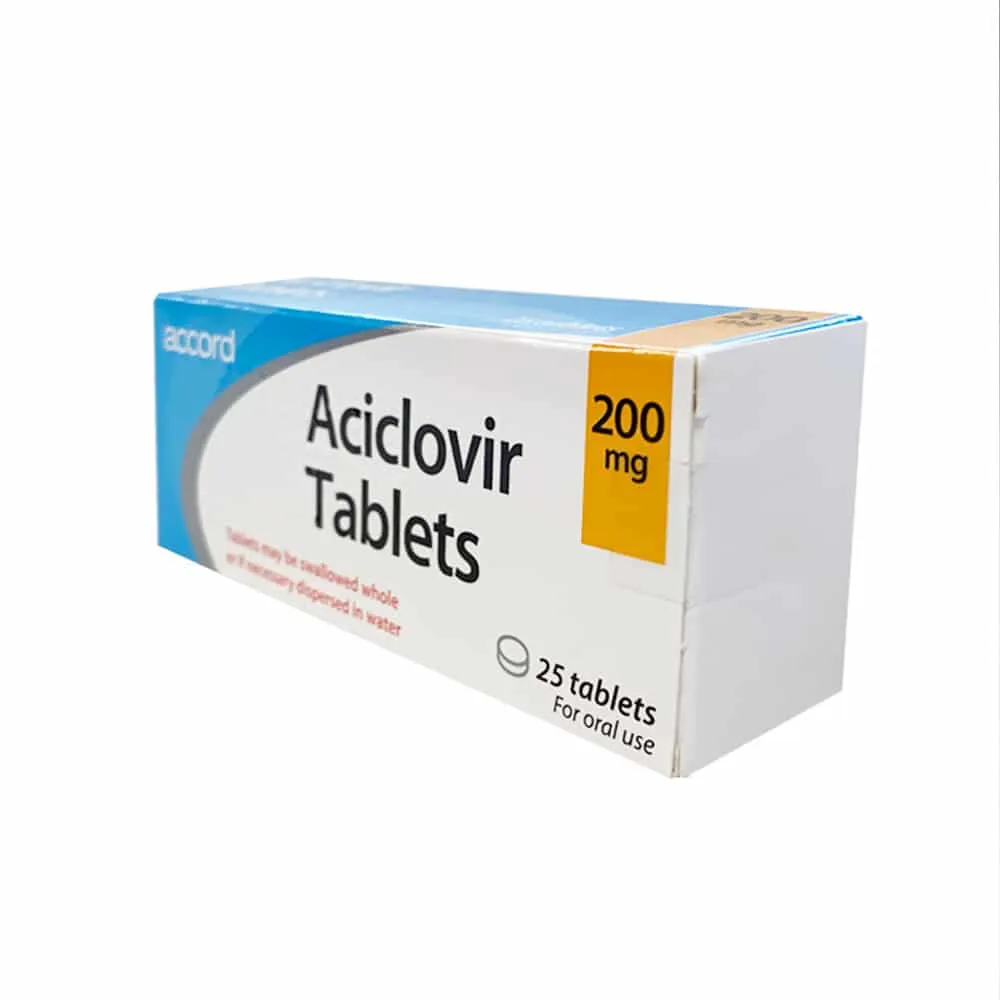
Table of Contents
Package leaflet: Information for the user
Aciclovir Accord, 200 mg, tablets
Aciclovir Accord, 400 mg, tablets
Aciclovir Accord, 800 mg, tablets
Aciclovirum
Please read the entire leaflet carefully before taking this medicine, as it contains
important information for the patient.
- Keep this leaflet, as you may need to read it again.
- If you have any questions, please consult your doctor or pharmacist.
- This medicine has been prescribed for a specific individual. Do not pass it on to others. It may harm someone else, even if their symptoms are the same.
- If you experience any adverse reactions, including any not listed in this leaflet, inform your doctor or nurse. See section 4.
Table of contents
- What Aciclovir Accord is and what it is used for
- Important information before taking Aciclovir Accord
- How to take Aciclovir Accord
- Possible side effects
- How to store Aciclovir Accord
- Contents of the pack and other information
1. What Aciclovir Accord is and what it is used for
Aciclovir Accord contains the active substance called aciclovir. It belongs to a group of medicines known as antiviral agents and prevents the replication of certain viruses.
Aciclovir Accord 200 mg and 400 mg may be used for:
- Treatment of chickenpox and shingles; in the case of shingles, it also helps reduce nerve pain that may persist after the rash has healed;
- Treatment of cold sores, genital herpes, and other infections caused by the herpes simplex virus (Latin: Herpes simplex);
- Prevention of recurrences of cold sores, genital herpes, and other infections caused by the herpes simplex virus;
- Prevention of herpes virus infections in people with weakened immune systems, whose bodies are less able to fight infections.
Aciclovir Accord 800 mg may be used for:
- Treatment of shingles (Latin: Herpes zoster);
- Treatment of chickenpox;
- Prophylaxis of shingles and chickenpox in people with severely weakened immune systems.
2. Important information before taking Aciclovir Accord
When not to take Aciclovir Accord:
- if the patient is allergic to aciclovir, valaciclovir, or any of the other
ingredients of this medicine (listed in section 6).
Do not take Aciclovir Accord if any of the above situations apply to the patient.
If in doubt, consult a doctor or pharmacist before taking Aciclovir Accord.
Warnings and precautions
Talk to your doctor before taking Aciclovir Accord if:
- the patient has impaired kidney function,
- the patient is aged 65 years or older.
If any of the above warnings apply, contact your doctor.
The doctor may reduce the dose of Aciclovir Accord.
It is important to drink sufficient amounts of fluid while taking Aciclovir Accord.
If in doubt whether any of the above situations apply, consult your doctor or pharmacist before starting treatment with Aciclovir Accord.
Aciclovir Accord and other medicines
Tell your doctor or pharmacist if the patient is taking any of the following medicines:
- probenecid, used in the treatment of gout;
- cimetidine, used in the treatment of stomach ulcers;
- mycophenolate mofetil, used to prevent rejection of transplanted organs;
- valproic acid and phenytoin, used in the treatment of seizures;
- theophylline, a medicine for respiratory diseases.
Pregnancy and breastfeeding
Aciclovir Accord is generally not recommended during pregnancy. If the patient is pregnant or breastfeeding, suspects she may be pregnant, or is planning to have a baby, she should consult her doctor or pharmacist before taking this medicine. The doctor will consider the benefits of using Aciclovir Accord during pregnancy for the patient and the potential risk to the unborn child.
The active substance of Aciclovir Accord passes into breast milk. If the patient is breastfeeding, she should consult her doctor before taking Aciclovir Accord.
The effect of aciclovir on female fertility is unknown.
Driving and operating machinery
Some adverse effects, such as drowsiness, may affect the ability to concentrate and react quickly. Before driving or operating machinery, ensure that such adverse effects are not present.
Aciclovir Accord contains sodium
This medicine contains less than 1 mmol (23 mg) of sodium per tablet; therefore, this medicine is considered "sodium-free".
3. How to take Aciclovir Accord
This medicine should always be taken exactly as prescribed by the doctor. In case of doubt, contact
the doctor or pharmacist.
The doctor will inform the patient about the correct dose, method of administration, and duration of treatment:
- depending on the type of infection;
- depending on whether the infection requires treatment or prevention of recurrences.
The usual dose for treating herpes simplex virus infections in adults is 200 mg, 5 times daily at approximately 4-hour intervals, omitting the nighttime dose. Treatment should usually continue for 5 days, but may be prolonged in severe infections.
Children aged 2 years and older are usually given the same dose as adults.
The usual dose for preventing recurrences of herpes simplex virus infection in adults is 200 mg, 4 times daily at approximately 6-hour intervals, omitting the nighttime dose.
The usual dose for treating varicella and herpes zoster in adults is 800 mg, 5 times daily at approximately 4-hour intervals, omitting the nighttime dose. Treatment should usually continue for 7 days.
Children over 6 years of age are usually given 800 mg 4 times daily; children aged 2 to 6 years are given 400 mg 4 times daily; children under 2 years of age are given 200 mg 4 times daily.
If the patient has impaired kidney function, the doctor will adjust the dose accordingly.
Administration of the medicine:
- The medicine is taken orally.
- The tablet should be swallowed whole with a sufficient amount of water.
- Aciclovir Accord should be taken at the same time each day.
- Aciclovir Accord should be taken according to the doctor's or pharmacist's instructions.
- If difficulty swallowing tablets occurs, the tablet may be dissolved in at least 50 ml of water, which should be mixed well before drinking.
Taking more than the recommended dose of Aciclovir Accord
Aciclovir Accord is usually not harmful unless taken in large amounts over several days. If a patient has taken too much Aciclovir Accord, contact a doctor or pharmacist immediately and bring the medicine packaging with you.
Missed dose of Aciclovir Accord
If a dose of Aciclovir Accord is missed, take it as soon as possible, but if it is almost time for the next dose, skip the missed dose. Do not take a double dose to make up for a missed dose.
4. Possible adverse reactions
Like any medicine, Aciclovir Accord may cause adverse reactions, although not everyone experiences them.
Symptoms to be aware of:
- Severe allergic reactions (anaphylaxis). These occur rarely in patients taking Aciclovir Accord (may occur in no more than 1 in 1,000 people). Rapid onset of symptoms, including:
- Itchy skin rash (urticaria);
- Swelling of lips, face, neck, and throat causing breathing difficulties (angioedema);
- Drop in blood pressure leading to collapse.
- If a patient experiences an allergic reaction, treatment with Aciclovir Accord must be discontinued immediately and medical help must be sought without delay.
Common adverse reactions (may occur in no more than 1 in 10 people):
- Headache;
- Dizziness;
- Nausea or vomiting;
- Diarrhea;
- Abdominal pain;
- Itching;
- Skin reaction following exposure to sunlight (photosensitivity);
- Fatigue;
- Increased body temperature (fever).
Uncommon adverse reactions (may occur in no more than 1 in 100 people):
- Itchy rash (urticaria);
- Hair loss.
Rare adverse reactions (may occur in no more than 1 in 1,000 people):
- Shortness of breath (dyspnea);
- Changes in blood tests;
- Swelling of lips, face, neck, and throat causing breathing difficulties (angioedema);
- Increased liver enzyme activity.
Very rare adverse reactions (may occur in less than 1 in 10,000 people):
- Disorientation or agitation;
- Tremor;
- Loss of balance while walking and lack of motor coordination (ataxia);
- Slow, slurred speech (dysarthria);
- Hearing or seeing things that are not there (hallucinations);
- Psychotic disorders;
- Seizures;
- Drowsiness;
- Brain damage (encephalopathy);
- Loss of consciousness (coma);
- Yellowing of the skin and whites of the eyes (jaundice), liver inflammation;
- Pain in the lower back, in the kidney area or just above the hip (renal origin pain);
- Kidney failure.
Very rare adverse reactions that may be revealed in blood tests (may occur in no more than 1 in 10,000 people):
- Reduced number of red blood cells (anaemia);
- Reduced number of white blood cells (leukopenia);
- Reduced number of platelets (cells involved in blood clotting; thrombocytopenia).
Reporting of adverse reactions
If any adverse reactions occur, including any not listed in this leaflet, inform your doctor or nurse.
Adverse reactions can be reported directly to the Department of Monitoring Adverse Drug Reactions, Office for Registration of Medicinal Products, Medical Devices and Biocidal Products
Al. Jerozolimskie 181C
02-222 Warsaw
Tel.: +48 22 49 21 301
Fax: +48 22 49 21 309
Website: https://smz.ezdrowie.gov.pl
Adverse reactions can also be reported to the marketing authorization holder. Reporting adverse reactions helps to provide more information on the safety of this medicine.
5. How to store Aciclovir Accord
- Keep this medicine out of the sight and reach of children.
- No special storage conditions are required for this medicine.
- Do not use this medicine after the expiry date stated on the blister and carton after: EXP.
Medicines must not be disposed of via the sewage system or household waste. Ask your pharmacist how to dispose of medicines no longer required. These measures will help protect the environment.
6. Contents of the pack and other information
What Aciclovir Accord contains
- The active substance is aciclovir: 200 mg, 400 mg or 800 mg in each tablet.
- The other ingredients are: microcrystalline cellulose type 101, sodium carboxymethyl starch (type A), povidone K25, colloidal anhydrous silica, magnesium stearate.
What Aciclovir Accord looks like and contents of the pack
Aciclovir Accord 200 mg, 400 mg and 800 mg tablets are packed in PVC/Aluminium foil blisters, in a cardboard box.
Pack sizes:
200 mg: 25 and 30 tablets in a blister;
400 mg: 25, 28, 30, 35 and 60 tablets in a blister;
800 mg: 25, 30 and 35 tablets in a blister.
Not all pack sizes may be marketed.
Aciclovir Accord 200 mg tablets are white or almost white, round, flat tablets with bevelled edges, embossed with the code "LG1" on one side and smooth on the other.
Aciclovir Accord 400 mg tablets are white or almost white, round, flat tablets with bevelled edges, embossed with "LG" above and "2" below the breakline on one side and smooth on the other.
Aciclovir Accord 800 mg tablets are white or almost white, oval, biconvex tablets, embossed with "LG" and "3" on both sides of the breakline on one side and smooth on the other.
Aciclovir Accord 400 mg and 800 mg: the breakline is intended only to facilitate breaking the tablet for ease of swallowing, and does not ensure equal dosing.
Marketing Authorisation Holder
Accord Healthcare Polska Sp. z o.o.
Taśmowa Street 7
02-677 Warsaw
Tel: +48 22 577 28 00
Manufacturer
Accord Healthcare Polska Sp. z o.o.
Lutomierska Street 50
95-200 Pabianice
This medicinal product is authorised in the European Economic Area member states under the following names:
| Member State | Medicinal Product Name |
| Austria | Aciclovir Accord 200/400/800 mg Tablet |
| Bulgaria | Aciclovir Accord 400 mg tablets |
| Croatia | Aciclovir Accord 200/400 mg tablets |
| Netherlands | Aciclovir Accord 200/400/800 mg, tabletten |
| Lithuania | Aciclovirum Accord 200/400/800 mg tablets |
| Latvia | Aciclovirum Accord 200/400/800 mg tabletes |
| Poland | Aciclovir Accord |