Acatar acti-tabs
Poland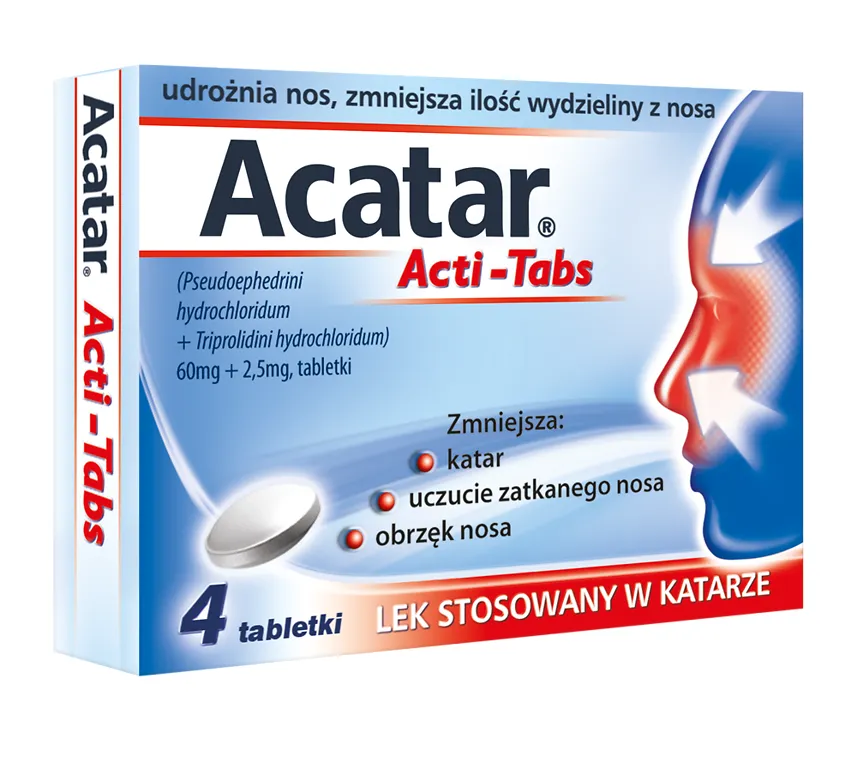
Table of Contents
Patient Information Leaflet
Acatar Acti-Tabs, 60 mg + 2.5 mg, tablets
Pseudoephedrini hydrochloridum + Triprolidini hydrochloridum
Please read the entire leaflet carefully before using the medicine, as it contains
important information for the patient.
This medicine should always be used exactly as described in this patient leaflet or as directed by
a doctor or pharmacist.
- Keep this leaflet for future reference.
- If you need advice or further information, consult your pharmacist.
- If you experience any adverse reactions, including any possible side effects not listed in this leaflet, inform your doctor or pharmacist. See section 4.
- If there is no improvement after 3 days, or if you feel worse, consult your doctor.
Table of Contents
- What Acatar Acti-Tabs is and what it is used for
- Important information before taking Acatar Acti-Tabs
- How to take Acatar Acti-Tabs
- Possible side effects
- How to store Acatar Acti-Tabs
- Contents of the pack and other information
1. What Acatar Acti-Tabs is and what it is used for
Acatar Acti-Tabs contains two active substances: pseudoephedrine and triprolidine. Pseudoephedrine reduces swelling and congestion of the nasal mucosa and paranasal sinuses, relieves nasal stuffiness (decongestant effect), and reduces nasal discharge. Triprolidine reduces sneezing and nasal itching.
Acatar Acti-Tabs is indicated for the relief of symptoms of rhinitis, such as swelling of the nasal and paranasal sinus mucosa, nasal discharge (runny nose), nasal stuffiness, and sneezing, associated with the common cold and influenza. The medicine may also be used temporarily in cases of allergic rhinitis and vasomotor rhinitis.
The effect of Acatar Acti-Tabs begins approximately 15–30 minutes after administration and lasts for at least 4 hours.
Acatar Acti-Tabs is intended for use in adults and children over 12 years of age.
2. Important information before using Acatar Acti-Tabs
When not to use Acatar Acti-Tabs:
- if the patient is allergic to the active substances or to any of the other ingredients of this medicine (listed in section 6) or to sympathomimetic amines such as ephedrine or phenylephrine, used, among others, to constrict nasal mucosa;
- if the patient is currently taking or has taken within the last 14 days medicines from the group of monoamine oxidase inhibitors (MAOIs), sometimes used in the treatment of depression;
- if the patient has very high blood pressure (severe hypertension) or uncontrolled hypertension;
- if the patient has severe acute (sudden) or chronic (long-term) kidney disease or renal failure;
- in patients with unstable ischaemic heart disease;
- in patients with severe hepatic insufficiency;
- during pregnancy and breastfeeding;
- if the patient is taking furazolidone (a medicine used for bacterial infections) or other medicines containing pseudoephedrine or antihistamines;
- in children under 12 years of age.
Warnings and precautions
Before starting to take Acatar Acti-Tabs, discuss this with your doctor or pharmacist.
Do not take this medicine without consulting a doctor in the following cases:
- in patients with diabetes, cardiac arrhythmias, hyperthyroidism, heart disease, hypertension, increased intraocular pressure, or urinary retention (e.g. due to benign prostatic hyperplasia or urethral stricture), due to the presence of pseudoephedrine;
- in patients with pyloric stenosis, bronchial asthma, acute angle-closure glaucoma, epilepsy, renal failure, hepatic insufficiency, or chronic obstructive pulmonary disease (COPD), due to the presence of triprolidine; elderly patients may be more sensitive to the sedative effect of triprolidine;
- in patients taking antihypertensive medicines, tricyclic antidepressants, sympathomimetic stimulants such as nasal decongestants, appetite suppressants, or psychotropic medicines with amphetamine-like effects (see section "Acatar Acti-Tabs and other medicines"). In such cases, the doctor will assess the effect of a single dose of the medicine on blood pressure.
During treatment with Acatar Acti-Tabs, sudden abdominal pain or rectal bleeding may occur due to inflammatory changes in the large intestine (ischaemic colitis). If such gastrointestinal symptoms occur, treatment with Acatar Acti-Tabs should be discontinued and medical advice should be sought immediately. See section 4.
During treatment with Acatar Acti-Tabs, reduced blood flow to the optic nerve may occur. If sudden vision loss occurs, discontinue use of Acatar Acti-Tabs immediately and contact a doctor or seek medical help without delay. See section 4.
If symptoms persist, worsen or do not improve after 3 days, or if new symptoms appear, consult a doctor.
If the patient develops fever with generalized skin erythema and vesicular rash, discontinue taking Acatar Acti-Tabs and contact a doctor or seek medical help immediately. See section 4.
Cases of posterior reversible encephalopathy syndrome (PRES) and reversible cerebral vasoconstriction syndrome (RCVS) have been reported following the use of medicines containing pseudoephedrine.
PRES and RCVS are rare conditions that may be associated with reduced blood flow to the brain.
If symptoms suggestive of PRES or RCVS occur, treatment with Acatar Acti-Tabs should be stopped immediately and medical help should be sought immediately (see section 4, "Possible side effects").
Children and adolescents
This medicine should not be used in children under 12 years of age.
Acatar Acti-Tabs and other medicines
Inform your doctor or pharmacist about all medicines currently used, recently taken, or planned to be used.
During treatment with Acatar Acti-Tabs, avoid taking sedative medicines.
Concomitant use of Acatar Acti-Tabs with medicines that constrict blood vessels of mucous membranes (e.g. phenylephrine, oxymetazoline), tricyclic antidepressants (e.g. amitriptyline, imipramine, opipramol), appetite suppressants (sibutramine), psychotropic medicines with amphetamine-like effects (bupropion, phentermine), or monoamine oxidase inhibitors (e.g. moclobemide) may sometimes lead to increased blood pressure (see section "Important information before using Acatar Acti-Tabs").
Triprolidine may enhance the effects of ethanol.
Pseudoephedrine may partially reduce the blood pressure-lowering effect of medicines that interfere with sympathetic nervous system function, such as bretylium, betanidine, guanethidine, debrisoquine, methyldopa, and alpha- and beta-adrenergic receptor blockers.
Acatar Acti-Tabs with food, drink or alcohol
Alcohol consumption should be avoided during treatment with Acatar Acti-Tabs.
Pregnancy, breastfeeding and fertility
If the patient is pregnant or breastfeeding, suspects she may be pregnant, or is planning to have a child, she should consult her doctor or pharmacist before using this medicine.
Acatar Acti-Tabs should not be used in pregnant women or in women who are breastfeeding.
Driving and using machines
Patients taking Acatar Acti-Tabs should not drive or operate machinery, as the medicine may cause drowsiness.
Acatar Acti-Tabs contains lactose
If the patient has been previously diagnosed with an intolerance to certain sugars, the patient should consult a doctor before taking this medicine.
3. How to use Acatar Acti-Tabs
This medicine should always be used according to the instructions provided by your doctor or pharmacist. If in doubt,
consult your doctor or pharmacist.
For oral use.
Recommended dose: Adults and children over 12 years of age – 1 tablet every 6 to 8 hours. The dose should not exceed
4 tablets per day.
Use in children and adolescents
This medicine should not be given to children under 12 years of age.
Taking more Acatar Acti-Tabs than recommended
If more than the recommended dose is taken, the following symptoms may occur: drowsiness, lethargy, dizziness,
impaired motor coordination, weakness, decreased muscle tone, respiratory depression, dryness of the skin and mucous membranes,
rapid heartbeat, high blood pressure, high fever, restlessness, irritability, seizures, and difficulty urinating.
If you take more than the recommended dose, seek medical advice immediately from your doctor or pharmacist.
If you miss a dose of Acatar Acti-Tabs
Do not take a double dose to make up for the missed dose.
4. Possible adverse reactions
Like all medicines, this medicine can cause adverse reactions, although not everybody will experience them.
You should stop taking Acatar Acti-Tabs immediately and seek medical help immediately if symptoms indicating posterior reversible encephalopathy syndrome (PRES) or reversible cerebral vasoconstriction syndrome (RCVS) occur. These include:
- sudden severe headache,
- nausea,
- vomiting,
- confusion,
- seizures, visual disturbances.
The following adverse reactions may occur:
Adverse reactions with unknown frequency (cannot be estimated from available data):
- severe disorders affecting blood vessels in the brain, known as posterior reversible encephalopathy syndrome (PRES) and reversible cerebral vasoconstriction syndrome (RCVS),
- hallucinations,
- drowsiness, sleep disturbances,
- increased heart rate (tachycardia),
- arterial hypertension,
- dryness of the mouth, nose, and throat,
- rash, sometimes with itching,
- urinary retention in men who have taken pseudoephedrine (in such cases, an important predisposing factor may be prostate enlargement),
- inflammation of the large intestine due to inadequate blood supply (ischaemic colitis),
- reduced blood flow within the optic nerve (ischaemic optic neuropathy).
Sudden fever, skin redness, or numerous small pustules (possible symptoms of acute generalized exanthematous pustulosis - AGEP) may occur within the first 2 days of taking Acatar Acti-Tabs. See section 2.
If such symptoms occur, you should stop taking Acatar Acti-Tabs and contact your doctor or seek immediate medical help.
Reporting of adverse reactions
If any adverse reactions occur, including any adverse reactions not listed in this leaflet, inform your doctor or pharmacist.
Adverse reactions can be reported directly to the Department of Monitoring Adverse Drug Reactions of the Office for Registration of Medicinal Products, Medical Devices and Biocidal Products:
Al. Jerozolimskie 181C,
02-222 Warsaw,
tel.: +48 22 49 21 301,
fax: +48 22 49 21 309
website: https://smz.ezdrowie.gov.pl
Adverse reactions can also be reported to the marketing authorization holder.
Reporting adverse reactions helps to provide more information on the safety of the medicine.
5. How to store Acatar Acti-Tabs
Keep this medicine out of the sight and reach of children.
Store below 25°C.
Do not use after the expiry date stated on the carton and the immediate packaging (month/year).
Blister marking: EXP – expiry date, Lot – batch number.
Medicines must not be disposed of via wastewater or household waste. Ask your pharmacist how to dispose of medicines no longer required. These measures will help protect the environment.
6. Contents of the pack and other information
What Acatar Acti-Tabs contains
- The active substances are pseudoephedrine hydrochloride and triprolidine hydrochloride. Each tablet contains: 60 mg of pseudoephedrine hydrochloride and 2.5 mg of triprolidine hydrochloride.
- The other ingredients are: microcrystalline cellulose, pregelatinized starch, lactose, stearic acid (50), colloidal anhydrous silica, magnesium stearate. What Acatar Acti-Tabs looks like and contents of the pack White, round, biconvex tablet with a central break line and the imprint "160" on one side.
Pack contents: 2 tablets (1 blister containing 2 tablets); 4 tablets (1 blister containing 4 tablets); 6 tablets (1 blister containing 6 tablets) or 12 tablets (1 blister containing 12 tablets).
Marketing Authorisation Holder and Manufacturer
US Pharmacia Sp. z o.o.
Ziębicka 40,
50-507 Wrocław, Poland
For further information, please contact the representative of the Marketing Authorisation Holder:
USP Zdrowie Sp. z o.o.
Poleczki 35
02-822 Warsaw, Poland
Tel. +48 (22) 543 60 00