Zypadhera
Italy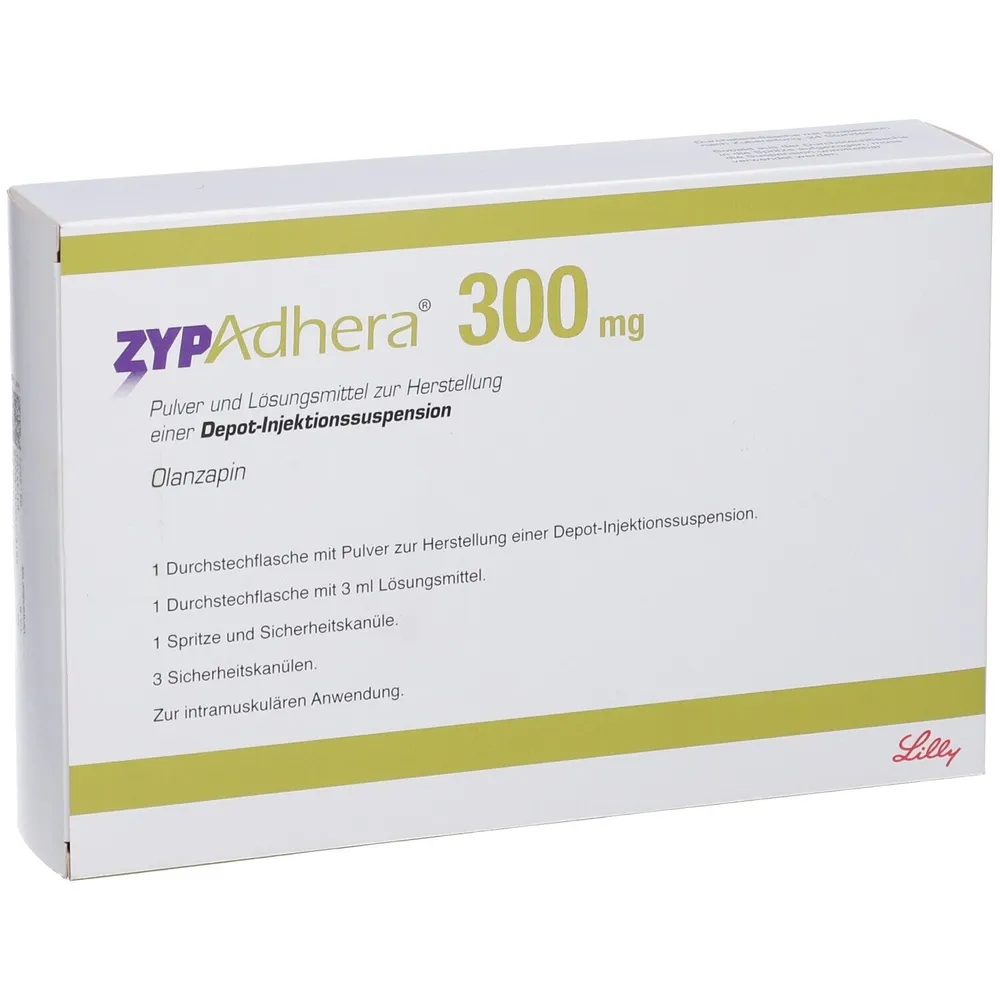
Table of Contents
- Package leaflet: Information for the user
- ZYPADHERA 210 mg, powder and solvent for prolonged-release injectable suspension, 300 mg, powder and solvent for prolonged-release injectable suspension, 405 mg, powder and solvent for prolonged-release injectable suspension
- 1. What ZYPADHERA is and what it is used for
- 2. What you should know before being administered ZYPADHERA
- 3. How ZYPADHERA is administered
- 4. Possible side effects
- 5. How to store ZYPADHERA
- 6. Package contents and other information
Package leaflet: Information for the user
ZYPADHERA 210 mg, powder and solvent for prolonged-release injectable suspension, 300 mg, powder and solvent for prolonged-release injectable suspension, 405 mg, powder and solvent for prolonged-release injectable suspension
olanzapine
Please read all of this leaflet carefully before you are given this medicine because it contains important information for you.
- Keep this leaflet. You may need to read it again.
- If you have any questions, ask your doctor or nurse.
- If you experience any side effects, including any not listed in this leaflet, tell your doctor or nurse. See section 4.
Contents of this leaflet
- What ZYPADHERA is and what it is used for
- What you need to know before you are given ZYPADHERA
- How ZYPADHERA is administered
- Possible side effects
- How to store ZYPADHERA
- Contents of the pack and other information
1. What ZYPADHERA is and what it is used for
ZYPADHERA contains the active substance olanzapine. ZYPADHERA belongs to a group of medicines called antipsychotics and is used to treat schizophrenia – a disease with symptoms such as hearing, seeing, or experiencing things that do not exist, false beliefs, unjustified suspicion, and social withdrawal. People with this illness may also feel depressed, anxious, or tense. ZYPADHERA is intended for adult patients who have been sufficiently stabilized during treatment with oral olanzapine.
2. What you should know before being administered ZYPADHERA
ZYPADHERA must not be administered to you
- if you are allergic (hypersensitive) to olanzapine or to any of the other components of this medicine (listed in section 6). An allergic reaction may present as skin rash, itching, facial swelling, lip swelling, or shortness of breath. If you have experienced this, inform the nurse or doctor.
- if you have previously been diagnosed with an eye condition such as certain types of glaucoma (increased pressure inside the eye).
Warnings and precautions
Talk to your doctor or nurse before ZYPADHERA is administered to you
- A rare but serious reaction may occur after each injection has been administered. Sometimes ZYPADHERA may accidentally enter the bloodstream too quickly. If this happens, you may experience the following symptoms after the injection. In some cases, these symptoms may lead to loss of consciousness.
- excessive drowsiness • dizziness
- confusion • disorientation
- irritability • anxiety
- aggressive behavior • increased blood pressure
- difficulty speaking • weakness
- difficulty walking • muscle stiffness or repeated muscle contractions
- seizures
These symptoms typically resolve within 24–72 hours after the injection. After each injection,
you will need to remain under observation at the healthcare facility for at least 3 hours due to the possible
onset of the symptoms listed above.
Although unlikely, such symptoms could occur more than 3 hours after the injection. If
this happens, contact your doctor or nurse immediately. Because of this risk,
do not drive or operate tools or machinery for the remainder of the day on which you received
the injection.
- Inform your doctor or nurse if you feel dizzy or faint after the injection. You may need to lie down until you feel better. Your doctor or nurse may need to monitor your blood pressure and heart rate.
- The use of ZYPADHERA in elderly patients with dementia (confusion and memory loss) is not recommended, as it may cause serious adverse effects.
- Very rarely, medicines of this type can cause unusual movements, particularly of the face and tongue, or a combination of fever, rapid breathing, sweating, muscle stiffness, and weakness or drowsiness. If you experience any of these after receiving ZYPADHERA, inform your doctor or nurse immediately.
- Weight gain has been observed in patients taking ZYPADHERA. You and your doctor should monitor your weight regularly. Consider consulting a dietitian or enrolling in a dietary program if necessary.
- Elevated blood sugar and fat levels (triglycerides and cholesterol) have been observed in patients taking ZYPADHERA. Your doctor should order blood tests to monitor your blood sugar and certain blood fat levels before you start taking ZYPADHERA and regularly during treatment.
- Inform your doctor if you or someone in your family has a history of blood clots, as medicines like this have been associated with blood clot formation.
Inform your doctor as soon as possible if you have any of the following conditions:
- Stroke or transient ischemic attack (temporary stroke-like symptoms) (TIA)
- Parkinson’s disease
- Prostate problems
- Intestinal blockage (paralytic ileus)
- Liver or kidney disease
- Blood disorders
- recent heart attack, or heart disease, including sick sinus syndrome (abnormal heart rhythm), unstable angina, or low blood pressure
- Diabetes
- Seizures
- If you know you may experience excessive loss of salts due to severe and prolonged diarrhea and vomiting (due to illness) or use of diuretics (water tablets)
As a regular precaution, if you are over 65 years old, have your
blood pressure checked periodically by your doctor.
Initiating ZYPADHERA is not recommended if you are over 75 years old.
Children and adolescents
ZYPADHERA is not indicated for patients under 18 years of age.
Other medicines and ZYPADHERA
Inform your doctor if you are currently taking, have recently taken, or might take any other
medicines.
In particular, inform your doctor if you are taking:
- medicines for Parkinson’s disease.
- carbamazepine (an anti-epileptic and mood stabilizer), fluvoxamine (an antidepressant), or ciprofloxacin (an antibiotic) – adjustment of the ZYPADHERA dose may be necessary.
If you are already taking antidepressants, medicines for anxiety, or medicines to help you sleep (tranquilizers),
you may experience drowsiness when ZYPADHERA is administered.
ZYPADHERA and alcohol
Do not consume any alcoholic beverages after receiving ZYPADHERA, as
concurrent use of ZYPADHERA and alcohol may cause drowsiness.
Pregnancy and breastfeeding
If you are pregnant, suspect you may be pregnant, planning a pregnancy, or breastfeeding,
consult your doctor before receiving this medicine.
This medicine must not be administered during breastfeeding, as small amounts of olanzapine may pass into breast milk.
The following symptoms may occur in newborns of mothers who used ZYPADHERA
during the third trimester (last three months of pregnancy): tremor, muscle stiffness and/or weakness,
drowsiness, agitation, breathing difficulties, and feeding problems. If the baby shows any
of these symptoms, you may need to contact the doctor.
Driving and using machines
Do not drive or operate tools or machinery for the remainder of the day on which you received
the injection.
ZYPADHERA contains sodium
After reconstitution, this medicine contains less than 1 mmol (23 mg) of sodium per vial, i.e., it is
essentially ‘sodium-free’.
3. How ZYPADHERA is administered
Your doctor will decide how much ZYPADHERA you need and for how long it should be administered.
ZYPADHERA is administered at doses of 150 mg to 300 mg every 2 weeks or 300 mg to 405 mg every 4 weeks.
ZYPADHERA is supplied as a powder, which your doctor or nurse will convert into a suspension that will be injected into the muscle tissue of your buttock.
If you are given more ZYPADHERA than you should have received
This medicine will be administered under the supervision of your doctor. Therefore, it is unlikely that you will receive an overdose.
Patients who have received an overdose of olanzapine have experienced the following symptoms:
- increased heart rate, agitation/aggression, difficulty speaking, unusual movements (especially of the face or tongue), and reduced level of consciousness. Other symptoms may include:
- acute confusion, seizures (epilepsy), coma, a combination of fever, rapid breathing, sweating, muscle rigidity, weakness, drowsiness, slowed breathing, aspiration of gastrointestinal contents into the airways, high or low blood pressure, changes in heart rhythm.
Contact your doctor or go to the hospital immediately if any of these symptoms occur.
If you miss an injection of ZYPADHERA
Do not stop treatment as soon as you start feeling better. It is important that you continue treatment with ZYPADHERA for the entire duration prescribed by your doctor.
If you miss an injection, contact your doctor as soon as possible to reschedule the next injection.
If you have any further questions about the use of this medicine, ask your doctor or nurse.
4. Possible side effects
Like all medicines, this medicine can cause side effects, although not everyone gets them.
Tell your doctor immediately if you experience:
- excessive drowsiness, dizziness, confusion, disorientation, difficulty speaking, difficulty walking, muscle stiffness or repeated muscle contractions, weakness, irritability, aggressive behaviour, anxiety, increased blood pressure, or seizures which may lead to loss of consciousness. These signs and symptoms may sometimes occur as a result of ZYPADHERA entering the bloodstream too quickly (a common side effect that may affect up to 1 in 10 patients);
- unusual movements (a common side effect that may affect up to 1 in 10 patients), especially of the face or tongue;
- blood clots in the veins (an uncommon side effect that may affect up to 1 in 100 patients), particularly in the lower limbs (symptoms include swelling, pain and redness of the leg), which may travel through the blood vessels to the lungs causing chest pain and difficulty breathing. If you experience any of these symptoms, consult a doctor immediately;
- a combination of fever, rapid breathing, sweating, muscle stiffness and confusion or drowsiness (the frequency of this side effect cannot be estimated from the available data).
Other common side effects (may affect up to 1 in 10 patients) with ZYPADHERA include drowsiness and injection site pain.
Rare side effects (may affect up to 1 in 1,000 patients) with ZYPADHERA include infection at the injection site.
The side effects listed below were observed after patients had taken olanzapine orally, but may also occur after administration of ZYPADHERA.
Other very common side effects (may affect more than 1 in 10 patients) include weight gain and increased levels of prolactin in the blood. In the early stages of treatment, some people may feel dizzy or faint (with a slowing of the heartbeat), especially when standing up from a lying or sitting position. These effects usually resolve spontaneously, but if they do not, inform your doctor.
Other common side effects (may affect up to 1 in 10 patients) include changes in levels of certain blood cells, circulating fats, and temporary increases in liver enzymes during the early stages of treatment; increased levels of sugar in the blood and urine; increased levels of uric acid and creatine phosphokinase in the blood; increased feeling of hunger; dizziness; restlessness; tremor; unusual movements (dyskinesias); constipation; dry mouth; rash; loss of strength; extreme tiredness; water retention leading to swelling of the hands, ankles or feet; fever; joint pain; and sexual dysfunction, such as decreased libido in males and females or erectile dysfunction in males.
Other uncommon side effects (may affect up to 1 in 100 patients) include hypersensitivity (e.g. swelling of the mouth and throat, itching, rash); diabetes or worsening of diabetes, occasionally associated with ketoacidosis (presence of ketone bodies in the blood and urine) or coma; epileptic seizures, usually associated with a history of seizures (epilepsy); muscle stiffness or spasms (including eye movements); restless legs syndrome; language problems; stuttering; slowing of the heartbeat; sensitivity to sunlight; nosebleeds; abdominal swelling; drooling; memory loss or forgetfulness; urinary incontinence; inability to urinate; hair loss; absence or reduction of menstrual cycles; and changes in the breasts in males and females, such as abnormal growth or abnormal milk secretion.
Rare side effects (may affect up to 1 in 1,000 patients) include decreased body temperature; changes in heart rhythm; unexplained sudden death; inflammation of the pancreas causing severe stomach pain, fever and malaise; liver disease manifesting as yellowing of the skin and whites of the eyes; muscle disease presenting as tenderness and unexplained muscle pain; and prolonged and/or painful erection.
Very rare side effects include severe allergic reactions such as drug reaction with eosinophilia and systemic symptoms (DRESS syndrome). DRESS initially presents with flu-like symptoms, a rash on the face which subsequently becomes widespread, high body temperature, swollen lymph nodes, increased levels of liver enzymes observed in blood tests, and an increase in a type of white blood cells (eosinophilia).
During treatment with olanzapine, elderly patients with dementia may experience stroke, pneumonia, urinary incontinence, falls, extreme tiredness, visual hallucinations, increased body temperature, skin redness and walking difficulties. Fatal cases have been reported in this particular patient group.
In patients with Parkinson's disease, oral olanzapine may worsen symptoms.
Reporting of side effects
If you experience any side effects, including those not listed in this leaflet, talk to your doctor or pharmacist. You can also report side effects directly via the national reporting system listed in Annex V.
By reporting side effects, you can help provide more information on the safety of this medicine.
5. How to store ZYPADHERA
Keep this medicine out of the sight and reach of children.
Do not administer the injection after the expiry date stated on the pack.
Do not refrigerate or freeze.
Chemical and physical stability of the suspension in the vials has been demonstrated for 24 hours at 20–25 °C.
From a microbiological standpoint, the medicine should be used immediately. If not used immediately,
the storage times and conditions prior to use are the responsibility of the user and should normally not exceed 24 hours at 20–25 °C. Do not use this medicine if you notice any discoloration or other visible signs of deterioration.
If the medicine is not used immediately, the vial must be shaken vigorously to resuspend its contents. Once drawn into a syringe, the suspension must be used immediately.
Do not dispose of medicines via wastewater or household waste. Ask your pharmacist how to dispose of medicines no longer required. This will help protect the environment.
6. Package contents and other information
What ZYPADHERA contains
The active substance is olanzapine.
ZYPADHERA 210 mg: Each vial contains olanzapine pamoate monohydrate equivalent to
210 mg of olanzapine.
ZYPADHERA 300 mg: Each vial contains olanzapine pamoate monohydrate equivalent to
300 mg of olanzapine.
ZYPADHERA 405 mg: Each vial contains olanzapine pamoate monohydrate equivalent to
405 mg of olanzapine.
After reconstitution: 1 ml of suspension contains 150 mg/ml of olanzapine.
The excipients in the solvent are: sodium carmellose, mannitol, polysorbate 80, water for
injections, hydrochloric acid and sodium hydroxide.
Description of the appearance of ZYPADHERA and contents of the pack
ZYPADHERA prolonged-release injectable suspension powder is a yellow powder contained in a clear glass vial. The doctor or nurse will reconstitute it into a suspension which will be administered to you by injection, using the ZYPADHERA solvent vial, which appears as a clear, colourless to slightly yellow solution, in a clear glass vial.
ZYPADHERA is a powder and solvent for prolonged-release injectable suspension. A carton contains one vial of prolonged-release injectable suspension powder, one 3 ml solvent vial, one syringe with a 19 gauge, 38 mm safety needle attached, and three separate safety needles: one 19 gauge, 38 mm needle and two 19 gauge, 50 mm needles.
Marketing Authorisation Holder
CHEPLAPHARM Registration GmbH, Weiler Straße 5e, 79540 Lörrach, Germany.
Manufacturer
Lilly S.A., Avda. de la Industria 30, 28108 Alcobendas, Madrid, Spain.
Manufacturing Packaging Farmaca (MPF) B.V., Neptunus 12, 8448 CN Heerenveen, The Netherlands.
CHEPLAPHARM Registration GmbH, Weiler Straße 5e, 79540 Lörrach, Germany.
More detailed information on this medicinal product is available on the European Medicines Agency website: http://www.ema.europa.eu
INSTRUCTIONS FOR HEALTHCARE PROFESSIONALS
INSTRUCTIONS FOR RECONSTITUTION AND ADMINISTRATION
ZYPADHERA olanzapine powder and solvent for prolonged-release injectable suspension
FOR DEEP INTRAMUSCULAR INJECTION IN THE GLUTEAL REGION ONLY.
DO NOT ADMINISTER BY INTRAVENOUS OR SUBCUTANEOUS ROUTE.
Reconstitution
STEP 1: Preparation of materials
The pack contains:
- Vial of ZYPADHERA prolonged-release injectable suspension powder
- Vial of solvent for ZYPADHERA
- One hypodermic syringe with safety needle attached (Hypodermic device)
- One 19 gauge, 38 mm safety needle (Hypodermic)
- Two 19 gauge, 50 mm safety needles (Hypodermic)
- Patient Leaflet
- Reconstitution and administration record card (this sheet)
- Safety Information and Instructions for Use for the Hypodermic device
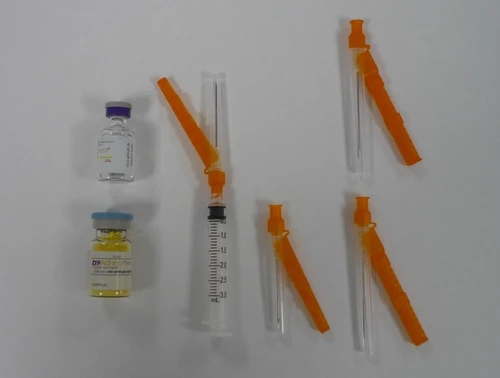
The use of gloves is recommended as ZYPADHERA may irritate the skin.
Reconstitute ZYPADHERA prolonged-release injectable suspension powder only with the solvent provided in the pack, using standard aseptic techniques for reconstitution of parenteral medicinal products.
STEP 2: Determination of solvent volume for reconstitution
The following table provides the required amount of solvent needed to reconstitute ZYPADHERA prolonged-release injectable suspension powder.
| ZYPADHERA vial strength (mg) | Volume of solvent to add (ml) |
| 210 | 1.3 |
| 300 | 1.8 |
| 405 | 2.3 |
It is important to note that the vial contains more solvent than is necessary for reconstitution.
STEP 3: Reconstitution of ZYPADHERA
- Disperse the powder by gently tapping the vial.
- Open the package containing the hypodermic syringe and the needle with the needle safety device. Remove the blister film and extract the device. Attach a syringe (if not already attached) to the Luer connector of the device with a slight twisting motion. Securely attach the needle to the device by pushing and turning clockwise, then remove the needle cap straight off. Failure to follow these instructions may result in a skin injury from accidental needle stick.
- Draw into the syringe the required amount of solvent (Step 2).
- Inject the required amount of solvent into the vial containing the powder.
- Aspirate air to equalize pressure within the vial.
- Remove the needle, holding the vial upright to avoid any loss of solvent.
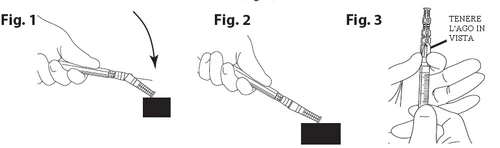
- Engage the needle safety device. Push the needle into the safety shield using a one-handed technique. Perform this action by gently pressing the safety shield against a flat surface. BY PRESSING THE SHIELD AGAINST THE SURFACE (Fig. 1), THE NEEDLE IS SECURELY LOCKED INTO THE SAFETY SHIELD (Fig. 2).
- Visually confirm that the needle is fully enclosed within the safety shield. Remove the device from the syringe only when required, following a specific medical procedure. Remove the device by firmly grasping the Luer connector of the needle safety device with thumb and index finger, keeping fingers well away from the distal end of the device containing the needle tip (Fig. 3).
- Tap the vial vigorously and repeatedly against a hard surface until the powder is no longer visible. Protect the surface to cushion the impact (see Figure A).

Figure A: Tap vigorously to mix
- Visually inspect the vial for clumps. Undissolved powder appears as dry, yellow clumps adhering to the vial. If clumps persist, further tapping may be necessary (see Figure B).


Undissolved powder: Dissolved powder:
visible clumps no clumps
Figure B: Check for undissolved powder and, if necessary, repeat
the tapping action
- Shake the vial vigorously until the suspension appears uniform in color and consistency. The reconstituted product will appear yellow and opaque (see Figure C).
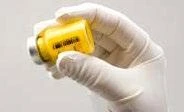
Figure C: Shake the vial vigorously
If foam forms, allow the vial to stand until the foam dissipates. If the product is not used immediately, it must be shaken vigorously again before use. Reconstituted ZYPADHERA remains stable in the vial for up to 24 hours.
Administration
STEP 1: Injection of ZYPADHERA
The following table specifies the final volume of ZYPADHERA suspension to be injected. The concentration of olanzapine suspension is 150 mg/mL.
| Dose (mg) | Final injection volume (ml) | |
| 150 | 1.0 | |
| 210 | 1.4 | |
| 300 | 2.0 | |
| 405 | 2.7 |
- Decide which needle will be used to administer the injection to the patient. For injection in obese patients, use of a 50 mm needle is recommended:
- If the 50 mm needle is to be used for injection, insert the needle with the 38 mm safety device onto the syringe to draw up the required volume of suspension.
- If the 38 mm needle is to be used for injection, insert the needle with the 50 mm safety device onto the syringe to draw up the required volume of suspension.
- Slowly draw up the required amount. A small amount of product will remain in the vial.
- Insert the needle safety device and remove the needle from the syringe.
- Attach the selected needle with safety device—either 50 mm or 38 mm—to the syringe before injection. Once the suspension has been drawn from the vial, it must be injected immediately.
- Select and prepare a skin area in the gluteal region for injection. DO NOT ADMINISTER INTRAVENOUSLY OR SUBCUTANEOUSLY.
- After inserting the needle, aspirate for several seconds to ensure that no blood appears. If blood is aspirated into the syringe, discard the syringe and dose, and restart the reconstitution and administration procedures. The injection must be performed with constant and steady pressure. DO NOT MASSAGE THE INJECTION SITE.
- Engage the needle safety device. (Fig. 1 and 2)
- Dispose of vials, syringe, used needles, the extra needle, and any unused parts of the solvent according to appropriate clinical procedures. The vial is for single use only.