Zevalin
Italy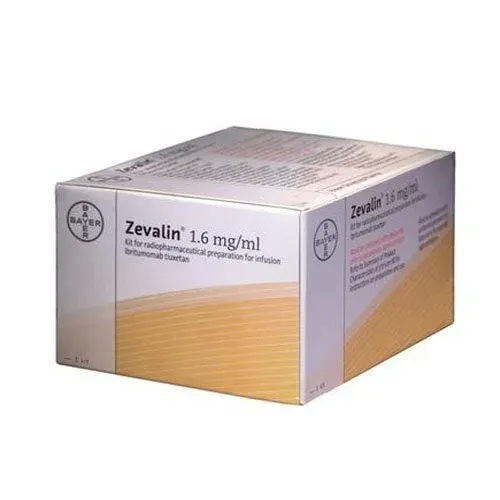
Table of Contents
- PACKAGE LEAFLET: INFORMATION FOR THE USER
- Zevalin 1.6 mg/ml, radiopharmaceutical preparation kit for infusion
- 1. WHAT ZEVALIN IS AND WHAT IT IS USED FOR
- 2. WHAT YOU SHOULD KNOW BEFORE REceiving ZEVALIN
- 3. HOW TO USE ZEVALIN
- 4. POSSIBLE ADVERSE EFFECTS
- 5. HOW TO STORE ZEVALIN
- 6. CONTENTS OF THE PACKAGE AND OTHER INFORMATION
PACKAGE LEAFLET: INFORMATION FOR THE USER
Zevalin 1.6 mg/ml, radiopharmaceutical preparation kit for infusion
Ibritumomab tiuxetan [Y]
Please read this leaflet carefully before you are given this medicine because it contains important information for you.
- Keep this leaflet. You may need to read it again.
- If you have any questions, ask your doctor or pharmacist.
- If you get any side effects, talk to your doctor or pharmacist. This includes any side effects not listed in this leaflet. See section 4.
Contents of this leaflet:
- What Zevalin is and what it is used for
- What you need to know before being given Zevalin
- How to use Zevalin
- Possible side effects
- How to store Zevalin
- Contents of the pack and other information
1. WHAT ZEVALIN IS AND WHAT IT IS USED FOR
This medicinal product is a radiopharmaceutical intended solely for therapeutic use.
Zevalin is a kit for the preparation of the active substance ibritumomab tiuxetanum [Y], a monoclonal antibody labelled with the radioactive substance yttrium-90 (Y). Zevalin binds to a protein (CD20) present on the surface of certain white blood cells (B-cells) and kills them through irradiation.
Zevalin is used to treat patients with certain types of B-cell non-Hodgkin's lymphoma (CD20+ low-grade or transformed B-cell NHL) when a previous treatment with rituximab, another monoclonal antibody, has not been effective or is no longer effective (refractory disease or relapse).
Zevalin is also used in patients with previously untreated follicular lymphoma. It is used as consolidation therapy to improve the reduction in lymphoma cells (remission) achieved with initial chemotherapy regimen.
Use of Zevalin involves exposure to small amounts of radioactivity. Your doctor and the nuclear medicine specialist have determined that the clinical benefit you will receive from this radiopharmaceutical procedure outweighs the risk associated with radiation exposure.
2. WHAT YOU SHOULD KNOW BEFORE REceiving ZEVALIN
You must not be given Zevalin
- if you are allergic (hypersensitive) to any of the following substances: ibritumomab tiuxetan, yttrium chloride, or any of the excipients of Zevalin (listed in section 6 “What Zevalin contains”), rituximab, or other murine-derived proteins
- if you are pregnant or breastfeeding (see also section “Pregnancy and breastfeeding”)
Warnings and precautions
The use of Zevalin is not recommended in the following cases, as its safety and efficacy have not been established:
- If more than 25% of your bone marrow contains abnormal malignant cells
- If you have previously undergone radiotherapy involving more than 25% of your bone marrow
- If you are being treated with Zevalin alone and your platelet count is less than 100,000/mm³
- If your blood platelet count after chemotherapy is less than 150,000/mm³
- If your white blood cell count is less than 1,500/mm³
- If you have previously undergone a bone marrow transplant or stem cell infusion.
If you have been treated with other proteins (particularly those derived from mice) prior to treatment with Zevalin, an allergic reaction may be more likely. Therefore, you may need to undergo a test to detect the presence of specific antibodies.
Additionally, the use of Zevalin is not recommended in patients with non-Hodgkin's lymphoma affecting the brain and/or spinal cord, as this patient group was not included in clinical studies.
Children
The use of Zevalin is not recommended in children under 18 years of age, as its safety and efficacy have not been established.
Elderly
Limited data are available in elderly patients (aged 65 years or older). Overall, no significant differences in safety and efficacy have been observed between these patients and younger patients.
Other medicines and Zevalin
Inform your doctor or pharmacist if you are taking or have recently taken any other medicines, including those without a prescription.
In particular, your doctor must discontinue treatment with growth factors, such as filgrastim, for three weeks before administration of Zevalin and for two weeks after treatment with Zevalin.
If you are treated with Zevalin less than 4 months after chemotherapy containing fludarabine as the active substance, the risk of reduced blood cell counts may be increased.
Inform your doctor about your treatment with Zevalin if you need to be vaccinated after treatment.
Pregnancy and breastfeeding
Zevalin must not be used during pregnancy. Your doctor will perform certain tests to rule out pregnancy before starting treatment. Women of childbearing potential and male patients must use effective contraception during treatment with Zevalin and for up to one year after completion of treatment.
There is a potential risk that the ionizing radiation from Zevalin may damage the ovaries or testes. Ask your doctor for advice regarding possible consequences, especially if you are planning to have children in the future.
Women must not breastfeed during treatment and for 12 months following treatment.
Driving and using machines
Zevalin may affect your ability to drive vehicles or operate machinery, as dizziness is a common side effect. Exercise particular caution until the effect of the product has subsided.
Zevalin contains sodium
This medicinal product contains up to 28 mg of sodium per dose, depending on the radioactivity concentration. This should be taken into consideration in patients on a low-sodium diet.
3. HOW TO USE ZEVALIN
There are strict regulations governing the use, handling, and disposal of radiopharmaceutical products. Zevalin will only be used in specially controlled areas. This product will be handled and administered to you exclusively by trained and qualified personnel who are experienced in its safe use. These individuals will take special precautions to ensure the safe use of this product and will keep you informed about their actions.
The dose of Zevalin depends on body weight, platelet count, and the type of disease for which it is being used (indication). The maximum dose must not exceed 1.200 MBq ("megabecquerel", a unit of radioactivity measurement).
Zevalin is used in combination with another medicinal product containing the active substance rituximab. You will receive a total of 3 infusions over two visits to a clinical facility, spaced 7–9 days apart.
- On Day 1, you will receive an infusion of rituximab
- On Day 7, 8, or 9, you will receive an infusion of rituximab followed shortly thereafter by an infusion of Zevalin (within 4 hours)
Recommended dose:
Consolidation therapy in patients with follicular lymphoma
- The usual dose is 15 MBq/kg body weight.
For treatment of patients with relapsed or refractory non-Hodgkin lymphoma who do not respond to rituximab
The usual dose is 11 or 15 MBq per kg body weight, depending on platelet count.
Preparation of Zevalin
Zevalin is not used directly and must first be prepared by healthcare professionals. The kit allows binding of the antibody ibritumomab tiuxetan to the radioactive isotope yttrium-90 (Y) (radioactive labelling).
How Zevalin is administered
Zevalin is administered via intravenous infusion (a drip into a vein), which usually lasts 10 minutes.
After administration of Zevalin
The amount of radiation your body will be exposed to due to Zevalin is less than that received during a course of radiotherapy. Most of the radioactivity will decay within the body, but a small amount will be eliminated through the urine. Therefore, during the week following the Zevalin infusion, you must wash your hands carefully after urinating.
After treatment, your doctor will perform regular blood tests to monitor your platelet and white blood cell levels, which typically decrease about two months after starting treatment.
If your doctor decides to treat you with other antibodies after Zevalin therapy, you will need to undergo a test to determine the possible presence of specific antibodies. Your doctor will inform you whether this test is required.
If you have received more Zevalin than you should have
Your doctor will provide any necessary medical care for potential adverse effects. This may include discontinuation of Zevalin therapy and treatment with growth factors or your own stem cells.
4. POSSIBLE ADVERSE EFFECTS
Like all medicines, Zevalin can cause adverse effects, although not everyone experiences them.
Immediately inform your doctor if you notice symptoms of any of the following conditions:
- infection: fever, chills
- blood poisoning (sepsis): fever and chills, changes in mental status, rapid breathing, increased heart rate, reduced urine output, low blood pressure, shock, bleeding or blood clots
- lung infection (pneumonia): difficulty breathing
- low blood cell count: unusual bruising, excessive bleeding from wounds, fever, or if you feel unusually tired or short of breath
- severe mucosal reactions, which may occur days or months after administration of Zevalin and/or rituximab. Your doctor will immediately stop treatment.
- extravasation (leakage of infused medicine into surrounding tissues): pain, burning sensation, stinging pain, or other reaction at the infusion site during administration. Your doctor will immediately stop the infusion and continue treatment using another vein.
- allergic reactions (hypersensitivity) /infusion reactions: Symptoms of allergic reactions/infusion reactions may include skin reactions, difficulty breathing, swelling, itching, flushing, chills, dizziness (possible sign of low blood pressure). Depending on the type and severity of the reaction, your doctor will decide whether treatment must be immediately stopped.
Adverse effects marked with an asterisk (*) have led to patient death in some cases observed during
clinical studies or post-marketing use of the medicine.
Adverse effects marked with two asterisks (**) have also been observed during consolidation therapy.
Very common adverse effects (may affect more than 1 in 10 people)
- reduced number of platelets, white blood cells, and red blood cells ( thrombocytopenia, leukopenia, neutropenia, anemia )*
- nausea
- weakness, fever, chills
- infection*
- fatigue**
- red spots under the skin ( petechiae )**
Common adverse effects (may affect up to 1 in 10 people)
- blood poisoning ( sepsis )*; lung infection (pneumonia) *; urinary tract infections, fungal infections in the mouth, such as oral thrush ( oral candidiasis )
- other malignant blood disorders ( myelodysplastic syndrome (MDS) / acute myeloid leukemia (AML) ) *, **; tumor pain
- fever with reduced number of certain white blood cells (febrile neutropenia); reduced count of all blood cells (pancytopenia) *; reduced number of lymphocytes (lymphocytopenia)
- allergic reactions ( hypersensitivity )
- severe loss of appetite ( anorexia )
- feeling of anxiety ( anxiety ), difficulty sleeping (insomnia)
- dizziness, headache
- bleeding due to low platelet count*
- cough, runny nose
- vomiting, stomach ache (abdominal pain), diarrhea, indigestion, sore throat, constipation
- skin rash, itching
- joint pain (arthralgia), muscle pain (myalgia), back pain, neck pain
- pain, flu-like symptoms, general feeling of discomfort, swelling due to fluid accumulation in arms, legs, and other tissues (peripheral edema), increased sweating
- high blood pressure ( hypertension )**
- low blood pressure ( hypotension )**
- absence of menstrual periods (amenorrhea )**
Uncommon adverse effects (may affect up to 1 in 100 people)
- fast heartbeat ( tachycardia )
Rare adverse effects (may affect up to 1 in 1,000 people)
- benign brain tumor ( meningioma )
- bleeding in the brain due to low platelet count*
Adverse effects of unknown frequency:
- skin and mucosal reactions (including Stevens-Johnson syndrome )*
- leakage of infused medicine into surrounding tissues ( extravasation ), leading to skin inflammation (infusion site dermatitis) and peeling ( infusion site desquamation ) or ulcers at the injection site
- damage to tissues surrounding lymphatic system tumors and complications due to swelling of these tumors
Reporting of adverse effects
If you experience any adverse effect, including those not listed in this leaflet, talk to your doctor or pharmacist.
You can also report adverse effects directly via the national reporting system listed in the [leaflet].
By reporting adverse effects, you can help provide more information on the safety of this medicine.
5. HOW TO STORE ZEVALIN
Keep this medicine out of the sight and reach of children.
Do not use Zevalin after the expiry date stated on the container.
Storage of the medicine is the responsibility of healthcare professionals.
Store in a refrigerator (2 °C – 8 °C). Do not freeze.
Keep the vials in the original container to protect the medicine from light.
Storage must comply with local regulations in force for radioactive substances.
After radiolabelling, immediate use is recommended. Stability has been demonstrated for 8 hours at 2 °C – 8 °C and protected from light.
6. CONTENTS OF THE PACKAGE AND OTHER INFORMATION
What Zevalin contains
- The active substance is ibritumomab tiuxetan. Each vial contains 3.2 mg of ibritumomab tiuxetan in 2 ml of solution (1.6 mg per ml).
- The other components are:
- vial with ibritumomab tiuxetan: sodium chloride, water for injections
- vial with sodium acetate: sodium acetate, water for injections
- vial with buffer solution: human serum albumin solution, sodium chloride, disodium phosphate dodecahydrate, sodium hydroxide, potassium dihydrogen phosphate, potassium chloride, pentetic acid, diluted hydrochloric acid to adjust pH, water for injections
The final formulation after radiolabelling contains 2.08 mg of [ Y] ibritumomab tiuxetan in a total volume of 10 ml.
Description of the appearance of Zevalin and contents of the pack
Zevalin is a kit for the preparation of a radiopharmaceutical for infusion, containing:
- One glass vial of ibritumomab tiuxetan, containing 2 ml of clear, colourless solution.
- One glass vial of sodium acetate, containing 2 ml of clear, colourless solution.
- One glass vial of buffer solution, containing 10 ml of clear solution, yellow to amber in colour.
- One empty glass reaction vial.
Marketing Authorisation Holder
Ceft Biopharma s.r.o.
Trtinova 260/1
Cakovice, 196 00 Praha 9
Czech Republic
Manufacturer
CIS bio international
RN 306 - Saclay
B.P. 32
91192 Gif-sur-Yvette Cedex
France
Other sources of information
More detailed information on this medicinal product is available on the website of the European Medicines Agency: http://www.ema.europa.eu.
This leaflet is available in all languages of the European Union/European Economic Area on the European Medicines Agency website.