Zetalax enema phosphate
Italy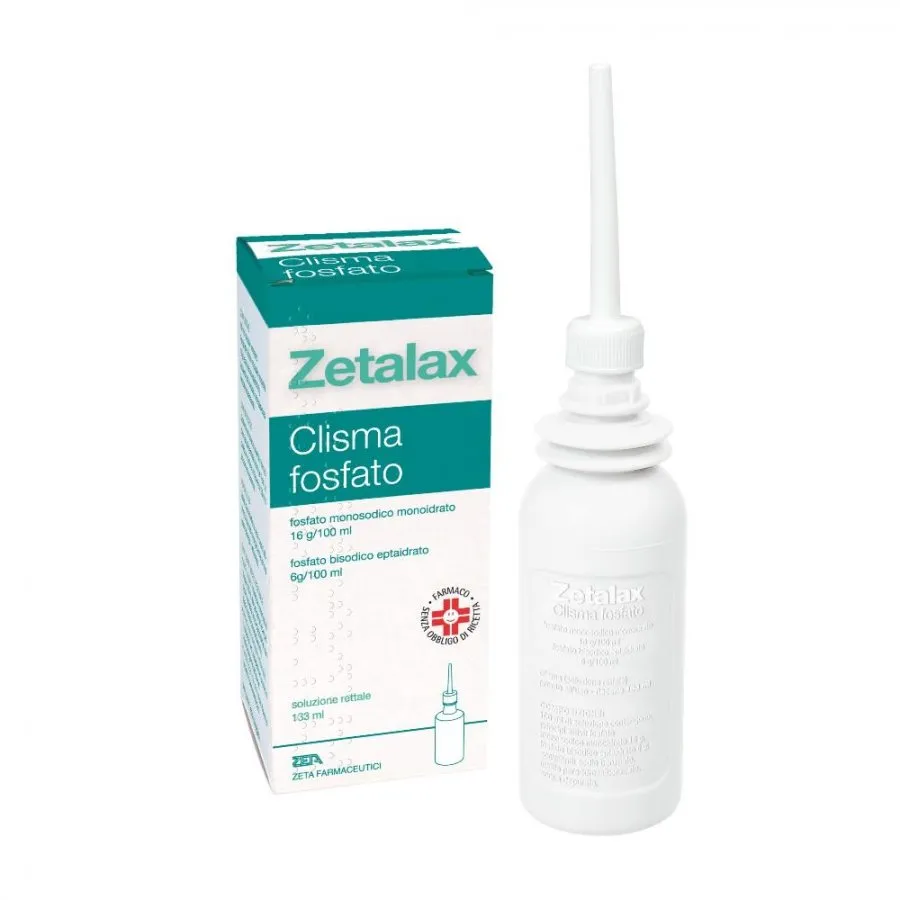
Table of Contents
- Patient Information Leaflet
- ZETALAX PHOSPHATE ENEMA
- 1. What ZETALAX CLISMA FOSFATO is and what it is used for
- 2. What you should know before using ZETALAX PHOSPHATE ENEMA
- 3. How to use ZETALAX PHOSPHATE ENEMA
- 4. Possible side effects
- 5. How to store ZETALAX CLISMA FOSFATO
- 6. Package contents and other information
Patient Information Leaflet
ZETALAX PHOSPHATE ENEMA
Monosodium phosphate monohydrate and disodium phosphate heptahydrate
Please read this leaflet carefully before using this medicine because it contains important information for you.
- Use this medicine exactly as described in this leaflet or as your doctor or pharmacist has instructed.
- Keep this leaflet. You may need to read it again.
- If you want further information or advice, consult your pharmacist.
- If you experience any side effects, including those not listed in this leaflet, contact your doctor or pharmacist. See section 4.
- Contact your doctor if you do not notice improvement or if your symptoms worsen after 7 days of treatment.
Contents of this leaflet:
- What ZETALAX PHOSPHATE ENEMA is and what it is used for
- What you need to know before using ZETALAX PHOSPHATE ENEMA
- How to use ZETALAX PHOSPHATE ENEMA
- Possible side effects
- How to store ZETALAX PHOSPHATE ENEMA
- Contents of the pack and other information
1. What ZETALAX CLISMA FOSFATO is and what it is used for
ZETALAX CLISMA FOSFATO contains the active substances monosodium phosphate monohydrate and disodium phosphate heptahydrate, which belong to a group of medicines called osmotic laxatives.
These medicines are used to facilitate the elimination of faeces.
ZETALAX CLISMA FOSFATO is indicated in adults and adolescents over 12 years of age for the short-term treatment of occasional constipation and for emptying the bowel prior to certain clinical examinations, such as radiological or rectoscopic examinations.
Consult your doctor if you do not notice improvement or if you feel worse after 7 days.
2. What you should know before using ZETALAX PHOSPHATE ENEMA
Do not use ZETALAX PHOSPHATE ENEMA
- if you are allergic to monosodium phosphate monohydrate, disodium phosphate heptahydrate, or any of the other ingredients of this medicine (listed in section 6);
- if you have acute abdominal pain or abdominal pain of unknown origin;
- if you have nausea or vomiting;
- if you suffer from intestinal or anorectal obstruction or narrowing (intestinal stenosis or anorectal stenosis);
- if you have a bowel blockage due to a physical obstruction (mechanical ileus) or a partial blockage (subintestinal occlusion);
- if you have a bowel blockage or impaired normal bowel emptying (paralytic ileus);
- if you suffer from inflammatory intestinal disorders or other conditions that may increase absorption of the medicine;
- if you have a perforation of the anal wall;
- if you have specific intestinal problems (colon abnormalities such as Hirschsprung's disease or congenital or acquired megacolon);
- if you have rectal bleeding of unknown origin;
- if you are experiencing an acute hemorrhoidal crisis with pain and bleeding;
- if you are severely dehydrated;
- if you suffer from heart disorders or problems;
- if you have severe kidney problems (severe renal insufficiency) or elevated blood phosphate levels (hyperphosphatemia);
- in children under 12 years of age;
- if you are taking other medicines containing sodium phosphate (such as oral solutions or tablets).
Warnings and precautions
Consult your doctor or pharmacist before using ZETALAX PHOSPHATE ENEMA:
- if you have suffered from constipation for more than 2 weeks;
- if you notice changes in your usual bowel habits or stool characteristics;
- if you do not experience improvement after using this medicine;
- if you are elderly;
- if you are not in good general health;
- if you have high blood pressure, heart problems, increased volume of abdominal fluid (ascites), or ulcers and fissures of the rectal mucosa;
- if you frequently have difficulty evacuating or suffer from chronic constipation.
What you should know about laxatives:
- prolonged use of a laxative for the treatment of constipation is not recommended;
- to treat constipation, medicines should only be an aid to dietary and lifestyle measures (e.g.: increasing dietary fiber and fluid intake, regular physical activity);
- you should drink at least 6–8 glasses of water or other fluids during treatment with laxatives to help soften stools; it is advisable to improve dietary habits by increasing fiber and water intake during episodes of constipation.
Use this medicine only when necessary or as advised by your doctor.
If you abuse laxatives by using this medicine excessively, frequently, or incorrectly,
you may experience prolonged diarrhea, resulting in loss of water, minerals (especially
potassium), and other essential nutrients.
In more severe cases, you may experience dehydration and low blood potassium levels
(hypokalemia), which may lead to heart, nerve, and muscle problems, especially if you are also taking
medicines to stimulate heart function (cardiac glycosides/digitalis), medicines to increase urine production (diuretics), or corticosteroids (anti-inflammatory drugs).
You may become dehydrated, especially if you are also taking medicines that affect kidney filtration, such as diuretics, ACE inhibitors, and sartans (antihypertensive drugs acting on angiotensin), or NSAIDs (anti-inflammatory drugs), or you may experience altered levels of certain blood electrolytes, which can lead to severe kidney problems (renal failure) and muscle stiffness (tetany).
If you use this medicine excessively or incorrectly, you may develop dependence (requiring progressively higher doses), long-term (chronic) constipation, and loss of normal intestinal function (intestinal atony).
Use this medicine only occasionally.
Treatment of chronic or recurrent constipation always requires medical supervision for diagnosis, prescription of medicines, and monitoring during therapy.
Health education notes
First of all, it should be noted that in most cases, a balanced diet rich in water and fiber (bran, vegetables, and fruit) can permanently resolve constipation.
Many people believe they are constipated if they do not have a bowel movement every day.
This is a mistaken belief, as this situation is completely normal for many individuals.
Constipation should instead be considered when bowel movements are reduced compared to your usual habits and are associated with the passage of hard stools.
Consult your doctor if episodes of constipation occur repeatedly.
Children
This medicine must not be used in children under 12 years of age.
Elderly
If you are elderly, consult your doctor before using this medicine.
Other medicines and ZETALAX PHOSPHATE ENEMA
Inform your doctor or pharmacist if you are taking, have recently taken, or might take any other medicines.
In particular, inform your doctor before using ZETALAX PHOSPHATE ENEMA if you are taking:
- medicines that increase urine elimination (diuretics), corticosteroid medicines (corticosteroids), certain medicines that lower blood pressure (calcium channel blockers), or lithium-containing medicines;
- medicines that affect heart rhythm (prolongation of the QT interval);
- calcium supplements and calcium-containing antacids;
- other medicines containing sodium phosphate (such as oral solutions or tablets).
Pregnancy and breastfeeding
If you are pregnant, think you may be pregnant, are planning a pregnancy, or are breastfeeding, ask your doctor or pharmacist for advice before using this medicine. If you are pregnant or breastfeeding, use this medicine only when strictly necessary and under direct medical supervision, who will assess whether the benefits to you outweigh the potential risks to the fetus or infant.
Driving and using machines
ZETALAX PHOSPHATE ENEMA does not affect the ability to drive or operate machinery.
However, undesirable effects may occur during treatment; therefore, it is advisable to be aware of your response to the medicine before driving or operating machinery.
ZETALAX PHOSPHATE ENEMA contains methyl parahydroxybenzoate, which may cause allergic reactions (including delayed reactions).
ZETALAX PHOSPHATE ENEMA contains sodium benzoate. This medicine contains 133 mg of sodium benzoate per bottle, equivalent to 1 mg/ml, which may cause local irritation.
3. How to use ZETALAX PHOSPHATE ENEMA
Use this medicine exactly as described in this leaflet or as directed by your doctor or pharmacist. If you have any doubts, consult your doctor or pharmacist.
Do not exceed the recommended doses.
Use laxatives only occasionally, as infrequently as possible and for no longer than 7 days.
If you need to use this medicine for longer periods, contact your doctor, who will assess whether you should continue treatment or not.
Adults and children over 12 years of age
The recommended dose is 1 bottle of 133 ml.
Before radiological or rectoscopic examinations, it is recommended to administer one enema the evening before and another one on the morning of the examination day.
Do not exceed these doses and use each bottle only once; discard any remaining medicine after use.
Use this medicine preferably in the evening and for no longer than 7 days.
Stop administration immediately if you encounter resistance during insertion of the cannula to avoid causing injury.
Instructions for use:
ZETALAX PHOSPHATE ENEMA can be administered at room temperature. If you prefer a warm solution, immerse the closed bottle in warm water or hold it under a running tap.
Before using the product, push the protective cap downwards until it stops, to break the safety seal located at the top of the cannula.
- For best results, lie on your left side (see fig. 1).
- For enhanced cleansing effect, assume the knee-chest position for a few minutes immediately after administration (see fig. 2).
- Remove the protective cap from the rectal cannula (see fig. 3).
- Hold the bottle and gently insert the cannula into the rectum (see fig. 4), then fully compress the bottle. A small amount of solution may remain in the bottle, which is by design. In children, do not insert the cannula beyond half its length.
- After completing the injection, remove the cannula and dispose of the empty bottle in its original carton (see fig. 5).
- Remain lying down until you feel a strong urge to defecate, which usually occurs within 5 minutes. In any case, there is no need to retain the enema for more than 10–15 minutes.
| Fig. 1 | 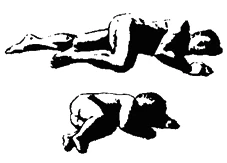 |
| Fig. 2 | 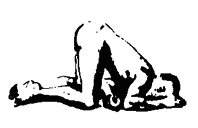 |
| Fig. 3 | 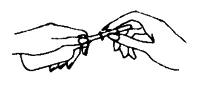 |
| Fig. 4 | 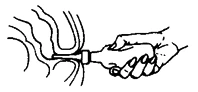 |
| Fig. 5 | 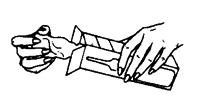 |
If you use more ZETALAX PHOSPHATE ENEMA than you should
In case of accidental ingestion/overdose of ZETALAX PHOSPHATE ENEMA,
contact your doctor immediately or go to the nearest hospital emergency department.
Undesirable effects that may occur following oral ingestion or rectal administration are:
- abdominal pain
- nausea
- vomiting
- persistent diarrhoea leading to loss of water, electrolytes (especially potassium), and other essential nutrients. These losses should be replaced by drinking water or other fluids. Excessive absorption of phosphate from the enema may cause:
- high levels of phosphate in the blood (hyperphosphatemia)
- low calcium levels in the blood (hypocalcemia)
- low magnesium levels in the blood (hypomagnesemia).
If you take an excessive dose of ZETALAX PHOSPHATE ENEMA, you may experience abdominal pain and diarrhoea, and you will need to replace lost fluids and electrolytes (see also section 2 “Warnings and precautions”).
If you forget to use ZETALAX PHOSPHATE ENEMA
Do not use a double dose to make up for the missed dose. If you have any questions about the use of this medicine, consult your doctor or pharmacist.
4. Possible side effects
Like all medicines, this medicine can cause side effects, although not everybody gets them.
The side effects that may occur with the use of ZETALAX PHOSPHATE ENEMA are:
- isolated cramp-like abdominal pains;
- intermittent abdominal pain (abdominal colic);
- diarrhoea with loss of fluids and salts, more frequent in cases of severe constipation (difficulty passing stools);
- redness with burning or pain (irritation) at the rectal level;
- nausea and vomiting;
- hypersensitivity reactions (e.g. urticaria);
- blisters, itching and burning of the skin.
The following side effects occur rarely:
- high levels of phosphate in the blood (hyperphosphataemia);
- high levels of sodium in the blood (hypernatraemia);
- low levels of calcium in the blood (hypocalcaemia);
- low levels of potassium in the blood (hypokalaemia);
- calcium accumulation (calcification) in tissues.
Reporting of side effects
If you experience any side effect, including those not listed in this leaflet, please contact your doctor or pharmacist. You may also report side effects directly via the national reporting system at: www.aifa.gov.it/content/segnalazioni-reazioni-avverse.
By reporting side effects, you can help provide more information on the safety of this medicine.
5. How to store ZETALAX CLISMA FOSFATO
Keep this medicine out of the sight and reach of children.
Do not use this medicine after the expiry date stated on the packaging after "Exp.".
The expiry date refers to the medicine in its original intact packaging, properly stored.
Do not dispose of any medicine via wastewater or household waste. Ask your pharmacist how to dispose of medicines you no longer use. This will help protect the environment.
6. Package contents and other information
What ZETALAX PHOSPHATE ENEMA contains
- The active substances are monosodium phosphate monohydrate and disodium phosphate heptahydrate. 100 ml of solution contain 16 g of monosodium phosphate monohydrate and 6 g of disodium phosphate heptahydrate.
- The other components are: methyl parahydroxybenzoate, sodium benzoate, purified water.
Description of the appearance of ZETALAX PHOSPHATE ENEMA and contents of the pack
ZETALAX PHOSPHATE ENEMA is a ready-to-use rectal solution (enema),
contained in a 133 ml bottle with a cannula.
Marketing Authorization Holder and Manufacturer
Marketing Authorization Holder
Zeta Farmaceutici S.p.A. - Via Mentana, 38 - 36100 Vicenza
Manufacturer
Zeta Farmaceutici S.p.A. - Via Galvani, 10 - 36066 Sandrigo (VI)