Zafrilla
Italy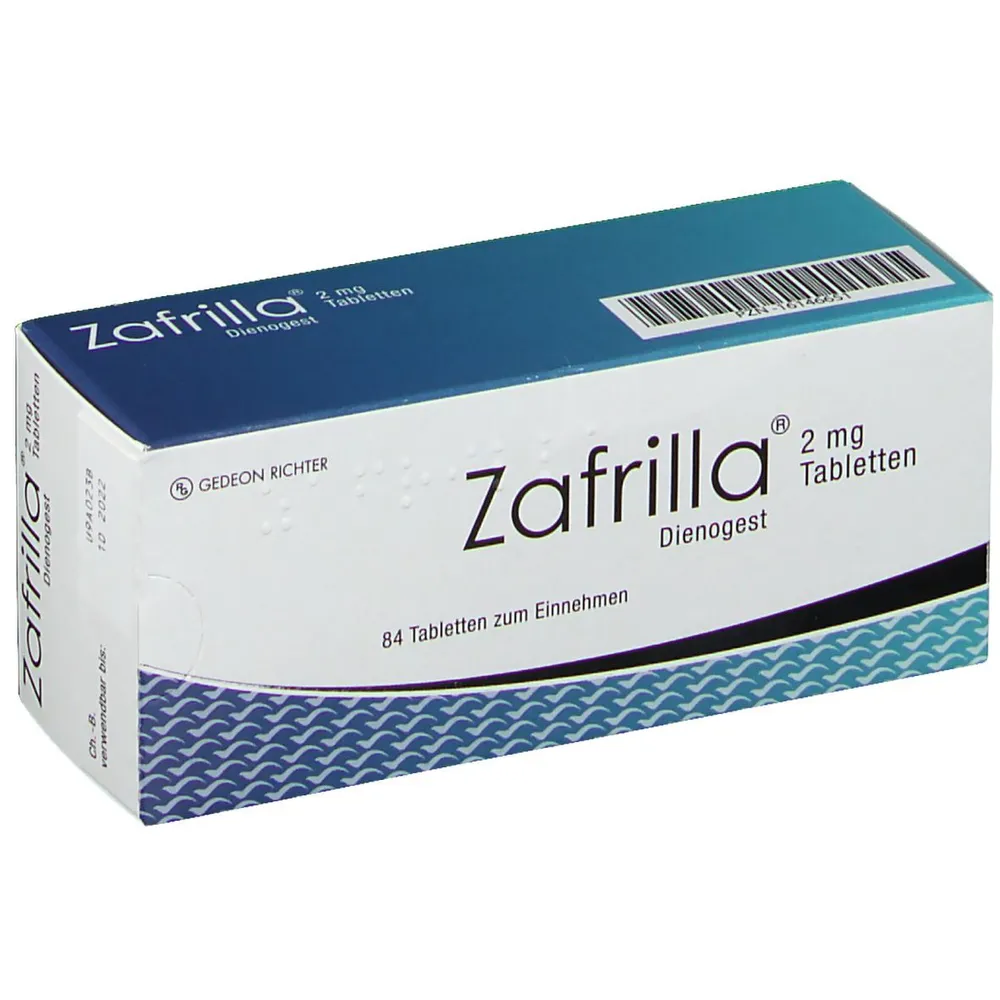
Table of Contents
Package leaflet: Information for the user
Zafrilla 2 mg tablets
Dienogest
Equivalent medicine
Please read all of this leaflet carefully before you start taking this medicine because it contains important information for you.
- Keep this leaflet. You may need to read it again.
- If you have any questions, ask your doctor or pharmacist.
- This medicine has been prescribed for you only. Do not pass it on to other people, even if they have the same symptoms as you, because it may be harmful.
- If you experience any side effects, including those not listed in this leaflet, tell your doctor or pharmacist. See section 4.
Contents of this leaflet:
- What Zafrilla is and what it is used for
- What you need to know before taking Zafrilla
- How to take Zafrilla
- Possible side effects
- How to store Zafrilla
- Contents of the pack and other information
1. What Zafrilla is and what it is used for
Zafrilla is a preparation used for the treatment of endometriosis (painful symptoms caused by displacement of the tissue lining the inside of the uterus). Zafrilla contains a hormone, the progestin dienogest.
2. What you should know before taking Zafrilla
Do not take Zafrilla
- if you have a blood clot in the veins (thromboembolic disorder). This may occur, for example, in a blood vessel of the leg (deep vein thrombosis) or in the lungs (pulmonary embolism). See also "Zafrilla and venous blood clots" below;
- if you have or have ever had a serious arterial disease, including a cardiovascular disease such as heart attack or stroke, or heart disease causing reduced blood flow (angina pectoris). See "Zafrilla and arterial blood clots" below;
- if you have diabetes with vascular complications;
- if you have or have ever had a severe liver disease (and liver function values have not returned to normal). Symptoms of liver disease may include yellowing of the skin and/or itching all over the body;
- if you have or have ever had a benign or malignant liver tumour;
- if you have or have ever had, or suspect you may have, a malignant tumour dependent on sex hormones, such as breast or genital organ cancer;
- if you have unexplained vaginal bleeding;
- if you are allergic (hypersensitive) to dienogest or any of the other ingredients of this medicine (listed in section 6).
If any of these conditions occurs for the first time while you are taking Zafrilla, stop treatment
immediately and consult your doctor.
Warnings and precautions
Talk to your doctor or pharmacist before taking Zafrilla.
You must not use hormonal contraceptives in any form (tablet, patch, intrauterine system)
while taking Zafrilla.
Zafrilla is not a contraceptive. If you wish to avoid pregnancy, you must use a condom or
other non-hormonal contraceptive methods.
You should be particularly careful when using Zafrilla in certain situations, and your doctor may need to examine you regularly. Inform your doctor if any of the following conditions apply to you:
- if you have ever had a blood clot (venous thromboembolism) or if a close relative has had a blood clot at a relatively young age;
- if a close relative has had breast cancer;
- if you have ever suffered from depression;
- if you have high blood pressure or if this condition develops during treatment with Zafrilla;
- if you develop liver disease while taking Zafrilla. Symptoms may include yellowing of the skin or eyes or itching all over the body. Inform your doctor even if these symptoms occurred during a previous pregnancy;
- if you have diabetes or had diabetes during a previous pregnancy;
- if you have ever had chloasma (patchy brown skin pigmentation, especially on the face). In this case, avoid excessive exposure to sunlight or ultraviolet radiation;
- if you experience lower abdominal pain while taking Zafrilla.
During treatment with Zafrilla, the possibility of pregnancy is reduced because Zafrilla may
affect ovulation.
If pregnancy occurs while taking Zafrilla, there is a slight increase in the risk of ectopic pregnancy (the embryo develops outside the uterus). Inform your doctor before taking Zafrilla if you have had an ectopic pregnancy in the past or if you have impaired function of the Fallopian tubes.
Zafrilla and severe uterine bleeding
Uterine bleeding, for example in women with a condition characterised by growth of the uterine lining (endometrium) into the muscular layer of the uterus, called adenomyosis, or benign uterine tumours, also known as uterine fibroids (uterine leiomyomas), may worsen with the use of Zafrilla. If bleeding is heavy and continuous, this may lead to a decrease in red blood cell levels (anaemia), which may in some cases be severe. If you have anaemia, you should discuss with your doctor whether to discontinue treatment with Zafrilla.
Zafrilla and changes in bleeding pattern
Most women treated with Zafrilla experience changes in their menstrual bleeding pattern (see section 4).
Zafrilla and venous blood clots
Some studies suggest there may be a slight, but not statistically significant, increase in the risk of blood clots in the legs (venous thromboembolism) associated with the use of progestogen-only preparations such as Zafrilla. Very rarely, blood clots can cause serious permanent damage or may even be fatal.
The risk of venous blood clots increases:
- with increasing age;
- if you are overweight;
- if you or a close relative has had a blood clot in the leg (thrombosis), lung (pulmonary embolism), or other organ at a young age;
- if you are undergoing surgery, prolonged bed rest, or have had a serious accident. It is important that you inform your doctor in advance that you are taking Zafrilla, as treatment may need to be stopped. Your doctor will tell you when to restart taking Zafrilla. Generally, this will be possible about 2 weeks after you have regained full mobility.
Zafrilla and arterial blood clots
There is limited evidence of an association between the use of progestogen-only preparations such as Zafrilla and an increased risk of arterial blood clots, for example in blood vessels of the heart (heart attack) or brain (stroke). In women with high blood pressure, the risk of stroke may be slightly increased by the use of progestogen-only preparations.
The risk of arterial blood clots increases:
- if you smoke. It is strongly recommended that you stop smoking while taking Zafrilla, especially if you are over 35 years of age;
- if you are overweight;
- if a close relative has had a heart attack or stroke at a young age;
- if you have high blood pressure.
Talk to your doctor before taking Zafrilla. Stop taking Zafrilla and contact your doctor immediately if you notice any possible signs of thrombosis, such as:
- severe pain and/or swelling in one leg;
- sudden, severe chest pain that may radiate to the left arm;
- sudden shortness of breath;
- sudden cough without apparent cause;
- unusual, severe or prolonged headache or worsening of migraine;
- partial or complete loss of vision or double vision;
- difficulty or inability to speak;
- dizziness or fainting;
- weakness, unusual sensations or numbness in any part of the body.
Zafrilla and cancer
Based on currently available data, it is unclear whether Zafrilla increases or decreases the risk of breast cancer. Breast cancer has been observed slightly more frequently in women using hormonal preparations compared to those who do not, but it is not known whether this is due to the treatment. For example, women using hormonal preparations may be diagnosed with more tumours, and earlier, because they undergo more frequent medical check-ups. The occurrence of breast cancer gradually decreases after stopping hormonal treatment. It is important that you regularly examine your breasts and contact your doctor if you feel any lumps.
Benign liver tumours have been observed rarely, and malignant liver tumours even more rarely, in women taking hormonal medicines. Contact your doctor if you experience unusually severe stomach pain.
Zafrilla and osteoporosis
Changes in bone mineral density (BMD)
The use of Zafrilla may affect bone strength in adolescents (aged 12 to under 18 years).
If you are under 18 years of age, your doctor must carefully evaluate the benefits and risks associated with using Zafrilla for you as a patient, taking into account possible risk factors for reduced bone mass (osteoporosis).
If you are taking Zafrilla, adequate intake of calcium and vitamin D through diet and/or supplements will be beneficial for your bones.
If you have an increased risk of osteoporosis (bone fragility due to mineral loss), your doctor will carefully assess the risks and benefits of treatment with Zafrilla, as the medicine has a moderate suppressive effect on the body's production of oestrogens (another type of female hormone).
Children and adolescents
Zafrilla must not be used in girls before menarche (first menstrual bleeding).
The use of Zafrilla may affect bone strength in adolescents (aged 12 to under 18 years).
If you are under 18 years of age, your doctor must carefully evaluate the benefits and risks associated with using Zafrilla for you as a patient, taking into account possible risk factors for reduced bone mass (osteoporosis).
Other medicines and Zafrilla
Inform your doctor or pharmacist if you are taking, have recently taken, or might take any other medicines.
Also, inform any doctor or dentist prescribing other medicines (or your pharmacist) that you are taking Zafrilla.
Some medicines may affect the levels of Zafrilla in your blood and may make it less effective, or may cause side effects.
These include:
- medicines used to treat:
- epilepsy (e.g. phenytoin, barbiturates, primidone, carbamazepine, oxcarbazepine, topiramate, felbamate);
- tuberculosis (e.g. rifampicin);
- HIV virus infection and Hepatitis C virus (known as protease inhibitors and non-nucleoside reverse transcriptase inhibitors such as ritonavir, nevirapine, efavirenz);
- other fungal infections (griseofulvin, ketoconazole).
- St John’s Wort preparations.
Ask your doctor or pharmacist for advice before taking any medicine.
Zafrilla with food and drink
During treatment with Zafrilla, you should avoid drinking grapefruit juice because it may increase the levels of Zafrilla in your blood. This may increase the risk of side effects.
Laboratory tests
If you are having a blood test, inform your doctor or laboratory staff that you are taking Zafrilla, as Zafrilla may affect the results of certain tests.
Pregnancy, breastfeeding and fertility
Do not take Zafrilla if you are pregnant or breastfeeding.
Driving and using machines
No effects on the ability to drive or use machines have been observed in users of Zafrilla.
Zafrilla contains lactose
If your doctor has diagnosed you with an intolerance to certain sugars, contact him/her before taking this medicine.
3. How to take Zafrilla
Take this medicine exactly as directed by your doctor. If you have any doubts, consult your doctor or pharmacist.
For adults, the usual dose is 1 tablet per day.
The following instructions apply to Zafrilla unless otherwise prescribed by your doctor. Follow these instructions carefully; otherwise, you may not obtain adequate benefit from treatment with Zafrilla.
You may start treatment with Zafrilla on any day of the cycle.
Adults: take one tablet daily, preferably at the same time each day, with a sufficient amount of liquid. When you finish a pack, start the next one without interruption. Continue taking the tablets even during menstrual bleeding days.
If you take more Zafrilla than you should
There have been no reports of serious harmful effects following the intake of an excessive number of Zafrilla tablets taken at the same time. However, if you are concerned, contact your doctor.
If you forget to take Zafrilla or experience vomiting or diarrhoea
The effectiveness of Zafrilla is reduced if you miss a tablet. If you forget to take one or more tablets, take one tablet as soon as you remember, and then continue taking your tablet at the usual time the next day.
If you vomit within 3–4 hours after taking Zafrilla, or if you have severe diarrhoea, the active substance in the tablet may not be completely absorbed by your body. This situation is similar to what happens when you forget to take a tablet. After vomiting or severe diarrhoea occurring within 3–4 hours of taking Zafrilla, you must take another tablet as soon as possible.
Do not take a double dose to make up for a forgotten tablet.
If you stop taking Zafrilla
If you stop taking Zafrilla, symptoms of endometriosis may return.
If you have any questions about the use of this medicine, consult your doctor or pharmacist.
4. Possible side effects
Like all medicines, this medicine can cause side effects, although not everyone gets them. These side effects most commonly occur during the first months of treatment with Zafrilla and usually disappear with continued use. Changes in bleeding patterns may also occur, such as spotting, irregular bleeding, or cessation of menstruation.
Common (may affect up to 1 in 10 people)
- weight gain;
- depressed mood, sleep disorders, nervousness, loss of interest in sex, mood changes;
- headache or migraine;
- nausea, abdominal pain, flatulence, bloating, or vomiting;
- acne or hair loss;
- back pain;
- breast discomfort, ovarian cyst, or hot flushes;
- uterine/vaginal bleeding, including spotting;
- weakness, irritability.
Uncommon (may affect up to 1 in 100 people)
- low red blood cell count (anaemia);
- weight loss or increased appetite;
- anxiety, depression, or mood swings;
- autonomic nervous system imbalance (controlling unconscious bodily functions such as sweating) or attention disturbances;
- dry eyes;
- ringing in the ears (tinnitus);
- non-specific circulatory problems or uncommon palpitations;
- low blood pressure;
- shortness of breath;
- diarrhoea, constipation, abdominal discomfort, inflammation of the stomach and intestine (gastrointestinal inflammation), inflammation of the gums (gingivitis);
- dry skin, excessive sweating, intense itching all over the body, appearance of visible hair in typically male areas (hirsutism), brittle nails, dandruff, dermatitis, abnormal hair growth, photosensitivity, or skin pigmentation problems;
- bone pain, muscle spasms, pain and/or heaviness in arms, hands, legs, or feet;
- urinary tract infection;
- vaginal candidiasis, genital dryness, vaginal discharge, pelvic pain, atrophic inflammation of the genitals with discharge (atrophic vulvovaginitis), or breast lump(s);
- fluid retention with swelling.
Additional side effects in adolescents (12 to less than 18 years): loss of bone density.
Reporting of side effects
If you experience any side effect, including those not listed in this leaflet, talk to your doctor or pharmacist. You can also report side effects directly via the national reporting system at:
https://www.aifa.gov.it/content/segnalazioni-reazioni-avverse.
By reporting side effects, you can help provide more information on the safety of this medicine.
5. How to store Zafrilla
Keep this medicine out of the sight and reach of children.
Store in the original packaging to protect the medicine from light.
No special storage temperature conditions are required for this medicine.
Do not use this medicine after the expiry date stated on the outer packaging and on the
blister after EXP. The expiry date refers to the last day of that month.
Do not dispose of any medicine via wastewater or household waste. Ask your pharmacist how to
dispose of medicines you no longer use. This will help protect the environment.
6. Package contents and other information
What Zafrilla contains
The active substance is dienogest. Each tablet contains 2 mg of dienogest.
The other components are monohydrate lactose, pregelatinized corn starch, microcrystalline cellulose, povidone K-25, crospovidone (type A), talc, magnesium stearate.
Description of the appearance of Zafrilla and the pack contents
Zafrilla 2 mg tablets are white to almost white, round, flat tablets with bevelled edges, imprinted with "G 93" on one side and "RG" on the other. The diameter of the tablets is 7 mm.
28, 84, and 168 Zafrilla 2 mg tablets are packaged in PVC rigid green//aluminum blisters with calendar, in folded cardboard boxes.
Not all pack sizes may be marketed.
Marketing Authorisation Holder and Manufacturer
Gedeon Richter Plc.
Gyömrői út 19-21.
1103 Budapest
Hungary
This medicinal product is authorised in the European Economic Area Member States under the following names:
Austria: Zafrilla 2 mg Tabletten
Belgium: Zafrilla 2 mg comprimés/tabletten/Tabletten
Bulgaria: Zafrilla
Czech Republic: Zafrilla
Denmark: Zafrilla
Estonia: SAWIS
Finland: Sawis
France: SAWIS 2 mg, comprimé
Germany: Zafrilla 2 mg Tabletten
Croatia: ZAFRILLA 2 mg tablete
Hungary: ZAFRILLA 2 mg tabletta
Ireland: Zafrilla
Italy: Zafrilla
Latvia: Sawis 2 mg tabletes
Lithuania: SAWIS 2 mg tabletės
Luxembourg: Zafrilla
Malta: Zafrilla
Netherlands: Zafrilla 2 mg tabletten
Poland: Zafrilla
Portugal: Zafril
Romania: ZAFRILLA 2 mg comprimate
Slovakia: ZAFRILLA 2 mg tablety
Slovenia: DIENOGEST GEDEON RICHTER 2 mg tablete
Spain: Zafril
Sweden: Sawis
United Kingdom: Sawis