Voncento
Italy
Table of Contents
- Package leaflet: Information for the user
- 1. What Voncento is and what it is used for
- 2. What you should know before taking Voncento
- 3. How to use Voncento
- 4. Possible side effects
- 5. How to store Voncento
- 6. Package contents and other information
- The following information is intended exclusively for healthcare professionals.
Package leaflet: Information for the user
Voncento 250 IU FVIII/600 IU VWF (5 ml solvent) powder and solvent for solution for
injection/infusion
Voncento 500 IU FVIII/1200 IU VWF (10 ml solvent) powder and solvent for solution for
injection/infusion
Voncento 500 IU FVIII/1200 IU VWF (5 ml solvent) powder and solvent for solution for
injection/infusion
Voncento 1000 IU FVIII/2400 IU VWF (10 ml solvent) powder and solvent for solution for
injection/infusion
human coagulation factor VIII,
human von Willebrand factor
Please read all of this leaflet carefully before you start using this medicine because it contains
important information for you.
- Keep this leaflet. You may need to read it again.
- If you have any further questions, ask your doctor, nurse, or pharmacist.
- This medicine has been prescribed for you. Do not pass it on to others. It may be harmful to other people even if their symptoms are the same as yours.
- If you get any side effects, talk to your doctor, nurse, or pharmacist. This includes any side effects not listed in this leaflet. See section 4.
Contents of this leaflet:
- What Voncento is and what it is used for
- What you need to know before using Voncento
- How to use Voncento
- Possible side effects
- How to store Voncento
- Contents of the pack and other information
1. What Voncento is and what it is used for
Voncento contains the active substances called human coagulation factor VIII (FVIII) and human von Willebrand factor (VWF), both derived from human plasma (the liquid part of blood).
Voncento is used in all age groups to prevent or stop bleeding caused by a deficiency of VWF in von Willebrand disease (VWD) and/or of FVIII in haemophilia A. Voncento is used only when treatment with another medicine, desmopressin, is not effective on its own or cannot be administered.
VWF and FVIII are involved in blood clotting. A deficiency in both factors means that blood does not clot as quickly as it should, resulting in an increased tendency to bleed. Replacing VWF and FVIII with Voncento will temporarily correct the blood clotting mechanisms.
Since Voncento contains both factor VIII and VWF, it is important to know which factor you primarily need. Depending on whether you have haemophilia A or VWD, your doctor will prescribe Voncento with the specified number of units of FVIII or VWF.
2. What you should know before taking Voncento
Do not use Voncento
- If you are allergic to VWF or FVIII or to any of the other excipients of this medicine (listed in section 6).
Warnings and precautions
Traceability
It is strongly recommended that each time Voncento is administered, you record the date of administration, the batch number, and the amount of product injected in your treatment diary.
Talk to your doctor, nurse, or pharmacist before taking Voncento.
- Allergic reactions (hypersensitivity) may occur. If symptoms of hypersensitivity occur, stop administration of the medicine immediately and consult your doctor. Your doctor is required to inform you about the early symptoms of hypersensitivity reactions, which include hives, generalized skin rash, chest tightness, shortness of breath, hypotension, and anaphylaxis (a severe allergic reaction causing severe breathing difficulties or dizziness).
- The development of inhibitors (antibodies) is a known complication that may occur during treatment with all Factor VIII-containing medicines. Inhibitors, especially at high levels, may prevent the treatment from working properly, and you or your child will be closely monitored for the development of such inhibitors. If Voncento fails to control bleeding in you or your child, inform your doctor immediately.
- If you know you have heart disease or are at risk of heart disease, inform your doctor or pharmacist.
- If a central venous access device (CVAD) is required to administer Voncento, your doctor must consider the risk of CVAD-related complications, including local infections, presence of bacteria in the blood (bacteremia), and formation of a blood clot in the blood vessel where the catheter has been inserted (thrombosis).
- Von Willebrand disease: If you are known to be at risk of developing blood clots, you will be carefully monitored for early signs of thrombosis (blood clot formation). Your doctor should provide treatment to prevent thrombotic events.
Viral safety
When medicines are produced from human blood or plasma, manufacturers take several measures to prevent the risk of infection for patients. These include:
- careful selection of blood and plasma donors to exclude those at risk of transmitting infections,
- testing of individual donations and plasma pools for the presence of viruses/infections,
- inclusion of steps in the manufacturing process that inactivate or remove viruses.
Despite these measures, when medicines prepared from human blood or plasma are administered, the possibility of transmitting infections cannot be completely ruled out. This includes unknown or emerging viruses and other types of infections.
The measures taken are considered effective against so-called “enveloped” viruses such as the human immunodeficiency virus (HIV, the AIDS virus), hepatitis B virus, and hepatitis C virus (which cause liver inflammation), as well as the “non-enveloped” hepatitis A virus (which also causes liver inflammation).
The effectiveness of these measures may be limited against non-enveloped viruses such as parvovirus B19.
Parvovirus B19 infection can be serious
- for pregnant women (as there is a risk of fetal infection), and
- for individuals with weakened immune systems or increased red blood cell production due to certain types of anemia (e.g., sickle cell anemia or hemolytic anemia).
Your doctor may recommend that you consider vaccination against hepatitis A and B if you regularly or repeatedly use human plasma-derived medicines such as Voncento.
Children and adolescents
The warnings and precautions mentioned above apply to children and adolescents.
Other medicines and Voncento
- Inform your doctor or pharmacist if you are taking, have recently taken, or might take any other medicines.
Pregnancy and breastfeeding
- If you are pregnant, breastfeeding, suspect you may be pregnant, or are planning to become pregnant, consult your doctor or pharmacist before using this medicine.
- During pregnancy and breastfeeding, Voncento should be administered only if clearly indicated.
Driving and using machines
Voncento does not affect your ability to drive vehicles or operate machinery.
Voncento contains Sodium
The 250 IU FVIII/600 IU VWF (5 ml solvent) and 500 IU FVIII/1200 IU VWF (5 ml solvent) vials contain up to 14.75 mg of sodium per vial (main ingredient in food preparation / table salt). This corresponds to 0.74% of the maximum daily recommended dietary intake of sodium for an adult.
The 500 IU FVIII/1200 IU VWF (10 ml solvent) and 1000 IU FVIII/2400 IU VWF (10 ml solvent) vials contain up to 29.50 mg of sodium per vial (main ingredient in food preparation / table salt). This corresponds to 1.48% of the maximum daily recommended dietary intake of sodium for an adult.
3. How to use Voncento
Your treatment must be supervised by a physician experienced in the management of blood
coagulation disorders.
If your doctor considers that you can self-administer Voncento, you will be properly instructed.
Always take this medicine exactly as your doctor has told you. If you have any doubts, consult your
doctor.
Dose
The amount of VWF and FVIII you need to take and the duration of treatment depend on:
- the severity of your condition
- the location and severity of bleeding
- your clinical condition
- your body weight (see also section “The following information is intended exclusively for healthcare professionals”). If you have been prescribed Voncento for home use, your doctor will show you how to perform the infusion and how much product to use.
Follow your doctor's instructions.
Use in children and adolescents
The dosage in children and adolescents < 18 years of age is based on body weight and is therefore
generally determined according to the same guidelines as for adults. In some cases, especially in
younger patients, higher doses may be required.
If you take more Voncento than you should
Five cases of overdose have been reported in clinical studies. No adverse reactions were associated
with these cases. However, the risk of developing blood clots (thrombosis) cannot be ruled out with
high doses, especially in patients with VWD.
If you forget to take Voncento
- Take the next dose immediately and continue at regular intervals as advised by your doctor.
- Do not take a double dose to make up for the missed dose.
If you stop using Voncento
Do not stop treatment with Voncento without consulting your doctor.
Reconstitution and administration
General instructions
- The powder must be mixed with the solvent (liquid) and withdrawn from the vial under sterile conditions.
- Voncento must not be mixed with other medicines, diluents, or solvents except those mentioned in section 6.
- The solution should be clear or slightly opalescent, e.g., it may have a slight shimmer when exposed to light, but must not contain visible particles. After filtration and withdrawal (see below), the solution must be visually inspected before use. Do not use the solution if it is visibly cloudy or contains deposits or particles.
- Any unused product and waste material derived from this medicine must be disposed of in accordance with local regulations and as instructed by your doctor.
Reconstitution
Without opening the vials, bring both the Voncento powder and the solvent to room temperature or body temperature. This can be achieved by leaving the two vials at room temperature for about one hour or by holding them in your hands for several minutes. DO NOT EXPOSE the vials directly to heat. The vials must not be heated above body temperature (37°C).
Carefully remove the protective caps from the vials and clean the rubber stoppers' surface with an alcohol swab. Allow the vials to dry before opening the Mix2Vial pack (which contains the transfer device with filter), then follow the instructions below.
1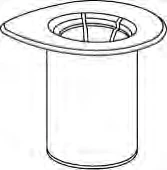 |
|
2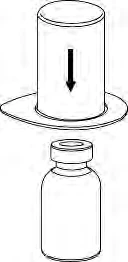 |
|
3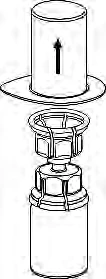 |
|
4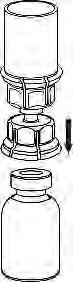 |
|
5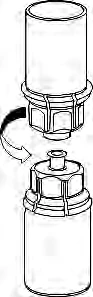 |
|
6 |
|
7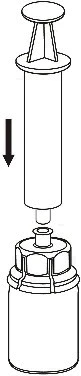 |
|
Collection and application
8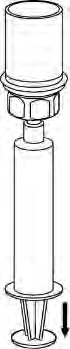 |
|
9 |
|
Use the infusion set supplied with the product, inserting the needle into the vein. Allow the blood to flow toward the distal end of the cannula. Connect the syringe to the threaded end of the infusion kit. It is recommended to use disposable plastic syringes, as solutions of this type tend not to flow properly with the smooth surfaces of glass syringes. Inject/infuse the reconstituted solution slowly (at a rate not exceeding 6 ml/min) intravenously, following the instructions provided by your doctor. Take care to avoid allowing blood to flow back into the syringe containing the product.
If large volumes of Voncento are required, several Voncento vials may be combined using a commercially available infusion set (e.g., a syringe pump for intravenous administration of medications). However, in such cases, the initially reconstituted Voncento solution must not be further diluted.
Be vigilant for any adverse reactions that may occur during administration. If you suspect that any of these adverse reactions may be related to the administration of Voncento, the injection or infusion must be stopped (see also section 2).
If you have any doubts about the use of this medicinal product, consult your doctor or pharmacist.
4. Possible side effects
Like all medicines, Voncento can cause side effects, although not everybody gets them.
Contact your doctor immediately if:
- you notice symptoms of an allergic reaction. In some cases, this may progress to a severe allergic reaction (anaphylaxis) causing serious breathing difficulties, dizziness, or shock. Allergic reactions may include the following symptoms: swelling of the face, tongue, mouth or throat, difficulty breathing or swallowing, hives, wheezing, burning and stinging pain at the infusion site, chills, flushing, rash over the entire body, headache, drop in blood pressure, restlessness, rapid heartbeat, chest tightness (including chest pain and chest discomfort), back pain, fatigue (lethargy), nausea, vomiting, tingling.
- you notice a reduction in the effectiveness of the medicine (bleeding does not stop).
In children who have not previously been treated with factor VIII-containing medicines, the development of inhibitors (see section 2) may be very common (more than 1 in 10 patients); however, in patients who have previously received factor VIII treatment (more than 150 days of treatment), the risk is uncommon (less than 1 in 100). If this occurs, the medicine may stop working properly and you or your child may experience persistent bleeding.
You may develop an inhibitor (neutralizing antibody) to VWF; in this case, VWF will no longer work properly.
- you notice any symptoms suggesting impaired blood flow to the extremities (e.g. cold, pale hands and feet) or to vital organs (e.g. severe chest pain). There is a risk of blood clot formation (thrombosis), particularly in patients with known risk factors (see also section 2).
The following side effect has been observed very commonly (may occur in more than 1 in 10 people):
- Headache
The following side effect has been observed commonly (may occur in up to 1 in 10 people):
- Increase in body temperature
The following side effects have been observed uncommonly (may occur in up to 1 in 100 people):
- Taste disturbance (dysgeusia)
- Abnormal liver function tests
Side effects in children and adolescents
Adverse reactions in children and adolescents are expected to be the same as those in adults.
Reporting of side effects
If you experience any side effects, including those not listed in this leaflet, talk to your doctor, nurse, or pharmacist. You can also report side effects directly through the national reporting system listed in Annex V.
By reporting side effects, you can help provide more information on the safety of this medicine.
5. How to store Voncento
- Keep this medicine out of the sight and reach of children.
- Do not use this medicine after the expiry date stated on the label and packaging.
- Do not store above 25 °C.
- Do not freeze.
- Voncento does not contain preservatives; therefore, the reconstituted product must be used immediately.
- If the reconstituted product is not administered immediately, the storage times and conditions prior to use are under the responsibility of the user.
- Keep the vials in their packaging to protect the medicine from light.
- Do not dispose of any medicine via wastewater or household waste. Ask your pharmacist how to dispose of medicines no longer in use. These measures will help protect the environment.
6. Package contents and other information
What Voncento contains
The active substance is:
250 IU of FVIII and 600 IU of VWF per vial; after reconstitution with 5 ml of water for
injections, approximately 50 IU/ml FVIII and 120 IU/ml VWF are obtained.
500 IU of FVIII and 1200 IU of VWF per vial; after reconstitution with 10 ml of water for
injections, approximately 50 IU/ml FVIII and 120 IU/ml VWF are obtained.
500 IU of FVIII and 1200 IU of VWF per vial; after reconstitution with 5 ml of water for
injections, approximately 100 IU/ml FVIII and 240 IU/ml VWF are obtained.
1000 IU of FVIII and 2400 IU of VWF per vial; after reconstitution with 10 ml of water for
injections, approximately 100 IU/ml FVIII and 240 IU/ml VWF are obtained.
For further information, see section “The following information is intended exclusively for
healthcare professionals”.
The other ingredients are:
Calcium chloride, human albumin, sodium chloride, sodium citrate, sucrose, trometamol.
See section 2 “Voncento contains sodium”.
Solvent: Water for injections
Description of the appearance of Voncento and contents of the pack
Voncento is supplied as a white powder together with solvent for solution for injection/infusion.
The reconstituted solution should be clear to slightly opalescent; it may shimmer when exposed to light but must not contain visible particles.
The primary container of the product plus solvent consists of a glass vial with a rubber stopper, a plastic disc, and an aluminium cap.
Pack sizes
A pack containing 250 IU/600 IU or 500 IU/1200 IU includes:
1 vial with powder
1 vial with 5 ml of water for injections
1 transfer device with 20/20 filter
An inner carton containing:
1 single-use 10 ml syringe
1 intravenous injection set
2 alcohol swabs
1 non-sterile plaster
A pack containing 500 IU/1200 IU or 1000 IU/2400 IU includes:
1 vial with powder
1 vial with 10 ml of water for injections
1 transfer device with 20/20 filter
An inner carton containing:
1 single-use 10 ml syringe
1 intravenous injection set
2 alcohol swabs
1 non-sterile plaster
Not all pack sizes may be marketed.
Marketing Authorisation Holder and Manufacturer
CSL Behring GmbH
Emil-von-Behring-Straße 76
35041 Marburg
Germany
For any information regarding this medicinal product, please contact the local representative of the Marketing Authorisation Holder.
België/Belgique/Belgien Lietuva
CSL Behring NV CentralPharma Communications UAB
Tél/Tel: +32 15 28 89 20 Tel: +370 5 243 0444
България Luxembourg/Luxemburg
МагнаФарм България CSL Behring NV
Тел: +359 2 810 3949 Tél/Tel: +32 15 28 89 20 (BE)
Česká republika Magyarország
CSL Behring s.r.o. CSL Behring Kft.
Tel: +420 702 137 233 Tel.: +36 1 213 4290
Danmark Malta
CSL Behring AB AM Mangion Ltd.
Tel: +46 8 544 966 70 Tel: +356 2397 6333
Deutschland Nederland
CSL Behring GmbH CSL Behring BV
Tel: +49 69 30584437 Tel: +31 85 111 96 00
Eesti Norge
CentralPharma Communications OÜ CSL Behring AB
Tel: +372 6015540 Tlf: +46 8 544 966 70
Ελλάδα Österreich
CSL Behring ΕΠΕ CSL Behring GmbH
Τηλ: +30 210 7255 660 Tel: +43 1 80101 2463
España Polska
CSL Behring S.A. CSL Behring sp. z o.o.
Tel: +34 933 67 1870 Tel: +48 22 213 22 65
France Portugal
CSL Behring S.A. CSL Behring Lda
Tél: +33 –(0)-1 53 58 54 00 Tel: +351 21 782 62 30
Hrvatska România
PharmaSwiss d.o.o. Prisum International Trading srl
Tel: +385 (1) 631-1833 Tel: +40 21 322 0171
Ireland Slovenija
CSL Behring GmbH NEOX s.r.o.-podružnica v Sloveniji
Tel: +49 69 30517254 Tel: +386 41 42 0002
Ísland Slovenská republika
CSL Behring AB CSL Behring s.r.o.
Sími: +46 8 544 966 70 Tel: +421 911 653 862
Italia Suomi/Finland
CSL Behring S.p.A. CSL Behring AB
Tel: +39 02 34964 200 Puh/Tel: +46 8 544 966 70
Κύπρος Sverige
CSL Behring ΕΠΕ CSL Behring AB
Τηλ: +30 210 7255 660 Tel: +46 8 544 966 70
Latvija United Kingdom (Northern Ireland)
CentralPharma Communications SIA CSL Behring GmbH
Tel: +371 6 7450497 Tel: +49 69 30517254 (DE)
Detailed information on this medicinal product is available on the European Medicines Agency website: http://www.ema.europa.eu.
The following information is intended exclusively for healthcare professionals.
Dosage
Von Willebrand Disease
It is important to calculate the dose using the number of International Units (IU) of VWF:RCo specified.
Generally, administration of 1 IU/kg of VWF:RCo results in an increase of circulating VWF:RCo by 0.02 IU/mL (2%).
VWF:RCo levels > 0.6 IU/mL (60%) and FVIII:C levels > 0.4 IU/mL (40%) should be achieved.
On-demand treatment
Typically, to achieve haemostasis, administration of 40–80 IU/kg of VWF (VWF:RCo), corresponding to 20–40 IU of FVIII:C/kg body weight, is recommended.
An initial dose of 80 IU/kg of VWF:RCo may be necessary, especially in patients with Type 3 VWF, in whom maintaining adequate VWF:RCo levels may require higher doses compared to other types of VWD.
Prevention of bleeding during surgical procedures:
To prevent excessive bleeding during or after surgery, administration should begin 1–2 hours before the procedure.
An appropriate dose should then be repeated every 12–24 hours. The dose and duration of treatment depend on the individual patient's clinical condition, the type and severity of bleeding, and VWF:RCo and FVIII:C levels.
When using VWF-containing preparations that also contain FVIII, the physician should be aware that prolonged treatment may lead to excessive increases in FVIII:C levels. To avoid uncontrolled elevation of FVIII:C, after 24–48 hours of treatment it may be advisable to reduce the dose and/or increase the interval between administrations, or consider using a VWF product containing low levels of FVIII.
Prophylactic treatment
For long-term prophylaxis in patients with VWD, a dose of 25–40 IU VWF:RCo/kg body weight should be considered, administered 1–3 times weekly. In patients with gastrointestinal bleeding or menorrhagia, shorter intervals or higher doses may be required. The dose and duration of treatment will depend on the patient's clinical condition as well as plasma levels of VWF:RCo and FVIII:C.
Paediatric population with VWD
Bleeding treatment
Usually, 40–80 IU/kg of von Willebrand factor (VWF:RCo), corresponding to 20–40 IU FVIII:C/kg body weight, is recommended in paediatric patients for treatment of bleeding.
Prophylactic treatment
Patients aged 12 to 18 years: Dosing should follow the same guidelines as for adults.
Patients aged <12 years: Based on results from a clinical study in which paediatric patients under 12 years of age showed lower VWF exposure, a prophylactic dose of 40–80 IU VWF:RCo/kg body weight, administered 1 to 3 times weekly, should be considered.
The dose and duration of treatment will depend on the patient's clinical condition and plasma levels of VWF:RCo and FVIII:C.
Haemophilia A
It is important to calculate the dose using the number of specified IU of FVIII:C.
The dose and duration of replacement therapy depend on the severity of FVIII deficiency, the location and extent of bleeding, and the patient's clinical condition.
The number of units of factor VIII to be administered is expressed in International Units (IU), referencing the current WHO standard for factor VIII products.
Factor VIII activity in plasma is expressed either as a percentage (relative to normal human plasma) or preferably in International Units (in accordance with the International Standard for FVIII in plasma).
1 IU of FVIII activity is equivalent to the amount of factor VIII contained in 1 mL of normal human plasma.
On-demand treatment
The calculation of the required factor VIII dose is based on the empirical finding that 1 IU of factor VIII per kg body weight increases plasma factor VIII activity by approximately 2% of normal activity (in vivo recovery: 2 IU/dL). The required dose is determined using the following formula:
Units required = body weight [kg] × desired increase in factor VIII [% or IU/dL] × 0.5.
The amount and frequency of administration should always be guided by clinical efficacy in the individual case.
In the case of the following bleeding episodes, factor VIII activity must not fall below the indicated plasma activity level (% of normal or IU/dL) during the corresponding period. The following table may be used as a reference for dosing in the case of bleeding events or surgical procedures:
| Severity of bleeding / Type of surgical intervention | Required Factor VIII level (% or IU/dl) | Dosing frequency (hours) / Duration of therapy (days) |
| Bleeding | ||
| Early haemarthrosis, intramuscular or oral cavity bleeding | 20 - 40 | Repeat infusion every 12-24 hours for at least 1 day until resolution of bleeding episode or healing, confirmed by cessation of pain. |
| More extensive haemarthrosis, intramuscular bleeding or haematomas | 30 - 60 | Repeat infusion every 12-24 hours for 3-4 days or more until resolution of pain and acute disability. |
| Life-threatening bleeding | 60 - 100 | Repeat infusion every 8-24 hours until the risk has subsided. |
| Surgery | ||
| Minor surgery, including dental extractions | 30 - 60 | Repeat infusion every 24 hours for at least 1 day, until healing is achieved. |
| Major surgery | 80 – 100 (pre- and postoperative) | Repeat infusion every 8-24 hours until adequate wound healing is achieved; thereafter continue therapy for at least 7 days to maintain Factor VIII activity between 30-60% (IU/dl). |
Monitoring of treatment
During treatment, appropriate determination of factor VIII levels is recommended in order to establish the dose to be administered and the frequency of repeated infusions. Individual patients may show variability in their response to factor VIII, with different recovery levels and half-lives. Dose adjustments based on body weight may be considered in underweight or overweight patients. In particular, during major surgical procedures, careful monitoring of replacement therapy is essential, through assessment of coagulation parameters (plasma factor VIII activity).
Prophylactic treatment
For long-term prophylaxis in patients with severe haemophilia A, the usual dose is 20 to 40 IU of FVIII per kg of body weight, administered every 2 to 3 days. In some cases, particularly in younger patients, more frequent administration or higher doses may be required.
Paediatric population in haemophilia A
Dosing in haemophilia A in children and adolescents < 18 years of age is based on body weight and is therefore generally based on the same guidelines used for adults. In some cases, shorter intervals between doses or higher doses may be necessary. The frequency of administration should always be guided by clinical efficacy in the individual case.
Elderly
No dose adjustment is required for the elderly population.