Verolax
Italy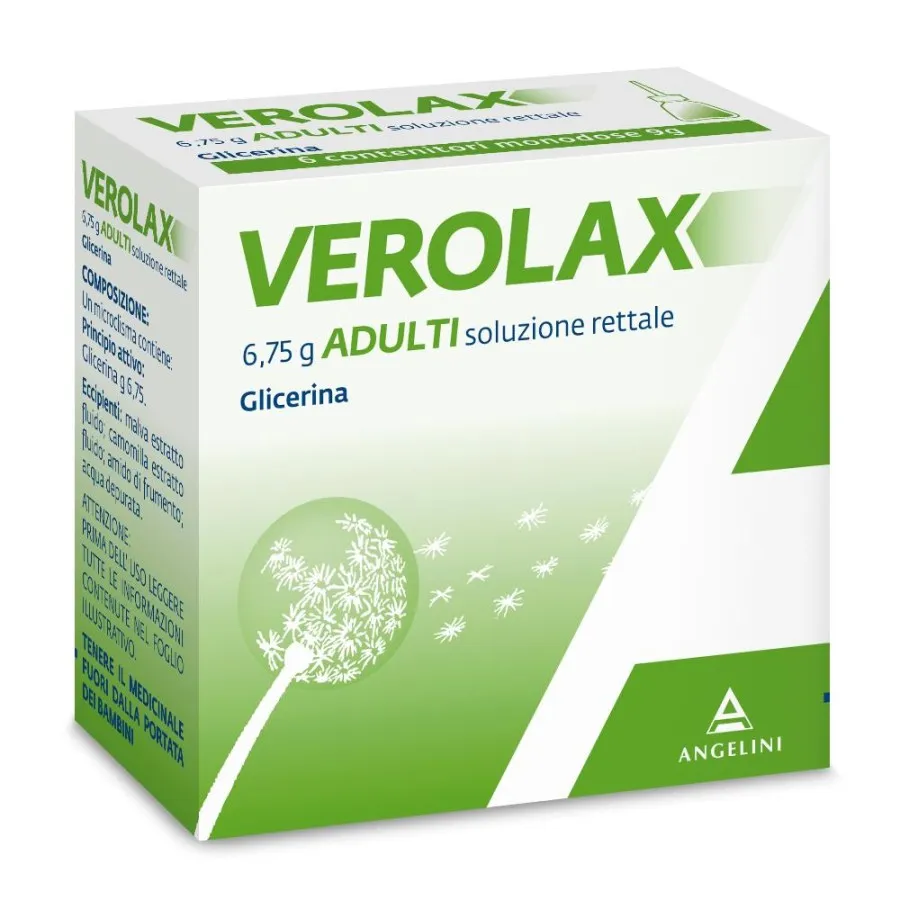
Instructions for Use
Table of Contents
- VEROLAX 2.25 g Adults, suppositories
- 1. What VEROLAX is and what it is used for
- 2. What you need to know before using VEROLAX
- 3. How to use VEROLAX
- 4. Possible side effects
- 5. How to store VEROLAX
- 6. Package contents and other information
- Patient Information Leaflet
- VEROLAX 1.375 g Children, suppositories
- 1. What VEROLAX is and what it is used for
- 2. What you should know before using VEROLAX
- 3. How to use VEROLAX
- 4. Possible side effects
- 5. How to store VEROLAX
- 6. Package contents and other information
- Patient information leaflet
- VEROLAX 0.675 g Infant Suppositories
- 1. What VEROLAX is and what it is used for
- 2. What you need to know before using VEROLAX
- 3. How to use VEROLAX
- 4. Possible side effects
- 5. How to store VEROLAX
- 6. Package contents and other information
- Patient information leaflet
- VEROLAX 6.75 g Adults, rectal solution
- 1. What VEROLAX is and what it is used for
- 2. What you need to know before using VEROLAX
- 3. How to use VEROLAX
- 4. Possible side effects
- 5. How to store VEROLAX
- 6. Package contents and other information
- Package leaflet: information for the patient
- VEROLAX 2.25 g Children, rectal solution
- 1. What VEROLAX is and what it is used for
- 2. What you should know before using VEROLAX
- 3. How to use VEROLAX
- 4. Possible side effects
- 5. How to store VEROLAX
- 6. Package Contents and Other Information
Package leaflet: Information for the patient
VEROLAX 2.25 g Adults, suppositories
Glycerol
Please read this leaflet carefully before using this medicine because it contains important information for you.
Use this medicine exactly as described in this leaflet or as your doctor or pharmacist has instructed.
- Keep this leaflet. You may need to read it again.
- If you need more information or advice, consult your pharmacist.
- If you experience any side effects, including those not listed in this leaflet, consult your doctor or pharmacist. See section 4.
- Consult your doctor if you do not notice any improvement or if you experience worsening of symptoms after a short period of treatment.
Contents of this leaflet:
- What VEROLAX is and what it is used for
- What you need to know before using VEROLAX
- How to use VEROLAX
- Possible side effects
- How to store VEROLAX
- Contents of the pack and other information
1. What VEROLAX is and what it is used for
VEROLAX contains glycerin, which helps facilitate the evacuation of feces. The laxative effect is achieved thanks to glycerin's ability to soften the stool and locally stimulate intestinal motility.
This medicine is indicated for the treatment of constipation.
Consult your doctor if you do not feel better or if you feel worse after a short period of treatment.
2. What you need to know before using VEROLAX
Do not use VEROLAX if:
- you are allergic to the active substance or to any of the other ingredients of this medicine (listed in section 6);
- you have nausea or vomiting, intestinal obstruction or narrowing (stenosis), or any abdominal pain of unknown cause;
- you have rectal bleeding or problems affecting the rectum and/or anus, such as hemorrhoid inflammation or hemorrhagic rectocolitis;
- you are in a severe state of dehydration characterized by dry and sticky mouth, thirst, reduced urine output, absence or reduction of tears, and dry skin.
Warnings and precautions
Talk to your doctor or pharmacist before using Verolax.
Laxatives should be used as infrequently as possible and for no longer than 7 days; use for longer periods requires a doctor's prescription. During treatment, drink at least 6–8 glasses of water or other fluids to help soften the stools.
Do not take laxatives if you have abdominal pain, nausea, or vomiting.
Abuse of laxatives may lead to tolerance (possibly requiring progressively higher doses), chronic constipation, and loss of normal bowel function (intestinal atony). Moreover, laxative abuse may cause persistent diarrhea, resulting in loss of body water (dehydration), mineral salts—especially potassium (hypokalemia)—and other essential nutrients. Loss of mineral salts causes imbalances in blood electrolytes, characterized by symptoms such as thirst, vomiting, weakness, edema, bone pain (osteomalacia), and hypoalbuminemia. More serious side effects include heart and muscle dysfunction, particularly if you are concurrently taking certain heart medications (cardiac glycosides), diuretics, or corticosteroids.
Consult your doctor before using VEROLAX:
- if you are elderly or in poor general health;
- if your need for a laxative is due to a sudden change in previous bowel habits (frequency and characteristics of bowel movements) lasting for more than two weeks. If the laxative does not produce an effect after a short period of treatment, consult your doctor.
Other medicines and VEROLAX
Inform your doctor or pharmacist if you are taking, have recently taken, or might take any other medicines.
Pregnancy and breastfeeding
If you are pregnant, suspect you may be pregnant, planning a pregnancy, or breastfeeding, consult your doctor or pharmacist before using this medicine.
Driving and using machines
This medicine does not affect the ability to drive or operate machinery.
3. How to use VEROLAX
Use this medicine exactly as stated in this leaflet or as instructed by your doctor or pharmacist. If you have any doubts, consult your doctor or pharmacist.
The correct dose is the lowest dose that produces easy passage of soft stools. It is advisable to initially use the lowest recommended doses.
Laxatives should be used as infrequently as possible and for no longer than 7 days. A diet rich in fluids helps the effect of the medicine.
Adults and adolescents (12–18 years)
The recommended dose is 1 suppository, 1 or at most 2 times daily.
Use only for short-term treatment.
Method of administration
Insert the suppository rectally.
VEROLAX can be used at any time of day.
If you use more VEROLAX than you should
Cases of overdose have not been reported. However, excessive doses (laxative abuse, frequent or prolonged use, or high doses) may cause abdominal pain and diarrhoea, with loss of fluids and electrolytes. These losses should be compensated by drinking water or other fluids.
In case of accidental ingestion/overdose of VEROLAX, inform your doctor immediately or go to the nearest hospital.
4. Possible side effects
Like all medicines, this medicine can cause side effects, although not everyone experiences them.
Usually, side effects related to VEROLAX affect the stomach and intestine (gastrointestinal).
Inform your doctor if you experience the following symptoms:
- Cramping pain (localized or widespread in the abdomen);
- Intermittent abdominal pain (colic);
- Diarrhoea;
- Redness with burning or pain (irritation) in the rectal area.
Reporting of suspected adverse reactions
Reporting suspected adverse reactions after a medicine has been authorised is important, as it allows continued monitoring of the benefit/risk balance of the medicine. Healthcare professionals are requested to report any suspected adverse reactions via the national reporting system at the following website:
https://www.aifa.gov.it/content/segnalazioni-reazioni-avverse.
5. How to store VEROLAX
Keep this medicine out of the sight and reach of children.
This medicine does not require any special storage conditions.
Do not use this medicine after the expiry date stated on the packaging. The expiry date refers to the last day of that month.
Do not dispose of any medicine via wastewater or household waste. Ask your pharmacist how to dispose of medicines no longer required. This will help protect the environment.
6. Package contents and other information
What VEROLAX contains
The active substance is: glycerol.
VEROLAX 2.25 g Adults contains 2.25 g of glycerol.
The other components are: sodium stearate, sodium carbonate.
Description of the appearance of VEROLAX and contents of the pack
VEROLAX 2.25 g Adults is available in a pack containing 18 suppositories.
Marketing Authorization Holder
Aziende Chimiche Riunite Angelini Francesco – A.C.R.A.F. S.p.A., Viale Amelia 70 - 00181 Rome
Manufacturer
A.C.R.A.F. S.p.A., Via Vecchia del Pinocchio 22 - 60131 Ancona
Laboratorio Chimico Farmaceutico A. Sella S.r.l., via Vicenza, 67 - 36015 Schio (VI)
N D E S
Constipation is a condition with various possible causes, ranging from an improper and unbalanced diet to
inadequate intake of water, vegetables, fruits, and cereals, resulting in reduced stool volume and hardening of feces.
Lack of physical activity and sedentary lifestyle, as well as other factors such as anxiety or pregnancy, can
increase the risk of constipation.
In most cases, engaging in daily physical exercise (even just walking), increasing daily water intake (about 2 liters per day), and consuming more vegetables, especially leafy greens (lettuce, spinach, chicory, chard, artichokes, etc.), can permanently resolve constipation problems.
Before using laxatives, it is advisable to correct dietary habits by ensuring adequate daily intake of dietary fiber and water.
Patient Information Leaflet
VEROLAX 1.375 g Children, suppositories
Glycerol
Please read this leaflet carefully before using this medicine because it contains important information for you.
Use this medicine exactly as described in this leaflet or as your doctor or pharmacist has instructed you.
- Keep this leaflet. You may need to read it again.
- If you would like more information or advice, consult your pharmacist.
- If you experience any of the side effects, including those not listed in this leaflet, contact your doctor or pharmacist. See section 4.
- Contact your doctor if you do not notice any improvement or if you experience worsening of symptoms after a short period of treatment.
Contents of this leaflet:
- What VEROLAX is and what it is used for
- What you need to know before using VEROLAX
- How to use VEROLAX
- Possible side effects
- How to store VEROLAX
- Package contents and other information
1. What VEROLAX is and what it is used for
VEROLAX contains glycerin, which helps facilitate the evacuation of stools. The laxative effect is achieved due to glycerin's ability to soften the stools and locally stimulate intestinal motility.
This medicinal product is indicated for the treatment of constipation.
Consult your doctor if your child does not feel better or feels worse after a short period of treatment.
2. What you should know before using VEROLAX
Do not administer VEROLAX to your child if:
- he/she is allergic to the active substance or to any of the other ingredients of this medicine (listed in section 6);
- he/she has nausea or vomiting, intestinal obstruction or narrowing (stenosis), or any condition causing abdominal pain of unknown origin;
- he/she has rectal or anal bleeding or disorders such as hemorrhoidal inflammation or hemorrhagic colitis;
- he/she is in a severe state of dehydration characterized by dry and sticky mouth, thirst, reduced urination, absence or reduction of tears, and dry skin.
Warnings and precautions
Talk to your doctor or pharmacist before administering Verolax to your child.
Laxatives should be used as infrequently as possible and for no longer than 7 days. Use in children under 12 years of age or for longer than the recommended duration requires a doctor's prescription. During treatment, ensure your child drinks at least 6–8 glasses of water or other fluids to help soften the stools.
Do not administer laxatives to your child if abdominal pain, nausea, or vomiting are present.
Follow your doctor’s instructions when administering VEROLAX to your child, as prolonged use may lead to tolerance (possibly requiring progressive dose increases), chronic constipation, and loss of normal intestinal function (intestinal atony). In addition, abuse may cause persistent diarrhea, resulting in loss of water (dehydration), mineral salts—especially potassium (hypokalemia)—and other essential nutrients. Loss of mineral salts causes imbalances in blood ions (electrolyte disturbances), characterized by symptoms such as thirst, vomiting, weakness, edema, bone pain (osteomalacia), and hypoalbuminemia. More serious adverse effects include heart and muscle dysfunction, particularly if the child is concurrently taking certain heart medications (cardiac glycosides), diuretics, or corticosteroids.
Consult your doctor before using VEROLAX:
- if the need for a laxative arises from a sudden change in previous bowel habits (frequency and characteristics of bowel movements) lasting more than two weeks.
If the laxative does not produce an effect in your child after a short period of treatment, consult your doctor again.
Other medicines and VEROLAX
Inform your doctor or pharmacist if your child is taking, has recently taken, or might take any other medicines.
Pregnancy and breastfeeding
This medicine is intended exclusively for use in children.
Driving and using machines
This medicine is intended exclusively for use in children.
3. How to use VEROLAX
Administer this medicine to your child exactly as stated in this leaflet and according to the instructions of the doctor or pharmacist. If you have any doubts, consult the doctor or pharmacist.
The correct dose is the lowest one sufficient to produce easy evacuation of soft stools. It is advisable to initially use the minimum recommended doses.
Laxatives should be used as infrequently as possible and for no longer than 7 days. A diet rich in fluids enhances the effect of the medicine.
Children
The recommended dose is 1 children’s suppository, once or twice daily.
Use only for short-term treatment.
Method of administration
Insert the suppository rectally.
VEROLAX may be used at any time of day.
If you administer more VEROLAX to your child than you should
No episodes of overdose have been reported. However, excessive doses (laxative abuse, frequent or prolonged use, or high doses) may cause abdominal pain and diarrhea with loss of fluids and electrolytes. Such losses should be replenished by drinking water or other fluids.
In case of accidental ingestion/overdose of a large amount of VEROLAX, inform a doctor immediately or go to the nearest hospital.
4. Possible side effects
Like all medicines, this medicine may cause side effects, although not everybody gets them.
Usually, side effects related to VEROLAX affect the stomach and intestine (gastrointestinal).
Inform your doctor if your child experiences the following symptoms:
- cramping pains (localized or widespread in the abdomen);
- intermittent abdominal pain (colic);
- diarrhoea;
- redness with burning or pain (irritation) in the rectal area
Reporting of suspected adverse reactions
Reporting suspected adverse reactions after a medicine has been authorised is important, as it allows continuous monitoring of the benefit/risk balance of the medicine. Healthcare professionals are asked to report any suspected adverse reactions via the national reporting system at the following website:
https://www.aifa.gov.it/content/segnalazioni-reazioni-avverse.
5. How to store VEROLAX
Keep this medicine out of the sight and reach of children.
This medicine does not require any special storage conditions.
Do not use this medicine after the expiry date stated on the packaging. The expiry date refers to the last day of that month.
Do not dispose of any medicine via wastewater or household waste. Ask your pharmacist how to dispose of medicines you no longer use. This will help protect the environment.
6. Package contents and other information
What VEROLAX contains
The active substance is: glycerol.
VEROLAX 1.375 g Children contains 1.375 g of glycerol.
The other components are: sodium stearate, sodium carbonate.
Description of the appearance of VEROLAX and package contents
VEROLAX 1.375 g Children is available in a pack containing 18 suppositories.
Marketing Authorization Holder
Aziende Chimiche Riunite Angelini Francesco – A.C.R.A.F. S.p.A., Viale Amelia 70 - 00181 Rome
Manufacturer
A.C.R.A.F. S.p.A., Via Vecchia del Pinocchio 22 - 60131 Ancona
Laboratorio Chimico Farmaceutico A. Sella S.r.l., via Vicenza, 67 - 36015 Schio (VI)
N D E S
Constipation is a condition with various possible causes, ranging from an inadequate and unbalanced diet to insufficient intake of water, vegetables, fruits and cereals, resulting in reduced stool volume and hardening of faeces.
Lack of physical activity and sedentary lifestyle, as well as other factors such as anxiety or pregnancy, may increase the risk of constipation.
In most cases, engaging in daily physical exercise (even just walking), increasing daily water intake (about 2 litres per day) and consuming more vegetables, especially leafy greens (lettuce, spinach, chicory, chard, artichokes, etc.), can provide a lasting solution to constipation.
Before using laxatives, it is advisable to correct dietary habits by ensuring an adequate daily intake of fibre and water.
Patient information leaflet
VEROLAX 0.675 g Infant Suppositories
Glycerol
Please read this leaflet carefully before using this medicine, as it contains important information for you.
Use this medicine exactly as described in this leaflet or as your doctor or pharmacist has instructed you.
- Keep this leaflet. You may need to read it again.
- If you would like more information or advice, consult your pharmacist.
- If you experience any side effects, including those not listed in this leaflet, consult your doctor or pharmacist. See section 4.
- Consult your doctor if you do not notice any improvement or if your symptoms worsen after a short period of treatment.
Contents of this leaflet:
- What VEROLAX is and what it is used for
- What you need to know before using VEROLAX
- How to use VEROLAX
- Possible side effects
- How to store VEROLAX
- Contents of the pack and other information
1. What VEROLAX is and what it is used for
VEROLAX contains glycerin, which helps facilitate the evacuation of stools. The laxative effect is achieved due to glycerin's ability to soften the stools and locally stimulate intestinal motility.
This medicine is indicated for the treatment of constipation.
Consult your doctor if your child does not feel better or feels worse after a short period of treatment.
2. What you need to know before using VEROLAX
Do not give VEROLAX to your child if:
- he/she is allergic to the active substance or to any of the other ingredients of this medicine (listed in section 6);
- he/she has nausea or vomiting, intestinal obstruction or narrowing (stenosis), or any abdominal pain of unknown cause;
- he/she has rectal bleeding or problems of the rectum and/or anus, such as hemorrhoid inflammation or hemorrhagic colitis;
- he/she is in a severe state of dehydration, characterized by dry and sticky mouth, thirst, low urine output, absence or reduced tear production, and dry skin.
Warnings and precautions
Talk to your doctor or pharmacist before giving Verolax to your child.
Laxatives should be used as infrequently as possible and for no longer than 7 days. Use in children
under 12 years of age and for periods longer than those recommended requires a doctor's prescription.
During treatment, ensure your child drinks enough water or other fluids to help soften the stools.
Do not give laxatives to your child if abdominal pain, nausea, or vomiting occur. Follow your doctor’s
instructions when administering VEROLAX to your child, because prolonged use may lead to tolerance
(with the possible need to gradually increase the dosage), chronic constipation, and loss of normal
intestinal function (intestinal atony). In addition, abuse may cause persistent diarrhea, resulting in loss of water (dehydration), minerals—especially potassium (hypokalemia)—and other essential nutrients, a condition particularly dangerous in infants.
Loss of mineral salts causes imbalances in blood ions (electrolyte disturbances), characterized by symptoms such as thirst, vomiting, weakness, edema, bone pain (osteomalacia), and hypoalbuminemia. More serious adverse effects include heart and muscle dysfunction, especially if the child is simultaneously being treated with certain heart medications (cardiac glycosides), diuretics, or corticosteroids.
If the use of the laxative fails to produce an effect in your child after a short period of treatment, consult your doctor again.
Other medicines and VEROLAX
Inform your doctor or pharmacist if your child is taking, has recently taken, or might take any other medicines.
Pregnancy and breastfeeding
This medicine is intended exclusively for use in children and infants.
Driving and using machines
This medicine is intended exclusively for use in children and infants.
3. How to use VEROLAX
Administer this medicine to your child exactly as stated in this leaflet and according to the instructions given by the doctor or pharmacist. If you have any doubts, consult the doctor or pharmacist.
The correct dose is the lowest amount needed to produce an easy evacuation of soft stools. It is advisable to initially use the minimum recommended doses.
Laxatives should be used as infrequently as possible and for no longer than 7 days. A diet rich in fluids helps enhance the effect of the medicine.
Infants
The recommended dose is 0.5 suppository for infants per day.
Use only for short-term treatment.
Method of administration
Insert the suppository rectally.
VEROLAX can be used at any time of the day.
If you give your child more VEROLAX than you should
Cases of overdose have not been reported. However, excessive doses (laxative abuse, frequent or prolonged use, or high doses) may cause abdominal pain and diarrhea, with loss of fluids and electrolytes. These losses should be replaced by drinking water or other fluids.
In case of accidental ingestion/overdose of VEROLAX, immediately inform the doctor or go to the nearest hospital.
4. Possible side effects
Like all medicines, this medicine may cause side effects, although not everybody gets them.
Usually, side effects related to VEROLAX affect the stomach and intestine (gastrointestinal).
Inform your doctor if your child experiences the following symptoms:
- cramping pain (localized or widespread in the abdomen);
- intermittent abdominal pain (colic);
- diarrhoea;
- redness with burning or pain (irritation) in the rectal area.
Reporting of side effects
Reporting suspected adverse reactions after a medicine has been authorised is important, as it allows continuous monitoring of the benefit-risk balance of the medicine. Healthcare professionals are encouraged to report any suspected adverse reactions via the national reporting system at the following website:
https://www.aifa.gov.it/content/segnalazioni-reazioni-avverse.
5. How to store VEROLAX
Keep this medicine out of the sight and reach of children.
This medicine requires no special storage conditions.
Do not use this medicine after the expiry date stated on the packaging.
The expiry date refers to the last day of that month.
Do not dispose of any medicine via wastewater or household waste. Ask your pharmacist how to
dispose of medicines you no longer use. This will help protect the environment.
6. Package contents and other information
What VEROLAX contains
The active substance is: glycerin.
VEROLAX 0.675 g Lactuli contains 0.675 g of glycerin.
The other components are: sodium stearate, sodium carbonate.
Description of the appearance of VEROLAX and contents of the pack
VEROLAX 0.675 g Lactuli is available in a pack containing 12 suppositories.
Marketing Authorization Holder
Aziende Chimiche Riunite Angelini Francesco – A.C.R.A.F. S.p.A., Viale Amelia 70 - 00181 Rome
Manufacturer
A.C.R.A.F. S.p.A., Via Vecchia del Pinocchio 22 - 60131 Ancona
N D E S
Constipation is a condition with various possible causes, ranging from an inadequate and unbalanced diet to insufficient intake of water, vegetables, fruits, and cereals, resulting in reduced stool volume and hardening of feces.
Lack of physical activity and sedentary lifestyle, as well as other factors such as anxiety or pregnancy, can increase the risk of constipation.
In most cases, engaging in daily physical exercise (even just walking), and increasing daily water intake (about 2 liters per day) and consumption of vegetables—especially leafy greens (lettuce, spinach, chicory, chard, artichokes, etc.)—can provide a lasting solution to constipation.
Before using laxatives, it is advisable to correct dietary habits by ensuring an adequate daily intake of fiber and water.
Patient information leaflet
VEROLAX 6.75 g Adults, rectal solution
Glycerol
Please read this leaflet carefully before using this medicine because it contains important information for you.
Always use this medicine exactly as described in this leaflet or as your doctor or pharmacist has instructed.
- Keep this leaflet. You may need to read it again.
- If you need more information or advice, consult your pharmacist.
- If you experience any side effects, including those not listed in this leaflet, contact your doctor or pharmacist. See section 4.
- Contact your doctor if you do not notice any improvement or if your symptoms worsen after a short period of treatment.
Contents of this leaflet:
- What VEROLAX is and what it is used for
- What you need to know before using VEROLAX
- How to use VEROLAX
- Possible side effects
- How to store VEROLAX
- Contents of the pack and other information
1. What VEROLAX is and what it is used for
VEROLAX contains glycerin, which helps facilitate the evacuation of stools. The laxative effect is achieved due to glycerin's ability to soften the stools and locally stimulate intestinal motility.
This medicinal product is indicated for the treatment of constipation.
Consult your doctor if you do not feel better or if you feel worse after a short period of treatment.
2. What you need to know before using VEROLAX
Do not use VEROLAX if:
- you are allergic to the active substance or to any of the other ingredients of this medicine (listed in section 6);
- you have nausea or vomiting, intestinal obstruction or narrowing (stenosis), or any abdominal pain of unknown cause;
- you have rectal or anal bleeding or disorders such as hemorrhoidal inflammation or hemorrhagic rectocolitis;
- you are in a severe state of dehydration characterized by dry and sticky mouth, thirst, reduced urine output, absence or reduced tears, and dry skin.
Warnings and precautions
Talk to your doctor or pharmacist before using Verolax.
Laxatives should be used as infrequently as possible and for no longer than 7 days; use for longer periods requires a doctor's prescription. During treatment, drink at least 6–8 glasses of water or other fluids to help soften the stools.
Do not use laxatives if you have stomach pain, nausea, or vomiting.
Abuse of laxatives may lead to tolerance (possibly requiring progressively higher doses), chronic constipation, and loss of normal intestinal function (intestinal atony). In addition, abuse may cause persistent diarrhea resulting in loss of water (dehydration), mineral salts—especially potassium (hypokalaemia)—and other essential nutrients. Loss of mineral salts causes imbalances in blood ions (electrolyte disturbances), characterized by symptoms such as thirst, vomiting, weakness, edema, bone pain (osteomalacia), and hypoalbuminemia. More serious adverse effects include heart and muscle dysfunction, particularly if you are also taking certain heart medications (cardiac glycosides), diuretics, or corticosteroids.
Talk to your doctor before using VEROLAX:
- if you are elderly or in poor general health;
- if the need for a laxative arises from a sudden change in your previous bowel habits (frequency and characteristics of bowel movements) lasting for more than two weeks.
If using the laxative does not produce results after a short period of treatment, consult your doctor.
Other medicines and VEROLAX
Inform your doctor or pharmacist if you are taking, have recently taken, or might take any other medicines.
Pregnancy and breastfeeding
If you are pregnant, suspect you may be pregnant, planning a pregnancy, or breastfeeding, consult your doctor or pharmacist before using this medicine.
Driving and using machines
This medicine does not affect the ability to drive or operate machinery.
3. How to use VEROLAX
Use this medicine exactly as described in this leaflet or as directed by your doctor or pharmacist. If you are unsure, consult your doctor or pharmacist.
The correct dose is the lowest amount needed to produce an easy evacuation of soft stools. It is advisable to start with the lowest recommended dose.
Laxatives should be used as infrequently as possible and for no longer than 7 days. A diet rich in fluids helps enhance the effect of the medicine.
Adults and adolescents (12–18 years)
The recommended dose is 1 single-dose container, 1 or at most 2 times daily.
If you have not had a bowel movement for more than two weeks (persistent constipation), your doctor may advise you to use 2 doses simultaneously.
Use only for short-term treatment.
Method of administration
VEROLAX can be used at any time of day.
- Hold the collar and twist the cap to break the seal

- Lift the cap; during both steps, do NOT hold the bulb, to avoid leakage of the medicine upon opening
- Lubricate the cannula with a drop of the solution itself
- Insert the cannula into the rectum and squeeze the bulb
- Withdraw while keeping the bulb squeezed and then discard.
If you use more VEROLAX than you should
No cases of overdose have been reported. However, excessive doses (laxative abuse, frequent or prolonged use, or high doses) may cause abdominal pain and diarrhea, with loss of fluids and electrolytes. These losses should be replenished by drinking water or other fluids.
In case of accidental ingestion or overdose of VEROLAX, contact your doctor immediately or go to the nearest hospital.
4. Possible side effects
Like all medicines, this medicine can cause side effects, although not everybody gets them.
Usually, side effects related to VEROLAX affect the stomach and intestine (gastrointestinal).
Inform your doctor if you experience the following symptoms:
- Cramping pain (localized or widespread in the abdomen);
- Intermittent abdominal pain (colic);
- Diarrhea;
- Redness with burning or pain (irritation) in the rectal area
Reporting of suspected adverse reactions
Reporting suspected adverse reactions occurring after the medicine has been authorized is important, as it allows continuous monitoring of the benefit-risk balance of the medicine. Healthcare professionals are required to report any suspected adverse reactions via the national reporting system at the following website:
https://www.aifa.gov.it/content/segnalazioni-reazioni-avverse.
5. How to store VEROLAX
Keep this medicine out of the sight and reach of children.
This medicine does not require any special storage conditions.
Do not use this medicine after the expiry date stated on the packaging. The expiry date refers to the last day of that month.
Do not dispose of any medicine via wastewater or household waste. Ask your pharmacist how to dispose of medicines you no longer use. This will help protect the environment.
6. Package contents and other information
What VEROLAX contains
The active substance is: glycerin.
VEROLAX 6.75 g Adults contains 6.75 g of glycerin.
The other components are: marshmallow fluid extract, chamomile fluid extract, wheat starch, purified water.
Description of the appearance of VEROLAX and package contents
VEROLAX 6.75 g Adults is available in a package containing 6 single-dose containers of 9 g each.
Marketing Authorization Holder
Aziende Chimiche Riunite Angelini Francesco – A.C.R.A.F. S.p.A., Viale Amelia 70 - 00181 Rome
Manufacturer
A.C.R.A.F. S.p.A., Via Vecchia del Pinocchio 22 - 60131 Ancona
N D E S
Constipation is a condition with various possible causes, ranging from incorrect and unbalanced diet to insufficient intake of water, vegetables, fruits, and cereals, resulting in reduced stool volume and hardening of feces.
Lack of physical activity and sedentary lifestyle, as well as other factors such as anxiety, anger, resentment, or pregnancy, may increase the risk of constipation.
In most cases, practicing physical exercise daily (even just walking), increasing daily water intake (about 2 liters per day), and including more vegetables—especially leafy greens (lettuce, spinach, chicory, chard, artichokes, etc.)—in the diet can permanently resolve constipation.
Before using laxatives, it is advisable to correct dietary habits by integrating the daily diet with an adequate intake of fiber and water.
Package leaflet: information for the patient
VEROLAX 2.25 g Children, rectal solution
Glycerol
Please read this leaflet carefully before using this medicine because it contains important information for you.
Use this medicine exactly as described in this leaflet or as your doctor or pharmacist has instructed you.
- Keep this leaflet. You may need to read it again.
- If you need more information or advice, consult your pharmacist.
- If any side effects occur, including those not listed in this leaflet, contact your doctor or pharmacist. See section 4.
- Contact your doctor if you do not notice improvement or if your symptoms worsen after a short period of treatment.
Contents of this leaflet:
- What VEROLAX is and what it is used for
- What you need to know before using VEROLAX
- How to use VEROLAX
- Possible side effects
- How to store VEROLAX
- Contents of the pack and other information
1. What VEROLAX is and what it is used for
VEROLAX contains glycerin, which helps facilitate the evacuation of stools. The laxative effect is achieved due to glycerin's ability to soften the stools and locally stimulate intestinal motility.
This medicine is indicated for the treatment of constipation in children aged between 2 and 12 years.
Consult your doctor if your child does not feel better or feels worse after a short period of treatment.
2. What you should know before using VEROLAX
Do not administer VEROLAX to your child if:
- he/she is allergic to the active substance or to any of the other ingredients of this medicine (listed in section 6);
- he/she has nausea or vomiting, intestinal obstruction or narrowing (stenosis), or any condition causing abdominal pain of unknown origin;
- he/she has rectal bleeding or problems affecting the rectum and/or anus, such as hemorrhoidal inflammation or hemorrhagic colitis;
- he/she is severely dehydrated, which manifests as dry and sticky mouth, thirst, reduced urination, absence or reduced tear production, and dry skin.
Warnings and precautions
Talk to your doctor or pharmacist before administering Verolax to your child.
Laxatives should be used as infrequently as possible and for no longer than 7 days. Their use in children under 12 years of age and for longer periods than recommended requires a doctor's prescription. During treatment, ensure your child drinks at least 6–8 glasses of water or other fluids to help soften the stools.
Do not administer laxatives to your child if abdominal pain, nausea, or vomiting are present.
Follow your doctor’s instructions when administering VEROLAX to your child, because prolonged use may lead to tolerance (possibly requiring progressive dose increases), chronic constipation, and loss of normal bowel function (intestinal atony). In addition, abuse could cause persistent diarrhea, resulting in loss of water (dehydration), mineral salts—especially potassium (hypokalemia)—and other essential nutrients. Loss of mineral salts causes imbalances in blood ions (electrolyte disturbances), characterized by symptoms such as thirst, vomiting, weakness, edema, bone pain (osteomalacia), and hypoalbuminemia. More serious adverse effects include heart and muscle dysfunction, particularly if the child is also being treated with certain heart medications (cardiac glycosides), diuretics, or corticosteroids.
Consult your doctor before using VEROLAX:
- if the need for a laxative arises from a sudden change in previous bowel habits (frequency and characteristics of bowel movements) lasting more than two weeks. If the laxative does not produce an effect in your child after a short period of treatment, consult your doctor again.
Other medicines and VEROLAX
Inform your doctor or pharmacist if your child is taking, has recently taken, or might take any other medicines.
Pregnancy and breastfeeding
This medicine is intended for use in children only.
Driving and using machines
This medicine is intended for use in children only.
3. How to use VEROLAX
Administer this medicine to your child exactly as stated in this leaflet and as directed by your doctor or pharmacist. If you have any doubts, consult your doctor or pharmacist.
The correct dose is the lowest amount needed to produce easy evacuation of soft stools. It is advisable to start with the lowest recommended doses.
Laxatives should be used as infrequently as possible and for no longer than 7 days. A diet rich in fluids helps the effect of the medicine.
Children
1 single-dose container, 1 or 2 times daily.
Use only for short-term treatment.
Do not use in children under 2 years of age.
Method of administration
VEROLAX can be used at any time of day.
- Hold the collar and twist the cap to break the seal

- Lift the cap; during both operations, do not touch the bulb to avoid leakage of the medicine upon opening
- Lubricate the cannula with a drop of the solution itself
- Insert the cannula into the rectum and press the bulb
- Withdraw while keeping the bulb pressed and then discard.
If you administer more VEROLAX to your child than you should
No cases of overdose have been reported. However, excessive doses (laxative abuse, frequent or prolonged use, or high doses) may cause abdominal pain and diarrhea with loss of fluids and electrolytes. These losses should be replaced by drinking water or other fluids.
In case of accidental ingestion/overdose of a large amount of VEROLAX, inform a doctor immediately or go to the nearest hospital.
4. Possible side effects
Like all medicines, this medicine can cause side effects, although not everybody gets them.
Usually, side effects related to VEROLAX affect the stomach and intestine (gastrointestinal).
Inform your doctor if your child experiences the following symptoms:
- Cramping pain (localized or widespread in the abdomen);
- Intermittent abdominal pain (colic);
- Diarrhea;
- Redness with burning or pain (irritation) in the rectal area.
Reporting of side effects
Reporting suspected adverse reactions after the medicine has been authorised is important, as it allows continuous monitoring of the benefit-risk balance of the medicine. Healthcare professionals are asked to report any suspected adverse reactions via the national reporting system at the following website:
https://www.aifa.gov.it/content/segnalazioni-reazioni-avverse.
5. How to store VEROLAX
Keep this medicine out of the sight and reach of children.
This medicine requires no special storage conditions.
Do not use this medicine after the expiry date stated on the packaging. The expiry date refers to the last day of that month.
Do not dispose of any medicine via wastewater or household waste. Ask your pharmacist how to dispose of medicines you no longer use. This will help protect the environment.
6. Package Contents and Other Information
What VEROLAX Contains
The active substance is: glycerol.
VEROLAX 2.25 g Children contains 2.25 g of glycerol.
The other components are: marshmallow fluid extract, chamomile fluid extract, wheat starch, purified water.
Description of the Appearance of VEROLAX and Package Contents
VEROLAX 2.25 g Children is available in a package containing 6 single-dose containers of 3 g each.
Marketing Authorization Holder
Aziende Chimiche Riunite Angelini Francesco – A.C.R.A.F. S.p.A., Viale Amelia 70 - 00181 Rome
Manufacturer
A.C.R.A.F. S.p.A., Via Vecchia del Pinocchio 22 - 60131 Ancona
N D E S
Constipation is a condition with various possible causes, including incorrect and unbalanced diet and insufficient intake of water, vegetables, fruit, and cereals, resulting in reduced stool volume and hardening of feces.
Lack of physical activity and sedentary lifestyle, as well as other factors such as anxiety, anger, resentment, or pregnancy, may increase the risk of constipation.
In most cases, practicing daily exercise (even just walking), increasing daily water intake (approximately 2 liters per day), and including more vegetables—especially leafy greens (lettuce, spinach, chicory, chard, artichokes, etc.)—in the diet can provide a lasting solution to constipation.
Before using laxatives, it is advisable to correct dietary habits by ensuring an adequate daily intake of dietary fiber and water.
Similar Medications
-
Epilax
Form: solution, rectal
Active substance Dosage GLYCEROL — Manufacturer: EPIFARMA S.R.L
-
Felax
Form: solution, rectal
Active substance Dosage GLYCEROL — Manufacturer: PHARMEG S.R.L.
-
Glycerol Alfasigma
Form: solution, rectal
Active substance Dosage GLYCEROL — Manufacturer: ALFASIGMA S.P.A.
-
Glycerol New.Fa.Dem.
Form: solution, rectal
Active substance Dosage GLYCEROL — GLYCEROL — Manufacturer: NEW.FA.DEM. S.R.L.
-
Glycerol Zeta
Form: solution, rectal
Active substance Dosage GLYCEROL — Manufacturer: ZETA FARMACEUTICI S.P.A.
This page has been machine-translated and may contain inaccuracies. The original data is available in the manufacturing country's language.
Last data check: May 11, 2026 · Data source: Agenzia Italiana del Farmaco (AIFA)