Vermox
Italy
Table of Contents
Patient Information Leaflet
Vermox 100 mg tablets, 20 mg/mL oral suspension
mebendazole
Please read this leaflet carefully before taking this medicine because it contains important information for you.
- Keep this leaflet. You may need to read it again.
- If you have any questions, ask your doctor or pharmacist.
- This medicine has been prescribed for you only. Do not give it to other people, even if their symptoms are the same as yours, because it could be harmful.
- If you experience any adverse reactions, including those not listed in this leaflet, consult your doctor or pharmacist. See section 4.
Contents of this leaflet:
- What Vermox is and what it is used for
- What you need to know before taking Vermox
- How to take Vermox
- Possible side effects
- How to store Vermox
- Contents of the pack and other information
1. What Vermox is and what it is used for
Vermox contains the active substance mebendazole, which belongs to a group of medicines called anthelmintics.
These medicines cause the expulsion or destruction of parasitic worms in humans (worms that live by exploiting the human body).
In particular, this medicine has potent activity against many parasitic worms (helminths) in humans belonging to the classes of nematodes and cestodes.
Vermox is particularly effective against infestations caused by:
- Enterobius vermicularis (pinworm): a parasite worm of the digestive tract
- Ascaris lumbricoides (roundworm): a parasite worm of the intestine
- Trichuris trichiura (whipworm): a parasite worm of the caecum
- Ancylostoma duodenale (hookworm): a parasite worm of the small intestine
- Necator americanus (hookworm): a parasite worm of the intestine
- Strongyloides stercoralis (threadworm): a parasite worm of the intestinal walls
- Taenia spp. (tapeworm): a parasite worm of the digestive tract
Consult your doctor if you do not feel better or if you feel worse.
2. What you should know before taking Vermox
Do NOT take Vermox:
- if you are allergic to mebendazole or to any of the other ingredients of this medicine (listed in section 6).
Warnings and precautions
Talk to your doctor or pharmacist before taking Vermox.
Glomerulonephritis (an inflammatory kidney disease) and agranulocytosis (a severe decrease in white blood cell count)
have been reported with doses substantially higher than those recommended and with prolonged treatment periods.
Children
Vermox may rarely cause seizures in children, including children under 1 year of age.
Vermox must not be administered to children under 1 year of age.
Vermox may be administered to children aged between 1 and 2 years only if considered necessary by the doctor.
The doctor will prescribe Vermox for your child only if there are no alternative treatment options.
To reduce the risk of choking, VERMOX 20 mg/ml oral suspension should be considered for patients, such as young children, who have difficulty swallowing tablets.
Other medicines and Vermox
Inform your doctor or pharmacist if you are taking, have recently taken, or might take any other medicines.
Avoid using the following medicine with Vermox:
- metronidazole (an antibiotic), as it may lead to Stevens-Johnson syndrome/toxic epidermal necrolysis (SJS/TEN) (serious drug-induced skin and/or mucosal reactions)
Use Vermox with caution and inform your doctor or pharmacist if you are taking:
- cimetidine (a medicine used to treat stomach ulcers): using this medicine with Vermox may increase its effect. Use Vermox cautiously if you are being treated with cimetidine.
Pregnancy and breastfeeding
If you are pregnant, suspect you may be pregnant, planning a pregnancy, or are breastfeeding, consult your doctor or pharmacist before taking this medicine.
A small amount of mebendazole is present in breast milk after oral administration. Therefore, caution should be exercised when VERMOX is administered to breastfeeding women.
Driving and using machines
No studies on the ability to drive vehicles or use machinery have been conducted.
Vermox suspension contains methyl parahydroxybenzoate and propyl parahydroxybenzoate
Methyl parahydroxybenzoate and propyl parahydroxybenzoate may cause allergic reactions (including delayed reactions).
Vermox suspension contains sucrose
If your doctor has diagnosed you with an intolerance to certain sugars, contact him/her before taking this medicine.
Vermox suspension contains sodium
This medicine contains less than 1 mmol (23 mg) of sodium per ml, i.e. it is essentially “sodium-free”.
Vermox tablets contain sunset yellow
Sunset yellow is an azo dye which may cause allergic reactions.
Vermox tablets contain sodium
This medicine contains 3.8 mg of sodium (a main component of table salt) per tablet. This corresponds to 0.19% of the maximum daily recommended dietary intake for an adult.
3. How to take Vermox
Take this medicine exactly as directed by your doctor or pharmacist. If you have any doubts, consult your doctor or pharmacist.
The recommended dose varies depending on the parasite:
- Enterobiasis (infection caused by a parasite of the digestive tract): The recommended dose is 100 mg (one tablet or one 5 ml spoonful of suspension) taken orally. It is advisable to repeat the treatment after 2 and 4 weeks, as the risk of reinfection is very high, especially in large social communities.
- Ascariasis (intestinal roundworm infection), trichuriasis (infection caused by a parasite of the caecum), ancylostomiasis (infection caused by a parasite of the small intestine), and mixed infections: The recommended dose is 100 mg (one tablet or one 5 ml spoonful of suspension) taken orally twice daily (morning and evening) for three consecutive days, regardless of the patient's age or weight.
- Taeniasis (infection caused by a parasite of the digestive tract) and strongyloidiasis (infection caused by parasites of the intestinal walls):
- Adults: The recommended dose is 200 mg (two tablets or two 5 ml spoonfuls of suspension) taken orally, divided into two daily doses (morning and evening) for three consecutive days.
- Children: The recommended dose is 100 mg (one tablet or one 5 ml spoonful of suspension) taken orally twice daily (morning and evening) for three consecutive days. For use in children, also see section "Warnings and precautions".
Method of administration
Vermox is available as tablets and as an oral suspension. One 5 ml spoonful of suspension contains the same amount of active substance as one 100 mg tablet.
- Tablets: Tablets may be swallowed with a little water or chewed during a meal. No special diet or laxatives are required for treatment.
- Suspension: Shake the bottle containing the suspension well before use.
An appropriate dosage for each indication allows elimination of all worms in over 90% of patients, even in cases of severe or mixed infestations.
VERMOX oral suspension should be considered for patients, such as young children, who have difficulty swallowing tablets.
If deemed necessary by the doctor, the tablet may be crushed before administration to a child. The child must always be supervised during the intake of VERMOX.
Use in children and adolescents
For children under one year of age, see section "Warnings and precautions".
VERMOX should only be used in children and adolescents if the doctor considers it necessary.
If you take more Vermox than you should
In case of accidental ingestion/overdose of Vermox, contact your doctor immediately or go to the nearest hospital.
If large amounts are ingested, or if you are being treated for dog tapeworm or fox tapeworm infection, the following problems may occur, which in some cases could be serious:
- blood disorders
- kidney problems
- liver problems
- hair loss, which in some cases may be permanent.
Long-term treatments must be closely monitored by the doctor.
In case of accidental ingestion/overdose of Vermox, symptoms such as abdominal cramps, nausea, vomiting, and diarrhoea may occur. In such cases, contact your doctor, who may administer activated charcoal (to absorb any remaining Vermox in the stomach), if appropriate.
There is no specific antidote. Activated charcoal will be administered if appropriate.
If you have any doubts about how to use this medicine, consult your doctor or pharmacist.
4. Possible side effects
Like all medicines, this medicine can cause side effects, although not everyone will experience them.
Contact your doctor immediately if any of the following symptoms occur:
- A severe skin disease characterized by skin rashes, blisters on the skin and mouth ulcers, inflammation of the eyes or anogenital area, fever.
- A reaction occurring immediately after administration, characterized by skin rash (red spots on the skin), itching, shortness of breath and/or facial swelling.
- A severe hypersensitivity (allergic) reaction occurring immediately after administration, which may be characterized by hives (skin rash), itching, flushing, fainting, and breathing difficulties.
- Seizures have been reported, including in newborns. Vermox should be administered to children under 1 year of age only if specifically prescribed by a doctor.
The following side effects have been reported with Vermox:
Common side effects (may affect up to 1 in 10 people):
- Abdominal pain
Uncommon side effects (may affect up to 1 in 100 people):
- Abdominal discomfort
- Diarrhea
- Flatulence (gas in the stomach or intestines)
- Nausea
- Vomiting
Rare side effects (may affect up to 1 in 1,000 people):
- Neutropenia (reduced number of white blood cells in the blood)
- Allergic reaction (anaphylactic and anaphylactoid reactions)
- Seizures
- Dizziness
- Hepatitis
- Abnormal liver function tests (altered liver values)
- Skin rash (red spots on the skin)
- Stevens-Johnson syndrome/toxic epidermal necrolysis (SJS/TEN) (a severe drug-induced reaction affecting the skin and/or mucous membranes)
- Eruption with pustules, vesicles and bullae
- Angioedema (swelling of the face, mouth, lips and/or tongue)
- Urticaria (skin rash)
- Alopecia (hair loss, which in some cases may be permanent)
- Inflammatory kidney diseases (glomerulonephritis) *
- Severe decrease in white blood cell count (agranulocytosis) *
* These may occur during treatment for dog tapeworm or fox tapeworm.
Reporting of side effects
If you experience any side effect, including those not listed in this leaflet, consult your doctor or pharmacist.
You may also report side effects directly via the national reporting system at https://www.aifa.gov.it/content/segnalazioni-reazioni-avverse. By reporting side effects, you can help provide more information on the safety of this medicine.
5. How to store Vermox
Keep this medicine out of the sight and reach of children.
Do not use this medicine after the expiry date stated on the packaging after "Exp". The expiry date refers to the last day of that month. This date applies to the product stored in its original, undamaged packaging and kept under proper storage conditions.
Do not dispose of any medicines via wastewater or household waste. Ask your pharmacist how to dispose of medicines no longer in use. This will help protect the environment.
Storage
- Tablets: This medicine does not require any special storage conditions.
- Suspension: Do not store above 25°C.
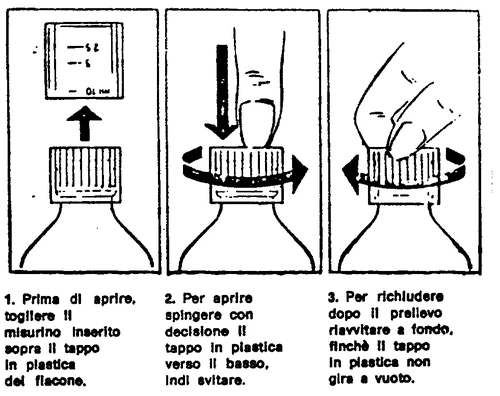
Child-resistant closure: (tablets)
Opaque blister pack
Child-resistant closure: (suspension)
Glass bottle with dosing syringe
How to use the dosing syringe: pour the suspension into the cavity indicated by the arrow on the syringe (as shown in the
illustration)
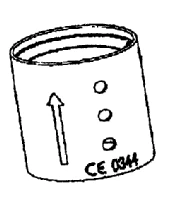
The holes in the syringe allow the suspension to escape if accidentally poured from the opposite end to that indicated by the arrow.
Instructions for using the dosing syringe:
Use the syringe as positioned on the bottle. Make sure the graduated side (the narrower side) is facing upwards; this is the side that should be filled. When the arrow on the side points upwards, the correct side is the one facing upwards. Fill the syringe up to the 5 mL mark.
6. Package Contents and Other Information
What Vermox Contains
100 mg tablets:
- The active substance is mebendazole
- The other components are: maize starch, sodium saccharin, sodium lauryl sulfate, sunset yellow, orange flavor, microcrystalline cellulose, colloidal silicon dioxide, magnesium stearate, sodium glycolate starch sodium salt, talc, hydrogenated cottonseed oil.
20 mg/ml oral suspension:
- The active substance is mebendazole
- The other components are: microcrystalline cellulose and sodium carmellose, sodium lauryl sulfate, methyl parahydroxybenzoate, propyl-parahydroxybenzoate, citric acid monohydrate, methylcellulose, banana flavor, sucrose, purified water.
Description of the Appearance of Vermox and Contents of the Package
- 100 mg tablets – 6 tablets in an opaque blister pack
- 20 mg/ml oral suspension – 30 ml bottle
Marketing Authorization Holder and Manufacturer
Marketing Authorization Holder
Janssen-Cilag SpA
Viale Fulvio Testi, 280/6
20126 Milano MI
Manufacturer
Tablets
Lusomedicamenta Sociedade Técnica Farmacêutica, S.A.
Estrada Consiglieri Pedroso 69-B
Queluz
2730-055 Barcarena
Portugal
Suspension
JANSSEN PHARMACEUTICA N.V.
Turnhoutseweg, 30
B-2340 Beerse (Belgium)
Lusomedicamenta Sociedade Técnica Farmacêutica, S.A.
Estrada Consiglieri Pedroso 69-B
Queluz
2730-055 Barcarena
Portugal