Venbig
Italy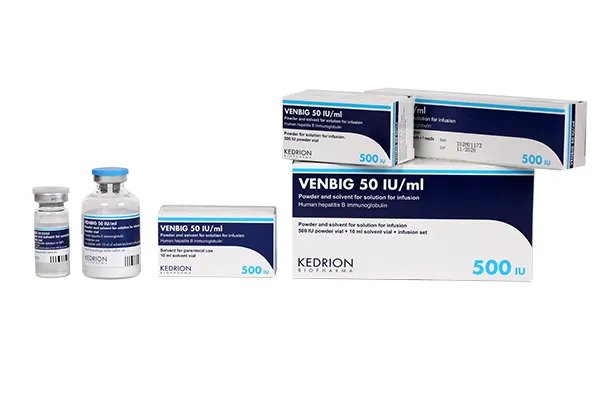
Instructions for Use
Table of Contents
- VENBIG 50 UI/ml Powder and solvent for solution for infusion
- 1. What VENBIG is and what it is used for
- 2. What you should know before using VENBIG
- 3. How to use VENBIG
- 4. Possible adverse reactions
- 5. How to store VENBIG
- 6. Contents of the pack and other information
- The following information is intended exclusively for physicians or healthcare professionals:
Package leaflet: Information for the user
VENBIG 50 UI/ml Powder and solvent for solution for infusion
Human hepatitis B immunoglobulin for intravenous use
Please read all of this leaflet carefully before you start using this medicine
because it contains important information for you.
- Keep this leaflet. You may need to read it again.
- If you have any questions, ask your doctor, pharmacist or nurse.
- If you get any side effects, including those not listed in this leaflet, tell your doctor, pharmacist or nurse. See section 4.
Contents of this leaflet:
- What VENBIG is and what it is used for
- What you need to know before using VENBIG
- How to use VENBIG
- Possible side effects
- How to store VENBIG
- Contents of the pack and other information
1. What VENBIG is and what it is used for
This medicinal product belongs to a pharmacotherapeutic group called immune sera and immunoglobulins.
VENBIG is a human anti-hepatitis B immunoglobulin solution (proteins that function as antibodies) for intravenous use, and is used in the following treatments:
To prevent recurrence of hepatitis B after liver transplantation due to liver failure caused by the hepatitis B virus, in combination with antiviral therapy.
To provide rapid availability of antibodies against the hepatitis B virus in order to prevent hepatitis B in the following cases:
- following accidental exposure in non-immunized individuals (i.e. in people who have not been vaccinated against the hepatitis B virus, including those who have not completed the full vaccination course or whose vaccination status is unknown);
- in patients undergoing haemodialysis (i.e. in patients with severe renal failure requiring blood purification through an artificial kidney), until vaccination becomes effective;
- in newborns born to mothers who are carriers of the hepatitis B virus;
- in individuals who have not shown an immune response following vaccination (i.e. in people for whom vaccination has not been effective) and who require ongoing prevention due to persistent risk of contracting hepatitis B.
2. What you should know before using VENBIG
Do not use VENBIG
- If you are allergic to human immunoglobulins or to any of the other components of this medicine (listed in section 6).
- If you have antibodies in your blood directed against IgA-type immunoglobulins, as administration of a product containing IgA may cause a severe allergic reaction.
Warnings and precautions
Talk to your doctor, pharmacist, or nurse before using VENBIG.
Blockage of a blood vessel (thrombosis) has been associated with the administration of
normal human immunoglobulins for intravenous use (IVIg). Therefore, your doctor must exercise particular caution
when administering this medicine if you have risk factors for thrombosis.
The levels of anti-HBs antibodies in your blood should be monitored regularly.
Adverse reactions may occur more frequently:
- if the infusion rate is high;
- if you have uncontrolled symptoms of untreated infections (e.g. fever) or symptoms of chronic inflammation;
- if you are receiving human normal immunoglobulins for the first time;
- in rare cases when switching to a different type of medicinal product containing human normal immunoglobulins, or when a long interval has passed since the previous infusion.
- In certain conditions, immunoglobulins may increase the risk of myocardial infarction, stroke, pulmonary embolism, or deep vein thrombosis because they increase blood viscosity. Therefore, your doctor will pay particular attention in the following circumstances:
- if you are overweight,
- if you are elderly,
- if you have diabetes,
- if you have high blood pressure (hypertension),
- if your blood volume is too low (hypovolemia),
- if you have or have had blood vessel problems (vascular diseases),
- if you have an increased tendency for blood clotting (inherited or acquired thrombophilic disorders),
- if you have experienced thrombotic episodes,
- if you suffer from diseases that increase blood density (viscosity),
- if you have had a prolonged period of immobility,
- if you have or have had kidney problems or if you are taking medicines that may damage the kidneys (nephrotoxic medicines), as cases of acute kidney failure have been reported. In case of kidney damage, your doctor may consider discontinuing treatment.
- You may be allergic (hypersensitive) to immunoglobulins (antibodies) without knowing it. This may occur even if you have previously received human normal immunoglobulins and tolerated prior administrations. This possibility is particularly relevant if you lack IgA-type immunoglobulins (IgA deficiency with anti-IgA antibodies). In these rare cases, allergic (hypersensitivity) reactions such as a drop in blood pressure or shock may occur.
The infusion rate recommended in section 3 "How to use VENBIG" must be strictly followed
by the doctor; this is strongly recommended because some serious adverse reactions to the
medicine may be related to the infusion rate. Furthermore, you must be closely monitored
and carefully observed throughout the entire infusion period for the appearance of any
symptoms.
In case of adverse reactions, your doctor may decide whether to reduce the infusion rate or stop
the infusion. Additionally, your doctor will determine the type of treatment required depending on the nature and
severity of the adverse effect.
VENBIG contains small amounts of IgA. If you have IgA deficiency, you may be at risk of developing
anti-IgA antibodies and may experience anaphylactic reactions after administration of blood components
containing IgA. Your doctor must evaluate the benefit of treatment with VENBIG against the potential risk
of hypersensitivity reactions.
Human hepatitis B immunoglobulins may rarely induce a drop in blood pressure with anaphylactic reaction, even if you have previously tolerated immunoglobulin treatments.
If you suffer from kidney failure, your doctor should consider discontinuing treatment with IVIg.
Although cases of kidney dysfunction and acute kidney failure have been associated with the use of
many authorized IVIg products containing various excipients such as sucrose, glucose, and
maltose, those containing sucrose as a stabilizer represent a very high proportion of the total number.
In patients at risk of acute kidney failure or thromboembolic adverse reactions, IVIg products
should be administered at the lowest feasible infusion rate and dose.
With immunoglobulin-based treatments, you may experience treatment-related lung injury,
called transfusion-related acute lung injury (TRALI). If you experience shortness of breath or rapid breathing during or shortly after the infusion, inform your doctor or nurse immediately, as emergency treatment may be required.
Suspicion of allergic or anaphylactic reactions requires immediate discontinuation of the infusion. In case of shock, standard medical treatment for shock must be followed.
Inform your doctor if any of the above-mentioned conditions apply to you. Your doctor will pay particular attention when prescribing and administering VENBIG to you.
Intravenous human immunoglobulin (IVIg) products may contain blood group-specific antibodies that may rarely cause destruction of red blood cells (hemolysis). For this reason, following IVIg therapy, you may develop a form of anemia due to abnormal breakdown of red blood cells (hemolytic anemia). Therefore, during IVIg treatment, you will be monitored for clinical signs and symptoms of hemolysis.
Blood tests
VENBIG may interfere with certain blood tests due to the temporary increase of various antibodies that are passively transferred into your bloodstream via the immunoglobulin infusion; this increase in antibodies may lead to blood test results that may not be accurate. Passive transfer of antibodies against erythrocyte antigens, e.g., A, B, D (determining blood group), may interfere with certain serological tests for red blood cell antibodies, for example, the direct antiglobulin test (Coombs test).
Viral safety
When medicines are prepared from human blood or plasma, certain measures are taken to prevent transmission of infections to patients. These measures include:
- careful selection of blood and plasma donors to ensure potentially infected donors are excluded;
- testing of each donation and plasma pool to confirm absence of infectious agents and/or viruses;
- inclusion during manufacturing of steps capable of inactivating or removing viruses. Despite these measures, when administering medicines prepared from human blood or plasma, the possibility of transmitting infectious agents cannot be completely excluded. This also applies to emerging or unknown viruses or other types of infectious agents. The measures taken are considered effective against lipid-enveloped viruses such as human immunodeficiency virus (HIV), hepatitis B virus (HBV), hepatitis C virus (HCV), and the non-lipid-enveloped hepatitis A virus (HAV).
The measures taken may have limited effectiveness against non-lipid-enveloped viruses such as parvovirus
B19.
Immunoglobulins have not been associated with hepatitis A or parvovirus B19 infections, probably
because antibodies against these infections contained in the product have protective properties.
It is strongly recommended that each time VENBIG is administered to you, the name and batch number of the
product be recorded, to ensure traceability of the batch used.
Children
No specific measures or monitoring are required.
Other medicines and VENBIG
Inform your doctor or pharmacist if you are taking, have recently taken, or might take any other
medicines.
Human hepatitis B immunoglobulins for intravenous use must not be mixed with other
medicinal products.
Live attenuated virus vaccines
VENBIG may interfere with the development of an immune response to live attenuated virus vaccines,
such as those for rubella, mumps, measles, and varicella. Administration of immunoglobulins
may alter the efficacy of these vaccines for a period lasting up to 3 months. At least three months should elapse after administration of VENBIG before vaccination with live attenuated virus vaccines.
Human hepatitis B immunoglobulins should be administered three or four weeks after vaccination with live attenuated virus vaccines; if administration of human hepatitis B immunoglobulins is required within three or four weeks after vaccination, revaccination should be performed three months after administration of the human hepatitis B immunoglobulins.
Loop diuretics (a group of medicines that increase urine production)
Concomitant use of loop diuretics together with VENBIG should be avoided.
Pregnancy, breastfeeding, and fertility
- If you are pregnant, suspect you may be pregnant, planning to become pregnant, or breastfeeding, consult your doctor or pharmacist before using this medicine. Your doctor will decide whether it is appropriate to use VENBIG during pregnancy and breastfeeding.
- No clinical studies have been conducted with VENBIG in pregnant women. It has been shown that intravenous human immunoglobulin products cross the placenta increasingly during the third trimester. However, antibody-containing medicines have been used for years in pregnant women and have not been shown to cause harmful effects on the course of pregnancy, the fetus, or the newborn.
- If you are breastfeeding while being treated with VENBIG, the antibodies contained in the product may pass into breast milk. Therefore, your baby may be protected from certain infections.
- Clinical experience with immunoglobulins suggests that harmful effects on fertility are not expected.
Driving and using machines
VENBIG does not affect or affects negligibly the ability to drive and use machines. Patients who
experience adverse reactions during treatment should wait until these resolve before driving
vehicles or operating machinery.
VENBIG contains sodium and sucrose
This medicine contains up to a maximum of 39 mg of sodium (a key component of table salt) per 10 ml vial and 175.5 mg of sodium per 45 ml vial. The amounts indicated correspond to 1.9% and 8.7% respectively of the maximum daily dietary intake recommended for an adult.
The medicine contains up to 92 mg of sucrose per ml (91.9 mg/ml). This should be taken into account in
patients at risk of acute kidney failure.
3. How to use VENBIG
VENBIG can only be administered in hospitals, clinics, or healthcare facilities by physicians or healthcare professionals.
The dosage and treatment regimen depend on the indication; your doctor will determine the appropriate dose and treatment for you.
At the beginning of the infusion, you will receive VENBIG at the minimum infusion rate. If you tolerate the applied rate, your doctor may gradually increase the infusion rate.
For further instructions, refer to the section “The following information is intended exclusively for physicians or healthcare professionals”.
If you use more VENBIG than you should
The consequences of overdose are not known.
If you are administered more VENBIG than recommended, an overload of proteins in the fluids may occur, and the blood may become too thick (hyperviscous); this is particularly observed in at-risk patients, especially elderly patients or those with impaired cardiac or renal function.
If you have any further doubts about the use of this medicine, consult your doctor, pharmacist, or nurse.
4. Possible adverse reactions
Like all medicines, this medicine can cause adverse reactions, although not everybody gets them.
If you notice any of the following adverse reactions, consult your doctor immediately or contact the nearest hospital:
- Allergic reactions (hypersensitivity). This adverse reaction may in some cases progress to acute allergic reaction (anaphylactic shock): for example itching, skin reactions, swelling of the lips, face and tongue, difficulty swallowing, breathing difficulties, fainting.
- Acute kidney failure (e.g. reduced or absent urine flow, fluid retention, shortness of breath).
The following adverse reactions have generally been reported after treatment with intravenous immunoglobulins:
- bradycardia (slow heart rate), feeling of warmth, syncope (fainting), bronchospasm (narrowing of the airways), cough, tachypnea (rapid breathing), hyperhidrosis (excessive sweating), tachycardia (accelerated heart rate), chills, headache, dizziness, fever, vomiting, allergic reactions, nausea, arthralgia (joint pain), hypotension (low blood pressure), moderate lower back pain and generalized musculoskeletal pain have been reported occasionally;
- isolated cases of temporary reduction in red blood cells (reversible haemolytic anaemia/haemolysis), especially in patients with blood groups A, B and AB, and (rarely) haemolytic anaemia requiring transfusion;
- a sudden drop in blood pressure has been reported rarely and, in some isolated cases, hypersensitivity reactions (anaphylactic shock) may occur, even if the patient has not had reactions to previous administrations;
- rare cases of transient skin reactions have been observed;
- very rare cases of thromboembolic reactions (blood clot formation) have been reported, which may lead to myocardial infarction, stroke, blockage of the pulmonary arteries (pulmonary embolism) and deep vein thrombosis;
- cases of transient non-infectious meningitis (aseptic reversible meningitis);
- cases of increased blood creatinine levels and/or acute kidney failure;
- cases of transfusion-related acute lung injury (TRALI).
The following adverse reactions have been reported after administration of VENBIG following the medicine's marketing authorization (frequency cannot be estimated from the available data):
- Hypersensitivity
- Anaphylactic shock
- Nausea
- Vomiting
- Fever
- Malaise
- Chills
- Dyspnoea (difficulty breathing)
- Chest discomfort or pain
For information regarding safety with respect to transmissible agents, see section 2 "What you need to know before using VENBIG".
Additional adverse reactions in children
No specific data are available in the paediatric population.
Reporting of adverse reactions
If you experience any adverse reaction, including those not listed in this leaflet, talk to your doctor, pharmacist or nurse. You can also report adverse reactions directly via the following website:
https://www.aifa.gov.it/content/segnalazioni-reazioni-avverse
By reporting adverse reactions, you can help provide more information on the safety of this medicine.
5. How to store VENBIG
Keep this medicine out of the sight and reach of children.
Do not use this medicine after the expiry date stated on the label and outer packaging.
The expiry date refers to the last day of that month.
Do not store above 25°C.
Store in the original outer packaging to protect the medicine from light.
Do not freeze.
VENBIG must be used immediately after reconstitution with the solvent.
Do not use this medicine if you notice that the solution is cloudy or contains deposits or shows any change in
colour (see also “Description of the appearance of VENBIG and contents of the pack” in section 6).
Do not dispose of any medicine via wastewater or household waste. Ask your pharmacist how to dispose of
medicines no longer required. This will help protect the environment.
6. Contents of the pack and other information
What VENBIG contains
The active substance is human hepatitis B immunoglobulin.
| VENBIG 500 IU | VENBIG 2500 IU | |
| Human proteins | 50 g/l | 50 g/l |
| consisting of human immunoglobulins of at least | 95% | 95% |
| Antibodies against HBs antigen (anti-HBs) in a quantity not less than | 500 IU/vial | 2500 IU/vial |
| Antibodies against HBs antigen (anti-HBs) after reconstitution with solvent in a quantity not less than | 50 IU/ml | 50 IU/ml |
The IgG (immunoglobulin G) subclasses have the following distribution:
IgG 26.0 - 40.0 mg/ml
IgG 13.0 - 25.0 mg/ml
IgG 1.20 - 2.50 mg/ml
IgG 0.15 - 0.50 mg/ml
The maximum IgA content is 0.05 mg/ml.
Produced from plasma of human donors.
Other components are sucrose, sodium chloride, and water for injections.
The vial of powder contains human anti-hepatitis B immunoglobulins, sucrose, and sodium chloride.
The solvent vial contains sodium chloride and water for injections.
Description of the appearance of VENBIG and contents of the pack
The VENBIG pack contains one vial of powder and one vial of solvent used to prepare the solution for administration.
The powder is white or slightly yellow, or appears as a friable solid mass.
After reconstitution, the product is a clear or slightly opalescent liquid, colorless or slightly yellow.
Before administration, reconstituted products must be visually inspected for the presence of suspended particles or abnormal discoloration. Do not use cloudy solutions or those showing deposits.
VENBIG 50 IU/ml powder and solvent for solution for infusion
Vial of powder containing 500 IU + vial of solvent containing 10 ml + infusion set (1 syringe with needle + 1 administration needle).
Vial of powder containing 2500 IU + vial of solvent containing 45 ml + infusion set.
Marketing Authorization Holder
Kedrion S.p.A. - Loc. Ai Conti, 55051 Castelvecchio Pascoli, Barga (Lucca).
Manufacturer
Kedrion S.p.A. - S.S. 7 bis Km 19.5, S. Antimo (Naples).
This summary of product characteristics was last approved on: 04/2026
The following information is intended exclusively for physicians or healthcare professionals:
Instructions for Proper Use
Before use, bring the product to room or body temperature.
Complete reconstitution must be achieved within 30 minutes.
VENBIG must be administered by intravenous infusion at an initial rate of 0.46–0.92 ml/kg/h (e.g., for a 65 kg patient, at a rate of 10–20 drops per minute) over 20–30 minutes. In case of an adverse reaction, the infusion rate should be reduced or the infusion stopped. If well tolerated, the infusion rate may be gradually increased up to a maximum of 1.85 ml/kg/h (e.g., for a 65 kg patient, at a rate of 40 drops per minute) for the remainder of the infusion.
Reconstitution of the solution, 500 IU vial:
- Draw the solvent into the injection syringe;
- Inject the solvent into the vial containing the powder using the same syringe;
- Gently shake the vial until the powder is completely dissolved;
- Do not shake vigorously; foam formation must be avoided;
- Draw up the resulting solution into the syringe;
- Replace the needle and administer to the patient.
Reconstitution of the solution, 2500 IU vial:
- Remove the protective caps from the powder and solvent vials;
- Clean the stopper surfaces of both vials with alcohol;
- Insert the smaller needle of the double-ended needle into the solvent vial;
- Remove the needle cap from the other end of the double-ended needle, taking care not to touch the second needle;
- Invert the solvent vial with the double-ended needle and insert the second needle into the powder vial; at the moment of piercing the stopper of the powder vial, the tip of the needle in the solvent vial must be in contact with the liquid, not with air;
- Gently shake the vial at room temperature until the powder is completely dissolved;
- Do not shake vigorously; foam formation must be avoided;
- Remove the solvent vial with the double-ended needle;
- Attach the infusion set and administer intravenously.
Reconstituted products must be visually inspected for particulate matter and discoloration prior to administration.
After reconstitution, the product is a clear or slightly opalescent, colorless or pale yellow liquid.
Turbid solutions or those containing deposits must not be used.
VENBIG must be used immediately after reconstitution with the solvent.
Unused medicine and waste material derived from this medicine must be disposed of in accordance with local regulations.
Special Precautions
Some serious adverse reactions to the product may be due to the infusion rate.
Potential complications can often be avoided by ensuring:
- that patients are not sensitive to normal human immunoglobulin by administering the product slowly at the beginning (with an infusion rate between 0.46 and 0.92 ml/kg/h);
- that patients are closely monitored for any symptoms throughout the entire infusion period. In particular, patients receiving normal human immunoglobulin for the first time, patients who have switched from another IVIg product, or patients who have had a long interval since their previous infusion, must be monitored during the first infusion and for the first hour after the first infusion to detect potential signs of adverse reactions. All other patients should be observed for at least 20 minutes after administration.
In all patients, administration of IVIg requires:
- adequate hydration before starting the IVIg infusion;
- monitoring of urinary output;
- monitoring of serum creatinine levels;
- avoidance of concomitant use of loop diuretics. In case of an adverse reaction, the infusion rate must be reduced or the infusion stopped. The required treatment depends on the nature and severity of the adverse effect. In case of shock, standard medical treatment for shock must be initiated.
Infusion Reaction
Some adverse reactions (e.g., headache, flushing, chills, myalgia, wheezing, tachycardia, back pain, nausea, and hypotension) may be related to the infusion rate. The recommended infusion rate must be strictly followed. Patients must be closely monitored and carefully observed for any symptoms throughout the entire infusion period.
Adverse reactions may occur more frequently:
- with high infusion rates;
- in patients with hypo- or agammaglobulinemia with or without IgA deficiency.
Hypersensitivity
True hypersensitivity reactions are rare.
VENBIG contains small amounts of IgA. Individuals with IgA deficiency may develop antibodies against IgA and may experience anaphylactic reactions after administration of blood components containing IgA. Therefore, the physician must evaluate the benefit of treatment with VENBIG against the potential risk of hypersensitivity reactions.
Rarely, human anti-hepatitis B immunoglobulins may induce a drop in blood pressure with anaphylactic reaction, even in patients who have previously tolerated immunoglobulin treatments.
Patients must be informed about the early signs of hypersensitivity reactions, such as urticaria, generalized hives, chest tightness, wheezing, hypotension, and anaphylaxis. The required treatment depends on the nature and severity of the adverse reaction.
Suspicion of an allergic or anaphylactic-type reaction requires immediate discontinuation of the infusion. In case of shock, standard medical treatment for shock must be initiated.
Interference with Serological Tests
After immunoglobulin administration, the transient increase in various passively transferred antibodies in the patient's blood may lead to false-positive results in serological tests.
Passive transfer of antibodies against erythrocyte antigens, e.g., A, B, D, may interfere with certain serological tests for red blood cell antibodies, such as the antiglobulin test (Coombs test).
Transmissible Agents
Standard measures to prevent infections from medicinal products prepared from human blood or plasma include donor selection, screening of individual donations and plasma pools for specific infection markers, and inclusion of effective virus inactivation/removal steps during manufacturing.
Nevertheless, when administering medicinal products prepared from human blood or plasma, the possibility of transmission of infectious agents cannot be completely excluded. This also applies to emerging or unknown viruses and other pathogens.
The measures taken are considered effective against lipid-enveloped viruses such as human immunodeficiency virus (HIV), hepatitis B virus (HBV), and hepatitis C virus (HCV), as well as against the non-lipid-enveloped hepatitis A virus (HAV).
The measures taken may have limited effectiveness against non-lipid-enveloped viruses such as parvovirus B19.
There is reassuring clinical experience regarding the absence of transmission of hepatitis A and parvovirus B19 with immunoglobulins, and it can be assumed that the antibody content provides an important contribution to viral safety.
It is strongly recommended that each time VENBIG is administered to a patient, the product name and batch number be recorded to ensure traceability between the patient and the product batch.
Important Information on VENBIG Ingredients
This medicinal product contains up to a maximum of 39 mg of sodium per 10 ml vial and 175.5 mg of sodium per 45 ml vial, equivalent to 1.9% and 8.7% of the maximum daily intake recommended by the WHO (2 g of sodium for an adult), respectively. This medicinal product contains up to 92 mg of sucrose per ml (91.9 mg/ml). This should be taken into account in patients at risk of acute renal failure.
The following adverse reactions have been associated with the use of normal human immunoglobulins for intravenous use (IVIg):
Thromboembolism
Clinical evidence shows a relationship between IVIg administration and thromboembolic events such as myocardial infarction, cerebrovascular accident (including stroke), pulmonary embolism, and deep vein thrombosis, presumed to be related to a relative increase in blood viscosity due to a high influx of immunoglobulin in at-risk patients. Caution is required when prescribing and infusing IVIg in obese patients and in patients with pre-existing risk factors for thrombotic events (such as advanced age, hypertension, diabetes mellitus, history of vascular disease or thrombotic episodes, patients with acquired or congenital thrombophilic disorders, immobilized patients, severely hypovolemic patients, or patients with conditions increasing blood viscosity).
In patients at risk of thromboembolic adverse reactions, IVIg-based products should be administered at the lowest feasible infusion rate and dose.
Acute Renal Failure
Cases of acute renal failure have been reported in patients undergoing IVIg therapy.
In most cases, risk factors have been identified, such as pre-existing renal insufficiency, diabetes mellitus, hypovolemia, overweight, concomitant use of nephrotoxic drugs, or age over 65 years.
Renal function should be monitored before administering IVIg, particularly in patients with potentially increased risk of developing acute renal failure, and at appropriate intervals after administration. In patients at risk of acute renal failure, IVIg-based products should be administered at the lowest feasible infusion rate and dose.
In case of renal damage, discontinuation of IVIg should be considered.
Although cases of renal dysfunction and acute renal failure have been associated with the use of many authorized IVIg products containing various excipients such as sucrose, glucose, and maltose, those containing sucrose as a stabilizer represent a very high proportion of the total number. In at-risk patients, the use of IVIg-based products that do not contain these excipients should be considered. VENBIG contains sucrose (see section 2, "VENBIG contains sodium and sucrose").
Aseptic Meningitis Syndrome (AMS)
Aseptic meningitis syndrome may occur in association with IVIg treatment.
The syndrome typically begins several hours to 2 days after IVIg administration. Cerebrospinal fluid (CSF) studies often show pleocytosis up to several thousand cells/mm³, predominantly granulocytes, and elevated protein levels up to several hundred mg/dL.
Patients presenting with these signs and symptoms should undergo a complete neurological examination, including CSF studies, to exclude other causes of meningitis.
Discontinuation of IVIg treatment has led to resolution of AMS within several days without sequelae.
Hemolytic Anemia
IVIg-based medicinal products contain blood group-specific antibodies that can act as hemolysins and induce, in vivo, binding of red blood cells to immunoglobulins, causing a positive direct antiglobulin reaction (Coombs test) and, rarely, hemolysis. Hemolytic anemia may develop after IVIg therapy due to increased red blood cell uptake. Patients receiving IVIg should be monitored for clinical signs and symptoms of hemolysis.
Neutropenia/Leukopenia
A transient decrease in neutrophil count and/or episodes of neutropenia, sometimes severe, have been reported after IVIg treatment. This typically occurs within a few hours or days after IVIg administration and resolves spontaneously within 7–14 days.
Transfusion-Related Acute Lung Injury (TRALI)
Cases of acute non-cardiogenic pulmonary edema (transfusion-related acute lung injury, TRALI) have been reported in patients receiving IVIg. TRALI is characterized by severe hypoxia, dyspnea, tachypnea, cyanosis, fever, and hypotension. Symptoms associated with TRALI typically appear during or within 6 hours after transfusion, often within 1–2 hours. Therefore, patients receiving IVIg should be monitored, and infusion should be immediately stopped if pulmonary adverse reactions occur. TRALI is a potentially life-threatening condition requiring immediate admission to intensive care.
Pediatric Population
No specific measures or monitoring are required.
Dosage Recommendations
Dosage
The dose and treatment regimen depend on the indication. The doses indicated below are intended as guidelines.
To prevent hepatitis B recurrence after liver transplantation due to hepatitis B-induced liver failure:
Adults:
10,000 IU on the day of transplantation, peri-operatively;
followed by 2,000–10,000 IU/day for 7 days, and as needed to maintain antibody levels above 100–150 IU/L in HBV-DNA-negative patients and above 500 IU/L in HBV-DNA-positive patients.
Pediatric Population:
Dosage should be adjusted according to body surface area, based on 10,000 IU/1.73 m².
Hepatitis B Immunoprophylaxis
- Prevention of hepatitis B after accidental exposure in non-immunized individuals: at least 500 IU, depending on the extent of exposure, as soon as possible after exposure, preferably within 24–72 hours.
- Hepatitis B immunoprophylaxis in hemodialysis patients: 8–12 IU/kg up to a maximum of 500 IU, every 2 months until seroconversion following vaccination.
- Prevention of hepatitis B in newborns of hepatitis B virus carrier mothers: 30–100 IU/kg at birth or as soon as possible after birth. In clinical practice, intramuscular administration is preferred whenever repeated administrations are required to achieve seroconversion after vaccination. Administration of anti-hepatitis B immunoglobulin may be repeated until post-vaccination seroconversion.
In all these situations, vaccination against hepatitis B virus is strongly recommended. The first dose of the vaccine and human anti-hepatitis B immunoglobulin may be administered on the same day, but at different sites.
In individuals who have not shown an immune response after vaccination (non-detectable anti-HBs antibodies) and for whom ongoing prevention is required, administration of 500 IU in adults and 8 IU/kg in children every 2 months may be considered; a minimum protective antibody titer is considered to be 10 mIU/ml.
The dose and dosage regimen for the use of human anti-hepatitis B immunoglobulins for intravenous use recommended in other official guidelines should also be taken into account.
Similar Medications
-
Keyvenb
Form: solution for infusion, powder and solvent for preparation
Active substance Dosage HUMAN HEPATITIS B IMMUNOGLOBULIN — Manufacturer: KEDRION S.P.A.
This page has been machine-translated and may contain inaccuracies. The original data is available in the manufacturing country's language.
Last data check: May 11, 2026 · Data source: Agenzia Italiana del Farmaco (AIFA)