Uromitexan
Italy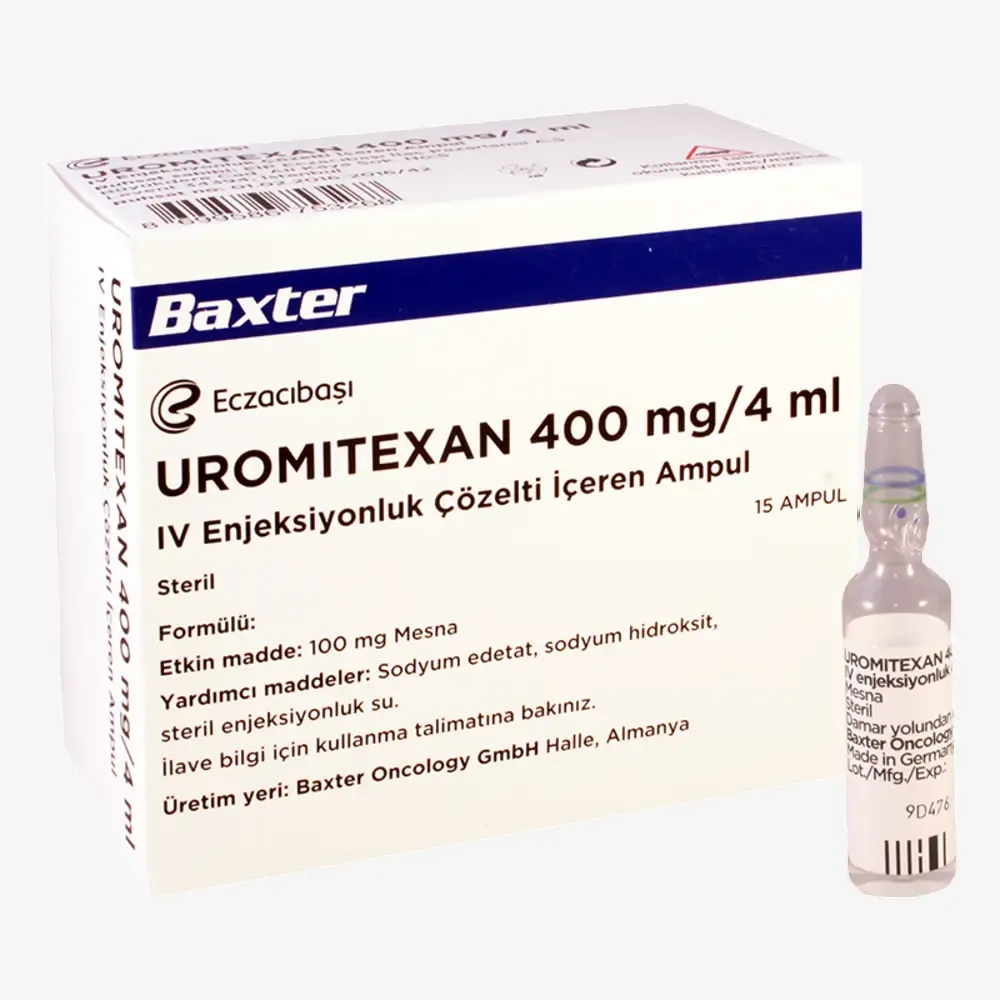
Table of Contents
Package leaflet
UROMITEXAN 400 mg/4 ml solution for injection for intravenous use
Mesna
PHARMACOTHERAPEUTIC CATEGORY
Detoxifying agent for cytostatic treatments.
THERAPEUTIC INDICATIONS
Prevention of toxic urinary tract lesions caused by oxazaphosphorines (cyclophosphamide, ifosfamide). UROMITEXAN should always be administered during cytostatic therapy with ifosfamide. When cyclophosphamide is administered, UROMITEXAN should always be used when the cytostatic agent is given as a bolus (doses exceeding 10 mg/kg), and also in high-risk patients.
Main risk factors are: previous pelvic radiotherapy, episodes of cystitis during prior treatment with ifosfamide and cyclophosphamide, or history of urinary tract disorders.
CONTRAINDICATIONS
Hypersensitivity to the active substance, to other thiol compounds, or to any of the excipients.
PRECAUTIONS FOR USE
Due to possible anaphylactoid reactions, ensure that emergency medications are available.
The protective effect of UROMITEXAN is exerted only at the level of the urinary tract, reducing the risk of hemorrhagic cystitis due to therapy with oxazaphosphorines. All other precautionary measures deemed necessary are not influenced by its use and must therefore be maintained. Urinary tract protection with UROMITEXAN should always be initiated only after a careful risk-benefit assessment and under medical supervision.
UROMITEXAN does not prevent hemorrhagic cystitis in all patients. Therefore, a urine sample must be examined daily for hematuria (microscopic evidence of red blood cells) before starting treatment with oxazaphosphorines.
Adequate urinary excretion must be maintained as required for treatment with oxazaphosphorines. In case of hematuria occurring during administration of UROMITEXAN and oxazaphosphorines according to the dosage regimen described in the DOSAGE, METHOD AND DURATION OF ADMINISTRATION section, the dose of oxazaphosphorines should be reduced or treatment discontinued depending on the severity of hematuria.
Paediatric use
Mesna is used as a protective agent against urotoxicity associated with oxazaphosphorines. Therefore, the only available references regarding the safety and efficacy of mesna in paediatric patients under 16 years of age are found in published medical literature on the use of oxazaphosphorine antineoplastic agents. No clinical studies specifically dedicated to the use of mesna in paediatrics are available.
INTERACTIONS
Inform your doctor or pharmacist if you are taking or have recently taken any other medicines, including those without a prescription.
The systemic effects of oxazaphosphorines are not altered by UROMITEXAN. Clinical studies have shown that overdosage of UROMITEXAN does not reduce the acute and subacute toxicity, leukotoxic activity, or immunosuppressive efficacy of oxazaphosphorines. Administration of ifosfamide and cyclophosphamide in animals bearing various types of tumours has further demonstrated that UROMITEXAN does not affect the antineoplastic efficacy of these drugs. Furthermore, UROMITEXAN
Fill_Uromitexan_giu13
Package leaflet
does not affect the antineoplastic activity of other cytostatics (e.g. doxorubicin, BCNU, methotrexate, vincristine) nor the therapeutic effect of digitalis glycosides.
Interference with diagnostic tests
Treatment with UROMITEXAN may cause false positive results in the acetone test (e.g. Rothera test, sodium nitroprusside-based urine test, or N-Multistick reagent strips) and false positive or false negative results in dipstick tests (reagent strips) for hematuria. The chromogenic reaction for acetone is orange instead of purple, is less stable, and fades immediately upon addition of glacial acetic acid. Microscopic examination is recommended to determine the presence of hematuria.
Treatment with mesna may cause false positive results in urine screening tests for ascorbic acid based on the Tillman reagent.
In pharmacokinetic studies in healthy volunteers, serum creatine phosphokinase (CPK) values were lower in samples taken 24 hours after mesna administration than in samples taken before administration. Although available data are insufficient to determine the cause of this phenomenon, a significant interference with thiol-dependent enzymatic tests for CPK (e.g. N-acetylcysteine) may be considered.
See also section UNDESIRABLE EFFECTS for information on abnormalities in diagnostic tests observed in pharmacokinetic studies.
SPECIAL WARNINGS
Urinary tract protection with UROMITEXAN should always be initiated only after a careful risk-benefit assessment and under medical supervision.
Hypersensitivity
In patients with immune system disorders receiving cyclophosphamide and UROMITEXAN, hypersensitivity reactions have been reported at a higher incidence compared to oncology patients, including skin and mucosal reactions of varying extent and severity (pruritus, skin rash, erythema, blistering, Lyell syndrome, Stevens-Johnson syndrome), local tissue swelling (urticarial edema), conjunctivitis, rare cases of hypotension associated with circulatory disturbances, increased heart rate above 100 beats/minute (tachycardia), increased respiratory rate (tachypnea) due to severe hypersensitivity reactions (anaphylactoid reactions), hypertension, ST segment elevation, myalgia, and transient increases in some liver function parameters (transaminases).
Therefore, urinary tract protection in patients with immune system disorders should be provided by mesna administration, with careful evaluation of the risk-benefit ratio and under strict medical supervision.
Hypersensitivity reactions to mesna have been reported following administration of mesna as a uroprotectant. These include:
- Skin reactions characterized by symptoms such as localized or generalized urticaria or other forms of rash, pruritus, burning sensation, angioedema and/or flushing.
- Severe cases of skin blistering and ulceration, and mucosal reactions have also been reported. Some reactions were considered compatible with Stevens-Johnson syndrome, toxic epidermal necrolysis, or erythema multiforme.
- Other reactions appeared consistent with a diagnosis of fixed drug eruption. Photosensitive rash distribution has also been reported. In some cases, skin reactions were accompanied by one or more additional symptoms:
- Fever
- Cardiovascular symptoms (hypotension, in some cases reported as refractory to fluids, tachycardia, electrocardiographic signs compatible with perimyocarditis, see section UNDESIRABLE EFFECTS)
Fill_Uromitexan_giu13
Package leaflet
- Signs consistent with acute renal failure
- Pulmonary symptoms (hypoxia, respiratory distress, bronchospasm, tachypnea, cough, bloody sputum; see section ADVERSE REACTIONS)
- Prolonged prothrombin time (PT) and partial thromboplastin time (PTT), laboratory findings indicating signs of disseminated intravascular coagulation (DIC)
- Hematological abnormalities (leukopenia, eosinophilia, lymphopenia, thrombocytopenia, pancytopenia; see section ADVERSE REACTIONS)
- Increased levels of liver enzymes
- Nausea, vomiting
- Limb pain, arthralgia, myalgia, malaise
- Stomatitis
- Conjunctivitis
Some reactions have presented as anaphylaxis. Fever accompanied by, for example, hypotension but without cutaneous manifestations has also been reported. Severe as well as mild reactions have been reported with the use of mesna in regimens for the treatment of severe systemic autoimmune disorders and tumors. In most cases, reactions occurred during or after the first treatment or after several weeks of exposure to mesna. In other cases, the initial reaction was observed only after several months of exposure. In many cases, symptoms appeared on the day of exposure, with a tendency toward shorter intervals upon subsequent exposures. In some patients, the manifestation and/or severity of the reaction appeared to vary according to the administered dose. Recurrence of reactions, in some cases with increased severity, has been reported upon subsequent exposures. However, in some cases, re-exposure did not result in recurrence of the reaction. Some patients with a history of a reaction have shown positive delayed responses in skin testing. However, a negative delayed skin test does not exclude hypersensitivity to mesna. Some patients have shown a positive immediate response in skin testing, regardless of prior exposure to mesna or a history of hypersensitivity reactions; this may be related to the concentration of the mesna solution used for testing. The prescribing physician must:
- Be aware of the possibility of such reactions, that reactions may worsen upon re-exposure, and that in some cases they may be life-threatening;
- Be aware that hypersensitivity reactions to mesna may resemble the clinical picture of sepsis and, in patients with autoimmune disorders, may mimic an exacerbation of the underlying disease.
Thiol compounds
Mesna is a thiol compound, i.e. an organic compound containing a sulfhydryl group (SH). Thiol compounds show some similarities in their adverse reaction profiles, including the potential to cause severe skin reactions. Examples of medicinal products that are thiol compounds include amifostine, penicillamine, and captopril. It is not clear whether patients who have experienced an adverse reaction to such medicinal products are at increased risk of developing such reactions or similar reactions with another thiol compound. Nevertheless, when evaluating the use of another thiol compound in such patients, the possibility of an increased risk should be taken into consideration.
Pregnancy and breastfeeding
Ask your doctor or pharmacist for advice before taking any medicine.
Since UROMITEXAN is used as a uroprotectant during cytostatic treatment with oxazaphosphorines, its use during pregnancy and breastfeeding follows the same criteria applied for cytostatic therapy.
Fill_Uromitexan_giu13
Patient Information Leaflet
Pregnancy:
There are no adequate data on the use of UROMITEXAN during pregnancy. Animal studies have not shown any embryotoxic or teratogenic effects of UROMITEXAN. Since reproductive studies in animals are not always predictive of human response, this medicinal product should be administered during pregnancy only if clearly necessary.
Breast-feeding:
It is not known whether mesna or dimesna is excreted in human milk. Since many drugs are excreted in breast milk and considering the potential for adverse reactions in the newborn due to UROMITEXAN, a decision must be made whether to discontinue breast-feeding or to discontinue the medicinal product, taking into account the importance of the therapy for the mother.
The physician must carefully evaluate the potential risks and benefits for each individual patient before prescribing mesna.
Effects on the ability to drive and use machines
Caution should be exercised when driving or operating machinery due to the possibility of undesirable effects (e.g., syncope, dizziness, somnolence, headache, vertigo, and blurred vision) which could impair the ability to drive or operate machinery. The decision to drive or use machinery should be made on an individual basis.
Important information about certain excipients:
Sodium content
UROMITEXAN, injectable solution for intravenous use, contains approximately 59 mg of sodium per 400 mg of mesna.
DOSAGE, METHOD AND DURATION OF ADMINISTRATION
Unless otherwise prescribed, UROMITEXAN is normally administered intravenously at a dose equal to 20% of the oxazaphosphorine dose at time zero (time of oxazaphosphorine administration), followed by additional doses at 4 and 8 hours.
Example:
Time 8.00 12.00 16.00
Oxazaphosphorine dose 40 mg/kg – –
UROMITEXAN dose 8 mg/kg 8 mg/kg 8 mg/kg
Therapeutic experience in children suggests that in individual cases it may be more beneficial to administer UROMITEXAN at shorter intervals (e.g., every 3 hours) [total UROMITEXAN dose = 60% of the oxazaphosphorine dose].
With high-dose cytotoxic therapy using high-dose oxazaphosphorines (e.g., prior to bone marrow transplantation), the total dose of UROMITEXAN may be increased from 120% to 160% of the oxazaphosphorine dose.
After administration of 20% of UROMITEXAN (relative to the total oxazaphosphorine dose) at time zero, the remaining dose should be administered over a 24-hour period by continuous intravenous infusion. Alternatively, intermittent bolus injections may be used: in adults, 3 x 40% (at times 0, 4, and 8 hours) or 4 x 40% (at times 0, 3, 6, and 9 hours).
In children, due to more frequent micturition, bolus injections should be administered at 3-hour intervals (e.g., 20% at times 0, 1, 3, 6, 9, and 12 hours). As an alternative to bolus injection, short infusions lasting 15 minutes may also be used.
With continuous infusion of ifosfamide (Holoxan), it is preferable to administer UROMITEXAN at time zero with an initial bolus injection (start of infusion, time 0), followed by a continuous infusion at a rate of up to 100% of the ifosfamide dose, and to maintain uroprotective coverage for 6–12 hours after completion of the ifosfamide infusion.
Fill_Uromitexan_giu13
Instructions for use
Example of UROMITEXAN administration with a 24-hour infusion of ifosfamide:
| HOURS | 0 | 24 30 36 |
| Ifosfamide dose | 5 g/m2 surface area (= 125 mg/kg) | |
| UROMITEXAN dose | 1 g/m2 surface area (= 25 mg/kg) | |
| UROMITEXAN infusion | Up to 5 g/m2 surface area (= 125 mg/kg) added to ifosfamide infusion | Up to 2.5 g/m2 surface area (= 62.5 mg/kg) |
Parenteral medicines should be visually inspected before administration
to check for the presence of particulate matter or discoloration.
If the solution is discolored, cloudy, or contains visible particulates, it must not be used.
Incompatibilities:
Mesna is in vitro incompatible with cisplatin, carboplatin, and nitrogen mustard, and is reactive
with acrolein.
Mixing mesna with epirubicin causes inactivation of epirubicin and must be avoided.
OVERDOSE
No specific antidote for UROMITEXAN is known.
Due to the possibility of anaphylactoid reactions, ensure that emergency medications are available.
In tolerability studies conducted in healthy volunteers using high intravenous and
oral doses of mesna, single doses of 60–70 mg/kg were associated with adverse events such as nausea, vomiting, colic, diarrhea,
headache, joint pain, hypotension, tachycardia, skin reactions, depression, irritability,
fatigue, weakness, flushing, bradycardia, paresthesia, fever, and bronchospasm.
In patients treated with oxazaphosphorines who received intravenous daily doses of mesna ≥ 80 mg/kg,
a significantly higher incidence of nausea, vomiting, and diarrhea was observed compared to patients receiving lower doses or hydration therapy alone.
In case of accidental ingestion of an excessive dose, contact a physician immediately and go to the nearest hospital.
ADVERSE REACTIONS
Like all medicines, this one may cause adverse reactions, although not everybody experiences them.
Hypersensitivity reactions following administration of UROMITEXAN have been reported more frequently in
patients with immune system disorders than in cancer patients.
There have been some reports of organ-related hypersensitivity (hyperergic reactions),
including decreased platelet count (thrombocytopenia), skin and mucosal reactions
of varying extent and severity (pruritus, erythema, redness, blistering, Lyell’s syndrome, Stevens-Johnson syndrome),
local tissue swelling (urticarial edema), conjunctivitis, rare cases of hypotension associated with circulatory disturbances,
increased heart rate above 100 beats/minute (tachycardia), and increased respiratory rate (tachypnea) due to severe hypersensitivity reactions (anaphylactoid reactions), hypertension, ST-segment elevation, myalgia, and also a transient increase in some liver function parameters (transaminases).
Rare cases of venous irritation at the injection site have been reported.
Fill_Uromitexan_giu13
Patient Information Leaflet
During treatment, it is difficult to clearly differentiate these adverse effects from those attributable to oxazaphosphornes themselves or to the concomitant use of other drugs.
In clinical studies and spontaneous reports, frequently reported adverse effects include nausea, vomiting, flatulence, diarrhoea, constipation, colic (abdominal pain), anorexia, influenza-like symptoms, fever, chills, hot flushes, cough, pharyngitis, dizziness, somnolence, headache, back pain, arthralgia. Other adverse effects are also frequently reported, such as leucopenia, granulocytopenia, anaemia, alopecia and pneumonia, which cannot reasonably be associated with the administration of UROMITEXAN and should be considered as adverse reactions due to the concomitant administration of cytotoxic medicinal products.
Clinical studies conducted in patients over 65 years of age have not revealed any age-specific adverse reactions.
Undesirable effects: Incidence
The frequency of undesirable effects is based on the following scale: very common (≥ 1/10), common (≥ 1/100 to <1/10), uncommon (≥ 1/1,000 to <1/100), rare (≥ 1/10,000 to <1/1,000), very rare (<1/10,000), not known (frequency cannot be estimated from the available data).
| Primary System Organ Classes (SOC) | Very common ≥1/10 | Common ≥1/100 to < 1/10 | Uncommon ≥1/1,000 to <1/100 | Rare ≥1/10,000 to <1/1,000 | Very rare <1/10,000 including isolated reports | Not known (frequency cannot be estimated from the available data) |
| Infections and infestations |
| |||||
| Blood and lymphatic system disorders |
|
|
| |||
| Immune system disorders |
| |||||
| Metabolism and nutrition disorders |
| |||||
| Psychiatric disorders |
| |||||
| Nervous system disorders |
|
|
| |||
| Eye disorders |
|
|
| |||
| Cardiac disorders |
|
|
| |||
| Vascular disorders |
|
|
Fill_Uromitexan_giu13
Package leaflet
| System Organ Classes (SOC) primari | Very common ≥1/10 | Common ≥1/100 - < 1/10 | Uncommon ≥1/1000 - <1/100 | Rare ≥1/10 000 - <1/1000 | Very rare <1/10 000 including isolated reports | Not known (frequency cannot be estimated based on available data) |
| Respiratory, thoracic and mediastinal disorders |
|
|
| |||
| Gastrointestinal disorders |
|
| ||||
| Hepatobiliary disorders |
|
|
Fill_Uromitexan_giu13
Package leaflet
| Primary System Organ Classes (SOC) | Very common >1/10 2 | Common >1/100 - < 1/10 | Uncommon >1/1000 - <1/100 | Rare >1/10 000 - <1/1000 | Very rare >1/10 000, including isolated case reports | Not known (frequency cannot be estimated from the available data) |
| Skin and subcutaneous tissue disorders |
|
| Skin and mucosal reactions: -Pruritus -Erythema -Erythema multiforme -Drug-induced rash* -Flushing -Ulceration and/or blistering/vesiculation** -Lyell's syndrome (toxic epidermal necrolysis) -Stevens-Johnson syndrome -Angioedema -Fixed drug eruption -Photosensitivity rash -Urticaria -Burning sensation -Localised tissue swelling -Urticarial oedema | |||
| Musculoskeletal and connective tissue disorders |
|
| ||||
| Renal and urinary disorders |
|
| ||||
| General disorders and administration site conditions | Infusion site reactions: -Pruritus -Rash |
|
|
| ||
| Investigations |
|
|
Fill_Uromitexan_giu13
Package leaflet
Time to onset
In these studies, some subjects experienced events upon first exposure to mesna, while others experienced them after the second or third exposure. In general, the full spectrum of symptoms presented by the subject develops over several hours.
Experience upon re-exposure
Some subjects did not experience further reactions after the initial events, whereas others showed exacerbation of events following repeated administration.
Infusion site reactions
In some subjects who had experienced local skin reactions at the infusion site, subsequent exposure to mesna led to skin events in other areas.
Cutaneous/mucosal reactions
Cutaneous and mucosal reactions have been reported following administration of mesna. Such reactions include rash, pruritus, hot flushes, mucosal irritation, pleuritic pain, and conjunctivitis. Approximately one-quarter of subjects with events had cutaneous and/or mucosal reactions together with other adverse symptoms including dyspnea, fever, headache, gastrointestinal symptoms, somnolence, malaise, myalgia, and influenza-like symptoms.
Gastrointestinal reactions
Gastrointestinal reactions reported in healthy subjects following administration of mesna include nausea, vomiting, diarrhea, abdominal pain/colic, epigastric pain/burning, constipation, and flatulence.
In-vivo effect on leukocyte count
In pharmacokinetic studies in healthy volunteers, administration of single doses of mesna was commonly associated with a rapid (within 24 hours), and in some cases marked, decrease in leukocyte count, generally reversible within one week after administration. There are insufficient data to characterize the time course of leukocyte count changes in case of repeated administration over several days.
In-vivo effect on serum phosphate levels
In pharmacokinetic studies in healthy volunteers, administration of mesna for one or more days was in some cases associated with a moderate, temporary increase in serum phosphate concentration. These phenomena should be taken into consideration when interpreting laboratory results.
Adherence to the instructions contained in this package leaflet reduces the risk of adverse effects.
If any of the adverse effects worsens, or if you notice any adverse effect not listed in this leaflet, inform your doctor or pharmacist.
EXPIRY DATE AND STORAGE
Expiry date: see the expiry date stated on the packaging.
Warning: do not use the medicine after the expiry date stated on the vials and the carton.
The stated expiry date refers to the product stored in intact packaging and kept under proper storage conditions.
Fill_Uromitexan_giu13
Package leaflet
Store at a temperature not exceeding 30 °C.
KEEP OUT OF REACH AND SIGHT OF CHILDREN.
Medicines should not be disposed of via wastewater or household waste. Ask your pharmacist
how to dispose of medicines you no longer use. This will help protect the environment.
COMPOSITION
One 4 ml vial contains:
Active substance:
Mesna: 400 mg;
Excipients:
sodium edetate, water for injections.
PHARMACEUTICAL FORM AND CONTENT
Injectable solution for intravenous use.
Carton containing 15 vials of 4 ml each.
MARKETING AUTHORISATION HOLDER
Baxter S.p.A. – Piazzale dell’Industria, 20 - 00144 Roma
MANUFACTURER
Baxter Oncology GmbH - Halle - Germany
REVISION OF THE PACKAGE LEAFLET BY THE ITALIAN MEDICINES AGENCY:
June 2013
Fill_Uromitexan_giu13