Tysabri
Italy
Table of Contents
- Package leaflet: Information for the patient
- Tysabri 300 mg concentrate for solution for infusion
- 1. What Tysabri is and what it is used for
- 2. What you need to know before receiving Tysabri
- 3. How Tysabri is administered
- 4. Possible side effects
- 5. How to store Tysabri
- 6. Package contents and other information
- The following information is intended exclusively for healthcare professionals:
- Package leaflet: Information for the user
- Tysabri 150 mg solution for injection in pre-filled syringe
- 1. What Tysabri is and what it is used for
- 2. What you should know before receiving Tysabri
- 3. How Tysabri is administered
- 4. Possible side effects
- 5. How to store Tysabri
- 6. Package contents and other information
- The following information is intended exclusively for healthcare professionals
Package leaflet: Information for the patient
Tysabri 300 mg concentrate for solution for infusion
natalizumab
Please read this leaflet carefully before using this medicine because it contains important information for you.
Along with this package leaflet, you will be given a patient alert card containing important safety information that you must know before and during treatment with Tysabri.
- Keep this leaflet and the patient alert card. You may need to read them again. Keep the patient alert card with you during treatment and for six months after the last dose of this medicine, as adverse reactions may occur even after stopping treatment.
- If you have any questions, consult your doctor.
- If you experience any adverse reactions, including those not listed in this leaflet, contact your doctor. See section 4.
Contents of this leaflet
- What Tysabri is and what it is used for
- What you need to know before receiving Tysabri
- How Tysabri is administered
- Possible side effects
- How to store Tysabri
- Contents of the pack and other information
1. What Tysabri is and what it is used for
Tysabri is used to treat multiple sclerosis (MS). It contains the active substance natalizumab.
This is known as a monoclonal antibody.
MS causes inflammation in the brain that damages nerve cells. This inflammation
occurs when white blood cells enter the brain and spinal cord. This medicine
prevents white blood cells from reaching the brain. This reduces nerve damage caused by
MS.
Symptoms of multiple sclerosis
MS symptoms vary from patient to patient, and you may experience some or none of them.
They may include: problems with walking, a sensation of numbness in the face, arms or legs, vision problems, fatigue, loss of balance or dizziness, bladder and bowel problems, difficulties with thinking and concentration, depression, acute or chronic pain, sexual problems, stiffness and muscle spasms. When symptoms flare up, this is called a relapse (also known as an exacerbation or attack). During a relapse, you may notice that your symptoms worsen suddenly, within a few hours, or gradually over several days. Usually, symptoms then gradually improve (this is known as remission).
How Tysabri can help
In studies, this medicine reduced by about half the worsening of disability caused by MS,
and reduced by about two-thirds the number of MS attacks. During treatment with this
medicine, you may not notice any effect on your MS symptoms, but it can help prevent the disease from getting worse.
2. What you need to know before receiving Tysabri
Before starting treatment with this medicine, it is important that you discuss with your doctor the
potential benefits you may receive from the treatment and the risks associated with it.
Tysabri must not be given to you
- If you are allergic to natalizumab or to any of the other ingredients of this medicine (listed in section 6).
- If you have been diagnosed with progressive multifocal leukoencephalopathy (PML). PML is an uncommon brain infection.
- If you have a serious problem affecting your immune system. This could be caused by a disease (such as HIV), or by any medicine you are taking, or have taken in the past (see below).
- If you are taking medicines that affect the immune system, including some medicines used to treat MS. These medicines cannot be used with Tysabri.
- If you have cancer (unless it is a type of skin cancer called basal cell carcinoma).
Warnings and precautions
You must discuss with your doctor whether Tysabri is the most appropriate treatment for you.
This should be done before starting Tysabri, and when you have received Tysabri for more than 2
years.
Possible brain infection (PML)
Some people receiving this medicine (less than 1 in 100) have developed an uncommon brain infection called progressive multifocal leukoencephalopathy (PML). PML can cause severe disability or be fatal.
- Before starting treatment, all patients will undergo blood tests arranged by your doctor to check for JC virus infection. The JC virus is a common virus that normally does not cause illness. However, PML is associated with an increase in JC virus in the brain. The reason for this increase in some patients treated with Tysabri is not clear. Before and during treatment, your doctor will perform blood tests to check whether you have antibodies against the JC virus, which are a sign that you have a JC virus infection.
- Your doctor will schedule a magnetic resonance imaging (MRI) scan, which will be repeated during treatment to rule out PML.
- Symptoms of PML may be similar to those of an MS relapse (see section 4, Possible side effects). You may develop PML up to 6 months after stopping treatment with Tysabri.
Contact your doctor as soon as possible if you notice worsening of MS symptoms, or if you notice any new symptoms during treatment with Tysabri or up to 6 months after.
-
Talk to your partner or caregivers about what to look out for (see also section 4, Possible side effects). Some symptoms may be difficult to recognize personally, such as changes in mood or behavior, confusion,
difficulty with speech and communication. If you develop any of these symptoms, you may need further tests. Continue to monitor for symptoms for 6 months after stopping treatment with Tysabri. -
Keep the patient alert card given to you by your doctor. It contains this information. Show it to your partner or caregivers.
Three factors may increase the risk of PML with Tysabri. If you have two or more of these
risk factors, the risk increases further:
- if you have JC virus antibodies in your blood. These are a sign that the virus is present in your body. You will be tested before and during treatment with Tysabri.
- if you have been treated for a long time with Tysabri, especially for more than two years.
- if you have taken a medicine called an immunosuppressant that reduces the activity of the immune system.
Another condition, called JC virus granule cell neuronopathy (JCV GCN), is also caused by the JC virus and has occurred in some patients treated with Tysabri. Symptoms of JCV GCN are similar to those of PML.
Your doctor may repeat testing regularly for those at lower risk of PML, to confirm that:
- you continue to have no anti-JC virus antibodies in your blood
- if you have been treated for more than 2 years, you still have a low level of anti-JC virus antibodies in your blood.
If someone develops PML
PML can be treated and treatment with Tysabri will be stopped. However, some people
experience a reaction when Tysabri is removed from the body. This reaction (known as
IRIS or immune reconstitution inflammatory syndrome) may worsen their condition, including worsening brain function.
Monitoring for other infections
Some infections other than PML can also be serious and may be caused by viruses,
bacteria, or other causes.
Talk to a doctor or nurse if you think you have an infection (see also section 4,
Possible side effects).
Changes in blood platelets
Natalizumab may reduce the number of platelets, which are responsible for blood clotting, in the blood.
This could lead to a condition called thrombocytopenia (see section 4), which causes blood to be unable to clot quickly enough to stop bleeding. This condition may in turn cause bruising and other more serious problems such as excessive bleeding. Contact a doctor immediately if you notice unexplained bruising, red or purple skin spots (called petechiae), bleeding from cuts that does not stop or oozes, prolonged gum or nosebleeds, blood in urine or stools, or bleeding in the white of the eye.
Children and adolescents
Do not administer this medicine to children and adolescents under 18 years of age.
Other medicines and Tysabri
Inform your doctor if you are taking, have recently taken, or might take any other
medicine.
- You must not be given this medicine if you are currently taking medicines that affect the immune system, including some other medicines used to treat MS.
- You may not be able to use this medicine if you have previously taken medicines that affect the immune system.
Pregnancy and breastfeeding
- Do not use this medicine during pregnancy unless you have discussed it with your doctor. Inform your doctor immediately if you become pregnant, suspect you are pregnant, or plan to become pregnant.
- Do not breastfeed during treatment with Tysabri. Your doctor will help you decide whether to stop breastfeeding or discontinue the medicine.
If you are pregnant, suspect you may be pregnant, planning a pregnancy, or breastfeeding, consult your doctor before taking this medicine. The risk to the child and benefit to the mother will be considered by your doctor.
Driving and use of machines
Dizziness is a very common side effect. If you experience dizziness, do not drive or operate machinery.
Tysabri contains sodium
Each vial of this medicine contains 2.3 mmol (or 52 mg) of sodium. After dilution, the
medicine contains 17.7 mmol (406 mg) of sodium per dose. You should take this
information into account if you are on a low-sodium diet.
3. How Tysabri is administered
An intravenous infusion of Tysabri will be administered to you by a physician specialized in the treatment of MS. Your physician may decide to switch you directly from another MS medication to Tysabri, provided there were no problems caused by the previous treatment.
- Your physician will order a blood test to check for antibodies to the JC virus and other potential issues.
- Your physician will perform an MRI scan, which will be repeated during treatment.
- When switching from certain MS medications, your physician may advise you to wait a certain period to ensure that most of the previous medication has been cleared from your body.
- For adults, the recommended dose is 300 mg, administered once every 4 weeks.
- Prior to administration, Tysabri must be diluted. It is given into a vein via an intravenous infusion, usually in the arm. The infusion lasts approximately 1 hour.
- Information for physicians and healthcare professionals on the preparation and administration of this medicine is provided at the end of this patient leaflet.
If you interrupt treatment with Tysabri
Regular administration of Tysabri is important, especially during the first months of treatment. It is essential that you continue treatment for as long as you and your physician consider it beneficial. Patients who have received one or two doses of Tysabri and subsequently interrupted treatment for three months or more have shown an increased risk of developing an allergic reaction if treatment is restarted.
Monitoring for allergic reactions
Some patients have experienced an allergic reaction to this medicine. Your physician may monitor you for possible allergic reactions during the infusion and for one hour afterwards. See also section 4, Possible side effects.
If you forget to take Tysabri
If you miss your usual dose of Tysabri, please arrange with your physician to receive it as soon as possible. After that, you should continue receiving Tysabri every 4 weeks.
Will Tysabri always work?
In some patients treated with Tysabri, over time the body's natural defenses may develop in such a way that they prevent the medicine from working properly. Your physician may determine whether this medicine is no longer effective by means of blood tests and, if necessary, discontinue treatment.
For further information on the use of Tysabri, please consult your physician. Always use this medicine exactly as stated in this leaflet or as instructed by your physician. If you have any doubts, consult your physician.
4. Possible side effects
Like all medicines, this medicine can cause side effects, although not everybody gets them.
Immediately contact your doctor or nurse if you notice any of the following:
Signs of a serious brain infection:
- changes in personality and behaviour such as confusion, delirium (confusional state), or loss of consciousness
- epileptic seizures (fits)
- headache
- nausea/vomiting
- neck stiffness
- extreme sensitivity to bright light
- fever
- rash (anywhere on the body)
These symptoms may be caused by an infection of the brain (encephalitis or PML) or of its lining layers (meningitis).
Signs of other serious infections:
- unexplained fever
- severe diarrhoea
- shortness of breath
- prolonged dizziness
- headache
- weight loss
- apathy
- vision problems
- pain or redness in one or both eyes
Signs of an allergic reaction:
- skin rash (urticaria)
- swelling of the face, lips, or tongue
- difficulty breathing
- chest pain or discomfort
- increase or decrease in blood pressure (which will be detected by your doctor or nurse if blood pressure is being monitored)
These are more likely to occur during or shortly after the infusion.
Signs of a possible liver problem:
- yellowing of the skin or whites of the eyes
- unusually dark-coloured urine
- abnormal liver function tests
Contact a doctor or nurse immediately if you experience any of the side effects listed above or if you think you may have an infection. Show your patient alert card and this leaflet to any doctor or nurse treating you, not only to your neurologist.
Other side effects
Very common (may affect more than 1 in 10 people):
- urinary tract infection
- sore throat and nasal discharge or congestion
- headache
- dizziness
- feeling of imminent vomiting (nausea)
- joint pain
- fatigue
- dizziness, feeling of imminent vomiting (nausea), itching, and chills during or shortly after the infusion
Common (may affect up to 1 in 10 people):
- anaemia (reduction in red blood cells which may make the skin pale and cause breathlessness or lack of energy)
- allergy (hypersensitivity)
- chills
- urticaria
- feeling unwell (vomiting)
- fever
- difficulty breathing (dyspnoea)
- redness of the face and body (flushing)
- herpes infection
- discomfort at the infusion site. You may experience bruising, redness, pain, itching, or swelling
Uncommon (may affect up to 1 in 100 people):
- severe allergy (anaphylactic reaction)
- progressive multifocal leucoencephalopathy (PML)
- inflammatory disorder after stopping the medicine
- facial swelling
- increase in white blood cell count (eosinophilia)
- reduction in blood platelets
- easy bruising (purpura)
Rare (may affect up to 1 in 1,000 people):
- herpes infection in the eye
- severe anaemia (reduction in red blood cells which may make the skin pale and cause breathlessness or lack of energy)
- severe swelling under the skin
- high levels of bilirubin in the blood (hyperbilirubinaemia) which may cause symptoms such as yellowing of the eyes or skin, fever, and fatigue
Not known (frequency cannot be estimated from the available data):
- unusual infections (so-called "opportunistic infections")
- liver damage
Contact your doctor as soon as possible if you think you have an infection.
You will find this information also on the patient alert card provided by your doctor.
Reporting of side effects
If you get any side effects, including those not listed in this leaflet, talk to your doctor. You can also report side effects directly via the national reporting system listed in Annex V. By reporting side effects, you can help provide more information on the safety of this medicine.
5. How to store Tysabri
Keep this medicine out of the sight and reach of children.
Do not use this medicine after the expiry date stated on the label and the carton. The expiry date refers to the last day of that month.
Intact vial:
Store in the refrigerator.
Do not freeze.
Keep the vial in the outer packaging to protect the medicine from light.
Diluted solution:
After dilution, immediate use is recommended. If not used immediately, the diluted solution must be stored at a temperature between 2 °C and 8 °C and administered within 24 hours of dilution.
Do not use this medicine if you notice particles in the liquid and/or if the liquid in the vial shows any change in colour.
6. Package contents and other information
What Tysabri contains
The active substance is natalizumab. Each 15 mL vial of concentrate contains 300 mg of
natalizumab (20 mg/mL). After dilution, the infusion solution contains approximately 2.6
mg/mL of natalizumab.
The other components are:
monobasic sodium phosphate monohydrate,
dibasic sodium phosphate heptahydrate,
sodium chloride (see section 2, 'Tysabri contains sodium'),
polysorbate 80 (E 433),
water for injections.
Description of the appearance of Tysabri and contents of the pack
Tysabri is a liquid, from colourless and clear to slightly opalescent.
Each carton contains one glass vial.
Marketing Authorisation Holder and Manufacturer
Biogen Netherlands B.V.
Prins Mauritslaan 13
1171 LP Badhoevedorp
The Netherlands
For further information on this medicinal product, please contact the local representative of the Marketing Authorisation Holder:
België/Belgique/Belgien Lietuva
Biogen Belgium N.V./S.A. Biogen Lithuania UAB
Tél/Tel: +32 2 219 12 18 Tel: +370 5 259 6176
България Luxembourg/Luxemburg
ТП ЕВОФАРМА Biogen Belgium N.V./S.A.
Teл.: +359 2 962 12 00 Tél/Tel: +352 2 219 12 18
Česká republika Magyarország
Biogen (Czech Republic) s.r.o. Biogen Hungary Kft.
Tel: +420 255 706 200 Tel.: +36 (1) 899 9883
Danmark Malta
Biogen (Denmark) A/S Pharma MT limited
Tlf.: +45 77 41 57 57 Tel: +356 213 37008/9
Deutschland Nederland
Biogen GmbH Biogen Netherlands B.V.
Tel: +49 (0) 89 99 6170 Tel: +31 20 542 2000
Eesti Norge
Biogen Estonia OÜ Biogen Norway AS
Tel: +372 618 9551 Tlf: +47 23 40 01 00
Ελλάδα Österreich
Genesis Pharma SA Biogen Austria GmbH
Τηλ: +30 210 8771500 Tel: +43 1 484 46 13
España Polska
Biogen Spain SL Biogen Poland Sp. z o.o.
Tel: +34 91 310 7110 Tel.: +48 22 351 51 00
France Portugal
Biogen France SAS Biogen Portugal Sociedade Farmacêutica
Tél: +33 (0)1 41 37 95 95 Unipessoal, Lda
Tel: +351 21 318 8450
Hrvatska România
Biogen Pharma d.o.o. Johnson & Johnson Romania S.R.L.
Tel: +358 (0) 1 775 73 22 Tel: +40 21 207 18 00
Ireland Slovenija
Biogen Idec (Ireland) Ltd. Biogen Pharma d.o.o.
Tel: +353 (0)1 463 7799 Tel: +386 1 511 02 90
Ísland Slovenská republika
Icepharma hf Biogen Slovakia s.r.o.
Sími: +354 540 8000 Tel: +421 2 323 340 08
Italia Suomi/Finland
Biogen Italia s.r.l. Biogen Finland Oy
Tel: +39 02 584 9901 Puh/Tel: +358 207 401 200
Κύπρος Sverige
Genesis Pharma (Cyprus) Ltd Biogen Sweden AB
Τηλ: +357 22 76 57 15 Tel: +46 8 594 113 60
Latvija
Biogen Latvia SIA
Tel: +371 68 688 158
Further sources of information
More detailed information on this medicinal product is available on the website of the European Medicines Agency: https://www.ema.europa.eu.
The following information is intended exclusively for healthcare professionals:
- Prior to dilution and administration, inspect the Tysabri vial visually for particulate matter. If particles are present and/or if the liquid in the vial does not appear colourless, clear or slightly opalescent, the vial must not be used.
- Use aseptic technique when preparing the medicinal product. Remove the flip-top cap from the vial. Insert the needle of the syringe through the center of the rubber stopper and withdraw 15 mL of concentrate for solution for infusion.
- Add the 15 mL of concentrate for solution for infusion to 100 mL of sodium chloride 9 mg/mL (0.9%) solution for injection. Gently invert the solution to ensure complete mixing. Do not shake.
- Tysabri must not be mixed with other medicinal products or diluents.
- Prior to administration, visually inspect the diluted product for the presence of particles and discoloration. Do not use the medicinal product if discoloration is observed or if particulate matter is present.
- The diluted medicinal product should be used as soon as possible and within 24 hours after dilution. If the diluted medicinal product is stored at a temperature between 2 °C and 8 °C (do not freeze), allow the solution to reach room temperature before infusion.
- The diluted solution must be administered by intravenous infusion over 1 hour, at a rate of approximately 2 mL per minute.
- After completion of the infusion, flush the intravenous line with sodium chloride 9 mg/mL (0.9%) solution for injection.
- Each vial is for single use only.
- To improve the traceability of biological medicinal products, the name (Tysabri) and batch number of the administered product must be clearly recorded.
- Unused medicinal product and waste material derived from this medicinal product must be disposed of in accordance with local applicable regulations.
Package leaflet: Information for the user
Tysabri 150 mg solution for injection in pre-filled syringe
natalizumab
Please read this leaflet carefully before using this medicine, as it contains important information for you.
Along with this package leaflet, you will be given a patient alert card containing important safety information that you must know before and during treatment with Tysabri.
- Keep this leaflet and the patient alert card. You may need to read them again. Keep the patient alert card with you during treatment and for six months after the last dose of this medicine, as adverse reactions may occur even after treatment has been discontinued.
- If you have any questions, consult your doctor.
- If you experience any adverse reactions, including those not listed in this leaflet, contact your doctor. See section 4.
Contents of this leaflet
- What Tysabri is and what it is used for
- What you need to know before receiving Tysabri
- How Tysabri is administered
- Possible side effects
- How to store Tysabri
- Contents of the pack and other information
1. What Tysabri is and what it is used for
Tysabri is used to treat multiple sclerosis (MS). It contains the active substance natalizumab, which
is known as a monoclonal antibody.
MS causes inflammation in the brain that damages nerve cells. This inflammation occurs when white
blood cells enter the brain and spinal cord. This medicine prevents white blood cells from reaching
the brain. This reduces nerve damage caused by MS.
Symptoms of multiple sclerosis
MS symptoms vary from patient to patient, and you may experience some of them or none at all.
They may include: difficulty walking, a sensation of numbness in the face, arms or legs, vision
problems, fatigue, loss of balance or dizziness, bladder and bowel problems, difficulties with thinking
and concentration, depression, acute or chronic pain, sexual problems, muscle stiffness and spasms.
When symptoms flare up, this is called a relapse (also known as an exacerbation or attack). During a
relapse, you may notice that your symptoms worsen suddenly within a few hours, or gradually over a
number of days. Usually, symptoms then gradually improve (this is known as remission).
How Tysabri can help
In studies, this medicine reduced the progression of disability caused by MS by about half, and
reduced the number of MS attacks by approximately two-thirds. During treatment with this medicine,
you may not notice any effect on your MS, but it can help prevent the disease from getting worse.
2. What you should know before receiving Tysabri
Before starting treatment with this medicine, it is important that you discuss with your doctor the
potential benefits you may gain from treatment and the risks associated with it.
Tysabri must not be given to you
- If you are allergic to natalizumab or to any of the other ingredients of this medicine (listed in section 6).
- If you have been diagnosed with progressive multifocal leukoencephalopathy (PML). PML is an uncommon brain infection.
- If you have a serious problem with your immune system. This could be caused by a disease (such as HIV), or by any medicine you are taking or have taken in the past (see below).
- If you are taking medicines that affect the immune system, including some medicines used to treat MS. These medicines cannot be used with Tysabri.
- If you have cancer (unless it is a type of skin cancer called basal cell carcinoma).
Warnings and precautions
You must discuss with your doctor whether Tysabri is the most appropriate treatment for you. This should be done
before starting this medicine, and when you have received this medicine for more than 2
years.
Possible brain infection (PML)
Some people receiving this medicine (fewer than 1 in 100) have developed an uncommon brain infection called progressive multifocal leukoencephalopathy (PML). PML can cause severe disability or be fatal.
- Before starting treatment, all patients will undergo blood tests arranged by your doctor to check for JC virus infection. The JC virus is a common virus that normally does not cause illness. However, PML is associated with an increase in JC virus in the brain. The reason for this increase in some patients treated with Tysabri is not clear. Before and during treatment, your doctor will perform blood tests to check whether you have antibodies against the JC virus, which indicate that you have a JC virus infection.
- Your doctor will schedule a magnetic resonance imaging (MRI) scan, which will be repeated during treatment to rule out PML.
- Symptoms of PML may be similar to those of an MS relapse (see section 4, Possible side effects). You may develop PML up to 6 months after stopping treatment with Tysabri.
Contact your doctor as soon as possible if you notice worsening of MS symptoms, or if you notice any new symptoms
during treatment with Tysabri or up to 6 months afterwards.
-
Talk to your partner or caregivers about what to look out for (see also section 4, Possible side effects). Some symptoms may be difficult to
recognize yourself, such as changes in mood or behaviour, confusion,
difficulty with speech and communication. If you develop any of these symptoms, you may
need further tests. Continue to monitor for symptoms for 6 months after
stopping treatment with Tysabri. -
Keep the patient alert card given to you by your doctor. It contains this information. Show it to your partner or caregivers.
Three factors may increase the risk of PML with Tysabri. If you have two or more of these
risk factors, the risk increases further:
- if you have JC virus antibodies in your blood. These indicate that the virus is present in your body. You will be tested before and during treatment with Tysabri.
- if you have been treated for a long time with Tysabri, especially for more than two years.
- if you have taken a medicine called an immunosuppressant that reduces the activity of the immune system.
Another condition, called JC virus granule cell neuronopathy (JCV GCN), is also caused by the JC virus and has occurred in some patients treated with this medicine. Symptoms of JCV GCN are similar to those of PML.
Your doctor may repeat testing regularly for those at lower risk of PML, to confirm that:
- you continue to have no anti-JC virus antibodies in your blood
- if you have been treated for over 2 years, you still have a low level of anti-JC virus antibodies in your blood.
If someone develops PML
PML can be treated and treatment with Tysabri will be stopped. However, some people
develop a reaction when Tysabri is cleared from the body. This reaction (known as IRIS or immune reconstitution inflammatory syndrome) can cause worsening of their condition, including worsening of brain function.
Monitoring for other infections
Other infections besides PML can also be serious and may be caused by viruses,
bacteria, or other agents.
Talk to a doctor or nurse if you think you have an infection (see also section 4,
Possible side effects).
Changes in blood platelets
Natalizumab may reduce the number of platelets, which are responsible for blood clotting, in the blood.
This could lead to a condition called thrombocytopenia (see section 4), which causes blood to be unable to clot quickly enough to stop bleeding. This condition may in turn cause bruising and other more serious problems such as excessive bleeding. Consult a doctor immediately if you notice unexplained bruising, red or purple skin spots (called petechiae), bleeding from cuts that does not stop or oozes, prolonged gum or nosebleeds, blood in urine or stools, or bleeding in the whites of the eyes.
Children and adolescents
Do not give this medicine to children and adolescents under 18 years of age.
Other medicines and Tysabri
Tell your doctor if you are taking, have recently taken, or might take any other
medicine.
- Do not take this medicine if you are currently taking medicines that affect the immune system, including some other medicines used to treat MS.
- You may not be able to use this medicine if you have previously taken medicines that affect the immune system.
Pregnancy and breastfeeding
- Do not use this medicine during pregnancy unless you have discussed it with your doctor. Inform your doctor immediately if you become pregnant, suspect you are pregnant, or plan to become pregnant.
- Do not breastfeed during treatment with Tysabri. Your doctor will help you decide whether to stop breastfeeding or to stop taking the medicine.
If you are pregnant, suspect you may be pregnant, planning a pregnancy, or breastfeeding,
ask your doctor for advice before taking this medicine. The risk to the child and the benefit to the mother will be considered by your doctor.
Driving and using machines
Dizziness is a very common side effect. If you experience dizziness, do not drive or operate machinery.
Tysabri contains sodium
This medicine contains less than 1 mmol of sodium per 300 mg dose, i.e. essentially "sodium-free".
3. How Tysabri is administered
Tysabri injections will be prescribed by a doctor specialized in the treatment of MS. The doctor may prescribe a direct switch from another medication to Tysabri, provided there are no signs of problems caused by the previous treatment. Tysabri injections will be administered by a healthcare professional.
- The doctor will order a blood test for JC virus antibodies and other potential issues.
- The doctor will perform an MRI, which will be repeated during treatment.
- When switching from certain MS medications, the doctor may advise you to wait a certain period to ensure that most of the previous medication has been cleared from your body.
- If your condition allows, the doctor may discuss with you the possibility of receiving injections outside a hospital setting (e.g., at home).
- For adults, the recommended dose is 300 mg, administered once every 4 weeks.
- Each dose is given as two subcutaneous injections into the thigh, abdomen, or back of the arm. This process may take up to 30 minutes.
- Information for doctors and healthcare professionals on the preparation and administration of this medicine is provided at the end of this leaflet.
If you interrupt treatment with Tysabri
Regular use of this medicine is important, especially during the first months of treatment. It is important that you continue treatment for as long as you and your doctor consider it beneficial. Patients who have received one or two doses of Tysabri and then discontinued treatment for three months or more have shown an increased risk of developing an allergic reaction if treatment is restarted.
Monitoring for allergic reactions
Some patients have experienced an allergic reaction to this medicine. Your doctor may monitor you for possible allergic reactions during and for one hour after the infusion. See also section 4, Possible side effects.
If you forget to take Tysabri
If you miss your scheduled dose of Tysabri, contact your doctor to arrange administration as soon as possible. After that, you should continue receiving Tysabri every 4 weeks.
Will Tysabri always work?
In some patients treated with Tysabri, over time the body's natural defenses may prevent the medicine from working properly because the body develops anti-drug antibodies. Your doctor may determine whether this medicine is not working as it should through blood tests and, if necessary, discontinue treatment.
For further information on the use of Tysabri, consult your doctor. Always use this medicine exactly as stated in this leaflet or as instructed by your doctor. If you have any doubts, consult your doctor.
The term "subcutaneous" is abbreviated as SC on the syringe label.
4. Possible side effects
Like all medicines, this medicine can cause side effects, although not everybody gets them.
Tell your doctor or nurse immediately if you notice any of the following
Signs of a serious brain infection:
- changes in personality and behaviour such as confusion, delirium (confusional state), or loss of consciousness
- epileptic seizures (fits)
- headache
- nausea/vomiting
- neck stiffness
- extreme sensitivity to bright light
- fever
- rash (anywhere on the body)
These symptoms may be caused by an infection of the brain (encephalitis or PML) or its lining layers (meningitis).
Signs of other serious infections:
- unexplained fever
- severe diarrhoea
- shortness of breath
- prolonged dizziness
- headache
- weight loss
- apathy
- vision impairment
- pain or redness in one or both eyes
Signs of an allergic reaction:
- rash (urticaria)
- swelling of the face, lips, or tongue
- difficulty breathing
- pain or discomfort in the chest
- increase or decrease in blood pressure (which will be noticed by your doctor or nurse if your blood pressure is being monitored)
These are more likely to occur during or immediately after the injection.
Signs of a possible liver problem:
- yellowing of the skin or whites of the eyes
- unusually dark-coloured urine
- abnormal liver function tests
Contact a doctor or nurse immediately if you experience any of the side effects listed above, or if you think you may have an infection. Show your patient alert card and this leaflet to any doctor or nurse treating you, not only your neurologist.
Other side effects
Very common (may affect more than 1 in 10 people):
- urinary tract infection
- sore throat and increased mucus production or nasal congestion
- headache
- dizziness
- feeling sick (nausea)
- joint pain
- tiredness
Common (may affect up to 1 in 10 people):
- anaemia (decrease in red blood cells which may make the skin pale and cause breathlessness or lack of energy)
- allergy (hypersensitivity)
- chills
- urticaria
- feeling unwell (vomiting)
- fever
- difficulty breathing (dyspnoea)
- redness of the face and body (flushing)
- herpes infection
- discomfort at the injection site. You may experience pain, bruising, redness, itching, or swelling
Uncommon (may affect up to 1 in 100 people):
- severe allergy (anaphylactic reaction)
- progressive multifocal leukoencephalopathy (PML)
- inflammatory disorder after stopping the medicine
- facial swelling
- increase in white blood cells (eosinophilia)
- reduction in platelets in the blood
- easy bruising (purpura)
Rare (may affect up to 1 in 1,000 people):
- herpes infection in the eye
- severe anaemia (decrease in red blood cells which may make the skin pale and cause breathlessness or lack of energy)
- severe swelling under the skin
- high levels of bilirubin in the blood (hyperbilirubinaemia) which may cause symptoms such as yellowing of the eyes or skin, fever, and tiredness
Not known (frequency cannot be estimated from the available data):
- unusual infections of the brain and eyes
- liver damage
Contact your doctor as soon as possible if you think you may have an infection.
You will also find this information on the patient alert card provided by your doctor.
Reporting of side effects
If you get any side effects, including ones not listed in this leaflet, talk to your doctor. You can also report side effects directly via the national reporting system listed in Annex V. By reporting side effects, you can help provide more information on the safety of this medicine.
5. How to store Tysabri
Keep this medicine out of the sight and reach of children.
Do not use this medicine after the expiry date stated on the label and the carton. The expiry date refers to the last day of that month.
Store in the refrigerator.
Do not freeze.
The syringes may be stored in their original packaging for up to 24 hours at room temperature (up to 25 °C). The syringes must not be put back into the refrigerator.
Keep the syringes in the outer packaging to protect the medicine from light.
Do not use this medicine if you notice particles in the liquid and/or if the liquid in the syringe has changed in colour.
6. Package contents and other information
What Tysabri contains
The active substance is natalizumab.
Each 1 mL pre-filled syringe contains 150 mg of natalizumab.
The other components are:
monobasic sodium phosphate monohydrate,
dibasic sodium phosphate heptahydrate,
sodium chloride (see section 2, 'Tysabri contains sodium'),
polysorbate 80 (E 433),
water for injections.
Description of the appearance of Tysabri and contents of the pack
Tysabri is a colourless to slightly yellow liquid, from slightly opalescent to opalescent.
Each carton contains two syringes.
Tysabri is available in packs containing 2 pre-filled syringes.
Marketing Authorisation Holder and Manufacturer
Biogen Netherlands B.V.
Prins Mauritslaan 13
1171 LP Badhoevedorp
The Netherlands
For further information about this medicinal product, please contact the local representative of the Marketing Authorisation Holder:
België/Belgique/Belgien Lietuva
Biogen Belgium N.V./S.A. Biogen Lithuania UAB
Tél/Tel: +32 2 219 12 18 Tel: +370 5 259 6176
България Luxembourg/Luxemburg
TP EVOPHARMA Biogen Belgium N.V./S.A.
Tel.: +359 2 962 12 00 Tél/Tel: +352 2 219 12 18
Česká republika Magyarország
Biogen (Czech Republic) s.r.o. Biogen Hungary Kft.
Tel: +420 255 706 200 Tel.: +36 (1) 899 9883
Danmark Malta
Biogen (Denmark) A/S Pharma MT limited
Tlf.: +45 77 41 57 57 Tel: +356 213 37008/9
Deutschland Nederland
Biogen GmbH Biogen Netherlands B.V.
Tel: +49 (0) 89 99 6170 Tel: +31 20 542 2000
Eesti Norge
Biogen Estonia OÜ Biogen Norway AS
Tel: +372 618 9551 Tlf: +47 23 40 01 00
Ελλάδα Österreich
Genesis Pharma SA Biogen Austria GmbH
Τηλ: +30 210 8771500 Tel: +43 1 484 46 13
España Polska
Biogen Spain SL Biogen Poland Sp. z o.o.
Tel: +34 91 310 7110 Tel.: +48 22 351 51 00
France Portugal
Biogen France SAS Biogen Portugal Sociedade Farmacêutica
Tél: +33 (0)1 41 37 95 95 Unipessoal, Lda
Tel: +351 21 318 8450
Hrvatska România
Biogen Pharma d.o.o. Johnson & Johnson Romania S.R.L.
Tel: +385 (0)1 775 73 22 Tel: +40 21 207 18 00
Ireland Slovenija
Biogen Idec (Ireland) Ltd. Biogen Pharma d.o.o.
Tel: +353 (0)1 463 7799 Tel: +386 1 511 02 90
Ísland Slovenská republika
Icepharma hf Biogen Slovakia s.r.o.
Sími: +354 540 8000 Tel: +421 2 323 340 08
Italia Suomi/Finland
Biogen Italia s.r.l. Biogen Finland Oy
Tel: +39 02 584 9901 Puh/Tel: +358 207 401 200
Κύπρος Sverige
Genesis Pharma (Cyprus) Ltd Biogen Sweden AB
Τηλ: +357 22 76 57 15 Tel: +46 8 594 113 60
Latvija
Biogen Latvia SIA
Tel: +371 68 688 158
Other sources of information
More detailed information on this medicinal product is available on the website of the European Medicines Agency: https://www.ema.europa.eu.
The following information is intended exclusively for healthcare professionals
Before administering a subcutaneous injection of Tysabri outside the clinical setting, for example at home, the healthcare professional must complete the checklist for administration outside the hospital environment for each patient prior to each administration, to ensure that the injection can be performed.
The recommended dose of 300 mg must be administered using two 150 mg pre-filled syringes; see section 3 below.
Instructions for administration
The pre-filled syringe is equipped with a needle safety guard that automatically activates when the plunger is fully depressed. When the plunger is released, the needle cover will cover the exposed needle.
C A E C D
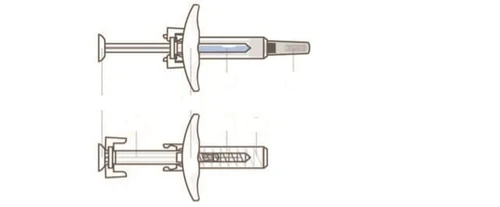
Before
administration
C D
A B
A. Plunger
C E F
B. Finger flange
After D. Needle safety guard
administration E. Needle
F. Needle cover
C. Pre-filled syringe (glass)
- Remove the dose packaging from the refrigerator and allow it to reach room temperature (up to 25 °C) before administering the injections. The recommended time to reach room temperature is 30 minutes.
The date and time of removal of the dose packaging from the refrigerator must be recorded on the box.
○ Do not use external heat sources, such as warm water, to heat the pre-filled syringes.
○ Do not touch or recap the needle at any step. This is to avoid injury from accidental needlestick.
-
Remove both product syringes from the tray. Check that the medicinal product in each pre-filled syringe is a solution ranging from colourless to slightly yellow and slightly opalescent, essentially free from visible particles. Air bubbles may be visible through the glass. This is normal and does not affect the dose.
- Check both pre-filled syringes. Do not use if:
○ they are past the expiry date stated on the syringe label (EXP), or
○ they have been stored at room temperature (up to 25 °C) for more than 24 hours,
○ the colour or clarity of the liquid does not match the description above, or if the liquid contains suspended particles,
○ there are signs of damage (cracks, chips, etc.). - If any of these conditions are observed, contact the pharmacy immediately.
- Check both pre-filled syringes. Do not use if:
-
A complete dose consists of two syringes administered consecutively and within 30 minutes of each other.

Use two 150 mg syringes
Complete dose = 300 mg
-
Use an aseptic (clean and germ-free) technique and a flat working surface during the injection procedure.
-
Select the first subcutaneous injection site on the thigh, abdomen, or upper outer area of the arm.

- Do not inject into an area of skin that is irritated, red, bruised, infected, or scarred in any way.
- Administer the first injection.
- Select an injection site and clean the skin with an alcohol wipe.
○ Allow the injection site to dry naturally before injecting.
○ Do not touch or blow on this area again before performing the injection.
○ Remove the needle safety guard.
○ Gently pinch the skin around the cleaned injection site using the thumb and index finger to create a slight skin fold.
○ Hold the pre-filled syringe at an angle of 45°–90° to the injection site. Quickly insert the needle directly into the skin fold until the needle is completely under the skin.
- Slowly depress the plunger in one smooth motion until the syringe is completely empty. Do not pull back on the plunger.
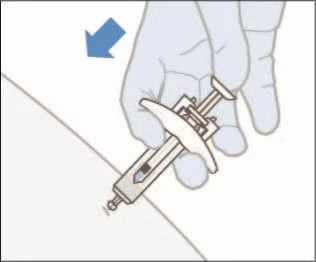
- Before removing the syringe, confirm that the syringe is empty. If blood is seen, apply cotton wool or gauze to the injection site. Do not rub the skin after the injection. When removing the syringe from the injection site, release the plunger WHILE withdrawing the needle. When the plunger is released, the needle cover will cover the exposed needle.
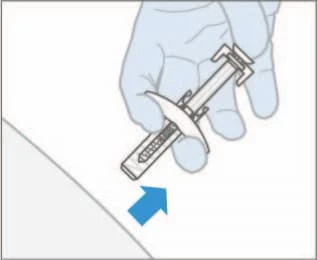
- Administer the injections one after the other without significant delays. If the second injection cannot be administered immediately after the first, the second injection must be given no later than 30 minutes after the first. The second injection must be administered at least 3 cm away from the site of the first injection.
Patients must be monitored during subcutaneous injections and for 1 hour after to check for any signs and symptoms of injection reactions, including hypersensitivity.
After the first 6 doses of Tysabri, regardless of the route of administration, patients should be monitored after subcutaneous injection according to clinical judgment.
Promptly discontinue the injection upon the first observation of any sign or symptom consistent with an allergic reaction [see SmPC section 4.4].
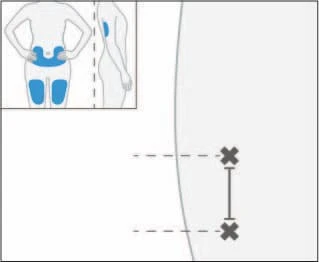
1st injection


At least
3 cm

2nd injection
- Dispose of the used syringe in accordance with local requirements.