Tryngolza
Italy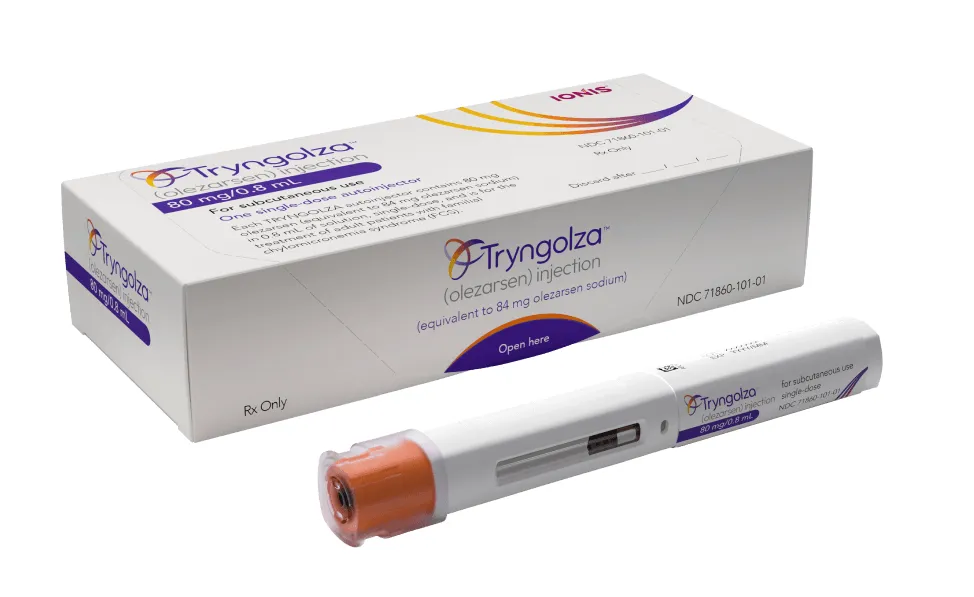
Table of Contents
- Package leaflet: Information for the user
- Tryngolza 80 mg solution for injection in pre-filled pen
- 1. What Tryngolza is and what it is used for
- 2. What you need to know before using Tryngolza
- 3. How to use Tryngolza
- 4. Possible side effects
- 5. How to store Tryngolza
- 6. Package contents and other information
Package leaflet: Information for the user
Tryngolza 80 mg solution for injection in pre-filled pen
olezarsen
This medicinal product is subject to additional monitoring. This will allow for rapid identification of new safety information. You can help by reporting any side effects you experience while taking this medicine. See the end of section 4 for information on how to report side effects.
Please read this leaflet carefully before using this medicine because it contains important information for you.
- Keep this leaflet. You may need to read it again.
- If you have any questions, ask your doctor, pharmacist or nurse.
- This medicine has been prescribed for you only. Do not give it to other people, even if their symptoms are the same as yours, as it may be harmful.
- If you experience any side effect, including those not listed in this leaflet, contact your doctor, pharmacist or nurse. See section 4.
Contents of this leaflet
- What Tryngolza is and what it is used for
- What you need to know before using Tryngolza
- How to use Tryngolza
- Possible side effects
- How to store Tryngolza
- Contents of the pack and other information
1. What Tryngolza is and what it is used for
Tryngolza is a medicine that modifies the way the body breaks down fats (a type of medicine known as a lipid-lowering agent). It contains the active substance olezarsen.
It is used together with dietary restrictions to help treat people aged 18 years and older with familial chylomicronaemia syndrome (FCS). FCS is an inherited disease that causes excessively high levels of fats, called triglycerides, in the blood. This can lead to inflammation of the pancreas, causing severe pain, permanent damage to the pancreas, and may be life-threatening.
Olezarsen works by blocking the production of the molecule that slows down the removal of triglycerides. In this way, it helps lower triglyceride levels in the blood and may help reduce the occurrence of acute pancreatitis (inflammation of the pancreas).
Tryngolza will only be administered to you if genetic testing has confirmed that you have FCS.
Tryngolza may be given after you have already received other medicines to lower triglyceride levels in the blood and have followed a low-fat diet without achieving significant results.
2. What you need to know before using Tryngolza
Do not use Tryngolza
- if you are allergic to olezarsen or to any of the other ingredients of this medicine (listed in section 6).
Warnings and precautions
Talk to your doctor, pharmacist, or nurse before using Tryngolza if you have any of the following
medical conditions:
- any problems with your liver or kidneys
- a low number of platelets in your blood. Platelets are a type of blood cell that clump together to help blood clotting.
Allergic reactions
Tryngolza may cause serious allergic reactions. Stop using Tryngolza and contact your doctor immediately if you develop symptoms of a severe allergic reaction (see section 4).
Children and adolescents
Do not use Tryngolza if you are under 18 years of age. Olezarsen has not been studied in patients under 18 years of age, and it is not known what effect this medicine may have in this population.
Other medicines and Tryngolza
Tell your doctor or pharmacist if you are taking, have recently taken, or might take any other medicines. Tryngolza can be used with other lipid-lowering medicines, such as statins and fibrates.
Pregnancy and breastfeeding
If you are pregnant, think you might be pregnant, are planning to become pregnant, or are breastfeeding, consult your doctor before taking this medicine.
It is not known whether this medicine may cause harm to the unborn child. It is preferable to avoid using Tryngolza during pregnancy, or if you suspect or are planning a pregnancy. Women of childbearing potential must use effective contraceptive measures.
It is not known whether olezarsen passes into breast milk. It is not known whether this medicine may have effects on the breastfed newborn/infant. Inform your doctor if you are breastfeeding or plan to breastfeed; your doctor will decide whether you should receive this medicine or breastfeed, based on what is best for you and your baby.
Driving and using machines
Tryngolza does not affect or has a negligible effect on the ability to drive or use machinery.
Sodium
This medicine contains less than 1 mmol (23 mg) of sodium per 80 mg dose, i.e. essentially 'sodium-free'.
3. How to use Tryngolza
Use this medicine exactly as instructed by your doctor, pharmacist, or nurse. If you have any doubts, consult your doctor or pharmacist.
During treatment with Tryngolza, you must continue the very low-fat diet recommended by your doctor.
The recommended dose is 80 mg once a month; the dose should be administered on the same day each month.
Tryngolza must be injected under the skin (subcutaneous administration) into the abdomen, the front of the thighs, or the back of the upper arm. You or the person assisting you will receive instructions on how to use Tryngolza, according to the instructions for use provided at the end of this leaflet. If you self-inject this medicine, you may only administer the injection under the skin of the abdomen or the upper part of the thighs. Only a healthcare professional or your caregiver may administer the injection into the back of the upper arm.
Each single-use pre-filled pen of this medicine delivers a dose of 80 mg in 0.8 mL. The pen can only be used once and must be disposed of after use.
Before using this medicine, it is important that you read, understand, and carefully follow the instructions for use provided at the end of this leaflet.
Do not use this medicine if the solution appears frozen, cloudy, or contains particles: it should be a clear liquid, colourless to yellow. Air bubbles in the solution may be visible; this is normal.
Do not administer the injection:
- within 5 cm of the navel
- at sites where the skin is bruised, tender, red, or hardened
- in scars or damaged skin.
If you use more Tryngolza than you should
If you inject too much Tryngolza, contact your doctor or pharmacist, or go immediately to the emergency department, even if you do not have any symptoms. You will be monitored and will receive supportive treatment if necessary. Take the medicine packaging or the pen with you.
If you forget to use Tryngolza
If you miss a dose of Tryngolza, inject the next dose as soon as possible and then continue with your monthly injections. If you have any doubts about the dosing schedule, consult your doctor, pharmacist, or nurse.
If you stop using Tryngolza
Do not stop using Tryngolza unless you have discussed it with your doctor.
If you have any doubts about how to use this medicine, consult your doctor, pharmacist, or nurse.
4. Possible side effects
Like all medicines, this medicine can cause side effects, although not everybody gets them.
Serious side effects
Common (may affect up to 1 in 10 people)
Contact your doctor immediately if you experience any of the following side effects:
- allergic reactions (hypersensitivity). These reactions can be life-threatening. Symptoms of an allergic reaction may include difficulty breathing, tightness in the throat, swelling of the face, lips, mouth, tongue or throat, skin redness and chills.
Other side effects
Very common (may affect more than 1 in 10 people)
- headache
- joint pain, soreness or stiffness (arthralgia)
- redness (erythema) at the injection site
- vomiting.
Common (may affect up to 1 in 10 people)
- muscle pain
- change in skin colour at the injection site
- tremor (chills)
- pain at the injection site
- swelling at the injection site.
Reporting of side effects
If you experience any side effect, including those not listed in this leaflet, talk to your doctor, pharmacist or nurse. You can also report side effects directly via the national reporting system detailed in Annex V. By reporting side effects, you can help provide more information on the safety of this medicine.
5. How to store Tryngolza
Keep this medicine out of the sight and reach of children.
Do not use this medicine after the expiry date which is stated on the carton and on the label of the pre-filled pen after "Exp". The expiry date refers to the last day of that month.
Store in a refrigerator (2°C – 8°C).
Keep in the original packaging to protect the medicine from light.
Tryngolza may also be stored in its original packaging outside the refrigerator (at a temperature up to 30°C) for a maximum of 6 weeks. If Tryngolza is stored outside the refrigerator, write the disposal date on the outer packaging. The disposal date is at most 6 weeks after removal of the medicine from the refrigerator and must be recorded in the space indicated for storage at temperatures up to 30°C. If the expiry date or the disposal date stated on the carton has been exceeded, do not use the pre-filled pen and dispose of it appropriately.
Do not dispose of any medicine via wastewater or household waste. Ask your pharmacist how to dispose of medicines no longer required. This will help protect the environment.
6. Package contents and other information
What Tryngolza contains
- The active substance is olezarsen. Each single-dose pre-filled pen contains 80 mg of olezarsen in 0.8 mL of solution.
- The other components are sodium dihydrogen phosphate (E339), disodium hydrogen phosphate (E339), sodium chloride, water for injections, sodium hydroxide (E524) and hydrochloric acid (E507) (see section 2 “Sodium”).
Description of the appearance of Tryngolza and contents of the pack
Tryngolza is a clear, colourless to yellow injectable solution in a single-dose pre-filled pen. Each pre-filled pen contains 0.8 mL of solution.
Pack containing one pre-filled pen.
Marketing Authorisation Holder
Swedish Orphan Biovitrum AB (publ)
SE-112 76
Stockholm
Sweden
Manufacturer
Ionis Ireland Limited
St. James House
72 Adelaide Road, Dublin 2
D02 Y017
Ireland
Other sources of information
More detailed information on this medicinal product is available on the website of the European Medicines Agency: https://www.ema.europa.eu/ .
INSTRUCTIONS FOR USE
Tryngolza is an injectable medicine administered subcutaneously using a single-use pre-filled pen.
Do not use Tryngolza until you fully understand the entire procedure described below. If you have any doubts about how to use Tryngolza, consult your doctor, pharmacist, or nurse.
| Single-dose pre-filled pen Other materials (not included) Plunger Viewing window Medicinal product Transparent cap Orange needle protection device Alcohol-impregnated wipe Sharps container Cotton ball or gauze Small plaster 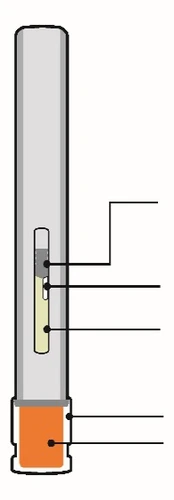 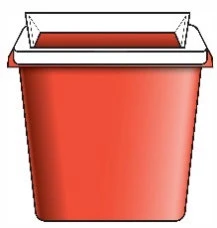  | |||||
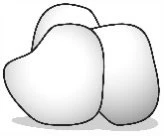 | 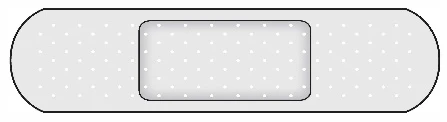 | ||||
Preparing for Tryngolza Injection
Step 1 Remove from the refrigerator
a) Remove the pre-filled pen from the
refrigerator (2°C – 8°C).
b) Keep the pre-filled pen in its
original carton packaging and allow it
to reach room temperature
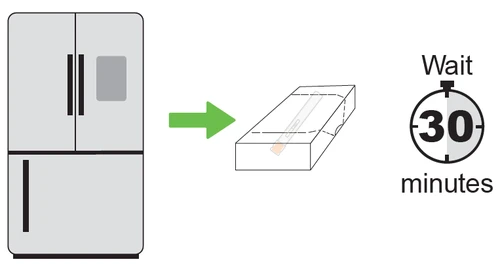
(up to 30°C) for 30 minutes before
administering the injection.
Do not attempt to speed up the warming
process by using other heat sources,
such as a microwave or hot water.
If Tryngolza is stored outside the
refrigerator, write the disposal date on
the outer packaging. The disposal date is
no later than 6 weeks after removing the
medicine from the refrigerator and must
be recorded in the space provided for
storage at temperatures up to 30°C.
Step 2 Inspect the medicine
a) Check the expiry date (“Exp.”). Do
not use Tryngolza if the “Exp.” date or
the disposal date on the carton has
passed.
b) Examine the medicine through the
viewing window. The medicine
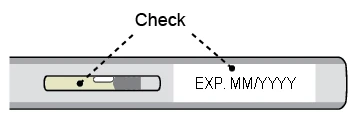
should be a clear, colourless to yellow
liquid. There should be no particles. It is
normal to see air bubbles in the solution.
Do not use the pre-filled pen if:
- the transparent cap is missing or not properly attached
- the expiry date (“Exp.”) or disposal date on the carton has passed
- the medicine appears frozen, cloudy, or contains particles
- the pre-filled pen appears damaged.
Step 3 Select the injection site
a) Choose an injection site on the
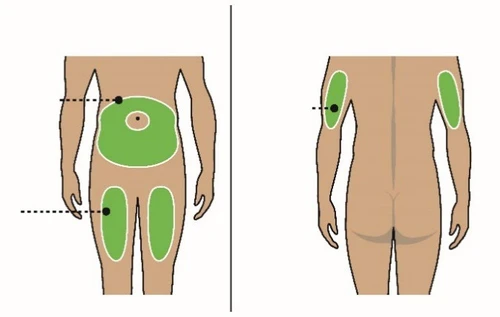
abdomen or the front of the thigh.
b) Only caregivers may choose the
back of the upper arm.
Do not administer the injection:
- within 5 cm of the navel
- in areas where the skin is bruised, tender, red, or hardened
- in scars or damaged skin.
Step 4 Wash hands and clean the
injection site
The person administering the injection
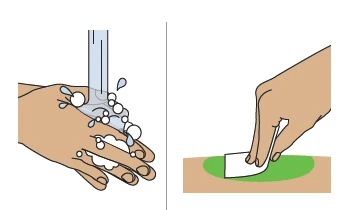
must:
a) Wash hands thoroughly with soap and water.
b) Clean the injection site well with an alcohol wipe using circular motions. Allow the skin to air dry.
Do not touch the cleaned skin before administering the injection.
Administering Tryngolza
Step 5 Remove and discard the
transparent cap
a) Hold the pre-filled pen by the middle section, with the transparent cap pointing away from you.
b) Remove the transparent cap by pulling it off. Do not twist it. The needle is located inside the orange needle protection device.
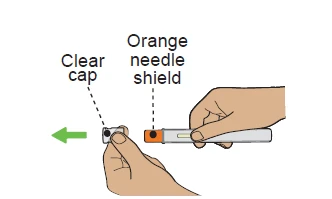
Press Hold
Orange needle
Transparent
protection
orange cap
device
c) Discard the transparent cap into a sharps container or trash bin.
Do not remove the transparent cap until just before injection.
Do not reattach the transparent cap to the pre-filled pen.
Do not press the orange needle protection device against your hand or finger.
Step 6 Begin the injection
a) Hold the pre-filled pen in one hand. Position the orange needle protection device at a 90-degree angle against the skin. Ensure the viewing window is visible.
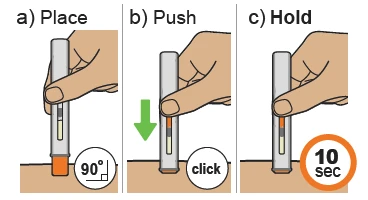
Press Hold
b) Press firmly and continue to hold the pre-filled pen firmly against the skin. You will hear a click when the injection starts.
You may hear a second click.
This is normal. The process is not yet complete.
c) Keep the pre-filled pen pressed against the skin for 10 seconds to ensure the full dose is delivered.
Do not move, rotate, or change the angle of the pen during injection.
Step 7 Complete the injection
a) Check that the orange plunger body has moved down and completely fills the viewing window. If the orange plunger body does not fill the viewing window, the full dose may not have been delivered.
If this occurs or if you have any concerns,
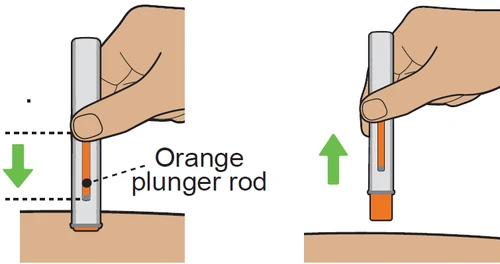
contact your healthcare provider.
b) Remove the pen by lifting it straight off. Once removed from the skin, the orange needle protection device will lock in place and cover the needle.
Orange
plunger
body
c) A small amount of blood or fluid at the injection site may occur. This is normal.
If needed, press a cotton ball or gauze pad on the area and apply a small plaster.
Do not reuse the pre-filled pen.
Disposing of Tryngolza
Step 8 Dispose of the pre-filled pen
Immediately after use, place the used pre-filled pen into a
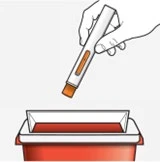
sharps container.
Do not dispose of the pre-filled pen in household waste.
Do not recycle the sharps container.
Do not reuse the pre-filled pen or the transparent cap.
If you do not have a sharps container, you may use a household container that:
is made of heavy-duty plastic
can be closed with a tight, puncture-resistant lid, preventing leakage of sharps
is upright and stable during use
is leak-proof, and
is properly labeled to warn of hazardous waste inside.
When the sharps container is nearly full, follow local guidelines for proper disposal. There may be local regulations governing the disposal of used pre-filled pens. Ask your pharmacist or visit the website of your local public health agency (if available) for more information on how to dispose of sharps in your area.