Truqap
Italy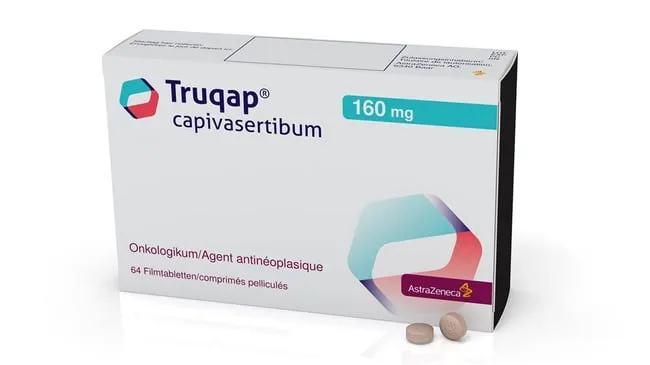
Table of Contents
Patient Information Leaflet
TRUQAP 160 mg film-coated tablets, 200 mg film-coated tablets
capivasertib
This medicinal product is subject to additional monitoring. This will allow for rapid identification of new safety information. You can help by reporting any side effects you experience while taking this medicine. See the end of section 4 for information on how to report side effects.
Please read this leaflet carefully before taking this medicine, as it contains important information for you.
- Keep this leaflet. You may need to read it again.
- If you have any questions, ask your doctor, pharmacist, or nurse.
- This medicine has been prescribed for you only. Do not give it to others, even if they have the same symptoms as you, because it may be harmful.
- If you experience any side effect, including those not listed in this leaflet, tell your doctor, pharmacist, or nurse. See section 4.
Contents of this leaflet
- What TRUQAP is and what it is used for
- What you need to know before taking TRUQAP
- How to take TRUQAP
- Possible side effects
- How to store TRUQAP
- Contents of the pack and other information
1. What TRUQAP is and what it is used for
What TRUQAP is
TRUQAP is a medicine used to treat cancer. It contains the active substance capivasertib.
Capivasertib belongs to a group of medicines called AKT inhibitors.
What TRUQAP is used for
TRUQAP is used in combination with fulvestrant (another anticancer medicine) to treat adult patients with estrogen receptor-positive (ER), HER2-negative advanced breast cancer or cancer that has spread to other parts of the body, and which has one or more abnormal “PIK3CA”, “AKT1”, or “PTEN” genes, and whose tumour does not respond to other medicines that block the effects of hormones (hormone therapy).
Women who have not yet reached menopause will also be treated with a medicine called a luteinising hormone-releasing hormone (LHRH) agonist. For men, the doctor will decide whether you should be treated with an LHRH agonist.
The healthcare provider will test your tumour to check for the presence of at least one abnormal “PIK3CA”, “AKT1”, or “PTEN” gene to ensure that TRUQAP is suitable for you.
How TRUQAP works
TRUQAP works by blocking the effects of proteins called AKT kinases. These proteins help cancer cells grow and multiply. By inhibiting their activity, TRUQAP can reduce the growth of cancer cells.
If you have any questions about how TRUQAP works or why this medicine has been prescribed for you, please consult your doctor.
Which other medicine is administered with TRUQAP
When you take this medicine, you will also be given another medicine called fulvestrant.
2. What you should know before taking TRUQAP
Do not take TRUQAP
- if you are allergic to capivasertib or to any of the other ingredients of this medicine (listed in section 6).
Warnings and precautions
Before taking TRUQAP, inform your healthcare provider if:
- You have or have had diabetes or high blood sugar levels (hyperglycaemia), or signs of high blood sugar, including excessive thirst, dry mouth, need to urinate more often than usual, increased volume of urine, increased appetite with weight loss.
- You currently have infections.
- You have diarrhoea or watery stools.
- You have a rash or other skin disorders.
- You have kidney problems or elevated levels of creatinine or uric acid in your blood (as observed in blood tests).
- You have liver problems.
Ask your doctor for the package leaflet of fulvestrant, as it contains important information about the medicine.
During treatment with TRUQAP, contact your doctor immediately if you experience any of the following adverse effects. Your doctor may need to treat these symptoms, temporarily interrupt treatment, reduce the dose, or permanently discontinue treatment with TRUQAP:
High blood sugar levels (hyperglycaemia)
- Your doctor will monitor your blood sugar levels before starting treatment with TRUQAP and regularly during treatment, particularly more frequently during the first eight weeks. Blood sugar levels should be monitored on day 3 or 4 of the dosing week, before taking TRUQAP. Based on the results, your doctor will take all necessary actions, such as prescribing medication to lower blood sugar levels and referring you to a diabetologist. More frequent monitoring of blood sugar levels and medications will be required if you have diabetes.
- Your doctor will inform you exactly when and where to have blood tests performed. Treatment with TRUQAP can only be started if test results show that your blood sugar levels are within normal limits. This is because TRUQAP can increase blood sugar (hyperglycaemia), which could be severe and lead to life-threatening complications.
- Signs of high blood sugar include excessive thirst, dry mouth, increased frequency of urination, increased volume of urine, increased appetite with weight loss. Other symptoms such as nausea, vomiting, abdominal pain, difficulty breathing, fruity-smelling breath, confusion, unusual tiredness, or drowsiness may indicate an acute complication due to elevated blood sugar levels.
Diarrhoea
- Your doctor or pharmacist may advise you to drink more fluids or take medication to treat diarrhoea.
- Signs of diarrhoea include loose or watery stools.
Rash and other drug-related skin reactions
- Signs of a rash and other drug-related skin reactions include skin rash, redness of the skin, blistering of the lips, eyes or mouth, skin peeling, dry skin, skin inflammation with rash, peeling and/or desquamation of the skin surface.
Children and adolescents
TRUQAP is not recommended for children or adolescents under 18 years of age. The safety and efficacy of TRUQAP have not been studied in this age group.
Other medicines and TRUQAP
Inform your doctor or pharmacist if you are taking, have recently taken, or might take any other medicines, including those without a prescription. Some medicines used to treat infections may increase the risk of TRUQAP side effects, and your doctor may need to reduce the dose of TRUQAP. See examples below:
- Certain antibiotics (e.g. clarithromycin, telithromycin).
- Certain antifungals (e.g. ketoconazole, itraconazole, voriconazole, posaconazole).
- Certain antivirals (e.g. boceprevir, nelfinavir, ritonavir, telaprevir).
Some medicines may reduce the effectiveness of TRUQAP, for example carbamazepine, phenytoin, St John’s wort (a herbal medicine), and rifampicin.
TRUQAP may also increase the risk of side effects or alter the effectiveness when taken with certain other medicines such as bupropion, carbamazepine, cyclosporine, fentanyl, irinotecan, simvastatin. Your doctor may need to adjust the dose of these medicines.
The medicines listed here may not be the only ones that could interact with TRUQAP.
Ask your doctor or pharmacist if you are unsure whether your medicine is one of those listed above.
Pregnancy and fertility
Do not take TRUQAP if you are pregnant or planning to become pregnant. TRUQAP may be harmful to the unborn baby.
If you are a woman of childbearing potential, your doctor will require a negative pregnancy test before starting treatment and will recommend regular pregnancy testing during treatment.
Contraception for men and women
If you are a woman, you must avoid becoming pregnant while taking TRUQAP. Discuss with your doctor which contraceptive methods to use if there is any chance you could become pregnant.
If you are of childbearing potential, you must use an effective method of contraception during treatment with TRUQAP and for 4 weeks after the last dose. If you become pregnant during treatment, inform your doctor immediately. Your doctor can advise you on suitable contraceptive methods.
If you are a man, you must use a condom during sexual intercourse with a pregnant woman or a woman of childbearing potential during treatment with TRUQAP and for 16 weeks after the last dose. Your partner should also use an appropriate contraceptive method. Inform your doctor if a pregnancy occurs.
Breast-feeding
Before taking TRUQAP, inform your doctor if you are breast-feeding. For the safety of the infant, you must not breast-feed during treatment with TRUQAP.
Driving and use of machines
TRUQAP may affect your ability to drive or operate machinery. If you feel tired while taking TRUQAP, exercise particular caution when driving or operating tools or machines.
TRUQAP contains sodium
This medicine contains less than 1 mmol (23 mg) of sodium per dose, i.e. essentially 'sodium-free'.
3. How to take TRUQAP
Take this medicine exactly as directed by your doctor or pharmacist. If
you have any doubts, consult your doctor or pharmacist.
- The usual starting dose is 400 mg (two 200 mg tablets) taken twice daily (for a total of 4 tablets per day) for four days, followed by three days without dosing. See Table 1.
- Swallow the tablets whole with water, taking them approximately 12 hours apart (2 in the morning and 2 in the evening) at about the same time on dosing days.
- Do not chew, crush, or split the tablets before swallowing. Do not take broken, cracked, or otherwise damaged tablets, as you may not receive the full dose.
- Tablets may be taken with or without food.
Table 1: TRUQAP Dosing Schedule
Day 1 2 3 4 5* 6* 7*
Morning 2 x 200 mg 2 x 200 mg 2 x 200 mg 2 x 200 mg
Evening 2 x 200 mg 2 x 200 mg 2 x 200 mg 2 x 200 mg
Mark on the carton the day you take your first dose.
While taking TRUQAP, you will also receive another medicine called fulvestrant. Your doctor will determine
the dose and schedule for fulvestrant.
If you vomit, do not take an additional dose. Take the next dose of TRUQAP at your usual time.
Avoid grapefruit and grapefruit juice while taking TRUQAP, as it may increase the risk of side effects.
Depending on your response to treatment with TRUQAP, your doctor may adjust the dose of TRUQAP.
It is very important to follow your doctor's instructions. If you experience certain side effects, your
doctor may reduce the dose, temporarily suspend treatment, or permanently discontinue treatment.
The number of tablets to take depends on the prescribed dose as follows:
- 400 mg dose: two 200 mg tablets twice daily
- 320 mg dose: two 160 mg tablets twice daily
- 200 mg dose: one 200 mg tablet twice daily
How long to take TRUQAP
Take TRUQAP for as long as your doctor prescribes.
This is a long-term treatment, which may last for months or years. Your doctor will monitor your condition regularly to ensure the treatment is working as expected. If you have any questions about how long you should take TRUQAP, consult your doctor or pharmacist.
If you take more TRUQAP than you should
If you take too many tablets or if someone else takes the medicine, contact a doctor or hospital immediately. Show the TRUQAP packaging and this patient information leaflet. Medical treatment may be necessary.
If you forget to take TRUQAP
If you miss a dose, you may still take it within 4 hours of your usual dosing time. If more than 4 hours have passed since your usual dose, skip the missed dose. Take the next dose at your usual time. Refer to Table 1 for the dosing schedule.
Do not take a double dose to make up for a forgotten dose.
If you stop taking TRUQAP
Do not stop treatment with TRUQAP unless your doctor tells you to. If you have any questions about using this medicine, consult your doctor or pharmacist.
4. Possible side effects
Like all medicines, this medicine can cause side effects, although not everyone will experience them.
Contact your doctor immediately if you experience any of the following side effects during treatment with TRUQAP. Your doctor may need to treat these symptoms, temporarily suspend treatment, reduce the dose, or permanently discontinue treatment with TRUQAP.
High blood sugar levels (hyperglycaemia)
- Excessive thirst and dry mouth
- Need to urinate more often than usual
- Production of larger than normal amounts of urine
- Increased appetite with weight loss
Your doctor or pharmacist will monitor your blood sugar levels before starting and during treatment with TRUQAP. Monitoring will be performed more frequently if you have diabetes.
Diarrhoea
- Watery or loose stools
Your doctor or pharmacist will advise you to drink more fluids or take medicines to treat diarrhoea.
Skin rash and other drug-related skin reactions
- Skin rash
- Redness of the skin
- Blisters on the lips, eyes, or mouth
- Skin peeling
- Dry skin
- Skin inflammation with rash
- Exfoliation and/or desquamation of the skin surface
Inform your doctor, pharmacist, or nurse if you notice any of the following side effects:
Very common (may affect more than 1 in 10 people)
- Infection of the parts of the body that collect and eliminate urine (urinary tract infection)
- Low levels of haemoglobin in the blood
- Loss of appetite
- Feeling unwell (nausea)
- Vomiting
- Mouth ulcers or ulcers with inflammation of the gums (stomatitis)
- Itching sensation (pruritus)
- Tiredness
- Headache
Common (may affect up to 1 in 10 people)
- Unusual taste in the mouth (dysgeusia)
- Stomach discomfort, indigestion (dyspepsia)
- Skin rashes
- Pain, redness, and swelling of mucous membranes in various parts of the body, e.g. genital mucosa (mucosal inflammation)
- Elevated levels of creatinine in the blood observed in blood tests, which may indicate kidney problems
- Elevated levels of glycated haemoglobin in the blood (a marker of blood sugar levels over the past 8–12 weeks)
- Decreased level of potassium in the blood
- Dizziness
- Syncope (fainting)
- Stomach pain
- Fever
- Kidney problems, including rapid loss of kidney function (acute kidney injury)
Uncommon (may affect up to 1 in 100 people)
- Hypersensitivity
- Toxic skin rash (allergic rash)
- Diabetic ketoacidosis (a serious complication due to high blood sugar levels)
Reporting of side effects
If you experience any side effect, including those not listed in this leaflet, talk to your doctor, pharmacist, or nurse. You can also report side effects directly through the national reporting system listed in Annex V. By reporting side effects, you can help provide more information on the safety of this medicine.
5. How to store TRUQAP
Keep this medicine out of the sight and reach of children.
Do not use this medicine after the expiry date stated on the carton after "Exp." and on the
blister after "EXP". The expiry date refers to the last day of that month.
This medicine requires no special storage conditions.
Do not use this medicine if you notice any damage to the packaging or if the tablet is broken, cracked, or otherwise not intact.
Do not dispose of any medicine via waste water or household waste. Ask your pharmacist how to dispose of medicines you no longer use. This will help protect the environment.
6. Package contents and other information
What TRUQAP contains
The active substance in TRUQAP is capivasertib.
- Each 160 mg TRUQAP film-coated tablet contains 160 mg of capivasertib.
- Each 200 mg TRUQAP film-coated tablet contains 200 mg of capivasertib.
The other ingredients (excipients) are:
- Tablet core: microcrystalline cellulose (E460i), calcium hydrogen phosphate, sodium croscarmellose (E468), and magnesium stearate (E470b) (see section 2 “TRUQAP contains sodium”).
- Film coating: hypromellose, titanium dioxide (E171), macrogol 3350, polydextrose, copovidone, medium-chain triglycerides, black iron oxide (E172), red iron oxide (E172), yellow iron oxide (E172).
Description of the appearance of TRUQAP and package contents
TRUQAP 160 mg film-coated tablets
Beige-colored, biconvex, round film-coated tablets, marked with “CAV” above “160” on one side and plain on the reverse. Approximate diameter: 10 mm.
TRUQAP 200 mg film-coated tablets
Beige-colored, biconvex, capsule-shaped film-coated tablets, marked with “CAV 200” on one side and plain on the reverse. Approximate dimensions: 14.5 mm (length), 7.25 mm (width).
TRUQAP is supplied in aluminium blisters (with sun symbols for morning/moon for evening) containing 16 film-coated tablets. Each pack contains 64 tablets (4 blisters).
Marketing Authorization Holder
AstraZeneca AB
SE-151 85 Södertälje
Sweden
Manufacturer
AstraZeneca AB
Gärtunavägen
SE-152 57 Södertälje
Sweden
For further information about this medicinal product, please contact the local representative of the Marketing Authorization Holder:
België/Belgique/Belgien Lietuva
AstraZeneca S.A./N.V. UAB AstraZeneca Lietuva
Tel: +32 2 370 48 11 Tel: +370 5 2660550
България Luxembourg/Luxemburg
АстраЗенека България ЕООД AstraZeneca S.A./N.V.
Тел.: +359 24455000 Tél/Tel: +32 2 370 48 11
Česká republika Magyarország
AstraZeneca Czech Republic s.r.o. AstraZeneca Kft.
Tel: +420 222 807 111 Tel.: +36 1 883 6500
Danmark Malta
AstraZeneca A/S Associated Drug Co. Ltd
Tlf.: +45 43 66 64 62 Tel: +356 2277 8000
Deutschland Nederland
AstraZeneca GmbH AstraZeneca BV
Tel: +49 40 809034100 Tel: +31 85 808 9900
Eesti Norge
AstraZeneca AstraZeneca AS
Tel: +372 6549 600 Tlf: +47 21 00 64 00
Ελλάδα Österreich
AstraZeneca A.E. AstraZeneca Österreich GmbH
Τηλ: +30 210 6871500 Tel: +43 1 711 31 0
España Polska
AstraZeneca Farmacéutica Spain, S.A. AstraZeneca Pharma Poland Sp. z o.o.
Tel: +34 91 301 91 00 Tel.: +48 22 245 73 00
France Portugal
AstraZeneca AstraZeneca Produtos Farmacêuticos, Lda.
Tél: +33 1 41 29 40 00 Tel: +351 21 434 61 00
Hrvatska România
AstraZeneca d.o.o. AstraZeneca Pharma SRL
Tel: +385 1 4628 000 Tel: +40 21 317 60 41
Ireland Slovenija
AstraZeneca Pharmaceuticals (Ireland) DAC AstraZeneca UK Limited
Tel: +353 1609 7100 Tel: +386 1 51 35 600
Ísland Slovenská republika
Vistor hf. AstraZeneca AB, o.z.
Sími: +354 535 7000 Tel: +421 2 5737 7777
Italia Suomi/Finland
AstraZeneca S.p.A. AstraZeneca Oy
Tel: +39 02 00704500 Puh/Tel: +358 10 23 010
Κύπρος Sverige
Αλέκτωρ Φαρµακευτική Λτδ AstraZeneca AB
Τηλ: +357 22490305 Tel: +46 8 553 26 000
Latvija
SIA AstraZeneca Latvija
Tel: +371 67377100
Other sources of information
More detailed information on this medicinal product is available on the website of the European Medicines Agency: https://www.ema.europa.eu.