Triveram
Italy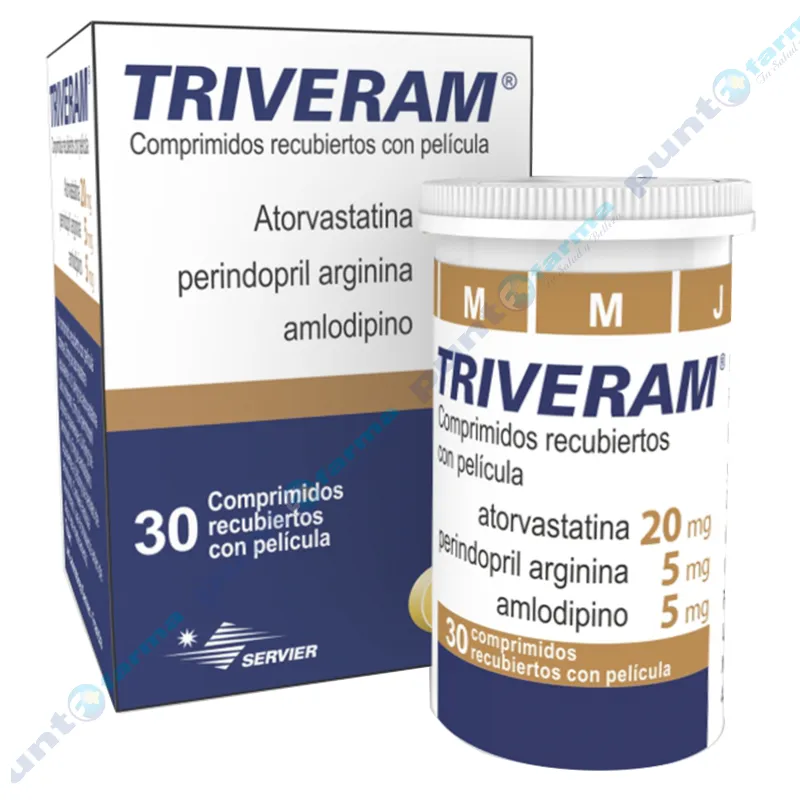
Table of Contents
- Package leaflet: information for the patient
- Triveram 10mg/5mg/5mg film-coated tablets, 20mg/5mg/5mg film-coated tablets, 20mg/10mg/5mg film-coated tablets, 20mg/10mg/10mg film-coated tablets, 40mg/10mg/10mg film-coated tablets
- 1. What Triveram is and what it is used for
- 2. What you need to know before taking Triveram
- 3. How to take Triveram
- 4. Possible side effects
- 5. How to store Triveram
- 6. Package contents and other information
PACKAGE LEAFLET
Package leaflet: information for the patient
Triveram 10mg/5mg/5mg film-coated tablets, 20mg/5mg/5mg film-coated tablets, 20mg/10mg/5mg film-coated tablets, 20mg/10mg/10mg film-coated tablets, 40mg/10mg/10mg film-coated tablets
atorvastatin / perindopril arginine / amlodipine
Please read this leaflet carefully before taking this medicine, as it contains important information for you.
- Keep this leaflet. You may need to read it again.
- If you have any questions, ask your doctor or pharmacist.
- This medicine has been prescribed for you only. Do not give it to others, even if their symptoms are the same as yours, as it may be harmful.
- If you experience any side effect, including those not listed in this leaflet, inform your doctor or pharmacist. See section 4.
Contents of this leaflet:
- What Triveram is and what it is used for
- What you need to know before taking Triveram
- How to take Triveram
- Possible side effects
- How to store Triveram
- Contents of the pack and other information
1. What Triveram is and what it is used for
Triveram contains three active substances in a single tablet: atorvastatin, perindopril arginine, and
amlodipine.
Atorvastatin belongs to a group of medicines known as statins, which regulate lipid (fat) levels.
Perindopril arginine is an angiotensin-converting enzyme (ACE) inhibitor. In patients with
high blood pressure, it works by dilating blood vessels, making it easier for the heart to pump blood.
Amlodipine belongs to a group of medicines known as calcium antagonists. In patients with
high blood pressure, it works by relaxing blood vessels, making it easier for blood to flow through them. In patients with angina (which causes chest pain), it improves blood flow to the heart, thereby increasing oxygen supply to the heart and helping to prevent chest pain.
Triveram is indicated for the treatment of high blood pressure (hypertension) and/or for the treatment of stable coronary artery disease (a condition in which blood supply to the heart is reduced or blocked) in adults who have one of the following conditions:
- high cholesterol levels (primary hypercholesterolaemia), or
- high cholesterol and fat (triglyceride) levels (combined or mixed hyperlipidaemia).
Triveram is intended for patients who are already taking atorvastatin, perindopril arginine, and amlodipine, but as separate tablets. Instead of taking separate tablets containing atorvastatin, perindopril arginine, and amlodipine, you will take one Triveram tablet containing the three active substances at the same dosage.
2. What you need to know before taking Triveram
Do not take Triveram:
- if you are allergic to atorvastatin or any other statin, to perindopril or any other ACE inhibitor, to amlodipine or any other calcium antagonist, or to any of the other ingredients of this medicine (listed in section 6),
- if you have a liver disease,
- if liver function tests have shown unexplained abnormal results,
- if you have severely low blood pressure (hypotension),
- if you have cardiogenic shock (a condition in which the heart is unable to supply sufficient blood to the body),
- if you have a blockage in blood flow from the left ventricle of the heart (e.g. obstructive hypertrophic cardiomyopathy and a high degree of aortic stenosis),
- if you have heart failure following a heart attack,
- if you have previously experienced symptoms such as shortness of breath, swelling of the face, tongue or throat, intense itching or severe skin rashes related to prior treatment with ACE inhibitors, or if you or a family member has ever had such symptoms under any circumstances (a condition called angioedema),
- if you have diabetes or impaired kidney function and are being treated with a blood pressure-lowering medicine containing aliskiren,
- if you are using the combination glecaprevir/pibrentasvir for the treatment of hepatitis C,
- if you are undergoing dialysis or any type of blood filtration. Depending on the equipment used, Triveram treatment may not be suitable for you,
- if you have kidney problems causing reduced blood flow to the kidneys (renal artery stenosis),
- if you are being treated with sacubitril/valsartan, a medicine used to treat heart failure (see "Warnings and precautions" and "Other medicines and Triveram"),
- if you are pregnant or planning a pregnancy, or if you are a woman of childbearing potential and not using a reliable method of contraception,
- if you are breastfeeding.
Warnings and precautions
Talk to your doctor or pharmacist before taking Triveram if:
- you have liver problems or a history of liver disease,
- you have moderate to severe kidney problems,
- you regularly consume large amounts of alcohol,
- you are taking or have taken within the last 7 days an oral or injectable medicine called fusidic acid (used to treat bacterial infections). The combination of fusidic acid with Triveram may cause serious muscle problems (rhabdomyolysis),
- you have had unexplained or recurrent muscle pain or tenderness, or a personal or family history of muscle disorders,
- you or a close relative suffer from a familial muscle disorder,
- you have previously experienced muscle problems during treatment with other lipid-lowering medicines (hypolipidemics), (e.g., other medicines belonging to the statin or fibrate classes),
- you have an underactive thyroid gland (hypothyroidism),
- you have a condition or situation that leads to increased levels of atorvastatin in the blood,
- you are developing symptoms of severe respiratory failure during treatment,
- you have diabetes (high blood glucose levels),
- you suffer from heart failure or any other heart condition,
- you have had or recently had a heart attack,
- you have recently suffered from diarrhea or vomiting, or are dehydrated,
- you have mild aortic or mitral valve stenosis (narrowing of the main blood vessel leaving the heart or of the heart's mitral valve),
- you have kidney problems; you have recently undergone a kidney transplant or are undergoing dialysis,
- you have an abnormally high level of a hormone called aldosterone in your blood (primary hyperaldosteronism),
- you are elderly,
- you experience symptoms of a severe allergic reaction such as swelling of the face, lips, tongue or throat, with difficulty swallowing or breathing (angioedema). This may occur at any time during treatment. If you experience such symptoms, stop taking Triveram immediately and consult a doctor,
- you are of Black ethnicity, as you may have a higher risk of developing angioedema and this medicine may be less effective in lowering blood pressure compared to non-Black patients,
- you are taking any of the following medicines, which increase the risk of angioedema:
- racecadotril (used to treat diarrhea),
- sirolimus, everolimus, temsirolimus and other medicines belonging to the class of so-called mTOR inhibitors (used to prevent organ transplant rejection),
- sacubitril (available as a fixed-dose combination with valsartan), used in long-term treatment of heart failure,
- you are scheduled to undergo LDL apheresis (blood purification to remove cholesterol using a machine),
- you are undergoing desensitization treatment to reduce the effects of allergy to bee or wasp stings,
- you are scheduled for general anesthesia and/or major surgery,
- you suffer from a collagen vascular disease (connective tissue disease) such as systemic lupus erythematosus or scleroderma,
- you are on a salt-restricted diet or use potassium-containing salt substitutes,
- your doctor has informed you that you have an intolerance to certain sugars,
- you are taking any of the following medicines used to treat high blood pressure:
- an "angiotensin II receptor blocker" (ARB) (also known as sartans – e.g. valsartan, telmisartan, irbesartan), particularly if you have kidney problems related to diabetes.
- aliskiren.
If any of the above conditions apply to you, consult your doctor before or during treatment with Triveram.
Your doctor may consider performing a blood test during treatment to monitor your muscles (see section 2 “Other medicines and Triveram”).
Additionally, inform your doctor or pharmacist if you experience persistent muscle weakness. Further tests or additional medicines may be needed to diagnose and treat this condition.
Your doctor may regularly monitor your kidney function, blood pressure, and blood levels of electrolytes (e.g., potassium). See also the information under "Do not take Triveram".
During treatment with this medicine, your doctor will carefully monitor whether you have diabetes or are at risk of developing diabetes. You are at risk of developing diabetes if you have high levels of sugar and fats in your blood, are overweight, and have high blood pressure.
Children and adolescents
Triveram should be avoided in children and adolescents under 18 years of age.
Other medicines and Triveram
Inform your doctor or pharmacist if you are taking, have recently taken, or might take any other medicine.
Some medicines may alter the effect of Triveram, or Triveram may alter the effect of other medicines. This type of interaction may reduce the effectiveness of one or both medicines. Alternatively, it may increase the risk or severity of side effects, including a condition of muscle breakdown known as rhabdomyolysis, described in section 4. Make sure to inform your doctor if you are taking any of the following medicines:
- immunosuppressants (medicines that suppress the body's defense mechanisms) used to treat autoimmune diseases or after organ transplantation (e.g., cyclosporine, tacrolimus),
- ketoconazole, itraconazole, voriconazole, fluconazole, posaconazole (medicines used to treat fungal infections),
- rifampicin, erythromycin, clarithromycin, telithromycin, fusidic acid*, trimethoprim (antibiotics used to treat bacterial infections),
- colchicine (used to treat gout, a disease causing joint pain and swelling due to uric acid crystal formation),
- other medicines used to regulate lipid (fat) levels, e.g., gemfibrozil, other fibrates, colestipol, ezetimibe,
- certain calcium channel blockers used for angina or high blood pressure, e.g., diltiazem,
- medicines used to regulate heart rhythm, e.g., digoxin, verapamil, amiodarone,
- letermovir, a medicine used to treat cytomegalovirus infection,
- medicines used to treat HIV or liver diseases such as hepatitis C, e.g., delavirdine, efavirenz, ritonavir, lopinavir, atazanavir, indinavir, darunavir, telaprevir, boceprevir, and the combination elbasvir/grazoprevir,
- warfarin (which reduces blood clot formation),
- oral contraceptives,
- stiripentol (an anticonvulsant for epilepsy),
- cimetidine (used for heartburn and peptic ulcer),
- phenazone (a painkiller),
- antacids (indigestion remedies containing aluminium and magnesium),
- over-the-counter medicines: Hypericum perforatum or St. John’s wort (a herbal remedy used for depression),
- dantrolene (infusion for severe body temperature abnormalities),
- other medicines for treating hypertension, including aliskiren, angiotensin II receptor antagonists (ARBs) (e.g., valsartan), (see also information under "Do not take Triveram" and "Warnings and precautions"),
- potassium-sparing agents (e.g., triamterene, amiloride, eplerenone, spironolactone), potassium supplements, or potassium-containing salt substitutes, other drugs that may increase blood potassium levels (such as heparin and co-trimoxazole, also known as trimethoprim/sulfamethoxazole),
- estramustine (used in cancer therapy),
- lithium used to treat mania or depression,
- medicines mainly used to treat diarrhea (racecadotril) or to prevent organ transplant rejection (sirolimus, everolimus, temsirolimus and other medicines belonging to the class of so-called mTOR inhibitors). See section “Warnings and precautions”,
- sacubitril/valsartan (used in long-term treatment of heart failure). See information under “Do not take Triveram” and “Warnings and precautions”,
- medicines for treating diabetes (such as insulin, metformin or gliptins),
- baclofen (used to treat muscle stiffness in conditions such as multiple sclerosis),
- non-steroidal anti-inflammatory drugs (e.g., ibuprofen) for pain relief or treatment of inflammation (e.g., in rheumatoid arthritis) or high-dose aspirin,
- vasodilators, including nitrates (medicines that dilate blood vessels),
- medicines for treating mental disorders such as depression, anxiety, schizophrenia, etc. (e.g., tricyclic antidepressants, antipsychotics),
- medicines used to treat low blood pressure, shock or asthma (e.g., ephedrine, noradrenaline or adrenaline),
- gold salts, especially when administered intravenously (used to treat symptoms of rheumatoid arthritis),
- allopurinol (for treating gout),
- procainamide (for treating irregular heartbeat).
*If you need to take oral fusidic acid to treat a bacterial infection, you must temporarily stop taking Triveram. Your doctor will determine when it is safe to resume treatment with Triveram. Taking Triveram with fusidic acid may rarely cause muscle weakness, soreness or pain (rhabdomyolysis). For further information on rhabdomyolysis, see section 4.
Triveram with food, drinks and alcohol
It is preferable to take Triveram before a meal.
Grapefruit and grapefruit juice
People taking Triveram must not drink grapefruit juice or eat grapefruit. Grapefruit and its juice may increase blood levels of the active substance amlodipine, which could unpredictably enhance the blood pressure-lowering effect of Triveram.
If you are taking Triveram, you should not drink more than one or two small glasses of grapefruit juice per day, as larger quantities will increase the effect of the active substance atorvastatin.
Alcohol
Avoid drinking excessive amounts of alcohol while taking this medicine. For further details, see section 2 “Warnings and precautions”.
Pregnancy and breastfeeding
If you are pregnant, suspect you may be pregnant, planning a pregnancy, or breastfeeding, consult your doctor or pharmacist before taking this medicine.
This medicine must not be used during pregnancy.
Do not take Triveram if you are pregnant, planning a pregnancy, or if there is any possibility of becoming pregnant, unless you are using an effective method of contraception (see “Do not take Triveram”).
Do not take Triveram if you are breastfeeding. Inform your doctor immediately if you are breastfeeding or planning to start breastfeeding.
Driving and using machines
Triveram may cause dizziness, headache, fatigue or nausea. If you experience these symptoms, your ability to drive or operate machinery may be impaired, especially at the beginning of treatment.
Triveram contains lactose
If your doctor has diagnosed you with an intolerance to certain sugars, contact him before taking this medicine.
Triveram contains sodium
Triveram contains less than 1 mmol of sodium (23 mg) per tablet, i.e., it is essentially "sodium-free".
3. How to take Triveram
Take this medicine exactly as directed by your doctor or pharmacist. If you have
any doubts, consult your doctor or pharmacist.
The recommended dose is one tablet daily. The tablet should be swallowed with a glass
of water, preferably at the same time every day, in the morning before a meal.
Use in children and adolescents
Triveram should be avoided for use in children and adolescents under 18 years of age.
If you take more Triveram than you should
If you have taken more tablets than prescribed, go immediately to the nearest emergency room or
consult your doctor. If you take an excessive number of tablets, your blood pressure may drop, possibly to a dangerous extent. This could cause dizziness, mental confusion, weakness, or fainting. In such cases, it may help to lie down with your legs raised. The drop in blood pressure could be so severe as to cause shock. Your skin may become cold and clammy, and you may lose consciousness.
If you forget to take Triveram
It is important to take the medicine every day, as regular treatment is more effective. If, however,
you forget to take a dose of Triveram, take the next dose as usual.
Do not take a double dose to make up for a forgotten dose.
If you stop taking Triveram
Since treatment with Triveram for hypertension is usually lifelong, you must speak with your doctor before
stopping this medicine.
If you have any doubts about how to use this medicine, consult your doctor or pharmacist.
4. Possible side effects
Like all medicines, this medicine can cause side effects, although not everybody gets them.
If you experience any of the following side effects or symptoms, which may be serious, stop taking this medicine immediately and inform your doctor without delay:
swelling of the eyelids, face, lips, mouth, tongue or throat, difficulty breathing (angioedema) (see section 2 “Warnings and precautions”),
severe skin reactions including intense rash, hives, redness of the skin all over the body, severe itching, blisters, skin peeling and swelling, inflammation of mucous membranes (Stevens-Johnson syndrome, Toxic Epidermal Necrolysis) or other allergic reactions,
muscle weakness, tenderness, pain, muscle tearing or red-brown discoloration of urine, especially if you also feel unwell and have a high fever; this may be due to abnormal muscle breakdown which can be life-threatening and may lead to kidney problems,
weakness in the arms or legs, difficulty speaking which may be a sign of possible cerebral haemorrhage (stroke),
severe dizziness due to low blood pressure or fainting,
unusually fast or irregular heartbeat,
chest pain (angina) or heart attack,
sudden shortness of breath, chest pain, difficulty breathing, or breathing problems (bronchospasm),
inflammation of the pancreas which may cause severe abdominal and back pain, together with a strong feeling of illness,
if you experience unexpected or unusual bleeding or bruising, which could indicate liver disease,
yellowing of the skin or eyes (jaundice), which may be a sign of hepatitis,
skin rash, often starting as itchy red spots on the face, arms or legs (erythema multiforme),
lupus-like syndrome (skin rashes, joint disorders and effects on blood cells).
Inform your doctor if you experience any of the following side effects:
Very common (may affect more than 1 in 10 people)
- oedema (fluid retention).
Common (may affect up to 1 in 10 people):
nasal passage inflammation, sore throat, nosebleeds,
allergic reactions (such as skin rashes, itching),
increased blood sugar levels (if you have diabetes, you must continue to monitor your blood sugar levels regularly), increased creatine kinase in the blood,
headache, dizziness, vertigo, pins and needles sensation, feeling of fatigue,
vision disturbances, double vision,
tinnitus (sensation of noise or ringing in the ears),
cough, shortness of breath (dyspnoea),
gastrointestinal disorders: feeling unwell (nausea), feeling of illness (vomiting), constipation, flatulence, indigestion, altered bowel habits, diarrhoea, abdominal pain, altered taste, dyspepsia,
joint pain, muscle pain, muscle cramps and back pain,
tiredness, weakness,
swelling of the ankles, palpitations (awareness of your heartbeat), hot flushes,
laboratory test results showing abnormal liver function.
Uncommon (may affect up to 1 in 100 people):
anorexia (loss of appetite), weight gain or weight loss,
nightmares, insomnia, sleep disorders, drowsiness, mood changes, anxiety, depression,
reduced sensation or tingling in fingers, toes or limbs, reduced sensitivity to pain or touch, memory loss,
blurred vision,
sneezing/runny nose due to inflammation of the nasal mucosa (rhinitis),
belching, dry mouth,
intense itching or severe skin rashes, red spots on the skin, skin discolouration, formation of clusters of blisters on the skin, urticaria, photosensitivity reaction (increased skin sensitivity to sunlight), hair loss,
kidney problems, urinary problems, increased need to urinate at night, increased frequency of urination,
inability to achieve an erection, impotence, discomfort or enlargement of the breasts in men,
neck pain, muscle fatigue,
feeling unwell, tremor, fainting, falls, chest pain, malaise, increased body temperature (fever), increased sweating, pain,
tachycardia (rapid heartbeat), vasculitis (inflammation of blood vessels),
elevated eosinophil count (a type of white blood cells),
urine tests positive for white blood cells,
changes in laboratory values: elevated blood potassium levels which return to normal after stopping treatment, low sodium levels, hypoglycaemia (very low blood sugar levels) in diabetic patients, increased blood urea and increased blood creatinine.
Rare (may affect up to 1 in 1,000 people):
worsening of psoriasis,
confusion,
unexpected bleeding or bruising,
cholestasis (yellowing of the skin and whites of the eyes),
damage to tendons,
changes in laboratory values: increased levels of liver enzymes, high levels of serum bilirubin,
nerve disorders which may cause weakness, tingling or numbness.
Very rare (may affect up to 1 in 10,000 people):
eosinophilic pneumonia (a rare type of pneumonia),
loss of hearing,
increased muscle tension,
swelling of the gums,
acute kidney failure,
abdominal swelling (gastritis),
abnormal liver function, yellowing of the skin (jaundice), increased liver enzymes which may lead to changes in certain clinical tests,
changes in blood values, such as decreased number of white and red blood cells, decreased haemoglobin, decreased platelet count which may result in unusual bruising or increased tendency to bleed (damage to red blood cells), disease due to destruction of red blood cells.
Frequency not known
persistent muscle weakness,
tremor, rigid posture, lack of facial expression, slow movements and unbalanced gait with shuffling steps,
abnormal colour, numbness and pain in fingers of hands or feet (Raynaud's phenomenon).
When using ACE inhibitors, very concentrated (dark-coloured) urine, feeling or state of malaise, muscle cramps, confusion and seizures may occur, probably due to inappropriate secretion of ADH (antidiuretic hormone). If you experience these symptoms, consult your doctor immediately.
Reporting of side effects
If you get any side effects, including ones not listed in this leaflet, talk to your doctor or pharmacist. You can also report side effects directly via the national reporting system at https://www.aifa.gov.it/content/segnalazioni-reazioni-avverse.
By reporting side effects, you can help provide more information on the safety of this medicine.
5. How to store Triveram
Keep this medicine out of the sight and reach of children.
Do not use this medicine after the expiry date which is stated on the carton and on the container of
tablets after Exp.
For the high-density polyethylene container containing 100 film-coated tablets, the shelf life after
first opening is 100 days.
The expiry date refers to the last day of that month.
Keep the container tightly closed to protect the medicine from moisture.
For all strengths below 40/10/10 mg in containers with 100 tablets: no special storage conditions required.
For the 40/10/10 mg strength in containers with 100 tablets: store below 30°C.
Do not dispose of any medicine via wastewater or household waste. Ask your pharmacist how to dispose of
medicines no longer in use. This will help protect the environment.
6. Package contents and other information
What Triveram contains
- The active substances are atorvastatin, perindopril arginine and amlodipine.
- Each tablet of Triveram 10/5/5 mg contains 10.82 mg of atorvastatin calcium trihydrate, equivalent to 10 mg of atorvastatin, 5 mg of perindopril arginine equivalent to 3.40 mg of perindopril and 6.94 mg of amlodipine besylate equivalent to 5 mg of amlodipine.
- Each tablet of Triveram 20/5/5 mg contains 21.64 mg of atorvastatin calcium trihydrate, equivalent to 20 mg of atorvastatin, 5 mg of perindopril arginine equivalent to 3.40 mg of perindopril and 6.94 mg of amlodipine besylate equivalent to 5 mg of amlodipine.
- Each tablet of Triveram 20/10/5 mg contains 21.64 mg of atorvastatin calcium trihydrate, equivalent to 20 mg of atorvastatin, 10 mg of perindopril arginine equivalent to 6.79 mg of perindopril and 6.94 mg of amlodipine besylate equivalent to 5 mg of amlodipine.
- Each tablet of Triveram 20/10/10 mg contains 21.64 mg of atorvastatin calcium trihydrate, equivalent to 20 mg of atorvastatin, 10 mg of perindopril arginine equivalent to 6.79 mg of perindopril and 13.87 mg of amlodipine besylate equivalent to 10 mg of amlodipine.
- Each tablet of Triveram 40/10/10 mg contains 43.28 mg of atorvastatin calcium trihydrate, equivalent to 40 mg of atorvastatin, 10 mg of perindopril arginine equivalent to 6.79 mg of perindopril and 13.87 mg of amlodipine besylate equivalent to 10 mg of amlodipine.
- The other components are:
- tablet core: monohydrate lactose, calcium carbonate (E170), hydroxypropylcellulose (E463), sodium starch glycolate (type A), microcrystalline cellulose (E460), maltodextrin, magnesium stearate (E572).
- film coating: glycerol (E422), hypromellose (E464), macrogol 6000, magnesium stearate (E572), titanium dioxide (E171), yellow iron oxide (E172).
Description of the appearance of Triveram and contents of the pack
Film-coated tablets of Triveram 10/5/5 mg are yellow, round, with a diameter of 7 mm, a curvature radius of 25 mm, with " " engraved on one side and on the other.

Film-coated tablets of Triveram 20/5/5 mg are yellow, round, with a diameter of 8.8 mm, a curvature radius of 32 mm, with " " engraved on one side and on the other.

Film-coated tablets of Triveram 20/10/5 mg are yellow, square-shaped, 9 mm in length, with a curvature radius of 16 mm, with " " engraved on one side and on the other.
Film-coated tablets of Triveram 20/10/10 mg are yellow, oblong-shaped, 12.7 mm in length and 6.35 mm in width, with " " engraved on one side and on the other.

Film-coated tablets of Triveram 40/10/10 mg are yellow, oblong-shaped, 16 mm in length and 8 mm in width, with " " engraved on one side and on the other.
The tablets are available in containers of 10 (available only for the 10 mg/5 mg/5 mg dosage), 28, 30 and 100 film-coated tablets. A pack of 84 tablets (3 containers of 28 tablets) and a pack of 90 tablets (3 containers of 30 tablets) are also available.
10, 28, 30 film-coated tablets in a container closed with a cap. The cap contains a desiccant.
100 film-coated tablets in a container with a screw cap. The screw cap contains a desiccant. Inside the container, there are 1-4 desiccant capsules.
The desiccant capsules must not be removed or ingested.
Not all pack sizes may be marketed.
Marketing Authorization Holder and Manufacturers
Marketing Authorization Holder
Les Laboratoires Servier
50, rue Carnot
92284 Suresnes cedex
France
Manufacturers
Les Laboratoires Servier Industrie
905, route de Saran
45520 Gidy
France
and
Servier (Ireland) Industries Ltd (SII)
Moneylands - Gorey Road – Arklow
Co. Wicklow – Ireland
Anpharm Przedsiebiorstwo Farmaceutyczne S.A.
ul. Annopol 6b
03-236 Warszawa
Poland
and
EGIS Pharmaceuticals Private Limited Company
Mátyás király u.65
H-9900 Körmend
Hungary
This medicinal product is authorized in the Member States of the European Economic Area under the following names:
Austria Triveram
Belgium Lipertance
Bulgaria Lipertance
Croatia Lipertance
Czech Republic Lipertance
Cyprus Triveram
Estonia Triveram
Finland Triveram
France Triveram
Germany Triveram
Greece Triveram
Ireland Lipertance
Italy Triveram
Latvia Triveram
Lithuania Triveram
Luxembourg Lipertance
Malta Triveram
Netherlands Triveram
Poland Triveram
Portugal Triveram
Romania Lipertance
Slovakia Lipertance
Slovenia Statriam