Tinset
Italy
Table of Contents
- Package leaflet: information for the patient
- Tinset Adulti 30 mg tablets
- 1. WHAT TINSET ADULTS IS AND WHAT IT IS USED FOR
- 2. WHAT YOU NEED TO KNOW BEFORE TAKING TINSET ADULTS
- 6. CONTENTS OF THE PACKAGE AND OTHER INFORMATION
- Patient Information Leaflet
- TINSET 25 mg/ml oral drops, suspension
- 1. WHAT TINSET IS AND WHAT IT IS USED FOR
- 2. WHAT YOU SHOULD KNOW BEFORE TAKING TINSET
- 3. HOW TO USE TINSET
- 4. POSSIBLE ADVERSE REACTIONS
- 5. HOW TO STORE TINSET
- 6. PACKAGING QUANTITY AND OTHER INFORMATION
Package leaflet: information for the patient
Tinset Adulti 30 mg tablets
Oxatomide
Please read this leaflet carefully before taking this medicine because it contains
important information for you.
- Keep this leaflet. You may need to read it again.
- If you have any questions, ask your doctor or pharmacist.
- This medicine has been prescribed for you only. Do not give it to other people, even if their symptoms are the same as yours, because it may be harmful.
- If you experience any side effects, including those not listed in this leaflet, talk to your doctor, pharmacist or nurse. See section 4.
Contents of this leaflet:
- What Tinset Adulti is and what it is used for
- What you need to know before taking Tinset Adulti
- How to take Tinset Adulti
- Possible side effects
- How to store Tinset Adulti
- Contents of the pack and other information
1. WHAT TINSET ADULTS IS AND WHAT IT IS USED FOR
Tinset Adults tablets contain the active substance oxatomide, which belongs to a group of
medicines called antihistamines.
Tinset Adults tablets are used to prevent and treat allergic conditions such as:
- allergic rhinitis
- itchy skin rashes, chronic urticaria, eczema, atopic dermatitis
- allergic asthma
- follicular conjunctivitis
- food allergies
Tinset Adults tablets can be used in combination with other medicines to treat these types of allergies.
Tinset Adults tablets must not be used to treat asthma attacks.
Tinset Adults tablets are intended for adults only.
2. WHAT YOU NEED TO KNOW BEFORE TAKING TINSET ADULTS
Do not take Tinset Adults tablets if you:
- are allergic to oxatomide (the active substance in Tinset Adults tablets), cinnarizine (used to treat motion-related disorders), or any of the other ingredients of this medicine (listed in section 6).
- suffer from liver disorders. Contraindicated in children and adolescents under 18 years of age.
Warnings and precautions
Talk to your doctor, pharmacist, or nurse before taking Tinset Adults tablets:
- If you are taking Tinset Adults tablets to control asthma, do not stop abruptly the medication you were already taking; it should be gradually reduced.
- Your doctor will periodically monitor your liver function while you are taking Tinset Adults tablets. If, during treatment with Tinset Adults tablets, you develop
signs of abnormal liver function, treatment with Tinset Adults tablets must be
discontinued and must not be restarted. Very rare cases of severe liver damage, which may lead to death, have been reported.
- Abnormal movements such as tremors or muscle spasms have been reported during treatment with Tinset. If this occurs, consult your doctor.
- Tinset Adults tablets should be used with caution in elderly patients, who may be more susceptible to its sedative effects and other adverse reactions.
Children and adolescents
Tinset Adults tablets are contraindicated for use in children and adolescents under 18 years of age.
Other medicines and Tinset Adults tablets
Inform your doctor or pharmacist if you are taking, have recently taken, or might take any other medicines, including those not requiring a prescription. In particular, inform your doctor if you are taking any of the following medicines:
- Any medicine containing alcohol; do not take these medicines while using Tinset Adults tablets. If in doubt, consult your doctor or pharmacist.
- Itraconazole or ketoconazole (used to treat fungal infections)
- Cimetidine (used to treat ulcers and heartburn)
- Medicines used to treat insomnia, depression, anxiety, and psychotic conditions, as Tinset may enhance their effects
- Antidepressants known as monoamine oxidase inhibitors (MAO inhibitors).
Tinset with food and drinks
Do not drink alcohol while taking Tinset.
Laboratory tests
If you need to undergo a skin test for allergies, do not take Tinset for at least 3 days before the test, as it may interfere with the results.
Pregnancy, breastfeeding, and fertility
If you are pregnant, suspect you may be pregnant, planning a pregnancy, or breastfeeding, consult your doctor or pharmacist before taking this medicine.
The effects of Tinset Adults tablets on unborn or breastfed children are unknown; therefore, the use of Tinset during pregnancy or breastfeeding is not recommended.
The effects of Tinset on fertility are unknown.
Driving and using machines
Tinset Adults tablets may cause drowsiness and lack of concentration, which could affect your ability to drive or operate machinery. Alcohol may increase this effect.
Tinset Adults tablets contain lactose
If your doctor has diagnosed you with an intolerance to certain sugars, contact him/her before taking this medicine.
3.
Take this medicine exactly as directed by your doctor or pharmacist. If you have any doubts, consult your doctor or pharmacist.
The recommended dose for adults is 1 tablet taken twice daily, after breakfast and after dinner.
Do not exceed the recommended daily dose.
If you take more Tinset Adults than you should
If you or someone else has accidentally taken too many Tinset Adults tablets, contact your doctor or go to the nearest hospital, bringing the medicine pack with you if possible. Symptoms of overdose include muscle spasms, hyperexcitability, agitation, altered heart function, altered consciousness, and coma.
If you forget to take Tinset Adults tablets
Take a tablet as soon as possible, unless it is almost time for your next dose. If it is close to the time for your next dose, take the tablet at your usual time. Do not take a double dose to make up for a missed tablet.
If you have any questions about the use of this medicine, consult your doctor or pharmacist.
4.
Like all medicines, this medicine can cause side effects, although not everybody gets them.
STOP taking Tinset Adults tablets and consult a doctor if you experience any of the following symptoms, which may be signs of an allergic reaction:
- swelling of the face, lips, throat, or tongue
- difficulty breathing
- skin rash.
Possible side effects are:
Very common (may affect more than 1 in 10 people)
- Drowsiness
Common (may affect up to 1 in 10 people)
- Increased appetite
- Feeling of fatigue
- Headache
- Sedation
- Dry mouth
Uncommon (may affect up to 1 in 100 people)
- Weight gain
- Changes in appetite
- Nervousness
- Restlessness
- Irritability
- Insomnia
- Inability to concentrate
- Dizziness (vertigo)
- Shortness of breath
- Nausea (feeling unwell)
- Vomiting (feeling sick)
- Stomach pain
- Indigestion (dyspepsia)
- Constipation
- Abdominal pain
- Chest discomfort
- Urinary retention (difficulty urinating)
- Skin rash
- Hives
Very rare (may affect up to 1 in 10,000 people)
- Anaemia and other blood disorders
- Hypersensitivity and shock
- Decreased appetite
- Psychiatric disorders (hallucinations, agitation, apathy, confusion, disorientation, nightmares, sleep disturbances, aggression)
- Blurred vision, abnormal dilation of the pupil, and other vision problems
- Ringing in the ears, hearing loss
- Changes in heartbeat and rhythm, palpitations (irregular heartbeat)
- Flushing, low blood pressure (hypotension)
- Nosebleeds, bronchoconstriction, dry nose
- Heartburn, gastro-oesophageal reflux, oesophagitis, diarrhoea
- Liver damage, hepatitis, jaundice
- Itching (pruritus) and skin swelling (oedema), photosensitivity (increased skin sensitivity to light), eczema
- Excessive sweating
- Severe skin rash with blisters and peeling of the skin (Stevens-Johnson syndrome, toxic epidermal necrolysis)
- Muscle stiffness or weakness, difficulty walking, stiff neck
- Change in urine colour
- Breast enlargement (in men) or milk secretion from the breast not related to childbirth or breastfeeding
- Fever, chills, fluid retention, abnormal sense of touch
- Changes in blood test and liver function test results
Reporting of side effects
If you experience any side effect, including those not listed in this leaflet, talk to your doctor or pharmacist. You can also report side effects directly via the website https://www.aifa.gov.it/content/segnalazioni-reazioni-avverse.
Reporting side effects can help provide more information on the safety of this medicine.
5.
Keep this medicine out of the sight and reach of children.
Do not use this medicine after the expiry date stated on the carton and blister after EXP:. The expiry date refers to the last day of that month.
Do not dispose of medicines via wastewater or household waste. Ask your pharmacist how to dispose of medicines no longer used. This will help protect the environment.
6. CONTENTS OF THE PACKAGE AND OTHER INFORMATION
What Tinset Adulti tablets contain
The active substance is oxatomide. Each tablet contains 30 mg of oxatomide.
The other components are: lactose (120 mg per tablet), maize starch, microcrystalline cellulose,
povidone, precipitated silica, magnesium stearate.
See the end of section 2 for further information on lactose.
Description of the appearance of Tinset Adulti tablets and contents of the pack
Tinset Adulti 30 mg tablets are round, white, flat tablets, with a break line engraved on one side and "30" engraved on the other side. They are packaged in blisters containing 30 tablets.
Marketing Authorization Holder
GRÜNENTHAL ITALIA S.r.l.
Via Carlo Bo, 11 – 20143 Milano
Italy
Manufacturer
FARMACEUTICI FORMENTI S.p.A.
Production site: Origgio (VA)
Via Di Vittorio 2
Origgio (VA) - Italy
Patient Information Leaflet
TINSET 25 mg/ml oral drops, suspension
Oxatomide
Please read this entire leaflet carefully before taking this medicine, as it contains important information for you.
- Keep this leaflet. You may need to read it again.
- If you have any questions, consult your doctor, pharmacist, or nurse.
- This medicine has been prescribed for you only. Do not give it to others, even if their symptoms appear to be the same as yours, as it could be harmful.
- If you experience any side effect, including those not listed in this leaflet, consult your doctor, pharmacist, or nurse. See section 4.
Contents of this leaflet:
- What Tinset is and what it is used for
- What you need to know before taking Tinset
- How to take Tinset
- Possible side effects
- How to store Tinset
- Contents of the pack and other information
1. WHAT TINSET IS AND WHAT IT IS USED FOR
Tinset contains the active substance oxatomide, which belongs to a group of medicines called antihistamines.
Tinset is used to prevent and treat allergic conditions such as:
- allergic cold (allergic rhinitis)
- itchy skin rashes, eczema (chronic urticaria, atopic dermatitis)
- allergic asthma
- conjunctivitis with follicles
- food allergies
Tinset may be used together with other medicines to treat these types of allergies.
Tinset must not be used to treat asthma attacks.
Tinset 25 mg/ml oral drops suspension is for use in adults, adolescents, and children aged 1 year and older.
2. WHAT YOU SHOULD KNOW BEFORE TAKING TINSET
Do not take Tinset if:
- you or your child are allergic to oxatomide (the active substance in Tinset), cinnarizine (used to treat motion-related disorders), or to any of the other ingredients of this medicine (listed in section 6).
- your child is under 1 year of age, or you or your child suffer from liver disorders.
Warnings and precautions
Talk to your doctor or pharmacist before taking Tinset:
- If you or your child are taking Tinset to control asthma, the medication previously used should not be stopped abruptly but gradually reduced.
- Your doctor will periodically monitor liver function while you or your child are taking Tinset. If, during treatment with Tinset, you or your child develop signs of abnormal liver function, treatment with Tinset must be discontinued and must not be restarted. Very rare cases of severe liver damage, which may lead to death, have been reported.
- Abnormal movements such as tremors or muscle spasms have been reported during treatment with Tinset; if this occurs in you or your child, inform your doctor.
- Tinset should be used with caution in elderly patients, who may be more susceptible to the sedative effects and other adverse reactions of the treatment.
Children and adolescents
Tinset must not be used in children under 1 year of age. Caution is recommended in children aged between 1 and 6 years, and especially in those aged between 12 and 24 months.
Always use this medicine exactly as your doctor or pharmacist has instructed you, particularly in children.
Other medicines and Tinset
Inform your doctor or pharmacist if you are taking, have recently taken, or might take any other medicines, including those without a prescription. In particular, inform your doctor if you are taking any of the following medicines:
- Any medicine containing alcohol; do not take such medicines while using Tinset. If in doubt, consult your doctor or pharmacist.
- Itraconazole or ketoconazole (used to treat fungal infections)
- Cimetidine (used to treat ulcers and heartburn)
- Medicines used to treat insomnia, depression, anxiety, or psychotic conditions, as Tinset may enhance their effects
- Antidepressants known as monoamine oxidase inhibitors (MAO inhibitors)
Tinset with food and drinks
Do not drink alcohol while taking Tinset.
Laboratory tests
If you are scheduled for a skin test for allergies, do not take Tinset for 3 days before the test, as it may interfere with the results.
Pregnancy, breastfeeding and fertility
If you are pregnant, think you might be pregnant, planning to become pregnant, or are breastfeeding, consult your doctor or pharmacist before taking this medicine.
The effects of Tinset on the unborn child or on breastfed infants are unknown; therefore, the use of Tinset during pregnancy or breastfeeding is not recommended.
The effects of Tinset on fertility are unknown.
Driving and using machines
Tinset may cause drowsiness and reduced concentration, which could affect your ability to drive or operate machinery. Alcohol may increase this effect.
Tinset 25 mg/ml oral drops, suspension contains:
- methyl 4-hydroxybenzoate and propyl 4-hydroxybenzoate, which may cause allergic reactions (including delayed reactions).
- less than 1 mmol (23 mg) of sodium per dose, i.e. essentially ‘sodium-free’.
3. HOW TO USE TINSET
Take this medicine exactly as instructed by your doctor or pharmacist. If
you have any doubts, consult your doctor or pharmacist.
Adults: 30 drops (equivalent to 30 mg) to be taken twice daily, after breakfast and after
dinner.
Children aged 1 year and older (weighing from 12 kg to 48 kg): 1 drop for every 2 kg of body weight,
twice daily after breakfast and after dinner, as specified below:
Child's weight Number of drops Times per day
12 kg 6 drops 2 times per day
14 kg 7 drops 2 times per day
16 kg 8 drops 2 times per day
20 kg 10 drops 2 times per day
24 kg 12 drops 2 times per day
28 kg 14 drops 2 times per day
32 kg 16 drops 2 times per day
36 kg 18 drops 2 times per day
40 kg 20 drops 2 times per day
44 kg 22 drops 2 times per day
48 kg 24 drops 2 times per day
Your doctor will advise you on the correct dose for the child if:
- The child is 1 year old or older and weighs less than 12 kg
- The child weighs more than 48 kg.
Do not take or administer more drops than recommended, as overdose may cause serious adverse
effects, especially in children.
- Give your child the number of drops calculated according to the child's weight
- If you are unsure about the number of drops to administer, consult your doctor or pharmacist
Warning: Overdose may lead to serious adverse effects, especially in children; therefore, it is essential to strictly follow the recommended dosage. To avoid accidental overdose, give your child the number of drops calculated based on the child's weight.
This medicine has a milk-like appearance and may attract children's attention; therefore, when administering Tinset to your child, follow these rules:
- Keep the open bottle out of the sight and reach of children while administering the drops
- Immediately after administering the medicine, tightly screw the dropper cap back onto the bottle
- Store the bottle closed in a suitable place, out of sight and reach of children
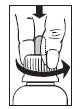
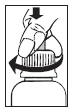
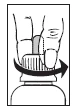
Keep the open bottle out of children's reach during administration and ensure the child-resistant closure is properly secured after use. If the bottle is not closed correctly (see below), the cap is no longer child-resistant.
How to use Tinset oral suspension drops
Shake the bottle well before each use.
The bottle cap has a safety mechanism: if your child attempts to open the bottle, they will have difficulty. You must close the bottle properly as explained below, so that your child cannot easily open it.
 |
|
 |
|
 |
|
If you use more Tinset 25 mg/ml oral drops suspension than you should
If you or someone else has accidentally taken too many drops, contact your doctor or go to the nearest hospital, taking the pack with you if possible. Symptoms of overdose include muscle spasms, hyperexcitability, agitation, disturbances in heart function, altered consciousness, and coma.
If you forget to take Tinset 25 mg/ml oral drops suspension
Take the missed dose as soon as possible, unless it is almost time for the next dose. If the next dose is due soon, take the drops at the usual time. Do not take a double dose to make up for the missed drops.
If you have any doubts about the use of this medicine, ask your doctor or pharmacist.
4. POSSIBLE ADVERSE REACTIONS
Like all medicines, this medicine can cause adverse reactions, although not everyone experiences them.
STOP taking Tinset and consult a doctor if the following symptoms occur, as they may be signs of an allergic reaction:
- swelling of the face, lips, throat or tongue
- difficulty breathing
- rash
Possible adverse reactions are:
Very common (may affect more than 1 in 10 people)
- Drowsiness
Common (may affect less than 1 in 10 people)
- Increased appetite
- Feeling of fatigue
- Headache
- Sedation
- Dry mouth
Uncommon (may affect up to 1 in 100 people)
- Weight gain
- Changes in appetite
- Nervousness
- Restlessness
- Irritability
- Insomnia
- Inability to concentrate
- Dizziness (vertigo)
- Shortness of breath
- Nausea (feeling unwell)
- Vomiting (feeling sick)
- Stomach pain
- Indigestion (dyspepsia)
- Constipation
- Abdominal pain
- Chest discomfort
- Urinary retention (difficulty urinating)
- Rash
- Hives
Very rare (may affect up to 1 in 10,000 people)
- Anaemia and other blood disorders
- Hypersensitivity and shock
- Decreased appetite
- Psychiatric disorders (hallucinations, agitation, apathy, confusion, disorientation, nightmares, sleep disturbances, aggression)
- Blurred vision, abnormal dilation of the pupil and other vision problems
- Ringing in the ears, hearing loss
- Changes in heartbeat and heart rhythm, palpitations (irregular heartbeat)
- Hot flushes, low blood pressure (hypotension)
- Nosebleeds, bronchial spasms, dryness of the nose
- Heartburn, gastro-oesophageal reflux, oesophagitis, diarrhoea
- Liver damage, hepatitis, jaundice
- Itching (pruritus) and swelling (oedema) of the skin, photosensitivity (increased skin sensitivity to light), eczema
- Excessive sweating
- Severe skin rash with blisters and skin peeling (Stevens-Johnson syndrome, toxic epidermal necrolysis)
- Muscle stiffness or weakness, difficulty walking, stiff neck
- Change in urine colour
- Breast enlargement (in men), milk discharge from the breast not related to childbirth or breastfeeding
- Fever, chills, fluid retention, abnormal sensation of touch
- Changes in blood and liver test results
Reporting of adverse reactions
If you experience any adverse reaction, including those not listed in this leaflet, please inform your doctor or pharmacist. You may also report adverse reactions directly via the system at https://www.aifa.gov.it/content/segnalazioni-reazioni-avverse
By reporting adverse reactions, you can help provide more information on the safety of this medicine.
5. HOW TO STORE TINSET
Keep this medicine out of the sight and reach of children.
Make sure the child-resistant cap is properly closed after use.
Do not use this medicine after the expiry date stated on the carton or bottle.
The expiry date refers to the last day of that month.
After opening, Tinset oral drops suspension must be used within 3 months.
Do not dispose of any medicine via wastewater or household waste. Ask your pharmacist how to
dispose of medicines no longer in use. This will help protect the environment.
6. PACKAGING QUANTITY AND OTHER INFORMATION
What Tinset 25 mg/ml oral drops suspension contains
- The active substance is oxatomide. Tinset 25 mg/ml oral drops suspension contains 2.6 g of hydrated oxatomide (equivalent to 2.5 g of oxatomide) per 100 ml. One drop corresponds to 1 mg of oxatomide.
- The other components are microcrystalline cellulose and carmellose, povidone, polysorbate 20, methyl para-hydroxybenzoate (180 mg per 100 ml), propyl para-hydroxybenzoate (20 mg per 100 ml), sodium saccharin (50 mg per 100 ml), purified water. See the end of section 2 for further information on methyl para-hydroxybenzoate, propyl para-hydroxybenzoate and sodium.
Description of the appearance of Tinset 25 mg/ml oral drops suspension and packaging contents
Tinset 25 mg/ml oral drops suspension is a white suspension packaged in a 30 ml amber glass bottle with a dropper and child-resistant closure.
Marketing Authorization Holder
GRÜNENTHAL ITALIA S.r.l.
Via Carlo Bo, 11 - 20143 Milano
Italy
Manufacturer
FARMACEUTICI FORMENTI S.p.A.
Production site: Origgio (VA)
Via Di Vittorio 2
Origgio (VA) - Italy
If systemic absorption (into the blood) occurs, the effect of the medicine may be enhanced if you are taking medicines used to treat insomnia, depression, anxiety, or psychotic conditions.
Marketing Authorization Holder