Teysuno
Italy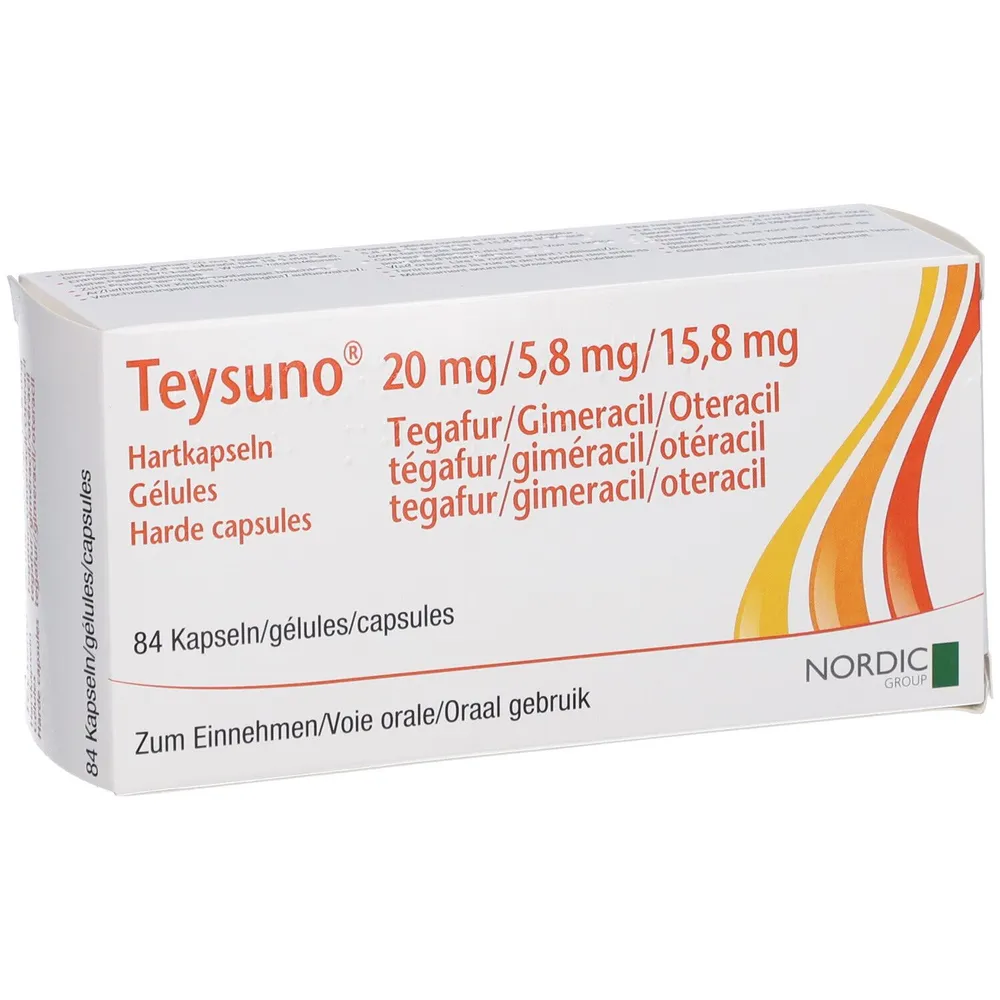
Table of Contents
- PACKAGE LEAFLET: INFORMATION FOR THE USER
- Teysuno 15 mg/4.35 mg/11.8 mg hard capsules
- 1. What Teysuno is and what it is used for
- 2. WHAT YOU SHOULD KNOW BEFORE TAKING TEYSUNO
- 3. How to take Teysuno
- 4. Possible side effects
- 5. How to store Teysuno
- 6. Package contents and other information
- Package leaflet: Information for the user
- Teysuno 20 mg/5.8 mg/15.8 mg hard capsules
- 1. What Teysuno is and what it is used for
- 2. What you need to know before taking Teysuno
- 3. How to take Teysuno
- 4. Possible side effects
- 5. HOW TO STORE TEYSUNO
- 6. Package contents and other information
PACKAGE LEAFLET: INFORMATION FOR THE USER
Teysuno 15 mg/4.35 mg/11.8 mg hard capsules
tegafur/gimeracil/oteracil
Please read all of this leaflet carefully before you start taking this medicine because it contains important information for you.
- Keep this leaflet. You may need to read it again.
- If you have any questions, ask your doctor or pharmacist.
- This medicine has been prescribed for you only. Do not give it to other people, even if they have the same symptoms as yours, because it could be harmful.
- If you experience any side effects, including those not listed in this leaflet, tell your doctor or pharmacist. See section 4.
Contents of this leaflet:
- What Teysuno is and what it is used for
- What you need to know before taking Teysuno
- How to take Teysuno
- Possible side effects
- How to store Teysuno
- Contents of the pack and other information
1. What Teysuno is and what it is used for
Teysuno contains the active substances tegafur, gimeracil and oteracil.
Teysuno belongs to a class of fluoropyrimidine-based medicines known as "antineoplastic agents" that stop the growth of tumour cells.
Teysuno is prescribed by the doctor for:
- Treatment of advanced gastric (stomach) cancer in adults, and is used in combination with cisplatin, another anti-tumour medicine.
- Treatment of metastatic colorectal cancer (cancer of the large intestine and rectum that has spread), in cases where continuation with another fluoropyrimidine (anti-tumour medicines of the same group as Teysuno) is not possible due to undesirable effects on the skin of the hands or feet (hand-foot syndrome) or on the heart. In these patients, Teysuno is used alone or in combination with other anti-tumour medicines.
2. WHAT YOU SHOULD KNOW BEFORE TAKING TEYSUNO
Do not take Teysuno:
- if you are allergic to tegafur, gimeracil, oteracil, or to any of the excipients listed in section 6.1.
- if you are currently taking other anti-tumour fluoropyrimidine-based medicines such as fluorouracil and capecitabine, or if you have previously experienced severe and unexpected reactions to fluoropyrimidines.
- if you know you lack the enzyme dihydropyrimidine dehydrogenase (DPD).
- if you are pregnant or breastfeeding.
- if you have severe blood disorders.
- if you have kidney disease requiring dialysis.
- if you are currently being treated or have been treated within the last 4 weeks with brivudine, used for the treatment of herpes zoster (shingles or chickenpox).
Warnings and precautions
- Talk to your doctor before taking Teysuno if you have:
- blood disorders
- kidney disease
- stomach and/or intestinal problems such as pain, diarrhoea, vomiting, and dehydration
- eye disorders, such as "dry eye" or increased tearing
- a current or past hepatitis B virus infection of the liver, as your doctor may wish to monitor you more closely
- a partial deficiency of the enzyme dihydropyrimidine dehydrogenase (DPD)
- a family history of partial or complete deficiency of the enzyme dihydropyrimidine dehydrogenase (DPD)
DPD deficiency: DPD deficiency is a genetic condition that usually does not cause health problems unless certain medications are taken. If you have DPD deficiency and take Teysuno, you are at increased risk of serious adverse reactions (listed in section 4, Possible side effects). It is recommended that you be tested for DPD deficiency before starting treatment. If you completely lack the enzyme, you must not take Teysuno. If you have reduced enzyme activity (partial deficiency), your doctor may prescribe a lower dose. Even with a negative test result for DPD deficiency, serious and potentially fatal adverse reactions may still occur.
Children and adolescents
Teysuno is not recommended for children under 18 years of age.
Other medicines and Teysuno
Inform your doctor if you are taking, have recently taken, or might take any other medicines.
You must not take brivudine (an antiviral medicine used to treat shingles or chickenpox) at the same time as Teysuno treatment (including during treatment breaks when no Teysuno capsules are taken).
If you have taken brivudine, you must wait at least 4 weeks after stopping it before starting Teysuno treatment. See also section “Do not take Teysuno”.
Additionally, you need to be particularly careful if you are taking any of the following medicines:
- other fluoropyrimidine-based medicines such as the antifungal flucytosine. Teysuno cannot replace other oral fluoropyrimidine-based medicines.
- inhibitors of the CYP2A6 enzyme, which activates Teysuno, such as tranilcypramine and methoxsalen
- folinic acid (often used in chemotherapy in combination with methotrexate)
- medicines that thin the blood: coumarin anticoagulants such as warfarin
- medicines used to treat seizures or tremors such as phenytoin
- medicines used to treat gout such as allopurinol
Teysuno with food and drink
Teysuno should be taken at least one hour before or one hour after a meal.
Pregnancy and breastfeeding
Before starting treatment, you must inform your doctor if you are pregnant or suspect you may be pregnant, or if you are planning a pregnancy. You must not take Teysuno if you are definitely or possibly pregnant.
Men must use contraception during treatment and for up to 3 months after treatment with Teysuno.
Women must use contraception during treatment and for up to 6 months after treatment with Teysuno. If you become pregnant during this period, you must inform your doctor.
You must not breastfeed while taking Teysuno.
Ask your doctor or pharmacist for advice before taking any medicine.
Driving and using machines
Be cautious when driving or operating machinery, as Teysuno may cause fatigue, nausea, or blurred vision. If you have any doubts, consult your doctor.
Teysuno contains
Lactose (a type of sugar). If your doctor has told you that you have an intolerance to certain sugars, consult your doctor before taking this medicine.
3. How to take Teysuno
Take Teysuno exactly as directed by your doctor. If you have any doubts, consult your doctor.
Your doctor will tell you what dose to take, when to take it, and for how long. The dose of Teysuno
will be determined by your doctor based on your height and weight. If you experience particularly
severe side effects, your doctor may reduce the dose.
Teysuno capsules should be swallowed with water, at least 1 hour before or 1 hour after a meal.
Teysuno should be taken twice daily (in the morning and evening).
For stomach cancer:
Teysuno capsules are usually taken for 21 days, followed by a 7-day rest period (during which the
capsules are not taken). This 28-day period constitutes one treatment cycle. Cycles are repeated.
Teysuno will be given together with another anticancer medicine called cisplatin. Cisplatin will be
discontinued after 6 treatment cycles. Teysuno may be continued after stopping cisplatin.
For metastatic colorectal cancer:
Teysuno capsules should be taken for 14 days, followed by a 7-day rest period (during which the
capsules are not taken). This 21-day period constitutes one treatment cycle. Cycles are repeated.
Teysuno may be administered together with other anticancer drugs (cisplatin, oxaliplatin, irinotecan,
or bevacizumab), depending on the treatment regimen.
If you take more Teysuno than you should
If you take more capsules than prescribed, contact your doctor immediately.
If you forget to take Teysuno
Do not take the missed dose and do not take a double dose to make up for the missed dose. Instead,
continue with your regular dosing schedule and inform your doctor.
If you stop treatment with Teysuno
There are no undesirable effects caused by stopping treatment with Teysuno. However, if you are
taking medications to thin the blood or antiepileptic medicines, stopping Teysuno may require your
doctor to adjust the dose of these medicines.
If you have any questions about the use of this medicine, consult your doctor.
4. Possible side effects
Like all medicines, Teysuno can cause side effects, although not everyone gets them. While some symptoms are easily recognizable by patients themselves as side effects, others require blood tests for detection. Your doctor will discuss this with you and explain the possible risks and benefits of the treatment.
Very common side effects (may affect more than 1 in 10 people) include:
-
Diarrhoea, nausea, vomiting, constipation
o If you have diarrhoea more than 4 times a day or during the night, or if you have mouth ulcers accompanied by diarrhoea, stop treatment with Teysuno and contact your doctor immediately.
o In case of diarrhoea, avoid high-fibre, fatty and spicy foods.
o Drink plenty of fluids between meals to replace lost fluids and prevent dehydration, reduced blood volume, and imbalances in salts or other chemicals in the blood.
o If you experience nausea and vomit a dose of the medicine, make sure to inform your doctor. Do not take an extra dose to replace the one lost due to vomiting.
o If you vomit more than twice within 24 hours, stop taking Teysuno and contact your doctor immediately.
o To help relieve nausea and vomiting:- Lie down or take deep breaths when feeling nauseous
- Avoid tight clothing
-
Reduction in the number of red blood cells leading to anaemia:
o You may experience symptoms such as cold hands and feet, paleness, mild confusion, fatigue, and shortness of breath.
o If you experience any of these symptoms, avoid strenuous activities and ensure adequate sleep and rest. -
Reduction in the number of white blood cells leading to an increased risk of serious local infections (e.g., oral, lung, or urinary) or blood infections:
o You may experience symptoms such as fever, chills, cough, or sore throat.
o If you have a fever of 38.5 °C or higher, stop taking Teysuno and contact your doctor immediately.
o To prevent infections, avoid crowded places, gargle upon returning home, and wash your hands before eating and before and after using the toilet. -
Low platelet count leading to an increased risk of bleeding:
o If you experience bleeding of the skin, mouth (while brushing teeth), nose, respiratory tract, stomach, intestine, etc., stop treatment with Teysuno and contact your doctor immediately.
o To prevent bleeding, avoid strenuous work or intense sports to prevent injuries and bruises. Wear loose clothing to protect the skin. Brush your teeth and blow your nose gently. -
Loss of appetite (anorexia), which may lead to weight loss and dehydration:
o If you do not eat and/or drink enough fluids, you may become dehydrated.
o Symptoms of dehydration may include dry mouth, weakness, dry skin, dizziness, and cramps.
o Try to eat small, frequent meals. Avoid fatty foods and those with strong odours. Even if you have no appetite, try to eat to maintain good nutritional status.
o If you experience fatigue and fever together with loss of appetite, contact your doctor immediately. -
Nervous system disorders: you may experience numbness, tingling, pain, abnormal sensitivity, muscle weakness, tremors, or difficulty with movement.
-
Weakness and fatigue, which could be side effects caused by other medicines.
Common side effects (may affect 1 to 10 in 100 people) include:
- Nervous system: headache, dizziness, insomnia, altered taste
- Eye: eye problems, increased or decreased tear production, vision problems, severe condition with blisters on the eyes, erosion of the outer layer of the eye (corneal erosion)
- Ear: hearing problems
- Blood vessels: high or low blood pressure, blood clots in the legs and lungs
- Lungs and nasal passages: shortness of breath, cough
- Gastrointestinal tract and mouth: dry mouth, mouth, throat, and oesophageal ulcers, hiccups, abdominal pain, indigestion, inflammation of the stomach or intestine, perforation of the stomach, small intestine, or large intestine
- Liver: yellowing of the eyes and skin, abnormal blood test results indicating liver function
- Skin: hair loss, itching, rash or dermatitis, skin reactions, dry skin, hand-foot reaction (pain, swelling, and redness of the hands and/or feet), pigmented spots on the skin
- Kidney: decreased urine volume, abnormal blood test results indicating kidney function, impaired kidney function, kidney damage
- Other: chills, weight loss, swelling in specific areas, musculoskeletal pain
Uncommon side effects (may affect 1 to 10 in 1,000 people) include:
- Mental: seeing and hearing things that are not there, personality changes, inability to sit still, confusion, nervousness, depression, sexual dysfunction
- Nervous system: voice disorders, inability to speak or understand words, memory problems, unsteady gait, balance problems, weakness on one side of the body, drowsiness, nerve inflammation, altered sense of smell, brain dysfunction, fainting, loss of consciousness, stroke, seizures
- Eye: itchy and red eyes, allergic eye reactions, drooping of the upper eyelid
- Ear: dizziness, ear blockage, ear discomfort
- Heart: irregular or rapid heartbeat, chest pain, excess fluid accumulation around the heart, heart attack, heart failure
- Blood vessels: vein inflammation, hot flushes
- Lungs and nasal passages: runny nose, voice disorders, nasal congestion, pharyngeal erythema, hay fever
- Gastrointestinal tract and mouth: fluid in the abdomen, gastroesophageal reflux disease, increased salivary secretion, excessive belching, inflammation of the lips, gastrointestinal disorder, mouth pain, abnormal contractions of oesophageal muscles, stomach and intestinal obstruction, stomach ulcers, retroperitoneal fibrosis, chipped or easily broken teeth, difficulty swallowing, salivary gland disorders, haemorrhoids
- Skin: loss of skin pigmentation, skin peeling, excessive body hair, shrinking of nails, excessive sweating
- General: worsening of general condition, weight gain, redness and swelling at the injection site (due to cisplatin), cancer-related pain and bleeding, multi-organ failure
- Blood test abnormalities: high blood sugar levels, high blood fat (lipid) levels, altered coagulation time, elevated blood cell count, high or low protein levels
- Other: frequent urination, blood in the urine, neck pain, back pain, breast pain, muscle tension or cramps, joint swelling, limb discomfort, muscle weakness, pain and inflammation due to arthritis
Rare side effects (may affect 1 to 10 in 10,000 people) and very rare side effects (may affect less than 1 in 10,000 people) include:
- Acute liver failure
- Inflammation of the pancreas
- Muscle breakdown
- Loss of sense of smell
- Sensitivity to sunlight
- Widespread blood clotting and bleeding
- Disease affecting the white matter of the brain
- Severe condition with blisters appearing on the skin, mouth, and genitals
- Reactivation of hepatitis B infection, if you have previously had hepatitis B (liver infection)
If you experience any side effect, including those not listed in this leaflet, consult your doctor.
If any of the side effects worsen, stop treatment with Teysuno and inform your doctor immediately.
Reporting of side effects
If you experience any side effect, talk to your doctor. You can also report side effects directly via the national reporting system listed in Appendix V. By reporting side effects, you can help provide more information on the safety of this medicine.
5. How to store Teysuno
- Keep this medicine out of the sight and reach of children.
- Do not use Teysuno after the expiry date stated on the carton and blister after Exp. The expiry date refers to the last day of that month.
- This medicine does not require any special storage conditions.
- Do not dispose of medicines via wastewater or household waste. Ask your pharmacist how to dispose of medicines you no longer use. This will help protect the environment.
6. Package contents and other information
What Teysuno contains
- The active substances are tegafur, gimeracil and oteracil. Each hard capsule contains 15 mg of tegafur, 4.35 mg of gimeracil and 11.8 mg of oteracil (as monopotassium salt).
- The other excipients are:
Capsule contents: monohydrate lactose, magnesium stearate
Capsule shell: gelatin, red iron oxide (E172), titanium dioxide (E171), sodium lauryl sulfate, talc
Ink: red iron oxide (E172), yellow iron oxide (E172), Indigo Carmine (E132), carnauba wax, bleached shellac, glycerol mono-oleate
Description of the appearance of Teysuno and the contents of the pack
The hard capsules have an opaque white body and an opaque brown cap printed with "TC448" in grey. They are supplied in blisters containing 14 capsules each.
Each package contains 42 capsules, 84 capsules, or 126 capsules.
Marketing Authorisation Holder
Nordic Group B.V.
Siriusdreef 41
2132 WT Hoofddorp
The Netherlands
Manufacturer
Nordic Pharma B.V.
Siriusdreef 41
2132 WT Hoofddorp
The Netherlands
Millmount Healthcare Limited
Block 7, City North Business Campus, Stamullen
Co. Meath, K32 YD60
Ireland
Other sources of information
More detailed information on this medicinal product is available on the website of the European Medicines Agency: http://www.ema.europa.eu.
Package leaflet: Information for the user
Teysuno 20 mg/5.8 mg/15.8 mg hard capsules
tegafur/gimeracil/oteracil
Please read this leaflet carefully before using this medicine because it contains important information for you.
- Keep this leaflet. You may need to read it again.
- If you have any questions, consult your doctor or pharmacist.
This medicine has been prescribed for you only. Do not give it to other people, even if their symptoms are the same as yours, as it may be harmful. - If you experience any side effects, including those not listed in this leaflet, consult your doctor or pharmacist.
Contents of this leaflet:
- What Teysuno is and what it is used for
- What you need to know before taking Teysuno
- How to take Teysuno
- Possible side effects
- How to store Teysuno
- Contents of the pack and other information
1. What Teysuno is and what it is used for
Teysuno contains the active substances tegafur, gimeracil and oteracil.
Teysuno belongs to a class of medicines based on fluoropyrimidines, known as "antineoplastic agents" that stop the growth of cancer cells.
Teysuno is prescribed by the doctor for:
- The treatment of advanced gastric (stomach) cancer in adults, and is used in combination with cisplatin, another anti-cancer medicine.
- The treatment of metastatic colorectal cancer (cancer of the large intestine and rectum that has spread), in cases where continuation with another fluoropyrimidine (anti-cancer medicines of the same group as Teysuno) is not possible due to undesirable effects on the skin of the hands or feet (hand-foot syndrome) or on the heart. In these patients, Teysuno is used alone or in combination with other anti-cancer medicines.
2. What you need to know before taking Teysuno
Do not take Teysuno:
- if you are allergic to tegafur, gimeracil, oteracil, or any of the other ingredients of Teysuno (listed in section 6).
- if you are currently taking other anti-tumour fluoropyrimidine-based medicines such as fluorouracil or capecitabine, or if you have previously experienced severe and unexpected reactions to fluoropyrimidines.
- if you know that you lack the enzyme dihydropyrimidine dehydrogenase (DPD).
- if you are pregnant or breastfeeding.
- if you have severe blood disorders.
- if you have kidney disease requiring dialysis.
- if you are currently being treated or have been treated within the last 4 weeks with brivudine for herpes zoster (shingles or chickenpox).
Warnings and precautions
Talk to your doctor before taking Teysuno if you have:
- blood disorders.
- kidney disease.
- stomach and/or intestinal problems such as pain, diarrhoea, vomiting, and dehydration.
- eye disorders, such as “dry eye” or increased tearing.
- a current or past liver infection caused by hepatitis B virus, as your doctor may need to monitor your condition more closely.
- partial deficiency in the activity of the enzyme dihydropyrimidine dehydrogenase (DPD).
- a family history of partial or complete deficiency of the enzyme dihydropyrimidine dehydrogenase (DPD).
DPD deficiency: DPD deficiency is a genetic condition that usually does not cause health problems unless certain medications are taken. If you have DPD deficiency and take Teysuno, you are at risk of serious adverse effects (listed in section 4, Possible side effects). It is recommended that you undergo testing for possible DPD deficiency before starting treatment. You must not take Teysuno if you are completely deficient in this enzyme. If you have reduced enzyme activity (partial deficiency), your doctor may prescribe a lower dose. Even if DPD deficiency testing is negative, serious and potentially life-threatening adverse effects may still occur.
Children and adolescents
Teysuno is not recommended for children under 18 years of age.
Other medicines and Teysuno
Inform your doctor if you are taking, have recently taken, or might take any other medicines.
You must not take brivudine (an antiviral medicine used to treat shingles or chickenpox) at the same time as Teysuno treatment
(including during treatment breaks when no Teysuno capsules are being taken).
If you have taken brivudine, you must wait at least 4 weeks after stopping it before starting Teysuno treatment. See also section “Do not take Teysuno”.
Additionally, you should be especially cautious if you are taking any of the following medicines:
- other fluoropyrimidine-based medicines such as the antifungal flucytosine. Teysuno cannot replace other oral fluoropyrimidine-based medicines.
- inhibitors of the CYP2A6 enzyme, which activates Teysuno, such as tranylcypromine and methoxsalen.
- folinic acid (often used in chemotherapy in combination with methotrexate).
- blood-thinning medicines: coumarin anticoagulants such as warfarin.
- medicines used to treat seizures or tremors such as phenytoin.
- medicines used to treat gout such as allopurinol.
Teysuno with food and drink
Teysuno should be taken at least one hour before or one hour after a meal.
Pregnancy and breastfeeding
If you are pregnant, think you might be pregnant, planning a pregnancy, or breastfeeding, consult your doctor or pharmacist before taking this medicine. You must not take Teysuno if you are definitely or possibly pregnant.
Men should use contraceptive measures during and for up to 3 months after treatment with Teysuno.
Women should use contraceptive measures during and for up to 6 months after treatment with Teysuno. If you become pregnant during this time, inform your doctor immediately.
You must not breastfeed while taking Teysuno.
Ask your doctor or pharmacist for advice before taking any medicine.
Driving and using machines
Be careful when driving or operating machinery, as Teysuno may cause fatigue, nausea, or blurred vision. If you have any doubts, consult your doctor.
Teysuno contains
Lactose (a type of sugar). If your doctor has informed you that you have an intolerance to certain sugars, consult your doctor before taking this medicine.
3. How to take Teysuno
Take Teysuno exactly as directed by your doctor. If you have any doubts, consult your doctor.
Your doctor will tell you what dose to take, when to take it, and for how long. The dose of Teysuno
will be determined by your doctor based on your height and weight. If you experience particularly
severe side effects, your doctor may reduce the dose.
Teysuno capsules must be swallowed with water at least 1 hour before or 1 hour after a meal.
Teysuno should be taken twice daily (in the morning and evening).
For stomach cancer:
Teysuno capsules are usually taken for 21 days, followed by a 7-day rest period (during which the
capsules are not taken). This 28-day period constitutes one treatment cycle. Cycles are repeated.
Teysuno will be given together with another anticancer medicine called cisplatin. Cisplatin will
be discontinued after 6 treatment cycles. Teysuno may be continued after cisplatin is stopped.
For metastatic colorectal or rectal cancer:
Teysuno capsules should be taken for 14 days, followed by a 7-day rest period (during which the
capsules are not taken). This 21-day period constitutes one treatment cycle. Cycles are repeated.
Teysuno may be administered together with other anticancer medicines (cisplatin, oxaliplatin,
irinotecan or bevacizumab), depending on the treatment regimen.
If you take more Teysuno than you should
If you take more capsules than prescribed, contact your doctor immediately.
If you forget to take Teysuno
Do not take the missed dose and do not take a double dose to make up for the missed dose. Instead,
continue with your prescribed dosing schedule and inform your doctor.
If you stop taking Teysuno
There are no adverse effects associated with stopping treatment with Teysuno. However, if you are
taking blood-thinning medicines or antiepileptic medicines, stopping Teysuno may require your
doctor to adjust the dose of these medicines.
If you have any questions about the use of this medicine, consult your doctor.
4. Possible side effects
Like all medicines, Teysuno can cause side effects, although not everybody gets them. While some symptoms are easily recognizable by patients themselves as side effects, others require blood tests for detection. Your doctor will discuss this with you and explain the possible risks and benefits of the treatment.
Very common side effects (may affect more than 1 in 10 people) include:
-
Diarrhoea, nausea, vomiting, constipation
o If you have diarrhoea more than 4 times a day or during the night, or if you have mouth ulcers accompanied by diarrhoea, stop treatment with Teysuno and contact your doctor immediately.
o In case of diarrhoea, avoid high-fibre, fatty, and spicy foods.
o Drink plenty of fluids between meals to replace lost fluids and prevent dehydration, reduced blood volume, and imbalances in salts or other chemicals in the blood.
o If you have nausea and vomit a dose of the medicine, make sure to inform your doctor. Do not replace the dose that was lost due to vomiting.
o If you vomit more than twice in 24 hours, stop treatment with Teysuno and contact your doctor immediately.
o To relieve nausea and vomiting:- Lie down or breathe deeply when you feel nauseous
- Avoid tight clothing
-
Reduction in the number of red blood cells, leading to anaemia
o You may experience symptoms such as cold hands and feet, paleness, mild mental confusion, fatigue, and shortness of breath.
o If you experience any of these symptoms, avoid strenuous activities and ensure adequate sleep and rest. -
Reduction in the number of white blood cells, increasing the risk of developing serious local infections (e.g. oral, lung, or urinary) or blood infections
o You may experience symptoms such as fever, chills, cough, or sore throat.
o If your temperature reaches 38.5°C or higher, stop taking Teysuno and contact your doctor immediately.
o To prevent infections, avoid crowded places, gargle as soon as you return home, and wash your hands before eating and before and after using the toilet. -
Low platelet count, increasing the risk of bleeding
o If you experience bleeding of the skin, mouth (while brushing teeth), nose, respiratory tract, stomach, intestine, etc., stop treatment with Teysuno and contact your doctor immediately.
o To prevent bleeding, avoid strenuous work or demanding sports to prevent injuries and bruises. Wear loose clothing to protect your skin. Brush your teeth and blow your nose gently. -
Loss of appetite (anorexia), which may lead to weight loss and dehydration
o If you do not eat and/or drink enough water, you may become dehydrated.
o Symptoms of dehydration may include dry mouth, weakness, dry skin, dizziness, and cramps.
o Try to eat small, frequent meals. Avoid fatty foods and those with strong odours. Even if you have no appetite, try to eat to maintain good nutritional status.
o If you experience fatigue and fever together with loss of appetite, contact your doctor immediately. -
Nervous system disorders: you may experience numbness, tingling, pain, abnormal sensitivity, muscle weakness, tremors, or difficulty with movement.
-
Weakness and fatigue, which could be side effects caused by other medicines.
Common side effects (may affect 1 to 10 in 100 people) include:
- Nervous system: headache, dizziness, insomnia, altered taste
- Eye: eye problems, increased or decreased tear production, vision problems, severe condition with blisters on the eyes, erosion of the outer layer of the eye (corneal erosion)
- Ear: hearing problems
- Blood vessels: high or low blood pressure, blood clots in the legs and lungs
- Lungs and nasal passages: shortness of breath, cough
- Gastrointestinal tract and mouth: dry mouth, mouth, throat, and oesophageal ulcers, hiccups, abdominal pain, indigestion, inflammation of the stomach or intestine, perforation of the stomach, small intestine, or large intestine
- Liver: yellowing of the eyes and skin, changes in blood tests indicating liver function
- Skin: hair loss, itching, rash or dermatitis, skin reactions, dry skin, hand-foot reaction (pain, swelling, and redness of the hands and/or feet), pigmented spots on the skin
- Kidney: decreased urine volume, changes in blood tests indicating kidney function, impaired kidney function, and kidney damage
- Other: chills, weight loss, swelling in specific areas, and musculoskeletal pain
Uncommon side effects (may affect 1 to 10 in 1,000 people) include:
- Mental: seeing and hearing things that are not there, personality changes, inability to sit still, confusion, nervousness, depression, sexual dysfunction
- Nervous system: voice disorders, inability to speak or understand words, memory problems, unsteady gait, balance problems, weakness limited to one side of the body, drowsiness, nerve inflammation, altered sense of smell, brain dysfunction, fainting, loss of consciousness, stroke, seizures
- Eye: itchy and red eyes, allergic eye reactions, drooping of the upper eyelid
- Ear: vertigo, ear blockage, ear discomfort
- Heart: irregular or rapid heartbeat, chest pain, excess fluid accumulation around the heart, heart attack, heart failure
- Blood vessels: vein inflammation, hot flushes
- Lungs and nasal passages: runny nose, voice disorders, nasal congestion, pharyngeal erythema, hay fever
- Gastrointestinal tract and mouth: presence of fluid in the abdomen, gastroesophageal reflux disease, increased salivary secretion, excessive belching, inflammation of the lips, gastrointestinal disorder, mouth pain, abnormal contractions of oesophageal muscles, stomach and intestinal obstruction, stomach ulcers, retroperitoneal fibrosis, chipped or easily broken teeth, difficulty swallowing, salivary gland disorders, haemorrhoids
- Skin: loss of skin pigmentation, skin peeling, excessive body hair, shrinking of nails, excessive sweating
- General: worsening of general condition, weight gain, redness and swelling at the injection site (due to cisplatin), cancer pain and bleeding, multi-organ failure
- Changes in blood tests: high blood sugar levels, high blood fat (lipid) levels, altered blood clotting time, elevated blood cell count, high or low protein levels
- Other: frequent urination, blood in urine, neck pain, back pain, breast pain, muscle tension or cramps, joint swelling, limb discomfort, muscle weakness, pain and inflammation due to arthritis
Rare side effects (may affect 1 to 10 in 10,000 people) and very rare side effects (may affect less than 1 in 10,000 people) include:
- Acute liver failure
- Inflammation of the pancreas
- Muscle breakdown
- Loss of sense of smell
- Sensitivity to sunlight
- Widespread blood clotting and bleeding
- Disease affecting the white matter of the brain
- Severe condition with blisters appearing on the skin, mouth, and genitals
- Reactivation (recurrence) of hepatitis B infection, if you have previously had hepatitis B (liver infection)
If you experience any side effect, or notice any unlisted side effect in this leaflet, inform your doctor.
If any of the side effects worsen, stop treatment with Teysuno and inform your doctor immediately.
Reporting of side effects
If you experience any side effect, including those not listed in this leaflet, contact your doctor. You may also report side effects directly via the national reporting system listed in Appendix V. By reporting side effects, you can help provide more information on the safety of this medicine.
5. HOW TO STORE TEYSUNO
- Keep this medicine out of the sight and reach of children.
- Do not use Teysuno after the expiry date stated on the carton and blister after Exp/Exp. The expiry date refers to the last day of that month.
- This medicine does not require any special storage conditions.
- Do not dispose of medicines via wastewater or household waste. Ask your pharmacist how to dispose of medicines you no longer use. This will help protect the environment.
6. Package contents and other information
What Teysuno contains
- The active substances are tegafur, gimeracil and oteracil. Each hard capsule contains 20 mg of tegafur, 5.8 mg of gimeracil and 15.8 mg of oteracil (as monopotassium salt).
- The other excipients are:
Capsule contents: monohydrate lactose, magnesium stearate
Capsule shell: gelatin, titanium dioxide (E171), sodium lauryl sulfate, talc
Ink: iron oxide red (E172), iron oxide yellow (E172), Indigo Carmine (E132), carnauba wax, bleached shellac, glycerol monooleate
Description of the appearance of Teysuno and package contents
The hard capsules have a white body and a white cap printed with "TC442" in grey.
They are supplied in blisters containing 14 capsules each.
Each pack contains 42 capsules or 84 capsules.
Marketing Authorization Holder
Nordic Group B.V.
Siriusdreef 41
2132 WT Hoofddorp
The Netherlands
Manufacturer
Nordic Pharma B.V.
Siriusdreef 41
2132 WT Hoofddorp
The Netherlands
Millmount Healthcare Limited
Block7, City North
Business Campus, Stamullen
Co. Meath, K32 YD60
Ireland
Other sources of information
More detailed information on this medicinal product is available on the European Medicines Agency website: http://www.ema.europa.eu