Tavlesse
Italy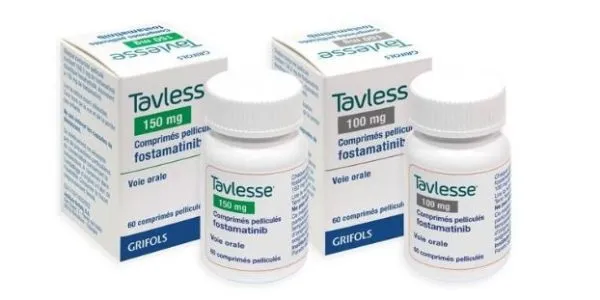
Table of Contents
Patient Information Leaflet
TAVLESSE 100 mg film-coated tablets, 150 mg film-coated tablets
fostamatinib disodium heptahydrate
Please read all of this leaflet carefully before you start taking this medicine, because it contains
important information for you.
- Keep this leaflet. You may need to read it again.
- If you have any questions, ask your doctor, pharmacist, or nurse.
- This medicine has been prescribed for you only. Do not give it to other people, even if they have the same symptoms as yours, because it may be harmful.
- If you experience any side effect, including those not listed in this leaflet, contact your doctor or nurse. See section 4.
Contents of this leaflet
- What TAVLESSE is and what it is used for
- What you need to know before taking TAVLESSE
- How to take TAVLESSE
- Possible side effects
- How to store TAVLESSE
- Contents of the pack and other information
1. What TAVLESSE is and what it is used for
What TAVLESSE is
TAVLESSE contains the active substance fostamatinib, which specifically targets an enzyme called spleen tyrosine kinase, playing an important role in the destruction of platelets. In this way, TAVLESSE reduces the immune system-mediated destruction of platelets and increases their number in the blood. This helps reduce the risk of severe bleeding.
What TAVLESSE is used for
TAVLESSE is used to treat adults with a low platelet count due to chronic immune thrombocytopenia (ITP), when a previous treatment for ITP has not been sufficiently effective. ITP is an autoimmune disease in which the body's immune system attacks and destroys platelets in the blood. Platelets are necessary to help form clots and stop bleeding.
2. What you need to know before taking TAVLESSE
Do not take TAVLESSE
- if you are allergic to fostamatinib or any of the other ingredients of this medicine (listed in section 6);
- if you are pregnant.
Warnings and precautions
Talk to your doctor or pharmacist before taking TAVLESSE, and inform them about all your medical
conditions, especially if:
- you have high blood pressure,
- you have liver problems,
- you become pregnant or are planning a pregnancy,
- you are breastfeeding or planning to breastfeed.
Immediately inform your doctor, pharmacist, or nurse if you experience any of the following
symptoms while taking this medicine:
- if you have high blood pressure (hypertension). The onset or worsening of high blood pressure is common in people treated with TAVLESSE and may be severe. Your doctor will regularly monitor your blood pressure during treatment with this medicine. If necessary, your doctor may start you on a blood pressure medication or change your current blood pressure treatment. Inform your doctor or pharmacist if you experience headache, confusion, dizziness, chest pain, or shortness of breath;
- if your skin or eyes appear yellowish (jaundice), or if you experience abdominal pain and swelling, swelling of the legs and ankles, skin itching, abnormally dark-coloured urine, pale or tarry stools, blood in the stool, chronic fatigue, stomach discomfort or nausea, or loss of appetite. Changes in blood tests indicating liver function are common with this medicine. These may be signs of liver problems, which may occur and can be serious. Your doctor will regularly perform blood tests to monitor your liver function during treatment with this medicine;
- if you develop diarrhoea. This is common in people treated with this medicine and may be severe. Inform your doctor or pharmacist if you experience diarrhoea during treatment with this medicine. Your doctor may recommend dietary changes, increased fluid intake, or prescribe an anti-diarrhoeal medication to manage symptoms;
- if you develop high fever (a sign of serious infection), chills, feeling unwell, or general malaise. Your doctor will regularly perform blood tests to monitor your white blood cell count, and you may be informed of a decrease in white blood cells (neutropenia). Decreases in white blood cell count are common with this medicine and may be serious. This may increase the risk of infections, including serious infections.
Children and adolescents
TAVLESSE must not be used in patients under 18 years of age. The medicine has not been studied in this age group.
Other medicines and TAVLESSE
Inform your doctor or pharmacist if you are taking, have recently taken, or might take any other medicines.
Taking TAVLESSE together with certain other medicines may affect how those medicines work, and other medicines may affect the action of TAVLESSE.
In particular, inform your doctor if you are taking any of the following medicines:
- Ketoconazole, this medicine is typically used to treat fungal infections.
- Rifampicin, this medicine is typically used to treat bacterial infections.
- Simvastatin and rosuvastatin, these medicines are typically used to treat high cholesterol.
- Digoxin, this medicine is typically used to treat various heart conditions such as atrial fibrillation, atrial flutter, and heart failure.
- Midazolam, this medicine is typically used for sedation or to treat anxiety.
- Anticoagulants, these medicines are typically used to prevent blood clots.
- Nelfinavir, this medicine is typically used to treat human immunodeficiency virus (HIV) infection.
- Verapamil, this medicine is typically used to treat various heart conditions such as high blood pressure.
- Ranitidine, this medicine is typically used to treat heartburn.
- Ethinylestradiol, this medicine is typically used for birth control.
- Pioglitazone, this medicine is typically used to treat type 2 diabetes.
Pregnancy, breastfeeding, and fertility
Pregnancy
TAVLESSE must not be used during pregnancy. It may cause harm or congenital malformations to the unborn baby.
If you are pregnant, suspect you may be pregnant, are planning a pregnancy, or are breastfeeding, consult your doctor or pharmacist before taking this medicine.
If you are a woman of childbearing potential, you must use an effective method of contraception during treatment with TAVLESSE and continue using it for at least one month after the last dose.
Contact your doctor immediately if you become pregnant while taking this medicine.
Breastfeeding
TAVLESSE is not recommended during breastfeeding. You must not breastfeed during treatment with TAVLESSE and for at least one month after the last dose.
If you are breastfeeding or planning to breastfeed, consult your doctor or pharmacist before taking this medicine.
Fertility
TAVLESSE may affect a woman’s ability to become pregnant and have children. Speak to your doctor if this is a concern for you. There is no impact on men.
TAVLESSE contains sodium
[TAVLESSE 100 mg film-coated tablets] This medicine contains 23 mg of sodium (the main component of table salt) per tablet, equivalent to 1.2% of the maximum recommended daily sodium intake for an adult.
[TAVLESSE 150 mg film-coated tablets] This medicine contains 34 mg of sodium (the main component of table salt) per tablet, equivalent to 1.7% of the maximum recommended daily sodium intake for an adult.
3. How to take TAVLESSE
Dosage
Take this medicine exactly as your doctor or pharmacist has told you. If you
have any doubts, consult your doctor or pharmacist.
Before starting treatment, your doctor will measure your platelet count.
The recommended dose of TAVLESSE is 100 mg twice daily (one 100 mg tablet).
However, during treatment with TAVLESSE, your doctor will monitor your platelet count and may
adjust the dose if necessary.
Once treatment with TAVLESSE has started, the dose may be increased to 150 mg twice daily (one 150 mg tablet) based on platelet count and tolerability. The daily dose must not exceed 300 mg (two 150 mg tablets).
If you do not respond to treatment with fostamatinib, your doctor will discontinue the treatment.
If you have liver problems or high blood pressure, your doctor may start treatment with a lower dose.
If you experience serious side effects (such as high blood pressure, liver problems, diarrhoea or a decrease in white blood cell count), your doctor may reduce the dose or temporarily or permanently discontinue treatment.
How to take TAVLESSE
Swallow the tablets whole with water.
TAVLESSE may be taken with food or between meals.
If you experience stomach upset, take the tablets with food.
In case of vomiting
If you vomit at any time after taking TAVLESSE, do not take another tablet. Take your next dose at the scheduled time.
If you take more TAVLESSE than you should
If you take too much TAVLESSE, contact your doctor or pharmacist immediately or go to the nearest hospital emergency department.
If you forget to take TAVLESSE
Do not take a double dose to make up for a forgotten tablet. Take your next dose at the usual scheduled time.
If you stop taking TAVLESSE
It is important to take TAVLESSE for as long as your doctor has prescribed. Do not stop taking TAVLESSE unless your doctor tells you to do so.
If you have any questions about how to use this medicine, ask your doctor, pharmacist or nurse.
4. Possible side effects
Like all medicines, this medicine can cause side effects, although not everyone experiences them.
Serious side effects
TAVLESSE may cause serious side effects. Immediately inform your doctor if you experience any of the following serious side effects, whether for the first time or if these effects worsen (see also section 2):
- high fever. Fever has been associated with low levels of white blood cells (febrile neutropenia) or infection;
- diarrhoea;
- infection and inflammation of the lungs (pneumonia). Symptoms include shortness of breath, chest pain, and production of discoloured mucus;
- jaundice, abdominal pain and swelling, swelling of the legs and ankles, skin itching, abnormally dark-coloured urine, pale or tarry stools, or blood in the stools, chronic fatigue, stomach discomfort or malaise, and loss of appetite. These may be symptoms of liver problems;
- severe increase in blood pressure which may lead to stroke (hypertensive crisis). Symptoms include headache, confusion, and dizziness.
Other side effects
In addition to the serious side effects listed above, you may also experience other side effects.
Very common (may affect more than 1 in 10 people):
- gastrointestinal disorders such as diarrhoea, stomach discomfort or malaise, and frequent bowel movements
- hypertension
- abnormal blood test results related to liver function
- dizziness
Common (may affect up to 1 in 10 people):
- low white blood cell count or neutropenia
- stomach pain
- chest pain
- tiredness (fatigue)
- flu-like symptoms
- nose and throat infections, such as sore throat and common cold
- tracheal infection, such as bronchitis
- taste alterations
- skin rash
- headache
Reporting of side effects
If any of the side effects worsens or if you notice any side effect not listed in this leaflet, consult your doctor or pharmacist. You may also report side effects directly via the national reporting system detailed in Annex V. By reporting side effects, you can help provide more information on the safety of this medicine.
5. How to store TAVLESSE
Keep this medicine out of the sight and reach of children.
This medicine does not require storage under specific temperature conditions. Store the medicine in the original packaging to protect it from moisture. Keep the bottle tightly closed.
Do not use this medicine after the expiry date stated on the carton and on the bottle after "Exp." The expiry date refers to the last day of that month.
Do not dispose of any medicine via wastewater or household waste. Ask your pharmacist how to dispose of medicines you no longer use. This will help protect the environment.
6. Package contents and other information
What TAVLESSE contains
- The active substance is fostamatinib disodium heptahydrate.
TAVLESSE 100 mg film-coated tablets
TAVLESSE 150 mg film-coated tablets - The other ingredients are:
- mannitol, sodium bicarbonate, sodium starch glycolate (type A), povidone (K30), magnesium stearate. See Section 2.
- film coating: poly(vinyl alcohol), titanium dioxide, macrogol (3350), talc, yellow iron oxide, red iron oxide
Description of the appearance of TAVLESSE and pack contents
TAVLESSE 100 mg film-coated tablets
The film-coated tablet is round, biconvex, and has a dark orange film coating. The tablets are marked with "R" on one side and "100" on the other.
Available in bottles of 30 and 60 film-coated tablets. Each bottle contains two desiccants.
Not all pack sizes may be marketed.
TAVLESSE 150 mg film-coated tablets
The film-coated tablet is oval, biconvex, and has a light orange film coating. The tablets are marked with "R" on one side and "150" on the other.
Available in bottles of 30 and 60 film-coated tablets. Each bottle contains two desiccants.
Not all pack sizes may be marketed.
Marketing Authorisation Holder and Manufacturer
Instituto Grifols, S.A.
Can Guasc, 2 - Parets del Vallès
08150 Barcelona – Spain
For further information about this medicinal product, please contact the local representative of the Marketing Authorisation Holder:
AT/BE/BG/CY/EE/EL/ES/HR/HU/IE/LV/CZ/LT/LU/MT/NL/RO/SI/SK
Grifols S.R.O.
Instituto Grifols, S.A.
Tel: +4202 2223 1415
Tel: +34 93 571 01 00
DE
Grifols Deutschland GmbH
Tel: +49 69 660 593 100
DK/FI/IS/NO/SE
Grifols Nordic AB
Tel: +46 8 441 89 50
FR
Grifols France
Tel: +33 (0)1 53 53 08 70
IT
Grifols Italia S.p.A.
Tel: +39 050 8755 113
PL
Grifols Polska Sp. z o.o.
Tel: +48 22 378 85 60
PT
Grifols Portugal, Lda.
Tel: +351 219 255 200
More detailed information on this medicinal product is available on the European Medicines Agency website: https://www.ema.europa.eu/en