Sylvant
Italy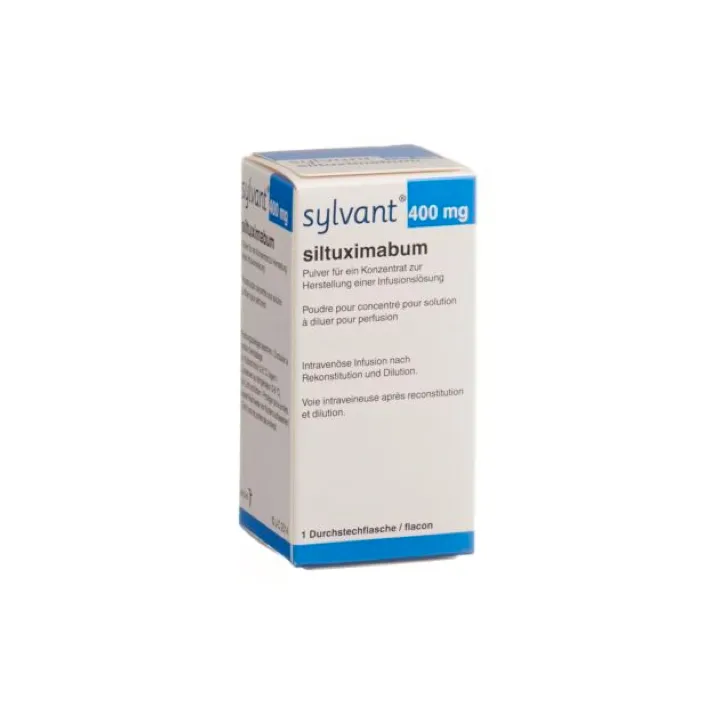
Table of Contents
- Package leaflet: Information for the patient
- SYLVANT 100 mg powder for concentrate for solution for infusion
- 1. What SYLVANT is and what it is used for
- 2. What you need to know before using SYLVANT
- 3. How to use SYLVANT
- 4. Possible side effects
- 5. How to store SYLVANT
- 6. Package contents and other information
- The following information is intended exclusively for healthcare professionals:
- Patient Information Leaflet
- SYLVANT 400 mg powder for concentrate for solution for infusion
- 1. What SYLVANT is and what it is used for
- 2. What you need to know before using SYLVANT
- 3. How to use SYLVANT
- 4. Possible side effects
- 5. How to store SYLVANT
- 6. Package contents and other information
- The following information is intended exclusively for healthcare professionals:
Package leaflet: Information for the patient
SYLVANT 100 mg powder for concentrate for solution for infusion
siltuximab
This medicinal product is subject to additional monitoring. This will allow for rapid identification of new safety information. You can help by reporting any side effects you experience while taking this medicine. See the end of section 4 for information on how to report side effects.
Please read all of this leaflet carefully before using this medicine because it contains important information for you.
- Keep this leaflet. You may need to read it again.
- If you have any questions, ask your doctor, pharmacist or nurse.
- If you get any side effects, including those not listed in this leaflet, tell your doctor, pharmacist or nurse. See section 4.
Contents of this leaflet
- What SYLVANT is and what it is used for
- What you need to know before using SYLVANT
- How to use SYLVANT
- Possible side effects
- How to store SYLVANT
- Contents of the pack and other information
1. What SYLVANT is and what it is used for
What SYLVANT is
SYLVANT is a medicine that contains the active substance siltuximab.
Siltuximab is a monoclonal antibody (a type of specialised protein) that selectively binds to an antigen (a target protein) in the body called interleukin-6 (IL-6).
What SYLVANT is used for
SYLVANT is used to treat multicentric Castleman disease (MCD) in adult patients who are not infected with human immunodeficiency virus (HIV) or human herpesvirus-8 (HHV-8).
Multicentric Castleman disease causes the growth of benign tumours in the lymph nodes of the body. Symptoms of the disease may include fatigue, night sweats, tingling sensations, and loss of appetite.
How SYLVANT works
Patients with multicentric Castleman disease (MCD) produce too much IL-6, and this is thought to contribute to the abnormal growth of certain cells in the lymph nodes. By binding to IL-6, siltuximab inhibits its activity and stops the abnormal cell growth. This action helps reduce the size of the affected lymph nodes, which in turn reduces disease symptoms and should help patients carry out their normal daily activities.
2. What you need to know before using SYLVANT
Do not use SYLVANT
If you are severely allergic to siltuximab or to any of the other ingredients of this medicine
(listed in section 6).
Warnings and precautions
Talk to your doctor, pharmacist, or nurse before using SYLVANT:
- if you currently have an infection, as SYLVANT may reduce your ability to detect or fight infections, and infections could worsen.
- if you are due to receive a vaccination or may need one in the near future, as certain vaccines should not be administered while receiving SYLVANT.
- if you have high levels of fats in your blood (hypertriglyceridemia), as SYLVANT may increase these levels. Your doctor may prescribe medication to manage this condition.
- if you have a condition such as stomach ulcer or diverticulitis, which may increase the risk of stomach or intestinal tearing (gastrointestinal perforation). Signs of developing perforation include worsening stomach pain, feeling unwell (nausea), changes in your usual bowel habits, and fever – if you experience any of these, contact your doctor immediately.
- if you have liver disease or if abnormalities are detected in blood tests assessing liver function. Your doctor will monitor you and your liver function.
If any of the above conditions apply to you (or you are unsure), discuss them with your doctor, pharmacist, or nurse before being administered SYLVANT.
Allergic reactions
Inform your doctor immediately if you experience a severe allergic reaction during or after the infusion. Symptoms include: difficulty breathing, chest tightness, wheezing, severe dizziness or lightheadedness, swelling of the lips, or skin rash.
Infections
During treatment with SYLVANT, you may be more susceptible to infections. These infections may also be severe, such as pneumonia or blood infection (called “sepsis”).
Inform your doctor immediately if you notice signs of infection during treatment with SYLVANT. These signs include:
cough, flu-like symptoms, feeling unwell, red or warm skin, fever.
Your doctor may stop treatment with SYLVANT immediately.
Children and adolescents
It is not known whether SYLVANT is safe and effective in children and adolescents; therefore, SYLVANT must not be given to children and adolescents.
Other medicines and SYLVANT
Inform your doctor, pharmacist, or nurse if you are taking, have recently taken, or might take any other medicines.
In particular, inform your doctor or pharmacist if you are taking any of the following medicines:
- theophylline, used for asthma
- warfarin, an anticoagulant
- cyclosporine, used during and after organ transplants
- oral contraceptives, used to prevent pregnancy.
If any of the above apply to you (or you are unsure), discuss them with your doctor or pharmacist before being administered SYLVANT.
Pregnancy and breastfeeding
If you are pregnant, suspect you may be pregnant, planning to become pregnant, or are breastfeeding, consult your doctor or pharmacist before receiving this medicine.
- Use of SYLVANT is not recommended during pregnancy. The effects of SYLVANT on unborn babies or on pregnant or breastfeeding women are unknown.
- You must not become pregnant during treatment with SYLVANT and for 3 months after treatment ends. During this time, you must use an effective method of contraception.
- In some cases, if you are pregnant and require treatment for MCD, your doctor will decide whether the benefits of taking SYLVANT for your health outweigh the potential risks to your unborn baby, including an increased risk of infection and the use of certain vaccines in babies born to mothers exposed to SYLVANT during pregnancy.
- It is not known whether SYLVANT passes into breast milk. Consult your doctor to decide whether you should continue taking SYLVANT or stop breastfeeding and discontinue SYLVANT.
Driving and using machines
It is unlikely that SYLVANT will affect your ability to drive, ride a bicycle, or use tools or machinery.
3. How to use SYLVANT
SYLVANT will be administered to you by a doctor or nurse, only in a hospital or clinic setting.
- The recommended dose is 11 milligrams per kilogram of body weight, administered once every 3 weeks.
- SYLVANT is given as an "intravenous infusion" (an intravenous drip into a vein, usually in the arm).
- The infusion is given slowly and lasts 1 hour.
- During the SYLVANT infusion, you will be monitored for any possible side effects.
- You will continue treatment until you and your doctor agree that you are no longer benefiting from the treatment.
If you are given more SYLVANT than you should receive
Since this medicine will be administered by a doctor or nurse, it is unlikely that you will receive more than the intended dose. If you think you have been given too much SYLVANT, inform your doctor or nurse immediately. The side effects of receiving too much SYLVANT are not known.
If you stop treatment with SYLVANT
You should not stop taking SYLVANT without first discussing it with your doctor.
If you have any further questions about the use of this medicine, consult your doctor, pharmacist, or nurse.
4. Possible side effects
Like all medicines, this medicine can cause side effects, although not everybody gets them. The following side effects may occur with SYLVANT.
Tell your doctor immediately if you notice any of the following side effects, as treatment may need to be stopped:
Common ( may affect up to 1 in 10 people):
- severe allergic reaction: signs may include difficulty breathing, tightness in the chest, wheezing, severe dizziness or feeling faint, swelling of the lips or skin rash.
Other side effects include:
Consult your doctor, pharmacist, or nurse if you notice any of the following side effects:
Very common (may affect more than 1 in 10 people):
- decrease in the number of white blood cells in the blood (neutropenia)
- decrease in the number of platelets in the blood (thrombocytopenia)
- itching
- rash, skin itching (eczema)
- high levels of fats in the blood (hypertriglyceridemia)
- elevated levels of 'uric acid' in the blood, which may cause gout
- abnormalities in kidney function tests
- swelling of the arms, legs, neck, or face
- increased blood pressure
- respiratory infections, such as those affecting the nose, sinuses, or throat
- urinary tract infections
- common cold
- sore throat
- stomach pain or discomfort, constipation, diarrhoea, heartburn, mouth ulcers, nausea, vomiting
- dizziness
- headache
- joint, arm, or leg pain
- weight gain
Common (may affect up to 1 in 10 people):
- high cholesterol levels in the blood
Reporting of side effects
If you experience any side effects, including those not listed in this leaflet, consult your doctor or pharmacist. You can also report side effects directly via the national reporting system listed in Annex V. By reporting side effects, you can help provide more information on the safety of this medicine.
5. How to store SYLVANT
Keep this medicine out of the sight and reach of children.
Do not use this medicine after the expiry date which is stated on the label after EXP. The expiry date refers to the last day of that month.
Store in a refrigerator (2°C - 8°C). Do not freeze. Keep in the original packaging to protect from light.
Do not use the medicine if you see opaque or foreign particles and/or if the solution shows a change in colour after reconstitution.
6. Package contents and other information
What SYLVANT contains
- The active substance is siltuximab. Each single-dose vial contains 100 mg of siltuximab. After reconstitution, the solution contains 20 mg of siltuximab per mL.
- The other components (excipients) are histidine, monohydrate histidine hydrochloride, polysorbate 80, and sucrose.
Description of the appearance of SYLVANT and contents of the pack
- SYLVANT is supplied as a glass vial containing a white powder for concentrate for solution for infusion (powder for concentrate).
- SYLVANT is available in packs containing 1 vial.
Marketing Authorization Holder
Recordati Netherlands B.V.
Beechavenue 54,
1119PW Schiphol-Rijk
The Netherlands
Manufacturer
Janssen Biologics B.V.
Einsteinweg 101
2333 CB Leiden
The Netherlands
Other sources of information
More detailed information on this medicinal product is available on the website of the European Medicines Agency: http://www.ema.europa.eu. In addition, links to other websites on rare diseases and related therapeutic treatments are provided.
The following information is intended exclusively for healthcare professionals:
This medicinal product is for single use only.
- Use aseptic technique.
- Calculate the required dose, the total volume of reconstituted SYLVANT solution needed, and the number of vials required. A 21-gauge 1½ inch (38 mm) needle is recommended for reconstitution. Infusion bags (250 mL) must contain 5% Dextrose and be made of polyvinyl chloride (PVC), polyolefin (PO), polypropylene (PP), or polyethylene (PE). Alternatively, PE bottles may be used.
- Allow SYLVANT vials to reach room temperature (between 15°C and 25°C) for approximately 30 minutes. SYLVANT must remain at room temperature throughout the preparation process. Each vial must be reconstituted with 5.2 mL of Water for Injections (single-dose container) to obtain a solution of 20 mg/mL.
- Gently rotate (DO NOT SHAKE OR VIGOROUSLY AGITATE OR USE A VORTEX) the vial containing the reconstituted solution to assist in dissolving the powder. Do not remove the contents until the powder has completely dissolved. The powder should dissolve within less than 60 minutes. Inspect the vial to ensure absence of particulate matter and discoloration prior to dose preparation. Do not use if the solution is visibly cloudy or if foreign particles and/or discoloration of the solution are present.
- Dilute the total volume of reconstituted solution to 250 mL with sterile 5% Dextrose, removing from the 250 mL 5% Dextrose bag a volume equal to that of the reconstituted SYLVANT. Slowly add the total volume of reconstituted SYLVANT solution to the 250 mL infusion bag. Mix gently.
- The reconstituted solution must not be stored for longer than 2 hours before being added to the infusion bag. The infusion must be completed within 6 hours after adding the reconstituted solution to the infusion bag. Administer the diluted solution over a period of 1 hour using administration sets made of PVC or polyurethane (PU) or PE, equipped with an in-line 0.2 micron polyethersulfone (PES) filter. SYLVANT does not contain preservatives; therefore, any unused portion of the infusion solution must not be retained for potential reuse.
- No physical or biochemical compatibility studies have been conducted to assess the concomitant administration of SYLVANT with other medicinal products. Do not infuse SYLVANT simultaneously in the same intravenous line with other agents.
- Any unused medicinal product and waste materials derived from this medicinal product must be disposed of in accordance with local regulations.
Traceability
To enhance traceability of biological medicinal products, the trade name and batch number of the administered product should be clearly recorded.
Patient Information Leaflet
SYLVANT 400 mg powder for concentrate for solution for infusion
siltuximab
This medicinal product is subject to additional monitoring. This will allow any new safety information to be identified quickly. You can help by reporting any side effects you experience while taking this medicine. See the end of section 4 for information on how to report side effects.
Please read all of this leaflet carefully before you start using this medicine because it contains important information for you.
- Keep this leaflet. You may need to read it again.
- If you have any questions, ask your doctor, pharmacist or nurse.
- If you experience any side effects, including those not listed in this leaflet, tell your doctor, pharmacist or nurse. See section 4.
Contents of this leaflet
- What SYLVANT is and what it is used for
- What you need to know before using SYLVANT
- How to use SYLVANT
- Possible side effects
- How to store SYLVANT
- Contents of the pack and other information
1. What SYLVANT is and what it is used for
What SYLVANT is
SYLVANT is a medicine that contains the active substance siltuximab.
Siltuximab is a monoclonal antibody (a type of specialised protein) that selectively binds to an antigen (a target protein) in the body called interleukin-6 (IL-6).
What SYLVANT is used for
SYLVANT is used to treat multicentric Castleman’s disease (MCD) in adult patients who are not infected with human immunodeficiency virus (HIV) or human herpesvirus-8 (HHV-8).
Multicentric Castleman’s disease causes benign tumours to grow in the body's lymph nodes. Symptoms of the disease may include fatigue, night sweats, tingling sensations, and loss of appetite.
How SYLVANT works
Patients with multicentric Castleman’s disease (MCD) produce too much IL-6, and this is thought to contribute to the abnormal growth of certain cells in the lymph nodes. By binding to IL-6, siltuximab inhibits its activity and stops the abnormal cell growth. This action helps reduce the size of the affected lymph nodes, thereby reducing disease symptoms and helping patients carry out their normal daily activities.
2. What you need to know before using SYLVANT
Do not use SYLVANT
If you are severely allergic to siltuximab or to any of the other ingredients of this medicine
(listed in section 6).
Warnings and precautions
Talk to your doctor, pharmacist, or nurse before using SYLVANT:
- if you currently have an infection, as SYLVANT may reduce your ability to detect or fight infections, and infections could worsen.
- if you need or may need a vaccination in the near future, as certain vaccines should not be administered while receiving SYLVANT.
- if you have high levels of fats in your blood (hypertriglyceridemia), as SYLVANT may increase these levels. Your doctor may prescribe medication to manage this condition.
- if you have a condition such as stomach ulcer or diverticulitis, which may increase the risk of stomach or intestinal tearing (gastrointestinal perforation). Signs of developing perforation include worsening stomach pain, feeling unwell (nausea), changes in usual bowel habits, and fever – if you experience any of these symptoms, contact your doctor immediately.
- if you have liver disease or if abnormalities are detected in blood tests assessing liver function. Your doctor will monitor you and your liver function.
If any of the above conditions apply to you (or if you are unsure), discuss them with your doctor, pharmacist, or nurse before receiving SYLVANT.
Allergic reactions
Inform your doctor immediately if you experience a severe allergic reaction during or after the infusion. Signs include: difficulty breathing, chest tightness, wheezing, severe dizziness or lightheadedness, swelling of the lips, or skin rash.
Infections
While being treated with SYLVANT, you may be more susceptible to infections. These infections may also be severe, such as pneumonia or blood infection (called “sepsis”).
Inform your doctor immediately if you notice signs of infection during treatment with SYLVANT. These signs include: cough, flu-like symptoms, feeling unwell, red or warm skin, and fever.
Your doctor may decide to stop treatment with SYLVANT immediately.
Children and adolescents
It is not known whether SYLVANT is safe and effective in children and adolescents; therefore, SYLVANT should not be administered to children and adolescents.
Other medicines and SYLVANT
Inform your doctor, pharmacist, or nurse if you are taking, have recently taken, or might take any other medicines.
In particular, inform your doctor or pharmacist if you are taking any of the following medicines:
- theophylline, used for asthma
- warfarin, an anticoagulant
- cyclosporine, used during and after organ transplants
- oral contraceptives, used to prevent pregnancy.
If any of the above apply to you (or if you are unsure), talk to your doctor or pharmacist before receiving SYLVANT.
Pregnancy and breastfeeding
If you are pregnant, suspect you may be pregnant, planning to become pregnant, or are breastfeeding, consult your doctor or pharmacist before receiving this medicine.
- The use of SYLVANT is not recommended during pregnancy. The effects of SYLVANT on unborn babies or on pregnant or breastfeeding women are unknown.
- You must not become pregnant while being treated with SYLVANT and for 3 months after stopping treatment. During this time, you must use an effective method of contraception.
- In some cases, if you are pregnant and require treatment for MCD, your doctor will decide whether the benefits of taking SYLVANT for your health outweigh the possible risks to your unborn baby, including an increased risk of infection and the use of certain vaccines in infants born to mothers exposed to SYLVANT during pregnancy.
- It is not known whether SYLVANT passes into breast milk. Consult your doctor to decide whether you should continue taking SYLVANT or stop breastfeeding, and discontinue SYLVANT.
Driving and using machines
It is unlikely that SYLVANT will affect your ability to drive, ride a bicycle, or operate tools or machinery.
3. How to use SYLVANT
SYLVANT will be administered to you by a doctor or nurse, only in a hospital or clinic setting.
- The recommended dose is 11 milligrams per kilogramme of body weight, administered once every 3 weeks.
- SYLVANT is given as an "intravenous infusion" (an infusion into a vein, usually in the arm).
- The infusion is administered slowly, over a period of 1 hour.
- During the SYLVANT infusion, you will be monitored for any possible occurrence of adverse effects.
- You will continue receiving treatment until you and your doctor agree that you are no longer benefiting from it.
If you are given more SYLVANT than you should receive
Since this medicine will be administered by a doctor or nurse, it is unlikely that you will receive more than the intended dose. If you think you have been given too much SYLVANT, inform your doctor or nurse immediately. The effects of receiving an overdose of SYLVANT are unknown.
If you stop treatment with SYLVANT
You should not stop taking SYLVANT without first discussing it with your doctor.
If you have any further questions about the use of this medicine, ask your doctor, pharmacist, or nurse.
4. Possible side effects
Like all medicines, this medicine can cause side effects, although not everyone gets them. The following side effects may occur with SYLVANT.
Immediately inform your doctor if you notice any of the following side effects, as treatment may need to be stopped:
Common ( may affect up to 1 in 10 people):
- severe allergic reaction: signs may include difficulty breathing, tightness in the chest, wheezing, severe dizziness or feeling lightheaded, swelling of the lips or skin rash.
Other side effects include:
Consult your doctor, pharmacist, or nurse if you notice any of the following side effects:
Very common (may affect more than 1 in 10 people):
- decrease in the number of white blood cells in the blood (neutropenia)
- decrease in the number of platelets in the blood (thrombocytopenia)
- itching
- rash, itchy skin (eczema)
- high levels of fats in the blood (hypertriglyceridemia)
- elevated levels of 'uric acid' in the blood, which may cause gout
- abnormalities in kidney function tests
- swelling of the arms, legs, neck, or face
- increased blood pressure
- respiratory infections, such as those affecting the nose, sinuses, or throat
- urinary tract infections
- common cold
- sore throat
- stomach pain or discomfort, constipation, diarrhea, heartburn, mouth ulcers (aphthae), nausea, vomiting
- dizziness
- headache
- joint, arm, and leg pain
- weight gain
Common (may affect up to 1 in 10 people):
- high level of cholesterol in the blood
Reporting of side effects
If you experience any side effect, including those not listed in this leaflet, please contact your doctor or pharmacist. You can also report side effects directly via the national reporting system listed in Annex V. By reporting side effects, you can help provide more information on the safety of this medicine.
5. How to store SYLVANT
Keep this medicine out of the sight and reach of children.
Do not use this medicine after the expiry date stated on the label after EXP. The expiry date refers to the last day of that month.
Store in a refrigerator (2°C - 8°C). Do not freeze. Keep in the original packaging to protect the medicine from light.
Do not use the medicine if you see opaque or foreign particles and/or if the solution shows a change in colour after reconstitution.
6. Package contents and other information
What SYLVANT contains
- The active substance is siltuximab. Each single-use vial contains 400 mg siltuximab. After reconstitution, the solution contains 20 mg siltuximab per mL.
- The other ingredients (excipients) are histidine, monohydrochloride monohydrate histidine, polysorbate 80 and sucrose.
Description of the appearance of SYLVANT and package contents
- SYLVANT is supplied as a glass vial containing a white powder for concentrate for solution for infusion (powder for concentrate).
- SYLVANT is available in packs containing 1 vial.
Marketing Authorisation Holder
Recordati Netherlands B.V.
Beechavenue 54,
1119PW Schiphol-Rijk
The Netherlands
Manufacturer
Janssen Biologics B.V.
Einsteinweg 101
2333 CB Leiden
The Netherlands
Other sources of information
More detailed information on this medicinal product is available on the website of the European Medicines Agency: http://www.ema.europa.eu. In addition, links to other websites on rare diseases and related therapeutic treatments are provided.
The following information is intended exclusively for healthcare professionals:
This medicinal product is for single use only.
- Use aseptic technique.
- Calculate the required dose, the total volume of reconstituted SYLVANT solution needed, and the number of vials required. A 21-gauge, 1½ inch (38 mm) needle is recommended for reconstitution. Infusion bags (250 mL) must contain 5% Dextrose and be made of polyvinyl chloride (PVC), polyolefin (PO), polypropylene (PP), or polyethylene (PE). Alternatively, PE bottles may be used.
- Bring SYLVANT vials to room temperature (between 15°C and 25°C) for approximately 30 minutes. SYLVANT must remain at room temperature throughout the preparation process. Each vial must be reconstituted with 20.0 mL of Water for Injections for single use to obtain a solution of 20 mg/mL.
- Gently rotate (DO NOT SHAKE OR VIGOROUSLY AGITATE OR USE A VORTEX) the vial containing the reconstituted solution to assist in dissolving the powder. Do not remove the contents until the powder has completely dissolved. The powder should dissolve within 60 minutes. Inspect the vial to ensure absence of particulate matter and discoloration prior to dose preparation. Do not use if the solution is visibly cloudy or if foreign particles are present and/or if discoloration of the solution occurs.
- Dilute the total volume of reconstituted solution to 250 mL with sterile 5% Dextrose by withdrawing from the 250 mL 5% Dextrose bag a volume equal to the volume of reconstituted SYLVANT. Slowly add the total volume of reconstituted SYLVANT solution to the 250 mL infusion bag. Mix gently.
- The reconstituted solution must not be stored for more than 2 hours before being added to the infusion bag. The infusion must be completed within 6 hours after adding the reconstituted solution to the infusion bag. Administer the diluted solution over a period of 1 hour using administration sets made of PVC or polyurethane (PU), or PE, equipped with an in-line 0.2 micron polyethersulfone (PES) filter. SYLVANT does not contain preservatives; therefore, any unused portion of the infusion solution must not be stored or reused.
- No physical or biochemical compatibility studies have been conducted to evaluate the concomitant administration of SYLVANT with other medicinal products. Do not administer SYLVANT through the same intravenous line simultaneously with other drugs.
- Any unused medicinal product and waste materials derived from such medicinal product must be disposed of in accordance with local regulations.
Traceability
To improve traceability of biological medicinal products, the trade name and batch number of the administered product should be clearly recorded.