Spectrila
Italy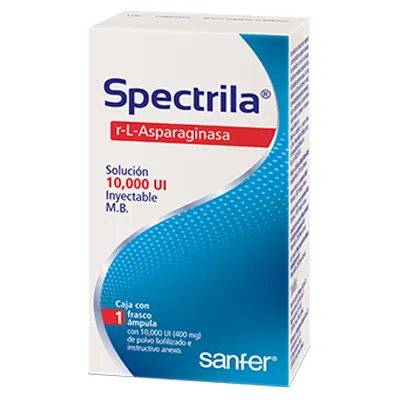
Table of Contents
- Package leaflet: Information for the patient
- Spectrila 10,000 U powder for concentrate for solution for infusion
- 1. What Spectrila is and what it is used for
- 2. What you should know before receiving Spectrila
- 3. How to use Spectrila
- 4. Possible side effects
- 5. How to store Spectrila
- 6. Package contents and other information
- The following information is intended exclusively for healthcare professionals:
Package leaflet: Information for the patient
Spectrila 10,000 U powder for concentrate for solution for infusion
asparaginase
Please read all of this leaflet carefully before you are given this medicine because it contains
important information for you.
- Keep this leaflet. You may need to read it again.
- If you have any questions, ask your doctor or nurse.
- If you get any side effects, including those not listed in this leaflet, tell your doctor or nurse. See section 4.
Contents of this leaflet
- What Spectrila is and what it is used for
- What you need to know before you are given Spectrila
- How to use Spectrila
- Possible side effects
- How to store Spectrila
- Contents of the pack and other information
1. What Spectrila is and what it is used for
Spectrila contains asparaginase, an enzyme that interferes with the natural substances required for the growth of tumour cells. All cells need an amino acid called asparagine in order to survive. Normal cells are able to produce asparagine on their own, unlike certain tumour cells. Asparaginase reduces the level of asparagine in blood cancer cells and stops tumour growth.
Spectrila is used to treat adults and children with acute lymphoblastic leukaemia (ALL), which is a form of blood cancer. Spectrila is used in combination with other medicines.
2. What you should know before receiving Spectrila
Do not use Spectrila
- if you are allergic to asparaginase or to any of the other ingredients of this medicine (listed in section 6);
- if you have or have previously had inflammation of the pancreas (pancreatitis);
- if you have severe liver function problems;
- if you have a blood clotting disorder (such as haemophilia);
- if you have previously experienced severe bleeding (haemorrhage) or a severe blood clotting disorder (thrombosis) during prior treatment with asparaginase.
Warnings and precautions
Talk to your doctor or nurse before receiving Spectrila.
During treatment with Spectrila, the following life-threatening conditions may occur:
- severe inflammation of the pancreas (acute pancreatitis);
- liver problems;
- a severe allergic reaction causing difficulty in breathing or dizziness;
- disorders of blood coagulation (bleeding or formation of blood clots);
- high levels of blood sugar.
Before and during treatment with Spectrila, your doctor will perform blood tests.
If severe liver problems occur, treatment with Spectrila must be stopped immediately.
If symptoms of allergy occur, the intravenous infusion of Spectrila must be stopped immediately. You may receive antiallergic medicines and, if necessary, medicines to stabilise circulation. In most cases, treatment can be continued with other medicines containing different forms of asparaginase.
Blood coagulation disorders may require administration of fresh plasma or a specific type of protein (antithrombin III) to reduce the risk of bleeding or formation of blood clots (thrombosis).
High blood sugar levels may require treatment with intravenous fluids and/or insulin.
Reversible posterior leukoencephalopathy syndrome (characterised by headache, confusion, seizures, and loss of vision) may require medicines to lower blood pressure and, in case of seizures, antiepileptic treatment.
Other medicines and Spectrila
Tell your doctor if you are taking, have recently taken, or might take any other medicines.
This is important because Spectrila may increase the side effects of other medicines due to its effect on the liver, which plays a key role in eliminating medicines from the body.
In particular, it is important to inform your doctor if you are also taking any of the following medicines:
- Vincristine (used to treat certain types of cancer), because concomitant use of vincristine and asparaginase may increase the risk of certain side effects. To avoid this, vincristine is usually administered 3–24 hours before asparaginase.
- Glucocorticoids (anti-inflammatory medicines that reduce the activity of the immune system), because concomitant use of glucocorticoids and asparaginase may increase the formation of blood clots (thrombosis).
- Medicines that reduce blood clotting ability, such as anticoagulants (e.g. warfarin and heparin), dipyridamole, acetylsalicylic acid, or medicines used for pain and inflammation, because using these medicines with asparaginase may increase the risk of bleeding.
- Medicines metabolised in the liver (e.g. paracetamol, acetylsalicylic acid, tetracycline), because their side effects may increase.
- Asparaginase may affect the effectiveness of methotrexate or cytarabine (used to treat certain types of cancer):
- if asparaginase is administered after these medicines, their effect may be increased;
- if asparaginase is administered before these medicines, their effect may be reduced.
- Medicines that may reduce liver function (e.g. paracetamol, acetylsalicylic acid, tetracycline), because this could worsen further with concomitant treatment with asparaginase.
- Medicines that may suppress bone marrow function (e.g. cyclophosphamide, doxorubicin, methotrexate), because these effects may be enhanced by concomitant use of asparaginase. You may be more susceptible to infections.
- Other anticancer medicines, because they might contribute to the release of excessive amounts of uric acid when cancer cells are destroyed by asparaginase.
Vaccination
Concomitant vaccination with live vaccines may increase the risk of severe infection. Therefore, you must not receive live vaccines for at least 3 months after completion of treatment with Spectrila.
Pregnancy and breastfeeding
There are no data on the use of asparaginase in pregnant women. Spectrila must not be used during pregnancy unless the woman's clinical condition requires treatment with asparaginase. It is not known whether asparaginase is present in breast milk. Therefore, Spectrila must not be used during breastfeeding.
If you are pregnant, suspect you may be pregnant, are planning a pregnancy, or are breastfeeding, consult your doctor before using this medicine.
Women must use contraceptive measures or abstain from sexual intercourse during treatment and for 7 months after the end of treatment. Since an indirect interaction between components of oral contraceptives and asparaginase cannot be ruled out, oral contraceptives are not considered sufficiently safe. A method other than oral contraceptives must be used in women of childbearing potential.
Men must take adequate precautions to ensure that their partners do not become pregnant during treatment with Spectrila and for 4 months after the last dose.
Driving and using machines
Do not drive or operate machinery while taking this medicine, as it may cause drowsiness, fatigue, or confusion.
3. How to use Spectrila
Spectrila is prepared and administered by healthcare professionals. Your doctor will determine the appropriate dose for you.
The dose is based on body surface area, calculated according to weight and height.
Spectrila is administered intravenously. It is usually given in combination with other anticancer medicines.
The duration of treatment depends on the specific chemotherapy protocol used for your disease.
Use in adults
The recommended dose of Spectrila for adults is 5,000 units (U) per m² of body surface area, administered every three days.
Use in children and adolescents
The recommended dose of Spectrila in children and adolescents aged 1 to 18 years is 5,000 U per m² of body surface area, administered every three days.
The recommended dose in infants from 0 to 12 months of age is as follows:
- Age less than 6 months: 6,700 U per m² of body surface area,
- Age 6–12 months: 7,500 U per m² of body surface area.
If you receive more Spectrila than you should
If you think you have been given too much Spectrila, inform your doctor or nurse as soon as possible.
To date, it is not known that an overdose of asparaginase has caused signs of overdose.
If necessary, your doctor will treat any symptoms and provide supportive measures.
If you have any doubts about the use of this medicine, consult your doctor or nurse.
4. Possible side effects
Like all medicines, this medicine can cause side effects, although not everybody gets them.
Immediately contact your doctor and stop taking Spectrila if you experience:
- inflammation of the pancreas, causing severe abdominal and back pain;
- severe liver function abnormalities (detected by laboratory tests);
- allergic reactions, including severe allergic reaction (anaphylactic shock), flushing, rash, low blood pressure, swelling of the face and throat, hives, shortness of breath;
- blood clotting disorders, such as bleeding, disseminated intravascular coagulation (DIC), or formation of blood clots (thrombosis);
- high blood sugar levels (hyperglycaemia).
A list of all other side effects is provided below, classified by their frequency:
Very common side effects (may affect more than 1 in 10 people)
- nausea, vomiting, stomach discomfort or diarrhoea
- fluid retention (oedema)
- feeling tired
- abnormalities in laboratory tests, including changes in blood protein levels, changes in blood fat levels or liver enzyme values, or high blood urea levels
Common side effects (may affect up to 1 in 10 people)
- mild to moderate reduction in the number of all blood cells
- allergic reactions, including wheezing (bronchospasm) or breathing difficulties
- low blood sugar level (hypoglycaemia)
- loss of appetite or weight loss
- depression, hallucinations or confusion
- nervousness (agitation) or drowsiness
- changes in electroencephalogram (EEG) (the recording of electrical activity of the brain)
- high levels of amylase and lipase in the blood
- pain (back pain, joint pain, stomach pain)
Uncommon side effects (may affect up to 1 in 100 people)
- high levels of uric acid in the blood (hyperuricaemia)
- high levels of ammonia in the blood (hyperammonaemia)
- headache
Rare (may affect up to 1 in 1,000 people)
- diabetic ketoacidosis (a complication due to uncontrolled blood sugar levels)
- seizures, severe disturbance of consciousness including coma, and stroke
- reversible posterior leucoencephalopathy syndrome (a condition characterised by headache, confusion, seizures and loss of vision)
- inflammation of the salivary glands (parotitis)
- cholestasis (blockage of bile flow from the liver)
- jaundice
- destruction of liver cells (hepatic necrosis)
- liver failure which may lead to death
Very rare (may affect up to 1 in 10,000 people)
- reduced function of the thyroid or parathyroid glands
- slight tremor of the fingers
- pancreatic pseudocysts (fluid collection following acute inflammation of the pancreas)
Not known (frequency cannot be estimated from the available data)
- infections
- fatty liver (hepatic steatosis).
Reporting of side effects
If you experience any side effect, including those not listed in this leaflet, talk to your doctor or nurse. You can also report side effects directly via the national reporting system referred to in Annex V. By reporting side effects, you can help provide more information on the safety of this medicine.
5. How to store Spectrila
Keep this medicine out of the sight and reach of children.
Do not use this medicine after the expiry date stated on the package. The expiry date refers to the last day of that month.
Store in a refrigerator (2°C - 8°C).
Keep the vial in the outer packaging to protect the medicine from light.
The reconstituted solution is stable for 2 days if stored at a temperature between 2°C and 8°C.
If the medicine is not used immediately, the person preparing it is responsible for the duration and conditions of storage to ensure the sterility of the product. Storage should normally not exceed 24 hours at 2°C - 8°C.
Do not dispose of any medicine via wastewater or household waste. Ask your pharmacist how to dispose of medicines you no longer use. This will help protect the environment.
6. Package contents and other information
What Spectrila contains
- The active substance is asparaginase. One vial of powder contains 10,000 units of asparaginase. After reconstitution, 1 ml of solution contains 2,500 units of asparaginase.
- The other component is sucrose.
Description of the appearance of Spectrila and contents of the pack
Spectrila is supplied as a powder for concentrate for solution for infusion.
The powder is white and is supplied in a clear glass vial with a rubber stopper, aluminium seal and a plastic flip-off cap.
Spectrila is available in packs containing 1 or 5 vials.
Not all pack sizes may be marketed.
Marketing Authorisation Holder and Manufacturer
medac
Gesellschaft für klinische Spezialpräparate mbH
Theaterstr. 6
22880 Wedel
Germany
Tel.: +49-4103-8006-0
Fax: +49-4103-8006-100
E-mail: [email protected]
Other sources of information
More detailed information on this medicinal product is available on the website of the European Medicines Agency, http://www.ema.europa.eu.
The following information is intended exclusively for healthcare professionals:
Traceability
To improve the traceability of biological medicinal products, the name and batch number of the administered medicinal product must be clearly recorded.
Spectrila must be used exclusively by physicians experienced in such therapeutic protocols.
Recommended monitoring tests and safety precautions
Before starting therapy, bilirubin, liver transaminases, and coagulation parameters (partial thromboplastin time [PTT], prothrombin time [PT], antithrombin, fibrinogen, and D-dimer) should be determined.
After administration of asparaginase, careful monitoring of bilirubin, liver transaminases, blood glucose/urinary glucose, coagulation parameters (PTT, PT, antithrombin III, fibrinogen, and D-dimer), amylase, lipase, triglycerides, and cholesterol is recommended.
Acute pancreatitis
Treatment with asparaginase must be discontinued in patients who develop acute pancreatitis. Acute pancreatitis has occurred in less than 10% of patients. Rarely, hemorrhagic or necrotizing pancreatitis may occur. Isolated fatal outcomes have been reported. Clinical symptoms include abdominal pain, nausea, vomiting, and anorexia. Serum amylase and lipase levels are usually elevated, although they may be within normal limits in some patients due to impaired protein synthesis. Patients with severe hypertriglyceridemia have an increased risk of developing acute pancreatitis. Such patients should no longer be treated with asparaginase-containing preparations.
Hepatotoxicity
Rarely, severe liver impairment has been reported, including cholestasis, jaundice, hepatic necrosis, and liver failure with fatal outcome (see sections 4.8 and 4.5). Liver function parameters must be closely monitored before and during treatment with asparaginase.
Treatment with asparaginase should be suspended if patients develop severe hepatic impairment (bilirubin > 3 times the upper limit of normal [ULN]; transaminases > 10 times ULN), severe hypertriglyceridemia, hyperglycemia, or coagulation disorders (e.g., cerebral venous sinus thrombosis, severe bleeding).
Allergy and anaphylaxis
Due to the risk of severe anaphylactic reactions, asparaginase must not be administered as an intravenous bolus. If allergic symptoms occur, administration of asparaginase must be immediately discontinued and appropriate treatment initiated, which may include antihistamines and corticosteroids.
Coagulation disorders
Due to inhibition of protein synthesis (reduced synthesis of factors II, V, VII, VIII, and IX, protein C and S, antithrombin III [AT III]) caused by asparaginase, coagulation disorders may occur, manifesting as thrombosis, disseminated intravascular coagulation (DIC), or bleeding. The risk of thrombosis appears to be higher than the risk of bleeding. Symptomatic thromboses related to the use of central venous catheters have also been reported. Frequent assessment of coagulation parameters is important before and during treatment with asparaginase. Expert consultation should be sought in case of reduced AT III levels.
Hyperglycemic conditions
Asparaginase may induce hyperglycemia due to reduced insulin production. Additionally, it may reduce insulin secretion from pancreatic β-cells and impair insulin receptor function. This condition is usually self-resolving. However, in rare cases, it may lead to diabetic ketoacidosis. Concomitant treatment with corticosteroids contributes to this effect. Serum and urinary glucose levels should be monitored regularly and managed according to clinical indications.
Antineoplastic agents
Asparaginase-induced tumor cell lysis may release large amounts of uric acid, leading to hyperuricemia. Concomitant administration of other antineoplastic drugs contributes to this effect. Aggressive urine alkalization and use of allopurinol may prevent uric acid nephropathy.
Glucocorticoids
An increased risk of thrombosis during induction therapy with asparaginase and prednisone has been observed in children with genetic prothrombotic risk factors (factor V G1691A mutation, prothrombin G20210A mutation, methylenetetrahydrofolate reductase [MTHFR] T677T genotype, elevated lipoprotein A, hyperhomocysteinemia).
Contraception
Women of childbearing potential must use effective contraceptive measures during treatment and for 7 months after discontinuation of asparaginase. Since an indirect interaction between components of oral contraceptives and asparaginase cannot be excluded, oral contraceptives are not considered sufficiently safe in this clinical situation. Men must use effective contraception and be advised not to father children during treatment with asparaginase and for 4 months after the end of treatment.
Philadelphia chromosome-positive patients
The efficacy and safety of Spectrila in Philadelphia chromosome-positive patients have not been established.
Asparaginase activity
Measurement of asparaginase activity in serum or plasma may be performed to exclude accelerated clearance of asparaginase activity. Levels should preferably be measured three days after the last administration of asparaginase, i.e., typically immediately before administering the next dose. Low levels of asparaginase activity are often associated with the presence of anti-asparaginase antibodies. In such cases, switching to a different asparaginase preparation should be considered, following consultation with an expert.
Hypoalbuminemia
Due to impaired protein synthesis, reduced serum protein levels (especially albumin) occur very commonly in patients treated with asparaginase. Given the importance of serum proteins for binding and transport functions of certain active substances, serum protein levels should be monitored regularly.
Hyperammonemia
Plasma ammonia levels should be determined in all patients presenting unexplained neurological symptoms or severe and prolonged vomiting. In cases of hyperammonemia with severe clinical symptoms, therapeutic and pharmacological measures must be initiated to rapidly reduce plasma ammonia levels (e.g., protein restriction and hemodialysis), reverse catabolic states, and enhance elimination of nitrogenous metabolic waste. Expert consultation should be sought.
Reversible posterior leukoencephalopathy syndrome (RPLS)
RPLS may rarely occur during treatment with any asparaginase. This syndrome is characterized on magnetic resonance imaging (MRI) by reversible lesions/edema (lasting from several days to months), primarily in the posterior region of the brain. RPLS symptoms mainly include elevated blood pressure, seizures, headache, altered mental status, and acute visual disturbances (primarily cortical blindness or homonymous hemianopia). It is unclear whether RPLS is caused by asparaginase, concomitant treatment, or underlying conditions. Treatment is symptomatic, including measures to manage seizures. It may be necessary to discontinue or reduce the dose of concomitantly administered immunosuppressive medicinal products. Expert consultation should be sought.
Handling
To dissolve the powder, carefully inject 3.7 ml of Water for Injections along the inner wall of the vial using an injection syringe (do not inject directly onto or into the powder). Dissolution of the contents should be achieved by slow swirling (avoid foaming due to agitation). The resulting solution for infusion may have a slight opalescence.
The calculated amount of asparaginase should be further diluted in 50–250 ml of sodium chloride 9 mg/ml (0.9%) solution for infusion.
Route of administration
For intravenous use only. The daily dose of asparaginase required per patient may be diluted in a final volume of 50–250 ml of sodium chloride 9 mg/ml (0.9%) solution for infusion.
Duration of administration
The diluted asparaginase solution should be infused over 0.5–2 hours.
The dose of asparaginase must not be administered as a bolus.
Disposal
Unused medicinal product and waste materials derived from such medicinal product must be disposed of in accordance with local regulations.