Sotalex
Italy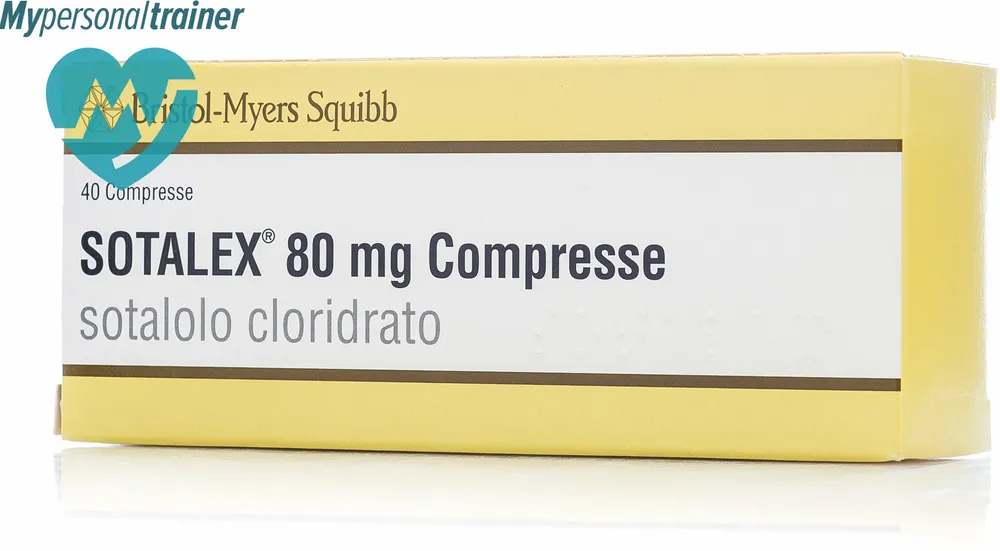
Table of Contents
Package leaflet: Information for the patient
SOTALEX 80 mg tablets
Sotalol hydrochloride
Please read this leaflet carefully before taking this medicine because it
contains important information for you.
- Keep this leaflet. You may need to read it again.
- If you have any questions, ask your doctor or pharmacist.
- This medicine has been prescribed for you only. Do not give it to other people, even if their symptoms are the same as yours, as it may be harmful.
- If you experience any side effects, including those not listed in this leaflet, contact your doctor or pharmacist. See section 4.
Contents of this leaflet:
- What Sotalex is and what it is used for
- What you need to know before taking Sotalex
- How to take Sotalex
- Possible side effects
- How to store Sotalex
- Contents of the pack and other information
1. What Sotalex is and what it is used for
Sotalex contains the active substance "sotalol hydrochloride", which belongs to a group of medicines known as beta-blockers. These medicines slow down the heartbeat, allowing the heart to beat more efficiently in adults.
Sotalex is used to:
- prevent the occurrence of certain serious irregularities of the heartbeat
- treat an irregular heartbeat
- maintain a regular heartbeat after a procedure performed to correct an irregular heartbeat
2. What you need to know before taking Sotalex
DO NOT take Sotalex
-
If you are allergic to the active substance or to any of the other ingredients of this medicine (listed in section 6).
-
If you have asthma, wheezing attacks, or any other lung disease.
-
If you suffer from low blood pressure.
-
If you have pain in the fingers and toes that first turn pale, then blue, and finally red (Raynaud's syndrome).
-
If you are scheduled to undergo general anesthesia.
-
If you have severe kidney problems.
-
If you have a condition called metabolic acidosis (build-up of acids in the blood).
-
If you have an untreated benign tumor of the adrenal gland (pheochromocytoma).
-
If you have a very slow heartbeat.
-
If you have suffered from certain heart conditions (such as uncontrolled heart failure, heart block, or sick sinus syndrome unless a pacemaker has been implanted).
-
If you have an abnormal heart rhythm known as "long QT syndrome".
-
If you are in a state of shock due to heart problems (a condition that may present with low blood pressure, cold skin, weak pulse, mental confusion, and anxiety).
-
If you suffer from Prinzmetal's angina (chest pain and palpitations at rest, usually during sleep), as sotalol may increase the risk of angina pectoris.
-
If you are taking other medicines to correct an abnormal heart rhythm, the so-called "Class I antiarrhythmics" (e.g., quinidine, disopyramide, and procainamide) or the so-called "Class III antiarrhythmics" (e.g., amiodarone) (see section “Other medicines and Sotalex”).
-
If you are also taking medicines used to treat schizophrenia and other serious mental disorders, for example sulpiride, amisulpride, thioridazine, chlorpromazine, levomepromazine, trifluoperazine, ciamemazine, tiapride, pimozide, haloperidol, droperidol (the so-called "neuroleptics").
-
If you are taking antidepressants (e.g., citalopram, escitalopram, clomipramine, amitriptyline, desipramine, imipramine, and nortriptyline).
-
If you are taking antipsychotics (e.g., phenothiazines: mesoridazine, thioridazine, levomepromazine, chlorpromazine; butyrophenones: droperidol; others: pimozide, sultopride).
-
If you are taking medicines for the treatment of malaria (e.g., halofantrine and chloroquine).
-
If you are taking antihistamines (e.g., terfenadine, promethazine, astemizole).
-
If you are taking medicines to prevent nausea or vomiting (e.g., cisapride, domperidone, ondansetron) (see section “Other medicines and Sotalex”).
-
If you are taking medicines acting as kinase inhibitors for the treatment of certain advanced or progressive cancers (e.g., vandetanib) (see section “Other medicines and Sotalex”).
-
If you are also receiving injections of erythromycin (an antibiotic) or vincamine (which may be used in the treatment of certain cerebral disorders such as dementia), or if you are taking bepridil (used to treat angina), cisapride (used to treat certain gastrointestinal problems), difemethil (which may be used to treat a slow heartbeat), mizolastine (used to treat hay fever), moxifloxacin (an antibiotic), or floctafénine (used to treat pain).
-
If you are taking methadone (for treatment of withdrawal syndrome), arsenic trioxide, donepezil, propofol, trazodone, probucol, fluconazole, papaverine, or anagrelide.
Warnings and precautions
Talk to your doctor or pharmacist before taking Sotalex:
- If you have diabetes, as sotalol may mask or reduce the warning signs of low blood sugar (hypoglycemia).
- If you have thyroid problems with excess thyroid hormones in the bloodstream (thyrotoxicosis), since sotalol may mask symptoms or worsen them if treatment with sotalol is stopped abruptly.
- If you have kidney problems, as the dose of Sotalex may need adjustment
(see section “How to take Sotalex”).
- If you have psoriasis (a skin disease causing itching, red, painful skin patches), as sotalol may worsen symptoms.
- If you have recently had a heart attack, as sotalol may worsen an already altered heartbeat or cause new heart rhythm problems.
- If you have certain abnormalities on the electrocardiogram (QT prolongation), a history of increased heart muscle volume (cardiomegaly), or heart failure.
- If you have an electrolyte imbalance (low levels of potassium and magnesium in the blood) (see “Other medicines and Sotalex”).
- If you suffer from frequent episodes of allergic reactions.
Other precautions to take:
- Inform your doctor or anesthesiologist that you are taking Sotalex, as it may affect the action of anesthetics.
- Do not stop taking Sotalex suddenly (see section “How to take Sotalex”).
- The presence of sotalol in urine may alter the results of urinary metanephrine measurement (an indicator for the presence of a benign adrenal gland tumor, pheochromocytoma).
For athletes
Using this medicine without therapeutic need constitutes doping and may lead to a positive
anti-doping test.
Children and adolescents
The efficacy and safety of Sotalex in patients under 18 years of age has not been
adequately established.
Other medicines and Sotalex
Inform your doctor or pharmacist if you are taking, have recently taken, or might take any other medicine.
Some medicines may interact with Sotalex. These medicines are listed above in the subsection “Do not take Sotalex”. In these cases, it may be necessary to adjust the dosage or discontinue treatment with some of them. It is important to inform your doctor if you are taking any of the following medicines:
- Floctafénine
- Other medicines for treating irregular heartbeat (e.g., disopyramide, hydroquinidine, quinidine, procainamide, flecainide, amiodarone, dofetilide, ibutilide, propafenone)
- Medicines that may alter the electrocardiogram (QT prolongation) or induce Torsades de Pointes:
- Medicines for depression and mental disorders (e.g., neuroleptics such as thioridazine, chlorpromazine, levomepromazine; antidepressants such as citalopram, escitalopram, clomipramine, and amitriptyline; phenothiazines such as mesoridazine, levomepromazine, chlorpromazine)
- Medicines used to treat infections (antibiotics) such as fluoroquinolones (e.g., moxifloxacin, levofloxacin) and macrolides (e.g., azithromycin, clarithromycin, erythromycin) and pentamidine
- Medicines used to prevent and treat malaria (halofantrine, chloroquine, artemether)
- Medicines for allergies (antihistamines, e.g., terfenadine, astemizole)
- Medicines that increase stomach and intestinal motility and are used to treat nausea and vomiting (cisapride, domperidone, ondansetron)
- Medicines acting as kinase inhibitors for the treatment of certain advanced or progressive cancers, e.g., in the stomach, intestine, or kidneys (vandetanib, sunitinib, sorafenib)
- Medicines used to reduce stomach acidity, for the treatment of gastroesophageal reflux disease and peptic ulcer disease (proton pump inhibitors), as hypomagnesemia may occur, increasing the risk of Torsades de Pointes
- Medicines used to treat addiction (methadone)
- Others (bepridil, difemethil, erythromycin, mizolastine, vincamine, moxifloxacin, arsenic trioxide, donepezil, propofol, trazodone, probucol, fluconazole, papaverine, anagrelide)
- Medicines that increase urine production (diuretics) which reduce potassium and magnesium levels in the blood (see “Warnings and precautions”)
- Medicines that reduce potassium levels in the blood: amphotericin B (an antibiotic), laxatives, corticosteroids (medicines used to treat inflammation)
- Medicines used to treat high blood pressure: calcium antagonists (such as verapamil and diltiazem)
You should also be cautious if you are taking:
- Medicines to lower blood sugar levels (e.g., antidiabetics and insulin)
- Digoxin, a medicine used to treat certain heart conditions
- Medicines used to treat high blood pressure: e.g., clonidine, beta-blockers, reserpine, guanethidine
- Medicines for asthma and other lung diseases (e.g., salbutamol, terbutaline, isoprenaline)
- Medicines used for anesthesia during surgery (e.g., lidocaine)
- Baclofen, a medicine used to treat muscle spasms and multiple sclerosis
- Non-steroidal anti-inflammatory drugs (NSAIDs) such as ibuprofen, diclofenac (used to treat pain, fever, or inflammation)
- Amifostine (used during chemotherapy or radiotherapy)
- Dipyridamole (administered intravenously) (used to prevent blood clot formation)
Pregnancy and breastfeeding
If you are pregnant, think you may be pregnant, plan to become pregnant, or are breastfeeding, consult your doctor or pharmacist before taking this medicine.
Pregnancy
You must inform your doctor if you think you are pregnant (or if there is a possibility of becoming pregnant). Sotalex should not be used during pregnancy; therefore, your doctor will carefully evaluate the benefits of treatment for you and the risks for the fetus.
Breastfeeding
Inform your doctor if you are breastfeeding or plan to start breastfeeding. Your doctor will decide whether to discontinue breastfeeding or treatment with Sotalex.
Driving and using machines
Possible adverse reactions such as visual disturbances and dizziness may impair your ability to drive vehicles or operate machinery.
Sotalex contains lactose
If your doctor has diagnosed you with an intolerance to certain sugars, contact them before taking this medicine.
3. How to take Sotalex
Take this medicine exactly as prescribed by your doctor or pharmacist. If you have any doubts, consult your doctor or pharmacist.
Adults
The recommended starting dose is 80 mg of Sotalex taken once daily or divided into two doses given 12 hours apart.
Your doctor will gradually increase the dose according to your needs every 2–3 days, up to a maximum dose of 320 mg per day.
For some patients with a life-threatening irregular heartbeat, the dose may be increased up to 480 mg or 640 mg of sotalol per day.
During the first few weeks after starting treatment with Sotalex and each time your dose is adjusted, your doctor will monitor your response to treatment.
Patients with impaired kidney function
If your kidney function is impaired, your doctor will take this into account when determining your dose.
How to take the tablets
The tablets should be swallowed whole with a glass of water, preferably 1–2 hours before meals.
If you take more Sotalex than you should
If you have taken too many tablets, contact your doctor or go to hospital immediately. Symptoms of overdose may include:
- slowed heartbeat (bradycardia)
- heart failure
- low blood pressure (hypotension)
- severe breathing difficulties (bronchospasm)
- low blood sugar levels (hypoglycaemia)
- seizures (including seizures caused by low blood sugar levels)
Therapeutic measures
Sotalol can be removed from the bloodstream by haemodialysis (a blood filtration method). Your doctor may manage symptoms with specific treatments.
If you forget to take Sotalex
Do not take a double dose to make up for a forgotten tablet.
If you forget to take a dose, take it as soon as you remember, unless it is almost time for your next dose; in that case, simply wait and take your next dose at the usual time. Continue your treatment as before.
If you stop taking Sotalex
Do not stop or discontinue treatment with Sotalex without first consulting your doctor, as serious heart problems may occur, including heart attack and death.
Your doctor will decide when and how to stop therapy with Sotalex. Follow your doctor’s instructions.
If you have any questions about how to use this medicine, ask your doctor or pharmacist.
4. Possible side effects
Like all medicines, this medicine can cause side effects, although not everyone gets them.
If you experience any of the following side effects at the beginning of treatment with Sotalex, contact your doctor immediately, who will STOP the treatment:
- slow heartbeat (bradycardia),
- very low blood pressure (severe hypotension).
The following side effects have been observed and reported during treatment with Sotalex:
Common (may affect up to 1 in 100 people):
- slow heartbeat (bradycardia), breathing difficulty (dyspnoea), chest pain, awareness of heartbeat in the chest (palpitations), swelling, abnormalities in the electrocardiogram (an examination to assess the heart's electrical activity), low blood pressure (hypotension), irregular heartbeat (proarrhythmia), fainting (syncope), weak heart (heart failure), “lightheadedness” (pre-syncope)
- Skin rashes (rash)
- Nausea, vomiting, diarrhoea, abdominal pain, excessive intestinal gas (flatulence), persistent or recurring pain or discomfort in the stomach area (dyspepsia)
- Muscle cramps
- Fatigue, dizziness, weakness (asthenia), feeling faint, headache (cephalalgia),
sleep disturbances, depression, altered sensation (paraesthesia), mood changes, anxiety - Sexual problems
- Vision and hearing problems
- Altered sense of taste
- Fever
Frequency not known (frequency cannot be estimated from the available data):
- reduced number of cells that help blood clot – this increases the risk of bleeding or bruising
- low blood sugar levels
- reduced blood flow to extremities causing cold and/or blue fingers and toes, leg pain when walking (Raynaud's syndrome)
- bronchospasm
- severe change in heart rhythm (atrioventricular block)
- angina pectoris
- itching sensation, hair loss, excessive sweating, psoriasis
Reporting of side effects
If you get any side effects, including those not listed in this leaflet, talk to your doctor or pharmacist. You can also report side effects directly via the national reporting system at https://www.aifa.gov.it/content/segnalazioni-reazioni-avverse.
By reporting side effects, you can help provide more information on the safety of this medicine.
5. How to store Sotalex
This medicine does not require any special storage conditions. Keep this
medicine out of the sight and reach of children.
Do not use this medicine after the expiry date which is stated on the packaging after
EXP. The expiry date refers to the last day of that month.
Do not dispose of any medicine via wastewater or household waste. Ask your
pharmacist how to dispose of medicines no longer in use. This will help
protect the environment.
6. Package contents and other information
What Sotalex contains
- The active substance is sotalol hydrochloride 80 mg
- The other components are lactose monohydrate, microcrystalline cellulose, maize starch, anhydrous colloidal silica, stearic acid, magnesium stearate
Description of the appearance of Sotalex 80 mg tablets and package contents
White, round, biconvex tablets with a break line on both sides, packaged in blisters containing 40 tablets.
Marketing Authorization Holder and Manufacturer
Marketing Authorization Holder:
CHEPLAPHARM Arzneimittel GmbH - Ziegelhof 24, 17489 - Greifswald (Germany)
Manufacturer:
FARMEA
10 rue Bouché Thomas
ZAC d’Orgemont, 49000 Angers, France