Solian
Italy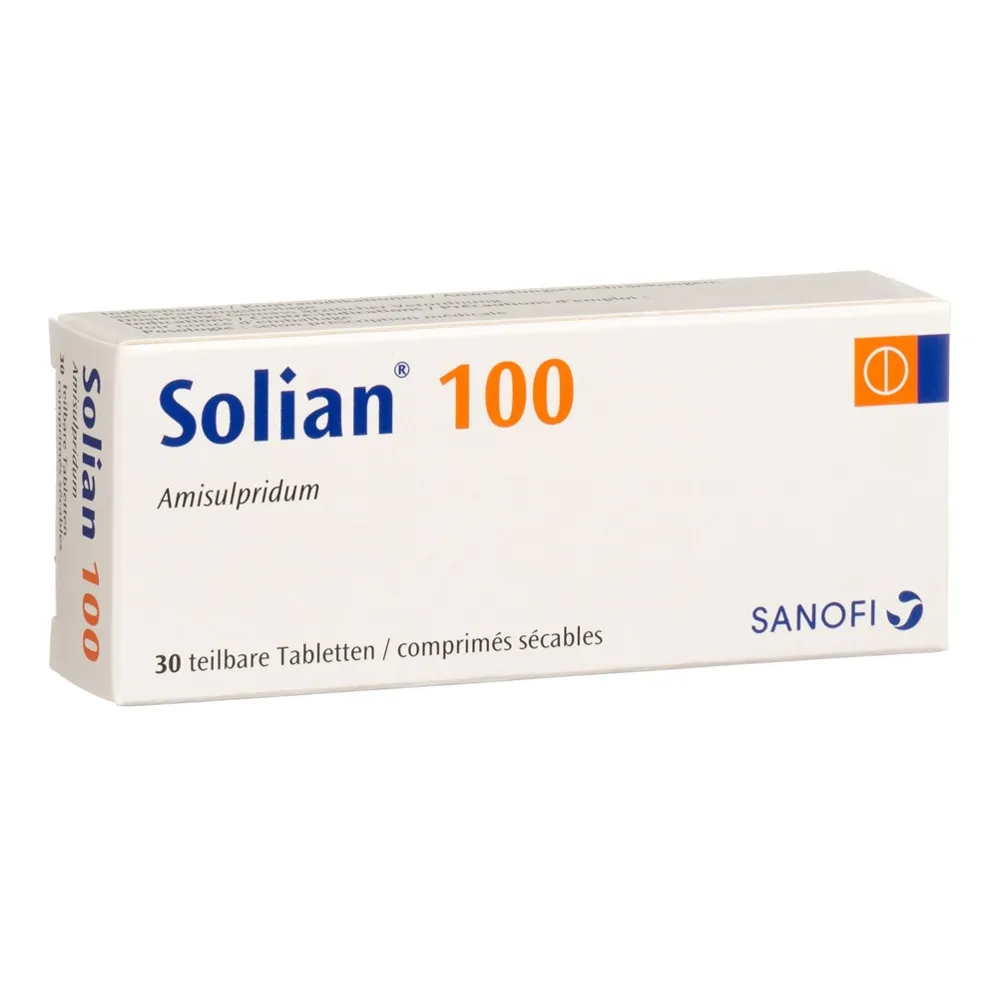
Table of Contents
Package leaflet: Information for the patient
Solian 100 mg Tablets, 200 mg Tablets, 400 mg Film-coated Tablets
amisulpride
Please read this leaflet carefully before taking this medicine because it contains
important information for you.
- Keep this leaflet. You may need to read it again.
- If you have any questions, ask your doctor or pharmacist.
- This medicine has been prescribed for you only. Do not give it to other people, even if their symptoms are the same as yours, as it may be harmful.
- If you experience any side effects, including those not listed in this leaflet, tell your doctor or pharmacist. See section 4.
Contents of this leaflet:
- What Solian is and what it is used for
- What you need to know before taking Solian
- How to take Solian
- Possible side effects
- How to store Solian
- Contents of the pack and other information
1. What Solian is and what it is used for
Solian contains amisulpride, which belongs to a class of medicines called "Psycholeptics, benzamides".
Solian is indicated for the treatment of mental disorders characterised by an inability to distinguish between self and the external world (acute and chronic psychotic disorders).
Symptoms of this disorder include:
- positive symptoms such as:
- disturbance in the interpretation of reality (delusions)
- hallucinations, such as experiencing, seeing or hearing things that do not exist
- strange and/or frightening thoughts (thought disorders)
- negative symptoms such as:
- difficulty in experiencing genuine feelings towards other people (affective flattening)
- becoming withdrawn and passive (emotional and social withdrawal)
2. What you should know before taking Solian
Do not take Solian
- if you are allergic to amisulpride, to any of the other ingredients of this medicine (listed in section 6), or to closely related substances;
- if you have breast cancer (mammary tumor) or a condition called "prolactin-dependent tumor" (see "Warnings and precautions" and "Possible side effects");
- if you have a tumor of the gland located above the kidneys (pheochromocytoma);
- if you are a child during developmental age up to puberty;
- if you are taking any of the following medicines, as they may cause serious disturbances in heart rhythm (onset of torsades de pointes):
- medicines used to treat irregular heartbeat (arrhythmias), such as:
o class Ia antiarrhythmics such as quinidine, disopyramide;
o class III antiarrhythmics such as amiodarone, sotalol; - other medicines such as bepridil (for treatment of irregular heartbeat), cisapride (for treatment of gastrointestinal disorders), sultopride, thioridazine (for treatment of mental disorders), intravenous metadone (for treatment of severe pain or opioid dependence), intravenous vincamine (to increase blood flow to the brain), halofantrine (for treatment of malaria), intravenous erythromycin, pentamidine, sparfloxacin (for treatment of bacterial infections) (see "Other medicines and Solian");
- levodopa, a medicine used to treat Parkinson's disease (see "Other medicines and Solian").
Warnings and precautions
Talk to your doctor or pharmacist before taking Solian.
Pay particular attention before taking Solian, especially if:
- you suffer from Parkinson's disease, as this medicine may worsen your condition;
- you have high blood sugar levels (diabetes mellitus) or are at risk of developing them. In this case, your doctor will monitor your blood sugar levels during treatment with Solian;
- you suffer from epilepsy. During treatment with Solian, you may experience more frequent seizures; your doctor must monitor you closely;
- you have impaired kidney function. Your doctor may reduce your dose or prescribe intermittent treatment (see "How to take Solian");
- you are elderly, as you are more likely to experience low blood pressure and drowsiness. Dose reduction may also be required in case of renal impairment.
With medicines used to treat psychosis, including Solian, decreases in certain types of white blood cells (leukopenia, neutropenia, and agranulocytosis) have been reported. Unexplained infections or fever may indicate a blood disorder (hematological dyscrasia - see "Possible side effects"), requiring immediate blood tests.
As with other medicines acting on the Central Nervous System, a group of symptoms known as Neuroleptic Malignant Syndrome, a potentially fatal complication, may occur. It is characterized by increased body temperature (hyperthermia), muscle rigidity, akinesia (movement disorders), irregular heartbeat and blood pressure, sweating, increased heart rate, changes in heart rhythm, elevated creatine phosphokinase levels (a substance produced by the body indicating possible muscle damage), rhabdomyolysis (muscle damage), disturbances in consciousness that may progress to stupor and coma.
If you develop high body temperature, particularly when daily doses are high, your doctor will discontinue any antipsychotic medication, including Solian.
Amisulpride causes a heart disturbance called "QT interval prolongation" (see "Possible side effects"), increasing the risk of heart rhythm disturbances (serious ventricular arrhythmias such as torsades de pointes). Your doctor will monitor your heart condition, especially if you have other cardiovascular diseases or family history of "QT interval prolongation". Avoid concomitant therapy with other neuroleptic medicines.
Use Solian with caution if you have risk factors for cerebrovascular disorders (stroke).
Elderly patients with psychosis associated with dementia:
In elderly patients with dementia, the risk of death is increased.
Venous thromboembolism (VTE), a circulatory system disorder
Before and during treatment with Solian, your doctor will perform checks to identify possible risk factors for a circulatory system disorder called "venous thromboembolism" (see "Possible side effects").
Breast cancer
Solian may increase levels of prolactin (a hormone acting on the breast). If you have a personal or family history of breast cancer, your doctor will monitor you during treatment with Solian.
Benign pituitary gland tumor (benign pituitary tumor)
Amisulpride may increase levels of a hormone called "prolactin". Cases of benign pituitary tumors (such as prolactinoma) have been observed during treatment with amisulpride (see "Side effects"). If prolactin levels are very high, or if you show clinical signs of pituitary tumor (such as visual field defects and headache), your doctor will perform specific tests (imaging diagnostics of the pituitary gland). If a pituitary tumor is confirmed, your doctor will discontinue treatment with Solian.
After abrupt discontinuation of high therapeutic doses of antipsychotic medicines, withdrawal symptoms have been reported, including nausea, vomiting, and insomnia.
Psychotic symptoms may also recur, and with Solian, the onset of involuntary movement disorders (such as akathisia, dystonia, and dyskinesia) has been reported.
Therefore, your doctor will gradually discontinue Solian.
Severe liver toxicity has been reported following the use of Solian. Contact your doctor immediately if you experience fatigue, loss of appetite, nausea, vomiting, abdominal pain, or yellowing of the eyes or skin.
Children and adolescents
Amisulpride must not be given to children up to puberty (see "Do not take Solian").
The efficacy and safety of amisulpride from development (puberty) up to the age of 18 years have not been established. Therefore, the use of Solian from puberty up to the age of 18 years is not recommended.
Other medicines and Solian
Inform your doctor or pharmacist if you are taking, have recently taken, or might take any other medicine.
When drugs known as neuroleptics are administered concomitantly with drugs that "prolong the QT interval" (such as Solian), the risk of developing heart rhythm disturbances (cardiac arrhythmias) increases.
The effects of Solian may be influenced by, or may influence, the following medicines:
Contraindicated combinations
- Some medicines that can cause serious disturbances in heart rhythm must not be used with Solian (medicines capable of causing torsades de pointes). These include:
- medicines used to treat irregular heartbeat such as class Ia antiarrhythmics (e.g., quinidine, disopyramide) and class III antiarrhythmics (e.g., amiodarone, sotalol);
- other medicines such as bepridil (for treatment of irregular heartbeat), cisapride (for treatment of gastrointestinal disorders), sultopride and thioridazine (for treatment of mental disorders), intravenous metadone (for treatment of severe pain or opioid dependence), intravenous vincamine (to increase blood flow to the brain), halofantrine (for treatment of malaria), intravenous erythromycin, pentamidine, sparfloxacin (for treatment of bacterial infections);
- levodopa, a medicine used to treat Parkinson's disease, as the effects of levodopa and Solian may interact with each other;
- medicines classified as "dopaminergic agonists" such as bromocriptine and ropinirole (for treatment of Parkinson's disease), since Solian may counteract their effect;
- medicines that may cause low potassium levels in the blood (hypokalemia), such as: potassium-depleting diuretics, stimulant laxatives, intravenous amphotericin B (for treatment of fungal infections), glucocorticoids (for treatment of inflammatory disorders), tetracosactide (for treatment of a severe form of epilepsy). Your doctor will correct low blood potassium levels with appropriate therapy.
Not recommended combinations
- Some medicines that may cause serious disturbances in heart rhythm (increase the risk of torsades de pointes or may prolong the QT interval):
- medicines that may reduce heart rate: beta-blockers, calcium channel blockers such as diltiazem, verapamil and guanfacine, clonidine (for treatment of high blood pressure), digitalis (to improve heart pumping strength);
- medicines with strong central nervous system sedative effects (neuroleptics such as pimozide, haloperidol), imipramine-type antidepressants, lithium;
- some medicines for the treatment of allergies (antihistamines);
- some medicines for the treatment of malaria (e.g., mefloquine).
Combinations requiring caution
- Medicines acting on the Central Nervous System (including narcotics, anesthetics, analgesics, sedative H1 antihistamines), medicines that calm, induce sleep, or relax muscles (barbiturates and benzodiazepines and other anxiolytics), clonidine and derivatives;
- medicines to regulate blood pressure (antihypertensives and other hypotensive agents);
- clozapine, as it may lead to increased levels of amisulpride in the blood.
Solian and alcohol
Solian may enhance some of the effects caused by alcohol.
Pregnancy, breastfeeding, and fertility
If you are pregnant, breastfeeding, suspect you may be pregnant, or are planning to become pregnant, consult your doctor or pharmacist before taking this medicine.
Pregnancy
Do not take Solian if you are pregnant or suspect you are pregnant, or if you are of childbearing age and not using effective contraception.
If you have used Solian during the last three months of pregnancy, the newborn may show agitation, increased muscle tone, involuntary tremors, drowsiness, breathing problems, or difficulty feeding. If your baby shows any of these symptoms, contact a doctor immediately.
Breastfeeding
You must not breastfeed during treatment with Solian. Ask your doctor for advice on how to feed your baby if you are taking Solian.
Driving and using machines
Even when used as recommended, Solian may cause drowsiness and blurred vision, thereby impairing your ability to drive vehicles or operate machinery (see "Possible side effects").
Solian tablets and Solian coated tablets contain lactose
If your doctor has diagnosed you with an intolerance to certain sugars, contact him before taking this medicine.
Solian tablets and Solian coated tablets contain sodium
This medicine contains less than 1 mmol (23 mg) of sodium per tablet or coated tablet, i.e., essentially 'sodium-free'.
3. How to take Solian
Take this medicine exactly as directed by your doctor or pharmacist. If you have any doubts, consult your doctor or pharmacist.
If you suffer from acute psychotic disorders, the recommended dose ranges from 400 to 800 mg per day.
Your doctor may decide to increase the daily dose up to 1200 mg per day, depending on your individual response.
If you suffer from mixed positive and negative symptoms, your doctor will determine the recommended dose to achieve optimal control of your positive symptoms.
For maintenance treatment, your doctor will use the lowest effective dose possible.
If you suffer from predominantly negative symptoms, the recommended dose ranges from 50 to 300 mg per day. Your doctor will adjust the dose according to your individual response.
You may take Solian once daily for doses up to 400 mg; for doses exceeding 400 mg daily, you must divide the dose into two doses per day.
Elderly patients
If you are elderly, your doctor will carefully evaluate the recommended dose and may consider reducing it, especially in patients with kidney problems (see "Warnings and precautions").
Children and adolescents
Amisulpride must not be given to children before puberty.
The use of Solian from puberty until the age of 18 years is not recommended (see "Do not take Solian" and "Warnings and precautions").
Impaired renal function (renal insufficiency)
Your doctor will prescribe a lower dose, half or one-third of the usual daily dose, depending on the degree of renal impairment.
Impaired hepatic function (hepatic insufficiency)
No dose adjustment is necessary.
If you take more Solian than you should
If you accidentally take too much Solian, contact your doctor immediately or go to the nearest hospital.
In case of overdose, you may experience drowsiness or sedation, low blood pressure (hypotension), tremors, rigidity, increased salivation, movement disorders (extrapyramidal symptoms), and coma. Fatal outcomes have been reported, particularly in association with other psychotropic agents.
If you forget to take Solian
Do not take a double dose to make up for the missed dose.
If you have any doubts about how to use this medicine, consult your doctor or pharmacist.
4. Possible side effects
Like all medicines, this medicine can cause side effects, although not everyone gets them.
Very common (may affect more than 1 in 10 people)
- tremor
- stiffness
- slowing down or reduction of spontaneous body movements (hypokinesia)
- increased salivation (hypersalivation)
- feeling of restlessness (akathisia)
- movement disorders (dyskinesia)
These disorders are generally mild at the recommended doses and partially reversible with administration of anti-Parkinson drugs, even without discontinuing Solian.
Common (may affect up to 1 in 10 people)
- muscle cramps, especially in the neck (spasmodic torticollis), eyes (oculogyric crisis), and jaw (trismus), which are reversible with appropriate medication prescribed by a doctor, even without stopping Solian treatment
- drowsiness or insomnia
- anxiety
- agitation
- psychomotor excitability
- orgasm abnormalities
- blurred vision (see "Driving and use of machines")
- heart rhythm disorders (QT prolongation)
- constipation (stipsis)
- nausea
- vomiting
- dry mouth
- difficulty in digestion (dyspepsia)
- increased levels of a hormone in the blood called prolactin, which may cause:
- unusual milk production in women and men (galactorrhea)
- absence of menstruation (amenorrhea)
- breast enlargement in men (gynaecomastia)
- breast pain (mastodynia)
- erectile dysfunction
These disorders disappear after stopping Solian treatment.
- low blood pressure (hypotension)
- weight gain
Uncommon (may affect up to 1 in 100 people)
- decrease in certain types of blood cells (leucopenia, neutropenia) (see "Warnings and precautions")
- movement disorders including uncontrollable movements of the tongue, mouth, and face (tardive dyskinesia). These may occur during or after prolonged treatment.
- seizures
- high blood sugar levels (hyperglycaemia) (see "Warnings and precautions")
- slowed heart rate (bradycardia)
- palpitations
- increased liver blood test values (particularly transaminases)
- allergic reactions
- increased triglycerides and cholesterol in the blood (hypertriglyceridaemia and hypercholesterolaemia)
- confusion
- increased blood pressure
- nasal congestion
- aspiration pneumonia due to inhalation of foreign material (mainly in association with other psychotropic drugs and drugs acting on the Central Nervous System)
- osteopenia and osteoporosis (increased bone fragility)
- inability to completely empty the bladder (urinary retention)
- liver tissue damage (hepatocellular injury)
Rare (may affect more than 1 in 1,000 people)
- decrease in certain types of blood cells (agranulocytosis) (see "Warnings and precautions")
- benign tumour of a gland called the pituitary (pituitary tumour, such as prolactinoma) (see "What you need to know before taking Solian")
- decreased sodium levels in the blood (hyponatraemia)
- disturbances in the production of certain hormones (syndrome of inappropriate antidiuretic hormone secretion - SIADH)
- combination of fever, rapid breathing, sweating, muscle rigidity, and reduced level of consciousness associated with a serious condition known as "Neuroleptic Malignant Syndrome", sometimes fatal (see "Warnings and precautions")
- heart rhythm disorders (QT interval prolongation, ventricular arrhythmias such as torsades de pointes, ventricular tachycardia, which may lead to ventricular fibrillation or cardiac arrest)
- sudden death
- blood clots in the veins (venous thromboembolism, including pulmonary embolism, sometimes fatal, and deep vein thrombosis)
- rapid swelling of legs, arms, face, or tongue (angioedema)
- urticaria
Frequency not known (frequency cannot be estimated from the available data)
- drug withdrawal symptoms in newborns of mothers who took Solian (neonatal withdrawal syndrome, extrapyramidal disorders) (see "Pregnancy and breastfeeding")
- uncomfortable sensation in the legs temporarily relieved by movement and symptoms worsening in the evening (restless legs syndrome)
- increased sensitivity of the skin to sunlight and ultraviolet rays (photosensitivity reaction)
- falls due to impaired body balance, which sometimes may result in fractures
- rhabdomyolysis (muscle breakdown associated with muscle pain)
- elevated levels of creatine phosphokinase (a blood test indicating muscle damage)
Mild chills, breathing difficulties (dyspnoea), and muscle pain have also been observed.
Reporting of side effects
If you experience any side effects, including those not listed in this leaflet, talk to your doctor or pharmacist.
You can also report side effects directly via the national reporting system at:
https://www.aifa.gov.it/content/segnalazioni-reazioni-avverse.
By reporting side effects, you can help provide more information on the safety of this medicine.
5. How to store Solian
This medicine does not require any special storage conditions.
Keep this medicine out of the sight and reach of children.
Do not use this medicine after the expiry date which is stated on the carton and the blister
after "Exp.". The expiry date refers to the last day of that month.
Do not dispose of any medicine via wastewater or household waste. Ask your pharmacist
how to dispose of medicines you no longer use. This will help protect the environment.
Contents of the pack and other information
What Solian contains
Solian 100 mg tablets
- The active substance is amisulpride. Each tablet contains 100 mg of amisulpride.
- The other ingredients are sodium carboxymethyl starch (type A), monohydrate lactose, microcrystalline cellulose, hypromellose, magnesium stearate.
Solian 200 mg tablets
- The active substance is amisulpride. Each tablet contains 200 mg of amisulpride.
- The other ingredients are sodium carboxymethyl starch (type A), monohydrate lactose, microcrystalline cellulose, hypromellose, magnesium stearate.
Solian 400 mg coated tablets
- The active substance is amisulpride. Each coated tablet contains 400 mg of amisulpride.
- The other ingredients are sodium glycolate starch (type A), monohydrate lactose, microcrystalline cellulose, hypromellose, magnesium stearate.
- Tablet coating: hypromellose, microcrystalline cellulose, polyoxyl 40 stearate, titanium dioxide (E171).
Description of the appearance of Solian and contents of the pack
Solian 100 mg tablets are divisible tablets:
Pack size: 30 divisible tablets
Solian 200 mg tablets are divisible tablets:
Pack size: 30 divisible tablets
Solian 400 mg coated tablets are coated divisible tablets:
Pack size: 30 coated divisible tablets
Marketing Authorization Holder
Sanofi S.r.l. – Viale L. Bodio, 37/B - Milan, Italy
Manufacturer
Delpharm Dijon – 6, Boulevard de l’Europe – 21800 Quétigny (France)