Sobrepin cough sedative
Italy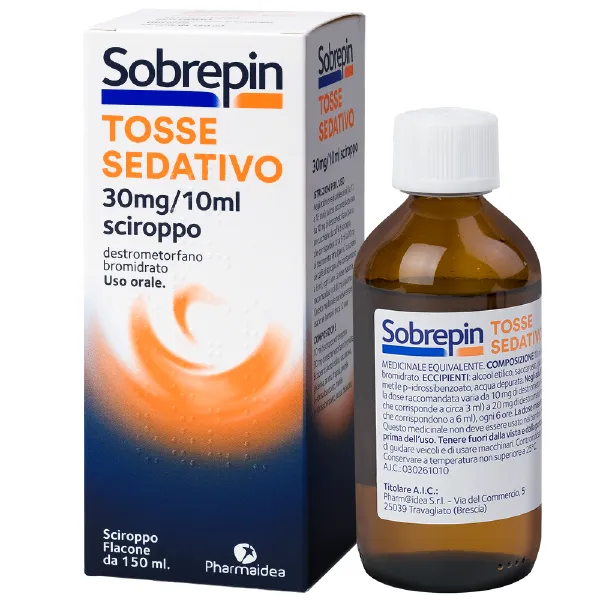
Table of Contents
- Package leaflet: Information for the patient
- SOBREPIN COUGH SUPPRESSANT 30 mg/10 ml syrup
- 1. What SOBREPIN COUGH SUPPRESSANT is and what it is used for
- 2. What you need to know before taking SOBREPIN COUGH SUPPRESSANT
- 3. How to take SOBREPIN COUGH SUPPRESSANT
- 4. Possible side effects
- 5. How to store SOBREPIN COUGH SUPPRESSANT
- 6. Package contents and other information
- Patient Information Leaflet
- SOBREPIN COUGH SUPPRESSANT 15 mg/ml oral drops, solution
- 1. What SOBREPIN COUGH SUPPRESSANT is and what it is used for
- 2. What you need to know before taking SOBREPIN COUGH SUPPRESSANT
- 3. How to take SOBREPIN COUGH SUPPRESSANT
- 4. Possible side effects
- 5. How to store SOBREPIN COUGH SUPPRESSANT
- 6. Package contents and other information
Package leaflet: Information for the patient
SOBREPIN COUGH SUPPRESSANT 30 mg/10 ml syrup
Generic medicine
Please read all of this leaflet carefully before taking this medicine, as it contains important
information for you.
Always take this medicine exactly as described in this leaflet or as your doctor or pharmacist has instructed you.
- Keep this leaflet. You may need to read it again.
- If you would like further information or advice, consult your pharmacist.
- If you experience any side effects, including those not listed in this leaflet, contact your doctor or pharmacist. See section 4.
- Consult your doctor if you do not notice any improvement or if your symptoms worsen after 5 days.
Contents of this leaflet:
- What SOBREPIN COUGH SUPPRESSANT is and what it is used for
- What you need to know before taking SOBREPIN COUGH SUPPRESSANT
- How to take SOBREPIN COUGH SUPPRESSANT
- Possible side effects
- How to store SOBREPIN COUGH SUPPRESSANT
- Contents of the pack and other information
1. What SOBREPIN COUGH SUPPRESSANT is and what it is used for
contains the active substance dextromethorphan hydrobromide, which belongs to the group
of cough suppressant medicines.
SOBREPIN COUGH SUPPRESSANT is indicated for the symptomatic treatment of dry cough.
Consult your doctor if you do not feel better or if you feel worse after 5 days.
2. What you need to know before taking SOBREPIN COUGH SUPPRESSANT
Do not take SOBREPIN COUGH SUPPRESSANT
- if you are allergic to dextromethorphan or any of the other ingredients of this medicine (listed in section 6);
- if you suffer from breathing disorders (bronchial asthma, chronic obstructive pulmonary disease);
- if you have difficulty breathing (including respiratory depression);
- if you have pneumonia, a lung infection;
- if you suffer from circulatory and heart disorders (cardiovascular diseases);
- if you have high blood pressure (hypertension);
- if you suffer from thyroid gland disorders (hyperthyroidism);
- if you have diabetes;
- if you have an eye disease characterized by increased internal eye pressure (glaucoma);
- if you suffer from prostate problems (prostatic hypertrophy);
- if you suffer from narrowing of the stomach, intestines, or urinary tract (gastrointestinal and urogenital stenosis);
- if you suffer from epilepsy;
- if you have severe liver disease;
- if the patient is a child under 12 years of age;
- if you are taking medicines used to treat depression (MAO inhibitor antidepressants); before taking SOBREPIN COUGH SUPPRESSANT, at least two weeks must have passed since stopping these antidepressant medicines (see section “Other medicines and SOBREPIN COUGH SUPPRESSANT”);
- if you are in the first trimester of pregnancy or if you are breastfeeding.
Warnings and precautions
Talk to your doctor or pharmacist before taking SOBREPIN COUGH SUPPRESSANT.
The duration of treatment with this medicine should not exceed 5–7 days.
The use of SOBREPIN COUGH SUPPRESSANT, especially for prolonged treatment, may lead to reduced effectiveness and the need to continue using the medicine (habituation, tolerance, and mental and physical dependence). Therefore, short-term treatment under strict medical supervision is recommended, especially if you are predisposed to such conditions.
This medicine is not indicated for the treatment of persistent cough (chronic cough), which may be due to smoking or lung disorders (emphysema) or breathing disorders (asthma). If you have a persistent cough, stop treatment and consult your doctor, as it may be a symptom of certain respiratory disorders (asthma).
Do not take this medicine if your cough is accompanied by abundant mucus. If your cough causes pain and discomfort (irritating cough) and is associated with mucus, consult your doctor, who will carefully evaluate whether treatment with this medicine is necessary. If your doctor considers treatment essential, you must be closely monitored during therapy.
Take this medicine with caution and only after consulting your doctor if you develop fever, skin rash, headache, nausea, or vomiting.
You may start treatment with SOBREPIN COUGH SUPPRESSANT only after careful evaluation by your doctor and under close medical supervision if:
- you suffer from circulatory and heart disorders (cardiovascular diseases);
- you have high blood pressure (hypertension);
- you suffer from thyroid gland disorders (hyperthyroidism);
- you have diabetes;
- you have an eye disorder (glaucoma);
- you suffer from prostate problems (prostatic hypertrophy);
- you suffer from disorders of the stomach, intestines, or urinary tract (gastrointestinal and urogenital stenosis);
- you suffer from epilepsy;
- you have severe liver disease;
- you are taking medicines used to treat depression (MAO inhibitor antidepressants); at least two weeks must have passed since stopping these antidepressant medicines. In all the above situations, taking this medicine is not recommended and should be reserved only for cases of absolute necessity (see section “Do not use SOBREPIN COUGH SUPPRESSANT”).
Talk to your doctor or pharmacist before taking SOBREPIN COUGH SUPPRESSANT:
- if you are taking medicines such as certain antidepressants or antipsychotics: SOBREPIN COUGH SUPPRESSANT may interact with these medicines and cause changes in mental status (e.g., agitation, hallucinations, coma) and other effects such as body temperature above 38°C, increased heart rate, unstable blood pressure, exaggerated reflexes, muscle rigidity, lack of coordination and/or gastrointestinal symptoms (e.g., nausea, vomiting, diarrhea).
Children and adolescents
This medicine must not be used in children under 12 years of age.
Other medicines and SOBREPIN COUGH SUPPRESSANT
Inform your doctor or pharmacist if you are taking, have recently taken, or might take any other medicines.
Do not take this medicine if you are taking medicines used to treat depression (MAO inhibitor antidepressants); at least two weeks must have passed since stopping these antidepressant medicines before taking SOBREPIN COUGH SUPPRESSANT.
In particular, inform your doctor if you are taking or have recently taken:
- medicines to treat depression such as fluoxetine, paroxetine, sertraline, and bupropion (see section 2 “Do not take SOBREPIN COUGH SUPPRESSANT”);
- medicines to treat severe pain or to reduce withdrawal symptoms in cases of dependence (methadone);
- medicines to treat psychiatric disorders (haloperidol, thioridazine, perphenazine);
- medicines to treat heart rhythm disorders (amiodarone, quinidine, propafenone);
- medicines to treat cardiac arrhythmias (flecainide);
- medicines to reduce calcium levels in the blood and treat dysfunction due to reduced secretion of the hormone regulating these levels (hyperparathyroidism), such as cinacalcet;
- medicines used to prevent fungal growth (terbinafine).
Exercise particular caution and consult your doctor if you are taking:
- antidepressant medicines (MAO inhibitors);
- linezolid, a medicine used to treat bacterial infections;
- sibutramine, a medicine used to treat obesity; as their concomitant use with SOBREPIN COUGH SUPPRESSANT may cause a potentially fatal condition called serotonin syndrome, whose symptoms include:
- nausea;
- low blood pressure;
- tremors and muscle disorders (clonic spasms, myoclonus, increased reflex response, and pyramidal-origin rigidity);
- nervous system disorders (autonomic nervous system hyperactivity, fever, rapid heartbeat (tachycardia), shortness of breath (tachypnea), pupil dilation (mydriasis));
- excessive sweating (diaphoresis);
- mental disturbances (agitation, excitement, confusion);
- cardiac arrest and death.
Consult your doctor and take this medicine with caution if you are taking:
- medicines used to treat insomnia and anxiety (hypnotic, sedative, and anxiolytic medicines);
- cimetidine, a medicine used to treat stomach disorders due to high acidity;
- ritonavir, a medicine used to treat AIDS;
- medicines used to facilitate mucus elimination (secretolytic medicines).
- Concomitant use of SOBREPIN COUGH SUPPRESSANT with benzodiazepines and related drugs: The concomitant use of SOBREPIN COUGH SUPPRESSANT and sedative medicines such as benzodiazepines and related drugs increases the risk of drowsiness, breathing difficulties (respiratory depression), coma, and may be life-threatening. Therefore, concomitant use should only be considered when no other treatment options are possible. However, if your doctor prescribes SOBREPIN COUGH SUPPRESSANT together with sedative medicines, the dose and duration of concomitant treatment must be limited by your doctor. Inform your doctor about all sedative medicines you are taking and carefully follow the dosing recommendations provided by your doctor. It may be helpful to inform friends or family members to watch for the signs and symptoms described above. Contact your doctor if such symptoms occur.
SOBREPIN COUGH SUPPRESSANT with food and alcohol
Avoid consuming grapefruit juice during treatment with this medicine, as it may increase unwanted effects or reduce effectiveness.
Avoid consuming alcohol during treatment with this medicine.
Pregnancy and breastfeeding
If you are pregnant, suspect you may be pregnant, planning to become pregnant, or breastfeeding, consult your doctor or pharmacist before taking this medicine.
Do not take this medicine during the first three months of pregnancy.
After the third month of pregnancy, you may take this medicine only in cases of absolute necessity and under strict medical supervision, as breathing problems in the newborn (respiratory depression) may occur, especially at high doses and even after short treatment periods.
Do not take this medicine during breastfeeding.
Driving and using machines
SOBREPIN COUGH SUPPRESSANT may affect your ability to drive or operate machinery, as it may cause drowsiness, especially if you consume alcohol concurrently (see section “SOBREPIN COUGH SUPPRESSANT with food and alcohol”).
SOBREPIN COUGH SUPPRESSANT contains sucrose, ethanol, and parahydroxybenzoates
This medicine contains sucrose, a type of sugar. If your doctor has diagnosed you with an intolerance to certain sugars, contact them before taking this medicine.
This medicine contains 6.02% vol ethanol (alcohol), e.g., up to 300 mg per dose, equivalent to 7.2 ml of beer or 3 ml of wine per dose. It may be harmful to alcoholics. This should be considered in pregnant or breastfeeding women, children, and high-risk groups such as patients with liver disease or epilepsy.
This medicine contains parahydroxybenzoates (methyl parahydroxybenzoate and propyl parahydroxybenzoate) which may cause allergic reactions (including delayed reactions).
3. How to take SOBREPIN COUGH SUPPRESSANT
Take this medicine exactly as stated in this leaflet or as instructed by your doctor or pharmacist. If you have any doubts, consult your doctor or pharmacist.
To open the container, press and simultaneously unscrew.
In adults and adolescents (aged 12 to 18 years), the recommended dose ranges from 10 mg of dextromethorphan (equivalent to one coffee spoonful of syrup, corresponding to approximately 3 ml) to 20 mg of dextromethorphan (equivalent to two coffee spoonfuls of syrup, corresponding to 6 ml), every 6 hours.
The maximum recommended dose is 80 mg per day.
Use in children under 12 years of age
This medicine must not be used in children under 12 years of age (see section "Do not take SOBREPIN COUGH SUPPRESSANT").
If you take more SOBREPIN COUGH SUPPRESSANT than you should
If you forget to take SOBREPIN COUGH SUPPRESSANT
Do not take a double dose to make up for the missed dose.
If you have any doubts about how to use this medicine, consult your doctor or pharmacist.
4. Possible side effects
Like all medicines, this medicine can cause side effects, although not everybody gets them.
The following side effects may occur:
- drowsiness, fatigue;
- involuntary and rapid eye movements (nystagmus);
- movement difficulties (dystonia);
- dizziness;
- mental dullness and slurred speech;
- serotonin syndrome (see section “Warnings and precautions”), characterised by nausea, decreased blood pressure, tremors and muscle disorders (clonic spasms, myoclonus, increased reflex response and pyramidal origin rigidity), nervous system disorders (autonomic nervous system hyperactivity), fever, increased heart rate (tachycardia), shortness of breath (tachypnea), dilation of the black part of the eye (midriasis), excessive sweating (diaphoresis), mental disturbances (agitation, excitement, confusion), cardiac arrest, and death;
- mental disorders (psychosis), hallucinations;
- need to continue taking the medicine (psychic dependence);
- type 2 diabetes mellitus;
- nausea and vomiting;
- stomach and intestinal disorders, loss of appetite;
- skin allergic reactions and rashes.
Reporting of side effects
If you experience any side effect, including those not listed in this leaflet, talk to your doctor or pharmacist.
You can also report side effects directly via the national reporting system at www.aifa.gov.it/content/segnalazioni-reazioni-avverse.
By reporting side effects, you can help provide more information on the safety of this medicine.
5. How to store SOBREPIN COUGH SUPPRESSANT
Keep this medicine out of the sight and reach of children.
Do not use this medicine after the expiry date stated on the packaging after "Expiry". The expiry date refers to the last day of that month.
Store the medicine in its original packaging to protect it from light.
Do not dispose of any medicine via wastewater or household waste. Ask your pharmacist how to dispose of medicines you no longer use. This will help protect the environment.
6. Package contents and other information
What SOBREPIN COUGH SUPPRESSANT contains
SOBREPIN COUGH SUPPRESSANT 30 mg/10 ml syrup
- The active substance is bromhexine hydrobromide.
Each 10 ml of syrup contains 30 mg of bromhexine hydrobromide.
- The other ingredients are ethyl alcohol, glycerin tit., fine sucrose, strawberry flavour, methyl p-hydroxybenzoate, propyl p-hydroxybenzoate, purified water.
Description of the appearance of SOBREPIN COUGH SUPPRESSANT and contents of the pack
• Pack containing one 150 ml bottle.
Marketing Authorization Holder
Pharm@idea S.r.l. – Via del Commercio 5 – 25039 Travagliato (Brescia)
Manufacturer
Aeffe Farmaceutici S.r.l. Via Torino, 448 – 10032 Brandizzo (TO)
Patient Information Leaflet
SOBREPIN COUGH SUPPRESSANT 15 mg/ml oral drops, solution
Equivalent medicine
Please read this entire leaflet carefully before taking this medicine, as it contains important information for you.
Always take this medicine exactly as described in this leaflet or as your doctor or pharmacist has instructed.
- Keep this leaflet. You may need to read it again.
- If you need more information or advice, consult your pharmacist.
- If any side effects occur, including those not listed in this leaflet, consult your doctor or pharmacist. See section 4.
- Consult your doctor if you do not notice improvement or if your symptoms worsen after 5 days.
Contents of this leaflet:
- What SOBREPIN COUGH SUPPRESSANT is and what it is used for
- What you need to know before taking SOBREPIN COUGH SUPPRESSANT
- How to take SOBREPIN COUGH SUPPRESSANT
- Possible side effects
- How to store SOBREPIN COUGH SUPPRESSANT
- Package contents and other information
1. What SOBREPIN COUGH SUPPRESSANT is and what it is used for
contains the active substance dextromethorphan hydrobromide, which belongs to the group
of cough suppressant medicines.
SOBREPIN COUGH SUPPRESSANT is indicated for the symptomatic treatment of dry cough.
Consult your doctor if you do not notice an improvement in your symptoms or if you feel worse after 5 days.
2. What you need to know before taking SOBREPIN COUGH SUPPRESSANT
Do not take SOBREPIN COUGH SUPPRESSANT
- if you are allergic to dextromethorphan or any of the other ingredients of this medicine (listed in section 6);
- if you suffer from breathing disorders (bronchial asthma, chronic obstructive pulmonary disease);
- if you have difficulty breathing (including respiratory depression);
- if you have pneumonia (a lung infection);
- if you suffer from circulatory or heart disorders (cardiovascular diseases);
- if you have high blood pressure (hypertension);
- if you suffer from thyroid disorders (hyperthyroidism);
- if you have diabetes;
- if you have a specific eye disease characterized by increased internal eye pressure (glaucoma);
- if you suffer from prostate problems (prostatic hypertrophy);
- if you have a narrowing in the stomach, intestine, or urinary tract (gastrointestinal and genitourinary tract stenosis);
- if you suffer from epilepsy;
- if you have severe liver disease;
- if the patient is a child under 12 years of age;
- if you are taking medicines used to treat depression (MAO inhibitor antidepressants); at least two weeks must have passed since stopping such antidepressants before taking SOBREPIN COUGH SUPPRESSANT (see section “Other medicines and SOBREPIN COUGH SUPPRESSANT”);
Warnings and precautions
Talk to your doctor or pharmacist before taking SOBREPIN COUGH SUPPRESSANT.
The duration of treatment with this medicine should not exceed 5–7 days.
The use of SOBREPIN COUGH SUPPRESSANT, especially for prolonged periods, may lead to reduced effectiveness and the need to continue taking the medicine (habituation, tolerance, mental and physical dependence). Therefore, short-term treatment under close medical supervision is recommended, particularly if you are predisposed to such conditions.
This medicine is not indicated for the treatment of persistent (chronic) cough, which may be due to smoking or lung disorders (emphysema) or breathing disorders (asthma). If you have a persistent cough, stop treatment and consult your doctor, as it may be a symptom of respiratory disorders (asthma).
Do not take this medicine if your cough is accompanied by abundant mucus. If your cough is painful and irritating and associated with mucus, consult your doctor, who will carefully assess whether treatment with this medicine is necessary. If your doctor considers treatment essential, you must be closely monitored during therapy.
Take this medicine with caution and only after consulting your doctor if you experience fever, skin rash, headache, nausea, or vomiting.
You may start treatment with SOBREPIN COUGH SUPPRESSANT only after careful evaluation by your doctor and under close medical supervision if:
- you suffer from circulatory or heart disorders (cardiovascular diseases);
- you have high blood pressure (hypertension);
- you suffer from thyroid disorders (hyperthyroidism);
- you have diabetes;
- you have an eye disorder (glaucoma);
- you suffer from prostate problems (prostatic hypertrophy);
- you suffer from disorders of the stomach, intestine, or urinary tract (gastrointestinal and genitourinary tract stenosis);
- you suffer from epilepsy;
- you have severe liver disease;
- you are taking medicines used to treat depression (MAO inhibitor antidepressants); at least two weeks must have passed since stopping such antidepressants.
In all the above situations, taking this medicine is not recommended and should be reserved only for cases of absolute necessity (see section “Do not use SOBREPIN COUGH SUPPRESSANT”).
Talk to your doctor or pharmacist before taking Sobrepin cough suppressant:
- if you are taking medicines such as certain antidepressants or antipsychotics: Sobrepin cough suppressant may interact with these medicines, potentially causing changes in mental status (e.g., agitation, hallucinations, coma) and other effects such as body temperature above 38°C, increased heart rate, unstable blood pressure, exaggerated reflexes, muscle stiffness, lack of coordination, and/or gastrointestinal symptoms (e.g., nausea, vomiting, diarrhea).
Children and adolescents
This medicine must not be used in children under 12 years of age.
Other medicines and SOBREPIN COUGH SUPPRESSANT
Inform your doctor or pharmacist if you are taking, have recently taken, or might take any other medicine.
Do not take this medicine if you are taking antidepressant medicines (MAO inhibitors); at least two weeks must have passed since stopping such antidepressants before taking SOBREPIN COUGH SUPPRESSANT.
In particular, inform your doctor if you are taking or have recently taken:
- medicines for depression such as fluoxetine, paroxetine, sertraline, and bupropion (see section 2 “Do not take SOBREPIN COUGH SUPPRESSANT”);
- medicines for severe pain or to reduce withdrawal symptoms in cases of dependence (methadone);
- medicines for psychiatric disorders (haloperidol, thioridazine, perphenazine);
- medicines for heart rhythm disorders (amiodarone, quinidine, propafenone);
- medicines for cardiac arrhythmia abnormalities (flecainide);
- medicines to reduce calcium levels in the blood and treat dysfunction due to reduced secretion of the hormone regulating these levels (hyperparathyroidism), such as cinacalcet;
- medicines used to prevent fungal (mold) growth (terbinafine).
Exercise particular caution and consult your doctor if you are taking:
- antidepressant medicines (MAO inhibitors);
- linezolid, a medicine used to treat bacterial infections;
- sibutramine, a medicine used to treat obesity;
as taking these together with SOBREPIN COUGH SUPPRESSANT may cause a potentially fatal condition called serotonin syndrome, whose symptoms include: - nausea;
- low blood pressure;
- tremors and muscle disorders (clonic spasms, myoclonus, increased reflex response, and pyramidal-tract-originated stiffness);
- nervous system disorders (autonomic nervous system hyperactivity), fever, rapid heartbeat (tachycardia), shortness of breath (tachypnea), dilation of the black part of the eye (mydriasis);
- excessive sweating (diaphoresis);
- mental disturbances (agitation, excitement, confusion);
- heart block (cardiac arrest) and death.
Consult your doctor and take this medicine with caution if you are taking:
- medicines used to treat insomnia and anxiety (hypnotic, sedative, and anxiolytic medicines);
- cimetidine, a medicine used to treat stomach disorders due to high acidity;
- ritonavir, a medicine used to treat AIDS;
- medicines used to facilitate mucus elimination (secretolytic medicines).
Concomitant use of Sobrepin cough suppressant with benzodiazepines and related medicines:
Concomitant use of Sobrepin cough suppressant and sedative medicines such as benzodiazepines and related drugs increases the risk of drowsiness, breathing difficulties (respiratory depression), coma, and may be life-threatening. For this reason, concomitant use should only be considered when no other treatment options are available.
However, if your doctor prescribes Sobrepin cough suppressant together with sedative medicines, the dose and duration of concomitant treatment must be limited by your doctor.
Inform your doctor about all sedative medicines you are taking and carefully follow the dosing recommendations provided by your doctor. It may be helpful to inform friends or family members to watch for the signs and symptoms described above. Contact your doctor if any of these symptoms occur.
SOBREPIN COUGH SUPPRESSANT with food and alcohol
Avoid consuming grapefruit juice during treatment with this medicine, as it may increase the risk of adverse effects or reduce effectiveness.
Avoid consuming alcohol during treatment with this medicine.
Pregnancy and breastfeeding
If you are pregnant, suspect you may be pregnant, planning pregnancy, or breastfeeding, consult your doctor or pharmacist before taking this medicine.
Do not take this medicine during the first three months of pregnancy.
After the third month of pregnancy, you may take this medicine only in cases of absolute necessity and under strict medical supervision, as breathing problems in the newborn (respiratory depression) may occur, especially at high doses and even after short treatment periods.
Do not take this medicine during breastfeeding.
Driving and using machines
SOBREPIN COUGH SUPPRESSANT may impair your ability to drive or operate machinery, as it may cause drowsiness, especially if taken together with alcohol (see section “SOBREPIN COUGH SUPPRESSANT with food and alcohol”).
SOBREPIN COUGH SUPPRESSANT contains propylene glycol, ethanol, and parahydroxybenzoates
This medicine contains 12.04% vol ethanol (alcohol), e.g., up to 140 mg per dose, equivalent to 3.4 ml of beer or 1.4 ml of wine per dose. It may be harmful for alcoholics. This should be taken into account in pregnant or breastfeeding women, children, and high-risk groups such as patients with liver disease or epilepsy.
This medicine contains parahydroxybenzoates (methyl parahydroxybenzoate and propyl parahydroxybenzoate), which may cause allergic reactions (including delayed reactions).
This medicine contains propylene glycol, which may cause symptoms similar to those caused by alcohol.
3. How to take SOBREPIN COUGH SUPPRESSANT
Take this medicine exactly as stated in this leaflet or as directed by your doctor or pharmacist. If you have any doubts, consult your doctor or pharmacist.
To open the container, press and unscrew at the same time.
In adults and adolescents (from 12 to 18 years of age), the recommended dose ranges from 10 mg of dextromethorphan (approximately 14 drops) to 20 mg of dextromethorphan (approximately 28 drops) every 6 hours.
The maximum recommended daily dose is 80 mg (approximately 110 drops).
Use in children under 12 years of age
This medicine must not be used in children under 12 years of age (see section Do not take SOBREPIN COUGH SUPPRESSANT).
If you take more SOBREPIN COUGH SUPPRESSANT than you should
If you forget to take SOBREPIN COUGH SUPPRESSANT
Do not take a double dose to make up for a forgotten dose.
If you have any doubts about how to use this medicine, consult your doctor or pharmacist.
4. Possible side effects
Like all medicines, this medicine can cause side effects, although not everybody will experience them.
The following side effects may occur:
- drowsiness, fatigue;
- involuntary and rapid eye movements (nystagmus);
- movement difficulties (dystonia);
- dizziness;
- mental dullness and slurred speech;
- serotonin syndrome (see section “Warnings and precautions”), characterized by nausea, decreased blood pressure, tremors and muscle disorders (clonic spasms, myoclonus, increased reflex response and pyramidal rigidity), disorders of the nervous system (autonomic nervous system hyperactivity), fever, increased heart rate (tachycardia), shortness of breath (tachypnea), dilation of the black part of the eye (midriasis), excessive sweating (diaphoresis), mental disturbances (agitation, excitement, confusion), cardiac arrest and death;
- mental disorders (psychosis), hallucinations;
- need to continue taking the medicine (psychic dependence);
- allergic reactions, even severe ones (anaphylactic and anaphylactoid reactions);
- elevated body temperature, high fever;
- diabetes mellitus;
- nausea and vomiting;
- stomach and intestinal disturbances, loss of appetite;
- skin allergic reactions and rashes.
Reporting of side effects
If you experience any side effect, including those not listed in this leaflet, talk to your doctor or pharmacist.
You can also report side effects directly via the national reporting system at www.aifa.gov.it/content/segnalazioni-reazioni-avverse.
By reporting side effects, you can help provide more information on the safety of this medicine.
5. How to store SOBREPIN COUGH SUPPRESSANT
Keep this medicine out of the sight and reach of children.
Do not use this medicine after the expiry date stated on the packaging after "Expiry:".
The expiry date refers to the last day of that month.
Store the medicine at a temperature not exceeding 25°C and in the original packaging to protect it from light and moisture.
Do not dispose of any medicine via wastewater or household waste. Ask your pharmacist how to dispose of medicines you no longer use. This will help protect the environment.
6. Package contents and other information
What SOBREPIN COUGH SUPPRESSANT contains
- The active substance is destromethorphan hydrobromide. Each ml of solution contains 15 mg of destromethorphan hydrobromide.
- The other components are propylene glycol, ethanol, polyoxyethylene(20) sorbitan monolaurate, citric acid, strawberry flavour, sodium saccharin, methyl 4-hydroxybenzoate, propyl 4-hydroxybenzoate, purified water.
Description of the appearance of SOBREPIN COUGH SUPPRESSANT and contents of the pack
Pack containing one 20 ml bottle.
Marketing Authorization Holder
Pharm@idea S.r.l. – Via del Commercio 5 – 25039 Travagliato (Brescia)
Manufacturer
Aeffe Farmaceutici S.r.l. Via Torino, 448 – 10032 Brandizzo (TO)