Shingrix
Italy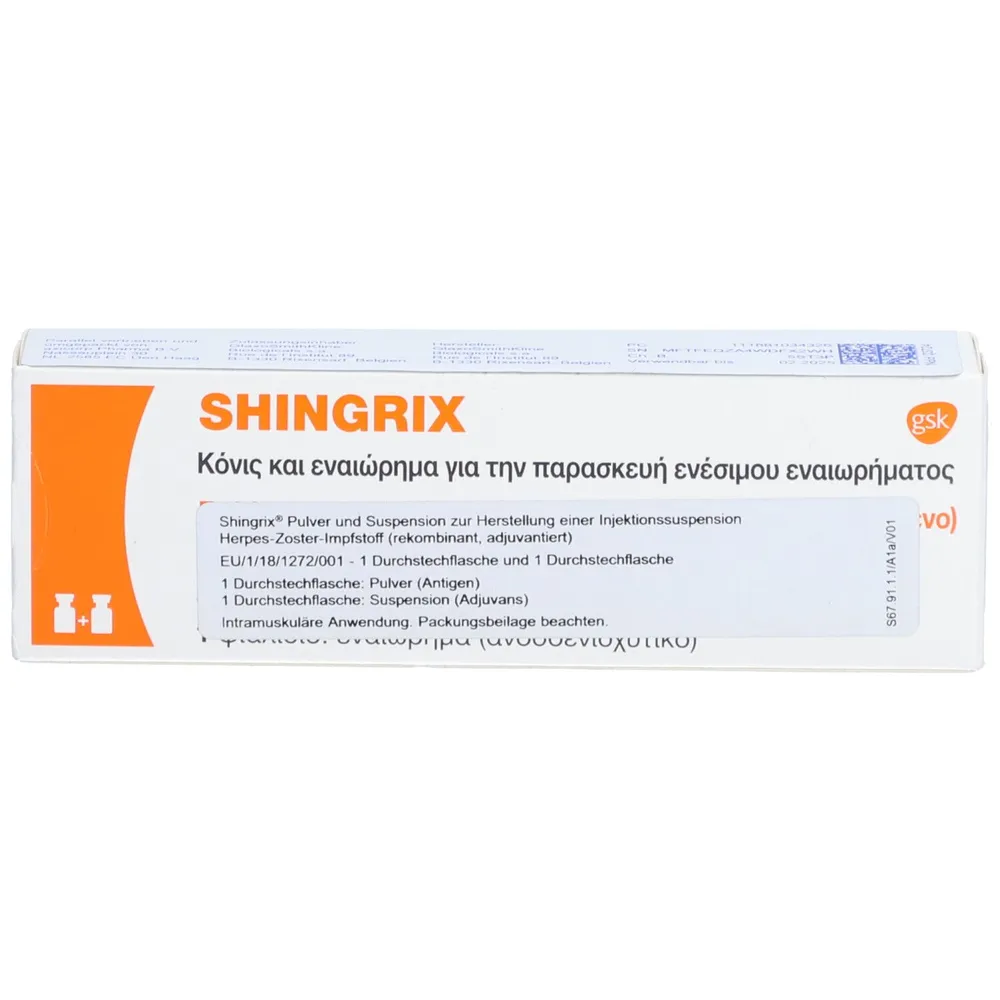
Table of Contents
- Patient Information Leaflet: Information for the User
- Shingrix powder and suspension for injectable suspension
- 1. What is Shingrix and what is it used for
- 2. What you should know before taking Shingrix
- 3. How Shingrix is administered
- 4. Possible side effects
- 5. How to store Shingrix
- 6. Package contents and other information
- The following information is intended exclusively for healthcare professionals:
- Package leaflet: information for the user
- Shingrix, injectable suspension in a pre-filled syringe
- 1. What is Shingrix and what is it used for
- 2. What you should know before taking Shingrix
- 3. How Shingrix is administered
- 4. Possible side effects
- 5. How to store Shingrix
- 6. Package contents and other information
- The following information is intended for healthcare professionals only:
Patient Information Leaflet: Information for the User
Shingrix powder and suspension for injectable suspension
Recombinant zoster vaccine (adjuvanted)
Please read this leaflet carefully before taking this medicine as it contains
important information for you.
- Keep this leaflet. You may need to read it again.
- If you have any questions, ask your doctor or pharmacist.
- This medicine has been prescribed for you only. Do not give it to others.
- If you experience any side effects, including those not listed in this leaflet, contact your doctor or pharmacist. See section 4.
Contents of this leaflet
- What Shingrix is and what it is used for
- What you need to know before receiving Shingrix
- How Shingrix is administered
- Possible side effects
- How to store Shingrix
- Contents of the pack and other information
1. What is Shingrix and what is it used for
What Shingrix is used for
Shingrix is a vaccine that helps protect adults against herpes zoster and postherpetic neuralgia (PHN), the long-lasting nerve pain that follows herpes zoster.
Shingrix is given to:
- adults aged 50 years and older;
- adults aged 18 years and older who are at increased risk of developing shingles.
Shingrix cannot be used to prevent chickenpox.
What is herpes zoster (shingles)
- Herpes zoster is a painful blistering rash. It usually occurs on one part of the body and can last for several weeks.
- Herpes zoster is caused by the same virus that causes chickenpox.
- After having chickenpox, the virus that caused the illness remains in the body within nerve cells.
- Many years after chickenpox, when the immune system (the body's natural defence) becomes weaker (due to ageing, illness, or medication), the virus may reactivate and cause shingles or herpes zoster.
Complications associated with herpes zoster
Herpes zoster can lead to complications.
The most common complication of herpes zoster is:
- persistent nerve pain – called postherpetic neuralgia or PHN. After the blisters have healed, pain may persist for months or even years and can be severe. Other complications of herpes zoster include:
- scarring where the blisters occurred;
- skin infections, muscle weakness, paralysis, and loss of hearing or vision – less common.
How Shingrix works
Shingrix helps your body remember the virus that causes herpes zoster. This helps your immune system (the body's natural defences) build an immune response that remains ready to fight the virus, protecting you against shingles and its complications.
2. What you should know before taking Shingrix
Do not receive Shingrix if:
- you are allergic to the active substances or to any of the other ingredients of this vaccine (listed in section 6). Signs of an allergic reaction may include itchy rash, difficulty breathing, or swelling of the face or tongue. If any of the conditions listed above apply to you, you should not receive Shingrix. If you are unsure, speak with your doctor or pharmacist.
Warnings and precautions
Talk to your doctor or pharmacist before receiving Shingrix if:
- you have a severe infection with a high fever. In such cases, vaccination may be postponed until you recover. A minor infection such as a cold should not be a problem, but please discuss this with your doctor first;
- you have bleeding problems or bruise easily. If any of the conditions listed above apply to you (or if you are unsure), talk to your doctor or pharmacist before receiving Shingrix.
Fainting can occur before or after any injection with a needle. Therefore, inform your doctor or nurse if you have previously fainted following an injection.
Shingrix must not be used as a treatment if you already have herpes zoster or complications from herpes zoster.
As with all vaccines, Shingrix may not protect all vaccinated individuals completely.
Other medicines and Shingrix
Inform your doctor or pharmacist if you are taking, have recently taken, or might take any other medicines, including those purchased without a prescription, or if you have recently been vaccinated.
Shingrix may be administered concomitantly with other vaccines, such as the seasonal influenza vaccine (inactivated, non-adjuvanted), the 23-valent pneumococcal polysaccharide vaccine, the 13-valent pneumococcal conjugate vaccine, the reduced antigen diphtheria, tetanus and acellular pertussis vaccine, the mRNA COVID-19 vaccine, or the (recombinant, adjuvanted) respiratory syncytial virus (RSV) vaccine. Each vaccine should be administered at a different injection site.
You may be more likely to experience fever and/or chills when the 23-valent pneumococcal polysaccharide vaccine is administered simultaneously with Shingrix.
You may be more likely to experience chills, fatigue, fever, gastrointestinal and digestive disorders (including nausea, vomiting, diarrhoea and/or stomach ache), headache, muscle pain or joint pain when an mRNA COVID-19 vaccine is administered simultaneously with Shingrix.
Pregnancy and breastfeeding
If you are pregnant, think you might be pregnant, planning a pregnancy, or are breastfeeding, consult your doctor or pharmacist before taking this medicine.
Driving and using machines
Some of the side effects mentioned in section 4 “Possible side effects” may temporarily affect your ability to drive or operate machinery. Do not drive or operate machinery if you do not feel well.
Shingrix contains polysorbate 80, sodium and potassium
This medicine contains 0.08 mg of polysorbate 80 per dose. Polysorbate 80 may cause allergic reactions. Inform your doctor if you have known allergies.
This medicine contains less than 1 mmol (23 mg) of sodium per dose, i.e. it is essentially ‘sodium-free’.
This medicine contains less than 1 mmol (39 mg) of potassium per dose, i.e. it is essentially ‘potassium-free’.
3. How Shingrix is administered
- Shingrix is given as an injection into the muscle (usually in the upper arm).
- You will receive 2 injections, 2 months apart. If flexibility in the vaccination schedule is needed, the second dose may be administered between 2 and 6 months after the first dose. Depending on your health condition, your doctor may also recommend receiving the second injection 1 month after the first.
- You will be informed about when you should receive the second Shingrix injection.
Make sure to complete the full vaccination course. This will maximize the protection
provided by Shingrix.
Shingrix may also be administered even if you have already been vaccinated with a live attenuated
vaccine for herpes zoster. Speak with your doctor for further information.
4. Possible side effects
Like all medicines, this vaccine can cause side effects, although not everybody will experience them.
Side effects reported with Shingrix during clinical studies and after marketing:
Very common (may occur with more than 1 in 10 doses of vaccine):
- headache
- stomach upset and digestive disorders (including nausea, vomiting, diarrhoea and/or stomach pain)
- muscle pain (myalgia)
- pain, redness or swelling at the injection site
- fatigue, chills, fever
Common (may occur in up to 1 in 10 doses of vaccine):
- itching at the injection site (pruritus)
- feeling of general malaise
Uncommon (may occur in up to 1 in 100 doses of vaccine):
- inflammation of the glands in the neck, armpits or groin
- joint pain
Rare (may occur in up to 1 in 1,000 doses of vaccine):
- allergic reactions including rash, hives, swelling of the face, tongue or throat which may cause difficulty in swallowing or breathing (angioedema)
Very rare (may occur in up to 1 in 10,000 doses of vaccine):
- a neurological disorder which usually starts with tingling and weakness in the limbs and may progress to partial or complete paralysis of the body (Guillain-Barré syndrome)
Most of these side effects are mild or moderate in intensity and do not last for long.
Immunocompromised adults aged 18 to 49 years may experience more side effects compared to immunocompromised adults aged ≥ 50 years.
Adults aged 50–69 years may experience a higher number of side effects compared to adults aged ≥ 70 years.
Reporting of side effects
If you experience any side effect, including those not listed in this leaflet, talk to your doctor or pharmacist. You can also report side effects directly via the national reporting system listed in Annex V.* By reporting side effects, you can help provide more information on the safety of this medicine.
5. How to store Shingrix
- Keep this medicine out of the sight and reach of children.
- Do not use this medicine after the expiry date stated on the label and packaging after EXP. The expiry date refers to the last day of that month.
- Store in a refrigerator (2 °C - 8 °C).
- Do not freeze.
- Keep in the original container to protect from light.
- Do not dispose of any medicine via wastewater or household waste. Ask your pharmacist how to dispose of medicines you no longer use. This will help protect the environment.
6. Package contents and other information
What Shingrix contains
- The active substances are:
After reconstitution, one dose (0.5 mL) contains:
Glycoprotein E antigen of Varicella Zoster Virus 50 micrograms
Varicella Zoster Virus = VZV
Adjuvanted with AS01 containing:
Quillaja saponaria Molina, fraction 21 (QS-21) 50 micrograms
3-O-desacyl-4’-monophosphoryl lipid A (MPL) from Salmonella minnesota 50 micrograms
Glycoprotein E is a protein present in the Varicella Zoster Virus. This protein is not
infectious.
The adjuvant (AS01) is used to enhance the antibody response to the vaccine.
- Other components are:
o Powder: sucrose, polysorbate 80 (E 433), sodium phosphate monobasic dihydrate (E 339),
potassium hydrogen phosphate (E 340).
o Suspension: dioleoyl phosphatidylcholine (E 322), cholesterol, sodium chloride, sodium phosphate
dibasic anhydrous (E 339), potassium phosphate monobasic (E 340) and water for injections.
See section 2 “Shingrix contains polysorbate 80, sodium and potassium”.
Description of the appearance of Shingrix and contents of the pack
- Powder and suspension for injectable suspension.
- The powder is white.
- The suspension is an opalescent liquid, colourless to light brown.
A Shingrix pack consists of:
- Powder (antigen) for 1 dose in a vial
- Suspension (adjuvant) for 1 dose in a vial.
Shingrix is available in packs containing 1 vial of powder and 1 vial of suspension, or in packs
containing 10 vials of powder and 10 vials of suspension.
Not all pack sizes may be marketed.
Marketing Authorisation Holder and Manufacturer
GlaxoSmithKline Biologicals s.a.
Rue de l’Institut 89
B-1330 Rixensart
Belgium
For further information on Shingrix, please contact the local representative of the Marketing Authorisation Holder:
België/Belgique/Belgien Lietuva
GlaxoSmithKline Pharmaceuticals s.a./n.v. GlaxoSmithKline Biologicals SA
Tél/Tel: + 32 (0) 10 85 52 00 Tel: +370 80000334
България Luxembourg/Luxemburg
GlaxoSmithKline Biologicals SA GlaxoSmithKline Pharmaceuticals s.a./n.v.
Тел. +359 80018205 Belgique/Belgien
Tél/Tel: + 32 (0) 10 85 52 00
Česká republika Magyarország
GlaxoSmithKline s.r.o. GlaxoSmithKline Biologicals SA
Tel: + 420 2 22 00 11 11 Tel.: +36 80088309
[email protected]
Danmark Malta
GlaxoSmithKline Pharma A/S GlaxoSmithKline Biologicals SA
Tlf.: + 45 36 35 91 00 Tel: +356 80065004
[email protected]
Deutschland Nederland
GlaxoSmithKline GmbH & Co. KG GlaxoSmithKline BV
Tel: + 49 (0)89 360448701 Tel: + 31 (0)33 2081100
[email protected]
Eesti Norge
GlaxoSmithKline Biologicals SA GlaxoSmithKline AS
Tel: +372 8002640 Tlf: + 47 22 70 20 00
Ελλάδα Österreich
GlaxoSmithKline Μονοπρόσωπη A.E.B.E GlaxoSmithKline Pharma GmbH
Tηλ: + 30 210 68 82 100 Tel: + 43 (0)1 97075 0
[email protected]
España Polska
GlaxoSmithKline, S.A. GSK Services Sp. z o.o.
Tel: + 34 900 202 700 Tel.: + 48 (22) 576 9000
[email protected]
France Portugal
Laboratoire GlaxoSmithKline GlaxoSmithKline - Produtos Farmacêuticos, Lda.
Tél: + 33 (0) 1 39 17 84 44 Tel: + 351 21 412 95 00
[email protected] [email protected]
Hrvatska România
GlaxoSmithKline Biologicals SA GlaxoSmithKline Biologicals SA
Tel.: +385 800787089 Tel: +40 800672524
Ireland Slovenija
GlaxoSmithKline (Ireland) Ltd GlaxoSmithKline Biologicals SA
Tel: + 353 (0)1 495 5000 Tel: +386 80688869
Ísland Slovenská republika
Vistor hf. GlaxoSmithKline Biologicals SA
Sími: +354 535 7000 Tel.: +421 800500589
Italia Suomi/Finland
GlaxoSmithKline S.p.A. GlaxoSmithKline Oy
Tel: + 39 (0)45 7741 111 Puh/Tel: + 358 10 30 30 30
Κύπρος Sverige
GlaxoSmithKline Biologicals SA GlaxoSmithKline AB
Τηλ: +357 80070017 Tel: + 46 (0)8 638 93 00
[email protected]
Latvija
GlaxoSmithKline Biologicals SA
Tel: +371 80205045
Other sources of information
More detailed information on this medicine is available on the website of the European Medicines Agency: https://www.ema.europa.eu/.
The following information is intended exclusively for healthcare professionals:
Shingrix is supplied as a vial with a brown flip-off cap containing the powder (antigen) and a vial with a blue-green flip-off cap containing the suspension (adjuvant).
The powder and suspension must be reconstituted prior to administration.
Antigen Adjuvant
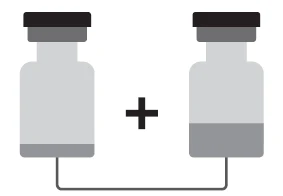
1 dose (0.5 mL)
The powder and suspension should be inspected visually for the presence of foreign particles and/or alteration in appearance. If either of these conditions is observed, do not reconstitute the vaccine.
How to prepare Shingrix:
Shingrix must be reconstituted before administration.
- Withdraw the entire contents of the vial containing the suspension into a syringe fitted with a suitable needle (21G to 25G).
- Add the entire contents of the syringe to the vial containing the powder.
- Gently shake until the powder is completely dissolved.
The reconstituted vaccine is an opalescent liquid, colourless to light brown.
The reconstituted vaccine should be inspected visually for the presence of foreign particles and/or changes in appearance. If either of these conditions is observed, do not administer the vaccine.
After reconstitution, the vaccine should be used immediately; if this is not possible, it must be stored refrigerated (2 °C – 8 °C). If not used within 6 hours, it must be discarded.
Before administration:
- Withdraw the entire contents of the vial containing the reconstituted vaccine into a syringe.
- Change the needle, using a new needle to administer the vaccine. Disposal
Any unused medicine and waste materials derived from this medicine must be disposed of in accordance with local regulations.
Package leaflet: information for the user
Shingrix, injectable suspension in a pre-filled syringe
Recombinant adjuvanted herpes zoster vaccine
Please read this leaflet carefully before using this medicine, as it contains
important information for you.
- Keep this leaflet. You may need to read it again.
- If you have any questions, ask your doctor or pharmacist.
- This medicine has been prescribed for you only. Do not give it to other people.
- If you experience any side effects, including those not listed in this leaflet, consult your doctor or pharmacist. See section 4.
Contents of this leaflet
- What Shingrix is and what it is used for
- What you need to know before receiving Shingrix
- How Shingrix is administered
- Possible side effects
- How to store Shingrix
- Contents of the pack and other information
1. What is Shingrix and what is it used for
What Shingrix is used for
Shingrix is a vaccine that helps protect adults against herpes zoster and postherpetic neuralgia (PHN), the long-lasting nerve pain that follows herpes zoster.
Shingrix is given to:
- adults aged 50 years and older;
- adults aged 18 years and older who are at increased risk of developing shingles.
Shingrix cannot be used to prevent chickenpox.
What is herpes zoster (shingles)
- Herpes zoster is a painful blistering rash. It usually occurs on one part of the body and can last for several weeks.
- Herpes zoster is caused by the same virus that causes chickenpox.
- After having chickenpox, the virus that caused the illness remains in the body within nerve cells.
- Many years later, when the immune system (the body's natural defense) becomes weaker (due to aging, illness, or certain medications), the virus may reactivate and cause shingles or herpes zoster.
Complications associated with herpes zoster
Herpes zoster can lead to complications.
The most common complication of herpes zoster is:
- persistent nerve pain – called postherpetic neuralgia or PHN. After the blisters have healed, you may experience pain lasting for months or years, which can be severe. Other complications of herpes zoster include:
- scarring where the blisters were;
- skin infections, weakness, muscle paralysis, and loss of hearing or vision – less common.
How Shingrix works
Shingrix helps your body remember the virus that causes herpes zoster. This helps your immune system (the body's natural defenses) build an immune response that remains ready to fight the virus, protecting you from shingles and its complications.
2. What you should know before taking Shingrix
Do not receive Shingrix if:
- you are allergic to the active substances or to any of the other ingredients of this vaccine (listed in section 6). Signs of an allergic reaction may include itchy rash, difficulty breathing, or swelling of the face or tongue. If any of the conditions described above apply to you, you should not receive Shingrix. If you are unsure, speak with your doctor or pharmacist.
Warnings and precautions
Talk to your doctor or pharmacist before receiving Shingrix if:
- you have a severe infection with high fever. In such cases, vaccination may be postponed until you recover. A minor infection such as a cold should not be a problem, but discuss it with your doctor first;
- you have bleeding problems or bruise easily. If any of the conditions described above apply to you (or you are unsure), talk to your doctor or pharmacist before receiving Shingrix.
Fainting may occur before or after any injection with a needle. Therefore, inform your doctor or
nurse if you have previously fainted following an injection.
Shingrix must not be used as a treatment if you already have shingles or complications from
shingles.
As with all vaccines, Shingrix may not protect all vaccinated individuals completely.
Other medicines and Shingrix
Inform your doctor or pharmacist if you are taking, have recently taken, or might take any
other medicines, including those purchased without a prescription, or if you have recently
been vaccinated.
Shingrix may be administered concurrently with other vaccines, such as the seasonal influenza vaccine (inactivated, non-adjuvanted), the 23-valent pneumococcal polysaccharide vaccine, the 13-valent pneumococcal conjugate vaccine, the reduced antigen diphtheria, tetanus and acellular pertussis vaccine, the mRNA-based COVID-19 vaccine, or the (recombinant, adjuvanted) respiratory syncytial virus (RSV) vaccine. Each vaccine should be administered at a different injection site.
Fever and/or chills may be more likely when the 23-valent pneumococcal polysaccharide vaccine is administered simultaneously with Shingrix.
Chills, fatigue, fever, gastrointestinal and digestive disorders (including nausea, vomiting, diarrhea and/or stomach ache), headache, muscle pain or joint pain may be more likely when an mRNA-based COVID-19 vaccine is administered simultaneously with Shingrix.
Pregnancy and breastfeeding
If you are pregnant, think you may be pregnant, are planning to become pregnant, or are breastfeeding, ask your doctor or pharmacist for advice before taking this medicine.
Driving and using machines
Some of the side effects mentioned in section 4 “Possible side effects” may temporarily affect your ability to drive or operate machinery. Do not drive or operate machinery if you do not feel well.
Shingrix contains polysorbate 80, sodium and potassium
This medicine contains 0.08 mg of polysorbate 80 per dose. Polysorbate may cause allergic reactions. Inform your doctor if you have known allergies.
This medicine contains less than 1 mmol (23 mg) of sodium per dose, i.e. it is essentially ‘sodium-free’.
This medicine contains less than 1 mmol (39 mg) of potassium per dose, i.e. it is essentially ‘potassium-free’.
3. How Shingrix is administered
- Shingrix is given as an injection into the muscle (usually in the upper arm).
- You will receive 2 injections, 2 months apart. If flexibility in the vaccination schedule is needed, the second dose may be given between 2 and 6 months after the first dose. Depending on your health condition, your doctor may also recommend receiving the second injection 1 month after the first.
- You will be informed of when you should receive your second Shingrix injection.
Make sure you complete the full vaccination course. This will maximize the protection
provided by Shingrix.
Shingrix may also be given to you even if you have already been vaccinated with a live attenuated
herpes zoster vaccine. Speak with your doctor for further information.
4. Possible side effects
Like all medicines, this vaccine can cause side effects, although not everybody will experience them.
Side effects reported with Shingrix during clinical trials and after marketing:
Very common (may occur in more than 1 in 10 doses of vaccine):
- headache
- stomach upset and digestive disorders (including nausea, vomiting, diarrhoea and/or stomach pain)
- muscle pain (myalgia)
- pain, redness or swelling at the injection site
- fatigue, chills, fever
Common (may occur in up to 1 in 10 doses of vaccine):
- itching at the injection site (pruritus)
- feeling generally unwell
Uncommon (may occur in up to 1 in 100 doses of vaccine):
- inflammation of the glands in the neck, armpits or groin
- joint pain
Rare (may occur in up to 1 in 1,000 doses of vaccine):
- allergic reactions including rash, hives, swelling of the face, tongue or throat which may cause difficulty swallowing or breathing (angioedema)
Very rare (may occur in up to 1 in 10,000 doses of vaccine):
- a neurological disorder which usually starts with tingling and weakness in the limbs and may progress to partial or complete paralysis of the body (Guillain-Barré syndrome)
Most of these side effects are mild or moderate in intensity and do not last for long.
Immunocompromised adults aged 18 to 49 years may experience more side effects compared to immunocompromised adults aged ≥ 50 years.
Adults aged 50–69 years may experience more side effects compared to adults aged ≥ 70 years.
Reporting of side effects
If you experience any side effect, including those not listed in this leaflet, talk to your doctor or pharmacist. You can also report side effects directly via the national reporting system listed in Annex V.* By reporting side effects, you can help provide more information on the safety of this medicine.
5. How to store Shingrix
- Keep this medicine out of the sight and reach of children.
- Do not use this medicine after the expiry date stated on the label and packaging after EXP. The expiry date refers to the last day of that month.
- Store in a refrigerator (2 °C - 8 °C).
- Do not freeze.
- Keep in the original container to protect from light.
- Do not dispose of any medicine via wastewater or household waste. Ask your pharmacist how to dispose of medicines you no longer use. This will help protect the environment.
6. Package contents and other information
What Shingrix contains
- The active substances are:
One dose (0.5 mL) contains:
Glycoprotein E antigen of Varicella Zoster Virus 50 micrograms
Varicella Zoster Virus = VZV
Adjuvanted with AS01 containing:
Quillaja saponaria Molina, fraction 21 (QS-21) 50 micrograms
3-O-desacyl-4’-monophosphoryl lipid A (MPL) from Salmonella minnesota 50 micrograms
Glycoprotein E is a protein present in the Varicella Zoster Virus. This protein is not
infectious.
The adjuvant (AS01) is used to enhance the antibody response to the vaccine.
- Other components are:
o Sucrose, polysorbate 80 (E 433), sodium dihydrogen phosphate dihydrate (E 339),
potassium hydrogen phosphate (E 340).
o Dioleoyl phosphatidylcholine (E 322), cholesterol, sodium chloride, disodium phosphate anhydrous
(E 339), potassium dihydrogen phosphate (E 340) and water for injections.
See section 2 “Shingrix contains polysorbate 80, sodium and potassium”.
Description of the appearance of Shingrix and contents of the pack
- Injectable suspension (injection) in a pre-filled syringe.
- The suspension is an opalescent liquid, colourless to light brown.
Shingrix is available in single-dose pre-filled syringes without needles, in packs of 1 or 10.
Not all pack sizes may be marketed.
Marketing Authorisation Holder and Manufacturer
GlaxoSmithKline Biologicals s.a.
Rue de l’Institut 89
B-1330 Rixensart
Belgium
For further information on Shingrix, please contact the local representative of the Marketing Authorisation Holder:
België/Belgique/Belgien Lietuva
GlaxoSmithKline Pharmaceuticals s.a./n.v. GlaxoSmithKline Biologicals SA
Tél/Tel: + 32 (0) 10 85 52 00 Tel: +370 80000334
България Luxembourg/Luxemburg
GlaxoSmithKline Biologicals SA GlaxoSmithKline Pharmaceuticals s.a./n.v.
Тел. +359 80018205 Belgique/Belgien
Tél/Tel: + 32 (0) 10 85 52 00
Česká republika Magyarország
GlaxoSmithKline s.r.o. GlaxoSmithKline Biologicals SA
Tel: + 420 2 22 00 11 11 Tel.: +36 80088309
[email protected]
Danmark Malta
GlaxoSmithKline Pharma A/S GlaxoSmithKline Biologicals SA
Tlf.: + 45 36 35 91 00 Tel: +356 80065004
[email protected]
Deutschland Nederland
GlaxoSmithKline GmbH & Co. KG GlaxoSmithKline BV
Tel: + 49 (0)89 360448701 Tel: + 31 (0)33 2081100
[email protected]
Eesti Norge
GlaxoSmithKline Biologicals SA GlaxoSmithKline AS
Tel: +372 8002640 Tlf: + 47 22 70 20 00
Ελλάδα Österreich
GlaxoSmithKline Μονοπρόσωπη A.E.B.E GlaxoSmithKline Pharma GmbH
Tηλ: + 30 210 68 82 100 Tel: + 43 (0)1 97075 0
[email protected]
España Polska
GlaxoSmithKline, S.A. GSK Services Sp. z o.o.
Tel: + 34 900 202 700 Tel.: + 48 (22) 576 9000
[email protected]
France Portugal
Laboratoire GlaxoSmithKline GlaxoSmithKline - Produtos Farmacêuticos, Lda.
Tél: + 33 (0) 1 39 17 84 44 Tel: + 351 21 412 95 00
[email protected] [email protected]
Hrvatska România
GlaxoSmithKline Biologicals SA GlaxoSmithKline Biologicals SA
Tel.: +385 800787089 Tel: +40 800672524
Ireland Slovenija
GlaxoSmithKline (Ireland) Ltd GlaxoSmithKline Biologicals SA
Tel: + 353 (0)1 495 5000 Tel: +386 80688869
Ísland Slovenská republika
Vistor hf. GlaxoSmithKline Biologicals SA
Sími: +354 535 7000 Tel.: +421 800500589
Italia Suomi/Finland
GlaxoSmithKline S.p.A. GlaxoSmithKline Oy
Tel: + 39 (0)45 7741 111 Puh/Tel: + 358 10 30 30 30
Κύπρος Sverige
GlaxoSmithKline Biologicals SA GlaxoSmithKline AB
Τηλ: +357 80070017 Tel: + 46 (0)8 638 93 00
[email protected]
Latvija
GlaxoSmithKline Biologicals SA
Tel: +371 80205045
Other sources of information
More detailed information on this medicinal product is available on the website of the European Medicines Agency: https://www.ema.europa.eu/.
The following information is intended for healthcare professionals only:
The vaccine must be inspected visually for the presence of foreign particles and/or changes in appearance.
If either of these conditions is observed, do not administer the vaccine.
Instructions for the pre-filled syringe
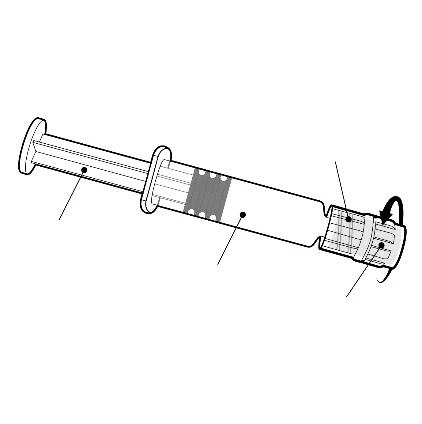
Luer Lock adapter
Hold the syringe by the barrel, not by the plunger.
Plunger
Unscrew the syringe cap by turning it counterclockwise.
Barrel
Cap
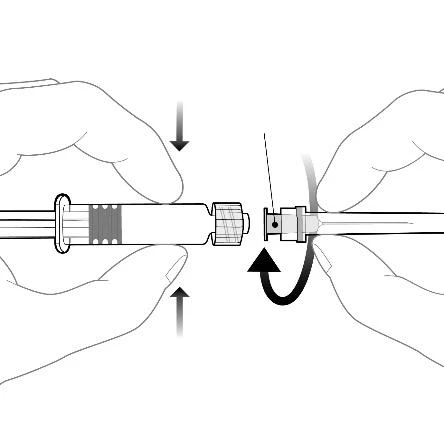
Needle hub
To attach the needle to the syringe, gently connect the needle hub to the Luer Lock adapter and rotate a quarter turn clockwise until a click is felt.
Do not remove the plunger from the syringe barrel.
If this occurs, do not administer the vaccine.
Disposal
Any unused medicine and waste material derived from this medicine must be disposed of in accordance with local regulations.