Selg
Italy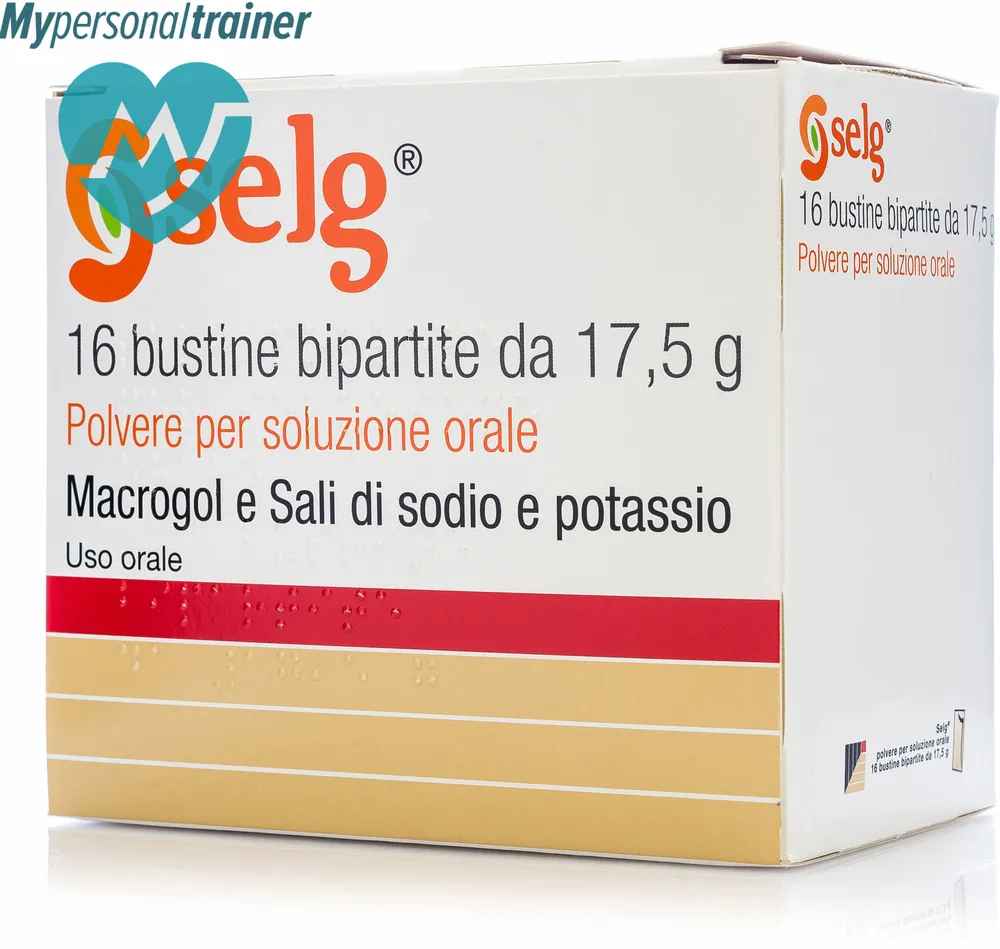
Table of Contents
- Package leaflet: Information for the patient
- SELG powder for oral solution
- 1. What SELG is and what it is used for
- 2. What you need to know before using SELG
- 3. How to use SELG
- 4. Possible side effects
- 5. How to store SELG
- 6. Package contents and other information
- Patient Information Leaflet
- SELG powder for oral solution
- 1. What SELG is and what it is used for
- 2. What you need to know before using SELG
- 3. How to use SELG
- 4. Possible side effects
- 5. How to store SELG
- 6. Package contents and other information
Package leaflet: Information for the patient
SELG powder for oral solution
macrogol and sodium and potassium salts
Please read this leaflet carefully before using this medicine because it contains important information for you.
- Keep this leaflet. You may need to read it again.
- If you have any questions, consult your doctor or pharmacist.
- This medicine has been prescribed for you only. Do not give it to others, even if their symptoms are the same as yours, as it could be harmful.
- If you experience any side effects, including those not listed in this leaflet, contact your doctor or pharmacist. See section 4.
Contents of this leaflet:
- What SELG is and what it is used for
- What you need to know before taking SELG
- How to take SELG
- Possible side effects
- How to store SELG
- Contents of the pack and other information
1. What SELG is and what it is used for
SELG contains the active ingredients macrogol, and sodium and potassium salts (anhydrous sodium sulfate, sodium bicarbonate, sodium chloride, potassium chloride).
SELG is a medicine belonging to the class of osmotic laxatives, which work by drawing water into the intestine, thereby promoting the formation of soft stools.
SELG is used for the treatment of constipation.
2. What you need to know before using SELG
DO NOT use SELG
- if you are allergic to macrogol, sodium and potassium salts, or any of the other ingredients of this medicine (listed in section 6)
- in case of gastrointestinal perforation or risk of gastrointestinal perforation
- if you suffer from severe inflammatory bowel diseases (such as ulcerative proctocolitis, Crohn's disease) or colon dilation (toxic megacolon), associated with symptomatic stenosis
- in case of intestinal blockage or suspected intestinal obstruction (occlusive, sub-occlusive or stenotic forms of the intestine)
- in case of blockage or slowing down of food in the gastrointestinal tract (ileus, gastric stasis)
- in case of abdominal pain of unknown origin, acute inflammation of the colon (acute colitis), nausea, vomiting, marked increase or decrease in bowel movements, or intestinal bleeding (the presence of one or more of these signs and symptoms requires medical evaluation to rule out conditions that contraindicate the use of laxatives) (see previous points)
- in case of severe dehydration
- in children under 8 years of age and weighing less than 20 kg.
Warnings and precautions
Talk to your doctor or pharmacist before using SELG.
Use SELG only after consulting your doctor:
- in children. Use SELG with particular caution:
- if you suffer from heart or kidney diseases (cardiopathies or nephropathies)
- in patients unable to swallow or with impaired mental status, due to the risk of aspiration of gastric contents into the lungs (aspiration from regurgitation)
- in elderly or debilitated patients. In these patients, prescription should be preceded by a careful assessment of the risk/benefit ratio.
- in case of diarrhoea, especially in elderly patients, patients with impaired liver or kidney function, or patients being treated with medicines that promote fluid elimination (diuretics). In such cases, monitoring of the patient's body fluid composition should be performed.
Prolonged use of a laxative for the treatment of constipation is not recommended.
Treatment of constipation with any medicinal product should be considered as an addition to a healthy lifestyle and proper diet, for example:
- increasing fluid and fibre intake
- appropriate physical activity and re-education of intestinal motility.
Talk to your doctor
- for the treatment of chronic or recurrent constipation
- if the need for a laxative arises from a sudden change in previous bowel habits (frequency and characteristics of bowel movements) lasting more than two weeks, or when the use of a laxative fails to produce an effect.
Abuse of laxatives, especially stimulant laxatives (contact laxatives), may cause:
- dependency and tolerance (with possible need for progressively increasing doses)
- chronic constipation
- loss of normal intestinal function (intestinal atony)
- persistent diarrhoea leading to loss of water, mineral salts (especially potassium), and other important nutrients
- in more severe cases, dehydration or hypokalaemia (low potassium levels in the blood), which may lead to heart or muscle disorders, particularly if the patient is also being treated with cardiac glycosides, diuretics, or corticosteroids.
Very rare cases of hypersensitivity reactions (rash, urticaria, oedema) have been reported with medicines containing macrogol (polyethylene glycol). Anaphylactic shock has been reported exceptionally.
Children
SELG must not be used in children under 8 years of age and weighing less than 20 kg.
Other medicines and SELG
Inform your doctor or pharmacist if you are taking, have recently taken, or might take any other medicines.
SELG, like other laxatives, may reduce intestinal transit time, and thus the absorption, of other oral medicines taken concomitantly, including in particular:
- antiepileptics (used for epilepsy)
- digoxin (used for irregular heartbeat and other heart conditions)
- immunosuppressants (used to prevent transplant rejection)
Do not take other medicines, especially laxatives, immediately before or during administration of SELG.
If you are taking another medicine, you should wait at least 2 hours before taking SELG.
SELG with food and drinks
Do not take SELG with liquorice. Taking liquorice increases the risk of reduced potassium levels in the blood (hypokalaemia).
Pregnancy and breastfeeding
If you are pregnant, think you may be pregnant, planning a pregnancy, or breastfeeding, consult your doctor or pharmacist before taking this medicine.
SELG should be used only if necessary, under direct medical supervision, after evaluating with your doctor the balance between the expected benefit for the mother and the potential risk for the fetus or breastfed infant.
Driving and using machines
No studies on the ability to drive vehicles or use machinery have been conducted.
SELG contains sodium and potassium
This medicine contains 722 mg of sodium (a main component of table salt) per sachet.
This corresponds to 36% of the maximum recommended daily dietary intake for an adult.
Talk to your doctor or pharmacist if you need 1 or more sachets per day for a prolonged period, especially if you have been advised to follow a low-sodium diet.
This medicine contains 2.6 mmol (100 mg) of potassium per sachet. This should be taken into account in patients with reduced kidney function or in patients following a low-potassium diet.
3. How to use SELG
Use this medicine exactly as directed by your doctor or pharmacist. If you have any doubts, consult your doctor or pharmacist.
The recommended dose for adults, adolescents, and children over 8 years of age and weighing more than 20 kg is:
- two divided sachets per day, one in the morning on an empty stomach and one in the evening before going to bed.
- once daily bowel movement is achieved, the dose may be reduced to one sachet per day, either as a single dose or divided into two administrations of half a sachet each, or one sachet every other day.
Please note that:
- the laxative effect of SELG occurs 24 to 48 hours after administration.
- the correct dose is the lowest dose sufficient to produce easy evacuation of soft stools.
- the daily dose should be adjusted according to the effect obtained and may vary from one sachet every other day (especially in children) up to two sachets per day.
- the duration of treatment should not exceed 3 months; in any case, follow your doctor's prescription. Regular bowel evacuation should be maintained through lifestyle and adequate diet.
Use in children
SELG must not be used in children under 8 years of age and weighing less than 20 kg.
In children, treatment must not exceed 3 months, as there are no clinical data available on the use of the product for periods longer than 3 months.
Preparation instructions
- Dissolve the contents of one sachet in 250 ml of water.
- The reduced dose of half a sachet should be dissolved in a glass of water.
- Do not add any other ingredients to the resulting solution.
If you take more SELG than you should
Immediately inform your doctor or go to the nearest hospital in case of accidental overdose of SELG.
Excessive doses may cause abdominal pain, diarrhoea, and vomiting, which resolve within 24–48 hours after discontinuation of treatment. Therapy may then be restarted at a lower dose.
Excessive fluid loss due to diarrhoea or vomiting should be replenished. In general, administering plenty of fluids is sufficient.
Cases of aspiration have been reported following administration via nasogastric tube of large quantities of macrogol and electrolytes.
Children with neurological disorders who suffer from chewing and swallowing difficulties (oro-motor dysfunction) are particularly at risk of pulmonary aspiration.
If you have any doubts about the use of SELG, consult your doctor or pharmacist.
4. Possible side effects
Like all medicines, this medicine can cause side effects, although not everybody will experience them.
During treatment, the following may occur in adults, although very rarely (may affect up to 1 in 10,000 people):
- severe allergic reactions (anaphylactic shock), such as itching, skin rashes, urticaria, or edema (swelling, particularly of the face or hands; swelling or tingling of the lips or throat), breathing difficulties. In such cases, stop taking the medicine and consult a doctor immediately.
Other side effects that may occur in adults are:
Common side effects (may affect up to 1 in 10 people):
- abdominal pain and/or abdominal bloating
- feeling of fullness in the stomach
- diarrhoea
- nausea
Uncommon side effects (may affect up to 1 in 100 people):
- vomiting
- urgent need to empty the bowel
- uncontrolled loss of faeces (faecal incontinence)
- anal irritation
Rare side effects (may affect up to 1 in 1,000 people):
- rectal bleeding or presence of blood in the stool (melena)
Side effects with unknown frequency (frequency cannot be estimated from the available data):
- electrolyte imbalances (reduced levels of sodium and potassium in the blood) and/or dehydration, especially in elderly people
- erythema
Cases of heart rhythm disorders (hypo-hyperkinetic cardiac arrhythmias) have been reported, probably due to intestinal distension, accelerated transit, and frequent defecation.
Possible side effects that may occur in children and adolescents after use of SELG:
Common side effects (may affect up to 1 in 10 people):
- abdominal pain
- diarrhoea, possibly accompanied by skin irritation around the anus
Uncommon side effects (may affect up to 1 in 100 people):
- vomiting
- abdominal bloating
- nausea
Side effects with unknown frequency (frequency cannot be estimated from the available data):
- allergic reactions (anaphylactic shock, angioedema, urticaria, rash, itching)
Reporting of side effects
If you experience any side effect, including those not listed in this leaflet, talk to your doctor or pharmacist. You can also report side effects directly via the national reporting system at https://www.aifa.gov.it/content/segnalazioni-reazioni-avverse.
By reporting side effects, you can help provide more information on the safety of this medicine.
5. How to store SELG
Keep this medicine out of sight and reach of children.
The reconstituted solution must be stored in the refrigerator (between 2°C and 8°C) and used within 48 hours of preparation. Any unused solution must be discarded.
Do not use this medicine after the expiry date stated on the packaging. The expiry date refers to the last day of that month.
Store in the original packaging to protect the product from moisture.
Do not use this medicine if the packaging is open or damaged.
Do not dispose of any medicine via wastewater or household waste. Ask your pharmacist how to dispose of medicines no longer in use. This will help protect the environment.
6. Package contents and other information
What SELG contains
Each 17.5 g dual-compartment sachet contains:
- Active substances: macrogol 4000 14.580 g, anhydrous sodium sulfate 1.423 g, sodium bicarbonate 0.422 g, sodium chloride 0.365 g, potassium chloride 0.185 g
- Other components: sodium cyclamate, acesulfame K, sodium saccharin, tangerine flavour, maltodextrin.
Description of the appearance of SELG and contents of the pack
SELG is an oral solution powder. Each pack contains 16 dual-compartment sachets of 17.5 g.
Marketing Authorization Holder and Manufacturer
Marketing Authorization Holder
Alfasigma S.p.A. - Via Ragazzi del '99, n. 5 - 40133 Bologna (BO)
Manufacturer
Sigmar Italia S.p.A. - Via Sombreno, 11 - 24011 Almè (BG)
Patient Information Leaflet
SELG powder for oral solution
macrogol and sodium and potassium salts
Please read this leaflet carefully before using this medicine because it contains important information for you.
- Keep this leaflet. You may need to read it again.
- If you have any questions, ask your doctor or pharmacist.
- This medicine has been prescribed for you only. Do not give it to others, even if their symptoms are the same as yours, because it could be harmful.
- If you experience any adverse reactions, including those not listed in this leaflet, consult your doctor or pharmacist. See section 4.
Contents of this leaflet:
- What SELG is and what it is used for
- What you need to know before taking SELG
- How to take SELG
- Possible side effects
- How to store SELG
- Package contents and other information
1. What SELG is and what it is used for
SELG contains the active ingredients macrogol and sodium and potassium salts (anhydrous sodium sulfate, sodium bicarbonate, sodium chloride, potassium chloride).
SELG is a medicine belonging to the class of osmotic laxatives, which work by drawing water into the intestine, thereby promoting the formation of soft stools.
SELG is used in clinical conditions requiring complete bowel evacuation (e.g. preoperative preparation, diagnostic examinations, etc.).
2. What you need to know before using SELG
DO NOT use SELG
- if you are allergic to macrogol, sodium and potassium salts, or any of the other ingredients of this medicine (listed in section 6)
- in case of gastrointestinal perforation or risk of gastrointestinal perforation
- if you suffer from severe inflammatory bowel diseases (such as ulcerative colitis, Crohn's disease) or colon dilation (toxic megacolon), associated with symptomatic stenosis
- in case of intestinal blockage or suspected intestinal obstruction (occlusive, sub-occlusive or stenotic forms of the intestine)
- in case of blockage or slowing down of food in the gastrointestinal tract (ileus, gastric stasis)
- in case of abdominal pain of unknown origin, acute inflammation of the colon (acute colitis), nausea, vomiting, marked increase or decrease in bowel movements, or rectal bleeding (the presence of one or more of these signs and symptoms requires medical evaluation to rule out conditions that contraindicate the use of laxatives (see above))
- in case of severe dehydration
- in children under 8 years of age and weighing less than 20 kg.
Warnings and precautions
Talk to your doctor or pharmacist before using SELG.
Use SELG with particular caution:
- if you suffer from heart or kidney diseases (cardiopathy or nephropathy)
- if you experience abdominal distension or abdominal pain. In such cases, reduce the frequency of administration or temporarily discontinue treatment until these symptoms resolve
- if you feel nauseous or have a sensation of vomiting after taking the medicine
- if you suffer from inflammation of the esophagus due to backflow of acidic stomach fluids (reflux esophagitis)
- in patients with reduced level of consciousness.
- if you experience sudden abdominal pain or rectal bleeding during treatment with SELG for bowel preparation, contact a doctor immediately.
Due to the risk of aspiration of gastric contents into the lungs (aspiration from regurgitation), this medicine should be administered with particular caution in patients who are unable to swallow, have impaired mental status, or are unconscious or semiconscious.
These patients must be closely monitored during administration, especially if administered via nasogastric route.
Very rare cases of hypersensitivity reactions (rash, urticaria, edema) have been reported with medicines containing macrogol (polyethylene glycol). Anaphylactic shock has been reported exceptionally.
Children
SELG must not be used in children under 8 years of age and weighing less than 20 kg.
Other medicines and SELG
Inform your doctor or pharmacist if you are taking, have recently taken, or might take any other medicines.
SELG, like other laxatives, may reduce intestinal transit time, and thus the absorption, of other medicines taken concomitantly by oral route, including in particular:
- antiepileptics (used for epilepsy)
- digoxin (used for cardiac arrhythmias and other heart conditions)
- immunosuppressive agents (used to prevent transplant rejection)
Do not take other medicines, especially laxatives, immediately before or during administration of SELG.
Wait at least 2 hours after taking any other medicine before taking SELG.
SELG with food and drink
Do not eat food during administration of this product (see section "Instructions for preparation and use").
Do not take SELG together with liquorice. The use of liquorice increases the risk of low blood potassium levels (hypokalemia).
Pregnancy and breastfeeding
If you are pregnant, think you may be pregnant, are planning to become pregnant, or are breastfeeding, consult your doctor or pharmacist before taking this medicine.
SELG should only be used when necessary and under direct medical supervision, after careful evaluation with your doctor of the benefit to the mother versus the potential risk to the fetus or infant.
There are no adequate studies on the use of this medicine during pregnancy or breastfeeding.
Driving and using machines
No studies on the ability to drive vehicles or use machinery have been conducted.
Sodium and potassium content of SELG
This medicine contains 2.89 g of sodium (a main component of table salt) per sachet and 11.56 g of sodium in the recommended dose of 4 liters of solution, equivalent to 578% of the maximum recommended daily dietary intake for an adult. This should be taken into account in individuals with impaired renal function or those on a low-sodium diet.
This medicine contains 10.3 mmol (402 mg) of potassium per sachet and 42 mmol in the recommended dose of 4 liters of solution. This should be taken into account in patients with impaired renal function or those on a low-potassium diet.
3. How to use SELG
Use this medicine exactly as instructed by your doctor or pharmacist. If you have
any doubts, consult your doctor or pharmacist.
The recommended dose in adults is:
4 litres (4 sachets of 70 g each, dissolved in one litre of water per sachet) to be taken either as a single dose
in the afternoon before the examination, or divided into two doses: 2 litres the evening before the examination and 2 litres on the morning of the examination.
Use in children and adolescents
In children over 8 years of age and weighing more than 20 kg, the recommended dosage is 25–40 ml/kg, taken every hour until stools become liquid and clear (clear rectal effluent).
Instructions for preparation and use
The preparation should be taken after a 3–4 hour fast. In any case, do not consume solid food within 2 hours before taking the medicine and until the examination is completed. You may drink water freely. The solution may be more palatable if cooled.
The medicine is normally taken orally, but may also be administered via a nasogastric tube by continuous infusion under the supervision of a doctor or nurse. In this case, the recommended administration rate should be 20 to 30 ml per minute.
- Pour the contents of one 70 g sachet into one litre of water and stir until completely dissolved. The solution may be more palatable if cooled.
- Drink a full glass (250 ml) of the solution every 10–15 minutes until the entire solution has been consumed. It is preferable to ingest each individual dose rapidly.
- Continue this procedure with each sachet, one after the other, until the entire solution has been taken or until the liquid stools become clear. The first bowel movement usually occurs approximately 90 minutes after starting administration.
- Do not add any other ingredients to the reconstituted solution.
If you take more SELG than you should
Inform your doctor immediately or go to the nearest hospital in case of accidental ingestion of an excessive dose of SELG.
Excessively high doses may cause abdominal pain, diarrhoea, and vomiting, which usually resolve within 24–48 hours after discontinuation of treatment. Subsequent losses of fluids and electrolytes should be replaced. In most cases, drinking plenty of fluids is sufficient. Afterwards, treatment may be resumed at a lower dose.
4. Possible side effects
Like all medicines, this medicine can cause side effects, although not everybody gets them.
During treatment, the following may occur in adults, although very rarely (may affect up to 1 in 10,000 people):
- severe allergic reactions (anaphylactic shock), such as itching, skin rashes, hives, or edema (swelling, localized especially on the face or hands; swelling or tingling of the lips or throat), difficulty breathing. In such cases, stop taking the medicine and consult a doctor immediately.
Other side effects that may occur in adults are:
Common side effects (may affect up to 1 in 10 people):
- nausea
- feeling of stomach fullness
- abdominal pain and/or abdominal bloating
- diarrhoea
Uncommon side effects (may affect up to 1 in 100 people):
- vomiting
- rectal irritation
- urgent need to empty the bowel
- uncontrolled loss of faeces (faecal incontinence)
Rare side effects (may affect up to 1 in 1,000 people):
- blood loss in stools or presence of blood in stools (melena)
Side effects with unknown frequency (frequency cannot be estimated from the available data):
- electrolyte imbalances (reduced levels of sodium and potassium in the blood) and/or dehydration, especially in elderly people
- erythema
Cases of heart rhythm disorders (hypo-hyperkinetic cardiac arrhythmias) have been reported, probably due to intestinal distension, accelerated transit, and frequent defecation.
Possible side effects that may occur in children and adolescents after use of SELG:
Common side effects (may affect up to 1 in 10 people):
- abdominal pain
- diarrhoea, possibly accompanied by skin irritation around the anus
Uncommon side effects (may affect up to 1 in 100 people):
- vomiting
- abdominal bloating
- nausea
Side effects with unknown frequency (frequency cannot be estimated from the available data):
- allergic reactions (anaphylactic shock, angioedema, urticaria, skin rash, itching)
Reporting of side effects
If you experience any side effect, including those not listed in this leaflet, talk to your doctor or pharmacist. You can also report side effects directly via the national reporting system at https://www.aifa.gov.it/content/segnalazioni-reazioni-avverse .
By reporting side effects, you can help provide more information on the safety of this medicine.
5. How to store SELG
Keep this medicine out of the sight and reach of children.
The reconstituted solution must be stored in the refrigerator (between 2°C and 8°C) and used within 48 hours of preparation.
Any remaining solution must be discarded.
Do not use this medicine after the expiry date stated on the packaging.
The expiry date refers to the last day of that month.
Store in the original packaging to protect the product from moisture.
Do not use this medicine if the packaging is open or damaged.
Do not dispose of medicines via wastewater or household waste. Ask your pharmacist how to dispose of medicines you no longer use. This will help protect the environment.
6. Package contents and other information
What SELG contains
One 70 g sachet contains:
- Active substances: macrogol 4000 58.32 g, anhydrous sodium sulfate 5.69 g, sodium bicarbonate 1.69 g, sodium chloride 1.46 g, potassium chloride 0.74 g
- Other components: sodium cyclamate, acesulfame K, sodium saccharin, tangerine flavor, maltodextrin.
Description of SELG's appearance and contents of the pack
SELG is an oral solution powder. Each pack contains 4 sachets of 70 g.
Marketing Authorization Holder and Manufacturer
Marketing Authorization Holder
Alfasigma S.p.A. - Via Ragazzi del '99, n. 5 - 40133 Bologna (BO)
Manufacturer
Sigmar Italia S.p.A. - Via Sombreno, 11 - 24011 Almè (BG)