Saxenda
Italy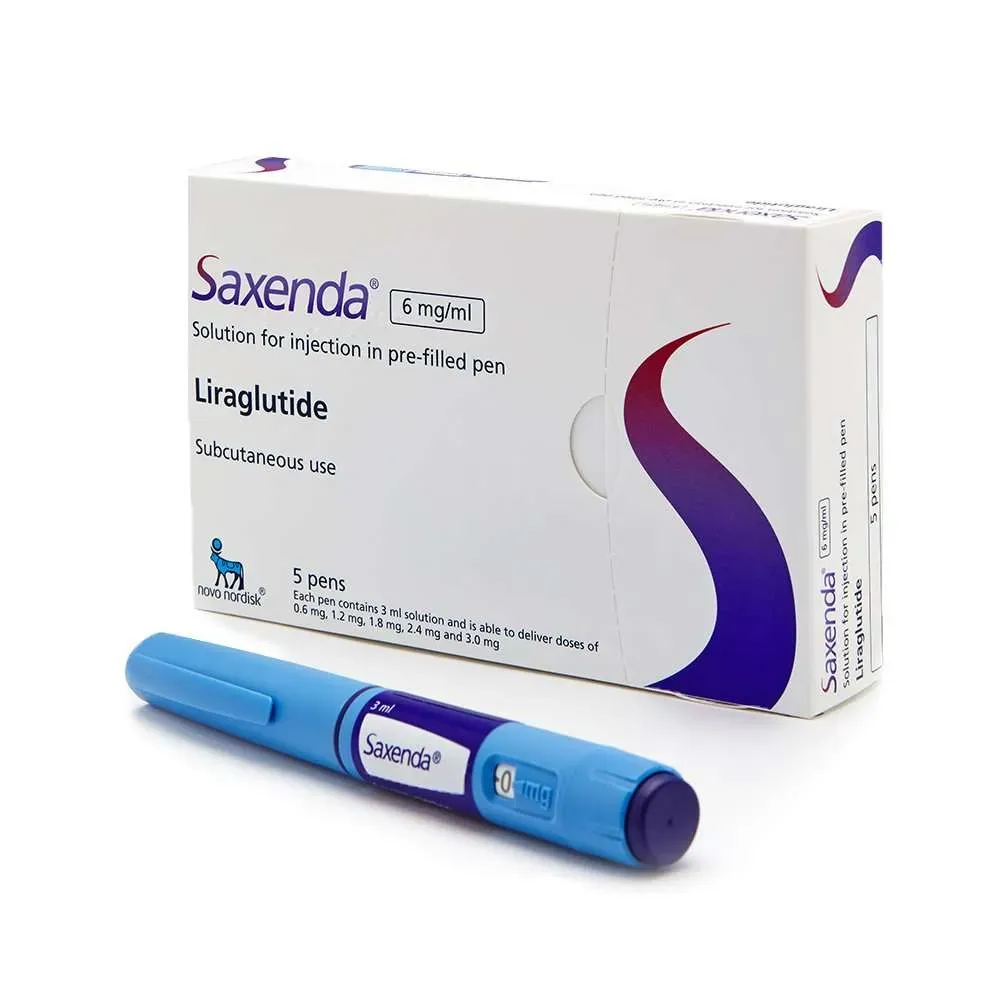
Table of Contents
- Package leaflet: Information for the patient
- Saxenda 6 mg/mL injection solution in a pre-filled pen
- 1. What Saxenda is and what it is used for
- 2. What you need to know before using Saxenda
- 3. How to use Saxenda
- 4. Possible side effects
- 5. How to store Saxenda
- 6. Package contents and other information
- Instructions for the use of Saxenda 6 mg/mL injectable solution in a pre-filled pen
Package leaflet: Information for the patient
Saxenda 6 mg/mL injection solution in a pre-filled pen
liraglutide
Please read this leaflet carefully before using this medicine because it contains
important information for you.
- Keep this leaflet. You may need to read it again.
- If you have any questions, ask your doctor, pharmacist, or nurse.
- This medicine has been prescribed for you only. Do not give it to other people, even if they have the same symptoms as you, because it could be harmful.
- If you experience any side effect, including those not listed in this leaflet, talk to your doctor, pharmacist, or nurse. See section 4.
Contents of this leaflet
- What Saxenda is and what it is used for
- What you need to know before using Saxenda
- How to use Saxenda
- Possible side effects
- How to store Saxenda
- Contents of the pack and other information
1. What Saxenda is and what it is used for
What Saxenda is
Saxenda is a medicine used for weight loss that contains the active substance liraglutide. It is similar to a naturally occurring hormone called glucagon-like peptide-1 (GLP-1), which is released from the intestine after a meal. Saxenda acts on receptors in the brain that regulate appetite, causing a feeling of increased satiety and reduced hunger. This may help you eat less food and reduce body weight.
What Saxenda is used for
Saxenda is used for weight loss in addition to diet and exercise in adults aged 18 years and older with:
- a body mass index (BMI) of 30 kg/m² or higher (obesity), or
- a body mass index (BMI) of 27 kg/m² and less than 30 kg/m² (overweight) and weight-related health problems (such as diabetes, high blood pressure, abnormal blood fat levels, or breathing problems known as obstructive sleep apnoea). BMI is a measure of weight relative to height.
Continue using Saxenda only if you have lost at least 5% of your body weight after 12 weeks on a daily dose of 3.0 mg (see section 3). Consult your doctor before continuing.
Saxenda is used for weight loss in addition to a healthy diet and exercise in adolescents aged 12 years and older with:
- obesity (diagnosed by a doctor)
- body weight above 60 kg
Continue using Saxenda only if you have lost at least 4% of your BMI after 12 weeks on a daily dose of 3.0 mg or the maximum tolerated dose (see section 3). Consult your doctor before continuing.
Saxenda is indicated in addition to a healthy diet and exercise for weight management in children aged 6 to <12 years with:
- obesity (diagnosed by a doctor)
- body weight ≥45 kg
Continue using Saxenda only if you have lost at least 4% of your BMI after 12 weeks on a daily dose of 3.0 mg or the maximum tolerated dose (see section 3). Consult your doctor before continuing.
Diet and exercise
Your doctor will advise you to start a diet and exercise programme. Continue following this programme while using Saxenda.
2. What you need to know before using Saxenda
Do not use Saxenda
- if you are allergic to liraglutide or to any of the other ingredients of this medicine (listed in section 6).
Warnings and precautions
Talk to your doctor, pharmacist, or nurse before using Saxenda.
The use of Saxenda is not recommended if you have severe heart failure.
There is limited experience with the use of this medicine in patients aged 75 years or older. The use of Saxenda is not recommended if you are 75 years of age or older.
There is limited experience with the use of this medicine in patients with kidney problems. If you have kidney disease or are on dialysis, consult your doctor.
There is limited experience with the use of this medicine in patients with liver problems. If you have liver problems, consult your doctor.
The use of this medicine is not recommended if you have severe stomach or intestinal problems, which manifest as delayed stomach emptying (called gastroparesis), or if you have inflammatory bowel disease.
If you are scheduled for surgery under anaesthesia, inform your doctor that you are taking Saxenda.
Diabetic patients
If you have diabetes, do not use Saxenda as a substitute for insulin.
Pancreatitis
Talk to your doctor if you have or have had a disease of the pancreas.
Gallbladder inflammation and gallstones
If you lose weight significantly, you are at risk of developing gallstones, which may lead to inflammation of the gallbladder. Stop treatment with Saxenda and contact your doctor immediately if you experience severe pain in the upper right part of the abdomen, under the ribs, which usually worsens. The pain may radiate to your back or right shoulder.
See section 4.
Thyroid disease
If you have thyroid diseases, including nodules or enlargement of the thyroid gland, consult your doctor.
Heart rate
Talk to your doctor if you experience palpitations (a sensation of feeling your heartbeat) or if you feel your heart beating faster at rest during treatment with Saxenda.
Fluid loss and dehydration
When you start treatment with Saxenda, you may lose body fluids or become dehydrated. This may be due to nausea, vomiting, and diarrhoea. It is important to avoid dehydration by drinking plenty of fluids.
If you have any questions or concerns, talk to your doctor, pharmacist, or nurse. See section 4.
Children
The safety and efficacy of Saxenda has not been studied in children under 6 years of age.
Other medicines and Saxenda
Inform your doctor, pharmacist, or nurse if you are taking, have recently taken, or might take any other medicines.
In particular, talk to your doctor, pharmacist, or nurse if:
- you are taking diabetes medicines called 'sulfonylureas' (such as glimepiride or glibenclamide) or if you are taking insulin – your blood sugar level may decrease (hypoglycaemia) when you use these medicines with Saxenda. Your doctor may adjust the dose of your diabetes medicines to prevent low blood sugar levels. See section 4 for signs of low blood sugar. If your insulin dose is adjusted, your doctor will recommend that you monitor your blood glucose levels more frequently.
- you are taking warfarin or other oral medicines to reduce blood clotting (anticoagulants). More frequent blood tests may be needed to monitor your blood's ability to clot.
Pregnancy and breastfeeding
Do not use Saxenda if you are pregnant, suspect you may be pregnant, or are planning a pregnancy, as it is not known whether Saxenda may have effects on the foetus.
Do not breastfeed while using Saxenda, as it is not known whether Saxenda passes into breast milk.
Driving and using machines
It is unlikely that Saxenda will affect your ability to drive or use machines. However, some patients may experience dizziness while taking Saxenda, mainly during the first 3 months of treatment (see section "Possible side effects"). If you experience dizziness, exercise particular caution when driving or using machines. For further information, talk to your doctor.
Important information about some ingredients of Saxenda
This medicine contains less than 1 mmol of sodium (23 mg) per dose, i.e. essentially 'sodium-free'.
3. How to use Saxenda
Use this medicine exactly as instructed by your doctor. If you have any doubts, consult your
doctor, pharmacist, or nurse.
Your doctor will start you on a diet and exercise programme. Continue this programme while using
Saxenda.
Injection dose
Adults
Treatment will start at a low dose, which will be gradually increased over the first five
weeks of treatment.
- When you first start using Saxenda, the initial dose is 0.6 mg once daily for at least one week.
- Your doctor will instruct you to gradually increase the dose by 0.6 mg, usually every week, until reaching the recommended dose of 3.0 mg once daily. Your doctor will tell you how much Saxenda to use each week. Typically, you will be advised to follow the schedule below.
Once the recommended dose of 3.0 mg is reached in week 5 of treatment, continue using
this dose until the end of the treatment period. Do not increase the dose further.
Your doctor will review your treatment at regular intervals.
Children and adolescents (from 6 to 18 years)
For children and adolescents aged 6 to under 18 years, the dose should be increased similarly
as described in the table above for adults. The dose should be increased until reaching 3.0 mg (maintenance dose) or the maximum tolerated dose. Daily doses higher than 3.0 mg are not recommended.
How and when to use Saxenda
- Before using the pen for the first time, your doctor or nurse will show you how to do it.
- You may use Saxenda at any time of day, with or without food and drinks.
- Use Saxenda approximately at the same time each day; choose a time of day that is convenient for you.
Where to inject
Saxenda is administered by injection under the skin (subcutaneous injection).
- The best areas for self-injection are the abdomen (waist), the front of the thighs, or the upper arms.
- Change the injection site every day to reduce the risk of lumps forming.
- Do not inject the medicine into a vein or muscle.
Detailed instructions for use are provided on the reverse of this leaflet.
For patients with diabetes
Inform your doctor if you have diabetes. Your doctor may need to adjust the dose of your diabetes
medicines to prevent low blood sugar levels.
- Do not mix Saxenda with other injectable medicines (e.g. insulin).
- Do not use Saxenda together with other medicines containing GLP-1 receptor agonists (such as exenatide or lixisenatide).
If you use more Saxenda than you should
If you use more Saxenda than prescribed, contact your doctor immediately or go to the hospital. Take
the medicine pack with you. You may require medical treatment. The following effects may occur:
- nausea
- vomiting
- low blood sugar (hypoglycaemia). See "Common side effects" for warning signs of low blood sugar.
If you forget to use Saxenda
- If you miss a dose and remember within 12 hours of your usual dosing time, inject the missed dose as soon as you remember.
- However, if more than 12 hours have passed since you should have used Saxenda, skip the missed dose and inject the next dose the following day at your usual time.
- Do not use a double dose or increase the dose the next day to make up for the missed dose.
If you stop using Saxenda
Do not stop using Saxenda without discussing it with your doctor.
If you have any questions about how to use this medicine, consult your doctor, pharmacist, or
nurse.
4. Possible side effects
Like all medicines, this medicine can cause side effects, although not everyone experiences them.
Serious side effects
Rarely, some serious allergic reactions (anaphylaxis) have been reported in patients using Saxenda. Seek immediate medical attention if you experience symptoms such as breathing difficulties, swelling of the face and throat, or rapid heartbeat.
Pancreatitis (inflammation of the pancreas) has been reported uncommonly in patients taking Saxenda. Pancreatitis is a serious condition that may be life-threatening.
If you experience any of the following serious side effects, stop using Saxenda and contact your doctor immediately:
- Severe and persistent pain in the abdomen (stomach area), possibly radiating to the back, along with nausea and vomiting, which may be signs of inflammation of the pancreas (pancreatitis).
Other side effects
Very common: affects more than 1 in 10 people
- Nausea, vomiting, diarrhoea, constipation, headache – these generally resolve after a few days or weeks
Common: affects up to 1 in 10 people
- Stomach and intestinal problems such as indigestion (dyspepsia), inflammation of the stomach lining (gastritis), stomach discomfort, upper abdominal pain, heartburn, abdominal bloating, gas (flatulence), belching, and dry mouth
- Feeling weak or tired
- Changes in taste sensation
- Dizziness
- Difficulty sleeping (insomnia) – usually occurs during the first 3 months of treatment
- Gallstones
- Rash
- Injection site reactions (such as bruising, pain, irritation, itching, and rash)
- Low blood sugar (hypoglycaemia). Signs of low blood sugar may occur suddenly and may include: cold, clammy sweat, cold and pale skin, headache, rapid heartbeat, nausea, intense hunger, vision changes, drowsiness, weakness, nervousness, anxiety, confusion, difficulty concentrating, and tremor. Your doctor will advise you on how to manage low blood sugar levels and what to do if you experience these symptoms
- Increased levels of pancreatic enzymes such as lipase and amylase.
Uncommon: affects up to 1 in 100 people
- Fluid loss (dehydration) – more likely to occur early in treatment and may be caused by vomiting, nausea, and diarrhoea
- Delayed stomach emptying
- Inflammation of the gallbladder
- Allergic reactions including rash
- General feeling of being unwell
- Rapid heartbeat
Rare: affects up to 1 in 1,000 people
- Reduced kidney function
- Acute kidney failure. Signs may include decreased urine output, metallic taste in the mouth, and increased tendency to bruise.
Not known (frequency cannot be estimated from available data)
- Intestinal obstruction – a severe form of constipation with additional symptoms such as stomach pain, bloating, vomiting, etc.
- Subcutaneous nodules may be caused by the accumulation of a protein called amyloid (cutaneous amyloidosis; frequency unknown).
Reporting of side effects
If you experience any side effect, including those not listed in this leaflet, talk to your doctor, pharmacist, or nurse. You can also report side effects directly through the national reporting system listed in Annex V. By reporting side effects, you can help provide more information on the safety of this medicine.
5. How to store Saxenda
Keep this medicine out of the sight and reach of children.
Do not use Saxenda after the expiry date stated on the pen label and on the carton after 'Exp.'.
The expiry date refers to the last day of that month.
Before first use:
Store in the refrigerator (2 °C - 8 °C). Do not freeze. Keep away from the freezer compartment.
After first use:
The pen may be stored for up to 1 month at temperatures below 30 °C or in the refrigerator (2 °C - 8 °C). Do not freeze. Keep away from the freezer compartment.
When not in use, store the pen with the cap on to protect the medicine from light.
Do not use the medicine if the solution is not clear and colourless or almost colourless.
Do not dispose of any medicine via wastewater or household waste. Ask your pharmacist how to dispose of medicines no longer required. This will help protect the environment.
6. Package contents and other information
What Saxenda contains
- The active substance is liraglutide. 1 mL of injectable solution contains 6 mg of liraglutide. A pre-filled pen contains 18 mg of liraglutide.
- The other ingredients are disodium phosphate dihydrate, propylene glycol, phenol, hydrochloric acid and sodium hydroxide (for pH adjustment), and water for injections.
Description of the appearance of Saxenda and contents of the pack
Saxenda is supplied as a clear, colourless or almost colourless, injectable solution in a pre-filled pen. Each pen contains 3 mL of solution and is capable of delivering doses of 0.6 mg, 1.2 mg, 1.8 mg, 2.4 mg and 3.0 mg.
Saxenda is available in packs containing 1, 3 or 5 pens. Not all pack sizes may be marketed.
Needles are not included.
Marketing Authorisation Holder and Manufacturer
Novo Nordisk A/S
Novo Allé
DK-2880 Bagsværd
Denmark
Other sources of information
More detailed information on this medicinal product is available on the European Medicines Agency website: http://www.ema.europa.eu .
Instructions for the use of Saxenda 6 mg/mL injectable solution in a pre-filled pen
Read these instructions carefully before using the Saxenda pre-filled pen.
Do not use the pen without having received adequate training from your doctor or nurse.
Start by checking the pen to ensure it contains Saxenda 6 mg/mL, then review the
illustrations below to learn the different parts of the pen and needle.
If you are blind or have severe vision problems, do not use this pen without assistance.
Ask for help from someone with good eyesight who has been trained in the use of the Saxenda pre-filled pen.
The pen is a pre-filled pen with dose selection. It contains 18 mg of liraglutide and delivers doses
of 0.6 mg, 1.2 mg, 1.8 mg, 2.4 mg, and 3.0 mg. The pen is designed to be used with NovoFine or NovoTwist disposable needles up to 8 mm in length and as thin as 32 G.
Needles are not included in the package.
Important information
Pay close attention to these notes, as they are important for the safe use of the pen.
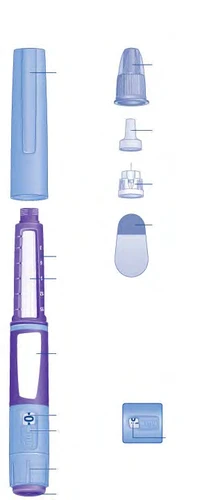
1 Preparing the pen with a new needle
- Check the name and colored label of the pen to ensure it contains Saxenda. This is particularly important if you use more than one type of injectable medicine. Using the wrong medicine may be harmful to your health.
- Remove the cap from the pen.
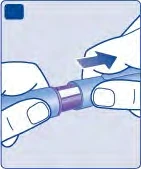
A
- Check that the solution in the pen is clear and colorless. Look through the pen window. If the solution appears opalescent, do not use the pen.
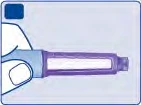
B
- Take a new needle and remove the protective seal.
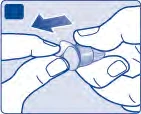
C
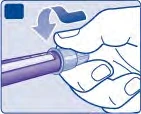
Ensure the needle is correctly attached.
- Press the needle straight onto the pen.
- Rotate it until it is securely tightened.
D
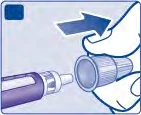
The needle is covered by two caps. You must remove both caps.
If you forget to remove both caps, you will not inject any solution.
- Remove the outer needle cap and keep it for later. You will need it after the injection to safely remove the needle from the pen.
E
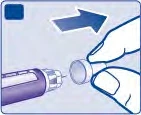
- Remove the inner needle cap and discard it. If you try to reattach it, you may accidentally prick yourself with the needle. A drop of solution may appear at the needle tip. This is normal, but you must still check the flow if you are using a new pen for the first time. Do not attach a new needle to the pen until you are ready to administer the injection.
Always use a new needle for each injection.
This prevents needle blockage, contamination, infection, and incorrect dosing.
Never use a bent or damaged needle.
F
2 Flow check with every new pen
-
If the pen has already been used, go directly to step 3, “Dose selection.” Perform the flow check only before the first injection with each new pen.
-
Rotate the dose selector to the flow check symbol ( ) immediately after 0. Ensure the flow check symbol is aligned with the indicator.
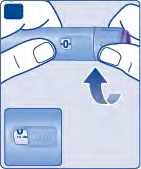
A
Flow check
symbol
selected
- Hold the pen with the needle pointing upward. Press and hold the injection button until the dose counter resets to 0. The 0 must align with the dose indicator. A drop of solution should appear at the needle tip.
A small drop may remain at the needle tip, but it will not be injected.
If no drop appears, repeat step 2 “Flow check with every new pen” up to 6 times. If still no drop appears, replace the needle and repeat step 2 “Flow check with every new pen” once more.
If no drop appears, discard the pen and use a new one.
Always ensure a drop appears at the needle tip before using a new pen for the first time. The presence of a drop confirms proper solution flow.
If no drop appears, no medicine will be injected, even if the dose counter moves.
This may indicate a blocked or damaged needle.
If you do not perform the flow check before the first injection with each new pen, you may not receive the prescribed dose and may not achieve the desired effect of Saxenda.
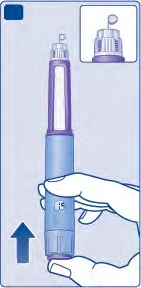
B
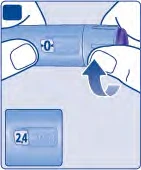
3 Dose selection
- Rotate the dose selector until the dose counter displays the dose (0.6 mg, 1.2 mg, 1.8 mg, 2.4 mg, or 3.0 mg). If you select the wrong dose, you can correct it by rotating the dose selector forward or backward. The maximum dose selectable on the pen is 3.0 mg.
The dose selector changes the dose. Only the dose counter and dose indicator show how many mg have been selected for each dose.
You can select up to 3.0 mg per dose. When the pen contains less than 3.0 mg, the dose counter will stop before reaching 3.0.
The dose selector makes a different click sound when rotated forward, backward, or when exceeding the remaining mg. Do not count the clicks of the pen.
Before injecting the medicine, always use the dose counter and dose indicator
to verify how many mg have been selected.
Do not count the clicks of the pen.
Do not use the pen scale, which only approximately shows how much solution remains in the pen.
Only doses of 0.6 mg, 1.2 mg, 1.8 mg, 2.4 mg, or 3.0 mg should be selected
using the dose selector. The selected dose must precisely align with the dose indicator to ensure a correct dose is delivered.
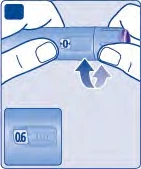
A
How much solution is left?
- The pen scale shows approximately how much solution remains in the pen.
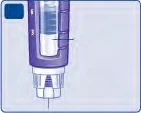
A
Approximate
amount of
solution
remaining
- To precisely determine how much solution is left, use the dose counter: rotate the dose selector until the dose counter stops. If it shows 3.0, at least 3.0 mg remain in the pen. If the dose counter stops before 3.0 mg, this means there is not enough solution left for a full 3.0 mg dose.
If you need more medicine than remains in the pen
Only after receiving specific training or instructions from your doctor or nurse, may you
split the dose between the pen currently in use and a new pen. Use a calculator to plan the doses according to your doctor’s or nurse’s instructions.
Be very careful to calculate the correct dose.
If you are unsure how to split the dose between two pens, select and inject the required dose using a new pen.
B
4 Administering the dose
- Insert the needle into the skin as shown to you by your doctor or nurse.
- Ensure you can see the dose counter. Do not cover it with your fingers to avoid interrupting the injection.
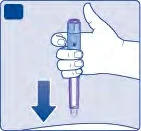
A
- Press and hold the injection button. Watch the dose counter return to 0. The 0 must align with the dose indicator. You may hear or feel a click.
- Continue holding the injection button while keeping the needle in the skin.
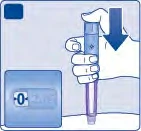
B
- Count slowly to 6 while holding the injection button down.
- If the needle is withdrawn too early, you may notice a flow of solution leaking from the needle tip. In this case, the full dose will not be delivered.
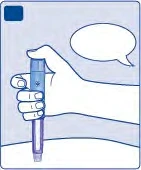
C
- Remove the needle from the skin. You may then release the injection button.
If bleeding occurs at the injection site, apply gentle pressure.
After the injection, you may see a drop of solution at the needle tip. This is
normal and does not affect the administered dose.
Always watch the dose counter to know how many mg you are injecting. Keep pressing
the injection button until the dose counter shows 0.
How to identify a blocked or damaged needle.
- If the dose counter does not show 0 after continuously pressing the injection button, you may have used a blocked or damaged needle.
- In this case – no medicine will have been administered – even if the dose counter moved from the originally set dose.
How to handle a blocked needle?
Replace the needle as described in step 5 “After the injection” and repeat all steps starting from step 1 “Preparing the pen with a new needle.” Ensure you select the full required dose.
Never touch the dose counter during injection to avoid interrupting the injection.
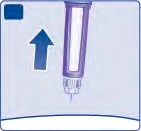
D
5 After the injection
- Always dispose of the needle after each injection to ensure comfortable future injections and to prevent needle blockage. If the needle is blocked, no medicine will be injected.
- Place the needle tip into the outer cap placed on a flat surface, without touching the needle or the outer needle cap.
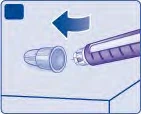
A
- When the needle is covered, press the outer needle cap fully down, carefully.
- Unscrew the needle and dispose of it carefully, according to instructions from your doctor, nurse, pharmacist, or local authorities.
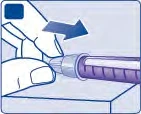
B
- Replace the pen cap on the pen after each use to protect the solution from light.
When the pen is empty, discard it without the needle attached, as instructed by your doctor,
nurse, pharmacist, or local authorities.
Never attempt to reattach the inner needle cap. You may prick yourself with the needle.
Always remove the needle from the pen after each injection.
This can prevent needle blockage, contamination, infection, solution leakage, and incorrect dosing.
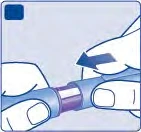
C
Other important information
- Always keep the pen and needles out of sight and reach of others, especially children.
- Never share the pen or needles with other people.
- Exercise great care when handling used needles to prevent needle-stick injuries and cross-infections.
- Change the injection site daily to reduce the risk of developing lumps.
Pen maintenance
- Do not leave the pen in a car or in other places where it could overheat or become too cold.
- Do not inject Saxenda if it has been frozen. Product that has been frozen may not produce the desired medicinal effect.
- Do not expose the pen to dust, dirt, or liquids.
- Do not wash, immerse, or lubricate the pen. It may be cleaned with a neutral detergent on a damp cloth.
- Do not drop the pen or allow it to hit hard surfaces. If it is dropped or you suspect damage, attach a new needle and check the solution flow before injection.
- Do not attempt to refill the pen. When empty, it must be discarded.
- Do not attempt to repair or disassemble the pen.