Ryzneuta
Italy
Table of Contents
- Package leaflet: Information for the user
- Ryzneuta 20 mg solution for injection
- 1. What Ryzneuta is and what it is used for
- 2. What you need to know before receiving Ryzneuta
- 3. How to take Ryzneuta
- 4. Possible side effects
- 5. How to store Ryzneuta
- 6. Package contents and other information
- Instructions for use
- Ryzneuta 20 mg solution for injection
Package leaflet: Information for the user
Ryzneuta 20 mg solution for injection
efbemalenograstim alfa
Medicinal product subject to additional monitoring. This will allow rapid identification of
new safety information. You can help by reporting any adverse reactions you experience
while taking this medicine. See the end of section 4 for information on how to report adverse reactions.
Please read this leaflet carefully before receiving this medicine as it contains
important information for you.
- Keep this leaflet. You may need to read it again.
- If you have any questions, ask your doctor, pharmacist or nurse.
- This medicine has been prescribed for you only. Do not give it to others, even if their symptoms are the same as yours, as it could be harmful.
- If you experience any adverse reaction, including those not listed in this leaflet, contact your doctor, pharmacist or nurse. See section 4.
Contents of this leaflet
- What Ryzneuta is and what it is used for
- What you need to know before receiving Ryzneuta
- How you will receive Ryzneuta
- Possible side effects
- How to store Ryzneuta
- Contents of the pack and other information
1. What Ryzneuta is and what it is used for
What Ryzneuta is and what it is used for
Ryzneuta contains the active substance efbemalenograstim alfa. Efbemalenograstim alfa is a protein
produced by laboratory-cultured cells. It belongs to a group of proteins called “cytokines” and is very
similar to a naturally occurring protein produced by the body called granulocyte colony-stimulating
factor, which is involved in the production of white blood cells in the bone marrow. White blood cells
help the body fight infections, but chemotherapy can cause a decrease in the number of white blood
cells in the body. If the number of white blood cells is too low, the body is no longer able to fight off
bacteria, increasing the risk of infections.
Ryzneuta is used in adult patients who are receiving anticancer medicines (known as chemotherapy).
Ryzneuta is administered to:
- Reduce the duration of neutropenia (low white blood cell count);
- Reduce the likelihood of febrile neutropenia (low white blood cell count with fever). Neutropenia and febrile neutropenia can be caused by medicines that rapidly destroy fast-growing cells, such as chemotherapy.
How Ryzneuta works
Ryzneuta promotes increased production of white blood cells by the bone marrow to help the body
fight infections.
2. What you need to know before receiving Ryzneuta
Do not use Ryzneuta:
- if you are allergic to efbemalenograstim alfa or to any of the other ingredients of this medicine (listed in section 6).
Do not use Ryzneuta if any of the above applies to you. If you are unsure, consult your doctor, pharmacist, or nurse before receiving Ryzneuta.
Warnings and precautions
Talk to your doctor, pharmacist, or nurse before receiving Ryzneuta if:
- You have recently had a severe lung infection, fluid in the lungs, lung inflammation (interstitial lung disease), or an abnormal finding on a chest X-ray (pulmonary infiltration).
- You have abnormal blood cell counts (for example, increased white blood cells or anemia) or a reduced platelet count, which decreases the blood’s ability to clot. Your doctor may want to monitor you closely.
- You have sickle cell anemia. Your doctor may want to monitor your condition closely.
- You are allergic to latex; the needle cap of the syringe may cause you severe allergic reactions. If any of the conditions listed above apply to you (or if you are unsure), consult your doctor, pharmacist, or nurse before receiving Ryzneuta.
During treatment with Ryzneuta, pay attention to the following signs and symptoms:
- Low blood pressure with weakness and mental confusion, difficulty breathing, facial swelling, flushed skin, rash, and itchy skin areas. These could be signs of an allergic reaction.
- Cough, fever, and difficulty breathing. These could be signs of acute respiratory distress syndrome (ARDS).
- Swelling or bloating, less frequent urination, difficulty breathing, stomach swelling and feeling of fullness, and a general feeling of fatigue. These could be signs of capillary leak syndrome (a condition in which fluid leaks from small blood vessels).
- Pain in the upper left abdomen or shoulder tip pain. These could be signs of spleen problems (splenomegaly, splenic rupture).
- Fever, stomach pain, general discomfort, and back pain. These could be signs of inflammation of the aorta.
Inform your doctor immediately if you notice any of the symptoms listed above. You may need urgent medical treatment.
Blood and urine tests
Your doctor will perform regular blood and urine tests, as medicines like Ryzneuta can damage the tiny filters (glomeruli) in the kidneys.
Risk of blood cancer
If you develop a blood cancer such as CML (chronic myeloid leukemia), AML (acute myeloid leukemia), or MDS (myelodysplastic syndrome), or if you are likely to develop a blood cancer, you should not receive Ryzneuta unless your doctor specifically instructs you to do so.
If the medicine stops working properly
If this medicine stops working as expected, your doctor will try to determine the reason. This may mean that you have developed antibodies that prevent the medicine from working properly.
Children and adolescents
This medicine must not be given to children and adolescents under 18 years of age, as it is not yet known whether it is safe and effective in this age group.
Other medicines and Ryzneuta
Inform your doctor or pharmacist if you are taking, have recently taken, or might take any other medicines.
Pregnancy and breastfeeding
If you are pregnant, suspect you may be pregnant, planning a pregnancy, or breastfeeding, consult your doctor before receiving this medicine.
Pregnancy
Ryzneuta is not recommended during pregnancy, as it may be harmful to the unborn baby. If you suspect or are planning a pregnancy, consult your doctor before receiving this medicine.
Contraception in women
Women of childbearing potential must use an effective method of contraception (birth control) during treatment with Ryzneuta.
Breastfeeding
It is not known whether Ryzneuta passes into breast milk. Inform your doctor if you are breastfeeding or plan to breastfeed. Your doctor will help you decide whether to discontinue breastfeeding or discontinue treatment with Ryzneuta, taking into account the benefits of breastfeeding for the child and the benefits of Ryzneuta for the mother.
Driving and using machines
Ryzneuta does not affect or has a negligible effect on the ability to drive or use machinery.
Ryzneuta contains sorbitol (E 420), sodium, and latex
Each 20 mg dose of this medicine contains 50 mg of sorbitol.
This medicine contains less than 1 mmol (23 mg) of sodium per 20 mg dose, i.e., it is essentially “sodium-free”.
The needle cap of the pre-filled syringe contains dry natural rubber (latex), which may cause allergic reactions.
3. How to take Ryzneuta
How Ryzneuta will be administered
Ryzneuta is administered by a qualified healthcare professional. Ryzneuta must always be administered exactly as prescribed by your doctor. If you have any doubts, consult your doctor or pharmacist.
This medicine is given by injection under the skin (subcutaneous injection).
How much Ryzneuta is administered and how often
The recommended dose is one 20 mg injection, administered at the end of each chemotherapy cycle, at least 24 hours after the last dose of chemotherapy for that cycle.
If you are given more Ryzneuta than you should
You may experience the same side effects as when receiving the recommended dose. If you are given more Ryzneuta than you should, contact your doctor or nurse.
4. Possible side effects
Like all medicines, this medicine can cause side effects, although not everyone experiences them. Inform your doctor if you experience any of these symptoms.
More serious side effects
Contact your doctor or nurse immediately and seek urgent medical care if you experience any of the following symptoms:
- Reactions such as severe allergic reactions, including anaphylaxis and angioedema (skin rash, weakness, low blood pressure, difficulty breathing, swelling of the face).
- Left upper abdominal pain or left shoulder pain, which could be symptoms of an enlarged spleen and possible splenic rupture; the latter may be fatal.
- Cough, difficult or painful breathing, anxiety, and restlessness may be signs of lung disorders such as pulmonary edema, interstitial pneumonia, pulmonary infiltrates, pulmonary fibrosis, respiratory failure, and acute respiratory distress syndrome.
- Swelling or bloating that may be associated with less frequent urination, difficulty breathing, abdominal swelling, and a general feeling of fullness, along with general fatigue. These symptoms usually develop rapidly and may indicate capillary leak syndrome, which causes leakage of blood from small blood vessels and requires urgent medical treatment.
Other side effects
Very common side effects (may occur in more than 1 out of 10 people)
- Bone pain
Common side effects (may occur in up to 1 out of 10 people)
- Back, joint, or limb pain
- Feeling unwell (nausea)
- Vomiting
- Diarrhea
- Feeling tired
- Feeling weak or generally unwell
- Fever
- Dizziness
- Headache
- Changes in blood tests:
High white blood cell count
High alanine aminotransferase (ALT) levels
High aspartate aminotransferase (AST) levels
Uncommon side effects (may occur in up to 1 out of 100 people)
- Herpes infection
- Reduced appetite
- Dizziness
- Taste disturbances
- Muscle spasms
- Numbness, tingling, or burning sensation (peripheral neuropathy)
- Drowsiness
- Watery eyes
- Very rapid heartbeat
- Hot flushes
- Vasculitis (inflammation of blood vessels in the skin)
- Dry nose, nosebleeds
- Mouth or throat pain
- Cough
- Difficulty breathing
- Inflammation of the mucous membrane of the mouth (stomatitis)
- Dry mouth
- Digestive problems (e.g., heartburn)
- Stomach ache (abdominal pain)
- Difficulty swallowing
- Hair loss (alopecia)
- Skin reactions such as rash, itching, hives, red spots, blisters, papules, eczema, dry skin
- Cold sweats
- Night sweats
- Nail pain
- Muscle pain
- Neck pain
- Injection site reactions, including redness, pain, or itching at the injection site
- Fluid retention causing swelling in the lower legs or hands (peripheral edema)
- Chills
- Thirst
- Weight gain
- Changes in blood tests:
High neutrophil count (a type of white blood cell)
Low neutrophil count
Low white blood cell count
Low hemoglobin (anemia)
Low platelet count
High blood glucose (blood sugar)
High creatinine levels (measure of kidney function)
High gamma-glutamyl transferase (liver enzyme)
Side effects observed with similar medicines, but not yet with Ryzneuta
- Blood disorders (myelodysplastic syndrome [MDS] or acute myeloid leukemia [AML])
- Sickle cell crisis in patients with sickle cell anemia
- Inflammation of the aorta (the large blood vessel carrying blood from the heart to the body)
- Stevens-Johnson syndrome, which may present as reddish patches or circular spots, often with central blisters typically on the trunk, skin peeling, mouth, throat, nose, genital, or eye ulcers, and may be preceded by fever and flu-like symptoms.
- Sweet’s syndrome (acute febrile neutrophilic dermatosis), characterized by painful, raised purple-colored skin lesions on the limbs and sometimes on the face and neck, associated with fever, although other factors may contribute.
- Damage to the tiny filters within the kidneys.
Reporting of side effects
If you experience any side effect, including those not listed in this leaflet, tell your doctor, pharmacist, or nurse. You can also report side effects directly via the national reporting system listed in Annex V.* By reporting side effects, you can help provide more information on the safety of this medicine.
5. How to store Ryzneuta
The doctor, pharmacist, or nurse is responsible for the correct storage of this medicinal product
and for the proper disposal of any unused medicine. The following information is
intended exclusively for healthcare professionals.
Keep this medicine out of the sight and reach of children.
Do not use this medicine after the expiry date which is stated on the carton and on the label of the
syringe after "Exp". The expiry date refers to the last day of that month.
Store in a refrigerator (2 °C to 8 °C).
Ryzneuta may be removed from the refrigerator and stored at room temperature (not above
30 °C) for up to 2 days. Once Ryzneuta has been removed from the refrigerator and has reached
room temperature (not above 30 °C), it must be used within 2 days or discarded.
Do not freeze. If Ryzneuta is accidentally frozen, it may be used only once for less than 24 hours.
Keep the pre-filled syringe in its outer packaging to protect the medicine from light.
Do not use this medicine if it appears cloudy or contains particles.
Do not dispose of any medicine via wastewater or household waste.
6. Package contents and other information
What Ryzneuta contains
- The active substance is efbemalenograstim alfa. Each pre-filled syringe contains 20 mg of efbemalenograstim alfa* in 1 ml of injectable solution.
- The other components are sodium acetate trihydrate, glacial acetic acid, sorbitol (E 420), polysorbate 20, edetic acid (EDTA), and water for injections. See section 2. Ryzneuta contains sorbitol (E 420), sodium, and latex.
Description of the appearance of Ryzneuta and contents of the pack
Ryzneuta is a clear, colourless injectable solution (injection) contained in a pre-filled glass syringe (20 mg/1 ml), with a stainless steel needle and a needle cap.
Each pack contains 1 pre-filled syringe.
Marketing Authorisation Holder
Evive Biotechnology Ireland LTD
20 Kildare Street
Dublin 2
D02 T3V7, Ireland
Manufacturer
Catalent Germany Schorndorf GmbH
Steinbeisstrasse 1-2,
D-73614 Schorndorf, Germany
For further information about this medicinal product, contact the local representative of the Marketing Authorisation Holder:
APOGEPHA Arzneimittel GmbH
Kyffhäuserstr. 27
D-01309 Dresden
Tel.: 0351 3363-3
Fax: 0351 3363-440
e-mail: [email protected]
Other sources of information
More detailed information about this medicinal product is available on the website of the European Medicines Agency: http://www.ema.europa.eu
The following information is intended for healthcare professionals only:
RYZNEUTA - Instructions for use
Instructions for use
Ryzneuta 20 mg solution for injection
efbemalenograstim alfa
Subcutaneous injection
This patient information leaflet contains instructions on how to inject Ryzneuta. Please read all instructions carefully before starting to use Ryzneuta.
What the Ryzneuta pre-filled syringe looks like
Figure A: New syringe with needle cap in place
Figure B: New syringe without needle cap
Figure C: Used syringe showing the activated safety device
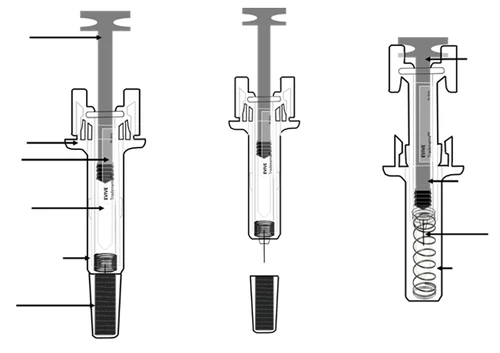
Plunger
Used plunger
Finger grip
Label and expiry date
Syringe barrel

Used
Viewing window of
syringe barrel
Used needle
Safety
Safety device
device of the needle
of the needle
Cap

of the needle
Needle cap After injection
Before injection
removed prior to
administration
Figure A Figure B Figure C
Important: before starting the injection
- Ryzneuta is for subcutaneous use only (inject directly into the fatty layer under the skin).
- Before proceeding with the injection, allow the syringe to reach room temperature for approximately 30 minutes.
- The needle is covered with a grey cap, which must be removed before injection (see Figure B).
- The needle cap contains dry natural rubber (latex). Ryzneuta must not be administered to patients who are allergic to latex.
- The pre-filled syringe is equipped with a needle safety device that automatically covers the needle after injection. This safety device helps prevent accidental needlestick injuries (see Figure C).
- Immediately after injection, dispose of the used syringe in a sharps disposal container. See “Disposal of Ryzneuta” at the end of these instructions.
Warnings:
× Do not use after the expiry date stated on the label of the pre-filled syringe.
× Do not shake the pre-filled syringe.
× Do not reuse the pre-filled syringe.
× Do not remove the grey needle cap from the pre-filled syringe before you are ready to administer the injection.
× Do not use the pre-filled syringe if the carton is open or damaged.
× Do not use the pre-filled syringe if it has been dropped on a hard surface. The syringe may be broken even if no visible damage is apparent. Use a new pre-filled syringe.
× Do not slide the transparent safety device over the needle before administering the injection. Doing so would "activate" or lock the safety device. If the device is already locked, use another pre-filled syringe that has not been activated and is ready for use.
Materials needed for injection:
- One pre-filled syringe of Ryzneuta
- One alcohol swab
- Cotton ball or gauze pad
- Adhesive bandage
- Sharps disposal container – See “Disposal of Ryzneuta” at the end of these instructions.
Preparing the Ryzneuta injection
1
Remove the Ryzneuta carton from the refrigerator.
Take the syringe tray out of the carton and place it on a clean, flat surface.
Allow the syringe to warm to room temperature for about 30 minutes before injecting.
× Do not warm the syringe using a heat source or leave it in direct sunlight.
2
Gather all necessary materials and place them on a clean, well-lit work surface:
- Ryzneuta
- Alcohol swab
- Cotton ball or gauze pad
- Adhesive bandage
- Sharps disposal container or equivalent container meeting local requirements
3
Open the syringe tray by peeling off the lid film.
Grasp the transparent needle safety device to remove the pre-filled syringe from the tray, as shown.
For safety reasons:
× Do not touch the plunger
× Do not touch the grey needle cap
× Do not shake the syringe
4
Inspect the medicine and the pre-filled syringe.
Ensure the solution in the syringe is clear, colourless, and free from particles.
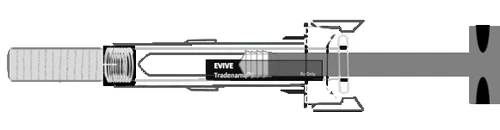
× Do not use the pre-filled syringe if:
- The solution is cloudy, discoloured, or contains particles
- The syringe shows cracks or breaks
- The syringe has been dropped
- The grey needle cap is missing or not fully attached
- The expiry date printed on the label has passed
In any of the above cases, use a new pre-filled syringe.
Preparing the injection site
5
Select an injection site as shown in the figure on the right (shaded areas). Suitable sites include:
- The thigh
- The abdominal area, except for a 5 cm area around the navel
- The upper outer area of the buttocks
- The upper outer area of the arm
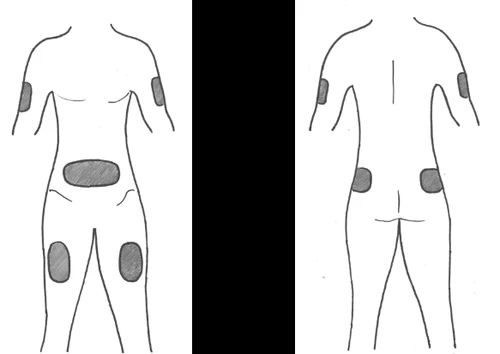



If using the same general area (e.g., thigh or arm), ensure you do not use the exact same spot as the previous injection.
× Do not inject into areas where the skin is tender, red, hardened, or bruised.
× Do not inject into areas with scars or stretch marks.
6
Wash your hands thoroughly with soap and water.
Clean the injection site with an alcohol swab. Allow the skin to dry completely.
× Do not fan or blow on the cleaned skin.
× Do not touch the area again before administering the injection.
Injecting Ryzneuta
7
Hold the pre-filled syringe by the safety device.
Carefully remove the grey needle cap, pointing the needle away from your body.




Always keep your hands away from the needle.
× Do not twist or bend the grey needle cap.
× Do not hold the pre-filled syringe by the plunger.
× Do not re-cap the needle after removal.
Dispose of (throw away) the grey needle cap in regular waste or in a sharps disposal container.
8
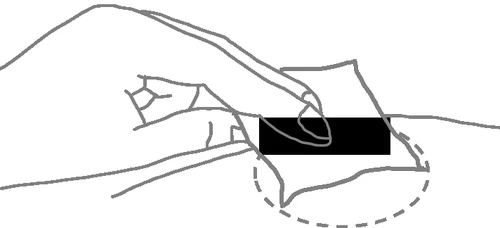
Pinch the patient’s skin by grasping a fold of skin at the chosen injection site to create a stable surface.
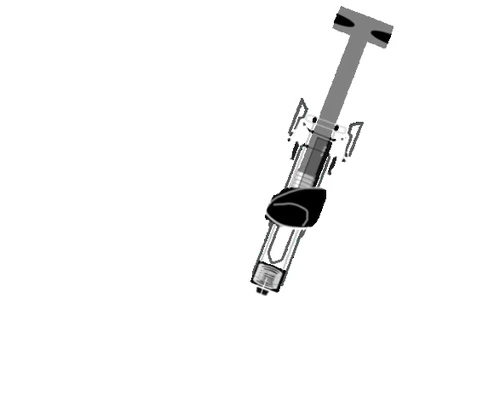
- Keep the skin fold elevated. Insert the needle into the skin at an angle between 45 and 90 degrees.
Important: During injection, keep the skin fold elevated to avoid intramuscular injection, and do not touch the injection site.
9
With slow and steady pressure, push the blue plunger all the way down until it reaches the bottom.


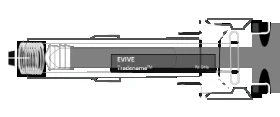


- The plunger must be fully depressed to deliver the complete dose.
10
After the full dose has been injected, continue pushing to activate the safety device.


Slowly release your thumb from the plunger until the safety device is fully activated.

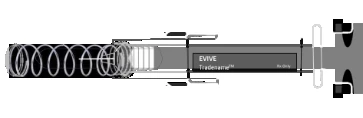

- The needle will automatically retract into the barrel.

- The device will lock in place, covering the needle.
× Do not attempt to push the plunger to re-expose the needle.
11
After needle removal, inspect the syringe barrel.
- If medicine remains in the syringe barrel, this means a full dose was not administered. Check the injection site.
- If blood appears at the site, apply a cotton ball or gauze pad and press gently.
- Apply an adhesive bandage if needed.
× Do not rub the injection site.
Disposal of Ryzneuta
12
Immediately after use, place the used pre-filled syringe into a sharps disposal container.
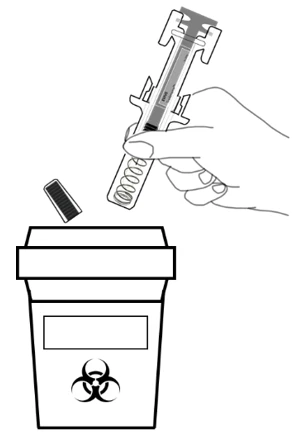
× Do not dispose of any medication via wastewater or household waste.
13
When the sharps disposal container is nearly full, follow local guidelines or regulations for proper disposal of the container.