Rulid
Italy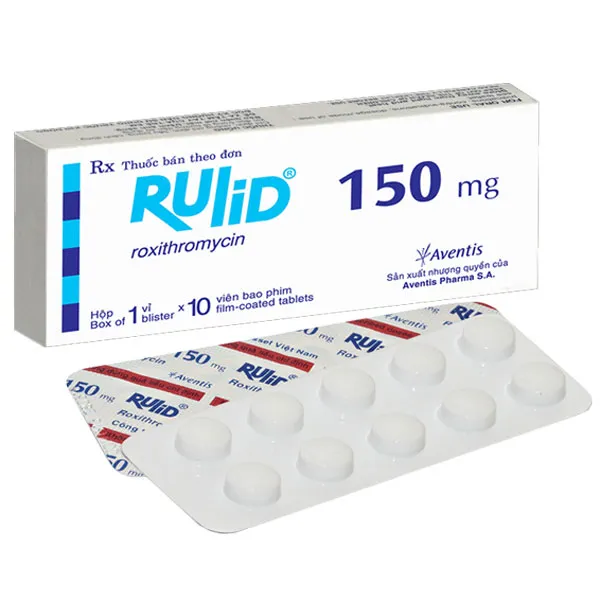
Table of Contents
- Package leaflet: Information for the patient
- Rulid 150 mg film-coated tablets, 300 mg film-coated tablets
- 1. What Rulid is and what it is used for
- 2. What you need to know before taking Rulid
- 3. How to take Rulid
- 4. Possible adverse reactions
- 5. How to store Rulid
- 6. Package contents and other information
Package leaflet: Information for the patient
Rulid 150 mg film-coated tablets, 300 mg film-coated tablets
roxithromycin
Please read this leaflet carefully before taking this medicine because it contains important information for you.
- Keep this leaflet. You may need to read it again.
- If you have any questions, ask your doctor or pharmacist.
- This medicine has been prescribed for you only. Do not give it to others, even if their symptoms are the same as yours, because it could be harmful.
- If you experience any side effects, including those not listed in this leaflet, talk to your doctor or pharmacist. See section 4.
Contents of this leaflet:
- What Rulid is and what it is used for
- What you need to know before taking Rulid
- How to take Rulid
- Possible side effects
- How to store Rulid
- Contents of the pack and other information
1. What Rulid is and what it is used for
Rulid contains roxithromycin, an antibiotic belonging to a group of medicines called macrolides, which
acts against certain bacteria that can cause the following conditions:
- infections of the ear, nose, tonsils, and throat (otorhinolaryngological);
- infections of the bronchi and lungs (bronchopulmonary);
- infections of the oral cavity, gums, and tissues around the tooth (odontostomatological);
- genital infections, except those known as gonococcal;
- skin infections;
- meningitis, where it is used to prevent the onset of the disease (caused by the bacterium called meningococcus) in cases where infection is suspected.
2. What you need to know before taking Rulid
Do not take Rulid
- if you are allergic to roxithromycin, to other antibiotics of the macrolide group (for example azithromycin, clarithromycin or erythromycin) or to any of the other ingredients of this medicine (listed in section 6);
- if you are taking medicines containing ergotamine or other medicines of the family of ergot alkaloids (see section “Other medicines and Rulid”);
- if you are taking medicines with a narrow therapeutic index, such as astemizole, cisapride, pimozide and terfenadine (see section “Other medicines and Rulid”);
- if you have severe liver problems, you must not take the 300 mg tablets.
Warnings and precautions
Talk to your doctor or pharmacist before taking Rulid.
This medicine is not recommended if you have severe liver problems.
If you have mild liver problems, Rulid will be administered only if strictly necessary.
If you develop a severe widespread skin rash, with blisters or peeling of the skin, as well as flu-like symptoms and fever (Stevens-Johnson syndrome), general malaise, fever, chills and muscle pain (toxic epidermal necrolysis), or a red rash with formation of pustules and blisters (exanthematous pustulosis), contact your doctor immediately, as these skin reactions may be life-threatening.
If you have a rare heart condition called “Long QT syndrome” (congenital prolongation of the QT interval), the use of roxithromycin may worsen this condition, especially if you also have other conditions that may predispose to heart rhythm disturbances (arrhythmias), such as untreated potassium or magnesium deficiency (hypokalaemia or hypomagnesaemia), or a condition called bradycardia, where the heartbeat is slowed, or if you are taking medicines that could worsen “Long QT syndrome” (see section “Other medicines and Rulid”).
In all these situations, Rulid will be administered only if strictly necessary.
If you have a disease characterised by severe muscle weakness (myasthenia gravis), the use of roxithromycin could worsen the condition.
If during or shortly after treatment with Rulid you experience episodes of severe diarrhoea, possibly with bleeding, this could be a sign of intestinal inflammation known as “pseudomembranous colitis”. In this case, stop treatment immediately and contact your doctor without delay.
Laboratory tests
During treatment, especially if the treatment lasts a long time (e.g. more than 2 weeks), your doctor will prescribe blood tests to monitor blood cells and to check the proper functioning of your liver and kidneys.
Other medicines and Rulid
Tell your doctor or pharmacist if you are taking, have recently taken, or might take any other medicines.
The use of Rulid must be avoided at the same time as the following medicines:
- medicines of the family of vasoconstrictive ergot alkaloids (used mainly in the treatment of migraine, including: bromocriptine, ergotamine, dihydroergotamine, dihydroergotoxine, ergonovine, lisuride, methysergide, nicergoline), because taking them together with roxithromycin may cause severe narrowing of blood vessels (ergotism), which could lead to irreversible damage to limbs (loss of hands or feet due to gangrene) (see section “Do not take Rulid”);
- astemizole (used for allergic conditions), cisapride (used to treat gastro-oesophageal reflux), pimozide (used to treat certain psychoses), terfenadine (used to treat certain allergies such as allergic rhinitis, conjunctivitis or dermatitis): taking Rulid at the same time may increase the risk of adverse effects caused by these medicines on heart rhythm (arrhythmias, QT interval prolongation and torsades de pointes) (see section “Do not take Rulid”).
The use of Rulid is generally not recommended if you are taking the following medicines:
- quinidine, procainamide, disopyramide, dofetilide and amiodarone (antiarrhythmics used to prevent or correct abnormal heart rhythms);
- citalopram (an antidepressant);
- methadone (an opioid used as an analgesic or to treat drug dependence);
- phenothiazines (a group of compounds used to treat nausea, vomiting and certain mental illnesses);
- tricyclic antidepressants, used to treat depression;
- moxifloxacin (an antibiotic belonging to the fluoroquinolone group, used to treat certain infections);
- fluconazole and pentamidine (antifungals used to treat fungal infections);
- telaprevir (a medicine used to treat viral infections); roxithromycin and all the medicines listed above can affect heart rate. For this reason, taking Rulid together with these medicines may cause an abnormal heart condition (prolongation of the QT interval).
- hydroxychloroquine or chloroquine (used to treat conditions such as rheumatoid arthritis, or to treat or prevent malaria): taking these medicines together with Rulid may increase the risk of potentially life-threatening heart-related side effects.
- warfarin and other anticoagulants (medicines used to prevent blood clots); using roxithromycin together with these medicines may alter the blood’s ability to clot properly. Your doctor will perform specific blood tests to monitor this function if they decide to prescribe Rulid together with one of these medicines.
- disopyramide (used to treat abnormal heart rhythms); roxithromycin may increase the blood levels of this medicine. Your doctor may monitor your electrocardiogram and disopyramide blood levels if they decide to prescribe Rulid together with this medicine.
Rulid will be prescribed only if strictly necessary if you are also taking the following medicines:
- digoxin (a medicine belonging to the group of cardiac glycosides, used to treat heart failure, i.e. the inability of the heart to supply adequate blood to the body); roxithromycin may increase the absorption of digoxin, leading to episodes of toxicity that may manifest as nausea, vomiting, diarrhoea, headache or dizziness, or disturbances in heart rhythm. Your doctor may monitor your electrocardiogram and digoxin blood levels if they decide to prescribe Rulid together with this medicine, especially if the above-mentioned signs of toxicity occur.
- medicines used to lower cholesterol (called HMG-CoA reductase inhibitors); roxithromycin may increase the effect of these medicines, increasing the risk of muscle-related adverse effects (such as breakdown of skeletal muscle cells, known as “rhabdomyolysis”). Your doctor may prescribe specific tests to monitor for possible muscle damage if they decide to prescribe Rulid together with one of these medicines.
- midazolam (a sedative); roxithromycin (at the 300 mg dose) may enhance the effects of midazolam.
- theophylline (used to treat various respiratory diseases), cyclosporine A (used to prevent organ transplant rejection) and rifabutin (used to treat tuberculosis); roxithromycin may slightly increase the blood concentrations of these medicines.
- bromocriptine (used to treat certain breast conditions or Parkinson’s disease); roxithromycin may slightly increase the blood levels of this medicine, increasing the risk of adverse effects.
Pregnancy and breastfeeding
If you are pregnant, think you may be pregnant, are planning to become pregnant, or are breastfeeding, consult your doctor or pharmacist before taking this medicine.
Pregnancy
The use of Rulid is not recommended during the first trimester of pregnancy. In later stages of pregnancy, it may be taken only if your doctor considers it strictly necessary.
Breastfeeding
Avoid taking Rulid while breastfeeding, as small amounts may pass into breast milk. If you are breastfeeding, your doctor will decide whether to discontinue breastfeeding or stop treatment with Rulid.
Driving and using machines
Rulid may affect your ability to drive or use machinery.
Do not drive or operate machinery requiring special attention while taking this medicine, as it may cause dizziness, which can reduce reflex responsiveness and level of alertness, as well as visual disturbances and blurred vision, which may impair your ability to drive or operate machinery.
Rulid contains glucose
If you have been diagnosed by your doctor with an intolerance to certain sugars, consult your doctor before taking this medicine.
3. How to take Rulid
Take this medicine exactly as directed by your doctor or pharmacist. If you have
any doubts, consult your doctor or pharmacist.
The recommended dose is 300 mg per day.
You may take 1 tablet of 150 mg every 12 hours (for a total of 2 tablets of 150 mg per
day), or 1 tablet of 300 mg every 24 hours (1 tablet of 300 mg per day),
preferably before meals.
If you take more Rulid than you should
If you take more than the prescribed dose, contact your doctor immediately or go
to the nearest hospital emergency department.
If you forget to take Rulid
Do not take a double dose to make up for the missed dose.
If you stop treatment with Rulid
If you have any doubts about using this medicine, consult your doctor or pharmacist.
4. Possible adverse reactions
Like all medicines, this medicine can cause adverse reactions, although not everyone experiences them.
The following adverse reactions are important and require immediate attention if they occur.
Stop taking this medicine and contact your doctor immediately if you experience any of the following:
- difficulty breathing or swallowing, swelling of the face, hands and feet, eyes, lips and/or tongue (angioedema);
- skin irritation, difficulty breathing, nausea, vomiting or diarrhoea, dizziness or loss of consciousness: these may be symptoms of a severe allergic reaction (anaphylactic shock);
- severe skin reactions:
- skin changes such as hives, development of red papules or blisters, or widespread blisters and peeling, particularly on the legs, arms, hands and feet, which may extend to the face and lips, occasionally accompanied by fever. These may be symptoms of serious skin diseases such as erythema multiforme, toxic epidermal necrolysis or Stevens-Johnson syndrome;
- red, scaly rash with formation of pustules and blisters (exanthematous pustulosis). The frequency of this adverse reaction is unknown (cannot be estimated from the available data).
- widespread red or purple spots on the skin, with or without joint or muscle pain, weakness and fever; these may be symptoms of inflammation of blood vessel walls (purpura);
- severe intestinal inflammation characterized by episodes of severe diarrhoea, possibly with bleeding (pseudomembranous colitis).
Common (may affect up to 1 in 10 people)
- dizziness, headache;
- nausea, vomiting, stomach pain (dyspepsia), diarrhoea;
- skin rash.
Uncommon (may affect up to 1 in 100 people)
- increased number of a type of white blood cells in the blood (eosinophilia); itching (urticaria).
Frequency not known (cannot be estimated from the available data)
- changes in heart rhythm (prolongation of QT interval, ventricular tachycardia, torsades de pointes);
- development of new infections superimposed on the one being treated (superinfections);
- severe reduction in the number of white blood cells in the blood (agranulocytosis, neutropenia) and in the number of platelets in the blood (thrombocytopenia);
- hallucinations, confusion;
- altered sensation in limbs or other body parts (paraesthesia);
- alteration or loss of taste (dysgeusia or ageusia);
- alteration or loss of smell (parosmia or anosmia);
- diarrhoea with bleeding;
- infection of the pancreas (pancreatitis);
- infection of the liver (cholestatic or acute hepatocellular hepatitis), yellowing of the skin or whites of the eyes (jaundice);
- increased blood test values for liver enzymes known as ASAT, ALAT and alkaline phosphatase;
- breathing difficulty (bronchospasm);
- temporary deafness, reduced hearing ability (hypacusis), unpleasant ringing sensation in the ears (tinnitus);
- vertigo;
- visual impairment;
- problems with your vision (blurred vision).
Reporting of adverse reactions
If you experience any adverse reaction, including those not listed in this leaflet, please inform your doctor or pharmacist. You may also report adverse reactions directly via the national reporting system at the following website: http://www.agenziafarmaco.gov.it/content/come-segnalare-una-sospetta-reazione-avversa.
By reporting adverse reactions, you can help provide more information on the safety of this medicine.
5. How to store Rulid
Rulid 150 mg film-coated tablets
Do not store above 25°C.
Rulid 300 mg film-coated tablets
This medicine does not require any special storage conditions.
Keep this medicine out of the sight and reach of children.
Do not use this medicine after the expiry date stated on the pack after “Exp.”.
The expiry date refers to the last day of that month.
Do not dispose of any medicine via wastewater or household waste. Ask your pharmacist how to dispose of
medicines you no longer use. This will help protect the environment.
6. Package contents and other information
What Rulid contains
- The active substance is roxithromycin. Each 150 mg film-coated tablet contains 150 mg of roxithromycin. Each 300 mg film-coated tablet contains 300 mg of roxithromycin.
- The other components are: poloxamers, povidone, hydroxypropylcellulose, anhydrous colloidal silica, corn starch, magnesium stearate, talc, propylene glycol, anhydrous glucose, hypromellose, titanium dioxide.
Description of the appearance of Rulid and contents of the pack
Rulid 150 mg film-coated tablets are supplied in a box containing 12 tablets in a blister.
Rulid 300 mg film-coated tablets are supplied in a box containing 6 tablets in a blister.
Marketing Authorisation Holder and Manufacturer
Marketing Authorisation Holder
Amdipharm Limited
Unit 17
Northwood House
Northwood Crescent
Northwood
Dublin 9
D09 V504
Ireland
Manufacturer
Opella Healthcare International SAS - 56, Route de Choisy - 60200 Compiègne (France)
Famar Italia Spa
Via L. Zambeletti, 25 - 20021,
Baranzate (Milan) - Italy
11/12/2025