Rosuvastatin Zentiva
Italy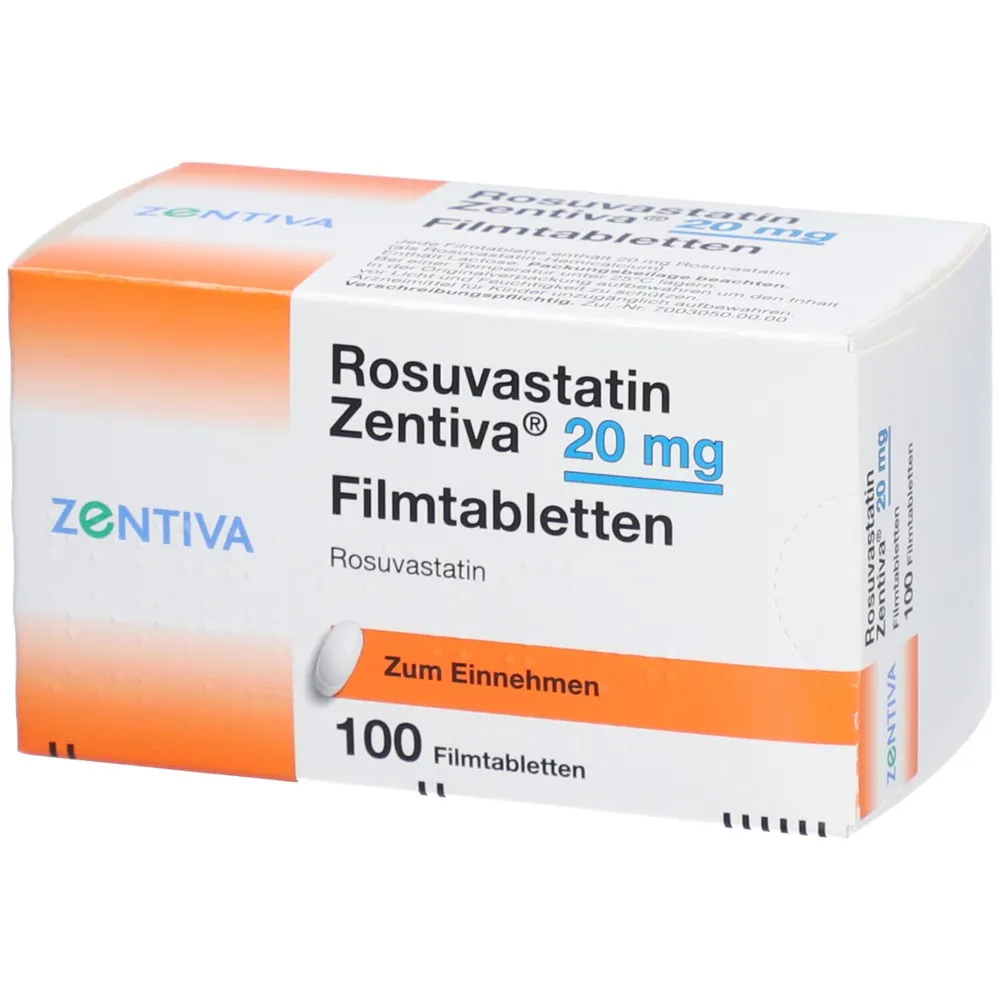
Table of Contents
- Patient Information Leaflet
- Rosuvastatin Zentiva 5 mg film-coated tablets, 10 mg film-coated tablets, 20 mg film-coated tablets, 40 mg film-coated tablets
- 1. What Rosuvastatina Zentiva is and what it is used for
- 2. What you need to know before taking Rosuvastatin Zentiva
- 3. How to take Rosuvastatina Zentiva
- 4. Possible side effects
- 5. How to store Rosuvastatin Zentiva
Patient Information Leaflet
Rosuvastatin Zentiva 5 mg film-coated tablets, 10 mg film-coated tablets, 20 mg film-coated tablets, 40 mg film-coated tablets
Generic medicine
Please read this leaflet carefully before taking this medicine, as it contains important information for you.
- Keep this leaflet. You may need to read it again.
- If you have any questions, ask your doctor or pharmacist.
- This medicine has been prescribed for you only. Do not give it to others, even if they have the same symptoms as yours, because it could be harmful.
- If you experience any side effects, including those not listed in this leaflet, inform your doctor or pharmacist. See section 4.
Contents of this leaflet:
- What Rosuvastatin Zentiva is and what it is used for
- What you need to know before taking Rosuvastatin Zentiva
- How to take Rosuvastatin Zentiva
- Possible side effects
- How to store Rosuvastatin Zentiva
- Contents of the pack and other information
1. What Rosuvastatina Zentiva is and what it is used for
Rosuvastatina Zentiva belongs to a group of medicines called statins.
You have been prescribed Rosuvastatina Zentiva because:
- your cholesterol level is high. This means you are at risk of heart attack or stroke. Rosuvastatina Zentiva is used in adults, adolescents, and children aged 6 years and older to treat high cholesterol.
You have been prescribed a statin because changing your diet and increasing physical activity
have not been sufficient to correct your cholesterol levels. While taking
Rosuvastatina Zentiva, you must continue a cholesterol-lowering diet and maintain
regular physical activity.
Alternatively
- you have other factors that increase your risk of heart attack, stroke, or related health problems.
Heart attack, stroke, and related health problems can be caused by a disease called
atherosclerosis. Atherosclerosis is due to the buildup of fatty deposits inside the
arteries.
Why it is important to keep taking Rosuvastatina Zentiva
Rosuvastatina Zentiva is used to correct levels of fatty substances in the blood known as
lipids, the most common of which is cholesterol.
There are different types of cholesterol in the blood: "bad" cholesterol (LDL-C) and "good" cholesterol (HDL-C).
- Rosuvastatina Zentiva can reduce "bad" cholesterol and increase "good" cholesterol.
- Rosuvastatina Zentiva works by helping to block the body's production of "bad" cholesterol. It also improves the body's ability to remove "bad" cholesterol from the blood.
For many people, high cholesterol does not affect how they feel, as it causes no symptoms. However, if high cholesterol is not treated, fatty deposits can build up in the walls of blood vessels, leading to narrowing.
Sometimes, these narrowed blood vessels can become blocked, interrupting blood flow to the heart or brain and causing a heart attack or stroke. By lowering cholesterol levels, the risk of having a heart attack, stroke, or related health problems is reduced.
You must continue taking Rosuvastatina Zentiva, even if your cholesterol levels
have returned to normal, to prevent them from rising again, which could lead to the formation of fatty deposits. However, you must stop taking it if your doctor tells you to do so or if you become pregnant.
2. What you need to know before taking Rosuvastatin Zentiva
Do not take Rosuvastatin Zentiva
- if you are allergic to rosuvastatin or to any of the other ingredients of this medicine (listed in section 6);
- if you are pregnant or breastfeeding. If you become pregnant while taking Rosuvastatin Zentiva, stop taking it immediately and inform your doctor. Women must avoid pregnancy during treatment with Rosuvastatin Zentiva by using appropriate contraceptive measures;
- if you have liver disease;
- if you have severe kidney problems;
- if you have repeated or unexplained muscle spasms or muscle pain;
- if you are taking a medicine containing cyclosporine (used, for example, after organ transplant).
If you fall into any of the above categories (or have any doubts), you must consult your doctor and inform them.
Additionally, do not take Rosuvastatin Zentiva 40 mg (the highest dose):
- if you have moderate kidney problems (ask your doctor if in doubt);
- if your thyroid gland is not functioning properly;
- if you have repeated or unexplained muscle spasms or pain, a personal or family history of muscle disorders, or have previously experienced muscle problems while taking other cholesterol-lowering medicines;
- if you regularly consume large amounts of alcohol;
- if you are of Asian origin (Japanese, Chinese, Filipino, Vietnamese, Korean, or Indian);
- if you are taking other cholesterol-lowering medicines called fibrates.
If you fall into any of the above categories (or have any doubts), you must consult your doctor.
Warnings and precautions
Talk to your doctor or pharmacist before taking Rosuvastatin Zentiva
- if you have kidney problems;
- if you have liver problems;
- if you have had repeated or unexplained muscle spasms or pain, a personal or family history of muscle disorders, or have previously experienced muscle problems while taking other cholesterol-lowering medicines. Inform your doctor immediately if you experience unexplained muscle spasms or pain, especially if accompanied by malaise or fever. Also, inform your doctor or pharmacist if you have persistent muscle weakness;
- if you regularly consume large amounts of alcohol;
- if your thyroid gland is not functioning properly;
- if you have severe respiratory failure;
- if you are taking other cholesterol-lowering medicines called fibrates. Read this leaflet carefully, even if you have previously taken other medicines for high cholesterol;
- if you are taking medicines used to treat HIV infections, such as ritonavir with lopinavir and/or atazanavir; please read section “Other medicines and Rosuvastatin Zentiva”;
- if you are over 70 years of age (as your doctor will choose the appropriate starting dose of Rosuvastatin Zentiva for you);
- if you are of Asian origin – such as Japanese, Chinese, Filipino, Vietnamese, Korean, or Indian (as your doctor will choose the appropriate starting dose of Rosuvastatin Zentiva for you);
- if you are taking antibiotics containing fusidic acid, please read the section “Other medicines and Rosuvastatin Zentiva”.
Children and adolescents
- if the patient is under 6 years of age: Rosuvastatin Zentiva must not be administered to children under 6 years of age;
- if the patient is under 18 years of age: Rosuvastatin Zentiva 40 mg tablets are not suitable for use in children and adolescents under 18 years of age.
If any of these conditions apply to you (or if you are unsure):
- do not take Rosuvastatin Zentiva 40 mg (the highest dose) and consult your doctor or pharmacist before taking any starting dose of Rosuvastatin Zentiva.
In a small number of people, statins may have a negative effect on the liver, which can be detected by a simple blood test measuring increased levels of liver enzymes.
For this reason, your doctor will request this test (liver function test) before and during treatment with Rosuvastatin Zentiva.
During treatment with this medicine, your doctor will closely monitor whether you have diabetes or are at risk of developing diabetes. Risk factors for developing diabetes include high blood sugar and fat levels, being overweight, and having high blood pressure.
Other medicines and Rosuvastatin Zentiva
Inform your doctor or pharmacist if you are taking, have recently taken, or might take any other medicines.
Inform your doctor if you are taking any of the following medicines:
- cyclosporine (used, for example, after organ transplant);
- warfarin or clopidogrel (or any other medicines used to thin the blood);
- fibrates (such as gemfibrozil, fenofibrate) or any other medicines used to lower cholesterol (such as ezetimibe);
- antacids (used to neutralize stomach acid);
- erythromycin (an antibiotic);
- fusidic acid (an antibiotic – see “Warnings and precautions”);
- an oral contraceptive (the pill);
- hormone replacement therapy or ritonavir with lopinavir and/or atazanavir (used to treat HIV infection – see “Warnings and precautions”).
The effects of these medicines may be altered by Rosuvastatin Zentiva, or these medicines may alter the effect of Rosuvastatin Zentiva.
Pregnancy, breastfeeding, and fertility
If you are pregnant, think you might be pregnant, planning to become pregnant, or breastfeeding, consult your doctor or pharmacist before taking this medicine.
Do not take Rosuvastatin Zentiva if you are pregnant or breastfeeding. If you become pregnant while taking Rosuvastatin Zentiva, stop taking it immediately and contact your doctor. Women must avoid becoming pregnant while taking Rosuvastatin Zentiva by using a contraceptive method.
Driving and using machines
Most people can drive and operate machinery while taking Rosuvastatin Zentiva – it does not affect their ability to drive or operate machinery. However, some people may experience dizziness during treatment with Rosuvastatin Zentiva. If you experience dizziness, consult your doctor before driving or operating machinery.
Rosuvastatin Zentiva contains lactose monohydrate
Rosuvastatin Zentiva 5 mg film-coated tablets contain 30 mg of lactose monohydrate.
Rosuvastatin Zentiva 10 mg film-coated tablets contain 60 mg of lactose monohydrate.
Rosuvastatin Zentiva 20 mg film-coated tablets contain 120 mg of lactose monohydrate.
Rosuvastatin Zentiva 40 mg film-coated tablets contain 240 mg of lactose monohydrate.
If your doctor has diagnosed you with an intolerance to certain sugars, contact them before taking this medicine.
3. How to take Rosuvastatina Zentiva
Take this medicine exactly as directed by your doctor or pharmacist.
If you have any doubts, consult your doctor or pharmacist.
Usual dose in adults
If you are taking Rosuvastatina Zentiva for high cholesterol:
Starting dose: Treatment with Rosuvastatina Zentiva should begin at a dose of 5 mg or 10 mg,
even if you have previously taken high doses of other statins.
A 5 mg dose can be obtained by splitting a 10 mg tablet in half along the break line.
The choice of starting dose depends on:
- your cholesterol level,
- your risk level for heart attack or stroke,
- whether you have any risk factors that make you more susceptible to possible side effects.
Check with your doctor or pharmacist which starting dose of rosuvastatin is best for you.
Your doctor may decide to prescribe a lower dose (5 mg) if:
- you are of Asian origin (Japanese, Chinese, Filipino, Vietnamese, Korean, or Indian);
- you are over 70 years old;
- you have moderate kidney problems;
- you are at risk of muscle pain or muscle damage (myopathy).
Dose increase and maximum daily dose
Your doctor may decide to increase your dose in order to determine the most appropriate dose for you.
If starting at 5 mg, your doctor may, if necessary, double the dose to 10 mg, then to 20 mg, and then to 40 mg (2x20 mg).
If starting at 10 mg, your doctor may, if necessary, double the dose to 20 mg and then to 40 mg.
There should be an interval of 4 weeks between each dose adjustment.
The maximum daily dose of Rosuvastatina Zentiva is 40 mg (2x20 mg). This dose is used only in patients with high cholesterol and a high risk of heart attack or stroke, whose cholesterol levels have not been sufficiently lowered with the 20 mg dose.
If you are taking Rosuvastatina Zentiva to reduce the risk of heart attack, stroke, or heart-related problems, the recommended dose is 20 mg daily. However, your doctor may decide to use a lower dose if you have any of the other risk factors listed above.
Use in children and adolescents aged 6 to 17 years
The usual starting dose is 5 mg. Your doctor may increase the dose to achieve the most appropriate Rosuvastatina Zentiva dose for you.
The maximum daily dose of Rosuvastatina Zentiva is 10 mg for children aged 6 to 9 years and 20 mg for children aged 10 to 17 years.
The tablet should be taken once daily.
Rosuvastatina Zentiva 40 mg tablets must not be used in children.
How to take the tablets
Swallow the tablets whole with a glass of water.
Take Rosuvastatina Zentiva once daily. You may take the tablet at any time of day, with or without food.
Try to take the tablets at the same time each day; this will help you remember to take them.
Regular cholesterol checks
It is important to return to your doctor regularly to monitor your cholesterol levels, to ensure that your cholesterol has reached and remains at the target level. Your doctor may decide to increase your dose to achieve the most appropriate amount of Rosuvastatina Zentiva for you.
If you take more Rosuvastatina Zentiva than you should
Contact your doctor or the nearest hospital for advice.
If you go to hospital or receive treatment for another condition, inform the hospital doctor that you are taking Rosuvastatina Zentiva.
If you forget to take Rosuvastatina Zentiva
Do not panic. Take the next dose at the usual time. Do not take a double dose to make up for the missed dose.
If you stop taking Rosuvastatina Zentiva
Inform your doctor if you intend to stop taking Rosuvastatina Zentiva. If you stop taking Rosuvastatina Zentiva, your cholesterol levels may rise again.
If you have any questions about how to use this medicine, ask your doctor or pharmacist.
4. Possible side effects
Like all medicines, this medicine can cause side effects, although not everyone gets them.
It is important to be aware of which of these side effects may occur.
They are usually mild and disappear in a short time.
Stop taking Rosuvastatina Zentiva and seek immediate medical help if you experience any of the following allergic reactions (rare side effect):
- difficulty breathing, with or without swelling of the face, lips, tongue and/or throat;
- swelling of the face, lips, tongue and/or throat which may cause difficulty swallowing;
- severe itching of the skin (with raised hives).
Also, stop taking Rosuvastatina Zentiva and contact your doctor immediately if you experience unusual muscle pains or aches that last longer than expected. Muscle-related symptoms are more common in children and adolescents than in adults. As with other statins, a very small number of people have experienced muscle-related side effects, and rarely these have progressed to a condition causing muscle damage, potentially life-threatening, known as rhabdomyolysis (rare side effect).
The adverse reactions listed below have been reported with rosuvastatin (the active substance in the medicine):
Possible common side effects (may affect up to 1 in 10 people):
- headache
- stomach pain
- constipation
- feeling unwell
- muscle pain
- feeling weak
- dizziness
- increased amount of protein in the urine – values usually return to normal on their own without needing to stop taking Rosuvastatina Zentiva (only for Rosuvastatina Zentiva 40 mg)
- diabetes. This is more likely if you have high levels of sugar and fats in your blood, are overweight, or have high blood pressure. Your doctor will monitor your blood sugar levels during treatment with this medicine.
Possible uncommon side effects (may affect up to 1 in 100 people):
- skin rash, itching, and other skin reactions
- increased amount of protein in the urine – these usually return to normal on their own without needing to stop treatment with Rosuvastatina Zentiva (only for Rosuvastatina Zentiva 5-10 mg and 20 mg).
Possible rare side effects (may affect up to 1 in 1,000 people):
- severe allergic reactions – signs include swelling of the face, lips, tongue and/or throat, difficulty swallowing and breathing, severe itching of the skin (with raised hives). If you suspect you are having an allergic reaction, stop taking Rosuvastatina Zentiva and seek immediate medical help
- muscle damage in adults – as a precaution, stop taking Rosuvastatina Zentiva and contact your doctor immediately if you have unusual muscle pains or aches that last longer than expected
- severe stomach pain (inflamed pancreas)
- increased liver enzymes in the blood
- abnormally low number of blood cells involved in blood clotting.
Possible very rare side effects (may affect up to 1 in 10,000 people):
- jaundice (yellowing of the skin and eyes)
- hepatitis (liver inflammation)
- joint pain
- traces of blood in the urine
- nerve damage in arms and legs (numbness)
- memory loss
- breast enlargement in men (gynecomastia)
Side effects with unknown frequency may include (frequency cannot be determined from available data):
- Depression
- Persistent muscle weakness
- Tendon injury
- Sleep disorders, including insomnia and nightmares
- Diarrhoea (loose stools)
- Stevens-Johnson syndrome (characterised by blisters on the skin, mouth, eyes and genitals)
- Cough
- Shortness of breath
- Oedema (swelling)
- Sexual problems
- Breathing problems, including persistent cough and/or shortness of breath or fever
Reporting of side effects
If you get any side effects, including any not listed in this leaflet, talk to your doctor or pharmacist. You can also report side effects directly via the national reporting system at
www.agenziafarmaco.gov.it/it/responsabili.
By reporting side effects, you can help provide more information on the safety of this medicine.
5. How to store Rosuvastatin Zentiva
Keep this medicine out of the sight and reach of children.
Do not use this medicine after the expiry date stated on the packaging after "Exp". The expiry date refers to the last day of that month.
Store in the original packaging to protect the medicine from light and moisture.
Do not dispose of any medicine via wastewater or household waste. Ask your pharmacist how to dispose of medicines no longer required. This will help protect the environment.
- Contents of the pack and other information
What Rosuvastatin Zentiva contains
The active substance is rosuvastatin.
Each film-coated tablet contains 5 mg, 10 mg, 20 mg, or 40 mg of rosuvastatin as rosuvastatin calcium.
The other components are:
Core: lactose monohydrate, microcrystalline cellulose, sodium croscarmellose, anhydrous colloidal silica, magnesium stearate.
Coating layer: hypromellose 2910/5, Macrogol 6000, titanium dioxide (E171), talc.
Rosuvastatin Zentiva 10 mg, 20 mg, and 40 mg also contain iron oxide red (E172).
Description of the appearance of Rosuvastatin Zentiva and contents of the pack
Rosuvastatin Zentiva 5 mg film-coated tablets are white or almost white, film-coated, round tablets with a diameter of approximately 5.1 mm.
Rosuvastatin Zentiva 10 mg film-coated tablets are light pink, film-coated, oval, biconvex tablets with a division line, approximately 8.8 mm in length and 4.5 mm in width. The tablets can be divided into two equal doses.
Rosuvastatin Zentiva 20 mg film-coated tablets are pink, film-coated, oval, biconvex tablets, approximately 11.1 mm in length and 5.6 mm in width.
Rosuvastatin Zentiva 40 mg film-coated tablets are dark pink, film-coated, oval, biconvex tablets, approximately 14.0 mm in length and 7.0 mm in width.
Pack sizes:
5 mg: 14, 20, 28, 30, 56, 60, 84, 90 film-coated tablets
10 mg: 14, 20, 28, 30, 60, 84, 90 film-coated tablets
20 mg and 40 mg: 14, 28, 30, 84, 90 film-coated tablets
Not all pack sizes may be marketed.
Marketing Authorisation Holder and Manufacturer
Marketing Authorisation Holder
Zentiva Italia S.r.l.
Viale Bodio 37/B
20158 Milan, Italy
Manufacturer
Zentiva, k.s.
U Kabelovny 130, Dolní Měcholupy
10, 102 37 Prague
Czech Republic
This medicine is authorised in the European Economic Area countries under the following names:
Rosuvastatin Zentiva 5 mg/ 10 mg/ 20 mg/ 40 mg filmom
Slovakia
obalené tablety
Rosuvastatin 5 mg/ 10 mg/ 20 mg/ 40 mg film-coated
United Kingdom
tablets
Cyprus, Greece Rosuvastatin/Zentiva
Rosuvastatin Zentiva 5 mg/ 10 mg/ 20 mg/ 40 mg
Hungary
filmtabletta
Italy, Portugal Rosuvastatina Zentiva
Poland Rosucard
Rosuvastatina Zentiva 5 mg/ 10 mg/ 20 mg/ 40 mg
Spain
comprimidos recubiertos con película EFG
Rosuvastatin Sanofi 5 mg/ 10 mg/ 20 mg/ 40 mg
Luxembourg
comprimés pelliculés
Rosuvastatin Sanofi 5 mg/ 10 mg/ 20 mg/ 40 mg
Belgium
filmomhulde tabletten
Rosuvastatine Zentiva 5 mg / 20 mg, comprimé pelliculé
France
Rosuvastatine Zentiva 10 mg, comprimé pelliculé sécable