Rivotril
Italy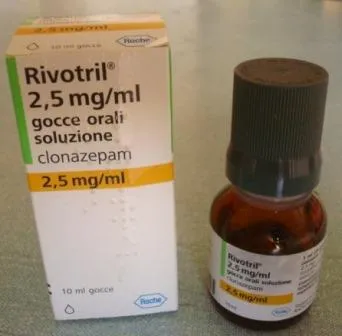
Table of Contents
- Package leaflet: Information for the patient
- Rivotril 0.5 mg tablets, 2 mg tablets, 2.5 mg/mL oral drops, solution
- 1. What Rivotril is and what it is used for
- 2. What you should know before using Rivotril
- 3. How to use Rivotril
- 4. Possible side effects
- 5. How to store Rivotril
- 6. Package contents and other information
Package leaflet: Information for the patient
Rivotril 0.5 mg tablets, 2 mg tablets, 2.5 mg/mL oral drops, solution
Clonazepam
Please read all of this leaflet carefully before taking this medicine because it contains important information for you.
- Keep this leaflet. You may need to read it again.
- If you have any questions, ask your doctor or pharmacist.
- This medicine has been prescribed for you only. Do not give it to others, even if their symptoms are the same as yours, as it could be harmful.
- If you experience any side effect, including those not listed in this leaflet, talk to your doctor or pharmacist. See section 4.
Contents of this leaflet:
- What Rivotril is and what it is used for
- What you need to know before taking Rivotril
- How to take Rivotril
- Possible side effects
- How to store Rivotril
- Contents of the pack and other information
1. What Rivotril is and what it is used for
Rivotril contains the active substance clonazepam, which belongs to a class of medicines called
"benzodiazepines".
- Rivotril is indicated in newborns and children for the treatment of certain forms of epilepsy (a disorder of the nervous system characterized by seizures and uncontrollable body movements), including:
- typical or atypical absence seizures;
- generalized tonic-clonic seizures, primary or secondary;
- status epilepticus in all its forms (see below).
- Rivotril is also indicated for the treatment of epilepsy in adults and for focal seizures (when the epileptic seizure is due to abnormal activity in a specific part of the brain, with symptoms depending on the affected brain area).
What are typical or atypical absence seizures, generalized tonic-clonic seizures (primary or secondary), status epilepticus, and focal seizures?
Typical or atypical absence seizures are a type of epilepsy in which the person suddenly stops, stares blankly into space, sometimes performs automatic movements or gestures, and may utter meaningless words or phrases. After a few seconds (2–15), the person resumes the previous activity as if nothing had happened.
Generalized tonic-clonic seizures, whether primary or secondary, are seizures associated with epilepsy, characterized by an initial phase lasting only a few seconds, during which the person loses consciousness and muscles suddenly stiffen, followed by a second phase in which the muscles rapidly contract and relax, causing convulsions.
Status epilepticus in all its forms is a serious complication of epilepsy characterized by prolonged seizures and/or lack of recovery between seizures.
Focal seizures are epileptic seizures caused by abnormal activity in a specific part of the brain, with manifestations depending on the affected brain region.
Talk to your doctor if you do not feel better or if you feel worse.
2. What you should know before using Rivotril
Do not use Rivotril
- if you are allergic to clonazepam or to any of the other ingredients of this medicine (listed in section 6);
- if you suffer from severe liver disease;
- if you have untreated open-angle glaucoma (an eye disease caused by increased pressure of the fluid inside the eye);
- if you have acute closed-angle glaucoma;
- if you suffer from severe renal insufficiency (severe reduction in kidney function);
- if you suffer from severe respiratory insufficiency (severe reduction in respiratory system activity);
- if you abuse medicines, drugs, or alcohol.
Do not take Rivotril during the first 3 months of pregnancy.
Do not give Rivotril to someone who is in a coma (a deep state of unconsciousness).
Do not take Rivotril together with alcohol or other medicines that may have a calming effect on the
central nervous system (see sections “Other medicines and Rivotril” and “Rivotril and alcohol”), as together
they could cause extremely serious adverse effects.
Warnings and precautions
Talk to your doctor or pharmacist before using Rivotril.
In particular, inform your doctor if:
- you have previously suffered from depression or psychotic disorders;
- you have previously attempted suicide (tried to kill yourself);
- you suffer from various forms of seizures (uncontrolled body movements). Rivotril may increase the frequency or trigger the onset of seizures; therefore, your doctor may add anticonvulsant medicines (medicines that block and reduce seizures) to your treatment or increase their dose if you are already taking them;
- you have difficulty swallowing, as Rivotril may increase salivation;
- you suffer from chronic respiratory diseases, since Rivotril may increase mucus production in the bronchi, causing breathing blockage;
- you have airway obstruction, as adverse effects on the respiratory system may worsen;
- you have brain damage, as adverse effects on the respiratory system may worsen;
- you suffer from sleep apnea (temporary cessation of breathing during sleep);
- you suffer from kidney disorders, as Rivotril is eliminated through urine and may accumulate in the kidneys;
- you suffer from liver disorders, as incorrect use of this medicine could worsen your health condition;
- you suffer from a rare inherited blood disease called “porphyria”;
- you suffer from ataxia (a disease causing difficulty in coordinating movements);
- you suffer from severe myasthenia gravis (a disease affecting muscles, manifesting as weakness and fatigue);
- you have previously abused medicines, drugs, or alcohol, as you are more likely to develop habituation and dependence on this medicine.
- Lactose intolerance (see section “Rivotril tablets contain lactose”).
Suicidal thoughts and/or behaviour
Some studies have shown that the use of antiepileptic medicines, such as clonazepam, slightly increases
the risk of suicidal thoughts and/or behaviour.
If you experience such thoughts or behaviours while being treated with clonazepam, inform your doctor immediately.
The doctor will then provide appropriate supportive therapy. In such cases, caregivers should also
inform the doctor immediately if they notice these signs.
Additionally, if you experience restlessness, irritability, aggression, agitation, nightmares, hallucinations,
anxiety, delirium, anger, psychosis, inappropriate behaviour, or other negative behaviours, inform your doctor immediately.
The doctor will advise you whether and how to discontinue treatment with Rivotril.
Benzodiazepines may cause the onset of anterograde amnesia (inability to memorize recent experiences);
this is particularly likely after taking high doses.
Blood tests
If your treatment with Rivotril is prolonged, your doctor may ask you to undergo appropriate blood tests.
Adverse effects
During treatment with Rivotril, you may experience adverse effects due to prolonged use and/or high doses
of this medicine (see section 4 “Possible side effects”).
Dependence
Taking high doses and/or prolonged use of clonazepam may lead to physical and psychological dependence,
as occurs with other medicines similar to clonazepam.
This risk is higher if you have previously abused medicines, drugs, or alcohol, as you are more likely to
develop habituation and dependence on this medicine.
High doses and/or prolonged use may cause reversible adverse effects such as: dysarthria (speech disorders),
reduced coordination of movements, gait disturbances (ataxia), nystagmus (involuntary oscillatory eye movements),
and double vision (diplopia). If you become dependent on this medicine and stop taking it abruptly, withdrawal
symptoms may occur.
Therefore, abrupt discontinuation of treatment should be avoided, and if necessary, treatment should be
stopped by gradually reducing the daily dose according to your doctor’s instructions (see section “If you stop
taking Rivotril”).
If you are elderly and/or debilitated
If you are elderly and/or debilitated, take Rivotril with caution and under medical supervision.
Children and adolescents
In newborns and children, Rivotril may increase saliva production and bronchial secretions (mucus).
Therefore, inform your doctor if the newborn/child has difficulty controlling secretions and/or suffers from
chronic respiratory diseases and/or airway obstruction, as adverse effects on the respiratory system may worsen.
It is important to keep the airways clear (see section “Additional adverse effects in children”).
Other medicines and Rivotril
Inform your doctor or pharmacist if you are currently using, have recently used, or might use any other
medicine.
In particular, inform your doctor if you are taking the following medicines:
- other medicines used to treat epilepsy (phenytoin, phenobarbital, carbamazepine, lamotrigine, valproate, and primidone). Your doctor will adjust the dose of each medicine to reduce possible adverse effects that may occur when these medicines are used together with Rivotril (e.g., sedation, apathy, absence states);
- fluconazole (a medicine used to treat fungal infections);
- medicines that reduce and block the activity of the central nervous system, as this may increase the risk of developing even very serious adverse effects (e.g., reduced respiratory function, severe cardiovascular disturbances, and deep sedation that may lead to coma and death). Generally, the concomitant use of these medicines with Rivotril should be avoided (see also section “Warnings and precautions”);
- psychotropic medicines (medicines for treating mental disorders), as unexpected adverse effects may occur;
- antidepressants (e.g., tricyclic antidepressants).
The concomitant use of Rivotril and opioids (strong painkillers, substitution therapy medicines, and some cough medicines) increases the risk of drowsiness, breathing difficulties (respiratory depression), and coma, and is potentially life-threatening. For this reason, concomitant use should only be considered when no other therapeutic options are available. However, if your doctor prescribes Rivotril together with opioids, the dose and duration of concomitant treatment should be limited. Inform your doctor about all opioid-containing medicines you are taking and carefully follow their dosage recommendations. It may be helpful to inform friends or family members so they are aware of the above signs and symptoms. If you experience these symptoms, contact your doctor immediately.
The following medicines:
- sertraline, fluoxetine (used to treat depression),
- felbamate (used for epilepsy),
can be used together with clonazepam without the need to adjust the dose.
Rivotril and alcohol
Do not drink alcohol while taking Rivotril, due to the risk of serious adverse effects.
Alcohol in any form may, independently of treatment, trigger epileptic seizures; therefore, it is essential not to
consume alcoholic beverages during treatment with Rivotril.
The combination of Rivotril with alcohol may also alter the effects of this medicine, compromise treatment
outcomes, or cause unpredictable adverse effects.
If you have previously abused alcohol or have a tendency to abuse alcohol, your doctor will closely monitor
you during treatment with Rivotril, as you are more likely to develop habituation and dependence on this medicine.
Therefore, do not use Rivotril if you abuse alcohol (see section “Do not use Rivotril”).
Rivotril, when taken with alcohol, may also increase the risk of falls and fractures, and cause adverse effects
such as reduced respiratory function, severe disturbances affecting the heart and blood vessels, and deep
sedation (physical and mental relaxation similar to that caused by anaesthetics), which may lead to coma and death.
Pregnancy and breastfeeding
If you are pregnant, think you may be pregnant, are planning a pregnancy, or are breastfeeding, consult your
doctor or pharmacist before taking this medicine.
Pregnancy
Do not take Rivotril during the first 3 months of pregnancy.
If you are more than 3 months pregnant, take Rivotril only if strictly necessary and under direct medical supervision.
If you are planning a pregnancy or are of childbearing age, consult a specialist before taking this medicine.
The use of antiepileptic medicines (for treating epilepsy) during pregnancy increases the risk of birth defects in children, such as cleft lip (lip deformity), heart/blood vessel malformations, and brain damage.
If you take high doses of Rivotril during the late stages of pregnancy or during labour, your baby may show irregular heartbeat, hypothermia (low body temperature), hypotonia (loss of muscle strength), breathing problems (moderate respiratory depression), and poor feeding. In addition, your baby may experience withdrawal symptoms.
If you are pregnant or discover you are pregnant, do not abruptly stop treatment with antiepileptic medicines, as this may increase the risk of epileptic seizures, with serious consequences for both you and the fetus. Always consult your doctor on how to proceed.
Breastfeeding
Rivotril passes into breast milk, and therefore breastfeeding should be avoided. If you need to take this
medicine, consult your doctor.
Driving and using machines
Do not drive while being treated with Rivotril.
This medicine may impair your ability to drive vehicles and operate machinery, as it reduces the activity of the
central nervous system.
Depending on the dose and individual sensitivity, Rivotril may affect, for example, your driving ability or
behaviour in traffic. Changes in reflexes may occur even with each dose increase or change in dosing time.
Rivotril tablets contain lactose (milk sugar)
If your doctor has diagnosed an intolerance to certain sugars (e.g. lactose), contact them before taking this medicine.
Rivotril 2.5 mg/mL oral drops, solution contains:
Sodium
This medicine contains less than 1 mmol (23 mg) of sodium per 1 mL, i.e. it is essentially “sodium-free”.
Benzyl benzoate (contained in the peach flavour)
This medicine may contain up to a maximum of 0.48 mg of benzyl benzoate per drop. Benzoates may increase jaundice (yellowing of the skin and eyes) in newborns up to 4 weeks of age.
Propylene glycol
This medicine contains approximately 40 mg of propylene glycol per drop.
If the child is under 5 years of age (especially under 4 weeks of age), talk to your doctor or pharmacist before administering this medicine, particularly if the child is taking other medicines containing propylene glycol or alcohol.
If you are pregnant or breastfeeding, do not take this medicine unless otherwise recommended by your doctor.
If you suffer from liver or kidney disease, do not take this medicine unless otherwise recommended by your doctor.
Your doctor may perform additional monitoring during treatment.
3. How to use Rivotril
Use this medicine exactly as directed by your doctor or pharmacist. If you have any doubts, consult your doctor or pharmacist.
DOSE
- Your doctor will start treatment with low doses of Rivotril and gradually increase the daily dose over 1–3 weeks, adjusting it until reaching the most appropriate maintenance dose.
- Once your doctor has determined the most suitable maintenance dose, they will advise you on how to continue the treatment.
- At the beginning of treatment, your doctor will indicate how to divide the doses throughout the day (if possible, the total daily dose should be divided into 2–3 administrations in children and into 3 administrations in adults).
Adults
- The recommended initial dose, determined by your doctor, must not exceed 1.5 mg per day, divided into 3 doses. If it is not possible to divide the total dose into 3 equal doses, take the larger dose before going to bed.
- The recommended maintenance dose, reached by gradually increasing the initial dose, generally ranges from 3 mg to 6 mg per day.
- The maximum dose, which must not be exceeded, is 20 mg per day.
Elderly and/or debilitated patients
If you are elderly and/or debilitated, your doctor will monitor you during treatment with Rivotril and prescribe the lowest possible dose.
Use in children and adolescents
Newborns and children up to 10 years of age (or up to 30 kg body weight)
- The recommended initial dose, determined by your doctor based on the child's body weight, should be divided into 2–3 daily doses and ranges between 0.01–0.03 mg/kg. If it is not possible to divide the total dose into 2–3 equal doses, the larger dose should be given in the evening before bedtime.
- The recommended maintenance dose, reached by gradually increasing the initial dose, is generally 0.1 mg/kg per day.
- The maximum dose, which must not be exceeded, is 0.2 mg/kg per day.
Children and adolescents from 10 to 16 years of age
- The recommended initial dose, determined by your doctor, is generally 1 mg to 1.5 mg per day, divided into 2–3 doses. If it is not possible to divide the total dose into 2–3 equal doses, the larger dose should be taken in the evening before bedtime.
- The recommended maintenance dose, reached by gradually increasing the initial dose, generally ranges from 3 mg to 6 mg per day.
If you suffer from reduced kidney function
If you have impaired kidney function, your doctor will monitor you during treatment with Rivotril to prevent accumulation of the medicine in the kidneys. In cases of severe renal insufficiency, the use of Rivotril is contraindicated (see section “Do not use Rivotril”).
If you suffer from reduced liver function
If you have impaired liver function, your doctor will monitor you during treatment with Rivotril. Your doctor will assess whether the dose needs to be adjusted. In cases of severe hepatic impairment, the use of Rivotril is contraindicated (see section “Do not use Rivotril”).
If you suffer from respiratory disorders
If you have respiratory disorders (e.g. chronic lung diseases), your doctor will adjust the dose of Rivotril to reduce the risk of respiratory side effects. In cases of severe respiratory insufficiency, the use of Rivotril is contraindicated (see section “Do not use Rivotril”).
HOW
Tablets
To facilitate administration, the 0.5 mg Rivotril tablet can be divided into two equal halves, while the 2 mg tablet can be divided into halves or quarters. To break the tablet, hold it with the score line facing upwards and apply downward pressure.
Oral drops
Warning: Do not pour Rivotril oral drops directly into the mouth from the bottle.
After each opening, ensure that the dropper is securely attached to the neck of the bottle.
The drops should be administered using a spoon or can be mixed with water, tea, or fruit juice.
Hold the bottle vertically with the opening facing downwards. If the liquid does not flow, turn the bottle upside down several times or gently shake it.
If you use more Rivotril than you should
In case of accidental ingestion/overdose of Rivotril, contact your doctor immediately or go to the nearest hospital.
Symptoms
In case of accidental ingestion/overdose of Rivotril, you may experience:
- drowsiness;
- ataxia (reduced motor coordination and gait instability);
- dysarthria (speech disorder);
- nystagmus (involuntary oscillating eye movements);
- areflexia (absence of reflexes);
- apnea (temporary cessation of breathing);
- hypotension (low blood pressure);
- cardiorespiratory depression (reduced respiratory and heart activity);
- coma. Coma, if it occurs, usually lasts for a few hours but may last longer and may be cyclical, especially in elderly patients;
- increased frequency of seizures;
- enhanced effects of medicines and substances that reduce central nervous system activity, including alcohol.
If you suffer from respiratory diseases, the effects on the respiratory system may be more severe.
Rarely, accidental overdose of Rivotril alone is life-threatening or leads to coma, even cyclical coma.
Treatment
Your doctor will provide appropriate supportive therapy based on clinical condition and symptoms.
Measures to reduce absorption of Rivotril may be necessary (e.g. activated charcoal and/or gastric lavage).
In cases of severe depression of the central nervous system, your doctor may consider using flumazenil (a medicine that blocks the effects of benzodiazepines). If you are taking medicines for depression (e.g. tricyclic antidepressants), inform your doctor, as flumazenil must be used with extreme caution in such cases.
Warning: Flumazenil is not indicated in patients with epilepsy treated with benzodiazepines.
Antagonism of the benzodiazepine effect may trigger seizures in these patients.
For further information on the correct use of this medicine, consult your doctor.
If you forget to use Rivotril
Do not take a double dose to make up for the missed dose.
If you stop using Rivotril
Do not stop treatment with Rivotril abruptly.
Discontinuation of the medicine must be gradual and under medical supervision.
Sudden withdrawal of Rivotril, especially after long-term treatment with high doses, may trigger status epilepticus and worsen epileptic conditions.
In addition, withdrawal symptoms may occur, such as tremor, sweating, agitation, sleep disturbances, anxiety, headache, diarrhea, muscle pain, extreme anxiety, tension, restlessness, mood changes, confusion, irritability, and seizures. In more severe cases, derealization (feeling that things are unreal), depersonalization (feeling of detachment from the surrounding environment), intolerance to sound (hyperacusis), numbness and tingling in hands and feet, hypersensitivity to light, noise, and physical contact, and hallucinations (seeing or hearing things that are not real) may also occur.
Withdrawal symptoms increase when benzodiazepines (such as clonazepam) are used simultaneously with sedatives (medicines causing physical and mental dullness).
During the discontinuation phase, your doctor may prescribe an alternative treatment with another anticonvulsant (a medicine used to treat epilepsy).
If you have any questions about the use of this medicine, consult your doctor or pharmacist.
4. Possible side effects
Like all medicines, this medicine can cause side effects, although not everyone experiences them.
The most common side effects of Rivotril are related to reduced activity of the central nervous system. Experience has shown that about 50% of patients experience drowsiness and about 30% experience ataxia (reduced motor coordination and gait); in some cases, these disturbances may decrease over time. Behavioural disturbances have been reported in approximately 25% of patients.
The possible side effects are listed below.
Immune system disorders
- allergic reactions and hypersensitivity;
- anaphylactic reactions (severe allergic reactions).
Psychiatric disorders
- disturbances in emotional state and mood;
- memory disturbances;
- confusion;
- disorientation;
- depression (which may also be associated with pre-existing depression);
- paradoxical reactions (more likely in children and elderly patients):
- restlessness;
- irritability;
- aggressiveness;
- agitation;
- nervousness;
- hostility;
- anxiety;
- sleep disturbances;
- delirium;
- anger;
- nightmares;
- abnormal dreams;
- hallucinations;
- psychosis;
- hyperactivity;
- inappropriate behaviour and other negative behaviours;
- change in libido (variation in sexual desire).
Nervous system disorders
- attention disturbances;
- drowsiness;
- slowed reactions;
- muscle hypotonia (reduced muscle tone);
- tremor;
- dizziness;
- ataxia (reduced motor coordination and gait);
- headache;
- generalized seizures;
- reversible dysarthria (speech disorder);
- reversible reduced motor coordination and gait (ataxia);
- reversible nystagmus (involuntary oscillatory eye movements). The following adverse effects are more frequent with high-dose and/or long-term treatment:
- anterograde amnesia and amnestic effects, which may be associated with behavioural changes;
- increased frequency of seizures (in certain forms of epilepsy).
Eye disorders
- reversible visual disturbances (diplopia);
- nystagmus (involuntary oscillatory eye movements).
Cardiac disorders
- palpitations (sensation of increased heartbeat);
- heart failure (reduced heart function);
- cardiac arrest (cessation of heartbeat).
Respiratory system disorders
- respiratory depression (reduced respiratory activity);
- chest congestion (oppression and/or chest pain);
- rhinorrhea (runny nose);
- breathing difficulties;
- increased secretions (mucus) in the upper respiratory tract (nose, throat).
Gastrointestinal disorders
- nausea;
- epigastric symptoms (stomach disturbances);
- appetite disturbances;
- sialorrhea (excessive saliva production);
- bowel disturbances (defecation disorders that may present as diarrhea and/or constipation);
- dry mouth;
- gastritis (inflammation of the stomach).
Hepatobiliary disorders
- hepatomegaly (enlargement of the liver);
- transient increase in serum transaminases and alkaline phosphatase (substances produced by the liver, whose increased blood levels may indicate liver damage).
Blood disorders
- anaemia (reduction in haemoglobin in the blood, the substance that carries oxygen);
- leucopenia (reduction in white blood cells);
- thrombocytopenia (reduction in platelets);
- eosinophilia (reduction in eosinophils in the blood, a type of white blood cell).
Skin and subcutaneous tissue disorders
- urticaria (red, itchy skin rashes);
- pruritus;
- rash (skin eruptions);
- transient hair loss;
- pigmentary changes (changes in skin colour).
Musculoskeletal disorders
- muscle weakness.
Renal and urinary disorders
- urinary incontinence (involuntary loss of urine).
Reproductive system and breast disorders
- erectile dysfunction (erectile disturbances).
General disorders and administration site conditions
- deterioration in general physical health;
- hyperthermia (increased body temperature);
- fatigue (tiredness, weakness).
Metabolism and nutrition disorders
- dehydration (excessive loss of body water);
- weight changes.
Injury
- falls and fractures. The risk of falls and fractures increases if the patient is elderly and/or is taking substances and medicines with sedative effects (including alcoholic beverages) concomitantly with Rivotril.
Investigations
- decreased platelet count in blood.
Additional side effects in children
The following side effects may occur in children:
Endocrine disorders
- incomplete reversible precocious puberty.
Respiratory system disorders
- increased saliva or mucus secretion. Therefore, particular attention must be paid to maintaining clear airways.
Reporting of side effects
If you experience any side effect, including those not listed in this leaflet, tell your doctor or pharmacist. You can also report side effects directly via the national reporting system at: https://www.aifa.gov.it/content/segnalazioni-reazioni-avverse. By reporting side effects, you can help provide more information on the safety of this medicine.
5. How to store Rivotril
Keep this medicine out of the sight and reach of children.
Oral drops: do not store above 25°C. Do not use this medicine if you notice any obvious signs
of damage or tampering with the bottle. After first opening the bottle, the medicine should be
used within 20 days.
Tablets: this medicine requires no special storage conditions.
Do not use this medicine after the expiry date stated on the pack after "Exp". The expiry date refers to the last day of that month.
Do not dispose of medicines via wastewater or household waste. Ask your pharmacist how to dispose of medicines you no longer use. This will help protect the environment.
6. Package contents and other information
What Rivotril contains
0.5 mg tablets
- The active substance is: clonazepam (one tablet contains 0.5 mg of clonazepam).
- The other components are: lactose (see section “Rivotril tablets contain lactose”), maize starch, pregelatinized potato starch, red iron oxide (E172), yellow iron oxide (E172), talc, magnesium stearate.
2 mg tablets
- The active substance is: clonazepam (one tablet contains 2 mg of clonazepam).
- The other components are: lactose (see section “Rivotril tablets contain lactose”), pregelatinized starch, microcrystalline cellulose, magnesium stearate.
Oral drops
- The active substance is: clonazepam (1 mL contains 2.5 mg of clonazepam).
- The other components are: sodium saccharin, peach flavoring, glacial acetic acid, propylene glycol.
Pharmaceutical forms and contents
Rivotril is available in the following forms:
- Cylindrical 0.5 mg tablets with a score line, packaged in blisters of 20 tablets;
- 2 mg tablets with a score line, packaged in blisters of 20 tablets;
- Clear and colourless oral solution at 2.5 mg/mL, supplied in a 20 mL amber glass bottle containing 10 mL of solution, equipped with a dropper (1 drop corresponds to approximately 0.1 mg of clonazepam).
Marketing Authorization Holder
CHEPLAPHARM Arzneimittel GmbH, Ziegelhof 24, 17489 Greifswald, Germany
Manufacturer
Rivotril 0.5 mg and 2 mg tablets
Recipharm Leganés S.L.U.
Calle Severo Ochoa 13
Leganés
28914 Madrid
Spain
Rivotril 2.5 mg/mL oral drops, solution
Delpharm Milano S.r.l.
Via Carnevale, 1
20054 Segrate (MI)
Italy
Roche S.p.A.
Viale G.B. Stucchi, 110
20900 Monza (MB)
Italy