Redoxin C
Italy
Instructions for Use
Package leaflet: Information for the patient
Redoxin C 1 g/5 ml injectable solution
vitamin C
Please read all of this leaflet carefully before using this medicine because it contains important information for you.
- Keep this leaflet. You may need to read it again.
- If you have any questions, ask your doctor or pharmacist.
- This medicine has been prescribed for you only. Do not give it to other people, even if their symptoms are the same as yours, as it could be harmful.
- If you experience any side effects, including those not listed in this leaflet, tell your doctor or pharmacist. See section 4.
Contents of this leaflet:
- What Redoxin C is and what it is used for
- What you need to know before using Redoxin C
- How to use Redoxin C
- Possible side effects
- How to store Redoxin C
- Contents of the pack and other information
1. What Redoxin C is and what it is used for
Redoxin C belongs to the category of vitamin preparations based on vitamin C.
Redoxin C is indicated in cases where a deficiency of vitamin C (hypovitaminosis C) is expected due to reduced dietary intake or increased requirement, such as during pregnancy and breastfeeding, or in the presence of rheumatic conditions and colds.
2. What you need to know before using Redoxin C
Do not use Redoxin C
- If you are allergic to ascorbic acid (vitamin C) or to any of the other ingredients of this medicine (listed in section 6);
- if you currently have or have previously had kidney stones (nephrolithiasis);
- if you have increased urinary excretion of calcium oxalate (hyperoxaluria);
- if your kidneys do not function properly (renal insufficiency) or you are on dialysis;
- if you have abnormal accumulation of iron in the body (haemochromatosis);
- if you are under 12 years of age.
Warnings and precautions
Talk to your doctor or pharmacist before using Redoxin C.
➢ Do not exceed the recommended dose. Vitamin C should not be taken at higher doses or for longer periods than recommended, as overdose may cause calcium oxalate deposits and acute renal failure (acute tubular necrosis) and/or reduced kidney function (see section “If you use more Redoxin C than you should”).
Take special care with Redoxin C:
➢ If your kidneys do not function properly (renal insufficiency); consult your doctor before taking high doses of vitamin C.
➢ If you currently have or have previously had kidney stones (nephrolithiasis); in this case, you should reduce your vitamin C intake to 100–200 mg per day.
➢ If you have severe renal insufficiency or are on dialysis; in this case, daily absorption of vitamin C should not exceed 50 or 100 mg per day, respectively, due to the risk of increased urinary excretion of calcium oxalate (hyperoxaluria) and kidney stones (oxalate crystallization in the kidneys).
➢ If you have a deficiency of an enzyme called glucose-6-phosphate dehydrogenase (an enzyme whose absence, genetically determined, causes a disease characterized by reduced survival of red blood cells), do not take doses higher than recommended, as vitamin C overdose in your case could lead to a reduced number of red blood cells due to their excessive destruction (haemolytic anaemia) (see section “If you use more Redoxin C than you should”).
➢ If you are already taking other products containing vitamins or any other medicine, or if you are undergoing medical treatment; consult your doctor before using this medicine (see “Other medicines and Redoxin C” and “If you use more Redoxin C than you should”).
High-dose vitamin C may interfere with the results of certain diagnostic tests.
Vitamin C may interfere with tests measuring glucose, creatinine, carbamazepine, uric acid, and inorganic phosphates in urine and serum, as well as with occult blood testing in faeces.
Inform your doctor if you are taking Redoxin C and need to undergo diagnostic tests.
Vitamin C may interfere with tests measuring glucose in urine and blood, although it does not affect blood glucose levels.
Consult the leaflet included in the test kit or glucose meter for information on possible interference by vitamin C and the accuracy of test results.
Children and adolescents
Redoxin C is contraindicated in children and adolescents under 12 years of age (see “Do not use Redoxin C” and “Use in children and adolescents”).
Other medicines and Redoxin C
Inform your doctor or pharmacist if you are taking, have recently taken, or might take any other medicines, especially products containing vitamins.
The following medicines may reduce the blood concentration and effectiveness of vitamin C by increasing its inactivation or elimination, or by decreasing its absorption:
- medicines used in inflammatory conditions (corticosteroids, acetylsalicylic acid, salicylates),
- a medicine called calcitonin used to lower blood calcium levels,
- antiepileptic medicines (barbiturates),
- medicines used for bacterial infections (tetracyclines),
- medicines used for contraception (oral contraceptives containing oestrogens),
- iron (even a slight increase in iron may be significant in patients with abnormal iron accumulation in the body (hereditary haemochromatosis) or carriers of the gene (heterozygotes) for this disease, as it could worsen iron overload),
- aluminium,
- amygdalin (a substance extracted from the seeds of certain fruits that releases cyanide); one case has been reported in which the risk of cyanide poisoning increased with concomitant ingestion of very high doses of vitamin C and amygdalin.
Vitamin C may reduce the blood concentration and/or effectiveness of the following medicines:
- a medicine used to prevent blood clotting (warfarin),
- medicines used for certain central nervous system disorders (phenothiazines, fluphenazine),
- a medicine used in AIDS (indinavir),
- a medicine used to treat alcoholism (disulfiram),
- a medicine used to remove excess iron from the body (deferoxamine); concomitant use with vitamin C may enhance iron toxicity in body tissues, particularly in the heart, leading to heart failure,
- an immunosuppressant used in organ transplantation (cyclosporine).
Redoxin C and alcohol
Alcohol consumption reduces vitamin C levels in the blood; therefore, avoid alcoholic beverages during treatment with this medicine.
Pregnancy, breastfeeding and fertility
If you are pregnant, think you may be pregnant, are planning to become pregnant, or are breastfeeding, consult your doctor or pharmacist before using this medicine.
Pregnancy
If you are pregnant, use this medicine only when strictly necessary, under direct medical supervision and adhering to the doses recommended in this leaflet.
Breastfeeding
If you are breastfeeding, use this medicine only when strictly necessary, under direct medical supervision and adhering to the doses recommended in this leaflet.
Fertility
There is no evidence suggesting that physiological levels of vitamin C cause adverse effects on human reproduction.
Driving and using machines
Redoxin C does not impair the ability to drive or operate machinery.
Redoxin C contains sodium
This medicine contains 135.24 mg of sodium (the main component of table salt) per 1 g/5 ml vial. This corresponds to 6.8% of the maximum daily dietary intake recommended for an adult.
3. How to use Redoxin C
Use this medicine exactly as prescribed by your doctor or pharmacist.
If you have any doubts, consult your doctor or pharmacist.
The recommended dose is: 1 vial of 1 g daily by subcutaneous (under the skin),
intramuscular (into the muscle) or intravenous (into the vein) route.
Do not exceed the dose of 1 g (1 vial) per day.
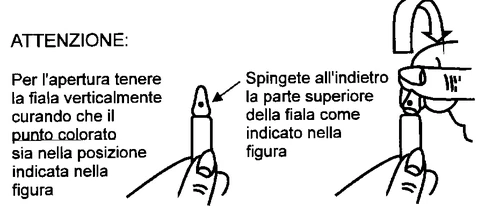
Instructions for use:
Use in children and adolescents
Redoxin C is contraindicated in children under 12 years of age (see "Do not use Redoxin C").
If you use more Redoxin C than you should
If you use this medicine as directed in the package leaflet, overdose is rare.
General symptoms of vitamin C overdose may include gastrointestinal disturbances such as diarrhoea, nausea and vomiting.
If you take an excessive dose of vitamin C, the following may occur:
- damage to blood cells (oxidative haemolysis), especially if you have a deficiency of an
enzyme called glucose-6-phosphate dehydrogenase;
-
blood clotting within arteries and veins (disseminated intravascular coagulation);
-
increased levels of substances called oxalates in the blood and urine, with risk of their accumulation and predisposition to crystal formation (especially if you periodically undergo dialysis to purify the blood), which may cause tubulointerstitial nephropathy (a syndrome characterized by renal failure) and acute renal failure (reduced kidney function);
-
accumulation of a substance called calcium oxalate in the kidneys causing severe damage, such as acute tubular necrosis and/or renal failure.
If you experience any of these symptoms, stop taking the medicine and consult your doctor.
If you have any doubts about how to use this medicine, consult your doctor or pharmacist.
4. Possible side effects
Like all medicines, this medicine can cause side effects, although not everyone experiences them.
The adverse reactions listed below are derived from spontaneous reports, and therefore their frequency cannot be determined.
Effects on the gastrointestinal system
- diarrhoea
- nausea
- vomiting
- stomach ache (abdominal pain)
- digestive problems (dyspepsia).
Effects on the immune system
Allergic and anaphylactic reactions with their related clinical manifestations:
- breathing difficulties (asthmatic syndrome);
- skin disorders: skin rashes, urticaria (itching and small spots on the skin), oedema, angioedema (swelling of the face and mucous membranes), pruritus;
- cardiac and circulatory distress (cardiorespiratory distress);
- severe reactions such as anaphylactic shock.
Localised effects at the site of administration
- reactions at the injection or infusion site.
Reporting of side effects
If you experience any side effect, including those not listed in this leaflet, please inform your doctor or pharmacist. You may also report side effects directly via the national reporting system at the following website:
https://www.aifa.gov.it/content/segnalazioni-reazioni-avverse .
By reporting side effects, you can help provide more information on the safety of this medicine.
5. How to store Redoxin C
Keep this medicine out of the sight and reach of children.
Do not use this medicine after the expiry date stated on the packaging. The expiry date refers
to the last day of that month. The indicated expiry date applies to the product in its original
packaging, properly stored.
Do not store above 25°C.
Do not dispose of any medicine via wastewater or household waste.
Ask your pharmacist how to dispose of medicines no longer in use. This will help protect
the environment.
6. Package contents and other information
What Redoxin C contains
- The active substance is ascorbic acid (vitamin C).
One 5 ml vial contains 1 g of ascorbic acid.
The other components are: sodium hydroxide, water for injections.
Description of the appearance of Redoxin C and contents of the pack
Redoxin C is a solution for injection.
Redoxin C 1 g/5 ml solution for injection: pack containing 3 vials of 5 ml for subcutaneous/intramuscular/intravenous administration.
Marketing Authorisation Holder and Manufacturer
Marketing Authorisation Holder
Bayer S.p.A. - Viale Certosa 130, 20156 Milan.
Manufacturer:
Doppel Farmaceutici S.r.l
Via Volturno 48 – Quinto De’ Stampi
20089 Rozzano (Mi)
This page has been machine-translated and may contain inaccuracies. The original data is available in the manufacturing country's language.
Last data check: May 11, 2026 · Data source: Agenzia Italiana del Farmaco (AIFA)