Protromplex Tim 3
ItalyTable of Contents
- Package leaflet: Information for the patient
- PROTROMPLEX TIM 3
- 1. What PROTROMPLEX TIM 3 is and what it is used for
- 2. What you should know before using PROTROMPLEX TIM 3
- 3. How to use PROTROMPLEX TIM 3
- 4. Possible side effects
- 5. How to store PROTROMPLEX TIM 3
- 6. Package Contents and Other Information
Package leaflet: Information for the patient
PROTROMPLEX TIM 3
600 IU powder and solvent for solution for infusion
Partially purified human prothrombin complex
(concentrate of three coagulation factors: Factor II, IX and X)
Please read all of this leaflet carefully before using this medicine because it contains important information for you.
- Keep this leaflet. You may need to read it again.
- If you have any questions, ask your doctor, pharmacist or nurse.
- This medicine has been prescribed for you only. Do not give it to other people, even if their symptoms are the same as yours, as it may be harmful.
- If you experience any side effects, including those not listed in this leaflet, tell your doctor, pharmacist or nurse. See section 4.
Contents of this leaflet:
- What PROTROMPLEX TIM 3 is and what it is used for
- What you need to know before using PROTROMPLEX TIM 3
- How to use PROTROMPLEX TIM 3
- Possible side effects
- How to store PROTROMPLEX TIM 3
- Contents of the pack and other information
1. What PROTROMPLEX TIM 3 is and what it is used for
PROTROMPLEX TIM 3 contains human prothrombin complex, which consists of several factors
necessary for blood clot formation and thus for stopping bleeding.
Factors II, IX and X are involved in blood coagulation. A deficiency of these factors in the blood
leads to the risk of delayed blood clotting (physiological clotting time), resulting in an increased
tendency to bleed. By administering PROTROMPLEX TIM 3, an increase in circulating levels of these factors
is achieved within a short period of time, thereby temporarily correcting blood coagulation mechanisms (hemostasis).
PROTROMPLEX TIM 3 is used for the treatment and prevention of bleeding in
patients of all ages who suffer from congenital or acquired coagulation disorders due to deficiency of coagulation factors II, IX and X, such as:
- liver diseases (parenchymal hepatopathies with impaired synthesis or increased consumption of coagulation factors);
- prevention of bleeding following invasive liver procedures (liver biopsy);
- bleeding in newborns, particularly in premature infants, who suffer from a deficiency of coagulation factors (especially vitamin K-dependent factor deficiency), or due to maternal treatment with anticoagulant drugs (medicines used to make the blood less prone to clotting);
- treatment of bleeding following administration of a specific class of anticoagulant drugs (dicoumarols);
- preoperative treatment in surgical procedures in patients with liver disease (hepatopathies).
2. What you should know before using PROTROMPLEX TIM 3
Do not use PROTROMPLEX TIM 3
- if you are allergic to human partial prothrombin complex or to any of the other ingredients of this medicine (listed in section 6);
- if you are allergic to heparin or have previously experienced a reduction in blood platelet count (thrombocytopenia) following heparin administration.
Warnings and precautions
Talk to your doctor before using PROTROMPLEX TIM 3.
In particular, inform your doctor:
- If you suffer from a blood coagulation disorder (e.g., disseminated intravascular coagulation (DIC)),
- If you have a deficiency of vitamin K-dependent coagulation factors,
- If you have been treated with human prothrombin complex concentrates, especially with repeated doses,
- If you have had coronary artery disease (arteries supplying blood to the heart),
- If you suffer from liver disease,
- If you are about to undergo surgery or have recently undergone surgery,
- If the recipient of the medicine is a newborn,
- If you are at risk of blood coagulation disorders.
If you have taken a vitamin K antagonist, you may be in a state of hypercoagulability, which may be worsened by the infusion of human prothrombin complex: in congenital deficiency of any vitamin K-dependent factor, a product containing the specific coagulation factor should be used when available.
Suspicion of an allergic or anaphylactic reaction requires immediate discontinuation of the infusion. In case of shock, standard medical treatments for shock must be initiated.
If you suffer from congenital or acquired deficiency of coagulation factors and are using human prothrombin complex concentrates, including PROTROMPLEX TIM 3, especially with repeated doses, you should be aware that there is a risk of thrombosis or disseminated intravascular coagulation (DIC). The risk may be higher when treating an isolated Factor VII deficiency.
The use of PROTROMPLEX TIM 3 has been associated with thromboembolic events (deep vein thrombosis, pulmonary embolism, thrombotic stroke) and widespread clot formation in circulation (DIC).
It is strongly recommended that each time human prothrombin complex is administered to you, you are closely monitored for signs and symptoms of intravascular coagulation or thrombosis, especially if you have a history of coronary artery disease, liver disorders, are in the pre- or post-operative phase, are a newborn, or are at high risk of developing thromboembolic events or disseminated intravascular coagulation.
At the first signs or symptoms of thrombosis or embolism, the infusion must be immediately stopped and appropriate diagnostic and therapeutic measures must be initiated.
Viral safety
PROTROMPLEX TIM 3 is a medicine derived from human plasma (the liquid fraction of blood).
When medicines are produced from human blood or plasma, several safety measures are applied to prevent transmission of infections to patients. These include careful selection of plasma and blood donors to ensure potential carriers of infection are excluded, and testing of each donation and plasma pool to detect the presence of viruses and infections.
Manufacturers of these medicines also incorporate steps in the processing of blood or plasma capable of inactivating or removing pathogenic viruses. Nevertheless, despite these measures, whenever medicines prepared from human blood or plasma are used, the possibility of transmitting an infection cannot be completely ruled out. This also applies to emerging or unknown viruses or other types of infections.
The measures taken in the production of PROTROMPLEX TIM 3 are considered effective against enveloped viruses such as human immunodeficiency virus (HIV), hepatitis B virus (HBV), and hepatitis C virus (HCV), as well as non-enveloped viruses such as hepatitis A virus (HAV) and parvovirus B19.
Adequate vaccination (hepatitis A and B) should be considered for patients undergoing regular/repeated treatment with prothrombin complex products derived from human plasma.
It is strongly recommended that each time PROTROMPLEX TIM 3 is administered to you, the name and batch number of the product be recorded to maintain a traceable link between patient and product batch.
Other medicines and PROTROMPLEX TIM 3
Inform your doctor or pharmacist if you are taking, have recently taken, or might take any other medicines.
In particular, inform your doctor:
- if you are taking vitamin K antagonists (their effects are neutralized by concomitant administration of medicines containing human prothrombin complex),
- if you need blood tests, as PROTROMPLEX TIM 3 may alter the results of coagulation tests.
Pregnancy and breastfeeding
If you are pregnant, suspect you may be pregnant, are planning a pregnancy, or are breastfeeding, consult your doctor before using this medicine.
During pregnancy and breastfeeding, your doctor will administer PROTROMPLEX TIM 3 only if strictly necessary.
Driving and using machines
No studies have been conducted regarding the effects on the ability to drive vehicles or operate machinery.
PROTROMPLEX TIM 3 contains sodium and heparin
Sodium
This medicine contains 81.7 mg of sodium (the main component of table salt) per vial or 0.14 mg of sodium per International Unit. This corresponds to 4.1% of the maximum daily recommended dietary intake for an adult.
Heparin
May cause allergic reactions and a reduction in red blood cells that may impair blood coagulation. If you have previously experienced allergic reactions caused by heparin, do not take medicines containing heparin.
.
3. How to use PROTROMPLEX TIM 3
Use this medicine exactly as instructed by your doctor. If you have any doubts, consult your doctor.
PROTROMPLEX TIM 3 must be administered only intravenously (into a vein).
The dose will be determined by the doctor based on the severity of the coagulation disorder, the site and extent of bleeding, and the patient's clinical condition.
Treatment with PROTROMPLEX TIM 3 must be initiated under the supervision of a physician experienced in the treatment of coagulation disorders.
The doctor will assess the amount and frequency of administrations based on your individual response to therapy and on blood test results evaluating coagulation parameters (for example: prothrombin time, INR).
Use in children and adolescents
The dose will be determined by the doctor based on the child’s or adolescent’s health status.
If you take more PROTROMPLEX TIM 3 than you should
It is very unlikely that you could receive a higher dose than intended, since your doctor or nurse will monitor you during treatment.
Should high doses of PROTROMPLEX TIM 3 be administered, the doctor will discontinue the treatment and monitor you closely to prevent the occurrence of adverse events such as myocardial infarction, disseminated intravascular coagulation (DIC), venous thrombosis, and pulmonary embolism.
4. Possible side effects
Like all medicines, this medicine can cause side effects, although not everybody will experience them.
If you experience any of the following side effects during treatment with PROTROMPLEX TIM 3,
inform your doctor immediately. The doctor will IMMEDIATELY DISCONTINUE administration at the first sign of an adverse reaction and will provide appropriate treatment for these symptoms, which may be life-threatening:
- Hypersensitivity and allergic reactions, which in some cases may progress to severe allergic reactions (anaphylactic shock). Allergic reactions may include the following symptoms:
o hives, drop in blood pressure, increased heart rate;
o formation of blood clots;
o blockage of an artery or vein (thrombosis or thromboembolism), reduced blood flow to the body (hypovolemic shock).
The additional adverse effects are summarized below:
Effects related to the Immune system (the body's defense system):
- formation of circulating antibodies that negatively affect your response to the medicine.
Effects related to the vascular and circulatory system:
- blockage of a blood vessel (deep vein thrombosis, pulmonary embolism, thrombotic ischemic stroke)
- widespread presence of blood clots in the bloodstream (DIC or Disseminated Intravascular Coagulation)
- hot flushes
Effects related to the central nervous system:
- headache
Effects related to the cardiovascular system:
- increased heart rate (tachycardia)
Effects related to the respiratory system:
- difficulty in breathing (dyspnea and bronchospasm)
- wheezing
- cough
Effects related to the gastrointestinal system:
- stomach pain (abdominal pain)
- nausea
Effects related to the skin and subcutaneous tissue:
- localized swelling of the facial skin (angioedema)
- skin rash
- itching (pruritus)
Effects related to the renal system:
- kidney disease (nephrotic syndrome)
Systemic effects and effects at the site of administration:
- reaction at the infusion site, including pain at the infusion site
Class effects
The following adverse effects have been reported with other products containing prothrombin complex and/or Factor IX:
- heart attack (myocardial infarction),
- development of antibodies (inhibitors) against one or more factors of human prothrombin complex,
- severe allergic reaction (anaphylactic shock),
- drop in blood pressure (hypotension),
- increase in blood pressure (hypertension),
- feeling of tightness in the chest (chest tightness),
- dizziness,
- numbness (paresthesia),
- persistent drowsiness (lethargy),
- restlessness,
- vomiting,
- hives,
- skin redness (erythema),
- fever,
- chills.
Reporting of adverse reactions
If you experience any adverse reaction, including those not listed in this leaflet, please contact your doctor. You may also report adverse reactions directly via the national reporting system at:
https://www.aifa.gov.it/content/segnalazioni-reazioni-avverse.
By reporting adverse reactions, you can help provide more information on the safety of this medicine.
5. How to store PROTROMPLEX TIM 3
Keep this medicine out of the sight and reach of children.
Store in the refrigerator (2 °C – 8 °C). Do not freeze.
Keep the container in the outer packaging to protect the medicine from light.
Do not use this medicine after the expiry date stated on the carton after Exp.:. The expiry date refers to the last day of that month.
Do not use this medicine if the reconstituted solution appears cloudy or contains particles or has an abnormal colour.
Do not dispose of medicines via wastewater or household waste. Ask your pharmacist how to dispose of medicines no longer required. This will help protect the environment.
6. Package Contents and Other Information
What PROTROMPLEX TIM 3 Contains
- The active substances are: Factor II (Prothrombin) 600 IU*, Factor IX 600 IU*, Factor X (Stuart-Prower Factor) 600 IU*
* 1 unit corresponds to the activity of the respective factor in 1 ml of normal fresh human plasma
The other components are: heparin, sodium citrate, sodium chloride (see section 2: PROTROMPLEX TIM 3 contains heparin and sodium), water for injections.
Description of the Appearance of PROTROMPLEX TIM 3 and Package Contents
PROTROMPLEX TIM 3 is a white or slightly colored powder.
After reconstitution, the solution is clear or slightly opalescent and free from foreign particles.
PROTROMPLEX TIM 3 is available in a pack containing one vial of 600 IU powder + one vial of 20 ml solvent + set for reconstitution and infusion.
Marketing Authorization Holder and Manufacturer
Marketing Authorization Holder
Baxalta Innovations GmbH, Industriestrasse 67
A - 1221 Vienna
Manufacturer
Baxter AG, Industriestrasse 67, A - 1221 Vienna
Representative in Italy:
Takeda Italia S.p.A.
Tel. +39 06 502601
The following information is intended exclusively for physicians or healthcare professionals:
DOSAGE, METHOD AND DURATION OF ADMINISTRATION
Below are general guidelines for dosing. Treatment must be initiated under the supervision of a physician experienced in managing coagulation disorders. The dosage and duration of replacement therapy depend on the severity of the coagulation factor deficiency, the site and extent of bleeding, and the patient's clinical condition.
The amount to be administered and the frequency of administration must always be determined based on the individual patient's response.
The interval between doses should be adjusted according to the different circulating half-lives of the various coagulation factors in the prothrombin complex.
The required individual doses should be determined based on regular measurements of plasma levels of the relevant coagulation factors or global assays of prothrombin complex levels (e.g., prothrombin time, INR), along with continuous monitoring of the patient's clinical response.
It is recommended to administer high initial doses to achieve a rapid increase in the deficient coagulation factors in the patient's plasma. Considering the in vivo half-lives of the factors (Factor II approximately 50–60 hours; Factor IX approximately 12–30 hours; Factor X approximately 40–60 hours), repeated administration is recommended at intervals of approximately 6–12 hours.
Coagulation control tests should be performed at regular intervals.
Prothrombin time is indicative of Factors II and X, while partial thromboplastin time reflects Factor IX activity.
As a general formula for dosage calculation, the following may be used:
Required International Units (IU) = body weight (kg) × desired increase in partial prothrombin time (%) × 1.2
(This formula is based on evidence that 1 IU of Prothrombin Complex increases the partial prothrombin time value by 1%)
PROTROMPLEX TIM 3 offers the advantage of achieving high concentrations of coagulation factors (II, IX, X) in circulation with a low volume of liquid and low protein content, making it particularly suitable for use in neonates or patients with arterial hypertension. Liver disease patients with deficiency of prothrombin complex factors undergoing surgery, biopsy, or splenoportography should be treated with PROTROMPLEX TIM 3 to maintain Normotest values above 50% for several days.
Patients receiving vitamin K antagonists may present a state of hypercoagulability, which may be exacerbated by infusion of human prothrombin complex.
In congenital deficiency of any vitamin K-dependent factor, a product containing the specific coagulation factor should be used when available.
By intravenous infusion of appropriate doses of PROTROMPLEX TIM 3, a sufficient increase in circulating Factors II, IX, and X can be rapidly achieved, thereby establishing conditions for normal hemostasis. In cases of acquired coagulation disorders with concurrent reduction of Factors II, IX, and X, intravenous administration of vitamin K—which is necessary for hepatic synthesis of these coagulation factors—may also be beneficial. However, it should be emphasized that vitamin K, unlike PROTROMPLEX TIM 3, only becomes effective several hours after intravenous administration.
Method of Administration
The product must be administered intravenously only. The infusion rate must not exceed 2 ml per minute.
INSTRUCTIONS FOR RECONSTITUTION AND ADMINISTRATION
The solution should be clear or slightly opalescent. Do not use solutions that appear cloudy, contain deposits, or show abnormal discoloration.
Before administration, parenteral products should be inspected visually for particulate matter or abnormal discoloration. Do not administer if particulate matter or abnormal discoloration is present.
Reconstitution of the Lyophilized Powder
The lyophilized powder should be reconstituted only immediately before administration. Any unused residue must not be reused.
- Warm the vial containing the solvent (20 ml) to room temperature (do not exceed 37°C).
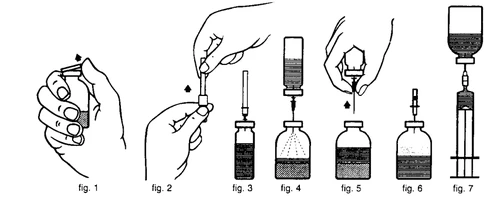
- Remove the protective caps from the lyophilized powder and solvent vials (Fig. 1) and disinfect the rubber stoppers of both vials.
- The transfer needle has two plastic caps connected by a sealed point. Rotate one cap to break the seal (Fig. 2), free the needle, and insert it into the rubber stopper of the solvent vial (Fig. 3).
- Remove the other cap from the transfer needle, taking care not to touch the needle.
- Invert the solvent vial and insert the free end of the transfer needle halfway into the rubber stopper of the lyophilized powder vial (Fig. 4). Since the vial containing the lyophilized substance is under vacuum, the solvent will be drawn in automatically.
- Separate the solvent vial (with the needle inserted) from the lyophilized powder vial (Fig. 5) and gently shake the latter to aid dissolution.
- After complete dissolution of the lyophilized substance, insert the venting needle (Fig. 6); any foam formed will dissipate rapidly. Remove the venting needle.
Infusion
- Rotate the protective cap of the filter needle to break the seal and remove it. Attach the filter needle to the disposable syringe and draw the solution into the syringe (Fig. 7).
- Remove the filter needle and attach the infusion needle (or butterfly needle) to the syringe. Administer the solution slowly (not exceeding 2 ml/min) intravenously.
If the solution is administered using an infusion set, it is essential that the set includes a filter.