Prontobario Colon
Italy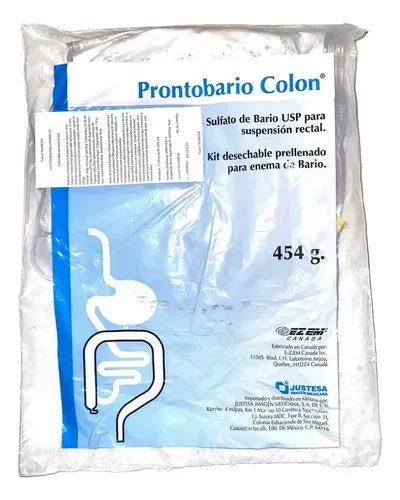
Table of Contents
- Package leaflet: Information for the patient
- PRONTOBARIO COLON
- 1. What PRONTOBARIO COLON is and what it is used for
- 2. What you should know before being administered PRONTOBARIO COLON
- 3. How PRONTOBARIO COLON is given to you
- 4. Possible side effects
- 5. How to store PRONTOBARIO COLON
- 6. Package contents and other information
Package leaflet: Information for the patient
PRONTOBARIO COLON
96.48 % w/w powder for rectal suspension
Barium sulfate
Please read this leaflet carefully before you are given this medicine
because it contains important information for you.
- Keep this leaflet. You may need to read it again.
- If you have any questions, ask your doctor or nurse.
- If you experience any side effects, including those not listed in this leaflet, tell your doctor. See section 4.
Contents of this leaflet:
- What PRONTOBARIO COLON is and what it is used for
- What you need to know before you are given PRONTOBARIO COLON
- How PRONTOBARIO COLON will be administered to you
- Possible side effects
- How to store PRONTOBARIO COLON
- Contents of the pack and other information
1. What PRONTOBARIO COLON is and what it is used for
PRONTOBARIO COLON contains the active substance barium sulfate and is a contrast agent for
diagnostic use.
This medicine is used to enhance the visibility of the gastrointestinal tract.
2. What you should know before being administered PRONTOBARIO COLON
You will NOT be administered PRONTOBARIO COLON
If you/the child:
- are allergic to barium sulfate or to any of the other ingredients of this medicine (listed in section 6);
- have or are suspected to have an abnormal passage (fistula), perforation, or obstruction of the gastrointestinal tract;
- have gastrointestinal bleeding (gastrointestinal hemorrhage);
- suffer from reduced blood flow to the intestine (gastrointestinal ischemia);
- have abnormal distension of the colon (megacolon or toxic megacolon);
- suffer from a bowel disease characterized by intestinal tissue death (necrotizing enterocolitis);
- suffer from severe constipation;
- suffer from a halt in the movement of intestinal contents (ileus);
- have recently undergone surgery on the gastrointestinal tract;
- have undergone radiotherapy to the rectum or prostate within the last 6 weeks;
- have new lesions or chemical burns of the gastrointestinal tract;
Warnings and precautions
Please consult your doctor before being administered PRONTOBARIO COLON.
Inform your doctor if you/the child:
- suffer from asthma;
- have a predisposition to allergies (atopy), such as hay fever or eczema, a family history of allergies, or previous reactions to contrast agents;
- suffer from a severe narrowing (stenosis) of the gastrointestinal tract;
- suffer from cancer, inflammatory bowel disease, inflammation of small pouches in the intestine (diverticulitis and diverticulosis), or parasitic infestation (amebiasis);
- have cystic fibrosis;
- are elderly;
- have a bowel disease (colitis);
- suffer from increased intracranial pressure;
- suffer from reduced gastrointestinal motility;
- suffer from imbalances in blood substances (electrolytes);
- are following a low-fiber diet and consuming poorly digestible foods (low-residue diet);
- suffer from heart disease;
- suffer from a hereditary intolerance to a sugar contained in PRONTOBARIO COLON (fructose);
Constipation or diarrhea
Inform the radiologist and/or healthcare professionals if you/your child are dehydrated, suffer from any medical condition, are taking any treatment that may cause constipation, or have a history of constipation.
In such cases, a mild laxative will be administered at the end of the radiological examinations. Drink plenty of fluids after rectal administration of barium sulfate to avoid severe constipation and the risk of intestinal obstruction.
Hereditary intolerance to a sugar (sorbitol-fructose)
Patients with rare hereditary fructose intolerance must not take this medicine.
Barium sulfate suspensions containing sorbitol should only be used in neonates and children after consulting a doctor, due to the possible presence of unrecognized hereditary fructose intolerance. There is also a health risk in young patients and adults with hereditary fructose intolerance.
Children and adolescents
As with all barium sulfate preparations, PRONTOBARIO COLON must be administered with caution in children.
Other medicines and PRONTOBARIO COLON
Inform your doctor if you/the child are taking, have recently taken, or might take any other medicines.
Pregnancy, breastfeeding, and fertility
Pregnancy
Whenever possible, radiation should be avoided during pregnancy; therefore, your doctor will carefully evaluate whether a radiological examination, with or without contrast agent, is necessary.
It is essential to inform your doctor if you are pregnant, suspect you may be pregnant, are planning pregnancy, or are breastfeeding. Please consult your doctor before undergoing an examination with PRONTOBARIO COLON.
In any case, PRONTOBARIO COLON is not contraindicated per se during pregnancy.
Breastfeeding
PRONTOBARIO COLON may be used during breastfeeding, as its systemic absorption (into the blood) after rectal administration with intact mucosa is negligible.
Driving and using machines
Before driving or operating machinery, check whether you are experiencing any adverse effects such as hypotension (low blood pressure), dizziness, or confusion, which may occur with the use of this medicine.
PRONTOBARIO COLON contains sorbitol
If your doctor has diagnosed you with an intolerance to certain sugars, contact them before taking this medicine.
3. How PRONTOBARIO COLON is given to you
PRONTOBARIO COLON will be administered by the radiologist and/or healthcare professionals.
PRONTOBARIO COLON will be administered rectally (enema).
Your doctor will determine the dose of PRONTOBARIO COLON based on your age, weight, and the type of examination to be performed.
Use in children and adolescents
The doctor will determine the dose based on the child's age and weight, and the type of examination to be performed.
If you are given more PRONTOBARIO COLON than you should
It is highly unlikely that you will be given more PRONTOBARIO COLON than required, as your doctor will carefully monitor the procedure during the examination.
However, an excessive dose of PRONTOBARIO COLON could cause abdominal cramps, nausea, vomiting, diarrhoea, and constipation. These symptoms are transient and usually resolve without medical intervention; occasionally, they may require appropriate treatment.
4. Possible side effects
Like all medicines, this medicine can cause side effects, although not everybody gets them.
The following side effects have been reported with PRONTOBARIO COLON, listed below by their frequency:
Rare (may affect up to 1 in 1,000 people)
- presence of bacteria in the blood (bacteraemia), collection of pus in the intestine and liver (intestinal abscess, liver abscess);
- infection of the peritoneum, a membrane covering the internal organs of the abdomen and pelvis, appendicitis;
- swollen lymph nodes (lymphadenopathy);
- allergic reactions (anaphylactoid or hypersensitivity reactions), anaphylactic shock;
- high blood sugar levels have been observed in diabetic patients (hyperglycaemia);
- confusion, agitation, nervousness, dizziness;
- fainting (syncope), loss of consciousness, difficulty speaking (dysarthria), headache, burning sensation, reduced muscle tone (hypotonia);
- eye swelling, ringing in the ears (tinnitus);
- heartbeat too slow and/or too fast (bradycardia and tachycardia), bluish or purplish skin and mucous membrane discoloration (cyanosis);
- pallor, low blood pressure (hypotension), vasodilation;
- difficulty breathing (bronchospasm, dyspnoea), swelling of the pharynx or larynx (pharyngeal or laryngeal oedema);
- tightness in the throat, oropharyngeal pain, throat irritation, cough;
- abdominal pain, nausea, vomiting;
- reduced or absent blood flow to the intestine (intestinal ischaemia), gastrointestinal perforation and/or obstruction;
- intestinal diseases (gastrointestinal ulcer, aggravated ulcerative colitis, gastrointestinal inflammation);
- abdominal distension, abdominal discomfort, constipation, diarrhoea, retching, excessive production and accumulation of intestinal gas (flatulence);
- urticaria, rash, erythema, skin inflammation caused by contact with a substance (contact dermatitis);
- facial and/or eye swelling, pruritus, excessive sweating;
- difficulty in passing urine;
- pain, swelling, fever, fatigue (asthenia), malaise;
- abnormal electrocardiogram;
- barium accumulation.
Side effects caused by procedural errors
- infections (e.g. peritonitis) following pre-existing or new gastrointestinal perforation. Complications include adhesions and inflammation of scar tissue (granulomas);
- intravasation of barium sulfate, resulting in rare formation of venous emboli (rare occurrence of blockage of an artery or vein) in the portal or vena cava system, and pulmonary embolism, which may be fatal in 50% of cases.
Skin and subcutaneous tissue disorders together with immune system disorders, reflecting allergic reactions to barium sulfate or to the excipients of the product, are among the most commonly reported side effects. Gastrointestinal disorders are also frequently reported among the adverse effects.
Additional side effects in children
Side effects in children are comparable to those in adults.
Reporting of side effects
If you experience any side effect, including those not listed in this leaflet, talk to your doctor or nurse. You can also report side effects directly via the national reporting system at the website http://www.agenziafarmaco.gov.it/content/come-segnalare-una-sospetta-reazione-avversa.
By reporting side effects, you can help provide more information on the safety of this medicine.
5. How to store PRONTOBARIO COLON
Keep this medicine out of the sight and reach of children.
Store below 25°C.
After reconstitution, the medicine must be used immediately.
Do not use this medicine after the expiry date stated on the label after "Exp.".
The expiry date refers to the last day of that month. The expiry date applies to the product in its original packaging, correctly stored.
Do not dispose of any medicine via wastewater or household waste. Ask your pharmacist how to dispose of medicines no longer required. This will help protect the environment.
6. Package contents and other information
What PRONTOBARIO COLON contains
- The active substance is barium sulfate 96.48% w/w;
- The other components are Sorbitol, Sodium citrate (see section 2. PRONTOBARIO COLON contains sorbitol), Simethicone, Tragacanth gum, Polysorbate 80, Pectin, Citric acid.
Description of the appearance of PRONTOBARIO COLON and contents of the pack
PRONTOBARIO COLON is a powder.
It is available in a 400 g sachet containing 96.48% w/w barium sulfate. The sachet is supplied with a
drainage tube and a rectal catheter made of polyvinyl chloride.
Marketing Authorization Holder
Bracco Imaging S.p.A. Via E. Folli, 50 – Milan
Manufacturer
Bracco Imaging s.p.a. – Bioindustry Park, Via Ribes 5, 10010 Colleretto Giacosa (TO)
The following information is intended exclusively for physicians or healthcare professionals.
INDICATIONS
Medicinal product for diagnostic use only.
Contrast medium for radiological visualization of the colonic gastrointestinal tract.
Rectal administration of barium sulfate (enema) helps identify and evaluate abnormalities
of the colon and/or distal small intestine, with concomitant administration of intestinal muscle relaxants.
It is indicated for single- and double-contrast examinations.
CONTRAINDICATIONS
Hypersensitivity to the active substance or to any of the excipients.
Barium sulfate suspensions must not be administered to patients with:
- known or suspected fistula, perforation, or obstruction anywhere in the gastrointestinal tract;
- gastrointestinal bleeding;
- gastrointestinal ischemia;
- megacolon or toxic megacolon;
- necrotizing enterocolitis;
- severe constipation;
- ileus.
Barium sulfate must not be administered immediately after gastrointestinal surgery,
including snare polypectomy or hot-biopsy of the colon performed with forceps. If post-procedural leakage is expected, the product must not be used.
Do not use during and up to six weeks after radiotherapy to the rectum or prostate.
Do not use in case of recent lesions or chemical burns of the gastrointestinal tract.
PRECAUTIONS FOR USE
PRONTOBARIO COLON is indicated for diagnostic use only.
The medicinal product must be administered under medical supervision. Diagnostic procedures involving radiopaque contrast agents must be performed under the direction of personnel trained and experienced in the specific procedure to be carried out.
Hypersensitivity
Optimal management of hypersensitivity reactions begins with a well-designed action plan and a diagnostic facility equipped with appropriate equipment and trained staff. Rapid recognition, assessment, and diagnosis are crucial to initiate effective treatment. On-site training of personnel involved in patients receiving contrast agents should include cardiopulmonary resuscitation and/or advanced cardiac life support procedures.
A history of bronchial asthma, atopy (evidenced by hay fever and eczema), a family history of allergies, or previous reactions to a contrast agent requires special attention.
Severe adverse reactions, including death, have been reported following administration of barium sulfate formulations and are usually associated with the administration technique, underlying pathological condition, and/or patient hypersensitivity. Anaphylactic and allergic reactions have been reported during double-contrast examinations using glucagon.
Barium sulfate-based preparations used as radiopaque contrast agents contain various excipients to ensure diagnostic performance. Allergic reactions have been reported following use of barium sulfate suspensions. Skin irritation, redness, inflammation, and urticaria have been reported in neonates and children following leakage of barium sulfate suspension onto the skin. These reactions appear to be due to flavors and/or preservatives used in the product.
Use of a retention balloon catheter is not necessary in patients with normal sphincter tone.
Adequate sphincter tone can be confirmed by preliminary digital rectal examination.
Perforation
In patients with severe stenosis at any level of the gastrointestinal tract, especially if distal to the stomach, and in the presence of conditions and pathologies increasing the risk of perforation such as advanced carcinoma, inflammatory bowel disease, diverticulitis and diverticulosis, and amebiasis, careful assessment of the risk-benefit ratio of administering a barium sulfate suspension is required. A known or suspected gastrointestinal fistula remains among the contraindications for the use of barium sulfate suspensions (see section 4.3).
When using catheters, care must be taken during insertion into the patient, as forced or overly deep insertion may cause lacerations or perforations of the rectum. Insertion of an enema must be performed only after digital examination by qualified medical personnel.
When balloon-tipped enema catheters are used to ensure retention, care must be taken to avoid overinflation of the balloon, as excessive or asymmetric inflation may cause tip displacement. Such displacement may lead to rectal perforation or formation of barium sulfate granulomas.
Balloon inflation must be performed under fluoroscopic control by qualified medical personnel. Avoid moving the catheter tip once inserted. A specially designed catheter tip is required for barium sulfate suspension examinations in patients with colostomy.
Intubation of an enteroclysis catheter must be performed by qualified medical personnel. Duodenal perforation has been reported.
Obstruction/Fluid overload
Small bowel obstruction (ileus) caused by barium sulfate suspension has been reported in pediatric patients with cystic fibrosis. During studies in neonates, when Hirschsprung’s disease is suspected, fluid overload due to water absorption has also been reported.
Intravasation
Barium sulfate may also intravasate into the venous drainage of the large intestine and enter the circulation as a "barium embolus." This complication is rare but may lead to potentially fatal complications, including systemic and pulmonary embolism, disseminated intravascular coagulation, sepsis, and prolonged hypotension. It is more likely in elderly patients due to age-related thinning of rectal and vaginal walls, and in patients with colorectal disease, when intraluminal pressure overcomes the resistance of the colon wall affected by colitis, diverticulitis, or intestinal obstruction. Intravasation has also been associated with inadvertent vaginal placement of the rectal catheter. This complication should be considered in all patients who collapse during or immediately after a barium enema, and in those who suddenly feel unwell in the hours following the procedure. Diagnosis can be confirmed by plain radiography; CT may also be useful to detect barium sulfate spread.
This complication can be prevented by ensuring correct placement of the rectal catheter and minimizing the use of balloon catheters.
Correct positioning of the rectal catheter must be confirmed before administration of the enema.
Constipation or diarrhea
Barium sulfate suspensions must be used with caution if the patient is dehydrated, suffers from any condition, is undergoing therapy that may cause constipation, or has a history of constipation. In such cases, a mild bulk-forming laxative should be administered at the end of radiological examinations. Increased fluid intake is recommended after oral or rectal administration of barium sulfate to prevent severe constipation and the risk of obstruction.
Other possible complications
In patients with increased intracranial pressure, enemas with barium sulfate suspensions carry an additional risk of further increasing intracranial pressure.
Care must be taken during barium sulfate enemas, as vasovagal reactions, syncopal episodes, cardiac arrhythmias, and other cardiovascular side effects may occur.
All plastic/rubber accessories are for single use; single-use devices must not be reused or left in the body cavity for prolonged periods.
Anxious patients may experience weakness, pallor, tinnitus, sweating, and bradycardia following administration of a diagnostic agent. These reactions are usually unpredictable and are best managed by keeping the patient lying down under observation for an additional 10–30 minutes.
Patient preparation for gastrointestinal diagnostic exams often requires laxatives and a liquid diet. These preparations may cause fluid loss in the patient. Patients must be rapidly rehydrated after a barium sulfate suspension examination in the gastrointestinal tract. In patients with reduced colonic motility, saline laxatives may be required after the barium sulfate enema; they are routinely recommended in patients with a history of constipation unless clinically contraindicated.
INTERACTIONS
Barium sulfate is biologically inert and no interactions with other medicinal products are known; however, the presence of barium sulfate formulations in the gastrointestinal tract may alter the absorption of concurrently administered therapeutic agents. To minimize any potential absorption changes, separate administration of barium sulfate and other drugs should be considered.
Other examinations performed in the same area of the gastrointestinal tract using another contrast agent may be complicated by the presence of barium sulfate (residual) in the gastrointestinal tract for several days after the barium contrast examination.
DOSAGE, METHOD AND TIME OF ADMINISTRATION
PRONTOBARIO COLON must be used within the final suspension concentration range between 20% w/v and 115% w/v.
The following table illustrates the dilutions typically used in clinical practice. Specific technical details and administration procedures for different barium sulfate preparations depend on the type of examination and diagnostic question and must comply with the instructions of the treating physician.
Barium sulfate dilutions used in clinical practice
| Typical concentration of the final solution to be administered | |||||||
| Name PRONTOBARIO COLON | Formula/Presentation Variation P | Pharmaceutical form Powder | Lowest 20% w/v | Highest 115% w/v | Oral | Rectal √ | Double Contrast √ |
Adults and elderly
- Double contrast: administer a 60%–115% w/v suspension prepared by adding an appropriate amount of warm water (approx. 40°C).
- Single contrast: add up to 2 liters of warm water (approx. 40°C) to obtain the suspension to be administered at the desired concentration.
Pediatric population: for radiological examination of the colon in children, the dose will depend on age and body weight.
Individual requirements will be determined based on the radiologist's experience.
Instructions for use
PRONTOBARIO COLON is ready for use after adding warm water (approx. 40°C) to the bag and shaking to obtain a homogeneous suspension, which is administered rectally to the patient prior to radiographic examination.
Close the tube with the provided clamp.
Barium sulfate powder must be reconstituted and thoroughly mixed before use and used immediately.
Shake the bag vigorously for 10–20 seconds and repeat immediately before use.
Push the red ball located at the tube connection into the bag by pressing it between thumb and index finger.
Loosen the provided clamp to allow the suspension to flow through the tube after connecting it to the rectal catheter.
To allow patient evacuation, place the bag at floor level.
For double contrast
Place the bag upside down on the radiological table with the tube connector facing upwards and compress with constant pressure.
EXPIRY DATE AND STORAGE
Expiry date: see the date printed on the packaging.
The expiry date refers to the product in its original, undamaged packaging and correctly stored.
Warning: do not use the medicinal product after the expiry date stated on the packaging.
Medicinal products must not be disposed of via wastewater or household waste. Ask your pharmacist how to dispose of medicines no longer in use. This will help protect the environment.
Keep the medicinal product out of the sight and reach of children.
Store at a temperature not exceeding 25°C.
After reconstitution, it must be used immediately.