Prevenar 13
Italy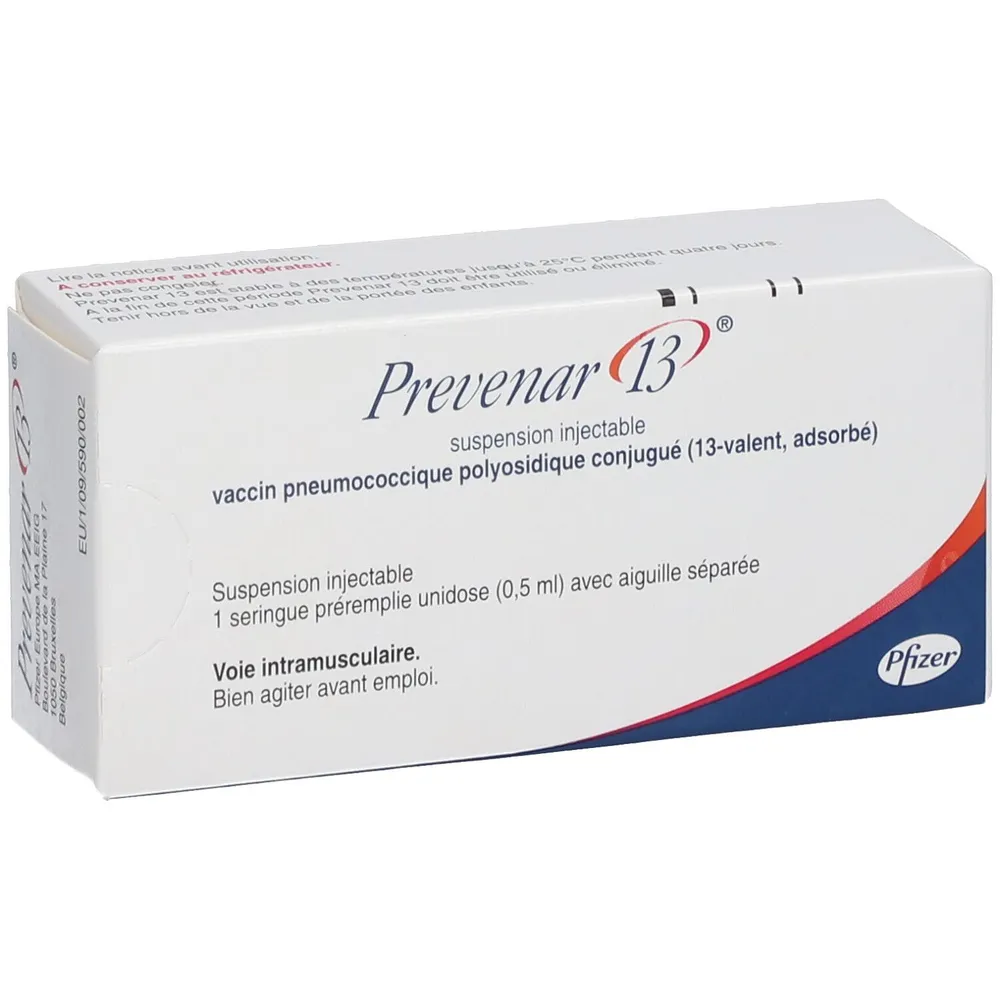
Table of Contents
- Package Leaflet: Information for the User
- Prevenar 13 injectable suspension
- 1. What Prevenar 13 is and what it is used for
- 2. What you should know before you or your child receive Prevenar 13
- 3. How to use Prevenar 13
- 4. Possible side effects
- 5. How to store Prevenar 13
- 6. Package contents and other information
- The following information is intended for healthcare professionals only:
- Package Leaflet: Information for the User
- Prevenar 13 injectable suspension in single-dose vial
- 1. What Prevenar 13 is and what it is used for
- 2. What you should know before you or your child receive Prevenar 13
- 3. How to use Prevenar 13
- 4. Possible side effects
- 5. How to store Prevenar 13
- 6. Package contents and other information
- The following information is intended exclusively for healthcare professionals:
- Package Leaflet: Information for the User
- Prevenar 13 injectable suspension in multidose container
- 1. What Prevenar 13 is and what it is used for
- 2. What you should know before you or the child receive Prevenar 13
- 3. How to use Prevenar 13
- 4. Possible side effects
- 5. How to store Prevenar 13
- 6. Package contents and other information
- The following information is intended exclusively for healthcare professionals:
Package Leaflet: Information for the User
Prevenar 13 injectable suspension
13-valent pneumococcal conjugate polysaccharide vaccine (adsorbed)
Please read all of this leaflet carefully before you or your child receive this vaccine because it contains important information.
- Keep this leaflet. You may need to read it again.
- If you have any questions, ask your doctor, pharmacist, or nurse.
- This vaccine has been prescribed only for you or your child. Do not give it to others.
- If you or your child experience any adverse reaction, including those not listed in this leaflet, contact your doctor, pharmacist, or nurse. See section 4.
Contents of this leaflet:
- What Prevenar 13 is and what it is used for
- What you need to know before you or your child receive Prevenar 13
- How to use Prevenar 13
- Possible side effects
- How to store Prevenar 13
- Contents of the pack and other information
1. What Prevenar 13 is and what it is used for
Prevenar 13 is a pneumococcal vaccine administered to:
- children aged 6 weeks to 17 years to protect them against diseases such as: meningitis (inflammation of the membrane surrounding the brain), sepsis or bacteremia (bacteria in the blood), pneumonia (lung infection), and ear infections
- adults 18 years of age and older to prevent diseases such as: pneumonia (lung infection), sepsis or bacteremia (bacteria in the blood), and meningitis (inflammation of the membrane surrounding the brain). All the diseases described are caused by thirteen types of the Streptococcus pneumoniae bacterium.
Prevenar 13 provides protection against 13 types of Streptococcus pneumoniae bacteria and replaces
Prevenar, which provided protection against 7 types of bacteria.
The vaccine works by helping the body produce its own antibodies, protecting you or your child
against these diseases.
2. What you should know before you or your child receive Prevenar 13
Prevenar 13 must not be given:
- if you or your child are allergic (hypersensitive) to the active substances or to any of the other ingredients of this medicine (listed in section 6) or to any other vaccine containing diphtheria toxoid.
- if you or your child have a severe infection with high fever (above 38°C). In this case, vaccination should be postponed until health improves. A minor infection, such as a cold, should not be a problem. However, discuss this first with your doctor, pharmacist, or nurse.
Warnings and precautions
Talk to your doctor, pharmacist, or nurse before vaccination if you or your child:
- has had or has ever had any medical problems after any dose of Prevenar or Prevenar 13, such as an allergic reaction or breathing difficulties;
- has any bleeding disorders or bruises easily;
- has a weakened immune system (for example due to HIV infection), as they may not get full benefit from Prevenar 13;
- has had seizures, as it may be necessary to take medicines to reduce fever before Prevenar 13 is administered. If your child becomes unresponsive or has seizures (fits) after vaccination, contact your doctor immediately: see also section 4.
Talk to your doctor, pharmacist, or nurse before vaccination if your child was born very prematurely (at 28 weeks of gestation or earlier), as breathing pauses longer than normal may occur for 2–3 days after vaccination. See also section 4.
Like any other vaccine, Prevenar 13 may not protect all individuals who are vaccinated.
Prevenar 13 will only protect against ear infections in children caused by the types of Streptococcus pneumoniae included in the vaccine. It will not protect against other infectious agents that may cause ear infections.
Other medicines/vaccines and Prevenar 13:
Your doctor may advise you to give your child paracetamol or other fever-reducing medicines before administering Prevenar 13. This will help reduce some of the side effects of Prevenar 13.
Inform your doctor, pharmacist, or nurse if you or your child are taking, have recently taken, or might take any other medicines, or have recently received any other vaccines.
Pregnancy and breastfeeding
If you are pregnant, think you may be pregnant, planning to become pregnant, or are breastfeeding, consult your doctor or pharmacist before receiving this medicine.
Driving and using machines
Prevenar 13 does not affect or has negligible effect on the ability to drive or operate machinery. However, some of the side effects listed in section 4 “Possible side effects” may temporarily affect the ability to drive or operate machinery.
Prevenar 13 contains Sodium
This medicine contains less than 1 mmol of sodium per dose (23 mg), therefore essentially "sodium-free".
3. How to use Prevenar 13
The doctor or nurse will inject the recommended dose of vaccine (0.5 ml) into your arm or into the arm or thigh muscle of the child.
Infants aged between 6 weeks and 6 months
Usually, the child should receive an initial series of three vaccine injections, followed by a booster dose.
- The first injection can be administered from the age of 6 weeks.
- Each injection will be given at least one month after the previous one.
- The fourth injection (booster) will be administered between 11 and 15 months of age.
- You will be informed when the child should return for the next injection.
In accordance with official recommendations in your country, the doctor or nurse may follow a different vaccination schedule. Speak with your doctor, pharmacist, or nurse for further information.
Premature infants
The child will receive an initial series of three injections. The first injection may be given as early as six weeks of age, with at least one month between doses. Between 11 and 15 months of age, the child will receive a fourth injection (booster).
Infants, children, and adolescents over 7 months of age who have not been vaccinated
Infants aged between 7 and 11 months should receive two injections. Each injection will be administered at least one month after the previous one. A third injection will be administered during the second year of life.
Children aged between 12 and 23 months should receive two injections. Each injection will be administered at least two months after the previous one.
Children aged between 2 and 17 years should receive one injection.
Infants, children, and adolescents previously vaccinated with Prevenar
Infants and children previously vaccinated with Prevenar may receive Prevenar 13 to complete the injection series.
For children aged between 1 and 5 years who were previously vaccinated with Prevenar, the doctor or nurse will advise how many doses of Prevenar 13 are needed.
Children and adolescents aged between 6 and 17 years should receive one injection.
It is important to follow the instructions of the doctor, pharmacist, or nurse so that the child completes the injection series.
If you forget to return for vaccination at the scheduled time, consult your doctor, pharmacist, or nurse.
Adults
Adults should receive one injection.
Inform your doctor, pharmacist, or nurse if you have previously received a pneumococcal vaccine.
If you have any further questions about the use of Prevenar 13, ask your doctor, pharmacist, or nurse.
Special populations
Individuals considered at higher risk of pneumococcal infection (such as those with sickle cell anaemia or HIV infection), including those previously vaccinated with the 23-valent pneumococcal polysaccharide vaccine, may receive at least one dose of Prevenar 13.
Individuals who have undergone haematopoietic stem cell transplantation may receive three injections, the first administered 3 to 6 months after transplantation and with an interval of at least 1 month between doses. A fourth injection (booster) is recommended 6 months after the third injection.
4. Possible side effects
Like all vaccines, Prevenar 13 may cause side effects, although not everybody experiences them.
The following side effects include those reported for Prevenar 13 in infants and children (aged between 6 weeks and 5 years):
The most common side effects (which may occur in more than 1 in 10 doses of vaccine) are:
- Decreased appetite
- Fever, irritability, pain, tenderness, redness, swelling or hardening at the injection site, drowsiness, restless sleep
- Redness, hardening or swelling at the injection site of 2.5 cm – 7 cm (after booster dose and in older children [between 2 and 5 years of age]).
The common side effects (which may occur in up to 1 in 10 doses of vaccine) are:
- Vomiting, diarrhoea
- Fever above 39°C, tenderness at the injection site interfering with movement, redness, hardening or swelling at the injection site of 2.5 cm – 7 cm (after the initial injection series)
- Rash
The uncommon side effects (which may occur in up to 1 in 100 doses of vaccine) are:
- Seizures, including those associated with high fever
- Hives or hives-like rash
- Redness, swelling or hardening at the injection site greater than 7 cm, crying
The rare side effects (which may occur in up to 1 in 1000 doses of vaccine) are:
- Collapse or shock-like state (hyporesponsive-hypotonic episode)
- Allergic reactions (hypersensitivity), including swelling of the face and/or lips, difficulty breathing
The following side effects include those reported for Prevenar 13 in children and adolescents (aged between 6 and 17 years):
The most common side effects (which may occur in more than 1 in 10 doses of vaccine) are:
- Decreased appetite
- Irritability, pain, tenderness, redness, swelling or hardening at the injection site; drowsiness; restless sleep; tenderness at the injection site interfering with movement.
The common side effects (which may occur in up to 1 in 10 doses of vaccine) are:
- Headache
- Vomiting, diarrhoea
- Rash, hives or hives-like rash
- Fever
Children and adolescents with HIV infection, sickle cell anaemia, or who have undergone transplantation of blood cell-producing stem cells experienced similar side effects; however, headache, vomiting, diarrhoea, fever, fatigue, and joint and muscle pain occurred very commonly.
In children born very prematurely (at 28 weeks of gestation or earlier), pauses between breaths longer than normal may occur for 2–3 days after vaccination.
The following side effects include those reported for Prevenar 13 in adults:
The most common side effects (which may occur in more than 1 in 10 doses of vaccine) are:
- Decreased appetite, headache, diarrhoea, vomiting (in individuals aged 18 to 49 years)
- Chills, fatigue, rash, pain, redness, swelling, hardening or tenderness at the injection site interfering with arm movement (severe pain or tenderness at the injection site in individuals aged 18 to 39 years and severe limitation of arm movement in individuals aged 18 to 39 years)
- Worsening or new joint pain, worsening or new muscle pain
- Fever (in individuals aged 18 to 29 years)
The common side effects (which may occur in up to 1 in 10 doses of vaccine) are:
- Vomiting (in individuals aged 50 years and older), fever (in individuals aged 30 years and older)
The uncommon side effects (which may occur in up to 1 in 100 doses of vaccine) are:
- Nausea
- Allergic reaction (hypersensitivity), including swelling of face and lips, difficulty breathing
- Swelling of lymph nodes or glands (lymphadenopathy) near the injection site, for example under the arm
Adults with HIV infection experienced similar side effects; however, fever and vomiting occurred very commonly, and nausea occurred commonly.
Adults who have undergone transplantation of blood cell-producing stem cells experienced similar side effects; however, fever and vomiting occurred very commonly.
The additional side effects listed below have been observed with Prevenar 13 during post-marketing experience:
- Severe allergic reaction including shock (cardiovascular collapse), angioedema (swelling of lips, face or throat)
- Hives, redness and irritation (dermatitis), and itching at the injection site, hot flushes
- Swelling of lymph nodes or glands (lymphadenopathy) in the area of injection, for example under the arm or in the groin
- Skin eruption causing itchy red spots (erythema multiforme)
Reporting of side effects
If you experience any side effect, including those not listed in this leaflet, talk to your doctor, pharmacist or nurse. You can also report side effects directly via the national reporting system listed in Annex V. By reporting side effects, you can help provide more information on the safety of this medicine.
5. How to store Prevenar 13
Keep this medicine out of the sight and reach of children.
Do not use this medicine after the expiry date stated on the packaging and label.
The expiry date refers to the last day of that month.
Store in a refrigerator (2 °C - 8 °C).
Do not freeze.
Prevenar 13 is stable at temperatures up to 25°C for four days. At the end of this period, Prevenar 13 must be used or discarded. These data are intended to provide guidance to healthcare professionals in the event of temporary temperature excursions.
Do not dispose of any medicine via wastewater or household waste. Ask your pharmacist how to dispose of medicines you no longer use. This will help protect the environment.
6. Package contents and other information
What Prevenar 13 contains
The conjugated active substances are CRM polysaccharides consisting of:
- 2.2 micrograms of polysaccharide for serotypes 1, 3, 4, 5, 6A, 7F, 9V, 14, 18C, 19A, 19F and 23F
- 4.4 micrograms of polysaccharide for serotype 6B
One dose (0.5 ml) contains approximately 32 µg of CRM carrier protein, adsorbed on aluminium phosphate (0.125 mg of aluminium).
The excipients are sodium chloride, succinic acid, polysorbate 80 and water for injections.
Description of the appearance of Prevenar 13 and contents of the pack
The vaccine is a white injectable suspension supplied in a pre-filled single-dose syringe (0.5 ml).
Pack sizes of 1, 10 and 50 syringes, with or without needles. Not all pack sizes may be marketed.
Marketing Authorisation Holder and Manufacturer
Marketing Authorisation Holder:
Pfizer Europe MA EEIG
Boulevard de la Plaine 17
1050 Brussels
Belgium
Responsible manufacturer for batch release:
Pfizer Manufacturing Belgium NV
Rijksweg 12
2870 Puurs-Sint-Amands
Belgium
For further information about this medicinal product, please contact the local representative of the Marketing Authorisation Holder.
België/Belgique/Belgien
Pfizer NV/SA
Tél/Tel: +32 (0)2 554 62 11
България
Pfizer Luxembourg SARL, Klон България
Teл: +359 2 970 4333
Česká Republika
Pfizer, spol. s r.o.
Tel: +420 283 004 111
Danmark
Pfizer ApS
Tlf: +45 44 201 100
Deutschland
Pfizer Pharma GmbH
Tel: +49 (0)30 550055-51000
Eesti
Pfizer Luxembourg SARL Eesti filiaal
Tel: +372 666 7500
Ελλάδα
Pfizer Ελλάς A.E.
Τηλ.: +30 210 6785 800
España
Pfizer, S.L.
Télf: +34 914909900
France
Pfizer
Tél: +33 1 58 07 34 40
Hrvatska
Pfizer Croatia d.o.o.
Tel: +385 1 3908 777
Ireland
Pfizer Healthcare Ireland
Tel: 1800 633 363 (toll free)
+44 (0)1304 616161
Ísland
Icepharma hf.
Simi: +354 540 8000
Italia
Pfizer S.r.l.
Tel: +39 06 33 18 21
Kύπρος
Pfizer Ελλάς A.E (Cyprus Branch)
Tηλ: +357 22 817690
Latvija
Pfizer Luxembourg SARL filiāle Latvijā
Tel.: +371 670 35 775
Lietuva
Pfizer Luxembourg SARL filialas Lietuvoje
Tel. +370 52 51 4000
Luxembourg/Luxemburg
Pfizer Luxembourg SARL
Tel: +32 (0)2 554 62 11
Magyarország
Pfizer Kft
Tel: +36 1 488 3700
Malta
Vivian Corporation Ltd.
Tel: +356 21 344610
Nederland
Pfizer BV
Tel: +31 (0)10 406 43 01
Norge
Pfizer AS
Tlf: +47 67 52 61 00
Österreich
Pfizer Corporation Austria Ges.m.b.H.
Tel: +43 (0)1 521 15-0
Polska
Pfizer Polska Sp. z o.o.
Tel.: +48 22 335 61 00
Portugal
Laboratórios Pfizer, Lda.
Tel: +351 21 423 5500
România
Pfizer Romania S.R.L
Tel: +40 (0) 21 207 28 00
Slovenija
Pfizer Luxembourg SARL, podružnica za svetovanje s področja farmacevtske dejavnosti, Ljubljana
Tel.: +386 (0)1 52 11 400
Slovenská republika
Pfizer Luxembourg SARL, organizačná zložka
Tel: +421 2 3355 5500
Suomi/Finland
Pfizer Oy
Puh/Tel: +358 (0)9 430 040
Sverige
Pfizer AB
Tel: +46 (0)8 550 520 00
United Kingdom (Northern Ireland)
Pfizer Limited
Tel: +44 (0)1304 616161
This leaflet was last updated on:
Other sources of information
More detailed information on this medicine is available on the European Medicines Agency website: http://www.ema.europa.eu
The following information is intended for healthcare professionals only:
A white deposit and a clear supernatant may be observed during storage. This
does not indicate deterioration.
The vaccine should be inspected visually for any particulate matter and/or physical changes. Do not use in any of the above cases.
Before expelling air from the syringe, the vaccine must be shaken thoroughly to obtain a homogeneous white suspension.
Administer the entire dose.
Prevenar 13 is for intramuscular use only. Do not administer intravascularly.
Prevenar 13 must not be mixed in the same syringe with any other vaccine.
Prevenar 13 may be administered simultaneously with other childhood vaccines; in such cases, different injection sites must be used.
Prevenar 13 may be administered to adults aged 50 years and older at the same time as inactivated trivalent or quadrivalent influenza vaccine.
Any unused product or waste material must be disposed of in accordance with local regulations.
Package Leaflet: Information for the User
Prevenar 13 injectable suspension in single-dose vial
13-valent adsorbed pneumococcal conjugate polysaccharide vaccine
Please read this leaflet carefully before you or your child receive this vaccine, as it
contains important information.
- Keep this leaflet. You may need to read it again.
- If you have any questions, ask your doctor, pharmacist, or nurse.
- This vaccine has been prescribed only for you or your child. Do not give it to others.
- If you or your child experience any adverse reactions, including those not listed in this leaflet, consult your doctor, pharmacist, or nurse. See section 4.
Contents of this leaflet:
- What Prevenar 13 is and what it is used for
- What you need to know before you or your child receive Prevenar 13
- How to use Prevenar 13
- Possible side effects
- How to store Prevenar 13
- Contents of the pack and other information
1. What Prevenar 13 is and what it is used for
Prevenar 13 is a pneumococcal vaccine given to:
- children aged 6 weeks through 17 years to protect them against diseases such as: meningitis (inflammation of the membrane covering the brain), sepsis or bacteremia (bacteria in the blood), pneumonia (lung infection), and ear infections
- adults 18 years of age and older to prevent diseases such as: pneumonia (lung infection), sepsis or bacteremia (bacteria in the blood), and meningitis (inflammation of the membrane covering the brain). All of the diseases described are caused by thirteen types of the Streptococcus pneumoniae bacterium.
Prevenar 13 provides protection against 13 types of the Streptococcus pneumoniae bacterium and replaces
Prevenar, which provided protection against 7 types of the bacterium.
The vaccine works by helping the body produce its own antibodies, which protect you or your child
against these diseases.
2. What you should know before you or your child receive Prevenar 13
Prevenar 13 must not be administered:
- if you or your child are allergic (hypersensitive) to the active substances or to any of the other ingredients of this medicine (listed in section 6) or to any other vaccine containing diphtheria toxoid.
- if you or your child have a serious infection with high fever (over 38°C). In this case, vaccination should be postponed until your health improves. A minor infection, such as a cold, should not be a problem. However, please discuss this first with your doctor, pharmacist, or nurse.
Warnings and precautions
Talk to your doctor, pharmacist, or nurse before vaccination if you or your child:
- has had or develops any medical problems after any dose of Prevenar or Prevenar 13, such as an allergic reaction or breathing difficulties;
- suffers from any bleeding disorder or bruises easily;
- has a weakened immune system (for example due to HIV infection), as they may not get full benefit from Prevenar 13;
- has had seizures, as medication to reduce fever may need to be given before Prevenar 13 is administered. If your child becomes unresponsive or has seizures (fits) after vaccination, contact your doctor immediately: see also section 4.
Talk to your doctor, pharmacist, or nurse before vaccination if your child was born very prematurely (at or before 28 weeks of gestation), as breathing pauses longer than normal may occur for 2–3 days after vaccination. See also section 4.
Like any other vaccine, Prevenar 13 will not protect all individuals who are vaccinated.
Prevenar 13 will only protect against ear infections in children caused by the types of Streptococcus pneumoniae included in the vaccine. It will not protect against other infectious agents that may cause ear infections.
Other medicines/vaccines and Prevenar 13:
Your doctor may advise you to give your child paracetamol or other medicines that reduce fever before administering Prevenar 13. This may help reduce some of the side effects of Prevenar 13.
Inform your doctor, pharmacist, or nurse if you or your child are taking, have recently taken, or might take any other medicines, or have recently received any other vaccines.
Pregnancy and breastfeeding
If you are pregnant, think you might be pregnant, planning to become pregnant, or are breastfeeding, please consult your doctor or pharmacist before receiving this medicine.
Driving and using machines
Prevenar 13 does not affect or affects negligibly the ability to drive or use machinery. However, some of the effects listed in section 4 “Possible side effects” may temporarily affect the ability to drive or use machinery.
Prevenar 13 contains Sodium
This medicine contains less than 1 mmol of sodium per dose (23 mg), i.e. it is essentially “sodium-free”.
3. How to use Prevenar 13
The doctor or nurse will inject the recommended dose of vaccine (0.5 ml) into your arm
or into the child’s arm or thigh muscle.
Infants aged between 6 weeks and 6 months
Usually, the child should receive an initial series of three vaccine injections, followed by a booster dose.
- The first injection may be given from the age of 6 weeks.
- Each injection will be administered at least one month after the previous one.
- The fourth injection (booster) will be given between 11 and 15 months of age.
- You will be informed when the child should return for the next injection.
According to official recommendations in your country, the doctor or nurse may follow a different vaccination schedule. Speak with your doctor, pharmacist, or nurse for further information.
Premature infants
The child will receive an initial series of three injections. The first injection may be given as early as six weeks of age, with at least one month between doses. Between 11 and 15 months of age, the child will receive a fourth injection (booster).
Infants, children, and adolescents over 7 months of age who have not been vaccinated
Infants aged between 7 and 11 months should receive two injections. Each injection will be administered at least one month after the previous one. A third injection will be given during the second year of life.
Children aged between 12 and 23 months should receive two injections. Each injection will be administered at least two months after the previous one.
Children aged between 2 and 17 years should receive one injection.
Infants, children, and adolescents previously vaccinated with Prevenar
Infants and children previously vaccinated with Prevenar may receive Prevenar 13 to complete the injection series.
For children aged between 1 and 5 years who were previously vaccinated with Prevenar, the doctor or nurse will advise how many doses of Prevenar 13 are needed.
Children and adolescents aged between 6 and 17 years should receive one injection.
It is important to follow the instructions of the doctor, pharmacist, or nurse so that the child completes the injection series.
If you forget to return for vaccination at the scheduled time, consult your doctor, pharmacist, or nurse.
Adults
Adults should receive one injection.
Inform the doctor, pharmacist, or nurse if you have previously received a pneumococcal vaccine.
If you have any further questions about the use of Prevenar 13, consult your doctor, pharmacist, or nurse.
Special populations
Individuals considered at higher risk of pneumococcal infection (such as those with sickle cell disease or HIV infection), including those previously vaccinated with the 23-valent pneumococcal polysaccharide vaccine, may receive at least one dose of Prevenar 13.
Individuals who have received a hematopoietic stem cell transplant may receive three injections, the first administered 3 to 6 months after transplantation, with at least one month between doses. A fourth injection (booster) is recommended six months after the third injection.
4. Possible side effects
Like all vaccines, Prevenar 13 may cause side effects, although not everybody will experience them.
The following side effects include those reported for Prevenar 13 in infants and children (aged between 6 weeks and 5 years):
The most common side effects (which may occur in more than 1 in 10 vaccine doses) are:
- Decreased appetite
- Fever, irritability, pain, tenderness, redness, swelling or hardening at the injection site, drowsiness, restless sleep
- Redness, hardening or swelling at the injection site of 2.5 cm – 7 cm (after booster dose and in older children [between 2 and 5 years of age]).
Common side effects (which may occur in up to 1 in 10 vaccine doses) are:
- Vomiting, diarrhoea
- Fever above 39°C, tenderness at the injection site interfering with movement, redness, hardening or swelling at the injection site of 2.5 cm – 7 cm (after the initial injection series)
- Rash
Uncommon side effects (which may occur in up to 1 in 100 vaccine doses) are:
- Seizures, including those associated with high fever
- Rash, urticaria or urticaria-like rash
- Redness, swelling or hardening at the injection site greater than 7 cm, crying
Rare side effects (which may occur in up to 1 in 1000 vaccine doses) are:
- Collapse or shock-like state (hyporesponsive-hypotonic episode)
- Allergic reactions (hypersensitivity), including swelling of the face and/or lips, difficulty breathing
The following side effects include those reported for Prevenar 13 in children and adolescents
(aged between 6 and 17 years):
The most common side effects (which may occur in more than 1 in 10 vaccine doses) are:
- Decreased appetite
- Irritability, pain, tenderness, redness, swelling or hardening at the injection site; drowsiness; restless sleep; tenderness at the injection site interfering with movement.
Common side effects (which may occur in up to 1 in 10 vaccine doses) are:
- Headache
- Vomiting, diarrhoea
- Rash, urticaria or urticaria-like rash
- Fever
Children and adolescents with HIV infection, sickle cell anaemia, or who have undergone stem cell transplantation for blood cell production experienced similar side effects; however, headache, vomiting, diarrhoea, fever, fatigue, and joint and muscle pain occurred very commonly.
In children born very prematurely (at 28 weeks of gestation or earlier), episodes of prolonged pauses between breaths, longer than normal, may occur for 2–3 days after vaccination.
The following side effects include those reported for Prevenar 13 in adults:
The most common side effects (which may occur in more than 1 in 10 vaccine doses) are:
- Decreased appetite, headache, diarrhoea, vomiting (in individuals aged 18 to 49 years)
- Chills, fatigue, rash, pain, redness, swelling, hardening or tenderness at the injection site interfering with arm movement (severe pain or tenderness at the injection site in individuals aged 18 to 39 years and severe limitation of arm movement in individuals aged 18 to 39 years)
- Worsening or new onset joint pain, worsening or new onset muscle pain
- Fever (in individuals aged 18 to 29 years)
Common side effects (which may occur in up to 1 in 10 vaccine doses) are:
- Vomiting (in individuals aged 50 years and older), fever (in individuals aged 30 years and older)
Uncommon side effects (which may occur in up to 1 in 100 vaccine doses) are:
- Nausea
- Allergic reaction (hypersensitivity), including swelling of face and lips, difficulty breathing
- Swelling of lymph nodes or glands (lymphadenopathy) near the injection site, for example under the arm
Adults with HIV infection experienced similar side effects; however, fever and vomiting occurred very commonly.
Adults who have undergone stem cell transplantation for blood cell production experienced similar side effects; however, fever and vomiting occurred very commonly.
The additional side effects listed below have been observed with Prevenar 13 during post-marketing experience:
- Severe allergic reaction including shock (cardiovascular collapse), angioedema (swelling of lips, face or throat)
- Urticaria, redness and irritation (dermatitis), and itching at the injection site, hot flushes
- Swelling of lymph nodes or glands (lymphadenopathy) in the area of injection, for example under the arm or in the groin
- Skin eruption causing itchy red spots (erythema multiforme)
Reporting of side effects
If you experience any side effect, including those not listed in this leaflet, please tell your doctor, pharmacist or nurse. You can also report side effects directly via the national reporting system listed in Annex V. By reporting side effects, you can help provide more information on the safety of this medicine.
5. How to store Prevenar 13
Keep this medicine out of the sight and reach of children.
Do not use this medicine after the expiry date stated on the packaging and label.
The expiry date refers to the last day of that month.
Store in a refrigerator (2 °C - 8 °C).
Do not freeze.
Do not dispose of any medicine via wastewater or household waste. Ask your pharmacist how to
dispose of medicines you no longer use. This will help protect the environment.
6. Package contents and other information
What Prevenar 13 contains
The active substances are conjugated CRM polysaccharides consisting of:
- 2.2 micrograms of polysaccharide for serotypes 1, 3, 4, 5, 6A, 7F, 9V, 14, 18C, 19A, 19F and 23F
- 4.4 micrograms of polysaccharide for serotype 6B
One dose (0.5 ml) contains approximately 32 µg of CRM carrier protein, adsorbed onto aluminium phosphate (0.125 mg of aluminium).
The excipients are sodium chloride, succinic acid, polysorbate 80 and water for injections.
Description of the appearance of Prevenar 13 and contents of the pack
The vaccine is a white injectable suspension supplied in a single-dose vial (0.5 ml). Packs containing 1, 5, 10, 25 and 50 vials. Not all pack sizes may be marketed.
Marketing Authorisation Holder and Manufacturer
Marketing Authorisation Holder:
Pfizer Europe MA EEIG
Boulevard de la Plaine 17
1050 Brussels
Belgium
Manufacturer responsible for batch release:
Pfizer Manufacturing Belgium NV
Rijksweg 12
2870 Puurs-Sint-Amands
Belgium
For further information about this medicine, please contact the local representative of the Marketing Authorisation Holder.
België/Belgique/Belgien
Pfizer NV/SA
Tél/Tel: +32 (0)2 554 62 11
България
Пфайзер Люксембург САРЛ, Клон България
Teл: +359 2 970 4333
Česká Republika
Pfizer, spol. s r.o.
Tel: +420 283 004 111
Danmark
Pfizer ApS
Tlf: +45 44 201 100
Deutschland
Pfizer Pharma GmbH
Tel: +49 (0)30 550055-51000
Eesti
Pfizer Luxembourg SARL Eesti filiaal
Tel: +372 666 7500
Ελλάδα
Pfizer Ελλάς A.E.
Τηλ.: +30 210 6785 800
España
Pfizer, S.L.
Télf: +34 914909900
France
Pfizer
Tél: +33 1 58 07 34 40
Hrvatska
Pfizer Croatia d.o.o.
Tel: +385 1 3908 777
Ireland
Pfizer Healthcare Ireland
Tel: 1800 633 363 (toll free)
+44 (0)1304 616161
Ísland
Icepharma hf.
Simi: +354 540 8000
Italia
Pfizer S.r.l.
Tel: +39 06 33 18 21
Kύπρος
Pfizer Ελλάς A.E (Cyprus Branch)
Tηλ: +357 22 817690
Latvija
Pfizer Luxembourg SARL filiāle Latvijā
Tel.: +371 670 35 775
Lietuva
Pfizer Luxembourg SARL filialas Lietuvoje
Tel. +370 52 51 4000
Luxembourg/Luxemburg
Pfizer Luxembourg SARL
Tel: +32 (0)2 554 62 11
Magyarország
Pfizer Kft
Tel: +36 1 488 3700
Malta
Vivian Corporation Ltd.
Tel: +356 21 344610
Nederland
Pfizer BV
Tel: +31 (0)10 406 43 01
Norge
Pfizer AS
Tlf: +47 67 52 61 00
Österreich
Pfizer Corporation Austria Ges.m.b.H.
Tel: +43 (0)1 521 15-0
Polska
Pfizer Polska Sp. z o.o.
Tel.: +48 22 335 61 00
Portugal
Laboratórios Pfizer, Lda.
Tel: +351 21 423 5500
România
Pfizer Romania S.R.L
Tel: +40 (0) 21 207 28 00
Slovenija
Pfizer Luxembourg SARL
Pfizer, podružnica za svetovanje s področja farmacevtske dejavnosti, Ljubljana
Tel.: +386 (0)1 52 11 400
Slovenská republika
Pfizer Luxembourg SARL, organizačná zložka
Tel: +421 2 3355 5500
Suomi/Finland
Pfizer Oy
Puh/Tel: +358 (0)9 430 040
Sverige
Pfizer AB
Tel: +46 (0)8 550 520 00
United Kingdom (Northern Ireland)
Pfizer Limited
Tel: +44 (0)1304 616161
This leaflet was last updated on:
Other sources of information
More detailed information on this medicine is available on the European Medicines Agency website: http://www.ema.europa.eu
The following information is intended exclusively for healthcare professionals:
A white deposit and a clear supernatant may be observed during storage. This
does not indicate deterioration.
The vaccine should be inspected visually for any particulate matter and/or physical changes. Do not use in any of the above cases.
Before administration, the vaccine must be shaken thoroughly to obtain a homogeneous white suspension.
Administer the entire dose.
Prevenar 13 is for intramuscular use only. Do not administer intravascularly.
Prevenar 13 must not be mixed in the same syringe with any other vaccine.
Prevenar 13 may be administered simultaneously with other childhood vaccines; in such cases, different injection sites must be used.
Prevenar 13 may be administered to adults aged 50 years and older simultaneously with inactivated trivalent or quadrivalent influenza vaccine.
Any unused product or waste material must be disposed of in accordance with local regulations.
Package Leaflet: Information for the User
Prevenar 13 injectable suspension in multidose container
13-valent conjugated pneumococcal polysaccharide vaccine (adsorbed)
Please read this leaflet carefully before you or your child receive this vaccine, as it contains important information.
- Keep this leaflet. You may need to read it again.
- If you have any questions, ask your doctor, pharmacist, or nurse.
- This vaccine has been prescribed only for you or your child. Do not give it to others.
- If you or your child experience any side effects, including those not listed in this leaflet, contact your doctor, pharmacist, or nurse. See section 4.
Contents of this leaflet:
- What Prevenar 13 is and what it is used for
- What you need to know before you or your child receive Prevenar 13
- How to use Prevenar 13
- Possible side effects
- How to store Prevenar 13
- Contents of the pack and other information
1. What Prevenar 13 is and what it is used for
Prevenar 13 is a pneumococcal vaccine given to:
- children aged 6 weeks to 17 years to protect them against diseases such as: meningitis (inflammation of the membrane surrounding the brain), sepsis or bacteremia (bacteria in the blood), pneumonia (lung infection), and ear infections
- adults 18 years of age and older to prevent diseases such as: pneumonia (lung infection), sepsis or bacteremia (bacteria in the blood), and meningitis (inflammation of the membrane surrounding the brain). All the diseases described are caused by thirteen types of the Streptococcus pneumoniae bacterium.
Prevenar 13 provides protection against 13 types of Streptococcus pneumoniae bacteria and replaces
Prevenar, which provided protection against 7 types of bacteria.
The vaccine works by helping the body produce its own antibodies, which protect you or your child
against these diseases.
2. What you should know before you or the child receive Prevenar 13
Prevenar 13 must not be administered:
- if you or the child are allergic (hypersensitive) to the active substances or to any of the other components of this medicine (listed in section 6) or to any other vaccine containing diphtheria toxoid.
- if you or the child have a severe infection with high fever (above 38°C). In this case, vaccination should be postponed until health improves. A minor infection, such as a cold, is not a problem. However, discuss this first with your doctor, pharmacist, or nurse.
Warnings and precautions
Talk to your doctor, pharmacist, or nurse before vaccination if you or the child:
- have had or have ever had any medical problems after any dose of Prevenar or Prevenar 13, such as an allergic reaction or breathing difficulties;
- have or have had any bleeding disorders or bruise easily;
- have a weakened immune system (for example due to HIV infection), as you or the child may not receive full benefit from Prevenar 13;
- have had seizures, as it might be necessary to take medicines to reduce fever before Prevenar 13 is given. If the child becomes unresponsive or has seizures (fits) after vaccination, contact your doctor immediately: see also section 4.
Talk to your doctor, pharmacist, or nurse before vaccination if the child was born very prematurely (at 28 weeks of gestation or earlier), as breathing pauses longer than normal may occur for 2–3 days after vaccination. See also section 4.
Like any other vaccine, Prevenar 13 may not protect all vaccinated individuals.
Prevenar 13 will only protect against ear infections in children caused by the types of Streptococcus pneumoniae included in the vaccine. It will not protect against other infectious agents that may cause ear infections.
Other medicines/vaccines and Prevenar 13:
Your doctor may advise you to give the child paracetamol or other medicines that reduce fever before administration of Prevenar 13. This may help reduce some of the unwanted effects of Prevenar 13.
Inform your doctor, pharmacist, or nurse if you or the child are taking, have recently taken, or might take any other medicines, or have recently received any other vaccines.
Pregnancy and breastfeeding
If you are pregnant, think you might be pregnant, are planning to become pregnant, or are breastfeeding, please consult your doctor or pharmacist before receiving this medicine.
Driving and using machines
Prevenar 13 does not affect, or has a negligible effect on, the ability to drive vehicles or use machinery. However, some of the effects mentioned in section 4 “Possible side effects” may temporarily affect the ability to drive or operate machinery.
Prevenar 13 contains sodium
This medicine contains less than 1 mmol of sodium per dose (23 mg), therefore essentially sodium-free.
3. How to use Prevenar 13
The doctor or nurse will inject the recommended dose (0.5 ml) into your arm, or into the arm or thigh muscle of the child.
Infants aged between 6 weeks and 6 months
Usually, the child should receive an initial series of three vaccine injections, followed by a booster dose.
- The first injection can be given from the age of 6 weeks.
- Each injection will be administered at least one month after the previous one.
- The fourth injection (booster) will be given between 11 and 15 months of age.
- You will be informed when the child should return for the next injection.
According to the official recommendations in your country, the doctor or nurse may follow a different vaccination schedule. Speak with your doctor, pharmacist, or nurse for further information.
Premature infants
The child will receive an initial series of three injections. The first injection can be given as early as six weeks of age, with at least one month between doses. Between 11 and 15 months of age, the child will receive a fourth injection (booster).
Unvaccinated infants, children and adolescents older than 7 months
Infants aged between 7 and 11 months should receive two injections. Each injection will be administered at least one month after the previous one. A third injection will be given during the second year of life.
Children aged between 12 and 23 months should receive two injections. Each injection will be administered at least two months after the previous one.
Children aged between 2 and 17 years should receive one injection.
Infants, children and adolescents previously vaccinated with Prevenar
Infants and children previously vaccinated with Prevenar may receive Prevenar 13 to complete the injection series.
For children aged between 1 and 5 years who were previously vaccinated with Prevenar, the doctor or nurse will recommend how many doses of Prevenar 13 are needed.
Children and adolescents aged between 6 and 17 years should receive one injection.
It is important to follow the instructions of the doctor, pharmacist, or nurse so that the child completes the series of injections.
If you forget to return for vaccination at the scheduled time, consult your doctor, pharmacist, or nurse.
Adults
Adults should receive one injection.
Inform your doctor, pharmacist, or nurse if you have previously received a pneumococcal vaccine.
If you have any further questions about the use of Prevenar 13, ask your doctor, pharmacist, or nurse.
Special populations
Individuals considered at higher risk of pneumococcal infection (such as those with sickle cell anaemia or HIV infection), including those previously vaccinated with the 23-valent pneumococcal polysaccharide vaccine, may receive at least one dose of Prevenar 13.
Individuals who have undergone haematopoietic stem cell transplantation may receive three injections, the first given 3 to 6 months after transplantation, with at least one month between each dose. A fourth injection (booster) is recommended six months after the third injection.
4. Possible side effects
Like all vaccines, Prevenar 13 may cause side effects, although not everybody will experience them.
The following side effects include those reported for Prevenar 13 in infants and children (aged between 6 weeks and 5 years):
The most common side effects (which may occur in more than 1 in 10 doses of vaccine) are:
- Decreased appetite
- Fever, irritability, pain, tenderness, redness, swelling or hardening at the injection site, drowsiness, restless sleep
- Redness, hardening or swelling at the injection site of 2.5 cm – 7 cm (after booster dose and in older children [between 2 and 5 years of age]).
The common side effects (which may occur in up to 1 in 10 doses of vaccine) are:
- Vomiting, diarrhoea
- Fever above 39°C, tenderness at the injection site interfering with movement, redness, hardening or swelling at the injection site of 2.5 cm – 7 cm (after the initial injection series)
- Rash
The uncommon side effects (which may occur in up to 1 in 100 doses of vaccine) are:
- Seizures, including those associated with high fever
- Rash, urticaria or urticarial rash
- Redness, swelling or hardening at the injection site greater than 7 cm, crying
The rare side effects (which may occur in up to 1 in 1000 doses of vaccine) are:
- Collapse or shock-like state (hyporesponsive-hypotonic episode)
- Allergic reactions (hypersensitivity), including swelling of the face and/or lips, difficulty breathing
The following side effects include those reported for Prevenar 13 in children and adolescents (aged between 6 and 17 years):
The most common side effects (which may occur in more than 1 in 10 doses of vaccine) are:
- Decreased appetite
- Irritability, pain, tenderness, redness, swelling or hardening at the injection site; drowsiness; restless sleep; tenderness at the injection site interfering with movement.
The common side effects (which may occur in up to 1 in 10 doses of vaccine) are:
- Headache
- Vomiting, diarrhoea
- Rash, urticaria or urticarial rash
- Fever
Children and adolescents with HIV infection, sickle cell anaemia, or who have received a stem cell transplant producing blood cells experienced similar side effects; however, the frequency of headache, vomiting, diarrhoea, fever, fatigue, and joint and muscle pain was very common.
In very premature infants (born at 28 weeks of gestation or earlier), pauses between breaths longer than normal may occur for 2–3 days after vaccination.
The following side effects include those reported for Prevenar 13 in adults:
The most common side effects (which may occur in more than 1 in 10 doses of vaccine) are:
- Decreased appetite, headache, diarrhoea, vomiting (in subjects aged 18 to 49 years)
- Chills, fatigue, rash, pain, redness, swelling, hardening or tenderness at the injection site interfering with arm movement (severe pain or tenderness at the injection site in subjects aged 18 to 39 years and severe limitation of arm movement in subjects aged 18 to 39 years)
- Worsening or new joint pain, worsening or new muscle pain
- Fever (in subjects aged 18 to 29 years)
The common side effects (which may occur in up to 1 in 10 doses of vaccine) are:
- Vomiting (in subjects aged 50 years and older), fever (in subjects aged 30 years and older)
The uncommon side effects (which may occur in up to 1 in 100 doses of vaccine) are:
- Nausea
- Allergic reaction (hypersensitivity), including swelling of face and lips, difficulty breathing
- Enlargement of lymph nodes or glands (lymphadenopathy) near the injection site, for example under the arm
Adults with HIV infection experienced similar side effects; however, the frequency was very common for fever and vomiting, and common for nausea.
Adults who received a stem cell transplant producing blood cells experienced similar side effects; however, the frequency was very common for fever and vomiting.
The additional side effects listed below have been observed with Prevenar 13 during post-marketing experience:
- Severe allergic reaction including shock (cardiovascular collapse), angioedema (swelling of lips, face or throat)
- Urticaria, redness and irritation (dermatitis) and itching at the injection site, hot flushes
- Enlargement of lymph nodes or glands (lymphadenopathy) in the area of injection, for example under the arm or in the groin
- Skin rash causing itchy red spots (erythema multiforme)
Reporting of side effects
If you experience any side effects, including those not listed in this leaflet, please contact your doctor, pharmacist or nurse. You may also report side effects directly via the national reporting system detailed in Annex V. By reporting side effects, you can help provide more information on the safety of this medicine.
5. How to store Prevenar 13
Keep this medicine out of the sight and reach of children.
Do not use this medicine after the expiry date stated on the packaging and label.
The expiry date refers to the last day of that month.
Store in the refrigerator (2 °C - 8 °C).
Do not freeze.
After first use, the product may be stored in the refrigerator for a maximum of 28 days.
Do not dispose of medicines via wastewater or household waste. Ask your pharmacist how to dispose of medicines you no longer use. This will help protect the environment.
6. Package contents and other information
What Prevenar 13 contains
The conjugated active substances are CRM-polysaccharides consisting of:
- 2.2 micrograms of polysaccharide for serotypes 1, 3, 4, 5, 6A, 7F, 9V, 14, 18C, 19A, 19F and 23F
- 4.4 micrograms of polysaccharide for serotype 6B
One dose (0.5 ml) contains approximately 32 µg of CRM carrier protein, adsorbed onto aluminium phosphate (0.125 mg of aluminium).
The excipients are sodium chloride, succinic acid, polysorbate 80, 2-phenoxyethanol and water for injections.
Description of the appearance of Prevenar 13 and contents of the pack
The vaccine is a white injectable suspension, supplied in a multidose container (4 doses of 0.5 ml).
Packs of 1, 5, 10, 25 and 50 vials. Not all pack sizes may be marketed.
Marketing Authorisation Holder and Manufacturer
Marketing Authorisation Holder:
Pfizer Europe MA EEIG
Boulevard de la Plaine 17
1050 Bruxelles
Belgium
Responsible manufacturer for batch release:
Pfizer Manufacturing Belgium NV
Rijksweg 12
2870 Puurs-Sint-Amands
Belgium
For further information about this medicinal product, please contact the local representative of the Marketing Authorisation Holder.
België/Belgique/Belgien Lietuva
Luxembourg/Luxemburg Pfizer Luxembourg SARL filialas Lietuvoje
Pfizer NV/SA Tel. + 370 52 51 4000
Tél/Tel: +32 (0)2 554 62 11
България Magyarország
Пфайзер Люксембург САРЛ, Клон Pfizer Kft
България Tel: +36 1 488 3700
Teл: +359 2 970 4333
Česká Republika Malta
Pfizer, spol. s r.o. Vivian Corporation Ltd.
Tel: +420 283 004 111 Tel: + 35621 344610
Danmark Nederland
Pfizer ApS Pfizer BV
Tlf: +45 44 201 100 Tel: +31 (0)10 406 43 01
Deutschland Norge
Pfizer Pharma GmbH Pfizer AS
Tel: +49 (0)30 550055-51000 Tlf: +47 67 52 61 00
Eesti Österreich
Pfizer Luxembourg SARL Eesti filiaal Pfizer Corporation Austria Ges.m.b.H.
Tel: +372 666 7500 Tel: +43 (0)1 521 15-0
Ελλάδα Polska
Pfizer Ελλάς A.E. Pfizer Polska Sp. z o.o.
Τηλ.: +30 210 6785 800 Tel.: +48 22 335 61 00
España Portugal
Pfizer, S.L. Laboratórios Pfizer, Lda.
Télf:+34914909900 Tel: +351 21 423 5500
France România
Pfizer Pfizer Romania S.R.L
Tél +33 1 58 07 34 40 Tel: +40 (0) 21 207 28 00
Hrvatska Slovenija
Pfizer Croatia d.o.o. Pfizer Luxembourg SARL
Tel: + 385 1 3908 777 Pfizer, podružnica za svetovanje s področja farmacevtske dejavnosti, Ljubljana
Tel.: + 386 (0) 1 52 11 400
Ireland Slovenská republika
Pfizer Healthcare Ireland Pfizer Luxembourg SARL, organizačná zložka
Tel: 1800 633 363 (toll free) Tel: + 421 2 3355 5500
+44 (0)1304 616161
Ísland Suomi/Finland
Icepharma hf. Pfizer Oy
Simi: + 354 540 8000 Puh/Tel: +358 (0)9 430 040
Italia Sverige
Pfizer S.r.l. Pfizer AB
Tel: +39 06 33 18 21 Tel: +46 (0)8 550 520 00
Kύπρος United Kingdom (Northern Ireland)
Pfizer Ελλάς A.E (Cyprus Branch) Pfizer Limited
Tηλ: +357 22 817690 Tel: +44 (0) 1304 616161
Latvija
Pfizer Luxembourg SARL filiāle Latvijā
Tel.: + 371 670 35 775
This leaflet was last updated on:
Other sources of information
More detailed information on this medicine is available on the European Medicines Agency website: http://www.ema.europa.eu
The following information is intended exclusively for healthcare professionals:
A white deposit with a clear supernatant may be observed during storage. This
is not an indication of deterioration.
The vaccine should be inspected visually for any particulate matter and/or physical changes.
Do not use the vaccine in any of the cases described above.
Before administration, the vaccine must be shaken thoroughly to obtain a homogeneous white suspension.
Administer the entire dose.
Prevenar 13 is for intramuscular use only. Do not administer intravascularly.
Prevenar 13 must not be mixed in the same syringe with any other vaccine.
Prevenar 13 may be administered simultaneously with other childhood vaccines; in such cases, different injection sites must be used.
Prevenar 13 may be administered to adults aged 50 years and older simultaneously with inactivated trivalent or quadrivalent influenza vaccine.
After first use, the product may be stored in the refrigerator for up to 28 days.
Any unused product or waste material must be disposed of in accordance with local regulations.