Piroxicam Doc Generici
Italy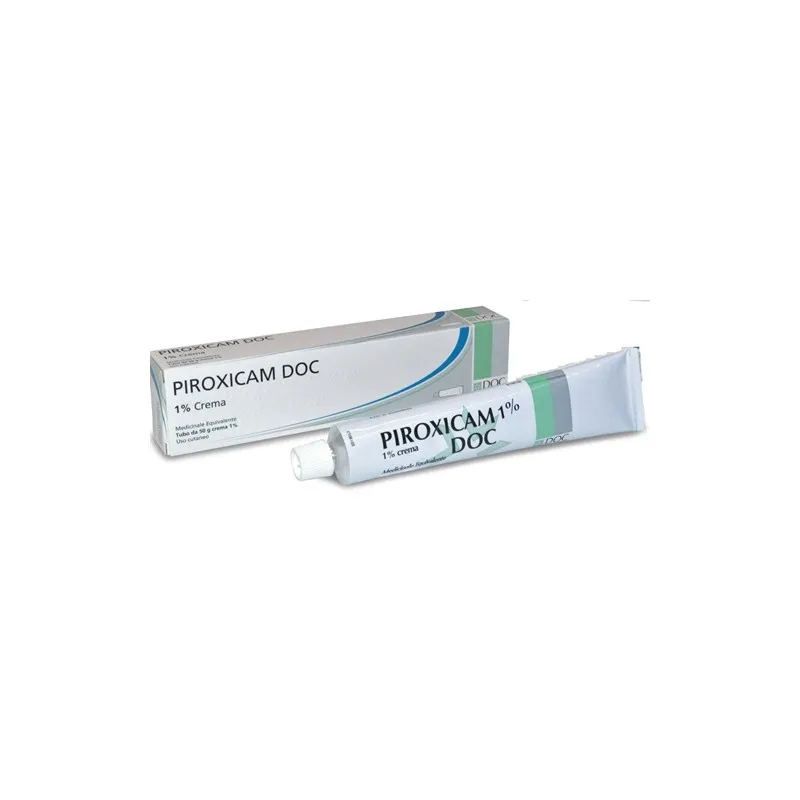
Table of Contents
- Package leaflet: Information for the user
- PIROXICAM DOC 20 mg/ml injectable solution for intramuscular use
- 1. What PIROXICAM DOC is and what it is used for
- 2. What you should know before using PIROXICAM DOC
- 3. How to use PIROXICAM DOC
- 4. Possible side effects
- 5. How to store PIROXICAM DOC
- 6. Package contents and other information
- Package leaflet: information for the user
- PIROXICAM DOC 1% Cream
- 1. What PIROXICAM DOC is and what it is used for
- 2. What you should know before using PIROXICAM DOC
- 3. How to use PIROXICAM DOC
- 4. Possible side effects
- 5. How to store PIROXICAM DOC
- 6. Contents of the package and other information
Package leaflet: Information for the user
PIROXICAM DOC 20 mg/ml injectable solution for intramuscular use
Generic medicine
Please read this leaflet carefully before using this medicine because it contains important information for you.
- Use this medicine exactly as described in this leaflet or as your doctor or pharmacist has instructed you.
- Keep this leaflet. You may need to read it again.
- If you need more information or advice, consult your pharmacist.
- If you experience any side effects, including those not listed in this leaflet, contact your doctor or pharmacist. See section 4.
- Contact your doctor if you do not notice any improvement or if your symptoms worsen.
Contents of this leaflet:
- What PIROXICAM DOC is and what it is used for
- What you need to know before using PIROXICAM DOC
- How to use PIROXICAM DOC
- Possible side effects
- How to store PIROXICAM DOC
- Contents of the pack and other information
1. What PIROXICAM DOC is and what it is used for
Before prescribing PIROXICAM DOC, your doctor will evaluate the benefits of this medicine
against the risk of side effects. Your doctor may need to review your condition periodically
and will inform you how often monitoring is required during treatment with PIROXICAM
DOC.
PIROXICAM DOC is an anti-inflammatory and analgesic medicine used to
relieve certain symptoms caused by osteoarthritis (osteoarthritis: degenerative joint disease),
rheumatoid arthritis, and ankylosing spondylitis (spinal rheumatism), such as joint
swelling, stiffness, and pain. PIROXICAM DOC does not cure arthritis and will provide relief only
as long as you continue taking it.
Your doctor will prescribe PIROXICAM DOC only when other non-steroidal anti-inflammatory drugs (NSAIDs)
are no longer effective in relieving your symptoms.
2. What you should know before using PIROXICAM DOC
Do not take PIROXICAM DOC
- if you are allergic to piroxicam or to any of the other ingredients of this medicine (listed in section 6)
- if you have previously had a stomach or intestinal ulcer, bleeding, or perforation
- if you currently have a stomach or intestinal ulcer, bleeding, or perforation
- if you have or have had gastrointestinal disorders (inflammation of the stomach or intestine) that predispose to hemorrhagic conditions, such as ulcerative colitis, Crohn's disease, gastrointestinal cancer, diverticulitis (inflamed or infected pouches/sacs in the colon)
- if you are taking other NSAIDs, including selective COX-2 inhibitors and acetylsalicylic acid (found in many medicines used to relieve pain and reduce fever). Remember that many NSAIDs are available without a prescription
- if you are taking anticoagulants such as warfarin to prevent blood clots
- if you have previously experienced a severe allergic reaction to piroxicam, other NSAIDs, or other medicines, particularly severe skin reactions (regardless of severity), such as erythema multiforme, exfoliative dermatitis (intense skin redness with flaking or peeling), blistering reactions: Stevens-Johnson syndrome, characterized by red, blistered, eroded, bloody skin or covered with crusts, and toxic epidermal necrolysis, characterized by blisters and peeling of the superficial layer of the skin
- if you have experienced asthma, rhinitis, nasal polyps, angioedema, or urticaria during treatment with acetylsalicylic acid or other NSAIDs
- if you are pregnant or suspect you might be
- if you are breastfeeding
- if you are under 18 years of age
- if you suffer from severe liver disease
- if you suffer from severe kidney disease
- if you have moderate or severe heart failure
- if you have severe hypertension
- if you have serious blood disorders
- if you have a hemorrhagic diathesis (a tendency to bleed frequently).
If any of these conditions apply, PIROXICAM DOC must not be prescribed to you. Inform your doctor immediately.
Warnings and precautions
Talk to your doctor or pharmacist before taking PIROXICAM DOC.
Be cautious when using PIROXICAM DOC. Like all non-steroidal anti-inflammatory drugs,
PIROXICAM DOC may cause serious stomach and intestinal reactions such as pain,
bleeding, and ulcers.
Potentially life-threatening skin rashes (Stevens-Johnson syndrome, toxic epidermal necrolysis) have
been reported with piroxicam use. These initially appear as round red spots or circular patches, often accompanied by blisters, typically on the central trunk.
Additional symptoms to watch for include mouth, throat, nose, or genital ulcers and conjunctivitis (red, swollen eyes).
These potentially life-threatening skin reactions are often accompanied by flu-like symptoms. The rash may progress to widespread blistering or skin peeling.
The highest risk of developing severe skin reactions occurs within the first weeks of treatment.
If you have previously experienced Stevens-Johnson syndrome or toxic epidermal necrolysis with piroxicam, piroxicam must not be used again.
If you develop a skin rash or skin-related symptoms, you must stop taking
PIROXICAM DOC immediately, seek medical attention immediately, and inform your doctor that you are taking this medicine.
You must stop taking PIROXICAM DOC immediately and contact your doctor if you experience stomach pain or any signs of stomach or intestinal bleeding, such as passing black or blood-streaked stools or vomiting blood.
You must stop using PIROXICAM DOC immediately and contact your doctor if you experience an allergic reaction such as skin rash, facial swelling, wheezing, or difficulty breathing.
If you are over 70 years old, your doctor may want to minimize the duration of treatment and monitor you more frequently while you are on PIROXICAM DOC.
If you are over 70 years old or if you are taking other medicines such as corticosteroids or certain antidepressants called selective serotonin reuptake inhibitors (SSRIs), or acetylsalicylic acid to prevent blood clots, your doctor may prescribe a stomach-protective medicine alongside PIROXICAM DOC.
You must not take this medicine if you are over 80 years old.
If you have or have had any medical conditions or any type of allergy, or if you are unsure whether you can take PIROXICAM DOC, inform your doctor before taking this medicine.
Inform your doctor if you are taking other medicines, including those without a prescription.
Medicines such as PIROXICAM DOC may be associated with an increased risk of heart attack ("myocardial infarction") or stroke. The risk is higher with high doses and prolonged treatment. Do not exceed the recommended dose or duration of treatment.
If you have heart problems, a history of stroke, or think you may be at risk for these conditions (e.g., due to high blood pressure, diabetes, high cholesterol, or smoking), discuss your treatment with your doctor or pharmacist.
PIROXICAM DOC, like other non-steroidal anti-inflammatory drugs, reduces platelet aggregation and prolongs clotting time; this should be considered when performing hematological tests and requires vigilance when used concomitantly with drugs that inhibit platelet aggregation.
Caution is required if you have a history of hypertension and/or heart failure, as fluid retention and edema have been reported during NSAID therapy.
Particular caution is necessary if you have cardiovascular insufficiency, arterial hypertension, impaired liver or kidney function, renal hypoperfusion, existing or previous blood disorders, or if you are on diuretic therapy.
If you are asthmatic, bronchospasm attacks, and possibly shock or other allergic phenomena, may occur due to the drug's interaction with arachidonic acid metabolism.
Since ocular changes have been observed during NSAID therapy, periodic ophthalmological examinations are recommended during prolonged treatment.
As with other similar-acting substances, increases in blood urea nitrogen (azotemia) have been observed, which do not progress beyond a certain level even with prolonged administration. Levels return to normal after discontinuation of treatment.
If you are diabetic, frequent blood tests are advisable.
Severe allergic reactions (particularly severe skin reactions) have been reported very rarely in association with NSAID use (see "Possible side effects").
If you are planning a pregnancy, if you have fertility problems or are undergoing fertility investigations, discuss your treatment with your doctor.
Other medicines and PIROXICAM DOC
Inform your doctor or pharmacist if you are currently using, have recently used, or might use any other medicines – including those purchased without a prescription.
Medicines can sometimes interact with each other. Your doctor may limit the use of
PIROXICAM DOC or other medicines, or you may need to take a different medicine. It is particularly important to report the following:
- if you are taking aspirin or other non-steroidal anti-inflammatory medicines for pain relief
- if you are taking corticosteroids, medicines used to treat various conditions such as allergies and hormonal imbalances
- if you are taking anticoagulants such as warfarin to prevent blood clots
- if you are taking certain antidepressants called selective serotonin reuptake inhibitors (SSRIs)
- if you are taking any medicine, such as aspirin, to prevent blood clots
- if you are taking diuretics, ACE inhibitors, or angiotensin II antagonists – used for high blood pressure and heart conditions
- if you are taking lithium – used to treat depression
- if you are taking quinolone antibiotics, used to treat bacterial infections
- if you use intrauterine devices.
If any of these conditions apply, inform your doctor immediately.
PIROXICAM DOC with food, drinks, and alcohol
It is advisable not to drink alcohol during treatment with PIROXICAM DOC.
Pregnancy, breastfeeding, and fertility
Ask your doctor or pharmacist for advice before taking this medicine.
- If you have fertility problems or are undergoing fertility investigations, inform your doctor, as PIROXICAM DOC may not be suitable for you.
- Do not take PIROXICAM DOC if you are pregnant, as it may harm the fetus or cause problems during delivery. NSAIDs can cause kidney and heart problems in the fetus. They may affect the bleeding tendency in both mother and baby and delay or prolong labor more than expected. From the 20th week of pregnancy, NSAIDs can cause kidney problems in the fetus, thereby reducing the levels of amniotic fluid surrounding the baby (oligohydramnios), or cause narrowing of a blood vessel (ductus arteriosus) in the baby's heart.
- If you are breastfeeding, do not take PIROXICAM DOC. Ask your doctor: it may be better to stop breastfeeding.
Driving and using machines
If you experience dizziness or unusual tiredness, take special care when driving or operating machinery.
PIROXICAM DOC contains propylene glycol.
This medicine contains 400 mg of propylene glycol per vial.
PIROXICAM DOC contains ethanol.
This medicine contains 100 mg of alcohol (ethanol) per vial. The amount of alcohol in one vial of this medicine is equivalent to 1 ml of wine or less than 3 ml of beer.
The small amount of alcohol in this medicine will not produce significant effects.
PIROXICAM DOC contains benzyl alcohol.
This medicine contains 20 mg of benzyl alcohol per vial.
Benzyl alcohol may cause allergic reactions.
Ask your doctor or pharmacist for advice if you are pregnant or breastfeeding. This is because large amounts of benzyl alcohol may accumulate in the body and cause undesirable effects (such as metabolic acidosis).
Ask your doctor or pharmacist for advice if you have liver or kidney disease. This is because large amounts of benzyl alcohol may accumulate in the body and cause undesirable effects (such as metabolic acidosis).
PIROXICAM DOC contains sodium.
This medicine contains less than 1 mmol (23 mg) of sodium per vial, i.e., it is essentially 'sodium-free'.
3. How to use PIROXICAM DOC
Take this medicine exactly as directed by your doctor or pharmacist. If
you have any doubts, consult your doctor or pharmacist.
Your doctor will monitor you regularly to ensure you are taking the optimal
dose of PIROXICAM DOC. Your doctor will adjust the treatment to the lowest dose that best controls your
symptoms. Under no circumstances should you change the dose without first informing your doctor.
Adults and elderly:
The maximum daily dose of PIROXICAM DOC is 20 milligrams taken as a single daily dose.
If you are over 70 years old, your doctor may prescribe a lower daily dose and reduce the duration
of treatment.
Your doctor may prescribe PIROXICAM DOC together with another medicine to protect your
stomach and intestines from possible undesirable effects.
Do not increase the dose if you feel the medicine is not very effective; always discuss this with your
doctor.
If you forget to take PIROXICAM DOC
Take the medicine as soon as you remember. If it is almost time for your next dose, do not take the
missed dose, but take the next dose at the usual time. Do not take a double dose.
If you take more PIROXICAM DOC than you should
Symptoms: the most indicative symptoms of overdose are headache, vomiting, drowsiness, dizziness, and fainting.
In case of accidental ingestion of an excessive dose of PIROXICAM DOC, contact your doctor immediately or go to the nearest hospital.
If you have any further questions about the use of this product, consult your doctor.
4. Possible side effects
Like all medicines, this medicine can cause side effects, although not everyone gets them.
Stop treatment with PIROXICAM DOC immediately and contact your doctor if:
- you develop blisters, redness or peeling of the skin (skin rash), ulceration in any part of the body (e.g. skin, mouth, eyes, lips or tongue), or any other sign of allergic reaction such as skin rash, swelling of the face, lips or tongue which may cause difficulty in breathing or wheezing
- your skin or the whites of your eyes turn yellow (jaundice)
- you notice signs of stomach or intestinal bleeding, such as passing black stools or stools with blood, or if you vomit blood.
Listed below are all the side effects associated with PIROXICAM DOC.
Common side effects
- Ulcers of the digestive tract and gastrointestinal bleeding
- Nausea, vomiting, diarrhoea, flatulence, constipation, heartburn, abdominal pain, ulcerative stomatitis, inflammatory bowel diseases (colitis and Crohn's disease)
- Swelling of ankles, legs and feet (fluid retention)
- Increased blood pressure
- Heart failure (difficulty in breathing and fatigue)
Uncommon side effects
- Heart attack (myocardial infarction)
- Stroke
- Anorexia
- Tiredness
- Anaemia
- Blisters, redness or peeling of the skin (skin rash), or ulceration in any part of the body (e.g. skin, mouth, eyes, lips or tongue), or any other sign of allergic reactions such as skin rash, swelling of the face, lips, tongue, wheezing
- Yellowing of the skin and eyes (jaundice)
- Increased liver function test values
- Pancreatitis
- Acute kidney failure, blood in urine, difficulty urinating
- Increased blood non-protein nitrogen (increased azotemia)
- Swelling of ankles, legs and feet (fluid retention)
- Increased blood pressure (hypertension)
- Nosebleeds
- Headache
- Drowsiness
- Deafness or ringing in the ears
- Dizziness
- Vision disorders
- Malaise
- Blood and lymphatic system disorders
- Gastritis
Rare side effects
- Appearance of bruises
- Changes in blood sugar levels (hypoglycaemia and hyperglycaemia)
- Sweating
- Changes in body weight
- Insomnia
- Depression
- Swelling, blisters or peeling of the skin
- Skin photosensitivity
- Dry mouth
- Irritability
- Bladder dysfunction
- Shock
- Alopecia
- Nail growth abnormalities
- Fatal hepatitis
Very rare side effects
- Potentially life-threatening skin rashes (Stevens-Johnson syndrome, toxic epidermal necrolysis) have been reported (see section 2).
Side effects with unknown frequency
- Drug eruption (may appear as round or oval patches of redness and swelling of the skin), hives (urticaria), itching.
If any of the side effects worsens, or if you notice any side effect not listed in this leaflet, inform your doctor or pharmacist.
Reporting of side effects
If you get any side effects, including those not listed in this leaflet, talk to your doctor or pharmacist.
You can also report side effects directly via the national reporting system at https://www.aifa.gov.it/content/segnalazioni-reazioni-avverse .
By reporting side effects, you can help provide more information on the safety of this medicine.
5. How to store PIROXICAM DOC
Keep this medicine out of the reach and sight of children.
Do not use this medicine after the expiry date stated on the carton and on the inner label.
The expiry date refers to the last day of that month.
Do not dispose of any medicine via wastewater or household waste. Ask your pharmacist how to
dispose of medicines you no longer use. This will help protect the environment.
6. Package contents and other information
What PIROXICAM DOC contains
- The active substance is piroxicam. Each 1 ml vial contains 20 mg of piroxicam.
- The other excipients are: propylene glycol, 95% ethyl alcohol, benzyl alcohol, nicotinamide, sodium hydroxide, concentrated hydrochloric acid, monosodium phosphate, water for injections.
Description of the appearance of PIROXICAM DOC and package contents
The injectable solution for intramuscular use is contained in amber glass vials.
Each package contains 6 vials of 1 ml.
Marketing Authorization Holder
DOC Generici S.r.l. - Via Turati 40 - 20121 Milan - Italy.
Manufacturer and Final Controller
Esseti Farmaceutici S.r.l. - Via Campobello 15 – 00071 Pomezia (Rome) – Italy.
Package leaflet: information for the user
PIROXICAM DOC 1% Cream
Equivalent medicine
Please read this leaflet carefully before using this medicine because it contains important information for you.
- Use this medicine exactly as described in this leaflet or as your doctor or pharmacist has instructed you.
- Keep this leaflet. You may need to read it again.
- If you need more information or advice, consult your pharmacist.
- If you experience any side effects, including those not listed in this leaflet, contact your doctor or pharmacist. See section 4.
- Contact your doctor if you do not notice any improvement or if you experience worsening of symptoms.
Contents of this leaflet:
- What PIROXICAM DOC is and what it is used for
- What you need to know before using PIROXICAM DOC
- How to use PIROXICAM DOC
- Possible side effects
- How to store PIROXICAM DOC
- Contents of the pack and other information
1. What PIROXICAM DOC is and what it is used for
PIROXICAM DOC contains the active substance piroxicam, which belongs to a group of medicines called non-steroidal anti-inflammatory drugs (NSAIDs) used locally (topical application) for muscle and joint pain.
PIROXICAM DOC is indicated for rheumatic, inflammatory, and traumatic pain affecting joints, muscles, tendons, and ligaments (for example, limb inflammation, periarthritis, osteoarthritis at various sites during exacerbation, synovitis, tendinitis, tenosynovitis, bursitis, contusions, sprains, strains, post-dislocation symptoms, myalgia, brachialgia, lumbago, torticollis).
Consult your doctor if you do not feel better or if you feel worse.
2. What you should know before using PIROXICAM DOC
Do not use PIROXICAM DOC
- if you are allergic to piroxicam or to any of the other ingredients of this medicine (listed in section 6);
- if you are pregnant or breastfeeding (see section “Pregnancy and breastfeeding”).
If you develop a skin rash or skin symptoms, you must stop taking
PIROXICAM DOC immediately, contact a doctor immediately and inform them that you are taking this
medicine.
Warnings and precautions
Talk to your doctor or pharmacist before using PIROXICAM DOC.
Other medicines and PIROXICAM DOC
Inform your doctor or pharmacist if you are taking, have recently taken, or might take any other
medicines.
No interactions between PIROXICAM DOC and other medicines have been reported. However, if you are taking other
medicines, your doctor should monitor you.
Pregnancy and breastfeeding
If you are pregnant, suspect you may be pregnant, planning a pregnancy, or breastfeeding, ask your doctor or pharmacist for advice before using this medicine.
Do not use PIROXICAM DOC if you are pregnant or breastfeeding, as it could be harmful (see section “Do not use PIROXICAM DOC”).
Driving and using machines
PIROXICAM DOC does not affect the ability to drive or operate machinery.
PIROXICAM DOC contains propylene glycol
This medicine contains 7 g of propylene glycol per 100 g. It may cause skin irritation.
Since this medicine contains propylene glycol, do not use it on open wounds or large damaged skin areas (such as burns) without first discussing it with your doctor or pharmacist.
PIROXICAM DOC contains cetostearyl alcohol
This medicine contains cetostearyl alcohol, which may cause localized skin reactions (e.g. contact dermatitis).
PIROXICAM DOC contains allergens
This medicine contains a fragrance which itself contains the allergens coumarin, 3-Methyl-4-
(2,6,6-trimethyl-2-cyclohexen-1-yl)-3-buten-2-one, linalool, benzyl benzoate, citronellol.
These allergens may cause allergic reactions.
3. How to use PIROXICAM DOC
Use this medicine exactly as stated in this leaflet or as directed by your doctor or pharmacist. If you have any doubts, consult your doctor or pharmacist.
Apply 2 to 3 centimeters of cream to the painful area, gently massaging until completely absorbed. Repeat the application 2–3 times or more daily.
If you use more PIROXICAM DOC than you should
Cases of overdose are not known.
In case of accidental ingestion/absorption of PIROXICAM DOC, inform your doctor immediately or go to the nearest hospital.
If you have any questions about the use of this medicine, consult your doctor or pharmacist.
4. Possible side effects
Like all medicines, this medicine can cause side effects, although not everyone experiences them.
Sensitisation reactions or local irritation may occur, especially if this medicine has been used for a prolonged period. In such case, discontinue treatment and consult your doctor, who will advise you on appropriate therapy.
Frequency not known: drug-induced fixed eruption (may appear as round or oval patches of redness and swelling of the skin), blisters (urticaria), itching.
Reporting of side effects
If you experience any side effect, including those not listed in this leaflet, speak to your doctor or pharmacist. You may also report side effects directly via the national reporting system at https://www.aifa.gov.it/content/segnalazioni-reazioni-avverse. By reporting side effects, you can help provide more information on the safety of this medicine.
5. How to store PIROXICAM DOC
Keep this medicine out of the sight and reach of children.
Do not use this medicine after the expiry date stated on the pack after “Exp.”.
The expiry date refers to the last day of that month.
Do not dispose of any medicine via wastewater or household waste. Ask your pharmacist how to
dispose of medicines you no longer use. This will help protect the environment.
6. Contents of the package and other information
What PIROXICAM DOC contains
- The active substance is piroxicam. 100 g of cream contain 1 g of piroxicam.
- The other components are: polyethylene glycol 1000 cetostearyl ether, propylene glycol, cetostearyl alcohol, phenylethyl alcohol, hypoallergenic fragrance, polyglycolyzed fatty acid esters, purified water.
Description of the appearance of PIROXICAM DOC and contents of the pack
PIROXICAM DOC is a cream contained in a 50 g tube.
Marketing Authorization Holder
DOC Generici S.r.l. - Via Turati 40 – 20121 Milan – Italy.
Manufacturer
Special Product’s Line S.p.A. - Via Fratta Rotonda Vado Largo 1 - 03012 Anagni (Frosinone) – Italy.