Pentacarinat
Italy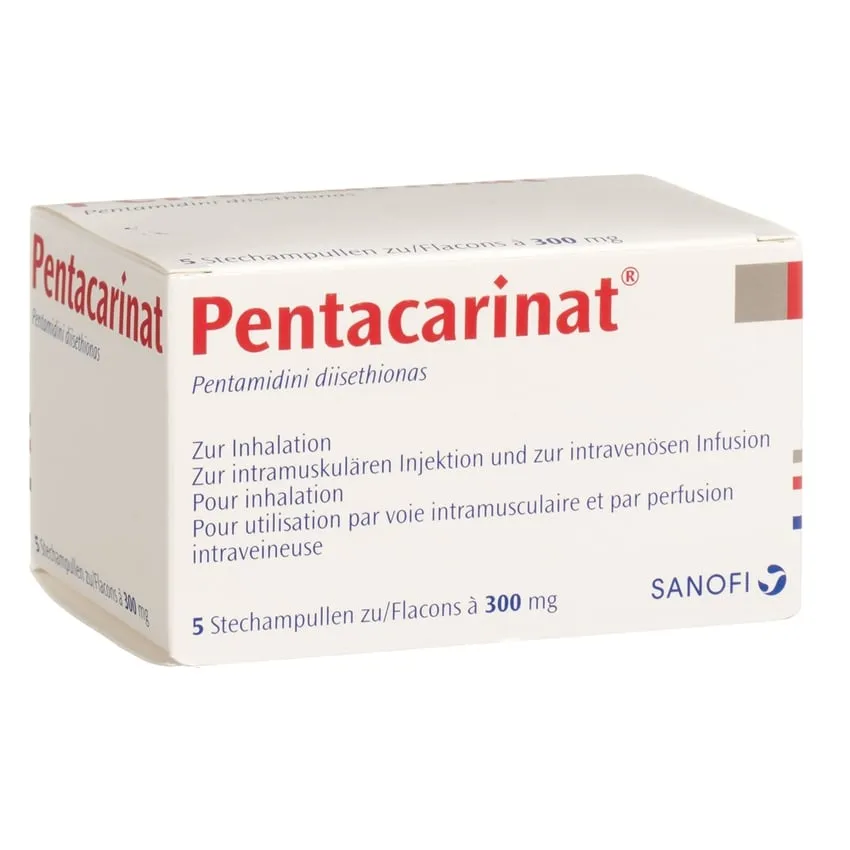
Table of Contents
- Package leaflet: Information for the patient
- Pentacarinat 300 mg powder for injectable solution or nebuliser solution
- 1. What Pentacarinat is and what it is used for
- 2. What you should know before taking Pentacarinat
- 3. How to take Pentacarinat
- 4. Possible adverse effects
- 5. How to store Pentacarinat
- 6. Package contents and other information
Package leaflet: Information for the patient
Pentacarinat 300 mg powder for injectable solution or nebuliser solution
Pentamidine isethionate
Please read all of this leaflet carefully before you start using this medicine because it contains important information for you.
- Keep this leaflet. You may need to read it again.
- If you have any questions, ask your doctor, pharmacist, or nurse.
- This medicine has been prescribed for you only. Do not give it to other people, even if their symptoms are the same as yours, as it may be harmful.
- If you experience any side effects, including those not listed in this leaflet, tell your doctor, pharmacist, or nurse. See section 4.
Contents of this leaflet:
- What Pentacarinat is and what it is used for
- What you need to know before using Pentacarinat
- How to use Pentacarinat
- Possible side effects
- How to store Pentacarinat
- Contents of the pack and other information
1. What Pentacarinat is and what it is used for
Pentacarinat contains pentamidine isethionate, which belongs to a class of medicines called antiprotozoals that kill microorganisms (microbes, germs, etc.) or stop their multiplication or growth.
Pentacarinat as an injectable solution is indicated for the treatment of the following diseases:
- Pneumocystis carinii pneumonia in weakened patients or those with impaired immune defenses (immunocompromised), such as in AIDS. Pentamidine isethionate is particularly useful in patients allergic to sulfonamide antibiotics and in cases of intolerance or resistance to co-trimoxazole.
- Infectious diseases caused by protozoa of the genus Leishmania, both in the form affecting various internal organs (visceral leishmaniasis) and in the form causing skin lesions (cutaneous leishmaniasis), including cases resistant to antimonial-based therapies.
- African trypanosomiasis: sleeping sickness caused by Trypanosoma gambiense in the initial phase.
Pentacarinat nebulizer solution is indicated for: prevention of Pneumocystis carinii pneumonia in weakened patients or those with impaired immune defenses (immunocompromised), such as in cases of severe immune deficiency due to HIV infection (human immunodeficiency virus).
2. What you should know before taking Pentacarinat
Do not use Pentacarinat
- If you are allergic to pentamidine isethionate or to any of the other ingredients of this medicine (listed in section 6).
- If you are pregnant (see "Pregnancy and breastfeeding").
- If you are breastfeeding (see "Pregnancy and breastfeeding").
- If it is for a child (only for the nebulizing solution).
Warnings and precautions
Talk to your doctor, pharmacist, or nurse before using Pentacarinat.
If you have liver and/or kidney problems, high or low blood pressure, high or low blood sugar levels,
low white blood cell count (leucopenia), low platelet count (thrombocytopenia), or low red blood cell count (anemia),
your doctor will administer Pentacarinat with particular caution.
Your doctor will pay special attention when administering Pentacarinat by intramuscular and/or
intravenous route, as serious, sometimes fatal, adverse effects have been reported due to a significant drop
in blood pressure, low blood sugar levels, acute inflammation of the pancreas (acute pancreatitis), and
abnormal heart rhythm (cardiac arrhythmia).
Your blood pressure must be measured before injecting the medicine, and the injections must be given while lying down.
Your blood pressure must be carefully monitored at regular intervals during administration and until the end of
treatment.
If you are receiving inhaled Pentacarinat treatment, you must be closely monitored for the possible occurrence of serious adverse effects.
If you have heart diseases, such as heart failure, coronary artery disease, or a heart rhythm disorder (QT interval prolongation),
if you have had previous heart rhythm abnormalities (ventricular arrhythmias), uncorrected low potassium levels in the blood (hypokalemia) or low magnesium levels in the blood (hypomagnesemia),
slow heart rate (bradycardia below 50 beats per minute), or if you are taking medicines that may cause QT interval prolongation (see "Other medicines and Pentacarinat"),
your doctor will administer Pentacarinat with caution. Indeed, pentamidine isethionate may, although rarely, cause heart disorders (QT interval prolongation, cardiac arrhythmias such as torsades de pointes).
Before, during, and after Pentacarinat therapy, your doctor will perform the following laboratory tests:
- monitoring of blood nitrogen concentration (azotemia) and blood creatinine concentration (creatininemia) daily during treatment;
- monitoring of red blood cells, white blood cells, and platelets (complete blood count) daily during treatment;
- monitoring of blood glucose concentration (glycemia) fasting daily during treatment and at regular intervals after completion of treatment;
- monitoring of liver function through specific blood tests (bilirubin, alkaline phosphatase, aspartate aminotransferase (AST/SGOT), and alanine aminotransferase (ALT/SGPT)). If values remain normal during treatment, monitoring should be performed once a week. If values are elevated and/or increase during treatment, monitoring should be performed once a week. If you are also taking other medicines that may cause liver damage, monitoring should be performed every 3–5 days;
- monitoring of blood calcium concentration (calcemia) weekly; monitoring of blood magnesium concentration (magnesemia) twice weekly;
- urine analysis and monitoring of blood electrolytes (sodium, chloride, potassium, etc.) daily during treatment;
- heart monitoring with electrocardiogram at regular intervals.
Pentacarinat Nebulizing Solution
If you are at risk of developing a condition characterized by air accumulation in the chest around the lungs, leading to lung compression (pneumothorax), your doctor must evaluate you before starting inhaled Pentacarinat therapy.
Inhalation of Pentacarinat may cause coughing and/or bronchial constriction making breathing difficult (bronchospasm), especially if you have asthma or smoke. In this case, you should temporarily stop inhalation, and your doctor will prescribe a bronchodilator spray (a medicine that relaxes the muscles of the airways). After 10 minutes, you may resume inhalation.
During subsequent aerosol therapy sessions with Pentacarinat, it is recommended to use a bronchodilator 10 minutes before starting.
If you have difficulty breathing, with a tendency toward narrowing of the airways (bronchoconstriction), low or high blood sugar levels (hypo- or hyperglycemia), kidney or liver disorders, low white blood cell count (leucopenia), low platelet count (thrombocytopenia), or low red blood cell count (anemia), your doctor will prescribe inhaled Pentacarinat with caution.
If you experience symptoms of lung infection such as shortness of breath, fever, and cough, your doctor must perform a thorough examination and tests to confirm or rule out Pneumocystis carinii pneumonia.
Before starting prevention with Pentacarinat, your doctor must exclude that you have Pneumocystis carinii pneumonia, because the recommended dose of Pentacarinat for preventing Pneumocystis carinii pneumonia is not sufficient to treat the disease.
If you have previously suffered from Pneumocystis carinii pneumonia, in rare cases you may develop infections outside the lungs (extrapulmonary infections) caused by Pneumocystis carinii.
It is recommended to avoid dispersing Pentacarinat into the environment.
Adequate ventilation of the room may help reduce the risks of sensitization and transmission of respiratory diseases. You must turn off the nebulizer every time you remove the mask from your face during treatment.
Children and adolescents
The use of Pentacarinat as a nebulizing solution is not recommended in children and adolescents under 18 years of age.
Other medicines and Pentacarinat
Inform your doctor, pharmacist, or nurse if you are taking, have recently taken, or might take any other medicine.
Concomitant administration of Pentacarinat with ACE inhibitors and beta-blockers (medicines used to lower blood pressure) may increase the frequency of cough and bronchoconstriction (contraction of the airway muscles making breathing difficult), especially if you have asthma.
The effects of Pentacarinat may be influenced by, or may influence, the following medicines:
- Medicines that may cause a heart rhythm disorder (QT interval prolongation), such as phenothiazines (for the treatment of mental illnesses), tricyclic antidepressants (for the treatment of depression), terfenadine and astemizole (for the treatment of allergies), intravenous erythromycin and quinolone antibiotics (for the treatment of infections), and halofantrine (for the treatment of malaria) (see "Warnings and precautions").
- Foscarnet (for the treatment of viral infections): hypocalcemia (decreased calcium levels in the blood) may occur.
Pregnancy and breastfeeding
If you are pregnant, suspect you may be pregnant, plan to become pregnant, or are breastfeeding, consult your doctor or pharmacist before using this medicine.
Pregnancy
You must not use Pentacarinat during pregnancy unless your doctor considers it strictly necessary.
Breastfeeding
You must not use Pentacarinat while breastfeeding unless your doctor considers it strictly necessary.
Driving and using machines
You should exercise caution when driving or operating machinery, as this medicine may cause dizziness.
3. How to take Pentacarinat
Take this medicine exactly as directed by your doctor or pharmacist. If you have any doubts, consult your doctor or pharmacist.
Pentacarinat injectable solution
Use in adults, children and infants
- Pneumocystis carinii pneumonia: The recommended dose is 4 mg of Pentacarinat per kg of body weight once daily for at least 14 days, preferably administered by slow intravenous infusion.
- Visceral leishmaniasis (Kala-azar): The recommended dose is 3–4 mg of Pentacarinat per kg of body weight on alternate days, up to a maximum of 10 injections, preferably administered intramuscularly. If necessary, a further treatment cycle may be repeated.
- Cutaneous leishmaniasis: The recommended dose is 3–4 mg of Pentacarinat per kg of body weight, administered 1–2 times weekly by intramuscular injection until healing occurs.
- Trypanosomiasis: The recommended dose is 4 mg of Pentacarinat per kg of body weight once daily or on alternate days, for a total of 7–10 injections. It may be administered either intramuscularly or by slow intravenous infusion.
Use in the elderly
No dose adjustment is necessary if you are elderly.
Use in patients with impaired kidney function (renal insufficiency)
- Pneumocystis carinii pneumonia: In life-threatening cases, the recommended dose is 4 mg of Pentacarinat per kg of body weight once daily for 7–10 days, followed by 4 mg of Pentacarinat per kg of body weight on alternate days until a complete treatment course of at least 14 doses is achieved. In less severe cases, 4 mg of Pentacarinat per kg of body weight on alternate days until a complete treatment course of at least 14 doses is sufficient. Dose reduction is not required for the treatment of leishmaniasis or trypanosomiasis.
Use in patients with impaired liver function (hepatic insufficiency)
If you have impaired liver function, no adjustment of the recommended dose is required.
Pentacarinat will be administered while you are lying down, either by deep intramuscular injection or by slow intravenous infusion (lasting at least 60 minutes).
Pentacarinat nebulizer solution
Use in adults
If you are an adult, the recommended dose is 300 mg once every 4 weeks.
If you need to interrupt a nebulization session, you must turn off the device.
For use of the nebulizer, follow the manufacturer’s instructions for operation.
Use in children
The use of Pentacarinat as a nebulizer solution is not recommended in children and adolescents under 18 years of age.
You must use nebulizers capable of delivering the Pentacarinat dose in particles smaller than 5 microns, preferably with particle size between 1 and 2 microns, to ensure optimal drug distribution in the lungs.
If you use reusable nebulizers, you must either replace the reservoir and tubing or sterilize them.
Reconstitution of the medicinal product
You must dissolve the contents of the vial with 6 ml of water for injections and transfer it into the reservoir. Do not use saline solution (0.9% physiological saline).
Do not mix Pentacarinat solution with other medicinal products.
Do not use the nebulizer to inhale bronchodilators.
Pentacarinat must be nebulized using a nebulizer equipped with a mouthpiece, which must be kept in the mouth throughout the entire nebulization period, typically lasting between 15 and 30 minutes. The nebulizer must also be equipped with an exhaust air filter to prevent dispersion of the drug into the environment.
If you take more Pentacarinat than you should
In case of accidental ingestion/overdose of Pentacarinat, contact your doctor immediately or go to the nearest hospital.
Following overdoses of pentamidine isethionate, cases of heart rhythm disturbances (cardiac arrhythmias, torsades de pointes) have been observed.
If you forget to use Pentacarinat
Do not take a double dose to make up for the missed dose.
If you have any doubts about how to use this medicine, consult your doctor, pharmacist or nurse.
4. Possible adverse effects
Like all medicines, this medicine can cause adverse effects, although not everyone experiences them.
The following adverse effects may also occur, according to the following frequency:
Pentacarinat injectable solution
Very common (may affect more than 1 in 10 people):
- Increased concentration of nitrogen in the blood (hyperazotemia),
- Kidney problems (renal failure),
- Blood in the urine (haematuria),
- Local reactions at the injection site such as discomfort, pain, hardening, accumulation of pus in tissues (abscess), and muscle cell death (muscle necrosis).
Common (may affect up to 1 in 10 people):
- Decreased number of white blood cells (leucopenia),
- Decreased number of blood platelets (thrombocytopenia),
- Decreased number of red blood cells (anaemia),
- Low blood sugar levels (hypoglycaemia),
- High blood sugar levels (hyperglycaemia),
- Diabetes (diabetes mellitus),
- High levels of potassium in the blood (hyperkalaemia),
- Low levels of calcium in the blood (hypocalcaemia),
- Low levels of magnesium in the blood (hypomagnesaemia),
- Loss of consciousness (syncope),
- Dizziness (vertigo),
- Low blood pressure (hypotension),
- Flushing,
- Nausea,
- Vomiting,
- Altered taste,
- Changes in blood tests indicating liver function abnormalities,
- Skin rash (cutaneous eruption).
Rare (may affect up to 1 in 1,000 people):
- Heart rhythm disorders (prolongation of the QT interval and cardiac arrhythmia),
- Inflammation of the pancreas (pancreatitis).
Frequency not known (cannot be estimated from available data):
- Allergic reactions (hypersensitivity, anaphylactic reactions),
- Severe and rapid generalized allergic reaction that may lead to death (anaphylactic shock),
- Swelling of the face, throat, limbs, possibly causing breathing difficulties (angioedema),
- Specific heart rhythm disturbance known as torsade de pointes, slowing of the heartbeat (bradycardia),
- Severe skin reactions with blisters or bullae, affecting the mouth and other body parts, accompanied by high fever, vomiting, diarrhoea, and joint pain (Stevens-Johnson syndrome),
- Muscle cell breakdown (rhabdomyolysis) following intramuscular administration,
- Increased blood test values for substances known as lactate dehydrogenase (LDH) and creatine phosphokinase (CPK),
- Altered sensation in limbs (paraesthesia of extremities) and reduced sensation in the face and around the mouth (facial and perioral hypoesthesia). These cases occurred during or immediately after intravenous administration and resolved after completion or interruption of the infusion.
Pentacarinat nebulizer solution
Common (may affect up to 1 in 10 people):
- Local allergic reactions with cough, shortness of breath, difficulty breathing (dyspnoea), contraction of respiratory tract muscles making breathing difficult (bronchospasm), especially if you have asthma or smoke. If you experience these adverse effects, talk to your doctor, who may prescribe appropriate medications,
- Altered taste,
- Nausea,
- Vomiting.
Rare (may affect up to 1 in 1,000 people):
- Heart rhythm disorders (prolongation of the QT interval and cardiac arrhythmia),
- Inflammation of the lungs (eosinophilic pneumonia).
Frequency not known (cannot be estimated from available data):
- Allergic reactions (hypersensitivity, anaphylactic reactions),
- Severe and rapid generalized allergic reaction that may lead to death (anaphylactic shock),
- Swelling of the face, throat, limbs, possibly causing breathing difficulties (angioedema),
- Low blood sugar levels (hypoglycaemia),
- Mild mental confusion,
- Specific heart rhythm disturbance known as torsade de pointes,
- Slowing of the heartbeat (bradycardia),
- Low blood pressure (hypotension),
- A specific lung condition characterized by accumulation of air in the chest cavity around the lungs, leading to lung compression (pneumothorax), particularly if you have had Pneumocystis carinii pneumonia,
- Inflammation of the pancreas (pancreatitis),
- Skin rash (cutaneous eruption),
- Kidney problems (renal failure),
- Fever,
- Decreased appetite,
- Fatigue.
Reporting of adverse effects
If you experience any adverse effect, including those not listed in this leaflet, contact your doctor, pharmacist, or nurse.
You can also report adverse effects directly via the national reporting system at www.agenziafarmaco.gov.it/content/come-segnalare-una-sospetta-reazione-avversa.
By reporting adverse effects, you can help provide more information on the safety of this medicine.
5. How to store Pentacarinat
Do not store above 30°C.
The reconstituted solution must be stored in a refrigerator (2°C-8°C) and must not be used
more than 24 hours after preparation.
Keep this medicine out of the sight and reach of children.
Do not use this medicine after the expiry date stated on the carton and vial after "Exp.".
The expiry date refers to the last day of that month.
Do not dispose of any medicine via wastewater or household waste. Ask your pharmacist how to
dispose of medicines no longer in use. This will help protect the environment.
6. Package contents and other information
What Pentacarinat contains
- The active substance is pentamidine isethionate. Each vial contains 300 mg of pentamidine isethionate.
Description of the appearance of Pentacarinat and contents of the pack
Pentacarinat is a powder for solution for injection or nebulization.
Pack: 1 vial containing 300 mg.
Marketing Authorization Holder
The Simple Pharma Company Limited
Ground Floor, 71 Lower Baggot Street,
Dublin, Ireland
Manufacturer
Sanofi S.r.l.
Via Valcanello, 4 – 03012 Anagni (FR) - Italy
The following information is intended exclusively for physicians or healthcare professionals:
Warnings and precautions
Blood pressure values should be determined at baseline, and injections should be administered while the patient is lying down. Blood pressure must be carefully monitored at regular intervals during administration, throughout the duration of treatment.
Therefore, patients receiving inhaled pentamidine should also be closely monitored for the development of serious adverse reactions.
Following administration of pentamidine isethionate, both in children and adults, cases of paresthesia in the extremities as well as facial and perioral hypoesthesia have been reported. These cases occurred during or immediately after administration and resolved after completion or interruption of treatment.
Inhalation of pentamidine isethionate may cause coughing and/or bronchospasm, especially in asthmatic patients or smokers. In such cases, nebulization should be temporarily interrupted and a bronchodilator spray administered. After 10 minutes, inhalation may be resumed. It is advisable that subsequent nebulization sessions in these patients are systematically preceded by premedication with a bronchodilator, administered 10 minutes before the start of each session.
Environmental and occupational risks: caution should be taken to avoid dispersion of pentamidine into the environment.
Adequate room ventilation may help reduce the risk of sensitization among healthcare personnel.
The nebulizer should be turned off when the mask is removed from the patient’s face during treatment.
Additionally, the treatment room should be thoroughly ventilated to minimize the risk of transmission of other respiratory pathogens such as Mycobacterium tuberculosis and Mycobacterium avium – intracellulare, which may be expelled during accidental coughing episodes during treatment.
How to administer Pentacarinat
Injectable solution
Pentamidine isethionate must always be administered to patients lying down, whether given by deep intramuscular injection or slow infusion (the diluted solution of pentamidine isethionate must be administered as a slow infusion lasting at least 60 minutes). It must not be administered as an intravenous bolus.
Pentamidine isethionate must not be mixed with other injectable solutions except water for injections, glucose solution, or 0.9% saline solution.
Intramuscular use
The contents of the vial should be dissolved in 3 ml of water for injections.
Intravenous use
The contents of the vial should be dissolved in 3–5 ml of water for injections. The required dose of pentamidine isethionate should then be further diluted in 50–250 ml of glucose solution or 0.9% (normal) saline solution. The final solution of pentamidine isethionate should be administered as a slow infusion lasting at least 60 minutes, under medical supervision and with the patient lying down.
Solution for nebulization
Dissolve the contents of the vial with 6 ml of water for injections and transfer into the reservoir. Saline solution (0.9% physiological saline) must not be used for reconstitution, as the reduced volume may cause precipitation of the active substance.
No other medications should be mixed with the pentamidine solution.
Aerosol administration should be performed using nebulizers capable of delivering pentamidine in particles with a diameter smaller than 5 microns, preferably between 1 and 2 microns, to ensure optimal alveolar distribution of the drug.
When using reusable nebulizers, the reservoir and tubing must either be replaced or sterilized.
The nebulizer must not be used to administer bronchodilators.
The entire dose of pentamidine must be nebulized and delivered via a nebulizer equipped with a mouthpiece, which the patient must keep in their mouth throughout the entire nebulization period, typically lasting between 15 and 30 minutes. The nebulizer must also be equipped with an exhaust air filter to prevent dispersion of the drug into the environment during exhalation.