Pariet
Italy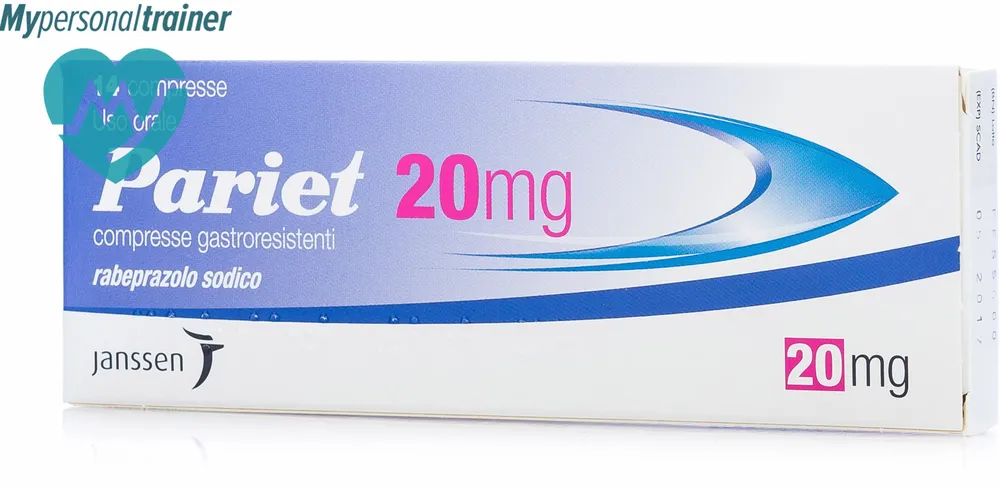
Table of Contents
- Package leaflet: Information for the user
- Pariet 10 mg gastro-resistant tablets, 20 mg gastro-resistant tablets
- 1. What Pariet is and what it is used for
- 2. What you need to know before taking Pariet
- 3. How to take Pariet
- 4. Possible side effects
- 5. How to store Pariet
- 6. Package contents and other information
Package leaflet: Information for the user
Pariet 10 mg gastro-resistant tablets, 20 mg gastro-resistant tablets
Rabeprazole sodium
Please read all of this leaflet carefully before you start taking this medicine because it contains important information for you.
- Keep this leaflet. You may need to read it again.
- If you have any questions, ask your doctor or pharmacist.
- This medicine has been prescribed for you only. Do not give it to others, even if they have the same symptoms as yours, because it may be harmful.
- If any of the side effects listed gets worse, or if you notice any side effects not listed in this leaflet, inform your doctor or pharmacist. See section 4.
Contents of this leaflet:
- What Pariet is and what it is used for
- What you need to know before taking Pariet
- How to take Pariet
- Possible side effects
- How to store Pariet
- Contents of the pack and other information
1. What Pariet is and what it is used for
Pariet tablets contain sodium rabeprazole as the active substance. This active substance
belongs to a class of medicines called Proton Pump Inhibitors (PPIs). They work
by reducing the amount of acid produced by your stomach.
Pariet tablets are used to treat the following conditions:
- Gastro-oesophageal reflux disease (GORD), which may include heartburn. Gastro-oesophageal reflux disease occurs when acid and food pass from the stomach into the oesophagus.
- Stomach ulcer or duodenal ulcer. If these ulcers are infected with a bacterium called Helicobacter pylori (H. pylori), antibiotics will also be prescribed. Taking Pariet tablets together with antibiotics helps eliminate the infection and heal the ulcer. In addition, this treatment helps prevent recurrence of the ulcer by eradicating the infection.
- Zollinger-Ellison syndrome, a condition in which the stomach produces extremely high amounts of acid.
2. What you need to know before taking Pariet
Do not take Pariet
- If you are allergic (hypersensitive) to sodium rabeprazole or to any of the excipients of this medicine (listed in section 6).
- If you are or think you may be pregnant.
- If you are breastfeeding.
Do not take Pariet if any of the conditions listed above apply to you. If you have any doubts, consult your doctor or pharmacist before taking Pariet tablets.
Warnings and precautions
Talk to your doctor or pharmacist before taking Pariet:
- if you are allergic to other proton pump inhibitors or "imidazole-like substitutes"
- if you have liver or blood problems; such problems have occurred in some patients and resolved upon discontinuation of Pariet treatment
- if you have been diagnosed with a stomach tumour
- if you have had liver disease
- if you are taking atazanavir for HIV infection
- if you have low body stores or risk factors that reduce vitamin B12 absorption and are receiving long-term treatment with sodium rabeprazole. Like all other agents that reduce acid, sodium rabeprazole may lead to reduced absorption of vitamin B12.
- if you have ever had a skin reaction after treatment with a medicine similar to Pariet that reduces gastric acidity.
- if you notice the appearance of a skin rash, especially in sun-exposed areas, consult your doctor as soon as possible, as treatment with Pariet may need to be discontinued. Remember to report any other adverse effects such as joint pain.
- if you are scheduled for a specific blood test (chromogranin A).
- During treatment with rabeprazole, inflammation of the kidneys may occur. Signs and symptoms may include decreased urine volume or blood in the urine and/or hypersensitivity reactions such as fever, rash, and joint stiffness. You should report such symptoms to your doctor.
If you are unsure whether any of the conditions listed above may apply to you, consult your doctor or pharmacist before taking Pariet tablets.
Children
The use of Pariet is not recommended in children.
If you develop severe diarrhoea (watery or bloody) with symptoms such as fever, abdominal pain or tenderness, stop taking Pariet and consult your doctor.
If you are taking a proton pump inhibitor such as PARIET, especially for more than one year, there may be a slight increase in the risk of fractures of the hip, wrist or spine. If you suffer from osteoporosis or are taking corticosteroids (which may increase the risk of osteoporosis), consult your doctor.
Other medicines and Pariet
Inform your doctor or pharmacist if you are taking, have recently taken or might take any other medicines, including those obtained without a prescription or herbal products.
In particular, inform your doctor or pharmacist if you are taking any of the following medicines:
- Ketoconazole or itraconazole – used to treat fungal infections. Pariet may reduce blood levels of these medicines. Your doctor may consider adjusting the dose.
- Atazanavir – used to treat HIV infections. Pariet may reduce blood levels of this medicine, and the two should not be used together.
- Methotrexate (a chemotherapeutic agent used at high doses to treat tumours) – if you are taking a high dose of methotrexate, your doctor may temporarily discontinue your treatment with Pariet.
If you are unsure whether any of the conditions listed above may apply to you, consult your doctor or pharmacist before taking Pariet tablets.
Pregnancy, breastfeeding and fertility
- Do not use Pariet if you are pregnant or think you may be pregnant.
- Do not use Pariet if you are breastfeeding or planning to breastfeed. If you are pregnant or breastfeeding, think you may be pregnant, or are planning a pregnancy, ask your doctor or pharmacist for advice before taking this medicine.
Driving and using machines
While taking Pariet, you may feel drowsy. If this occurs, do not drive and do not operate tools or machinery.
Pariet contains sodium
This medicine contains less than 1 mmol of sodium (23 mg) per gastro-resistant tablet, i.e. essentially "sodium-free".
3. How to take Pariet
Always take this medicine exactly as instructed by your doctor. If you have
any doubts, consult your doctor or pharmacist.
Taking Pariet
- Remove the tablet from the blister pack just before taking it.
- Swallow the tablet whole with a glass of water. Do not chew or crush the tablets.
- Your doctor will provide information on how many tablets to take and for how long. This will depend on your condition.
- If you are taking this medicine for a prolonged period, your doctor will need to monitor you regularly.
Adults and Elderly
"Gastroesophageal reflux disease" (GERD)
Treatment of moderate to severe symptoms (symptomatic GERD)
- The recommended dose is 1 tablet of Pariet 10 mg once daily for four weeks.
- Take the tablet in the morning before breakfast.
- If symptoms recur after 4 weeks of treatment, your doctor may decide to continue treatment with 1 tablet of Pariet 10 mg for as long as necessary.
Treatment of more severe symptoms (erosive or ulcerative GERD)
- The recommended dose is 1 tablet of Pariet 20 mg once daily for 4–8 weeks.
- Take the tablet in the morning before breakfast.
Long-term treatment of symptoms (maintenance therapy for GERD)
- The recommended dose is 1 tablet of Pariet 10 mg or 20 mg once daily for the duration indicated by your doctor.
- Take the tablet in the morning before breakfast.
- Your doctor will want to review you at regular intervals to assess symptoms and dosage.
Treatment of stomach ulcer (peptic ulcer)
- The recommended dose is 1 tablet of Pariet 20 mg once daily for six weeks.
- Take the tablet in the morning before breakfast.
- Your doctor may prescribe continuation of treatment for another six weeks if your condition has not improved.
Treatment of intestinal ulcer (duodenal ulcer)
- The recommended dose is 1 tablet of Pariet 20 mg once daily for four weeks.
- Take the tablet in the morning before breakfast.
- Your doctor may prescribe continuation of treatment for another four weeks if your condition has not improved.
Treatment and prevention of ulcers caused by Helicobacter pylori infections
- The recommended dose is 1 tablet of Pariet 20 mg twice daily for seven days.
- Your doctor will also prescribe antibiotics called amoxicillin and clarithromycin. For further information about the other medicines used in the treatment of Helicobacter pylori infection, please consult their respective package leaflets.
Treatment of Zollinger-Ellison syndrome, a condition in which the stomach produces very high amounts of acid
- It is recommended to start treatment with 3 tablets of Pariet 20 mg once daily.
- The dose may subsequently be adjusted by your doctor according to your response to treatment. If you are on long-term treatment, you will need to see your doctor at regular intervals to monitor symptoms and review the dose.
Patients with liver problems
You should consult your doctor, who will exercise particular caution at the start of your treatment with
Pariet and throughout the course of therapy.
If you take more Pariet than you should
If you take more tablets than prescribed, consult your doctor or go to the nearest hospital emergency department. Always bring the tablets or the packaging with you.
If you forget to take Pariet
- If you forget to take a dose, take it as soon as you remember. However, if it is almost time for your next dose, skip the missed dose and continue with your regular schedule.
- If you forget to take the medicine for more than 5 days, contact your doctor before taking it again.
- Do not take a double dose (two doses at the same time) to make up for a forgotten tablet.
If you stop taking Pariet
Relief from symptoms usually occurs before the ulcer is completely
healed. It is important not to stop taking the tablets until your doctor tells you to do so.
If you have any further questions about the use of this medicine, consult your doctor or pharmacist.
4. Possible side effects
Like all medicines, this medicine can cause side effects, although not everyone gets them.
Side effects are generally mild in severity and resolve without discontinuing treatment.
Stop treatment with Pariet and contact your doctor immediately if you notice any of the
following side effects – you may need urgent medical treatment:
- Allergic reactions – signs may include: sudden swelling of the face, shortness of breath, or low blood pressure, which could lead to fainting or collapse.
- Frequent infections such as sore throat, fever, or mouth or throat ulcers.
- Easy bruising or bleeding. These side effects are rare (occur in fewer than 1 in 1,000 people).
- Severe blistering skin reactions or irritation or ulcers in the mouth and throat. These side effects are very rare (occur in fewer than 1 in 10,000 people).
Other possible side effects:
Common (occur in less than 1 in 10 people)
- Infections
- Difficulty falling asleep
- Headache or dizziness
- Cough, cold, runny nose, sore throat (pharyngitis)
- Stomach or intestinal problems such as: abdominal pain, diarrhoea, flatulence, nausea, vomiting, or constipation
- Non-specific pain, back pain
- Weakness, flu-like syndrome
- Benign polyps in the stomach
Uncommon (occur in less than 1 in 100 people)
- Nervousness or drowsiness
- Lower respiratory tract infections (bronchitis)
- Blocked and painful nose (sinusitis)
- Dry mouth
- Indigestion or burping
- Rash or redness of the skin
- Muscle, leg or joint pain
- Fractures of the hip, wrist or spine
- Bladder infections (urinary tract infections)
- Chest pain
- Chills or fever
- Liver disorders (shown in blood tests)
Rare (occur in less than 1 in 1,000 people)
- Loss of appetite (anorexia)
- Depression
- Hypersensitivity (including allergic reactions)
- Vision disturbances
- Inflammation of the mouth (stomatitis) or taste disturbances
- Stomach disorders or stomach pain
- Liver problems, including yellowing of the skin and whites of the eyes (jaundice)
- Itchy skin and blister formation
- Sweating
- Kidney problems
- Weight gain
- Changes in white blood cells (detected in blood tests) which may lead to frequent infections
- Reduced platelets in the blood which may lead to bleeding or bruising more easily than normal
Other possible side effects (frequency not known)
- Breast swelling in men
- Fluid retention
- Low levels of sodium in the blood, which may cause tiredness, confusion, muscle spasms, seizures and coma
- Patients with previous liver problems may very rarely develop encephalopathy (brain disease)
- Erythema, possible joint pain
- Inflammation of the intestine (causing diarrhoea)
If you take PARIET for more than three months, your blood magnesium levels may decrease.
Low magnesium levels may cause fatigue, involuntary muscle contractions, disorientation, seizures,
dizziness, and increased heart rate. If you experience any of these symptoms, contact your doctor
immediately. Low magnesium levels may also lead to reduced levels of potassium or calcium in the
blood. Your doctor should decide whether to monitor your blood magnesium levels periodically.
Do not be alarmed by this list of side effects. You may not experience any of them.
Reporting of side effects
If you experience any side effect, including those not listed in this leaflet, talk to your doctor or
pharmacist. You can also report side effects directly via the national reporting system at
https://www.aifa.gov.it/content/segnalazioni-reazioni-avverse . By reporting side effects, you can help
provide more information on the safety of this medicine.
5. How to store Pariet
Keep Pariet out of the sight and reach of children.
Do not store above 25°C.
Do not refrigerate.
Do not use Pariet after the expiry date stated on the packaging and blister. The expiry date refers to the last day of the month.
Medicines should not be disposed of via wastewater or household waste. Ask your pharmacist how to dispose of medicines you no longer use. This will help protect the environment.
6. Package contents and other information
What Pariet contains
Each Pariet 10 mg tablet contains 10 mg of sodium rabeprazole as the active substance.
The excipients are:
mannitol, magnesium oxide, low-substituted hydroxypropyl cellulose, hydroxypropyl cellulose, magnesium stearate,
ethylcellulose, hypromellose phthalate, diacetylated monoglycerides, talc, titanium dioxide (E171), iron oxide red (E 172), carnauba wax and ink (white shellac, black iron oxide (E172), dehydrated ethyl alcohol, 1-butanol).
Each Pariet 20 mg tablet contains 20 mg of sodium rabeprazole as the active substance.
The excipients are:
mannitol, magnesium oxide, low-substituted hydroxypropyl cellulose, hydroxypropyl cellulose, magnesium stearate,
ethylcellulose, hypromellose phthalate, diacetylated monoglycerides, talc, titanium dioxide (E171), iron oxide yellow (E 172), carnauba wax and ink (white shellac, red iron oxide (E 172), glycerin esterified with fatty acid, dehydrated ethyl alcohol, 1-butanol).
Description of the appearance of Pariet and contents of the pack
Pariet 10 mg gastro-resistant tablets are pink, biconvex tablets with the imprint “E241” on one side.
Pariet 20 mg gastro-resistant tablets are yellow, biconvex tablets with the imprint “E243” on one side.
The tablets are packaged in blisters containing 1, 7, 14, 15, 25, 28, 30, 50, 56, 75 or 120 tablets.
Not all pack sizes may be marketed.
Marketing Authorization Holder and Manufacturer
Marketing Authorization Holder
Janssen-Cilag SpA
Viale Fulvio Testi, 280/6
20126 Milano MI
Italy
Manufacturer
Janssen Pharmaceutica N.V.
Turnhoutseweg 30,
2340 Beerse, Belgium
and/or
Eisai GmbH,
Edmund-Rumpler-Straße 3,
60549 Frankfurt am Main
Germany
and/or
Lusomedicamenta – Sociedade Técnica Farmacêutica S.A.
Estrada Consiglieri Pedroso 66, 69 B
Queluz de Baixo
2730-055 Barcarena
Portugal
This medicinal product is authorized in the Member States of the European Economic Area and the United Kingdom (Northern Ireland) under the following trade names:
| Country | Name of the medicinal product | Country | Name of the medicinal product |
|---------|-------------------------------|---------|-------------------------------|
| Austria | Pariet | Italy | Pariet |
| Belgium | Alfence, Pariet | Luxembourg | Pariet |
| Denmark | Pariet | Netherlands | Pariet |
| Finland | Pariet | Portugal | Pariet |
| France | Alfence, Pariet | Spain | Pariet |
| Germany | Pariet | Sweden | Pariet |
| Greece | Pariet | United Kingdom (Northern Ireland) | Pariet |
| Ireland | Pariet | | |