Opzelura
Italy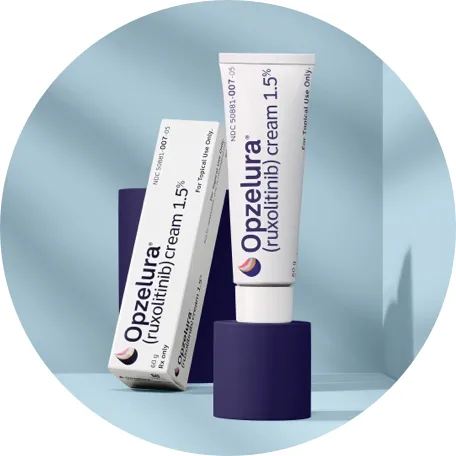
Table of Contents
Patient Information Leaflet
Opzelura 15 mg/g cream
ruxolitinib
Please read all of this leaflet carefully before you start using this medicine because it contains important information for you.
- Keep this leaflet. You may need to read it again.
- If you have any questions, ask your doctor or pharmacist.
- This medicine has been prescribed for you only. Do not pass it on to other people, even if their symptoms are the same as yours, as it may be harmful to them.
- If you experience any side effects, including those not listed in this leaflet, tell your doctor or pharmacist. See section 4.
Contents of this leaflet
- What Opzelura is and what it is used for
- What you need to know before using Opzelura
- How to use Opzelura
- Possible side effects
- How to store Opzelura
- Contents of the pack and other information
1. What Opzelura is and what it is used for
Opzelura contains the active substance ruxolitinib. It belongs to a group of medicines called Janus kinase inhibitors.
Opzelura is used on the skin to treat vitiligo affecting the face in adults and adolescents aged 12 years and older. Vitiligo is an autoimmune disease in which the immune system attacks the body's own cells that produce the skin pigment called melanin. This causes a loss of melanin, leading to the appearance of white or pale pink patches on the skin. In vitiligo, ruxolitinib reduces the immune system's activity against the cells that produce melanin, allowing the skin to produce pigment and restore its normal colour.
2. What you need to know before using Opzelura
Do not use Opzelura
- if you are allergic to ruxolitinib or to any of the other ingredients of this medicine (listed in section 6)
- if you are pregnant or breastfeeding.
Warnings and precautions
Talk to your doctor or pharmacist before using Opzelura.
Opzelura must not be used on the lips, in the eyes, in the mouth, or in the vagina. If the cream
accidentally gets into these areas, remove it carefully and/or rinse thoroughly with water.
Children under 12 years of age
Do not administer Opzelura to children under 12 years of age, as this medicine has not been
studied in this age group.
Other medicines and Opzelura
Tell your doctor or pharmacist if you are using, have recently used, or might use any other
medicines.
Using Opzelura together with other topical medicines on the same treated skin area is not recommended, as this combination has not been studied.
After applying Opzelura, wait at least 2 hours before applying other medicines, sunscreens, or body creams/oils to the same area of skin.
Pregnancy and breastfeeding
Opzelura must not be used by women who are pregnant or breastfeeding, as this use has not been studied. If you are a woman of childbearing age, you must use effective contraception during treatment and for 4 weeks after the last application of Opzelura.
It is not known whether ruxolitinib passes into breast milk after topical application. The effects of this medicine on breastfed infants are unknown; therefore, Opzelura must not be used if you are breastfeeding or planning to breastfeed. You may resume breastfeeding approximately four weeks after the last application of Opzelura.
Driving and using machines
It is unlikely that Opzelura will affect your ability to drive or operate machinery.
Opzelura contains propylene glycol, cetyl alcohol, stearyl alcohol, methyl parahydroxybenzoate,
propyl parahydroxybenzoate, and butylated hydroxytoluene
- This medicine contains 150 mg of propylene glycol (E1520) per gram of cream, which may cause skin irritation.
- Cetyl alcohol and stearyl alcohol may cause localized skin reactions (e.g. contact dermatitis).
- Methyl parahydroxybenzoate (E218) and propyl parahydroxybenzoate may cause allergic reactions (including delayed reactions).
- Butylated hydroxytoluene (E321) may cause localized skin reactions (e.g. contact dermatitis) or irritation to the eyes and mucous membranes.
3. How to use Opzelura
Use this medicine exactly as instructed by your doctor or pharmacist. If you have
any doubts, consult your doctor or pharmacist.
Recommended dose
- Apply a thin layer of cream twice daily to the affected skin areas. Wait at least 8 hours between applications.
- The cream must not be used on more than 10% (one tenth) of the body surface area. This area corresponds to ten times the size of the palm of one hand, including the five fingers.
Method of administration
- This medicine is for topical use only.
- Do not apply the medicine to areas of skin other than those indicated by your doctor. The medicine should be applied to the smallest necessary skin surface area.
- Wash your hands after applying this medicine, unless your hands themselves have been treated. If another person applies the medicine, they must wash their hands after administration.
- After applying Opzelura, avoid washing the treated skin for at least 2 hours.
Duration of treatment
Your doctor will determine how long you should use this cream.
A minimum duration of 6 months is recommended, but more than 12 months may be necessary for satisfactory treatment. If the level of repigmentation achieved in the treated areas is satisfactory, consult your doctor about possibly discontinuing treatment in these areas. If loss of repigmentation occurs after stopping treatment, consult your doctor.
Do not use more than two 100-gram tubes in one month.
If you use more Opzelura than you should
If this happens, remove the excess cream.
If you forget to use Opzelura
If you forget to apply the cream at the scheduled time, apply it as soon as you remember, then continue according to the usual dosing schedule. However, if the next dose is due within 8 hours, skip the missed dose.
If you have any doubts about how to use this medicine, consult your doctor or pharmacist.
4. Possible side effects
Like all medicines, this medicine can cause side effects, although not everybody gets them.
The following side effects have been reported with Opzelura:
Common (may affect up to 1 in 10 people)
- acne at the application site
Reporting of side effects
If you experience any side effect, including those not listed in this leaflet, talk to your doctor or pharmacist.
You can also report side effects directly through the national reporting system listed in Annex V. By reporting side effects, you can help provide more information on the safety of this medicine.
5. How to store Opzelura
Keep this medicine out of the sight and reach of children.
Do not use this medicine after the expiry date stated on the tube and the cardboard box after "Exp.". The expiry date refers to the last day of that month.
Do not store above 30 °C.
Once the tube has been opened, use the cream within 6 months, but not beyond the expiry date.
Do not dispose of any medicine via wastewater or household waste. Ask your pharmacist how to dispose of medicines you no longer use. This will help protect the environment.
6. Package contents and other information
What Opzelura contains
- The active substance is ruxolitinib. One gram of cream contains 15 mg of ruxolitinib.
- The other ingredients are butylated hydroxytoluene (E321), cetyl alcohol, dimethicone (E900), disodium edetate (E385), glyceryl stearate, paraffin (E905), macrogol, medium-chain triglycerides, methyl parahydroxybenzoate (E218), phenoxyethanol, polysorbate 20 (E432), propylene glycol (E1520), propyl parahydroxybenzoate, purified water, stearyl alcohol, xanthan gum (E415).
See section 2 “Opzelura contains propylene glycol, cetyl alcohol, stearyl alcohol, methyl
parahydroxybenzoate, propyl parahydroxybenzoate and butylated hydroxytoluene”.
Description of the appearance of Opzelura and contents of the pack
Opzelura is a cream of white to off-white colour and is supplied in a tube containing 100 g of
cream. Each cardboard box contains one tube.
Marketing Authorisation Holder and Manufacturer
Incyte Biosciences Distribution B.V.
Paasheuvelweg 25
1105 BP Amsterdam
The Netherlands
More detailed information on this medicinal product is available on the European Medicines Agency’s website: http://www.ema.europa.eu.