Omnipaque
Italy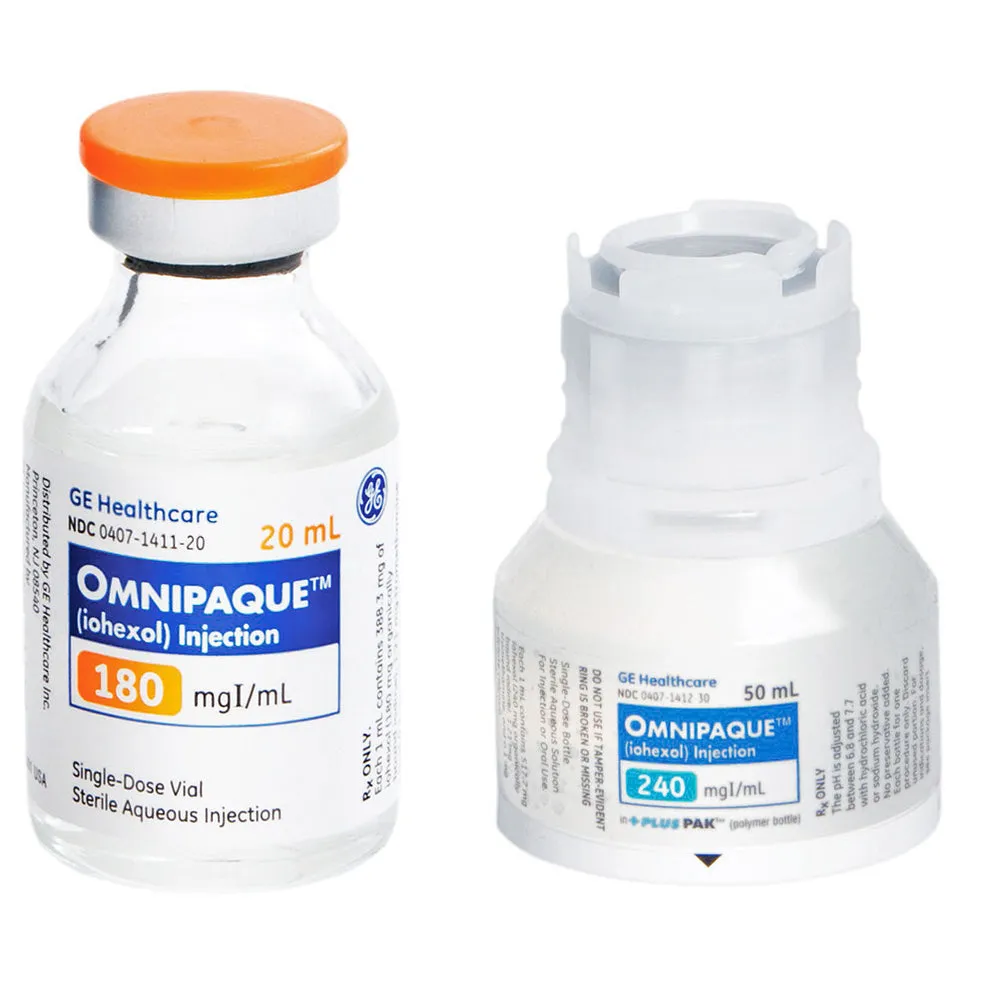
Table of Contents
- PACKAGE LEAFLET: INFORMATION FOR THE PATIENT
- Omnipaque 240 mg I/ml solution for injection, 300 mg I/ml solution for injection, 350 mg I/ml solution for injection
- 1. What Omnipaque is and what it is used for
- 2. What you should know before using Omnipaque
- 3. How to use Omnipaque
- 4. Possible side effects
- 5. How to store Omnipaque
- 6. Package contents and other information
- The following information is intended exclusively for healthcare professionals:
PACKAGE LEAFLET: INFORMATION FOR THE PATIENT
Omnipaque 240 mg I/ml solution for injection, 300 mg I/ml solution for injection, 350 mg I/ml solution for injection
Iohexol
Please read this leaflet carefully before using this medicine because it contains important information for you.
- Keep this leaflet. You may need to read it again.
- If you have any questions, consult your doctor.
- If you experience any side effects, including those not listed in this leaflet, consult your doctor. See section 4.
Contents of this leaflet:
- What Omnipaque is and what it is used for
- What you need to know before using Omnipaque
- How to use Omnipaque
- Possible side effects
- How to store Omnipaque
- Contents of the pack and other information
1. What Omnipaque is and what it is used for
This medicine is for diagnostic use only. It is used solely to help identify a disease.
Omnipaque is a "contrast medium". It is administered before X-rays to provide the doctor with a clearer image.
- Once injected, it can help the doctor distinguish between the normal and abnormal appearance and structure of certain organs in your body.
- It can be used for X-rays of your urinary system, spinal cord, or blood vessels, including the blood vessels of your heart.
- In some people, this medicine is given before or during a scan of the head or body using "Computed Tomography" (also known as CT scan). This type of scan uses X-rays.
- It may also be used to examine your salivary glands, stomach and intestines, or to examine body cavities such as your joints, uterus, and fallopian tubes.
- This medicine is also indicated in adults to identify a known or suspected breast lesion using a technique known as "contrast-enhanced spectral mammography" (CESM), in patients with dense breasts who have absolute or relative contraindications to undergoing magnetic resonance imaging.
Your doctor will explain which part of your body will be scanned.
2. What you should know before using Omnipaque
Do not use Omnipaque
- if you have severe thyroid problems
- if you are allergic (hypersensitive) to ioxaglate or to any of the other ingredients of this medicine (listed in section 6).
Warnings and precautions
Talk to your doctor before using Omnipaque:
- if you have had an allergic reaction after taking a medicine similar to Omnipaque, called a "contrast medium".
- if you have thyroid problems (hyperthyroidism).
- if you have had allergies.
- if you have asthma.
- if you have diabetes.
- if you have brain disorders (including migraine) or tumors.
- if you have or have had severe heart or lung diseases.
- if you have kidney problems or combined liver and kidney problems.
- if you have high blood pressure.
- if you have myasthenia gravis (a condition causing severe muscle weakness).
- if you have phaeochromocytoma (persistent high blood pressure or sudden spikes in blood pressure due to a rare tumor of the adrenal glands).
- if you have homocystinuria (a condition characterized by increased excretion in the urine of the amino acid cysteine).
- if you have an immune system disease.
- if you have suffered from alcohol or drug dependence.
- if you have epilepsy, blood clots in the brain, or stroke.
- if you are due to undergo thyroid function tests in the coming weeks.
- if you have paraproteinaemia (a group of conditions characterized by the presence in the bloodstream of high levels of certain proteins called paraproteins) or dysproteinaemia (an alteration in the amount and quality of blood proteins).
- if you have a blood disorder called sickle cell anemia.
A short-term brain disorder called encephalopathy may occur during or shortly after the imaging procedure.
Inform your doctor immediately if you notice any of the symptoms related to this condition described in section 4.
Inform your doctor before using Omnipaque if you are unsure whether any of the above conditions apply to you.
Other medicines and Omnipaque
Tell your doctor if you are taking a medicine containing metformin, if you are being treated with β-blockers, vasoactive substances, ACE inhibitors or angiotensin antagonists (medicines used to treat high blood pressure), or if you have recently been given interleukin-2 (for example following a transplant) or interferons (medicines used in the treatment of immune system disorders), antidepressants (medicines used to treat mental disorders such as depression), or if you are currently using, have recently used, or might use any other medicines, including those not requiring a prescription.
This is because some medicines may interfere with Omnipaque.
β-blockers may increase the risk of breathing difficulties and may interfere with the treatment of severe allergic reactions, which poses a risk with Omnipaque.
Pregnancy and breastfeeding
If you are pregnant, think you might be pregnant, planning to become pregnant, or breastfeeding, consult your doctor before using this medicine. The safety of using OMNIPAQUE in pregnant women has not been established. Therefore, your doctor will administer Omnipaque only if they consider that the benefit outweighs the risk for both mother and child. If Omnipaque has been administered to the mother during pregnancy, the newborn's thyroid function should be tested during the first week of life and between 2 and 6 weeks of age in premature infants and low-birth-weight newborns.
Breastfeeding
Breastfeeding can generally continue normally after an examination with Omnipaque.
However, to avoid any risk to the infant, it is recommended that you stop breastfeeding before using Omnipaque and do not resume for at least 24 hours. Breast milk produced during this period should be discarded.
Driving and using machines
It is not advisable to drive or operate machinery after the last injection of Omnipaque for:
- 24 hours, if the medicine was administered into the spinal column, or
- 1 hour in all other cases.
This is because you may experience dizziness or other symptoms of a delayed reaction.
Children and adolescents
Adequate hydration must be ensured before and after administration of OMNIPAQUE, especially in newborns and young children.
3. How to use Omnipaque
Use this medicine exactly as instructed by your doctor. If you have any doubts, consult your doctor.
Dosage and administration
Omnipaque will always be administered by a properly trained and qualified healthcare professional.
- Omnipaque will always be used in a hospital or clinic setting.
- Medical staff will inform you of everything you need to know for the safe use of the medicine.
Your doctor will determine the most appropriate dose for you.
The usual dose is:
- A single injection, or you may be asked to drink it.
After administration of Omnipaque
You will be asked to:
- drink plenty of fluids to help eliminate the medicine from your body, and
- remain in the area where the scan or X-ray was performed, or nearby, for at least 30 minutes,
- stay in the clinic or hospital for one hour.
Inform your doctor immediately if you experience any adverse effects during this period (see section 4 "Possible side effects").
The above advice applies to all patients who have been administered Omnipaque. If you are unsure about the above, please ask your doctor.
Omnipaque can be administered in many different ways; below is a description of the ways in which it is usually given:
Injection into an artery or vein
Omnipaque is usually injected into a vein in the arm or leg.
Sometimes it will be administered through a thin plastic tube (catheter) inserted into an artery, usually in the arm or groin.
Injection into the spinal column
Omnipaque will be injected into the space around the spinal cord to visualize your spinal canal.
If you have been administered Omnipaque into your spinal column, you will subsequently be advised to follow these recommendations:
- remain with your head and body elevated for one hour, or for six hours if you are in bed, and
- walk carefully and avoid bending over for six hours, and
- not remain completely alone during the first 24 hours after administration of Omnipaque, if you are an outpatient and have previously experienced seizures.
The above recommendations apply only if Omnipaque has been administered into your spinal column.
If you are unsure about the above, please ask your doctor.
Use in body cavities or joints
Body cavities may include joints, the uterus, and the fallopian tubes. The method and site of administration of Omnipaque may vary.
Oral use
Omnipaque is usually given by mouth to examine the throat, stomach, and small intestine.
Omnipaque may be diluted with water for these examinations.
If you have been given more Omnipaque than you should have
Since Omnipaque will be administered by a qualified healthcare professional, overdose is unlikely.
4. Possible side effects
Like all medicines, this medicine can cause side effects, although not everybody will experience them.
Allergic reactions
If you have an allergic reaction after receiving Omnipaque in hospital or clinic, inform your doctor immediately. Symptoms may include:
- Shortness of breath, difficulty breathing, tightness or pain in the chest
- Severe skin reactions, skin rashes, swellings, itchy spots, blisters on the skin and in the mouth, redness/itching of the eyes, cough, nasal congestion, sneezing, and other allergic symptoms
- Swelling of the face
- Dizziness or fainting (caused by low blood pressure)
The above side effects may also occur several hours or days after Omnipaque has been administered. If any of these side effects occur after you have left the hospital or clinic, go immediately to the nearest hospital emergency department. Other side effects may also occur as listed below.
The frequencies of side effects are defined as follows:
Very common: affects more than 1 in 10 people
Common: affects 1 to 10 in 100 people
Uncommon: affects 1 to 10 in 1,000 people
Rare: affects 1 to 10 in 10,000 people
Very rare: affects less than 1 in 10,000 people
Not known: frequency cannot be estimated from the available data
General
(Applicable to all uses of Omnipaque)
Common:
- Warm sensation
Uncommon:
- Feeling unwell (nausea)
- Increased or abnormal sweating, cold sensation, dizziness/fainting
Rare:
- Allergic reactions (hypersensitivity)
- Slowing of the heartbeat
- Headache, vomiting, fever
Very rare:
- Temporary alteration in taste sensation
- High or low blood pressure, tremor (shivering)
- Diarrhoea, abdominal pain
Not known:
- Allergic reactions, including severe allergic reactions leading to shock and collapse; see “Allergic reactions” for other symptoms.
- Fainting
- Swelling of the salivary glands
- Iodine intoxication, acute or chronic
After injection into an artery or vein
Read first the sub-section “General”. Below are described only the side effects and frequencies occurring after intravascular use of non-ionic monomeric contrast media.
Common:
- Warm sensation
- Short-term changes in respiratory rate, breathing problems
Uncommon:
- Pain and discomfort
Rare:
- Dizziness
- Partial or complete loss of muscle movement
- Intolerance to bright light
- Unusual feeling of tiredness
- Diarrhoea
- Irregular heartbeat
- Kidney problems
- Cough, general discomfort, respiratory arrest
- Skin rash and itching, skin redness
- Reduced vision
Very rare:
- Seizures (convulsive fits), clouding of consciousness, stroke, sensory disturbances (e.g. touch), altered sensitivity in limbs or other body parts (paresthesia), tremor
- Hot flushes, redness
- Breathing difficulties
- Transient brain disorders (encephalopathy), including short-term memory loss, coma, drowsiness, loss of memory for events occurring before the cause (retrograde amnesia), which may cause confusion, hallucinations, visual disturbances, loss of vision, seizures, loss of coordination, loss of movement on one side of the body, speech problems, and loss of consciousness
- Myocardial infarction
Not known:
- Severe skin reactions of pustular, exfoliative or bullous type
- Feeling confused, disoriented, restless, agitated or anxious
- Brain edema/swelling
- Overactivity of the thyroid gland (excess thyroid hormones in the blood causing various symptoms such as tachycardia, sweating, anxiety), short-term underactivity of the thyroid gland (a temporary thyroid dysfunction that returns to normal). Normally, no symptoms are observed.
- Transient movement difficulties, sensory disturbances (e.g. touch)
- Transient language disorders including aphasia (inability to speak), dysarthria (difficulty in pronouncing words)
- Temporary blindness, transient hearing loss
- Chest pain, heart problems including heart failure, cardiac arrest, and cyanosis (bluish to purplish skin coloration due to reduced oxygen)
- Chest tightness or breathing difficulties including fluid accumulation in the lungs, worsening of pancreatitis or acute inflammation of the pancreas
- Shock, arterial spasm, ischemia
- Pain and swelling of the vein, blood clots (thrombosis), reduction in blood platelets
- Joint pain, muscle spasm, muscle weakness, reaction at injection site, back pain
- Asthma attack
- Psoriasis flare-up
- Bullous dermatitis, Stevens-Johnson syndrome, erythema multiforme, toxic epidermal necrolysis, generalized acute exanthematous pustulosis, drug rash
- Iodism (excessive amount of iodine in the body) resulting in swelling and pain in the salivary glands
After injection into the spinal canal
Read first the sub-section “General”. Below are described only the side effects and frequencies occurring after intrathecal use of non-ionic monomeric contrast media.
Very common:
- Headache (may be severe and last for hours)
Common:
- Feeling unwell (nausea), vomiting
Uncommon:
- Central nervous system disorder (aseptic meningitis, including chemical meningitis)
Rare:
- Seizures (convulsive fits), dizziness, diarrhoea
- Pain in arms or legs, neck pain, back pain, extremity pain
Not known:
- Feeling agitated
- Abnormal electrical activity in the brain observed in an examination called electroencephalography
- Irritation of the meninges
- Status epilepticus
- Intolerance to bright light
- Movement difficulties, feeling confused
- Sensory disturbances (e.g. touch), temporary blindness, transient hearing loss
- Language disorders including aphasia (inability to speak), dysarthia (difficulty in pronouncing words)
- Altered sensitivity in limbs or other body parts (paresthesia), decreased sensitivity and response to a given stimulus (hypoesthesia)
- Tingling sensation, muscle contractions (spasms), reaction at injection site
- Transient brain disorders (encephalopathy) including short-term memory loss, coma, drowsiness, loss of memory for events occurring before the cause (retrograde amnesia), which may cause confusion, hallucinations, visual disturbances, loss of vision, seizures, loss of coordination, loss of movement on one side of the body, speech problems, and loss of consciousness
After use in body cavities (such as uterus and fallopian tubes, gallbladder, pancreas or hernia)
Read first the sub-section “General”. Below are described only the side effects and frequencies occurring after use of non-ionic monomeric contrast media in body cavities.
After endoscopic retrograde cholangiopancreatography (ERCP), a procedure performed to determine what is obstructing the normal flow of bile and pancreatic juice into the intestine:
Common:
- Inflammation of the pancreas (pancreatitis)
- Increased amylase (enzymes) in the blood
After oral use:
Very common:
- Diarrhoea
Common:
- Nausea, vomiting
Uncommon:
- Abdominal pain
After hysterosalpingography (HSG), a radiological technique used to assess the condition of the fallopian tubes (salpinges) and study the morphology of the uterine cavity:
Very common:
- Abdominal pain
After joint X-ray (arthrography):
Very common:
- Pain
Not known:
- Arthritis
Herniography:
Not known:
- Pain
Additional side effects in children and adolescents:
Not known:
Transient thyroid inactivity in newborns.
Temporary underactivity of the thyroid gland (transient hypothyroidism), unable to produce sufficient thyroid hormones to maintain normal body function, has been reported in premature infants, newborns, and other children after administration of Omnipaque. Premature infants are particularly sensitive to the effects of iodine. Thyroid function should be monitored in newborns during the first week of life following administration of iodinated contrast media to the mother during pregnancy.
Reporting of side effects
If you experience any side effect, including those not listed in this leaflet, consult your doctor. You can also report side effects directly via the following website:
https://www.aifa.gov.it/content/segnalazioni-reazioni-avverse
By reporting side effects, you can help provide more information on the safety of this medicine.
5. How to store Omnipaque
Keep this medicine out of the sight and reach of children.
Polypropylene vials: Store below 30°C, protected from light.
Glass vials: Store below 25°C, protected from light.
Glass and polypropylene vials of 50, 75, 100, 200 and 500 ml may be stored for one month at 37°C prior to use.
Polypropylene vials of 20 ml may be stored for one week at 37°C prior to use.
Do not use this medicine after the expiry date stated on the label after "Exp". The expiry date refers to the last day of that month.
The stated expiry date applies to the product as long as the packaging remains intact and it is stored correctly.
Store in the carton to protect the medicine from light.
6. Package contents and other information
What Omnipaque contains
-
The active substance is ioxaglate.
Omnipaque 240 mg I/ml contains 518 mg of ioxaglate per ml (equivalent to 240 mg of iodine per ml).
Omnipaque 300 mg I/ml contains 647 mg of ioxaglate per ml (equivalent to 300 mg of iodine per ml).
Omnipaque 350 mg I/ml contains 755 mg of ioxaglate per ml (equivalent to 350 mg of iodine per ml). -
The other components are: trometamol, sodium calcium edetate, hydrochloric acid (for pH adjustment), and water for injections.
Description of the appearance of Omnipaque and package contents
Omnipaque is an injectable solution. The medicine is a clear, aqueous solution, colourless to slightly yellow.
Omnipaque is supplied in the following pack sizes:
240 mg I/ml: 1 vial of 20 ml
1 vial of 50 ml
300 mg I/ml: 1 vial of 20 ml
1 vial of 50 ml
1 vial of 75 ml
1 vial of 100 ml
1 vial of 200 ml
1 vial of 500 ml
1 polypropylene vial of 20 ml
1 break-off polypropylene vial of 50 ml
1 polypropylene vial of 50 ml
1 polypropylene vial of 75 ml
1 polypropylene vial of 100 ml
1 polypropylene vial of 200 ml
1 polypropylene vial of 500 ml
350 mg I/ml: 1 vial of 50 ml
1 vial of 100 ml
1 vial of 200 ml
1 vial of 500 ml
1 break-off polypropylene vial of 50 ml
1 polypropylene vial of 50 ml
1 polypropylene vial of 100 ml
1 polypropylene vial of 200 ml
1 polypropylene vial of 500 ml
Not all pack sizes may be marketed.
Marketing Authorization Holder and Manufacturer
GE Healthcare S.r.l.
Via Galeno 36,
20126 Milano - Italy