Nurofen Junior
Italy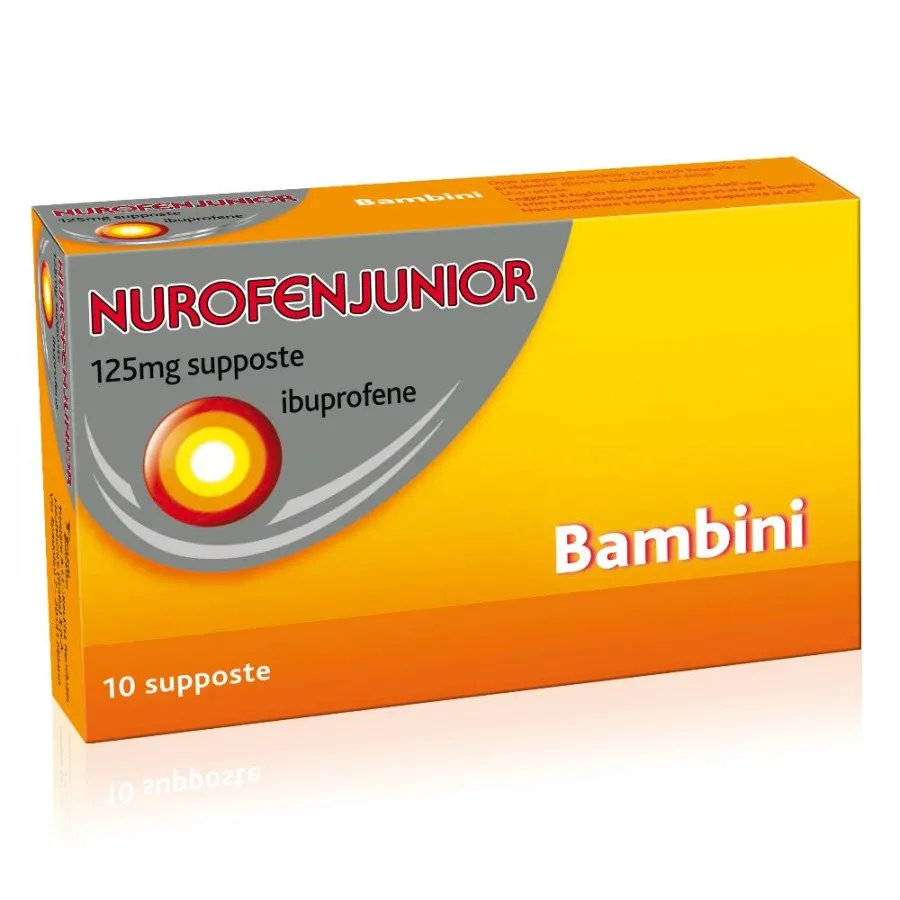
Table of Contents
Patient Information Leaflet
Nurofenjunior 125 mg Suppositories
Children
Indicated for children weighing from 12.5 kg (2 years) to 20.5 kg (6 years)
Ibuprofen
Please read all of this leaflet carefully before using this medicine because it contains important information for you.
Always take this medicine exactly as described in this leaflet or as your doctor or pharmacist has instructed.
- Keep this leaflet. You may need to read it again.
- If you need more information or advice, consult your pharmacist.
- If you experience any side effects, including those not listed in this leaflet, contact your doctor or pharmacist. See section 4.
- Consult your doctor if symptoms worsen or do not improve after 3 days of treatment.
- If any of the side effects worsen, or if you notice any side effect not listed in this leaflet, contact your doctor or pharmacist.
Contents of this leaflet:
- What Nurofenjunior is and what it is used for
- What you need to know before using Nurofenjunior
- How to use Nurofenjunior
- Possible side effects
- How to store Nurofenjunior
- Further information
1 What Nurofenjunior is and what it is used for
Nurofenjunior contains ibuprofen and belongs to a group of medicines called non-steroidal anti-inflammatory drugs (NSAIDs). These medicines work by controlling the body's response to pain and fever.
Nurofenjunior is indicated for the short-term symptomatic treatment of:
- fever
- mild to moderate pain
Nurofenjunior is particularly indicated when oral administration is not recommended, e.g. in case of vomiting.
Nurofenjunior is indicated for children weighing from 12.5 kg (2 years) to 20.5 kg (6 years).
2. What you need to know before using Nurofenjunior
Do not use Nurofenjunior if:
- you are allergic (hypersensitive) to ibuprofen or to other similar painkillers (NSAIDs) or to any of the other ingredients of this medicine (listed in section 6)
- you have previously experienced shortness of breath, asthma, rhinorrhea (runny nose), facial and/or hand swelling, or hives after taking ibuprofen, acetylsalicylic acid, or other similar painkillers (NSAIDs)
- you have a history of gastrointestinal bleeding or perforation related to previous treatment with NSAIDs
- you have (or have had two or more episodes of) gastric/duodenal ulcer (peptic ulcer) or stomach bleeding
- you have cerebrovascular bleeding or other types of active bleeding
- you suffer from unexplained blood disorders
- you suffer from severe dehydration (caused by vomiting, diarrhoea, or insufficient fluid intake)
- you suffer from severe renal, hepatic, or cardiac insufficiency
- you are in the last three months of pregnancy
- in children weighing less than 12.5 kg (under 2 years of age)
Warnings and precautions
Talk to your doctor or pharmacist before using Nurofenjunior:
- if you have certain skin diseases (systemic lupus erythematosus (SLE) or mixed connective tissue disease)
- if you suffer from severe skin reactions such as exfoliative dermatitis, Stevens-Johnson syndrome, or toxic epidermal necrolysis. Use of Nurofenjunior must be immediately discontinued at the first signs of skin reactions, mucosal lesions, or any other sign of allergic reaction
- if you suffer from a hereditary blood disorder (e.g. acute intermittent porphyria)
- if you suffer from blood coagulation disorders
- if you have current or past gastrointestinal disorders (ulcerative colitis or Crohn’s disease)
- if you have ever suffered from high blood pressure and/or heart failure
- if you have impaired kidney function
- if you suffer from liver disorders
- if you have disorders of the rectum or anus
- if you have had previous episodes of high blood pressure and/or heart failure
- if you suffer or have suffered from asthma or allergic diseases, as you may experience difficulty breathing
- If you have hay fever, nasal polyps, or chronic obstructive respiratory disorders, there is an increased risk of allergic reactions. Allergic reactions may manifest as asthma attacks (so-called “analgesic-induced asthma”), angioedema (Quincke’s edema), or urticaria
- If gastrointestinal bleeding, ulceration, or perforation occurs while taking this medicine. These conditions are not necessarily preceded by warning symptoms, do not affect only patients with a previous history of serious gastrointestinal events, and may be fatal. If gastrointestinal bleeding or ulceration occurs in patients taking Nurofenjunior, treatment must be discontinued. Caution is required in patients taking other medicines that may increase the risk of ulceration or bleeding, such as oral corticosteroids (e.g. prednisolone), anticoagulants (e.g. warfarin), selective serotonin reuptake inhibitors (medicines used to treat depression), or antiplatelet agents (e.g. acetylsalicylic acid)
- if you are taking other NSAIDs (including selective COX-2 inhibitors such as celecoxib or etoricoxib)
- in case of chickenpox, it is advisable to avoid using Nurofenjunior
- Regular monitoring of liver values, renal function, and blood counts is required if Nurofenjunior is used for prolonged periods
- adverse effects can be minimized by using the lowest effective dose for the shortest duration necessary to control symptoms
- elderly patients have an increased risk of adverse effects
- in general, habitual use of painkillers may lead to serious and permanent kidney problems. This risk may increase with physical exertion associated with loss of salts and dehydration. Therefore, it should be avoided
- prolonged use of any type of painkiller for headache may worsen the symptoms. If this occurs or is suspected, consult your doctor and discontinue treatment. Medication-overuse headache (MOH) should be suspected in patients who have frequent or daily headaches despite (or because of) regular use of analgesics
- concomitant use with other NSAIDs, including selective cyclooxygenase-2 (COX-2) inhibitors, may increase the risk of adverse reactions (see section “Other medicines and Nurofenjunior”) and should be avoided. Medicines such as Nurofenjunior may be associated with a small increased risk of heart attack (“myocardial infarction”) or stroke. Any risk is more likely with high doses and prolonged treatment. Do not exceed the recommended dose or duration of treatment (maximum 3 days)
- if you have heart problems or a history of stroke, or if you think you are at risk for these conditions (for example, if you have high blood pressure, diabetes, high cholesterol, or are a smoker), discuss your treatment with your doctor or pharmacist
- there is a risk of kidney damage in dehydrated children
- special medical monitoring is required immediately after major surgery
- NSAIDs may mask symptoms of infection and fever
Other medicines and Nurofenjunior
What should you avoid when taking this medicine?
Some medicines, such as anticoagulants (blood thinners) (e.g. acetylsalicylic acid, warfarin, ticlopidine), medicines for high blood pressure (ACE inhibitors, e.g. captopril, beta-blockers, angiotensin II antagonists), and other medicines may interact with or be affected by treatment with ibuprofen.
Therefore, always ask your doctor for advice before using ibuprofen together with other medicines.
Inform your doctor or pharmacist if you are using, or have recently used, any other medicines, including those not requiring a prescription.
In particular, inform them if you are taking:
| Acetylsalicylic acid and other NSAIDs (anti-inflammatory and analgesic medicines) | Because they may increase the risk of gastrointestinal ulcers and bleeding |
| Digoxin (for heart failure) | Because the effect of digoxin may be enhanced |
| Glucocorticoids (medicines containing cortisone or cortisone-like substances) | Because they may increase the risk of gastrointestinal ulcers and bleeding |
| Antiplatelet agents | Because they may increase the risk of bleeding |
| Low-dose acetylsalicylic acid | Because the blood-thinning effect may be reduced |
| Medicines to thin the blood (such as warfarin) | Because ibuprofen may enhance the effects of these medicines |
| Phenytoin (for epilepsy) | Because the effect of phenytoin may be enhanced |
| Selective serotonin reuptake inhibitors (medicines used for depression) | Because they may increase the risk of gastrointestinal bleeding |
| Lithium (a medicine for bipolar disorder and depression) | Because the effect of lithium may be enhanced |
| Probenecid and sulfinpyrazone (medicines for gout) | Because the excretion of ibuprofen may be delayed |
| Medicines for high blood pressure and diuretics | Because ibuprofen may reduce the effects of these medicines and there may be an increased risk to the kidneys |
| Potassium-sparing diuretics | Because they may lead to hyperkalemia |
| Methotrexate (a medicine for cancer or rheumatism) | Because the effect of methotrexate may be enhanced |
| Tacrolimus and cyclosporine (immunosuppressant medicines) | Because kidney damage may occur |
| Zidovudine (a medicine for the treatment of HIV/AIDS) | Because the use of Nurofen Junior may lead to an increased risk of bleeding into joints or bleeding causing swelling in HIV-positive haemophilic patients |
| Sulfonylureas (antidiabetic medicines) | Because interactions are possible |
| Quinolone antibiotics | Because the risk of seizures may be increased |
| CYP2C9 inhibitors | Concomitant administration of ibuprofen and CYP2C9 inhibitors may increase exposure to ibuprofen (a CYP2C9 substrate). In a study with voriconazole and fluconazole (CYP2C9 inhibitors), increased exposure to S(+)-ibuprofen of approximately 80% to 100% was observed. Dose reduction of ibuprofen should be considered when strong CYP2C9 inhibitors are administered concurrently, especially when high doses of ibuprofen are given with voriconazole or fluconazole. |
Nurofenjunior and alcohol
Do not drink alcoholic beverages while using Nurofenjunior. Some adverse effects, such as those affecting the gastrointestinal tract or the nervous system, may be more likely when alcohol is taken concurrently with Nurofenjunior.
Pregnancy, breastfeeding and fertility
If you are pregnant, think you may be pregnant, are planning to become pregnant, or are breastfeeding, consult your doctor or pharmacist before using this medicine.
Pregnancy
Consult your doctor if you become pregnant while using Nurofenjunior. Do not take this medicine during the last three months of pregnancy. Avoid using this medicine during the first six months of pregnancy unless prescribed by your doctor.
Breastfeeding
This medicine may be used during breastfeeding if taken at the recommended doses and for the shortest possible duration.
Driving and using machines
For short-term treatment, this medicine has little or no influence on the ability to drive or use machinery.
3. How to use Nurofenjunior
Always use Nurofenjunior exactly as stated in this leaflet. If you have any doubts, consult your doctor or pharmacist.
Nurofenjunior should be administered to children over 2 years of age and weighing at least 12.5 kg (see also section 2). The maximum daily dose of ibuprofen is 20–30 mg/kg body weight, divided into 3 or 4 doses throughout the day. Nurofenjunior may be administered according to the following dosing schedule (note that body weight is more important than age):
| Child's weight (Age) | Dose | How many times a day? |
| 12.5 - 17 kg (from 2 to 4 years) | 1 suppository | Repeat, if necessary, after at least 6 – 8 hours. Do not exceed 3 suppositories in 24 hours |
| 17 – 20.5 kg (from 4 to 6 years) | 1 suppository | Repeat, if necessary, after at least 6 hours. Do not exceed 4 suppositories in 24 hours |
The suppositories must be administered rectally, inserting the pointed end first.
Warming the suppository in the hands before administration may be helpful.
For short-term use only.
If this medicine is required for more than 3 days, or if symptoms worsen, consult a doctor.
Consult your doctor or pharmacist if you think the medicine is not working as expected.
If you use more Nurofenjunior than you should
If you have taken more Nurofenjunior than recommended, or if your child has accidentally taken this medicine, always contact your doctor or the nearest hospital to obtain advice on the potential risk and necessary actions to take.
Symptoms may include nausea, stomach ache, vomiting (possibly with traces of blood), gastrointestinal bleeding, headache, tinnitus (ringing in the ears), confusion, and uncontrolled eye movements (nystagmus), or less commonly, diarrhea. At higher doses, drowsiness, chest pain, palpitations, loss of consciousness, seizures (particularly in children), weakness, dizziness, blood in the urine, feeling cold, and breathing difficulties may occur. In addition, dizziness, blurred vision, low blood pressure, agitation, disorientation, coma, hyperkalemia (high levels of potassium in the blood), prolonged prothrombin time/INR, acute kidney failure, liver damage, respiratory depression, cyanosis, and worsening of asthma in asthmatic patients may occur.
If you have any doubts about using this medicine, consult your doctor or pharmacist.
4. Possible side effects
Like all medicines, Nurofenjunior can cause side effects, although not everyone experiences them.
Side effects can be minimised by using the lowest effective dose for the shortest time needed to relieve symptoms.
You may experience one of the known side effects of NSAIDs (see below). If this happens, or if you have any concerns, stop taking this medicine and contact your doctor as soon as possible. Elderly patients taking this medicine are at higher risk of developing problems related to side effects.
Stop using this medicine and consult your doctor immediately if you develop:
- Signs of intestinal bleeding, such as severe abdominal pain, dark stools, vomiting blood or dark particles resembling coffee grounds;
- Signs of very rare but serious allergic reactions, such as worsening asthma, unexplained shortness of breath or difficulty breathing, swelling of the face, tongue or throat, difficulty breathing, rapid heartbeat, drop in blood pressure leading to shock. These symptoms may occur even with the first use of this medicine;
- Severe skin reactions, such as rashes affecting the entire body, skin peeling, blistering or skin detachment.
Consult your doctor if you experience any of the following possible side effects
Common (may affect up to 1 in 10 people):
- Gastrointestinal disturbances such as heartburn, stomach pain and nausea, indigestion, diarrhoea, vomiting, flatulence and constipation, and mild bleeding in the stomach and/or intestines, which in rare cases may lead to anaemia.
Uncommon (may affect up to 1 in 100 people):
- Hypersensitivity reactions such as hives and itching.
- Gastrointestinal ulcers, perforation or bleeding, inflammation of the mouth mucosa (ulcerative stomatitis), worsening of existing intestinal disorders (colitis or Crohn's disease), gastritis, localised rectal irritation.
- Central nervous system disorders such as headache, dizziness, insomnia, agitation, irritability or fatigue.
- Visual disturbances.
- Various skin rashes.
Rare (may affect up to 1 in 1,000 people):
- Tinnitus (ringing in the ears).
- Increased blood urea levels, flank and/or abdominal pain, blood in urine and fever, which may indicate kidney damage (papillary necrosis).
- Decreased haemoglobin levels.
Very rare (may affect up to 1 in 10,000 people):
- Inflammation of the oesophagus, pancreatitis, formation of diaphragm-like intestinal structures.
- Heart failure, heart attack and swelling of the face and hands (oedema).
- Reduced urine output compared to normal and swelling (especially in patients with high blood pressure or reduced kidney function); oedema and cloudy urine (nephrotic syndrome); inflammatory kidney disease (interstitial nephritis) which may lead to acute kidney failure. If any of these symptoms occur, or if you feel generally unwell, stop taking Nurofenjunior and consult your doctor immediately, as these may be early signs of kidney damage or kidney failure.
- Psychotic reactions, depression.
- High blood pressure, vasculitis.
- Palpitations.
- Liver dysfunction, liver damage (early signs may include skin discoloration), especially during prolonged treatment, liver failure, acute inflammation of the liver (hepatitis).
- Problems in blood cell production – early signs include: fever, sore throat, superficial mouth ulcers, flu-like symptoms, severe fatigue, nose and skin bleeding, and unexplained bruising. In such cases, you must stop treatment immediately and consult your doctor without delay. Self-medication with analgesics or fever-reducing medicines (antipyretics) must be avoided.
- Severe skin infections and soft tissue complications during chickenpox infection.
- Worsening of infection-related inflammation (e.g. necrotising fasciitis) has been reported with the use of some analgesics (NSAIDs). If signs of infection appear or worsen, seek immediate medical advice to determine whether anti-infective/antibiotic treatment is required.
- Symptoms of aseptic meningitis such as stiff neck, headache, nausea, vomiting, fever or confusion have been observed during ibuprofen use. Patients with autoimmune disorders (SLE, mixed connective tissue disease) may be more susceptible. Contact your doctor immediately if these symptoms occur.
- Severe forms of skin reactions such as rashes with redness and blistering (e.g. Stevens-Johnson syndrome, erythema multiforme, toxic epidermal necrolysis/Lyell's syndrome), hair loss (alopecia).
Not known (frequency cannot be estimated from the available data):
- Respiratory tract reactions including asthma, bronchospasm or dyspnoea.
- A serious skin reaction known as DRESS syndrome may occur. Symptoms of DRESS include: skin rash, fever, swollen lymph nodes and increased eosinophils (a type of white blood cell).
Medicines such as Nurofenjunior may be associated with a small increased risk of heart attack ("myocardial infarction") or stroke.
Reporting of side effects
If you experience any side effect, including those not listed in this leaflet, talk to your doctor or pharmacist. You can also report side effects directly via the national reporting system at:
www.agenziafarmaco.gov.it/content/come-segnalare-una-sospetta-reazione-avversa
By reporting side effects, you can help provide more information on the safety of this medicine.
5. How to store Nurofenjunior
Keep the medicine out of the reach and sight of children.
Do not use Nurofenjunior after the expiry date stated on the carton and blister. The expiry date refers to the last day of that month.
Do not store above 25°C.
Medicines should not be disposed of via wastewater or household waste. Ask your pharmacist how to dispose of medicines no longer used. This will help protect the environment.
6. Other information
What Nurofenjunior contains
The active substance is ibuprofen. Each suppository contains 125 mg of ibuprofen.
The other ingredients are solid semisynthetic glycerides.
Description of the appearance of Nurofenjunior and contents of the pack
White or yellowish-white cylindrical suppositories.
The pack contains 1, 10, 11, 12, 13, 14, 15, 16, 17, 18, 19 or 20 suppositories.
Not all pack sizes may be marketed.
Marketing Authorization Holder:
Reckitt Benckiser Healthcare (Italia) S.p.A. – Via Spadolini 7 – 20141 Milan, Italy
Manufacturer:
Famar A.V.E., Avlon Plant, 49th km National Road, Athens - Lamia, 19011 Avlona Attiki, Greece
This medicinal product is authorized in the European Economic Area countries under the following names:
Germany: Nurodon für Kinder 125 mg Zäpfchen
Netherlands: Nurofen voor Kinderen 125 mg Zeptil
Italy: Nurofenjunior 125 mg supposte bambini
Slovenia: Nurofen za otroke 125 mg svečke