Nurofen for flu and cold
Italy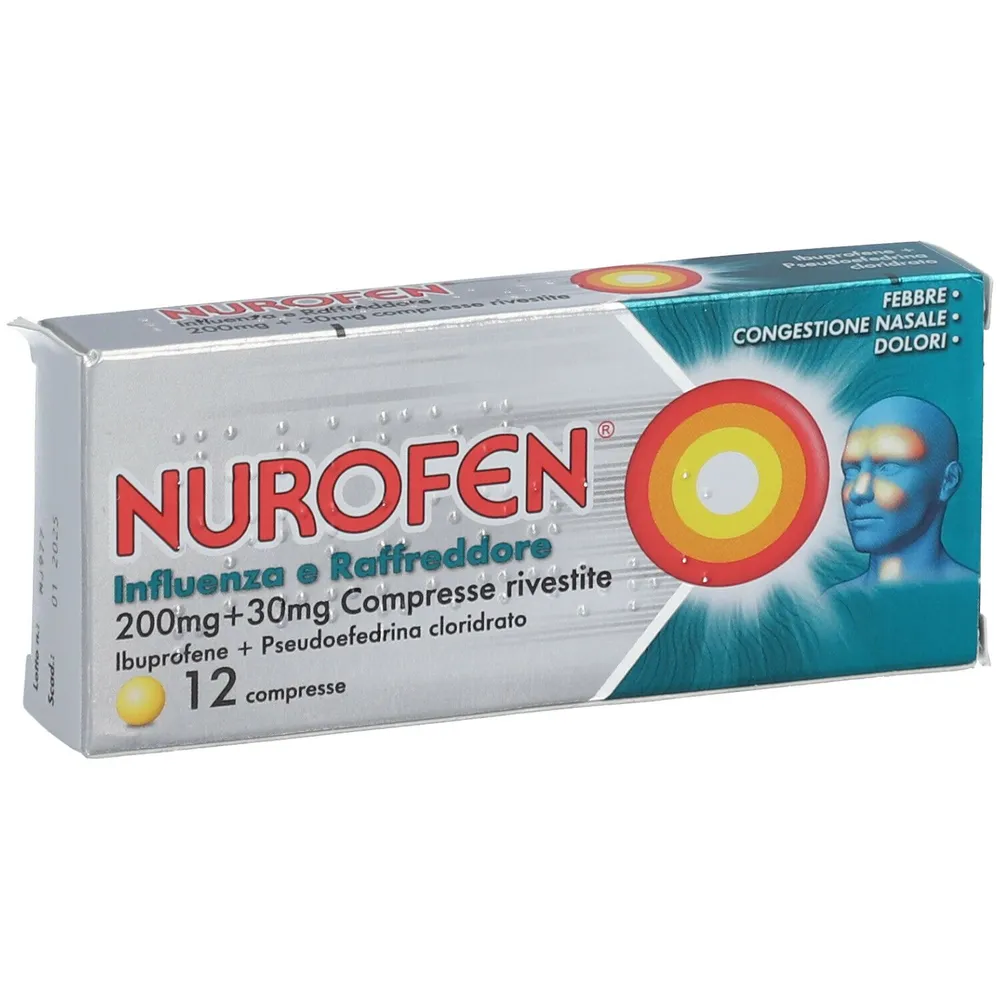
Table of Contents
Package leaflet: Information for the patient
NUROFEN COLD AND FLU 200 mg + 30 mg coated tablets
Ibuprofen + pseudoephedrine hydrochloride
Please read this leaflet carefully before taking this medicine because it contains important information for you.
Always take this medicine exactly as described in this leaflet or as your doctor or pharmacist has instructed you.
- Keep this leaflet. You may need to read it again.
- If you need more advice or information, consult your pharmacist.
- If you experience any side effects, including those not listed in this leaflet, contact your doctor or pharmacist. See section 4.
- Contact your doctor if you do not notice improvement or if your symptoms worsen after:
- 3 days in adolescents over 12 years of age
- 5 days in adults.
Contents of this leaflet:
1 What Nurofen Cold and Flu is and what it is used for
2 What you need to know before taking Nurofen Cold and Flu
3 How to take Nurofen Cold and Flu
4 Possible side effects
5 How to store Nurofen Cold and Flu
6 Contents of the pack and other information
1 What Nurofen Cold and Flu is and what it is used for
Nurofen Cold and Flu contains two active substances:
- ibuprofen, which belongs to a group of medicines called non-steroidal anti-inflammatory drugs (NSAIDs). Its action helps reduce pain and swelling caused by inflammation and lowers fever;
- pseudoephedrine hydrochloride, which belongs to a group of medicines called vasoconstrictors. Its action on blood vessels in the nose helps relieve nasal congestion.
Nurofen Cold and Flu is indicated in adults and adolescents over 12 years of age for the treatment of symptoms of cold and flu such as blocked nose (nasal and sinus congestion), pain, headache, fever, and sore throat.
Contact your doctor if you do not feel better or feel worse after 3 days in adolescents over 12 years of age and after 5 days in adults.
2 What you need to know before taking Nurofen Cold and Flu
Do not take Nurofen Cold and Flu:
- if you are allergic to ibuprofen, pseudoephedrine, or any of the other ingredients of this medicine (listed in section 6);
- if in the past, after taking ibuprofen, acetylsalicylic acid, or other non-steroidal anti-inflammatory drugs (NSAIDs), or other medicines used to treat fever or pain, you experienced allergic reactions such as nasal polyps, shortness of breath and/or difficulty breathing (asthma), rhinitis, swelling of the face, lips, and throat (angioedema), or hives;
- if you have or have had recurrent gastric/duodenal ulcers (peptic ulcers) or bleeding (at least two distinct episodes of ulcers or bleeding diagnosed);
- if you have severe liver disease (hepatic insufficiency);
- if you have severe acute (sudden) or chronic (long-term) kidney disease or renal failure;
- if you have severe heart disease (severe heart failure);
- if you have serious heart or circulation problems such as increased heart rate (tachycardia), very high blood pressure (severe hypertension) or uncontrolled hypertension with medication, chest pain occurring when the heart does not receive enough oxygen (angina pectoris);
- if you have overactivity of the thyroid gland (hyperthyroidism);
- if you have a condition characterized by high blood glucose levels (diabetes);
- if you have a tumor affecting the kidney (pheochromocytoma);
- if you have increased intraocular pressure (glaucoma);
- if you have difficulty urinating due to prostate problems;
- if you are under 12 years of age;
- if you are pregnant or breastfeeding;
- if you are taking antidepressant medicines, such as non-selective monoamine oxidase inhibitors (known as MAOIs), or have taken them within the last 14 days.
Warnings and precautions
Consult your doctor or pharmacist before taking Nurofen Cold and Flu if:
- you are taking other medicines used to treat pain, reduce fever, and/or treat inflammation (non-steroidal anti-inflammatory drugs, NSAIDs, including COX-2 inhibitors). Concurrent use of these medicines may increase the risk of side effects and should be avoided (see section “Other medicines and Nurofen Cold and Flu”);
- you have blood clotting problems or are taking medicines to thin the blood (oral anticoagulants). Your doctor will carefully assess whether you can take this medicine, as it may lead to reduced clotting (see section “Other medicines and Nurofen Cold and Flu”);
- you are elderly and/or have had stomach or intestinal disorders (history of ulcers), especially with bleeding or perforation, or if you are taking medicines that may increase the risk of gastrointestinal events. In these cases, your doctor may advise starting treatment with the lowest available dose and possibly using concomitant medicines that protect the stomach (misoprostol or proton pump inhibitors);
- you have or have had inflammatory bowel disease (ulcerative colitis, Crohn’s disease);
- you are taking medicines that could increase the risk of ulceration or bleeding, such as medicines used to treat inflammation (oral corticosteroids), medicines used to thin the blood (e.g., warfarin), antiplatelet drugs (aspirin), or medicines used to treat depression (selective serotonin reuptake inhibitors) (see section “Other medicines and Nurofen Cold and Flu”);
- you have heart problems including heart attack, angina (chest pain), or a history of heart attack, coronary bypass surgery, peripheral arterial disease (poor circulation to legs or feet due to narrowing or blockage of arteries), or any type of stroke (including ‘mini-stroke’ or TIA, transient ischemic attack);
- you have high blood pressure, diabetes, high cholesterol, a family history of heart disease or stroke, or if you are a smoker;
- you have reduced kidney function;
- you suffer from or have had allergic reactions or episodes of asthma (difficulty breathing), as you may experience shortness of breath;
- you have liver disorders;
- in dehydrated adolescents (i.e., those who have lost significant fluids due to fever, vomiting, or diarrhea) due to the risk of impaired kidney function;
- you have a chronic autoimmune disease causing disorders in various parts of the body, particularly the skin (systemic lupus erythematosus) or mixed connective tissue disease, as this increases the risk of aseptic meningitis;
- if you suffer from hyperexcitability;
- if you are taking medicines that mimic the effects of stimulation of the sympathetic nervous system on various tissues, such as nasal decongestants, appetite suppressants, and amphetamine-like stimulants (see “Other medicines and Nurofen Cold and Flu”). Your doctor will carefully evaluate co-administration;
- if you develop a generalized feverish erythema associated with pustules, stop taking Nurofen Cold and Flu and contact your doctor or seek immediate medical help. See section 4;
- sudden abdominal pain or rectal bleeding may occur with Nurofen Cold and Flu due to inflammation of the colon (ischemic colitis). If you develop these gastrointestinal symptoms, stop taking Nurofen Cold and Flu and contact your doctor or seek immediate medical help. See section 4.
- if you have an infection. See section “Infections” below.
Allergic reactions to this medicine, including breathing difficulties, swelling of the face and neck (angioedema), and chest pain, have been reported with ibuprofen.
Immediately stop taking Nurofen Cold and Flu and contact your doctor or emergency services if you notice any of these signs.
Anti-inflammatory/pain-relieving medicines such as ibuprofen may be associated with a small increased risk of heart attack or stroke, especially when administered at high doses. Do not exceed the recommended dose or duration of treatment.
During treatment with all NSAIDs, at any time, with or without warning symptoms or previous history of serious gastrointestinal events, bleeding, ulceration, and perforation of the stomach or intestine have been reported, which may be fatal. If bleeding or ulceration occurs, stop treatment with Nurofen Cold and Flu and contact your doctor (see section “Possible side effects”).
If you have previously suffered from gastrointestinal problems (gastrointestinal toxicity), especially if you are elderly, inform your doctor of any unusual symptoms (particularly gastrointestinal bleeding), especially during the initial stages of treatment.
Nurofen Cold and Flu may cause reduced blood flow to the optic nerve. If you experience sudden vision loss, stop taking Nurofen Cold and Flu and contact your doctor or healthcare facility immediately. See section 4.
Skin reactions
Serious skin reactions have been reported with Nurofen Cold and Flu treatment. Stop taking Nurofen Cold and Flu and consult your doctor immediately if you develop a rash, mucosal lesions, blisters, or other signs of allergy, as these may be early signs of a very serious skin reaction. See section 4.
Infections
Nurofen Cold and Flu may mask symptoms of infections such as fever and pain. Therefore, Nurofen Cold and Flu may delay appropriate treatment of the infection, potentially increasing the risk of complications. This has been observed in bacterial pneumonia and bacterial skin infections related to chickenpox. If you take this medicine while having an infection and infection symptoms persist or worsen, contact your doctor immediately.
Cases of posterior reversible encephalopathy syndrome (PRES) and reversible cerebral vasoconstriction syndrome (RCVS) have been reported following the use of medicines containing pseudoephedrine. PRES and RCVS are rare conditions that may result in reduced blood flow to the brain. Immediately stop using NUROFEN COLD AND FLU and seek immediate medical assistance if you develop symptoms that could indicate PRES or RCVS (see section 4 “Possible side effects” for symptoms).
For athletes
Using this medicine without therapeutic need constitutes doping and may result in a positive anti-doping test.
Children and adolescents
Do not give this medicine to children under 12 years of age.
In dehydrated adolescents, there is a risk of impaired kidney function.
Other medicines and Nurofen Cold and Flu
Inform your doctor or pharmacist if you are taking, have recently taken, or might take any other medicines.
In particular, inform your doctor or pharmacist if you are taking:
- antidepressant medicines such as non-selective monoamine oxidase inhibitors (known as MAOIs) or if you have taken them within the last 14 days (see section “Do not take Nurofen Cold and Flu”);
- other medicines used to treat pain, reduce fever, and/or treat inflammation (non-steroidal anti-inflammatory drugs, NSAIDs, including COX-2 inhibitors), as this increases the risk of possible side effects;
- medicines used to treat depression such as selective serotonin reuptake inhibitors or tricyclic antidepressants;
- medicines used for inflammation (corticosteroids);
- medicines used to treat bacterial infections (quinolone antibiotics);
- medicines with anticoagulant effects (i.e., substances that thin the blood and prevent clotting, e.g., aspirin/acetylsalicylic acid, warfarin, ticlopidine);
- medicines used to lower high blood pressure (ACE inhibitors such as captopril, beta-blockers such as atenolol, angiotensin II receptor antagonists such as losartan, guanethidine, reserpine, methyldopa);
- medicines that increase fluid elimination through urine (diuretics);
- a medicine used to treat AIDS (zidovudine);
- medicines that modulate the immune response such as tacrolimus and cyclosporine (increased risk of kidney toxicity);
- a medicine used in cancer and rheumatism treatment (methotrexate);
- a medicine used for mental disorders (lithium);
- a medicine used to terminate pregnancy (mifepristone). Do not take NSAIDs during the 8–12 days following mifepristone intake;
- medicines used to treat heart diseases (cardiac glycosides such as digoxin);
- medicines that mimic the effects of stimulation of the sympathetic nervous system on various tissues such as nasal decongestants and appetite suppressants (sympathomimetic medicines);
- a medicine used for cardiac arrhythmias (quinidine);
- medicines used for migraine (ergot alkaloids);
- a substance administered during childbirth to induce uterine contraction (oxytocin);
- medicines used to reduce appetite (anorectics) and psychostimulants;
- linezolid (a medicine used to treat bacterial infections), as it may increase blood pressure.
Other medicines may also affect or be affected by treatment with Nurofen Cold and Flu. Therefore, always consult your doctor or pharmacist before using Nurofen Cold and Flu with other medicines.
Pregnancy, breastfeeding, and fertility
If you are pregnant, suspect you may be pregnant, planning a pregnancy, or breastfeeding, consult your doctor or pharmacist before taking this medicine.
Pregnancy
Do not take Nurofen Cold and Flu if you are pregnant, as this medicine may cause problems for your baby and during childbirth.
Breastfeeding
Do not take Nurofen Cold and Flu if you are breastfeeding.
Fertility
The use of Nurofen Cold and Flu is not recommended if you are trying to become pregnant, as it may affect ovulation.
Driving and using machines
Nurofen Cold and Flu does not affect or affects negligibly the ability to drive or use machines.
Nurofen Cold and Flu contains:
- Sunset Yellow FCF (E 110): may cause allergic reactions;
- less than 1 mmol (23 mg) of sodium per tablet, i.e., essentially “sodium-free”.
3 How to take Nurofen Cold and Flu
Take this medicine exactly as described in this leaflet or as instructed by your doctor or pharmacist. If you have any doubts, consult your doctor or pharmacist.
The lowest effective dose for the shortest duration necessary to relieve symptoms should be used.
If you have an infection, contact your doctor immediately if symptoms (e.g., fever and pain) persist or worsen (see section 2).
Unless otherwise prescribed by your doctor, the recommended initial dose in adults and adolescents over 12 years is 1–2 tablets per day, then, if necessary, 1–2 tablets every 4 hours.
Take NUROFEN COLD AND FLU tablets whole with a glass of water.
Do not exceed 6 tablets in 24 hours.
Use in patients with liver or kidney problems
If you are an elderly person with kidney or liver problems, your doctor will determine the appropriate dose.
Duration of use
This product is intended for short-term treatment. Use this medicine for:
- up to 3 days in adolescents aged 12 to 18 years;
- up to 5 days in adults. Contact your doctor if you do not notice improvement or if symptoms worsen.
If you take more Nurofen Cold and Flu than you should
If you have taken more Nurofen Cold and Flu than recommended or if your child has taken this medicine by mistake, contact a doctor or the nearest hospital for advice on risk and actions to take.
Symptoms of overdose may include: nausea, stomach ache, vomiting (possibly with traces of blood), abdominal pain, and less commonly diarrhea, deep sleep with reduced response to normal stimuli (lethargy), headache, ringing in the ears (tinnitus), confusion, and uncontrolled eye movements (nystagmus). At high doses, drowsiness, chest pain, palpitations, loss of consciousness, seizures (especially in children), weakness, dizziness, blood in urine, low blood potassium levels, feeling cold, and breathing difficulties may occur.
Symptoms of overdose may appear within 4–6 hours after taking ibuprofen.
You may also experience: increased acid levels in the blood (metabolic acidosis), lowered body temperature (hypothermia), kidney effects, bleeding from the stomach and intestine, deep loss of consciousness (coma), temporary cessation of breathing (apnea), reduced nervous system and respiratory activity, disorientation, excitement, fainting, low blood pressure (hypotension), and decreased or increased heart rate (bradycardia or tachycardia). Additionally, reduced clotting (prolonged prothrombin time) may occur.
If you take significantly high doses of ibuprofen, severe kidney and liver damage may occur. In asthmatic patients, worsening of the disease may occur.
Due to the presence of pseudoephedrine, overdose may cause the following symptoms: irritability, restlessness, tremors, thirst, blurred vision, anxiety, shortness of breath, insomnia, fever, sweating, bulging eyes, hallucinations, muscle weakness, palpitations, seizures, urinary retention, difficulty urinating, high blood pressure, nausea, vomiting, tachycardia, and irregular heartbeat.
If you forget to take Nurofen Cold and Flu
Do not take a double dose to make up for the forgotten tablet.
If you have any doubts about using Nurofen Cold and Flu, consult your doctor or pharmacist.
4 Possible side effects
Like all medicines, this medicine can cause side effects, although not everybody gets them.
Immediately stop treatment with NUROFEN COLD AND FLU and contact your doctor urgently if you develop symptoms that could indicate posterior reversible encephalopathy syndrome (PRES) or reversible cerebral vasoconstriction syndrome (RCVS). These include: severe sudden-onset headache, nausea, vomiting, confusion, seizures, and vision changes.
Stop treatment and contact your doctor immediately if you experience any of the following side effects:
- ulcers or bleeding in the stomach or intestine, not necessarily preceded by warning symptoms or previous history of serious stomach or intestinal diseases;
- skin and mucosal changes (rashes, redness, itching, blisters), as they may indicate serious allergic reactions (exfoliative dermatitis, Stevens-Johnson syndrome, and toxic epidermal necrolysis). These reactions usually occur in the early stages of treatment;
- difficulty breathing (bronchospasm);
- hallucinations, restlessness, or sleep disturbances (see section “Warnings and precautions”).
Sudden onset of fever, skin redness, or multiple small pustules (possible symptoms of acute generalized exanthematous pustulosis) may occur within the first 2 days of treatment with Nurofen Cold and Flu. See section 2.
Stop using Nurofen Cold and Flu if you develop these symptoms and contact your doctor or seek immediate medical help.
Other side effects include:
Uncommon (may affect up to 1 in 100 people):
- digestive disorders (dyspepsia), abdominal pain, and nausea;
- headache, tremors;
- allergic reactions manifesting as hives and itching.*
- skin rashes*
Rare (may affect up to 1 in 1,000 people):
- diarrhea, vomiting, intestinal gas (flatulence), and difficulty passing stools (constipation)
Very rare (may affect up to 1 in 10,000 people):
- peptic ulcers, perforation and bleeding of the stomach and intestine, black stools, and vomiting blood, sometimes fatal, especially in the elderly (see section “Warnings and precautions”);
- bleeding mouth lesions, heartburn (gastritis);
- severe kidney disease (severe renal failure including papillary necrosis). Especially during long-term treatment, associated with increased blood urea levels and swelling (edema);
- liver damage;
- reduction in blood cell count (anemia, leukopenia, thrombocytopenia, pancytopenia, agranulocytosis). Early signs include: fever, sore throat, superficial mouth ulcers, flu-like symptoms, severe fatigue, unexplained bleeding, and skin bruising (ecchymoses);
- severe allergic reactions (anaphylaxis, angioedema, or severe shock). Symptoms may include swelling of the face, tongue, and larynx, difficulty breathing (dyspnea), rapid heartbeat (tachycardia), low blood pressure (hypotension);
- viral central nervous system disease (aseptic meningitis), with symptoms such as stiff neck, headache, nausea, vomiting, fever, or disorientation (more frequent if you have systemic lupus erythematosus or mixed connective tissue disease);
- decreased hemoglobin levels (the substance that carries oxygen) in the blood;
- skin reactions with blisters, including Stevens-Johnson syndrome, erythema multiforme, and toxic epidermal necrolysis
Not known (frequency cannot be estimated from available data):
- serious conditions affecting cerebral blood vessels known as posterior reversible encephalopathy syndrome (PRES) and reversible cerebral vasoconstriction syndrome (RCVS);
- chest pain, which may be a sign of a potentially severe allergic reaction called Kounis syndrome;
- respiratory tract disorders due to allergic reactions, including shortness of breath and/or difficulty breathing (asthma), shortness of breath (bronchospasm), and difficulty breathing (dyspnea)*;
- high blood pressure (hypertension) (see section “Warnings and precautions”);
- palpitations, changes in heart rhythm (tachycardia, arrhythmia);
- swelling (edema);
- chest pain;
- heart failure (see section “Warnings and precautions”);
- insomnia;
- anxiety;
- agitation;
- restlessness;
- hallucinations;
- worsening of inflammatory bowel diseases (colitis and Crohn’s disease) (see section “Warnings and precautions”);
- dry mouth;
- excessive sweating;
- muscle weakness;
- reduced normal daily urine output;
- irritability;
- thirst;
- widespread, red, scaly rash with pustules under the skin and blisters mainly located in skin folds, trunk, and upper limbs, accompanied by fever at the beginning of treatment (acute generalized exanthematous pustulosis). Stop using Nurofen Cold and Flu if you develop these symptoms and contact your doctor immediately. See also section 2;
- inflammation of the colon due to insufficient blood supply (ischemic colitis);
- reduced blood flow to the optic nerve (ischemic optic neuropathy);
- skin becomes sensitive to light.
A serious skin reaction known as DRESS syndrome may occur. Symptoms of DRESS include: rash, fever, swollen lymph nodes, and increased eosinophils (a type of white blood cell).
*Allergic reactions include: a) non-specific allergic reactions and anaphylaxis; b) respiratory tract reactivity including asthma, worsening of asthma, bronchospasm, or dyspnea; or c) various skin disorders such as different rashes, itching, hives, skin redness with bleeding (purpura), skin signs, and swelling around eyes and lips (angioedema), and very rarely bullous and exfoliative dermatitis including toxic epidermal necrolysis, Stevens-Johnson syndrome, and erythema multiforme); allergic reactions due to pseudoephedrine or similar compounds (cross-reactivity with pseudoephedrine).
The following adverse effects have also been reported: gastrointestinal intolerance, hemorrhages, sweating, dizziness, chest pain (precordial pain), difficulty urinating, and insomnia.
Reporting of side effects
If you experience any side effects, including those not listed in this leaflet, contact your doctor or pharmacist. You can also report side effects directly via the national reporting system at: https://www.aifa.gov.it/content/segnalazioni-reazioni-avverse.
Reporting side effects can help provide more information on the safety of this medicine.
5 How to store Nurofen Cold and Flu
Keep this medicine out of the sight and reach of children.
Do not use this medicine after the expiry date stated on the packaging. The expiry date refers to the last day of that month.
This medicine does not require any special storage conditions.
Do not dispose of medicines via wastewater or household waste. Ask your pharmacist how to dispose of medicines you no longer use. This will help protect the environment.
6 Contents of the pack and other information
What Nurofen Cold and Flu contains
The active substances are:
- ibuprofen; each tablet contains 200 mg of ibuprofen;
- pseudoephedrine hydrochloride; each tablet contains 30 mg of pseudoephedrine hydrochloride, equivalent to 24.6 mg of pseudoephedrine.
Other components are: tricalcium phosphate, sodium carboxymethylcellulose (see section “Nurofen Cold and Flu contains”), microcrystalline cellulose, povidone, methylhydroxypropylcellulose, magnesium stearate, talc, quinoline yellow (E104), Sunset Yellow FCF (E110) (see section “Nurofen Cold and Flu contains”), titanium dioxide (E171).
Description of the appearance of Nurofen Cold and Flu and contents of the pack
Nurofen Cold and Flu is available as round, coated tablets.
Pack contents: 12 or 24 tablets.
Not all pack sizes may be marketed.
Marketing Authorization Holder and Manufacturer
Marketing Authorization Holder
Reckitt Benckiser Healthcare (Italia) S.p.A. – via G. Spadolini 7 – 20141 Milano
Manufacturer
Reckitt Benckiser Healthcare International Ltd – Nottingham Site, Thane Road, Nottingham NG90 2DB (UK)
RB NL Brands B.V., Schiphol Boulevard 207, Schiphol 1118BH, The Netherlands