Norfloxacin ABC
Italy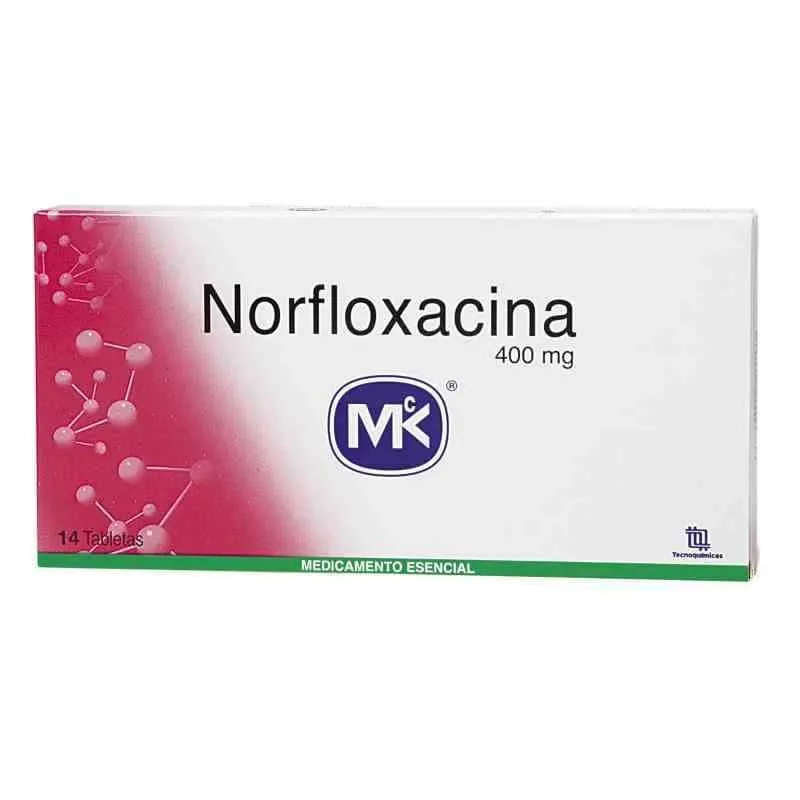
Package leaflet: Information for the patient
NORFLOXACIN ABC 400 mg hard capsules
Norfloxacin
Generic medicine
Please read this leaflet carefully before taking this medicine because it contains important information for you.
- Keep this leaflet. You may need to read it again.
- If you have any questions, ask your doctor or pharmacist.
- This medicine has been prescribed for you only. Do not give it to others, even if their symptoms are the same as yours, as it could be harmful.
- If you experience any side effects, including those not listed in this leaflet, contact your doctor or pharmacist. See section 4.
Contents of this leaflet:
- What Norfloxacin ABC is and what it is used for
- What you need to know before taking Norfloxacin ABC
- How to take Norfloxacin ABC
- Possible side effects
- How to store Norfloxacin ABC
- Contents of the pack and other information
1. What Norfloxacin ABC is and what it is used for

Norfloxacin ABC contains the active substance norfloxacin, which belongs to a group of medicines called antibacterial agents, used to treat infections caused by multidrug-resistant pathogenic microorganisms.
This medicine is indicated for the treatment of infections of the upper and lower urinary tract (cystitis, pyelitis, cystopyelitis, pyelonephritis).
When taken at normal doses, this medicine successfully treats infections caused by microorganisms resistant to other antibiotics.
2. What you need to know before taking Norfloxacin ABC

Before taking this medicine
Do not take quinolone/fluoroquinolone antibacterial medicines, including Norfloxacin ABC, if you have previously experienced any severe adverse reaction during treatment with a quinolone or fluoroquinolone. In such case, inform your doctor as soon as possible.
Do not take Norfloxacin ABC
- if you are allergic to norfloxacin, to other similar substances (quinolone medicines) or to any of the other ingredients of this medicine (listed in section 6);
- if you have had tendon inflammation (tendinopathy), particularly after taking similar medicines (fluoroquinolones);
- if you are pregnant or breastfeeding (see section “Pregnancy and breastfeeding”);
- if the patient is a pre-pubertal child or an adolescent with incomplete skeletal development (see section “Children and adolescents”);
- if you suffer from seizures or epilepsy, or are predisposed to epileptic seizures (see section “Possible side effects”).
Warnings and precautions
Talk to your doctor before taking Norfloxacin ABC:
- if you have been diagnosed with an enlarged or "bulging" large blood vessel (aortic aneurysm or peripheral aneurysm of a large blood vessel);
- if you have kidney problems (renal insufficiency) and have a urinary tract infection, you may take this medicine but must inform your doctor (see section “Use in patients with kidney problems”). It is recommended to drink plenty of fluids to avoid complications (crystalluria);
- if your vision decreases or your eyes become impaired in any way, consult an ophthalmologist immediately;
- if you have previously experienced episodes of aortic dissection (a tear in the aortic wall);
- if you have been diagnosed with insufficiency of one of the heart valves (aortic or mitral regurgitation);
- if you have a family history of aortic aneurysm or dissection, congenital heart valve disease, or other risk factors or predisposing conditions (e.g. connective tissue disorders such as Marfan syndrome, Ehlers-Danlos syndrome, Turner syndrome, Sjögren's syndrome [an autoimmune inflammatory disease], or vascular disorders such as Takayasu arteritis, giant cell arteritis, Behçet's syndrome, known high blood pressure or atherosclerosis, rheumatoid arthritis [an autoimmune inflammatory disease] or endocarditis [inflammation of the heart]).
During treatment with Norfloxacin ABC:
- if you experience sudden, severe pain in the abdomen, chest, or back, which may be a sign of aortic aneurysm or dissection, go immediately to the emergency room. The risk may be higher if you are taking systemic corticosteroids.
- inform your doctor immediately if you notice a sudden onset of shortness of breath, especially when lying down, or swelling of the ankles, feet, or abdomen, or new episodes of palpitations (sensation of rapid or irregular heartbeat).
During treatment with this medicine, you may experience skin problems after exposure to light, such as irritation (photosensitivity). Therefore, avoid excessive exposure to light. If you experience such problems, stop treatment with Norfloxacin ABC.
When taking this medicine
Rarely, joint pain and swelling, and tendon inflammation or rupture may occur. The risk is higher if you are elderly (over 60 years of age), have received an organ transplant, have kidney problems, or are taking corticosteroids. Tendon inflammation and rupture may occur within the first 48 hours of treatment and up to several months after stopping Norfloxacin ABC. At the first sign of tendon pain or inflammation (e.g. in the ankle, wrist, elbow, shoulder, or knee), stop treatment with Norfloxacin ABC, consult your doctor, and rest the affected area. Avoid unnecessary movements, as the risk of tendon rupture may increase.
Rarely, symptoms of nerve damage (neuropathy) such as pain, burning, tingling, numbness, and/or weakness, particularly in the feet and legs or hands and arms, may occur. In such cases, stop treatment with Norfloxacin ABC and inform your doctor immediately to prevent permanent nerve damage.
Take this medicine with caution and inform your doctor if you have heart problems, particularly if you have conditions that predispose you to heart problems (QT interval prolongation), for example:
- if you have a congenital disease (congenital long QT syndrome);
- if your blood electrolyte levels are altered (electrolyte imbalance), such as low potassium (hypokalemia) or low magnesium (hypomagnesemia);
- if you have heart problems (heart failure, myocardial infarction, bradycardia);
- if you are elderly or a woman.
Children and adolescents
This medicine is contraindicated in children before puberty and in adolescents with incomplete skeletal development.
Serious, prolonged, disabling, and potentially irreversible adverse effects
Antibacterial medicines containing fluoroquinolones/quinolones, including Norfloxacin ABC, have been associated with very rare but serious adverse effects, some of which are prolonged (lasting months or years), disabling, or may not improve. These include tendon, muscle, and joint pain in arms or legs, difficulty walking, abnormal sensations such as tingling, prickling, itching, numbness, or burning (paresthesia), sensory organ disturbances such as changes in vision, taste, smell, and hearing, depression, memory impairment, severe fatigue, and severe sleep disturbances.
If you experience any of these adverse effects after taking Norfloxacin ABC, contact your doctor immediately before continuing treatment. Your doctor will decide with you whether to continue treatment and may consider using an antibiotic from another class.
Other medicines and Norfloxacin ABC
Inform your doctor or pharmacist if you are taking, have recently taken, or might take any other medicines.
Take Norfloxacin ABC with caution and inform your doctor if you are taking the following medicines, as specific monitoring may be required:
- medicines used to treat high uric acid levels (probenecid);
- medicines used for urinary tract infections (nitrofurantoin);
- medicines used to treat asthma (theophylline); consult your doctor, who will monitor blood levels and adjust the dose if necessary;
- cyclosporine, a medicine used after transplantation to prevent rejection or to treat immune system disorders; your doctor will monitor blood levels and adjust the dose if necessary;
- medicines used to thin the blood (oral anticoagulants such as warfarin and its derivatives), as specific monitoring (prothrombin time, coagulation tests) is required;
- vitamin supplements containing zinc and iron, medicines used for stomach acidity (antacids), and medicines used to treat stomach problems (reflux, gastric ulcer), such as sucralfate. Take these medicines at least two hours after Norfloxacin ABC and not simultaneously;
- non-steroidal anti-inflammatory drugs (fenbufen), as seizures may occur;
- medicines used for heart rhythm disorders (antiarrhythmics such as quinidine, hydroquinidine, disopyramide, amiodarone, sotalol, dofetilide, ibutilide), medicines used to treat depression (tricyclic antidepressants), antibiotics used to treat bacterial infections (macrolide antibiotics), and medicines used to treat certain mental disorders (antipsychotics), as these may cause heart problems (QT interval prolongation).
Norfloxacin ABC with drinks
Be cautious with coffee consumption during treatment with Norfloxacin ABC, as caffeine may increase blood levels of this medicine.
Pregnancy and breastfeeding
If you are pregnant, suspect you may be pregnant, planning a pregnancy, or breastfeeding, consult your doctor or pharmacist before taking this medicine.
Do not take this medicine if you are pregnant or breastfeeding.
Driving and using machines
This medicine may cause dizziness and drowsiness, which may affect your ability to drive or operate machinery.
If these effects occur, avoid driving or operating machinery.
Norfloxacin ABC contains sodium
Norfloxacin ABC capsules contain less than 1 mmol (23 mg) of sodium per dose, i.e., essentially 'sodium-free'.
3. How to take Norfloxacin ABC

Take this medicine exactly as prescribed by your doctor or pharmacist. If you have any doubts, consult your doctor or pharmacist.
Take the capsules one hour before or two hours after meals with a glass of water.
Treatment of urinary tract infections
The recommended dose for adults is 400 mg twice daily for 7–10 days.
For cystitis in women (uncomplicated acute cystitis), the treatment duration is 3–7 days.
Urine tests are recommended to assess the effectiveness of this medicine, but you may take Norfloxacin ABC even before test results are available.
Use in patients with kidney problems
If you have kidney problems (renal insufficiency), the recommended dose is one 400 mg capsule daily.
If you have severe kidney problems, a marked alteration in norfloxacin levels in the urine may occur.
If you take more Norfloxacin ABC than you should
In case of overdose, drink plenty of fluids.
If you accidentally ingest or take an excessive dose of Norfloxacin ABC, contact your doctor immediately or go to the nearest hospital.
If you forget to take Norfloxacin ABC
Do not take a double dose to make up for the missed dose.
If you have any doubts about using this medicine, consult your doctor or pharmacist.
4. Possible side effects

Like all medicines, this medicine can cause side effects, although not everyone experiences them.
The following side effects may occur:
Common (may affect up to 1 in 10 people)
- stomach and intestinal disorders such as nausea, abdominal pain, indigestion (dyspepsia), constipation, flatulence, stomach pain (gastralgia);
- mental disorders (neuropsychiatric problems) such as headache (cephalalgia), dizziness, fatigue, drowsiness, depression, insomnia;
- skin reactions such as skin irritation (rash).
Rare (may affect up to 1 in 1,000 people)
- seizures, even if you previously took this medicine without experiencing this problem.
Frequency not known (frequency cannot be estimated from available data):
-
increased levels of white blood cells (eosinophilia);
-
increased levels of liver enzymes (transaminases) and alkaline phosphatase;
-
reduced number of white blood cells (leukopenia, neutropenia), reduced platelet levels (thrombocytopenia);
-
allergic reactions (hypersensitivity), including severe reactions (anaphylaxis);
-
kidney problems (interstitial nephritis);
-
swelling of the face, lips, mouth, tongue, or throat due to fluid accumulation (angioedema);
-
inflammation of blood vessels (vasculitis);
-
skin irritation (urticaria);
-
joint inflammation (arthritis), muscle pain (myalgia), and joint pain (arthralgia);
-
skin sensitivity to light (photosensitivity);
-
severe skin disorders (Stevens-Johnson syndrome, toxic epidermal necrolysis, exfoliative dermatitis, erythema multiforme);
-
itching;
-
intestinal inflammation (pseudomembranous colitis);
-
mental confusion;
-
other severe allergic reactions, such as swelling of the tongue, larynx (glottis), breathing difficulties (dyspnea), low blood pressure (arterial hypotension) up to insufficient blood circulation in vital organs (life-threatening shock);
-
changes in heart rhythm (ventricular arrhythmia and torsade de pointes, mainly reported in patients with known risk factors for QT prolongation (prolonged QT on ECG)); loss of appetite (anorexia), dry mouth, diarrhea, fever, vomiting, skin irritation (erythema), anxiety, agitation, irritability, euphoria, disorientation, hallucinations, ringing in the ears, eye tearing (epiphora);
-
vision disorders (including diplopia), hearing disorders such as tinnitus, hearing loss (hypacusis), and taste disturbances.
-
increased levels of nitrogen and creatinine in the blood (azotemia and creatinemia);
-
decreased number of blood cells (hematocrit);
-
inflammation of the pancreas (pancreatitis).
Cases of aortic wall dilation and weakening or aortic wall tear (aneurysms and dissections), with possible rupture that may be fatal, as well as cases of blood regurgitation from heart valves, have been reported in patients treated with fluoroquinolones. See also section 2.
Very rare cases of prolonged (lasting months or years) or permanent adverse drug reactions, such as tendon inflammation, tendon rupture, joint pain, arm or leg pain, difficulty walking, abnormal sensations such as tingling, prickling, itching, burning, numbness, or pain (neuropathy), fatigue, memory and concentration impairment, mental health effects (which may include sleep disturbances, anxiety, panic attacks, depression, and suicidal thoughts), hearing, vision, taste, and smell disturbances, have been associated with the use of quinolone and fluoroquinolone antibiotics, in some cases regardless of pre-existing risk factors.
Reporting of suspected adverse reactions
If you experience any side effect, including those not listed in this leaflet, contact your doctor or pharmacist. You can also report side effects directly via the website:
https://www.aifa.gov.it/content/segnalazioni-reazioni-avverse
Reporting side effects helps provide more information on the safety of this medicine.
5. How to store Norfloxacin ABC

Keep this medicine out of the sight and reach of children.
Do not take this medicine after the expiry date stated on the packaging after “Expiry”.
The expiry date refers to the last day of that month, for the product in intact packaging and properly stored.
This medicine should be stored at room temperature.
Do not dispose of medicines via wastewater or household waste. Ask your pharmacist how to dispose of medicines you no longer use. This will help protect the environment.
6. Contents of the pack and other information

What Norfloxacin ABC contains
The active substance is norfloxacin. Each capsule contains 400 mg of norfloxacin.
The other components are: water of hydration, sodium lauryl sulfate, starch, titanium dioxide (E171), yellow iron oxide (E172), gelatin.
Description of the appearance of Norfloxacin ABC and contents of the pack
Pack of 14 capsules.
Marketing Authorization Holder
ABC Farmaceutici S.p.a. - Corso Vittorio Emanuele II, 72 - 10121 Turin - Italy.
Manufacturer
ABC Farmaceutici S.p.a. Canton Moretti, 29 – 10015 San Bernardo d’Ivrea - Turin - Italy.