Neurobion
Italy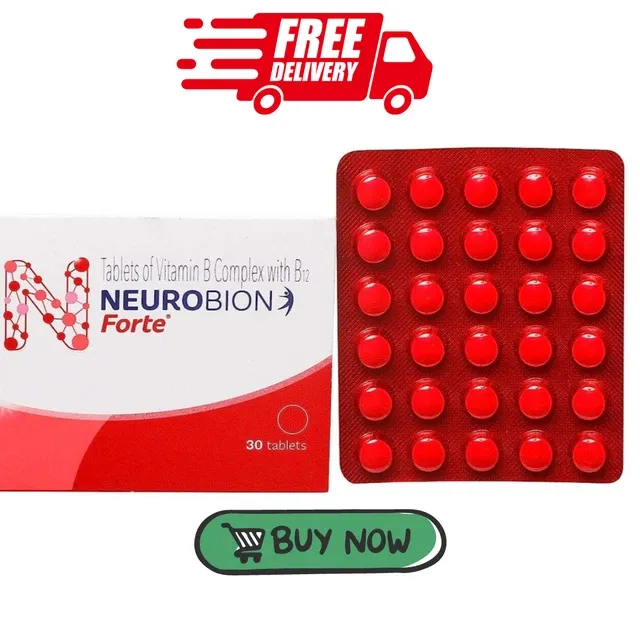
Table of Contents
Patient Information Leaflet
Neurobion 100 mg/50 mg/1 mg film-coated tablets
Thiamine nitrate/pyridoxine hydrochloride/cyanocobalamin
Please read this leaflet carefully before taking this medicine because it contains important information for you.
Always take this medicine exactly as described in this leaflet or as your doctor, pharmacist or nurse has instructed you.
- Keep this leaflet. You may need to read it again.
- If you need more information or advice, consult your pharmacist.
- If you experience any side effect, including those not listed in this leaflet, contact your doctor, pharmacist or nurse. See section 4.
- Consult your doctor if you do not notice any improvement or if your symptoms worsen after 30 days of treatment.
Contents of this leaflet
- What Neurobion is and what it is used for
- What you need to know before taking Neurobion
- How to take Neurobion
- Possible side effects
- How to store Neurobion
- Contents of the pack and other information
1. What Neurobion is and what it is used for
Neurobion is a medicine containing thiamine (vitamin B1), pyridoxine (vitamin B6), and cyanocobalamin (vitamin B12). Its use is restricted to adults only. It may be taken to prevent a decrease in the levels of these vitamins in the body or to treat a deficiency (when the body does not have a sufficient amount of vitamins).
A reduction in vitamin B1, B6, or B12 levels may occur if:
- you are not eating enough foods containing these vitamins;
- your body is unable to absorb the vitamins from food;
- you have undergone surgery on the stomach or intestines, which may affect the way nutrients are absorbed;
- you have certain conditions, such as inflammatory diseases, that may increase the body’s use of vitamins;
- you have conditions, such as kidney disease, that may cause the body to eliminate higher than normal amounts of vitamins.
Reduced levels of vitamin B1, B6, or B12 may be more common in elderly individuals or in patients with neurological disorders, diabetes, or gastrointestinal diseases, such as chronic inflammatory bowel disease or celiac disease.
If you have reduced levels of vitamin B1, B6, or B12, you may initially experience no symptoms; however, you may begin to develop symptoms such as fatigue, or tingling and numbness in the hands and feet.
You should use this medicine only if you know you have one of the conditions or diseases listed above (i.e., diagnosis has been confirmed by a doctor) and if treatment with this medicine has been recommended by a doctor.
2. What you need to know before taking Neurobion
Do not take Neurobion:
- if you are allergic to vitamin B1, B6, B12, or to any of the other ingredients of this medicine (listed in section 6);
- if you are under 18 years of age.
Warnings and precautions
Talk to your doctor, pharmacist, or nurse before taking Neurobion:
if you suffer from megaloblastic anaemia. Vitamin B12 (cyanocobalamin) may improve folate deficiency-related megaloblastic anaemia. The use of Neurobion could improve this condition due to the presence of vitamin B12 (cyanocobalamin).
If you experience any new symptoms during treatment with Neurobion, stop taking the medicine and consult your doctor, pharmacist, or nurse.
Children and adolescents
Neurobion must not be used in children and adolescents under 18 years of age due to the high content of vitamins B1, B6, and B12.
Other medicines and Neurobion
Tell your doctor or pharmacist if you are taking, have recently taken, or might take any other medicines.
Vitamin B6 may increase side effects and reduce the therapeutic effect of L-DOPA.
Medicines containing substances such as DOPA decarboxylase inhibitors (e.g. medicines for the treatment of Parkinson's disease) may cause a marked reduction in vitamin B6 levels.
Pyridoxine antagonists such as isoniazid, cycloserine, penicillamine, or hydralazine may reduce the effectiveness of vitamin B6.
Long-term use of loop diuretics (medicines that increase the production and elimination of urine), such as furosemide, may accelerate the elimination of vitamin B1 and lower its blood levels, and may also reduce vitamin B6 blood levels.
Neurobion with food, drinks, and alcohol
Alcohol reduces the absorption of vitamin B1.
Pregnancy, breastfeeding, and fertility
If you are pregnant, think you may be pregnant, are planning to become pregnant, or are breastfeeding, consult your doctor or pharmacist before taking this medicine.
Driving and using machines
Neurobion has no known effects on the ability to drive vehicles or operate machinery.
Neurobion contains sodium
This medicine contains less than 1 mmol (23 mg) of sodium per film-coated tablet, i.e. it is essentially "sodium-free".
3. How to take Neurobion
Take this medicine exactly as stated in this leaflet or as instructed by your doctor, pharmacist or nurse. If you have any doubts, consult your doctor, pharmacist or nurse.
The recommended dose for adults is 1 tablet per day. Swallow the tablet with liquid and take the tablet during or after meals.
Consult your doctor if you notice no improvement or if your symptoms worsen after 30 days of treatment.
Do not use this medicine for longer than 30 days without consulting your doctor. If you wish to continue treatment, consult your doctor.
Use in children and adolescents
Neurobion must not be used in children and adolescents under 18 years of age due to the high content of vitamins B1, B6 and B12.
If you take more Neurobion than you should
If you accidentally take an excessive dose of Neurobion, inform your doctor or pharmacist, or contact the Emergency Department of the nearest hospital for further advice.
When more than 1 tablet per day is taken for 6 months or longer, signs of neuropathy may occur, for example increased or decreased sensitivity to pressure, temperature and pain in the arms, hands, feet or legs, numbness, tingling, muscle weakness, reduced reflexes or other neurological symptoms.
In such a case, stop taking the medicine and consult your doctor, pharmacist or nurse.
If you forget to take Neurobion
If you forget to take Neurobion, take one tablet as soon as you remember, with the next meal on the same day.
Do not take a double dose to make up for the forgotten dose.
If you have any questions about the use of this medicine, consult your doctor, pharmacist or nurse.
4. Possible side effects
Like all medicines, this medicine can cause side effects, although not everybody will experience them.
When taking Neurobion, side effects with unknown frequency (frequency cannot be estimated from the available data) may occur:
- signs of allergic reactions such as sweating, tachycardia (increased heart rate), and skin reactions with itching and urticaria;
- gastrointestinal disturbances, such as nausea, vomiting, diarrhoea and abdominal pain;
- chromaturia ("reddish-coloured urine", which may appear within the first few hours after taking a tablet and usually resolves shortly after discontinuation of treatment);
- headache.
Reporting of side effects
If you experience any side effect, including those not listed in this leaflet, talk to your doctor, pharmacist or nurse. You can also report side effects directly through the national reporting system at https://www.aifa.gov.it/content/segnalazioni-reazioni-avverse. Reporting side effects can help provide more information on the safety of this medicine.
5. How to store Neurobion
This medicinal product requires no special storage conditions.
Keep this medicine out of the sight and reach of children.
Do not use this medicinal product after the expiry date stated on the label after “Exp.”. The expiry date refers to the last day of that month.
Do not dispose of any medicine via wastewater or household waste. Ask your pharmacist how to dispose of medicines you no longer use. This will help protect the environment.
6. Package contents and other information
What Neurobion contains
The active substances are: thiamine nitrate, pyridoxine hydrochloride, and cyanocobalamin.
Each coated tablet contains 100 mg of thiamine nitrate, 50 mg of pyridoxine hydrochloride, and 1 mg of cyanocobalamin.
The other components are:
Tablet core
Microcrystalline cellulose, gelatin, sodium croscarmellose, hypromellose, magnesium stearate, anhydrous colloidal silica, sodium starch glycolate.
Transparent coating
Polyvinyl alcohol, talc, glycerol monocaprylocaprate, sodium lauryl sulfate.
White coating
Hypromellose, polydextrose, titanium dioxide, macrogol.
Polishes
Beeswax, carnauba wax.
Description of the appearance of Neurobion and package contents
White, round, biconvex, film-coated tablets.
Blister packs contained in a cardboard box, pack size: 30 tablets.
Marketing Authorization Holder
Procter & Gamble S.r.l.
Viale Giorgio Ribotta, 11
00144 Roma
Italy
Manufacturer
P&G Health Austria GmbH. & Co. OG
Hösslgasse 20
9800 Spittal an der Drau
Austria
This medicinal product is authorized in the European Economic Area Member States under the following names:
Austria Neurobion
Belgium Neurobion
Czech Republic Neurobion
Germany Neurobion
Greece Neurobionta
Hungary Neurobion 100 mg/50 mg/1 mg filmtabletta
Italy Neurobion
Luxembourg Neurobion
Poland Neurobion Advance
Portugal Neurobion Advance
Slovakia Neurobion 100 mg/50 mg/1 mg filmom obalené tablety