Mysimba
Italy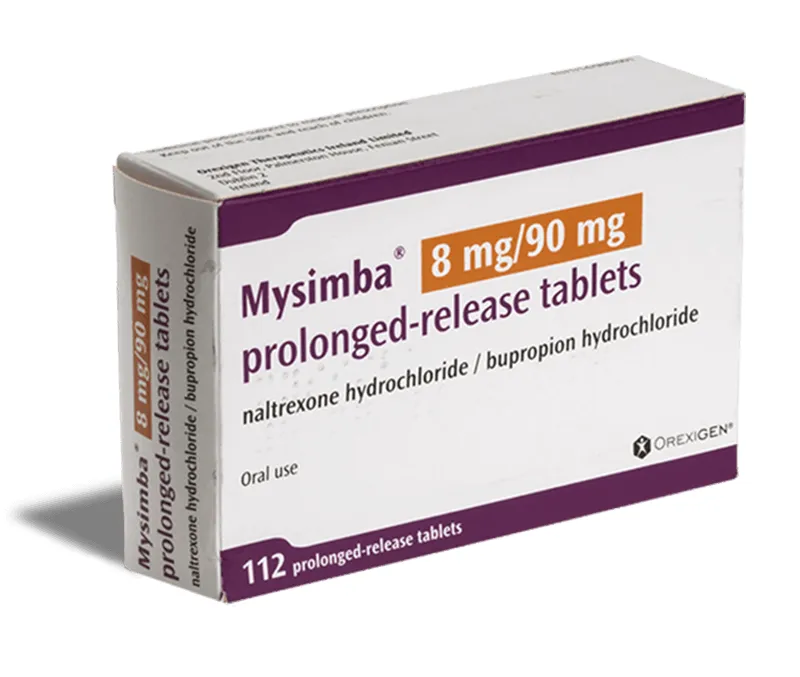
Table of Contents
Patient Information Leaflet
Mysimba 8 mg/90 mg prolonged-release tablets
naltrexone hydrochloride / bupropion hydrochloride
This medicinal product is subject to additional monitoring. This will allow any new safety information to be identified quickly. You can help by reporting any side effects you experience while taking this medicine. See the end of section 4 for information on how to report side effects.
Please read all of this leaflet carefully before taking this medicine, as it contains important information for you.
- Keep this leaflet. You may need to read it again.
- If you have any questions, ask your doctor or pharmacist.
- This medicine has been prescribed for you only. Do not give it to other people, even if their symptoms are the same as yours, as it may be harmful.
- If you experience any side effect, including those not listed in this leaflet, talk to your doctor or pharmacist. See section 4.
Contents of this leaflet
- What Mysimba is and what it is used for
- What you need to know before taking Mysimba
- How to take Mysimba
- Possible side effects
- How to store Mysimba
- Contents of the pack and other information
1. What Mysimba is and what it is used for
Mysimba contains two active substances: naltrexone hydrochloride and bupropion hydrochloride, and is used in obese or overweight adults to help control weight, together with a reduced-calorie diet and exercise. This medicine acts on areas of the brain involved in controlling food intake and energy expenditure.
Obesity in adults over 18 years of age is defined as a body mass index greater than or equal to 30; overweight in adults over 18 years of age is defined as a body mass index greater than or equal to 27 and less than 30. Body mass index is calculated as body weight (kg) divided by height squared (m²).
Mysimba is approved for use in patients with an initial body mass index greater than or equal to 30. It may also be prescribed to patients with a body mass index between 27 and 30 if they have additional weight-related conditions such as controlled high blood pressure (hypertension), type 2 diabetes, or high levels of lipids (fats) in the blood.
Your doctor may discontinue Mysimba after 16 weeks if you have not lost at least 5% of your initial body weight. Your doctor may also recommend stopping treatment if you have not maintained a weight loss of at least 5% of your initial body weight after 1 year of treatment, or if there are concerns regarding increased blood pressure, or other safety and tolerability issues with this medicine.
2. What you need to know before taking Mysimba
Do not take Mysimba:
- if you are allergic to naltrexone, bupropion, or any of the other ingredients of this medicine (listed in section 6);
- if you have uncontrolled high blood pressure (hypertension) not managed with medication;
- if you have a condition causing seizures or have had seizures in the past;
- if you have a brain tumor;
- if you are a heavy drinker and have recently stopped drinking or plan to stop while taking Mysimba;
- if you have recently stopped taking sedatives or anxiety medications (especially benzodiazepines) or plan to stop while taking Mysimba;
- if you currently suffer from or have previously suffered from bipolar disorder (extreme mood swings);
- if you are taking any other medicine containing bupropion or naltrexone;
- if you currently have or have previously had an eating disorder (e.g., bulimia or anorexia nervosa);
- if you are currently opioid-dependent or are taking opioids for addiction treatment (e.g., methadone or buprenorphine), or if you are experiencing acute opioid withdrawal (withdrawal crisis);
- if you are taking or have taken within the last 14 days monoamine oxidase inhibitors (MAOIs), medicines used to treat depression or Parkinson’s disease;
- if you have severe liver disease;
- if you have end-stage renal disease.
Warnings and precautions
Talk to your doctor or pharmacist before taking Mysimba.
This is important because certain conditions may increase the risk of side effects (see also section 4).
If you feel depressed, have thoughts of suicide, have previously attempted suicide, have had panic attacks, or have suffered from any other mental health condition, you must inform your doctor before taking this medicine.
Seizures
Mysimba has been shown to cause seizures in 1 out of 1,000 patients (see also section 4). You must inform your doctor before taking this medicine:
- if you have had a severe head injury or head trauma;
- if you regularly consume alcohol (see "Mysimba with alcohol");
- if you regularly use medicines that help you sleep (sedatives);
- if you are currently dependent on cocaine or other stimulants;
- if you have diabetes treated with insulin or oral medications that may cause low blood sugar (hypoglycemia);
- or if you are taking other medicines that may increase the risk of seizures (see "Other medicines and Mysimba").
If you have a seizure, stop taking Mysimba immediately and contact your doctor without delay.
Hypersensitivity reactions
You must stop taking Mysimba immediately and consult your doctor if you experience any symptoms of an allergic reaction, such as swelling of the throat, tongue, lips, or face, difficulty swallowing or breathing, dizziness, fever, rash, joint or muscle pain, itching, or hives after taking this medicine (see also section 4).
Serious skin reactions, including Stevens-Johnson syndrome and acute generalized exanthematous pustulosis (AGEP), have been reported in association with Mysimba treatment. If you notice any of the symptoms related to these serious skin reactions described in section 4, stop using Mysimba and seek immediate medical attention.
You must especially inform your doctor if:
- you have high blood pressure before starting Mysimba, as it may worsen. Your blood pressure and heart rate will be monitored before and during treatment. If your blood pressure or heart rate increases significantly, you may need to stop taking Mysimba;
- you have uncontrolled coronary artery disease (a heart condition caused by reduced blood flow in the heart vessels), with symptoms such as angina (chest pain), or if you have recently had a heart attack;
- you currently have or have previously had a condition affecting blood circulation in the brain ( cerebrovascular disease );
- you have any liver problems before starting Mysimba;
- you have any kidney problems before starting Mysimba;
- you have previously experienced mania (feeling elated or overexcited, leading to abnormal behavior);
- you are taking medicines for depression, as combining these with Mysimba may lead to serotonin syndrome, a potentially life-threatening condition (see "Other medicines and Mysimba" in this section and section 4).
Brugada syndrome
- if you have a condition known as Brugada syndrome (a rare inherited disorder affecting heart rhythm) or if there is a family history of cardiac arrest or sudden death.
Elderly
Use Mysimba with caution if you are over 65 years of age. Mysimba is not recommended if you are over 75 years old.
Children and adolescents
Studies have not been conducted in children and adolescents under 18 years of age. Therefore, Mysimba must not be used in children and adolescents under 18 years of age.
Other medicines and Mysimba
Inform your doctor or pharmacist if you are taking, have recently taken, or might take any other medicines.
Do not take Mysimba with:
- monoamine oxidase inhibitors (medicines used to treat depression or Parkinson’s disease), such as phenelzine, selegiline, or rasagiline. You must stop taking these medicines at least 14 days before starting Mysimba (see "Do not take Mysimba");
- opioid-containing medicines, for example, to treat cough and cold (such as mixtures containing dextromethorphan or codeine), opioid dependence (such as methadone or buprenorphine), pain (e.g., tramadol, morphine, or codeine), or diarrhea (e.g., paregoric). You must have discontinued any opioid medicine at least 7–10 days before starting Mysimba. Your doctor may perform tests to confirm that these medicines are no longer in your system before starting treatment. If opioid treatment becomes necessary while you are taking Mysimba (e.g., during surgery), you must stop taking Mysimba at least 3 days before starting opioid treatment or undergoing surgery. Naltrexone contained in Mysimba blocks the effects of opioids for several days after stopping Mysimba. Taking Mysimba together with antidepressants and opioids may cause serious, life-threatening reactions such as serotonin syndrome and seizures (see section 2. Inform your doctor if…), (see "Possible side effects"). If you take high doses of opioids to overcome the blocking effects of naltrexone, you may experience acute opioid poisoning, which could be potentially fatal. After stopping Mysimba, you may become more sensitive to low doses of opioids (see "Do not take Mysimba").
Inform your doctor if you are taking any of the following medicines, as your doctor will closely monitor for side effects:
- medicines that may increase the risk of seizures when used alone or in combination with naltrexone/bupropion, such as:
o antidepressants and other medicines for mental health conditions;
o steroids (except eye drops, creams, or lotions for eye or skin conditions or inhalers for respiratory disorders such as asthma);
o medicines used to prevent malaria;
o quinolones (antibiotics such as ciprofloxacin used to treat infections);
o theophylline (used to treat asthma);
o antihistamines (medicines used to treat hay fever, itching, and other allergic reactions) that cause drowsiness (such as chlorpheniramine);
o medicines to lower blood sugar levels (such as insulin, sulfonylureas like glyburide or glybenclamide, and meglitinides like nateglinide or repaglinide);
o medicines to help you sleep (sedatives such as diazepam). - medicines for depression (such as amitriptyline, desipramine, imipramine, venlafaxine, paroxetine, fluoxetine, citalopram, escitalopram) or other mental health conditions (such as risperidone, haloperidol, thioridazine). Mysimba may interact with other antidepressants, potentially causing serotonin syndrome. Symptoms include changes in mental status (e.g., agitation, hallucinations, coma) and other effects such as body temperature above 38°C, increased heart rate, unstable blood pressure, exaggerated reflexes, muscle rigidity, lack of coordination, and/or gastrointestinal symptoms (e.g., nausea, vomiting, diarrhea) (see section 4);
- certain medicines used to treat high blood pressure (beta-blockers such as metoprolol and clonidine, a centrally-acting antihypertensive);
- certain medicines used to treat irregular heart rhythm (such as propafenone, flecainide);
- certain medicines used to treat cancer (such as cyclophosphamide, ifosfamide, tamoxifen);
- certain medicines for Parkinson’s disease (such as levodopa, amantadine, or orphenadrine);
- ticlopidine or clopidogrel, mainly used to treat heart conditions or stroke;
- medicines used to treat HIV and AIDS infections, such as efavirenz and ritonavir;
- medicines used to treat epilepsy, such as valproate, carbamazepine, phenytoin, or phenobarbital.
Your doctor will closely monitor for side effects and/or may need to adjust the dose of the other medicine or of Mysimba.
Mysimba may reduce the effectiveness of other medicines when taken at the same time as Mysimba:
- If you are taking digoxin for heart conditions
If this applies to you, inform your doctor. Your doctor may consider adjusting the dose of digoxin.
Mysimba with alcohol
Excessive alcohol consumption while being treated with Mysimba may increase the risk of seizures, episodes of psychiatric disturbances, or reduce alcohol tolerance. Your doctor may advise you not to drink alcohol while taking Mysimba or to drink as little as possible. If you currently drink heavily, do not stop abruptly, as this may put you at risk of having a seizure.
Pregnancy and breastfeeding
Mysimba must not be used during pregnancy, if you are planning a pregnancy, or during breastfeeding.
If you are pregnant, suspect you may be pregnant, are planning to become pregnant, or are breastfeeding, consult your doctor or pharmacist before taking this medicine.
Driving and using machines
Ask your doctor for advice before driving or operating machinery, as Mysimba may cause dizziness and drowsiness, which could impair your ability to concentrate and react.
Do not drive, operate tools or machinery, or engage in hazardous activities until you know how this medicine affects you.
Do not drive or operate machinery if you experience fainting, muscle weakness, or seizures.
If in doubt, consult your doctor, who may consider discontinuing treatment depending on your condition.
Mysimba contains lactose (a type of sugar)
If your doctor has diagnosed you with an intolerance to certain sugars, contact them before taking this medicine.
3. How to take Mysimba
Take this medicine exactly as your doctor has told you. If you are unsure, consult your doctor or pharmacist.
The usual starting dose is one tablet (8 mg hydrochloride naltrexone / 90 mg hydrochloride bupropion) once daily in the morning. The dose will be gradually adjusted as follows:
- First week: one tablet once daily in the morning
- Second week: two tablets daily, one in the morning and one in the evening
- Third week: three tablets daily, two in the morning and one in the evening
- From the fourth week onwards: four tablets daily, two in the morning and two in the evening
The maximum recommended daily dose of Mysimba is two tablets twice daily.
After 16 weeks and every day following the start of treatment, your doctor will assess whether you should continue taking Mysimba.
If you have problems with your liver or kidneys, or if you are over 65 years old, and depending on the severity of your condition, your doctor may carefully consider whether this medicine is suitable for you, may recommend a different dose, and may monitor you more closely for potential side effects. Your doctor may perform blood tests before starting treatment with Mysimba if you have high blood sugar levels (diabetes) or if you are over 65 years old, to decide whether you should take this medicine or require a different dose.
This medicine is for oral use only. Swallow the tablets whole. Do not cut, chew or break them.
The tablets should preferably be taken with food.
If you take more Mysimba than you should
If you take too many tablets, you may be more likely to experience seizures or other side effects similar to those described in section 4 below. Do not delay, and inform your doctor immediately or contact the nearest hospital emergency department.
If you forget to take Mysimba
Skip the missed dose and take the next dose at your regular scheduled time. Do not take a double dose to make up for the missed dose.
If you stop taking Mysimba
You may need to take Mysimba for at least 16 weeks to achieve the full effect. Do not stop taking Mysimba without first talking to your doctor.
If you have any doubts about how to use this medicine, consult your doctor or pharmacist.
4. Possible side effects
Like all medicines, this medicine can cause side effects, although not everyone gets them.
Serious side effects
Contact your doctor immediately if you experience any of the following serious side effects:
-
Suicidal thoughts and feelings of depression
The frequency of side effects such as suicide attempts, suicidal behaviour, suicidal thoughts, and feelings of depression is unknown and cannot be estimated from the available data in people taking Mysimba. Cases of depression, suicidal thoughts, and suicide attempts have been reported during treatment with Mysimba. If you have thoughts of harming yourself or other distressing thoughts, or if you feel depressed and notice your mood worsening or develop new symptoms, contact your doctor or go to hospital immediately. -
Seizures
Rare – may affect up to 1 in 1,000 people taking Mysimba, with a risk of having a seizure. Symptoms of a seizure include convulsions and usually loss of consciousness. A person who has had a seizure may feel confused and may not remember what happened. Seizures are more likely if you have taken too much medicine, taken other medicines, or have a higher than normal risk of seizures (see section 2). -
Erythema multiforme and Stevens-Johnson syndrome
Frequency unknown – cannot be estimated from the available data in people taking Mysimba. Erythema multiforme is a serious skin condition that can affect the mouth and other parts of the body, with red spots, often itchy, starting on the limbs. Stevens-Johnson syndrome is a rare skin condition with severe blistering and bleeding of the lips, eyes, mouth, nose, and genitals. -
Generalized pustular eruption (acute generalized exanthematous pustulosis)
Frequency unknown – cannot be estimated from the available data in people taking Mysimba. A widespread, red, scaly skin rash with bumps under the skin and blisters, accompanied by fever. Symptoms usually appear early in treatment. -
Rhabdomyolysis
Frequency unknown – cannot be estimated from the available data in people taking Mysimba. Rhabdomyolysis is abnormal breakdown of muscle tissue, which can lead to kidney problems. Symptoms include severe muscle cramps, muscle pain, or muscle weakness. -
Drug-induced lupus rash or worsening of lupus symptoms
Frequency unknown – cannot be estimated from the available data in people taking Mysimba. Lupus is an immune system disorder affecting the skin and other organs. If you experience lupus flare-ups, skin rash, or skin lesions (especially on sun-exposed areas) while taking Mysimba, contact your doctor immediately, as treatment may need to be stopped. -
Serotonin syndrome
This may occur as changes in mental status (e.g. agitation, hallucinations, coma) and other effects such as body temperature above 38°C, increased heart rate, unstable blood pressure, exaggerated reflexes, muscle rigidity, lack of coordination, and/or gastrointestinal symptoms (e.g. nausea, vomiting, diarrhoea), particularly when Mysimba is taken together with medicines used to treat depression (such as paroxetine, citalopram, escitalopram, fluoxetine, venlafaxine, and opioids) (see section 2). Frequency unknown – cannot be estimated from the available data in people taking Mysimba.
Other side effects include:
Very common side effects (may affect more than 1 in 10 people):
- Nausea, vomiting
- Constipation
- Headache
Common side effects (may affect up to 1 in 10 people):
- Anxiety
- Dizziness, feeling dizzy or vertigo
- Tremor
- Difficulty sleeping (do not take Mysimba close to bedtime)
- Altered taste (dysgeusia), dry mouth
- Difficulty concentrating
- Feeling tired and sleepy, lack of energy (lethargy)
- Ringing in the ears (tinnitus)
- Fast or irregular heartbeat
- Hot flushes
- Increase in blood pressure (sometimes severe)
- Pain in the upper abdomen
- Abdominal pain
- Excessive sweating (hyperhidrosis)
- Skin rash, itching
- Hair loss (alopecia)
- Irritability
- Feeling restless
Uncommon side effects (may affect up to 1 in 100 people):
- Hives (urticaria)
- Hypersensitivity
- Abnormal dreams
- Nervousness, feeling disoriented, tension, restlessness, mood swings
- Head or limb tremor that worsens when trying to perform a specific action (intention tremor)
- Balance disorders
- Memory loss (amnesia)
- Tingling or numbness in hands or feet
- Motion sickness (cinetosis)
- Belching
- Abdominal discomfort
- Indigestion
- Inflammation of the gallbladder (cholecystitis)
- Increased blood creatinine levels (indicating loss of kidney function)
- Increased liver enzymes and bilirubin levels, liver disorders
- Difficulty achieving or maintaining an erection
- Feeling of abnormality, weakness (asthenia)
- Thirst, feeling of warmth
- Chest pain
- Increased appetite, weight gain
Rare side effects (may affect up to 1 in 1,000 people):
- Low count of certain white blood cells (decreased lymphocyte count)
- Decreased haematocrit (indicating reduced red blood cell volume)
- Swelling of the eyelids, face, lips, tongue, or throat, which may cause severe breathing difficulty (angioedema)
- Excessive loss of body fluids (dehydration)
- Hallucinations
- Fainting, near-fainting (pre-syncope), loss of consciousness
- Convulsive seizures
- Passage of bright red blood from the anus, usually in or with stools (haematochezia)
- Protrusion of an organ or surrounding tissue through the wall of the cavity that normally contains it (hernia)
- Toothache
- Dental caries, cavities
- Pain in the lower abdomen
- Liver injury due to drug toxicity
- Jaw/mouth pain
- Condition characterised by sudden urgency to urinate (urinary urgency)
- Irregular menstrual cycle, vaginal bleeding, dryness of the vulva and vagina
- Coldness in the extremities (hands, feet)
Side effects with unknown frequency (frequency cannot be estimated from the available data):
- Swelling of glands in the neck, armpits, or groin (lymphadenopathy)
- Mood disorders
- Irrational ideas (delusional thoughts)
- Psychosis
- Sudden, severe, and disabling anxiety (panic attack)
- Loss of sexual desire
- Feelings of hostility
- Severe suspiciousness (paranoia)
- Aggressiveness
- Attention disorders
- Nightmares
- Confusion, disorientation
- Memory impairment
- Restlessness
- Muscle rigidity, uncontrolled movements, problems walking or with coordination
- Blurred vision, eye pain, eye irritation, eye swelling, tearing, increased sensitivity to light (photophobia)
- Ear pain, ear discomfort
- Breathing difficulties
- Nasal discomfort, congestion, runny nose, sneezing, sinus problems
- Sore throat, voice problems, cough, yawning
- Haemorrhoids, ulcer
- Diarrhoea
- Flatulence
- Hepatitis
- Acne
- Groin pain
- Muscle pain
- Joint pain
- Abnormally frequent urination, pain during urination
- Chills
- Increased energy
Reporting of side effects
If you experience any side effect, including those not listed in this leaflet, talk to your doctor or pharmacist. You can also report side effects directly via the national reporting system listed in Annex V. By reporting side effects, you can help provide more information on the safety of this medicine.
5. How to store Mysimba
Keep this medicine out of the sight and reach of children.
Do not use this medicine after the expiry date which is stated on the outer carton and on the blister
after “Exp”. The expiry date refers to the last day of that month.
Do not store above 30 °C.
Do not dispose of any medicine via wastewater or household waste. Ask your pharmacist how to
dispose of medicines you no longer use. This will help protect the environment.
6. Package contents and other information
What Mysimba contains
- The active substances are naltrexone hydrochloride and bupropion hydrochloride. Each tablet contains 8 milligrams of naltrexone hydrochloride, equivalent to 7.2 milligrams of naltrexone, and 90 milligrams of bupropion hydrochloride, equivalent to 78 milligrams of bupropion.
- The other components (excipients) are: Tablet core: microcrystalline cellulose, hydroxypropyl cellulose, anhydrous lactose, monohydrate lactose (see section 2 “Mysimba contains lactose”), cysteine hydrochloride, crospovidone type A, magnesium stearate, hypromellose, disodium edetate, colloidal silicon dioxide, and aluminium lake containing indigo carmine (E132). Film coating: poly(vinyl alcohol), titanium dioxide (E171), macrogol (3350), talc, and aluminium lake containing indigo carmine (E132).
Description of the appearance of Mysimba and the pack contents
Mysimba prolonged-release tablets are blue, biconvex, round tablets with “NB-890” engraved on one side. Mysimba is available in packs containing 28 or 112 tablets. Not all pack sizes may be marketed.
Patient card: information on management
A Patient Card will be included with the Mysimba packaging, containing important safety information for you and your doctors. Always carry the Patient Card with you.
Marketing Authorisation Holder and Manufacturer
Orexigen Therapeutics Ireland Limited
9-10 Fenian Street,
Dublin 2,
D02 RX24
Ireland
MIAS Pharma Ltd
Suite 1 Stafford House, Strand Road, Portmarnock, Co. Dublin,
Ireland
For further information about this medicinal product, please contact the local representative of the Marketing Authorisation Holder:
Belgique/België/Belgien Lietuva
GOODLIFE Pharma SA/NV B-LINK PHARMA UAB
Tel. +3280079510 Tel: 0880033407
България Luxembourg/Luxemburg
PharmaSwiss EOOD GOODLIFE Pharma SA/NV
Teл.: 08002100278 Tel. +352 800 23603
Česká republika Magyarország
PharmaSwiss Česká republika s.r.o. Bausch Health Magyarország Kft.
Tel: +420 800202135 Tel: +36 80014337
Danmark Malta
Navamedic AB Vivian Corporation Limited
Tel. +4580253432 Tel. +356 80062176
Deutschland Nederland
Orexigen Therapeutics Ireland Limited Goodlife Pharma B.V
Tel. +44 1223771222 Tel. +31 8000200800
Eesti Norge
B-LINK PHARMA UAB Navamedic AB
Tel: 8000112023 Tel. 800 315 11
Ελλάδα Österreich
Win Medica Pharmaceutical S.A. Kwizda Pharma GmbH
Τηλ: +30 8003252735 Tel. +43800232905
España Polska
Orexigen Therapeutics Ireland Limited Bausch Health Poland sp. Z o.o.
Tel. +34 900 808 093 Tel.: +48 800999969
France Portugal
Orexigen Therapeutics Ireland Limited Laboratório Medinfar - Produtos Farmacêuticos, S.A.
Tel. +33 805543871 Tel. +351800509600
Hrvatska România
Orexigen Therapeutics Ireland Limited Orexigen Therapeutics Ireland Limited
Tel. 0800200448 Tel. 0040800896562
Ireland Slovenija
Consilient Health Limited Orexigen Therapeutics Ireland Limited
Tel. +3531800849099 Tel. +38680083132
Ísland Slovenská republika
Navamedic AB Bausch Health Slovakia s.r.o.
Tel. 8004383 Tel: +42800601203
Italia Suomi/Finland
Bruno Farmaceutici S.p.A. Navamedic AB
Tel. +39800187271 Puh. 0800416203
Κύπρος Sverige
C.G.Papaloisou Ltd Navamedic AB
Tel: +35780091128 Tel. +46200336733
Latvija United Kingdom (Northern Ireland)
B-LINK PHARMA UAB Orexigen Therapeutics Ireland Limited
Tel: 80005400 Tel. +44 20 3966 0116
Liechtenstein
Orexigen Therapeutics Ireland Limited
Tel. +49 89121409178
Other sources of information
More detailed information on this medicinal product is available on the website of the European Medicines Agency: http://www.ema.europa.eu.
Annex IV
Scientific conclusions and grounds for the variation to the terms of the marketing authorisation
Scientific conclusions
Taking into account the assessment by the Pharmacovigilance and Risk Assessment Committee (PRAC) of the Periodic Safety Update Reports (PSURs) for naltrexone/bupropione, the PRAC's scientific conclusions are as follows:
Considering the available data on the risk of inadequate analgesia due to interactions with opioids from spontaneous reports, in addition to the requirements of GVP Module XVI (rev 3), the PRAC concluded that the product information for medicinal products containing naltrexone/bupropione should be updated to include a statement on the availability and accessibility of the patient card for Mysimba.
Having reviewed the PRAC's recommendation, the Committee for Human Medicinal Products (CHMP) agrees with its overall conclusions and the rationale for the recommendation.
Grounds for the variation to the terms of the marketing authorisations
Based on the scientific conclusions for naltrexone/bupropione, the CHMP considers that the benefit-risk balance of medicinal products containing naltrexone/bupropione remains unchanged, subject to the proposed amendments to the product information.
The CHMP recommends a variation to the terms of the marketing authorisation.