Myfenax
Italy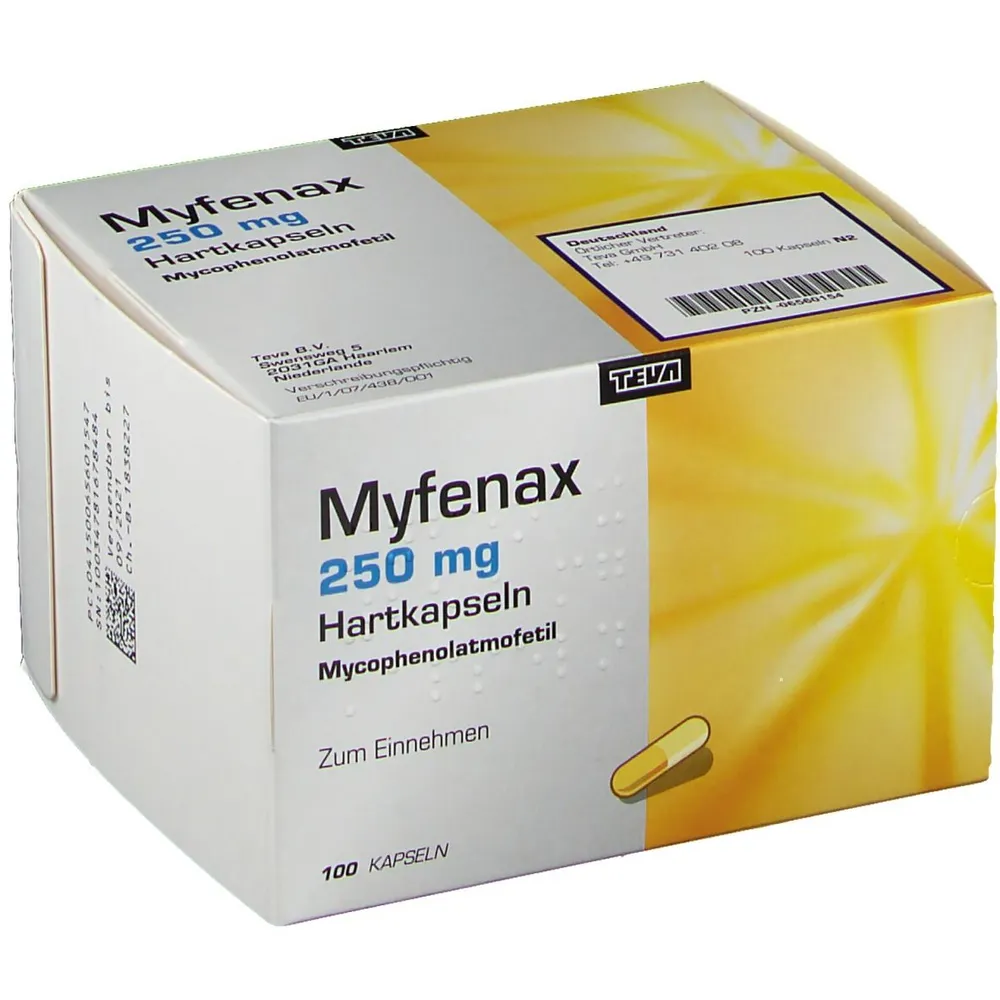
Table of Contents
- Patient Information Leaflet
- Myfenax 250 mg Hard Capsules
- 1. What Myfenax is and what it is used for
- 2. What you need to know before taking Myfenax
- 3. How to take Myfenax
- 4. Possible side effects
- 5. How to store Myfenax
- 6. Package contents and other information
- Patient Information Leaflet
- Myfenax 500 mg film-coated tablets
- 1. What Myfenax is and what it is used for
- 2. What you should know before taking Myfenax
- 3. How to take Myfenax
- 4. Possible side effects
- 5. How to store Myfenax
- 6. Package contents and other information
Patient Information Leaflet
Myfenax 250 mg Hard Capsules
mycophenolate mofetil
Please read all of this leaflet carefully before taking this medicine because it contains important information for you.
- Keep this leaflet. You may need to read it again.
- If you have any questions, ask your doctor or pharmacist.
- This medicine has been prescribed for you only. Do not pass it on to other people, even if their symptoms are the same as yours, as it may be harmful to them.
- If you experience any side effects, including those not listed in this leaflet, talk to your doctor, pharmacist or nurse. See section 4.
Contents of this leaflet
- What Myfenax is and what it is used for
- What you need to know before taking Myfenax
- How to take Myfenax
- Possible side effects
- How to store Myfenax
- Contents of the pack and other information
1. What Myfenax is and what it is used for
Myfenax is a medicine used to reduce immune activity.
The active substance in this medicine is called mycophenolate mofetil.
Myfenax is used in adults and children to prevent the body from rejecting a transplanted kidney,
heart or liver. It is used in combination with other medicines that have a similar function (e.g.
cyclosporine and corticosteroids).
2. What you need to know before taking Myfenax
WARNING
Mycophenolate causes birth defects and miscarriage. If you are a woman of childbearing potential, you must
have a negative pregnancy test before starting treatment and follow your doctor’s advice
regarding contraception.
Your doctor will discuss this with you and provide written information, particularly on the effects of
mycophenolate on the unborn child. Read this information carefully and follow the instructions.
If you do not fully understand these instructions, ask your doctor to explain them again before taking
mycophenolate. Also read the information in this section under “Warnings and precautions” and “Contraception, pregnancy and breastfeeding”.
Do not take Myfenax
- if you are allergic to mycophenolate mofetil, mycophenolic acid, or any of the other ingredients of this medicine (listed in section 6)
- if you are a woman of childbearing potential and have not had a negative pregnancy test before the first prescription, because mycophenolate causes birth defects and miscarriage
- if you are pregnant, suspect you may be pregnant, or are planning a pregnancy
- if you are not using any effective contraceptive method (see “Contraception, pregnancy and breastfeeding”)
- if you are breastfeeding with breast milk. Do not take this medicine if any of the above conditions apply to you. If you have any doubts, speak with your doctor or pharmacist before using Myfenax.
Warnings and precautions
Inform your doctor immediately before starting treatment with Myfenax:
- if you are over 65 years old, as you may have an increased risk of adverse events such as certain viral infections, gastrointestinal bleeding, and pulmonary edema compared to younger patients.
- if you experience signs of infection (e.g. fever, sore throat), unexplained bruising and/or bleeding.
- if you have or have ever had digestive disorders, such as gastric ulcer.
- if you are planning a pregnancy or if you or your partner become pregnant while being treated with Myfenax.
- if you suffer from an inherited enzyme deficiency such as Lesch-Nyhan syndrome or Kelley-Seegmiller syndrome.
Myfenax reduces the body's immune defenses, increasing the risk of skin cancer.
Therefore, you should limit exposure to sunlight and ultraviolet (UV) radiation by wearing suitable protective clothing and applying a high-protection sunscreen.
You must not donate blood during treatment with Myfenax and for at least 6 weeks after stopping treatment. Men must not donate sperm during treatment with Myfenax and for at least 90 days after stopping treatment.
Children and adolescents
Children, especially those under 6 years of age, may be more likely than adults to experience certain side effects, including diarrhea, vomiting, infections, reduced red and white blood cells in the blood, and possibly lymphatic system or skin cancer.
The capsules are suitable only for children able to swallow solid medicines without risk of choking. The medicine must therefore be administered only as prescribed by the doctor.
If you have any doubts about your child’s treatment, consult your doctor or pharmacist before use.
Other medicines and Myfenax
Tell your doctor or pharmacist if you are taking, have recently taken, or might take any other medicines.
If you answer yes to any of the following questions, discuss this with your doctor before starting Myfenax:
- Are you currently taking medicines containing:
o azathioprine or other immunosuppressants (sometimes prescribed to patients after organ transplant),
o cholestyramine (used to treat patients with high blood cholesterol),
o rifampicin (an antibiotic),
o proton pump inhibitor antacids (used for stomach acidity problems such as indigestion),
o phosphate binders (used in patients with chronic kidney failure to reduce phosphate absorption),
o antibiotics (used to treat bacterial infections),
o isavuconazole (used to treat fungal infections),
o telmisartan (used to treat high blood pressure),
o or any other medicine (including over-the-counter medicines) of which your doctor is unaware? - Do you need to receive vaccinations (live vaccines)? Your doctor will advise you on what is appropriate for you.
Contraception, pregnancy and breastfeeding
Contraception in women taking Myfenax
If you are a woman of childbearing potential, you must use an effective contraceptive method while taking Myfenax. This means:
- before starting Myfenax
- throughout the entire treatment with Myfenax
- for 6 weeks after stopping treatment with Myfenax.
Talk to your doctor about the most suitable contraceptive method for you. This will depend on your individual situation. Using two contraceptive methods is preferable to reduce the risk of unintended pregnancy. Contact your doctor as soon as possible if you think your contraceptive method may not have been effective or if you have missed taking your oral contraceptive pill.
You cannot be considered unable to become pregnant unless one of the following conditions applies:
- You are postmenopausal, i.e. you are at least 50 years old and your last menstrual period was over a year ago (if your menstrual cycle has stopped due to anti-cancer treatment, you may still be able to become pregnant).
- Both fallopian tubes and both ovaries have been surgically removed (bilateral salpingo-oophorectomy).
- The uterus has been surgically removed (hysterectomy).
- Your ovaries no longer function (premature ovarian failure, confirmed by a specialist gynecologist).
- You were born with one of the following rare conditions making pregnancy impossible: XY genotype, Turner syndrome, or uterine agenesis.
- You are a child or adolescent who has not yet had her first menstrual period.
Contraception in men taking Myfenax
Although available clinical data do not indicate an increased risk of birth defects or miscarriages when the father takes mycophenolate, this risk cannot be completely ruled out.
As a precaution, you and your partner are therefore advised to use a reliable contraceptive method during treatment and for 90 days after stopping Myfenax therapy.
If you are planning a pregnancy, talk to your doctor about potential risks and alternative treatments.
Pregnancy and breastfeeding
If you are pregnant, suspect you may be pregnant, are planning a pregnancy, or are breastfeeding with breast milk, consult your doctor or pharmacist before taking this medicine. Your doctor will discuss with you the risks in case of pregnancy and alternative treatments available to prevent organ transplant rejection if:
- you are planning a pregnancy
- you miss or think you may have missed a menstrual period, have unusual menstrual bleeding, or suspect a pregnancy
- you have had sexual intercourse without using effective contraception.
If you become pregnant during treatment with mycophenolate, inform your doctor immediately. In any case, continue taking Myfenax until you see your doctor.
Pregnancy
Mycophenolate very frequently causes miscarriage (50%) and severe birth defects (23–27%). Reported birth defects include abnormalities of the ears, eyes, face (cleft lip/palate), fingers, heart, esophagus (the tube connecting the throat and stomach), kidneys, and nervous system (e.g., spina bifida [when the bones of the spine are not fully developed]). The baby may have one or more of these defects.
If you are a woman of childbearing age, you must have a negative pregnancy test before starting treatment and follow your doctor’s advice regarding contraception. Your doctor may require more than one test to ensure you are not pregnant before starting treatment.
Breastfeeding
Do not take Myfenax if you are breastfeeding with breast milk. Small amounts of the medicine may pass into breast milk.
Driving and using machines
Myfenax may have a moderate effect on the ability to drive vehicles or use tools or machines. If you feel drowsy, dizzy, or confused, consult your doctor or nurse and do not drive or operate tools or machinery until you feel better.
Myfenax contains sodium
This medicine contains less than 1 mmol of sodium (23 mg) per hard capsule, i.e. essentially ‘sodium-free’.
3. How to take Myfenax
Take this medicine exactly as your doctor has told you. If you have any doubts, consult your doctor or pharmacist.
Your treatment will be started and monitored by a specialist doctor in transplantation.
Usually, Myfenax is taken as follows:
Kidney transplant
Adults
The first dose should be administered within 72 hours after the transplant surgery. The recommended dose is 8 capsules (2 g of active substance) daily, divided into two doses—i.e., 4 capsules in the morning and 4 capsules in the evening.
Children
The capsules are suitable only for children able to swallow solid medicines without risk of choking. The medicine must therefore be administered strictly as prescribed by the doctor. If you have any doubts, consult your doctor or pharmacist before use.
The dose to be administered will depend on the child's body surface area.
The child’s doctor will determine the appropriate dose based on the child’s height and weight (body surface area—measured in square meters or “m²”). The recommended initial dose is 600 mg/m² administered twice daily. The recommended maintenance dose remains 600 mg/m² twice daily (maximum total daily dose of 2 g). The dose must be individualized based on clinical assessment.
Heart transplant
Adults
The first dose should be administered within 5 days after the transplant surgery. The recommended dose is 12 capsules (3 g of active substance) daily, divided into two doses—i.e., 6 capsules in the morning and 6 capsules in the evening.
Children
The capsules are suitable only for children able to swallow solid medicines without risk of choking. The medicine must therefore be administered strictly as prescribed by the doctor. If you have any doubts, consult your doctor or pharmacist before use.
The dose to be administered will depend on the child's body surface area.
The child’s doctor will determine the most appropriate dose based on the child’s height and weight (body surface area—measured in square meters or “m²”). The recommended initial dose is 600 mg/m² administered twice daily. The dose must be individualized based on the doctor’s clinical assessment. If well tolerated, the dose may be increased to 900 mg/m² administered twice daily, as needed (maximum total daily dose of 3 g).
Liver transplant
Adults
The first dose of oral Myfenax will be administered at least 4 days after transplantation and when you are able to take oral medication. The recommended dose is 12 capsules (3 g of active substance) daily, divided into two doses—i.e., 6 capsules in the morning and 6 capsules in the evening.
Children
The capsules are suitable only for children able to swallow solid medicines without risk of choking. The medicine must therefore be administered strictly as prescribed by the doctor. If you have any doubts, consult your doctor or pharmacist before use.
The dose to be administered will depend on the child's body surface area.
The child’s doctor will determine the most appropriate dose based on the child’s height and weight (body surface area—measured in square meters or “m²”). The recommended initial dose is 600 mg/m² administered twice daily. The dose must be individualized based on the doctor’s clinical assessment. If well tolerated, the dose may be increased to 900 mg/m² administered twice daily, as needed (maximum total daily dose of 3 g).
Method and route of administration
Swallow the capsules whole with a glass of water. You may take them with or without food. Do not break or crush the capsules, and do not take any broken or opened capsule. Avoid contact with powder leaking from damaged capsules. If a capsule accidentally breaks, wash the affected skin area thoroughly with soap and water. If powder comes into contact with your eyes or mouth, rinse thoroughly with plenty of fresh running water.
Treatment will continue as long as immunosuppression is necessary to prevent rejection of the transplanted organ.
If you take more Myfenax than you should
It is important not to ingest too many capsules. Contact your nearest emergency department or your doctor immediately for advice if you have taken more capsules than prescribed, or if you suspect a child has ingested them.
If you forget to take Myfenax
If you forget to take your dose, take it as soon as you remember, then continue taking it as usual.
Do not take a double dose to make up for the missed dose.
If you stop taking Myfenax
Do not stop taking Myfenax because you feel better. It is important to take the medicine for the full duration prescribed by your doctor. Stopping treatment with Myfenax may increase the risk of rejection of your transplanted organ. Do not stop taking the medicine unless instructed by your doctor.
If you have any questions about the use of this medicine, consult your doctor or pharmacist.
4. Possible side effects
Like all medicines, this medicine can cause side effects, although not everybody gets them.
Contact a doctor immediately if you notice any of the following serious side effects – urgent medical treatment may be needed:
- signs of infection such as fever or sore throat.
- unexpected bruising or bleeding.
- rash, itching, hives, shortness of breath or difficulty breathing, wheezing or cough, mental confusion, dizziness, changes in consciousness, hypotension, with or without mild generalized itching, skin redness, and swelling of the face/throat (symptoms of a severe allergic reaction).
- passing black stools or stools containing blood, or vomiting blood or dark particles resembling coffee grounds. These may be signs of bleeding in the stomach or intestines.
The frequency of certain side effects depends on the transplanted organ; that is, some side effects may occur more or less frequently depending on whether the medicine is taken to prevent rejection of a transplanted heart or a transplanted kidney. For clarity, each side effect is always listed under its highest frequency.
Other side effects
Very common (may affect more than 1 in 10 people)
- Bacterial, viral and/or fungal infections
- Severe infections that may affect the whole body
- Decrease in the number of white blood cells, platelets or red blood cells, which may lead to increased risk of infections, bruising, bleeding, shortness of breath and weakness
- Bleeding under the skin
- Increased white blood cells
- Excess acid in the body
- High levels of cholesterol and/or lipids in the blood
- High blood sugar levels
- High levels of potassium in the blood, low levels of potassium, magnesium, calcium and/or phosphate in the blood
- High levels of uric acid in the blood, gout
- Restlessness, abnormal thinking, perception disorders and altered level of consciousness, depression, anxiety, difficulty sleeping
- Increased muscle tension, tremor, drowsiness, dizziness, headache, tingling, prickling or numbness
- Rapid heartbeat
- High/low blood pressure, dilation of blood vessels
- Fluid accumulation in the lungs, shortness of breath, cough
- Swollen abdomen
- Vomiting, stomach pain, diarrhoea, feeling unwell
- Constipation, indigestion, flatulence
- Reduced appetite
- Changes in various laboratory parameters
- Inflammation of the liver, yellowing of the skin and whites of the eyes (jaundice)
- Skin overgrowth, rash, acne
- Muscle weakness
- Joint pain
- Kidney problems
- Blood in the urine
- Fever, chills, pain, feeling of weakness
- Fluid retention in the body
- Protrusion of an internal organ or tissue through a weak spot in the abdominal muscles (hernia)
- Muscle pain, neck and back pain
Common (may affect up to 1 in 10 people)
- Skin cancer, non-cancerous skin growth
- Abnormal and excessive tissue growth
- Decrease in all types of blood cells
- Benign enlargement of lymph nodes, inflammatory skin changes (pseudolymphoma)
- Weight loss
- Abnormal thoughts
- Seizures
- Altered sense of taste
- Formation of a blood clot in a vein
- Inflammation of the tissue lining the inner abdominal wall and covering most abdominal organs (peritonitis)
- Intestinal blockage
- Inflammation of the colon causing abdominal pain or diarrhoea (sometimes due to cytomegalovirus), mouth and/or stomach and/or duodenal ulcers, inflammation of the stomach, oesophagus and/or mouth and lips
- Belching
- Hair loss
- Feeling unwell
- Overgrowth of gum tissue
- Inflammation of the pancreas, causing severe abdominal and back pain
Uncommon (may affect up to 1 in 100 people)
- Protozoal infections
- Proliferation of lymphatic tissue, including malignant tumours
- Insufficient production of red blood cells
- Severe bone marrow diseases
- Accumulation of lymphatic fluid inside the body
- Shortness of breath, cough, which may be caused by bronchiectasis (a condition in which the lung airways are abnormally dilated) or pulmonary fibrosis (scarring of the lung). Consult your doctor if you have persistent cough or shortness of breath.
- Reduction in the amount of antibodies in the blood
- Severe decrease in certain white blood cells (possible symptoms include fever, sore throat, frequent infections) (agranulocytosis)
Not known (frequency cannot be estimated from the available data)
- Changes in the inner wall of the small intestine (atrophy of intestinal villi)
- Severe inflammation of the membrane covering the brain and spinal cord (meningitis)
- Severe inflammation of the heart and its valves (endocarditis)
- Bacterial infections usually causing severe lung disease (tuberculosis, infection with atypical mycobacteria)
- Severe kidney disease (BK virus-associated nephropathy)
- Severe central nervous system disease (progressive multifocal leukoencephalopathy associated with JC virus)
- Decrease in certain white blood cells (neutropenia)
- Changes in the shape of certain white blood cells
Additional side effects in children and adolescents
Children, especially those under 6 years of age, may experience some side effects more frequently than adults, including diarrhoea, vomiting, infections, reduced red and white blood cells in the blood, and possibly lymphatic system cancer or skin cancer.
Do not stop treatment before discussing it with your doctor.
Reporting of suspected adverse reactions
If you experience any side effect, including those not listed in this leaflet, talk to your doctor, pharmacist or nurse. You can also report side effects directly via the national reporting system listed in Annex V. By reporting side effects, you can help provide more information on the safety of this medicine.
5. How to store Myfenax
Keep this medicine out of the sight and reach of children.
Do not use this medicine after the expiry date which is stated on the blister and the carton after
"Exp.". The expiry date refers to the last day of that month.
This medicine does not require any special storage conditions.
Do not dispose of medicines via wastewater or household waste. Ask your pharmacist how to
dispose of medicines you no longer use. This will help protect the environment.
6. Package contents and other information
What Myfenax contains
- The active substance is mycophenolate mofetil. Each capsule contains 250 mg of mycophenolate mofetil.
- The other components are:
Capsule contents
Pregelatinized corn starch
Povidone K-30
Sodium croscarmellose
Magnesium stearate
Capsule shell
Cap
Indigotine/indigo carmine (E132)
Titanium dioxide (E171)
Gelatin
Body
Iron oxide red (E172)
Iron oxide yellow (E172)
Titanium dioxide (E171)
Gelatin
Black printing ink containing: lacquer, black iron oxide (E172), propylene glycol and potassium hydroxide
Description of the appearance of Myfenax and contents of the pack
Hard capsules
Body: opaque caramel-coloured, printed axially in black with "250".
Cap: opaque blue, printed axially in black with "M".
Myfenax 250 mg hard capsules are available in transparent aluminum-PVC/PVdC blisters in packs of 100, 300 or 100 x 1 capsules, and in multiple packs containing 300 (3 packs of 100) capsules.
Not all pack sizes may be marketed.
Marketing Authorisation Holder and Manufacturer
Marketing Authorisation Holder:
Teva B.V.
Swensweg 5
2031 GA Haarlem
Netherlands
Manufacturers:
Teva Pharmaceutical Works Private Limited Company
Pallagi út 13.
Debrecen H-4042
Hungary
Teva Operations Poland Sp. z o.o.
Mogilska 80 Str.
31-546 Krakow
Poland
Pharmachemie B.V.
Swensweg 5
2031 GA Haarlem
Netherlands
For further information about this medicinal product, please contact the local representative of the Marketing Authorisation Holder:
België/Belgique/Belgien Lietuva
Teva Pharma Belgium N.V./S.A./AG UAB Teva Baltics
Tél/Tel: +32 38207373 Tel: +370 52660203
България Luxembourg/Luxemburg
Тева Фарма ЕАД Teva Pharma Belgium N.V./S.A./AG
Тел.: +359 24899585 Belgique/Belgien
Tél/Tel: +32 38207373
Česká republika Magyarország
Teva Pharmaceuticals CR, s.r.o. Teva Gyógyszergyár Zrt.
Tel: +420 251007111 Tel.: +36 12886400
Danmark Malta
Teva Denmark A/S TEVA HELLAS Α.Ε.
Tlf.: +45 44985511 il-Greċja
Tel: +30 2118805000
Deutschland Nederland
TEVA GmbH Teva Nederland B.V.
Tel: +49 73140208 Tel: +31 8000228400
Eesti Norge
UAB Teva Baltics Eesti filiaal Teva Norway AS
Tel: +372 6610801 Tlf: +47 66775590
Ελλάδα Österreich
TEVA HELLAS Α.Ε. ratiopharm Arzneimittel Vertriebs-GmbH
Τηλ: +30 2118805000 Tel: +43 1970070
España Polska
Teva Pharma, S.L.U. Teva Pharmaceuticals Polska Sp. z o.o.
Tel: +34 915359180 Tel.: +48 223459300
France Portugal
Teva Santé Teva Pharma - Produtos Farmacêuticos, Lda.
Tél: +33 155917800 Tel: +351 214767550
Hrvatska România
Pliva Hrvatska d.o.o. Teva Pharmaceuticals S.R.L.
Tel: +385 13720000 Tel: +40 212306524
Ireland Slovenija
Teva Pharmaceuticals Ireland Pliva Ljubljana d.o.o.
Tel: +44 2075407117 Tel: +386 15890390
Ísland Slovenská republika
Alvogen ehf. TEVA Pharmaceuticals Slovakia s.r.o.
Sími: +354 5222900 Tel: +421 257267911
Italia Suomi/Finland
Teva Italia S.r.l. Teva Finland Oy
Tel: +39 028917981 Puh/Tel: +358 201805900
Κύπρος Sverige
TEVA HELLAS Α.Ε. Teva Sweden AB
Ελλάδα Tel: +46 42121100
Τηλ: +30 2118805000
Latvija
UAB Teva Baltics filiāle Latvijā
Tel: +371 67323666
This leaflet was last updated on {MM/YYYY}
More detailed information on this medicinal product is available on the European Medicines Agency website: https://www.ema.europa.eu
Patient Information Leaflet
Myfenax 500 mg film-coated tablets
mycophenolate mofetil
Please read this leaflet carefully before taking this medicine because it contains
important information for you.
- Keep this leaflet. You may need to read it again.
- If you have any questions, ask your doctor or pharmacist.
- This medicine has been prescribed for you only. Do not give it to other people, even if they have the same symptoms as you, because it could be harmful.
- If you experience any side effect, including those not listed in this leaflet, tell your doctor, pharmacist or nurse. See section 4.
Contents of this leaflet
- What Myfenax is and what it is used for
- What you need to know before taking Myfenax
- How to take Myfenax
- Possible side effects
- How to store Myfenax
- Contents of the pack and other information
1. What Myfenax is and what it is used for
Myfenax is a medicine used to suppress immune system activity.
The active substance in this medicine is called mycophenolate mofetil.
Myfenax is used in adults and children to prevent the body from rejecting a transplanted kidney,
heart, or liver. It is used in combination with other medicines with a similar function (e.g.,
cyclosporine and corticosteroids).
2. What you should know before taking Myfenax
WARNING
Mycophenolate causes birth defects and miscarriage. If you are a woman of childbearing potential, you
must have a negative pregnancy test before starting treatment and follow your doctor’s advice
regarding contraception.
Your doctor will discuss this with you and provide written information, particularly about the effects of
mycophenolate on the unborn child. Please read this information carefully and follow the instructions.
If you do not fully understand these instructions, ask your doctor to explain them again before taking
mycophenolate. Also read the information in this section under “Warnings and precautions” and “Contraception, pregnancy and breastfeeding”.
Do not take Myfenax
- if you are allergic to mycophenolate mofetil, mycophenolic acid, or any of the other ingredients of this medicine (listed in section 6)
- if you are a woman of childbearing potential and have not had a negative pregnancy test before the first prescription, because mycophenolate causes birth defects and miscarriage
- if you are pregnant, suspect you may be pregnant, or are planning a pregnancy
- if you are not using any effective contraceptive method (see “Contraception, pregnancy and breastfeeding”)
- if you are breastfeeding
Do not take this medicine if any of the above conditions apply to you. If you have any doubts, speak with your doctor or pharmacist before using Myfenax.
Warnings and precautions
Inform your doctor immediately before starting treatment with Myfenax:
- if you are over 65 years old, as you may have an increased risk of adverse events such as certain viral infections, gastrointestinal bleeding, and pulmonary edema compared to younger patients.
- if you experience signs of infection (e.g. fever, sore throat), or unexpected bruising and/or bleeding.
- if you have or have ever had digestive disorders, for example gastric ulcer.
- if you are planning a pregnancy or become pregnant while you or your partner are being treated with Myfenax.
- if you suffer from an inherited enzyme deficiency such as Lesch-Nyhan syndrome or Kelley-Seegmiller syndrome.
Myfenax lowers the body's defences, increasing the risk of skin cancer.
Therefore, you should limit exposure to sunlight and ultraviolet (UV) radiation by wearing suitable protective clothing and using high-protection-factor sunscreens.
You must not donate blood during treatment with Myfenax and for at least 6 weeks after stopping treatment. Men must not donate sperm during treatment with Myfenax and for at least 90 days after stopping treatment.
Children and adolescents
Children, especially those under 6 years of age, may be more likely than adults to experience certain side effects, including diarrhoea, vomiting, infections, reduced red and white blood cells in the blood, and possibly lymphatic system or skin cancer.
The tablets are suitable only for children able to swallow solid medicines without risk of choking. The medicine should therefore be administered only as prescribed by the doctor.
If you have any doubts regarding your child's treatment, consult your doctor or pharmacist before use.
Other medicines and Myfenax
Inform your doctor or pharmacist if you are taking, have recently taken, or might take any other medicines.
If you answer yes to any of the following questions, discuss this with your doctor before starting Myfenax:
- Are you currently taking medicines containing:
o azathioprine or other immunosuppressants (sometimes prescribed to patients after organ transplant),
o colestyramine (used to treat patients with high blood cholesterol),
o rifampicin (an antibiotic),
o antacids or proton pump inhibitors (used for stomach acidity problems such as indigestion),
o phosphate binders (used in patients with chronic kidney failure to reduce phosphate absorption),
o antibiotics (used to treat bacterial infections),
o isavuconazole (used to treat fungal infections),
o telmisartan (used to treat high blood pressure),
o or any other medicine (including over-the-counter medicines) of which your doctor is unaware? - Do you need to receive vaccinations (live vaccines)? Your doctor will advise you on what is appropriate for you.
Contraception, pregnancy and breastfeeding
Contraception in women taking Myfenax
If you are a woman of childbearing potential, you must use an effective contraceptive method with Myfenax. This means:
- before starting Myfenax
- throughout the entire treatment with Myfenax
- for 6 weeks after stopping treatment with Myfenax.
Talk to your doctor about the most suitable contraceptive method for you. This will depend on your individual situation. Using two contraceptive methods is preferable to reduce the risk of unintended pregnancy. Contact your doctor as soon as possible if you think your contraceptive method may not have been effective or if you have missed taking your oral contraceptive pill.
You do not need to use contraception if any of the following apply to you:
- You are postmenopausal, i.e. you are at least 50 years old and your last menstrual period was over a year ago (if your menstrual cycle has stopped due to anti-cancer treatment, you may still be able to become pregnant).
- Both fallopian tubes and both ovaries have been surgically removed (bilateral salpingo-oophorectomy).
- The uterus has been surgically removed (hysterectomy).
- Your ovaries no longer function (premature ovarian failure, confirmed by a gynaecology specialist).
- You were born with one of the following rare conditions making pregnancy impossible: XY genotype, Turner syndrome, or uterine agenesis.
- You are a child or adolescent who has not yet had her first menstrual period.
Contraception in men taking Myfenax
Although available clinical data do not indicate an increased risk of birth defects or miscarriage when the father takes mycophenolate, this risk cannot be completely ruled out. As a precaution, you and your partner are therefore advised to use a reliable contraceptive method during treatment and for 90 days after stopping Myfenax therapy.
If you are planning a pregnancy, talk to your doctor about potential risks and alternative treatments.
Pregnancy and breastfeeding
If you are pregnant, suspect you may be pregnant, are planning a pregnancy, or are breastfeeding, consult your doctor or pharmacist before taking this medicine. Your doctor will discuss with you the risks associated with pregnancy and alternative treatments you may undergo to prevent organ transplant rejection if:
- you are planning a pregnancy
- you miss or think you may have missed a menstrual period, have unusual menstrual bleeding, or suspect a pregnancy
- you have had sexual intercourse without using effective contraceptive methods.
If you become pregnant during treatment with mycophenolate, you must inform your doctor immediately. In any case, continue taking Myfenax until you see your doctor.
Pregnancy
Mycophenolate very frequently causes miscarriage (50%) and serious birth defects (23–27%). Reported birth defects include abnormalities of the ears, eyes, face (cleft lip/palate), development of fingers, heart, oesophagus (the tube connecting the throat and stomach), kidneys, and nervous system (e.g. spina bifida [when the bones of the spine are not fully developed]). The baby may have one or more of these defects.
If you are a woman of childbearing age, you must have a negative pregnancy test before starting treatment and follow your doctor’s advice regarding contraception. Your doctor may require more than one test to ensure you are not pregnant before starting treatment.
Breastfeeding
Do not take Myfenax if you are breastfeeding. Small amounts of the medicine may pass into breast milk.
Driving and using machines
Myfenax may have a moderate effect on the ability to drive vehicles or use tools or machines.
If you feel drowsy, dazed, or confused, consult your doctor or nurse and do not drive or operate tools or machinery until you feel better.
Myfenax contains sodium
This medicine contains less than 1 mmol of sodium (23 mg) per film-coated tablet, i.e. essentially ‘sodium-free’.
3. How to take Myfenax
Take this medicine exactly as directed by your doctor. If you have any doubts, consult your doctor or pharmacist.
Your treatment will be initiated and monitored by a doctor who is a specialist in transplantation.
Myfenax is usually taken as follows:
Kidney transplant
Adults
The first dose should be administered within 72 hours after transplantation. The recommended dose is 4 tablets (2 g of active substance) daily, divided into two doses—i.e., 2 tablets in the morning and 2 tablets in the evening.
Children
The tablets are suitable only for children able to swallow solid medicines without risk of choking. Therefore, the medicine must be administered strictly as prescribed by the doctor. If you have any doubts, consult your doctor or pharmacist before use.
The dose to be administered depends on the child's body surface area.
The child’s doctor will determine the appropriate dose based on the child’s height and weight (body surface area measured in square meters or “m²”). The recommended initial dose is 600 mg/m² administered twice daily. The recommended maintenance dose remains 600 mg/m² twice daily (maximum total daily dose of 2 g). The dose must be individualized based on clinical assessment by the doctor.
Heart transplant
Adults
The first dose should be administered within 5 days after transplantation. The recommended dose is 6 tablets (3 g of active substance) daily, divided into two doses—i.e., 3 tablets in the morning and 3 tablets in the evening.
Children
The tablets are suitable only for children able to swallow solid medicines without risk of choking. Therefore, the medicine must be administered strictly as prescribed by the doctor. If you have any doubts, consult your doctor or pharmacist before use.
The dose to be administered depends on the child's body surface area.
The child’s doctor will determine the most appropriate dose based on the child’s height and weight (body surface area measured in square meters or “m²”). The recommended initial dose is 600 mg/m² administered twice daily. The dose must be individualized based on clinical assessment by the doctor. If well tolerated, the dose may be increased to 900 mg/m² administered twice daily (maximum total daily dose of 3 g).
Liver transplant
Adults
The first dose of oral Myfenax will be administered at least 4 days after transplantation and when you are able to take oral medication. The recommended dose is 6 tablets (3 g of active substance) daily, divided into two doses—i.e., 3 tablets in the morning and 3 tablets in the evening.
Children
The tablets are suitable only for children able to swallow solid medicines without risk of choking. Therefore, the medicine must be administered strictly as prescribed by the doctor. If you have any doubts, consult your doctor or pharmacist before use.
The dose to be administered depends on the child's body surface area.
The child’s doctor will determine the most appropriate dose based on the child’s height and weight (body surface area measured in square meters or “m²”). The recommended initial dose is 600 mg/m² administered twice daily. The dose must be individualized based on clinical assessment by the doctor. If well tolerated, the dose may be increased to 900 mg/m² administered twice daily (maximum total daily dose of 3 g).
Method and route of administration
Swallow the tablets whole with a glass of water. You may take them with or without food. Do not break or crush the tablets.
Treatment will continue for as long as immunosuppression is needed to prevent rejection of your transplanted organ.
If you take more Myfenax than you should
It is important not to take too many tablets. Contact the nearest emergency department or your doctor immediately for advice if you have taken more tablets than prescribed, or if you think a child may have taken them.
If you forget to take Myfenax
If you forget to take a dose, take it as soon as you remember, then continue taking it as usual.
Do not take a double dose to make up for a forgotten dose.
If you stop taking Myfenax
Do not stop taking Myfenax because you feel better. It is important to continue taking the medicine for the duration prescribed by your doctor. Stopping treatment with Myfenax may increase the risk of rejection of your transplanted organ. Do not stop taking the medicine unless instructed by your doctor.
If you have any questions about using this medicine, consult your doctor or pharmacist.
4. Possible side effects
Like all medicines, this medicine can cause side effects, although not everybody gets them.
Contact a doctor immediately if you notice any of the following serious side effects – urgent medical treatment may be required:
- signs of infection such as fever or sore throat
- unexpected bruising or bleeding
- skin rash, itching, hives, shortness of breath or difficulty breathing, wheezing or coughing, mental confusion, dizziness, changes in consciousness, low blood pressure, with or without mild generalized itching, skin redness and swelling of the face/throat (symptoms of a severe allergic reaction)
- passing black stools or stools containing blood, or vomiting blood or dark particles resembling coffee grounds. These may be signs of bleeding in the stomach or intestines
The frequency of certain side effects depends on the transplanted organ; that is, some side effects may occur more or less frequently depending on whether the medicine is taken to prevent rejection of a transplanted heart or a transplanted kidney. For clarity, each side effect is always listed under its highest frequency.
Other side effects
Very common (may affect more than 1 in 10 people)
- Bacterial, viral and/or fungal infections
- Severe infections that can affect the whole body
- Decrease in the number of white blood cells, platelets or red blood cells, which may lead to increased risk of infections, bruising, bleeding, shortness of breath and weakness
- Bleeding under the skin
- Increased white blood cells
- Excess acid in the body
- High levels of cholesterol and/or lipids in the blood
- High blood sugar levels
- High levels of potassium in the blood, low levels of potassium, magnesium, calcium and/or phosphate in the blood
- High levels of uric acid in the blood, gout
- Restlessness, abnormal thinking, perception disturbances and altered level of consciousness, depression, anxiety, difficulty sleeping
- Increased muscle tension, tremor, drowsiness, dizziness, headache, tingling, prickling or numbness
- Rapid heartbeat
- High/low blood pressure, dilation of blood vessels
- Fluid accumulation in the lungs, shortness of breath, cough
- Swollen abdomen
- Vomiting, stomach pain, diarrhoea, feeling unwell
- Constipation, indigestion, flatulence
- Reduced appetite
- Changes in various laboratory parameters
- Inflammation of the liver, yellowing of the skin and whites of the eyes (jaundice)
- Skin overgrowth, skin rash, acne
- Muscle weakness
- Joint pain
- Kidney problems
- Blood in the urine
- Fever, chills, pain, feeling of weakness
- Fluid retention in the body
- Protrusion of an internal organ or tissue through a weak spot in the abdominal muscles (hernia)
- Muscle pain, neck and back pain
Common (may affect up to 1 in 10 people)
- Skin cancer, non-cancerous skin growth
- Abnormal and excessive tissue growth
- Decrease in all types of blood cells
- Benign enlargement of lymph nodes, inflammatory skin changes (pseudolymphoma)
- Weight loss
- Abnormal thoughts
- Seizures
- Altered sense of taste
- Formation of a blood clot in a vein
- Inflammation of the tissue lining the inner wall of the abdomen and covering most of the abdominal organs (peritonitis)
- Intestinal obstruction
- Inflammation of the colon causing abdominal pain or diarrhoea (sometimes due to cytomegalovirus), mouth and/or stomach and/or duodenal ulcers, inflammation of the stomach, oesophagus and/or mouth and lips
- Belching
- Hair loss
- Feeling unwell
- Excessive growth of gum tissue
- Inflammation of the pancreas, causing severe abdominal and back pain
Uncommon (may affect up to 1 in 100 people)
- Protozoal infections
- Proliferation of lymphatic tissue, including malignant tumours
- Insufficient production of red blood cells
- Severe diseases of the bone marrow
- Accumulation of lymphatic fluid within the body
- Shortness of breath, cough, which may be caused by bronchiectasis (a condition in which the airways of the lungs are abnormally widened) or pulmonary fibrosis (scarring of the lung). Consult your doctor if you have a persistent cough or shortness of breath.
- Reduction in the amount of antibodies in the blood
- Severe decrease in the number of certain white blood cells (possible symptoms include fever, sore throat, frequent infections) (agranulocytosis)
Not known (frequency cannot be estimated from the available data)
- Changes in the inner wall of the small intestine (intestinal villi atrophy)
- Severe inflammation of the membrane covering the brain and spinal cord (meningitis/encephalitis)
- Severe inflammation of the heart and its valves (endocarditis)
- Bacterial infections that typically cause severe lung disease (tuberculosis, infection with atypical mycobacteria)
- Severe kidney disease (BK virus-associated nephropathy)
- Severe disease of the central nervous system (progressive multifocal leukoencephalopathy associated with JC virus)
- Decrease in the number of certain white blood cells (neutropenia)
- Changes in the shape of certain white blood cells
Additional side effects in children and adolescents
Children, especially those under 6 years of age, may experience certain side effects more frequently than adults, including diarrhoea, vomiting, infections, reduced red and white blood cells in the blood, and possibly lymphatic system or skin cancer.
Do not stop treatment before discussing it with your doctor.
Reporting of suspected adverse reactions
If you get any side effects, including any not listed in this leaflet, contact your doctor, pharmacist or nurse. You can also report side effects directly via the national reporting system listed in Annex V. By reporting side effects, you can help provide more information on the safety of this medicine.
5. How to store Myfenax
Keep this medicine out of the sight and reach of children.
Do not use this medicine after the expiry date stated on the blister pack and carton after "Exp.". The expiry date refers to the last day of that month.
This medicine does not require any special storage conditions.
Do not dispose of medicines via wastewater or household waste. Ask your pharmacist how to dispose of medicines you no longer use. This will help protect the environment.
6. Package contents and other information
What Myfenax contains
- The active substance is mycophenolate mofetil 500 mg. Each tablet contains 500 mg of mycophenolate mofetil.
- The other components are:
Tablet core
Microcrystalline cellulose
Povidone K-30
Magnesium stearate
Sodium croscarmellose
Tablet film coating
Hypromellose (HPMC 910)
Titanium dioxide (E171)
Macrogol
Talc
Indigo carmine/indigo carmine aluminium lake (E132)
Black iron oxide (E172)
Red iron oxide (E172)
Description of the appearance of Myfenax and contents of the pack
Film-coated tablets
Light purple, oval-shaped film-coated tablet, embossed with "M500" on one side and plain on the other side.
Myfenax 500 mg film-coated tablets are available in transparent aluminium-PVC/PVdC blisters in packs of 50, 100, 150, 50 x 1 or 100 x 1 tablets and in multiple packs containing 150 (3 x 50) tablets.
Not all pack sizes may be marketed.
Marketing Authorisation Holder and Manufacturer
Marketing Authorisation Holder
Teva B.V.
Swensweg 5
2031GA Haarlem
Netherlands
Manufacturers:
Teva Pharmaceutical Works Private Limited Company
Pallagi út 13.
Debrecen H-4042
Hungary
Teva Operations Poland Sp. Z.o.o.
Mogilska 80 Str.
31-546 Krakow
Poland
Pharmachemie B.V.
Swensweg 5
2031 GA Haarlem
Netherlands
For further information about this medicinal product, please contact the local representative of the Marketing Authorisation Holder:
België/Belgique/Belgien Lietuva
Teva Pharma Belgium N.V./S.A./AG UAB Teva Baltics
Tél/Tel: +32 38207373 Tel: +370 52660203
България Luxembourg/Luxemburg
Тева Фарма ЕАД Teva Pharma Belgium N.V./S.A./AG
Тел.: +359 24899585 Belgique/Belgien
Tél/Tel: +32 38207373
Česká republika Magyarország
Teva Pharmaceuticals CR, s.r.o. Teva Gyógyszergyár Zrt.
Tel: +420 251007111 Tel.: +36 12886400
Danmark Malta
Teva Denmark A/S TEVA HELLAS Α.Ε.
Tlf.: +45 44985511 il-Greċja
Tel: +30 2118805000
Deutschland Nederland
TEVA GmbH Teva Nederland B.V.
Tel: +49 73140208 Tel: +31 8000228400
Eesti Norge
UAB Teva Baltics Eesti filiaal Teva Norway AS
Tel: +372 6610801 Tlf: +47 66775590
Ελλάδα Österreich
TEVA HELLAS Α.Ε. ratiopharm Arzneimittel Vertriebs-GmbH
Τηλ: +30 2118805000 Tel: +43 1970070
España Polska
Teva Pharma, S.L.U. Teva Pharmaceuticals Polska Sp. z o.o.
Tel: +34 915359180 Tel.: +48 223459300
France Portugal
Teva Santé Teva Pharma - Produtos Farmacêuticos, Lda.
Tél: +33 155917800 Tel: +351 214767550
Hrvatska România
Pliva Hrvatska d.o.o. Teva Pharmaceuticals S.R.L.
Tel: +385 13720000 Tel: +40 212306524
Ireland Slovenija
Teva Pharmaceuticals Ireland Pliva Ljubljana d.o.o.
Tel: +44 2075407117 Tel: +386 15890390
Ísland Slovenská republika
Alvogen ehf. TEVA Pharmaceuticals Slovakia s.r.o.
Sími: +354 5222900 Tel: +421 257267911
Italia Suomi/Finland
Teva Italia S.r.l. Teva Finland Oy
Tel: +39 028917981 Puh/Tel: +358 201805900
Κύπρος Sverige
TEVA HELLAS Α.Ε. Teva Sweden AB
Ελλάδα Tel: +46 42121100
Τηλ: +30 2118805000
Latvija
UAB Teva Baltics filiāle Latvijā
Tel: +371 67323666
This leaflet was last updated on {MM/YYYY}
More detailed information on this medicinal product is available on the website of the European Medicines Agency, https://www.ema.europa.eu
ANNEX IV
SCIENTIFIC CONCLUSIONS AND REASONS FOR THE VARIATION TO THE TERMS OF THE
MARKETING AUTHORISATIONS
Scientific conclusions
Taking into account the assessment by the Pharmacovigilance and Risk Assessment Committee (PRAC) of the Periodic Safety Update Reports (PSURs) for mycophenolate mofetil and mycophenolic acid, the PRAC's scientific conclusions are as follows:
In view of the available data on anaphylactic reactions from the literature and spontaneous reports, including cases with a close temporal relationship, cases of de-challenge and/or positive re-challenge, the PRAC considers that a causal relationship between mycophenolate mofetil, mycophenolic acid and anaphylactic reactions is at least a reasonable possibility. The PRAC concluded that the product information for medicinal products containing mycophenolate mofetil and mycophenolic acid should be amended accordingly.
Having reviewed the PRAC's recommendation, the Committee for Human Medicinal Products (CHMP) agrees with the general conclusions and the rationale of the recommendation.
Reasons for the variation to the terms of the marketing authorisations
Based on the scientific conclusions regarding mycophenolate mofetil and mycophenolic acid, the CHMP considers that the benefit-risk balance of medicinal products containing mycophenolate mofetil and mycophenolic acid remains unchanged, subject to the proposed changes to the product information.
The CHMP recommends a variation to the terms of the marketing authorisations.