Mirvaso
Italy
Table of Contents
Patient Information Leaflet
Mirvaso 3 mg/g gel
brimonidine
Please read this leaflet carefully before using this medicine because it contains important information for you.
- Keep this leaflet. You may need to read it again.
- If you have any questions, consult your doctor.
- This medicine has been prescribed for you only. Do not give it to others, even if their symptoms are the same as yours, as it could be harmful.
- If you experience any side effects, including those not listed in this leaflet, consult your doctor. See section 4.
Contents of this leaflet:
- What Mirvaso is and what it is used for
- What you need to know before using Mirvaso
- How to use Mirvaso
- Possible side effects
- How to store Mirvaso
- Package contents and other information
1. What Mirvaso is and what it is used for
Mirvaso contains the active substance brimonidine, which belongs to a group of medicines
generally known as “alpha-agonists”.
It is applied to the facial skin to treat facial redness due to rosacea in adult patients.
Facial redness caused by rosacea is due to increased blood flow in the facial skin, resulting from the enlargement (dilation) of small blood vessels in the skin.
When applied, Mirvaso works by constricting these blood vessels again, thereby reducing excess blood flow and redness.
2. What you need to know before using Mirvaso
Do not use Mirvaso:
- If you are allergic to brimonidine or to any of the other ingredients of this medicine (listed in section 6).
- In children under 2 years of age, as they may be at higher risk of adverse effects from any medicine absorbed through the skin.
- If you are taking specific medicines used for depression or Parkinson’s disease, including so-called monoamine oxidase inhibitors (MAOIs) (e.g. selegiline or moclobemide) or tricyclic antidepressants (such as imipramine) or tetracyclic antidepressants (such as maprotiline, mianserine or mirtazapine). Using Mirvaso while taking these medicines may cause a drop in blood pressure.
Warnings and precautions
Talk to your doctor or pharmacist before using Mirvaso, especially if:
- The skin on your face is irritated or has open wounds.
- You have heart or circulation problems.
- You suffer from depression, reduced blood flow to the brain or heart, low blood pressure upon standing, reduced blood flow to hands, feet or skin, or if you have Sjögren's syndrome (a chronic disease in which the body's natural defenses – the immune system – attack the glands that produce fluids).
- You have or have previously had kidney or liver problems.
- You have undergone or are planning to undergo laser procedures on the facial skin.
It is important to start treatment with a small amount of gel and gradually increase the dose,
but do not exceed the maximum dose of 1 gram (approximately 5 pea-sized amounts). See also the instructions “How to use Mirvaso”.
Do not apply Mirvaso more than once a day and do not exceed the maximum daily dose of 1
gram (about 5 pea-sized amounts). See also the instructions “How to use Mirvaso”.
Worsening of skin redness, flushing, or burning sensation:
Up to 1 in 6 patients may experience a recurrence of redness that is worse than at the beginning. This worsening usually occurs within the first 2 weeks of starting treatment with Mirvaso. Generally, it resolves spontaneously after stopping treatment. In most cases, the effect should gradually disappear within a few days. Before resuming treatment with Mirvaso, perform a test application on a small area of the face on a day when you can stay at home. If no worsening of redness or burning sensation occurs, continue with the usual treatment (see section 3).
If you experience worsening or unexpected redness, stop treatment and consult your doctor.
If any of these conditions apply to you, consult your doctor, as this medicine may not be suitable for you.
Children and adolescents
Do not administer this medicine to children and adolescents under 18 years of age, as safety and efficacy have not been established in this age group. This is particularly important in children under 2 years of age (see section “Do not use Mirvaso”).
Other medicines and Mirvaso
Tell your doctor or pharmacist if you are taking, have recently taken, or might take any other medicines, as they could affect your treatment with Mirvaso or Mirvaso could affect treatment with these medicines.
Do not take Mirvaso with selegiline, moclobemide, imipramine, mianserine, or maprotiline, which are medicines used for depression or Parkinson’s disease, as this could lead to a change in the effectiveness of Mirvaso or increase the likelihood of adverse effects such as low blood pressure (see section “Do not use Mirvaso”).
Additionally, inform your doctor if you are taking any of the following medicines:
- Medicines used to treat pain, sleep disorders, or anxiety
- Medicines used to treat psychiatric disorders (chlorpromazine) or hyperactivity (methylphenidate) or high blood pressure (reserpine)
- Medicines acting on the same body mechanism as Mirvaso (other alpha-agonists, e.g. clonidine; so-called alpha-blockers or alpha-antagonists, e.g. prazosin, isoprenaline, generally used to treat high blood pressure, low heart rate, or asthma)
- Cardiac glycosides (e.g. digoxin), used to treat heart problems
- Medicines used to lower blood pressure such as beta-blockers or calcium antagonists (e.g. propranolol, amlodipine)
If any of these conditions apply to you or if you have any doubts, consult your doctor.
Mirvaso and alcohol
Inform your doctor if you regularly consume alcohol, as this may affect treatment with this medicine.
Pregnancy and breastfeeding
The use of Mirvaso is not recommended during pregnancy, as its effects on the unborn child are unknown. Do not use this medicine during breastfeeding, as it is not known whether this medicine passes into breast milk.
If you are pregnant, suspect you may be pregnant, planning to become pregnant, or are breastfeeding, consult your doctor before using this medicine.
Driving and using machines
Mirvaso has no significant effect on the ability to drive vehicles or operate machinery.
Mirvaso contains methyl 4-hydroxybenzoate (E218), which may cause allergic reactions (including delayed reactions). This medicine also contains 55 mg of propylene glycol (E1520) per gram, equivalent to 5.5% w/w, which may cause skin irritation.
3. How to use Mirvaso
Use this medicine exactly as instructed by your doctor. If you have any doubts, consult your
doctor or pharmacist.
Important: Mirvaso should only be used in adults and only on the facial skin. Do not use this
medicine on other parts of the body, especially on moist body surfaces such as the eyes,
mouth, nose, or vagina.
Do not swallow.
Keep Mirvaso gel out of the reach of children.
How to use Mirvaso
Mirvaso is recommended to be applied to the face only once daily.
During the first week, start treatment with a small amount of gel (about the size of a pea), as explained by your doctor or nurse.
If symptoms remain unchanged or improve only slightly, you may gradually increase the amount of gel. Spread a very thin, even layer evenly over the affected area as directed by your doctor or nurse. It is important not to exceed the maximum daily dose of 1 g
(5 pea-sized amounts applied to the entire face).
You must wash your hands immediately after applying this medicine.
If your symptoms worsen during treatment with Mirvaso (increased redness or burning), stop treatment and make an appointment with your doctor; see also Section 2, “Warnings and precautions”.
Avoid contact with eyes, eyelids, lips, mouth, and the inside of the nose. If the gel comes into contact with these areas, rinse immediately with plenty of water. If redness or burning sensation worsens, stop using Mirvaso and consult your doctor, if necessary.
Do not apply other topical medicines or cosmetics immediately before the daily application of Mirvaso. These products may only be used once the applied dose of Mirvaso has dried.
When opening the tube/pump for the first time, be careful not to let out more gel than needed. If this happens, discard the excess gel so that you do not apply more than the recommended dose. See above section “How to use Mirvaso”.
[EU/1/13/904/004-006, EU/1/13/904/008-009]
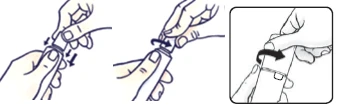
How to open the tube with child-resistant cap
To avoid accidental leakage, do not squeeze the tube when opening or closing.
Press down on the cap and turn counterclockwise (turn to the left). Then remove the cap.
How to close the tube with child-resistant cap
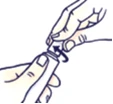
Press down and turn clockwise (turn to the right).
[EU/1/13/904/007]
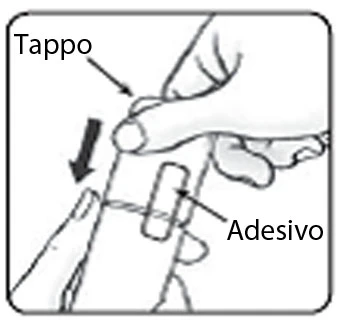
How to open the pump with child-resistant cap
Press down on the cap and turn counterclockwise (turn to the left) until the cap is removed. Note:
When the cap is removed, the pump is no longer child-resistant.
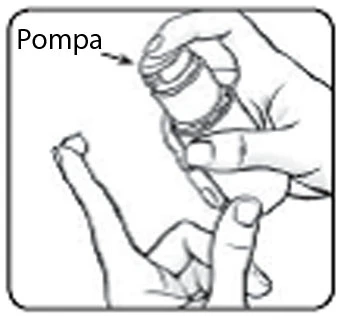
Before first use, prime the pump by pressing down several times until the medicine appears at the tip of the finger.
To apply Mirvaso gel to the face, dispense a pea-sized amount of Mirvaso onto the fingertip using the pump. Continue pressing the pump down to obtain the number of pea-sized amounts prescribed for you by your doctor (but no more than 5 in total).
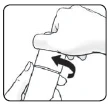
To close the pump, replace the cap. Press down and turn the cap to the right (clockwise) until it stops. The pump is now child-resistant again.
If you use more Mirvaso than you should
If you use more than the maximum daily dose of 1 gram within a 24-hour period, this may cause skin irritation or other adverse effects at the application site. Repeated doses within the same 24-hour period may cause adverse effects such as low blood pressure, weakness, or drowsiness.
Contact your doctor, who will advise you on the necessary steps to take.
If someone, especially a child, accidentally swallows Mirvaso, they may experience serious adverse effects and require hospital treatment.
Contact your doctor immediately or go straight to the emergency room if you, a child, or another person swallows this medicine and experiences any of the following symptoms: dizziness due to low blood pressure, vomiting, fatigue or weakness, slow or irregular heartbeat, small pupils (pupil constriction), breathing difficulties or shortness of breath, lethargy, low body temperature, or seizures (epileptic fits). Take the medicine packaging with you so that the doctor knows what has been ingested.
If you forget to use Mirvaso
Mirvaso works on a day-to-day basis, starting from the first day of treatment. If you miss a daily dose, redness will not be reduced that day. Do not use a double dose to make up for a missed dose; continue treatment as prescribed.
If you stop using Mirvaso
A potential consequence of stopping treatment before completing the treatment course is that the condition may return to its initial state. Contact your doctor before stopping treatment so they can advise you on an alternative treatment, if needed.
If you have any questions about how to use this medicine, consult your doctor or pharmacist.
4. Possible side effects
Like all medicines, this medicine can cause side effects, although not everyone gets them.
If you experience uncommon side effects such as severe skin irritation or inflammation, rash, skin pain or discomfort, dry skin, skin warmth, skin tingling or prickling, facial swelling, or common side effects such as worsening of rosacea, stop treatment and consult your doctor, as this medicine may not be suitable for you. In some cases, symptoms may extend beyond the treated area. See also Section 2, "Warnings and precautions".
If you develop contact allergy (e.g. allergic reaction, rash) or rare angioedema (a serious allergic reaction usually causing swelling of the face, mouth or tongue), stop using Mirvaso and contact a doctor immediately.
Mirvaso may also cause the following additional side effects:
Common side effects (may affect up to 1 in 10 people):
- Flushing
- Excessive whitening (pallor) at the site of gel application
- Skin redness, burning sensation or itching
Uncommon side effects (may affect up to 1 in 100 people):
- Acne
- Dry mouth
- Cold sensation in hands and feet
- Feeling of warmth
- Headache
- Nasal congestion
- Swelling of the eyelids
- Hives (urticaria)
- Dizziness
Rare side effects (may affect up to 1 in 1,000 people):
- Hypotension (low blood pressure)
- Decreased heart rate (slowed heartbeat, known as bradycardia)
Reporting of side effects
If you experience any side effect, including those not listed in this leaflet, talk to your doctor. You can also report side effects directly via the national reporting system listed in Annex V. By reporting side effects, you can help provide more information on the safety of this medicine.
5. How to store Mirvaso
Keep this medicine out of the sight and reach of children.
Do not use this medicine after the expiry date which is stated on the carton, tube, and pump after Exp. The expiry date refers to the last day of that month.
Store below 30°C and do not freeze.
Do not dispose of any medicine via wastewater or household waste. Ask your pharmacist how to dispose of medicines you no longer use. This will help protect the environment.
6. Package contents and other information
What Mirvaso contains
- The active substance is brimonidine. One gram of gel contains 3.3 mg of brimonidine, equivalent to 5 mg of brimonidine tartrate.
- The other ingredients are carbomer, methylparaben (E218), phenoxyethanol, glycerol, titanium dioxide, propylene glycol (E1520), sodium hydroxide, purified water. For information on methylparaben and propylene glycol, see the end of section 2.
Description of the appearance of Mirvaso and package contents
Mirvaso is an opaque gel, white to pale yellow in colour. It is supplied in tubes
containing 2, 10 or 30 grams of gel or in a multi-dose container with an air-tight pump system
containing 30 g of gel.
Pack size: 1 tube or 1 pump.
Not all pack sizes may be marketed.
Marketing Authorisation Holder
Galderma International
Tour Europlaza, 20 avenue André Prothin – La Défense 4
La Défense Cedex 92927
France
Manufacturer
Laboratoires Galderma
Z.I. Montdésir
74540 Alby-sur-Chéran
France
or
Galderma Laboratorium GmbH
Toulouser Allee 19a-23a,
Pempelfort,
Duesseldorf
North Rhine-Westphalia,
40211,
Germany
For further information on this medicinal product, please contact the local representative of the Marketing Authorisation Holder:
Österreich Italia
Galderma Austria GmbH Galderma Italia S.p.A.
Tel: 0043 732 715 993 Tel: + 39 337 1176197
e-mail: [email protected] e-mail: [email protected]
België/Belgique/Belgien Latvija
Luxembourg/Luxemburg Tamro SIA, Latvia
Galderma Benelux BV Tel. +371 67067800
Tél./Tel: +31 183691919
e-mail: [email protected]
България Lietuva
PHOENIX PHARMA EOOD, Tamro UAB, Lithuania
Bulgaria Tel. +37037401099
Tel. +359 2 9658 100
Česká republika Slovenská republika
Magyarország SOLDRA International Kft.
4 LIFE PHARMA CZ, s.r.o. Tel.: +362 0 960 4294
Czech e-mail: [email protected]
Tel. +420 244 403 003
e-mail: [email protected]
Danmark Malta
Norge Prohealth Limited
Ísland Tel. +356 23385000
Suomi/Finland e-mail: [email protected].
Sverige
Galderma Nordic AB
Tlf/Sími/Puh/Tel: + 46 18 444 0330
e-mail: [email protected]
Deutschland Nederland
Galderma Laboratorium GmbH Galderma Benelux BV
Tel: + 49 (0) 800 – 5888850 Tel: + 31 183691919
e-mail: [email protected] e-mail: [email protected]
Eesti Polska
Tamro Eesti OÜ, Estonia Galderma Polska Sp. z o.o.
Tel. +372 650 3600 Tel.: + 48 22 331 21 80
e-mail: [email protected]
Ελλάδα Portugal
Κύπρος Laboratorios Galderma, SA – Sucursal em
Pharmassist Ltd Portugal
Tel: + 30 210 6560700 Tel: + 351 21 315 19 40
e-mail: [email protected] e-mail: [email protected]
España România
Laboratorios Galderma SA Romastru Trading SRL
Tel: + 34 902 02 75 95 Tel: + 40 21 233 27 60
e-mail: [email protected] e-mail: [email protected]
France
Hrvatska
Ireland
Slovenija
Galderma International
Tél: +33 08.00.00.99.38
e-mail: [email protected]
More detailed information on this medicinal product is available on the website of the European Medicines Agency: http://www.ema.europa.eu.