Minidiab
Italy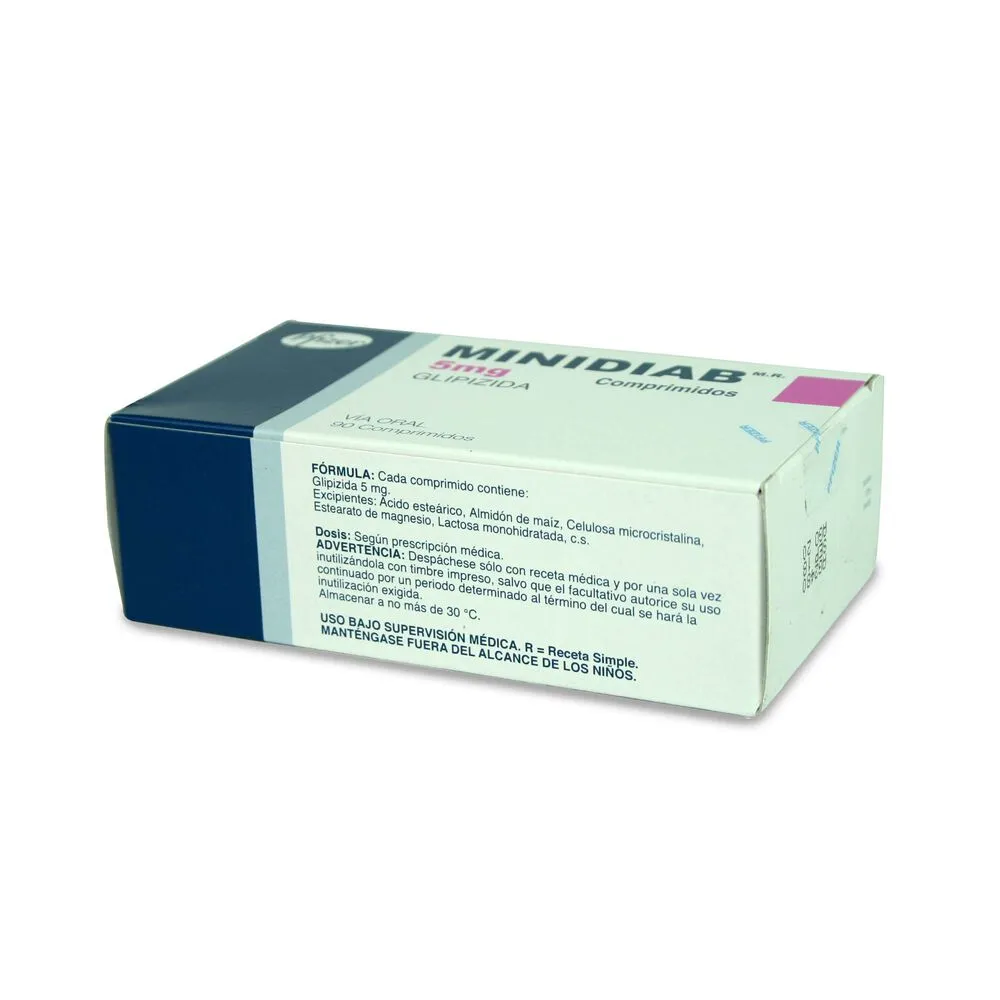
Table of Contents
Patient Information Leaflet
MINIDIAB 5 mg tablets
Glipizide
Please read this leaflet carefully before taking this medicine because it contains important information for you.
- Keep this leaflet. You may need to read it again.
- If you have any questions, consult your doctor or pharmacist.
- This medicine has been prescribed for you only. Do not give it to others, even if their symptoms are the same as yours, as it may be harmful.
- If you experience any side effect, including those not listed in this leaflet, contact your doctor or pharmacist. See section 4.
Contents of this leaflet:
- What Minidiab is and what it is used for
- What you need to know before taking Minidiab
- How to take Minidiab
- Possible side effects
- How to store Minidiab
- Contents of the pack and other information
1. What Minidiab is and what it is used for
Minidiab contains the active substance glipizide. Glipizide belongs to a group of medicines called sulfonylureas and works by lowering blood sugar levels.
Minidiab is used in adults for the treatment of diabetes mellitus that cannot be controlled by diet alone.
2. What you should know before taking Minidiab
Do not take Minidiab
- if you are allergic to glipizide or to any of the other ingredients of this medicine (listed in section 6);
- if you have insulin-dependent diabetes (diabetes that developed in childhood or at a young age and requires insulin treatment);
- if you have diabetic ketoacidosis (ketone bodies and sugar in the urine);
- if you experience episodes of loss of consciousness (this condition may indicate diabetic coma);
- if you have severe kidney or liver problems;
- if you have adrenal insufficiency (reduced production of certain hormones by the adrenal glands).
It is advisable not to use this medicine if you have latent diabetes or prediabetes
(mild forms of diabetes mellitus characterized only by increased blood sugar levels).
Warnings and precautions
Talk to your doctor or pharmacist before taking Minidiab.
Inform your doctor or pharmacist before taking this medicine if you think any of the following conditions apply to you:
- you have glucose-6-phosphate dehydrogenase deficiency (G6PD), a condition causing anemia due to abnormal destruction of red blood cells;
- you have kidney or liver disorders;
- you are elderly, debilitated, and/or malnourished;
- you are taking beta-blockers;
- you have pituitary gland disorders, a gland located at the base of the brain.
Minidiab can cause hypoglycemia (low blood glucose levels), a condition characterized by headache, irritability, sleep disturbances, tremor, and excessive sweating, which may require hospitalization and can progress to coma. If you are elderly, debilitated, malnourished, have pituitary disorders, or are taking beta-blockers, you may be more prone to hypoglycemia. Hypoglycemia is also more likely to occur when there is inadequate caloric intake, after significant and prolonged physical exercise, when alcohol is consumed, or when taking other medicines that lower blood sugar levels.
Inform your doctor if you are scheduled for surgery, have suffered a trauma, have contracted an infection, or have fever. In these cases, diabetes control may become inadequate and your doctor may prescribe insulin treatment.
Laboratory tests
During treatment with Minidiab, your doctor will perform regular checks to monitor your blood sugar levels and assess the medicine's effects.
The effectiveness of this medicine may decrease over time, and your doctor may decide to increase the dose.
Other medicines and Minidiab
Inform your doctor or pharmacist if you are taking, have recently taken, or might take any other medicine.
The following medicines may cause excessive decrease in blood sugar levels (hypoglycemia) when taken together with Minidiab:
- miconazole, fluconazole, voriconazole, medicines used to treat fungal infections;
- non-steroidal anti-inflammatory drugs (NSAIDs) (e.g. phenylbutazone and acetylsalicylic acid), medicines used for inflammation, pain, and fever;
- beta-blockers, medicines used to treat high blood pressure and certain heart conditions;
- ACE inhibitors, medicines used to lower blood pressure;
- H-_receptor antagonists (e.g. cimetidine), medicines used to treat stomach and esophageal ulcers;
- monoamine oxidase inhibitors, medicines used to treat depression;
- quinolones, medicines used to treat bacterial infections;
- sulphonamides and chloramphenicol, antibiotics;
- probenecid, a medicine used to treat gout;
- dicumarol and similar medicines, medicines used to thin the blood;
- cyclophosphamide, a medicine used to treat cancer;
- pheniramidol, a medicine used to relax muscles.
The following medicines may cause excessive increase in blood sugar levels (hyperglycemia) when taken together with Minidiab:
- phenothiazines (e.g. chlorpromazine), medicines used to treat psychiatric disorders;
- corticosteroids, medicines used to treat inflammation and allergic reactions;
- sympathomimetics (e.g. ritodrine), medicines used to stop premature labor, salbutamol and terbutaline, medicines used to treat asthma;
- diuretics, medicines used to increase urine production;
- thyroid hormones, used when the thyroid gland is underactive or has been surgically removed;
- estrogen and progestin hormones, oral contraceptives;
- phenytoin, a medicine used to treat epileptic seizures;
- nicotinic acid, used to reduce cholesterol and other fat levels;
- calcium channel blockers, medicines used to lower blood pressure;
- isoniazid, a medicine used to treat tuberculosis;
- adrenaline, a medicine used to treat shock from severe allergic reactions and in cases of cardiac arrest.
Minidiab and alcohol
Do not drink alcohol while taking Minidiab. Alcohol may increase the lowering of blood sugar levels and cause loss of consciousness (hypoglycemic coma).
Pregnancy and breastfeeding
If you are pregnant, think you might be pregnant, are planning to become pregnant, or are breastfeeding, consult your doctor before taking this medicine.
Administration of glipizide during pregnancy is not recommended.
If you are breastfeeding, your doctor will prescribe Minidiab only if strictly necessary.
Minidiab may cause drowsiness, headache, dizziness, confusion, and visual disturbances. If you experience these side effects, do not drive or operate machinery.
Minidiab contains lactose
Minidiab contains lactose. If your doctor has diagnosed you with an intolerance to certain sugars, contact your doctor before taking this medicine.
3. How to take Minidiab
Take this medicine exactly as directed by your doctor or pharmacist. If you have any doubts, consult your doctor or pharmacist.
Swallow the tablets with a glass of water. The tablet may be divided into equal parts.
Your doctor will determine the most appropriate dose for you based on your condition and your blood and urine sugar levels.
The recommended doses range from half a tablet (2.5 mg) to 4 tablets (20 mg) daily, divided into two or more doses taken immediately before main meals.
If you are taking Minidiab for the first time
Start treatment with half a tablet or one tablet per day. Your doctor will advise you on how to increase the dosage.
If you are already being treated with oral antidiabetic medicines
Your doctor will determine the most suitable dose for you, starting with low doses and increasing them gradually. Your doctor may also decide to leave an appropriate interval between the end of the previous treatment and the start of treatment with Minidiab.
If you are being treated with insulin:
In some cases, Minidiab may allow a reduction in your daily insulin requirement. However, during the initial treatment period, it is necessary to frequently monitor your blood glucose levels.
If you take more Minidiab than you should
If you accidentally take too high a dose of Minidiab, inform your doctor immediately.
An overdose may cause mild symptoms of hypoglycaemia; in such a case, promptly consume sugary food or drinks or reduce your Minidiab dose.
If you experience seizures or loss of consciousness, you must be taken to the nearest hospital without delay.
If you forget to take Minidiab
If you forget to take a dose, ask your doctor whether you should take the missed dose as soon as you remember or wait until your next scheduled dose. Do not take a double dose to make up for the forgotten dose.
If you stop taking Minidiab
If you stop treatment with this medicine, your blood sugar levels may change suddenly and your condition may worsen, which could endanger your life.
Do not stop treatment with Minidiab unless your doctor specifically instructs you to do so.
If you have any questions about the use of this medicine, consult your doctor or pharmacist.
4. Possible side effects
Like all medicines, this medicine can cause side effects, although not everybody will experience them.
Stop taking this medicine immediately and contact your doctor if you experience:
- cholestatic jaundice
- skin reactions, redness and allergies (eczema, allergic dermatitis, erythema, morbilliform or maculopapular rashes)
- urticaria, itching, increased sensitivity of the skin to sunlight
Contact your doctor if you experience the following side effects:
Common (may affect up to 1 in 10 people):
- decrease in blood glucose levels (hypoglycaemia) (see section 2 “Warnings and precautions”)
- nausea, diarrhoea, abdominal pain
Uncommon (may affect up to 1 in 100 people):
- dizziness
- somnolence
- tremor
- blurred vision
- vomiting
Frequency not known (frequency cannot be estimated from the available data):
- decrease in the number of white blood cells, platelets and red blood cells in the blood
- decrease in blood sodium levels
- confusion
- headache
- double vision, visual impairment or reduced vision
- constipation
- decreased liver function, liver inflammation
- non-acute porphyria (altered haemoglobin production)
- general malaise
- changes in certain blood laboratory tests assessing liver, kidney and muscle function (increased aspartate aminotransferase, increased blood lactate dehydrogenase, increased blood alkaline phosphatase, increased blood urea, increased blood creatinine)
Most of the adverse effects are dose-related, transient, and improve with dose reduction or discontinuation of treatment.
Reporting of side effects
If you experience any side effect, including those not listed in this leaflet, talk to your doctor or pharmacist. You can also report side effects directly via the national reporting system at: www.agenziafarmaco.gov.it/it/responsabili.
By reporting side effects, you can help provide more information on the safety of this medicine.
5. How to store Minidiab
Keep this medicine out of the sight and reach of children.
Do not use this medicine after the expiry date stated on the carton and blister after "Exp.".
The expiry date refers to the last day of that month.
This medicine does not require any special storage conditions.
Do not dispose of medicines via wastewater or household waste. Ask your pharmacist how to dispose of medicines you no longer use. This will help protect the environment.
6. Package contents and other information
What Minidiab contains
The active substance is glipizide.
Each tablet contains 5 mg of glipizide.
The other components are: lactose (see section 2 "Minidiab contains lactose"), microcrystalline cellulose,
starch, stearic acid.
Description of the appearance of Minidiab and the contents of the pack
Minidiab tablets are available in PVC/aluminum blisters, in packs of 30 or 40 divisible tablets.
Not all pack sizes may be marketed.
Marketing Authorization Holder and Manufacturer
Marketing Authorization Holder
Pfizer Italia S.r.l.
via Isonzo, 71
04100 Latina
Manufacturer
Pfizer Italia S.r.l.
Località Marino del Tronto
63100 – Ascoli Piceno (AP)