Luxamide
Italy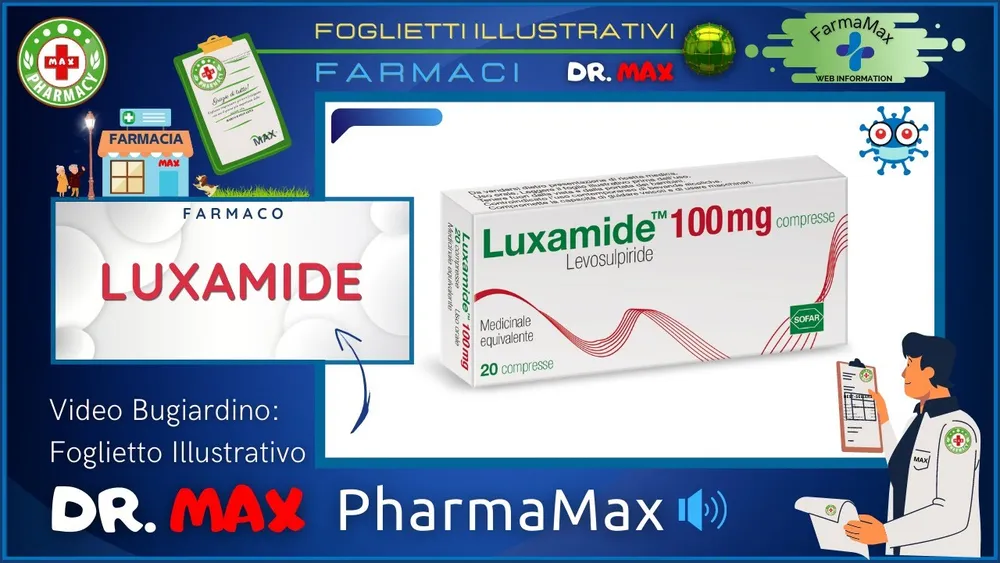
Table of Contents
- Package leaflet: Information for the patient
- Luxamide, 50 mg tablets
- 1. What Luxamide is and what it is used for
- 2. What you need to know before taking Luxamide
- 3. How to take Luxamide
- 4. Possible side effects
- 5. How to store Luxamide
- 6. Package contents and other information
- Luxamide 25 mg tablets
- 1. What Luxamide is and what it is used for
- 2. What you should know before taking Luxamide
- 3. How to take Luxamide
- 4. Possible side effects
- 5. How to store Luxamide
- 6. Package contents and other information
Package leaflet: Information for the patient
Luxamide, 50 mg tablets
Luxamide, 100 mg tablets
Levosulpiride
Generic medicine
Please read this leaflet carefully before taking this medicine because it contains important information for you.
- Keep this leaflet. You may need to read it again.
- If you have any questions, ask your doctor or pharmacist.
- This medicine has been prescribed for you only. Do not give it to other people, even if their symptoms are the same as yours, because it could be harmful.
- If any adverse reaction occurs, including those not listed in this leaflet, contact your doctor or pharmacist. See section 4.
- Contents of this leaflet:
-
- What Luxamide is and what it is used for
-
- What you need to know before taking Luxamide
-
- How to take Luxamide
-
- Possible side effects
-
- How to store Luxamide
-
- Contents of the pack and other information
1. What Luxamide is and what it is used for
Luxamide is a medicine containing the active substance called levosulpiride, which belongs to a
group of medicines known as psycholeptics and antipsychotics (neuroleptics). It works by blocking the effects of
dopamine, a substance naturally present in the brain.
Luxamide is used in adults to treat mental disorders such as:
- psychiatric conditions characterized by physical symptoms in the absence of any underlying physical disease ("Somatic symptom disorders")
- long-term or chronic illnesses causing severe and persistent disturbances in behaviour, mood, thinking, and perception (feeling, perceiving or seeing things that are not actually present) ("Chronic schizophrenia with negative symptoms").
2. What you need to know before taking Luxamide
Do not take Luxamide:
- if you are allergic to levosulpiride or to any of the other ingredients of this medicine (listed in section 6)
- if you are at risk of developing a tumour of the adrenal gland called phaeochromocytoma
- if you suffer from seizures (epilepsy)
- if you suffer from mood disorders that may cause feelings of excitement (manic states with hyperactivity, irritability, or reduced need for sleep)
- if you have malignant breast cancer (malignant mastopathy)
- if you have gastrointestinal bleeding, intestinal obstruction (which may be characterized by abdominal cramps, vomiting, constipation), or ulcers (lesions of the stomach/intestinal wall)
- if you are or suspect you may be pregnant or if you are breastfeeding (see "Pregnancy and breastfeeding")
Warnings and precautions
Talk to your doctor or pharmacist before taking Luxamide. It is very important that you inform your doctor:
- if you suffer from a disease that reduces your ability to remember, speak, and reason (dementia)
- if you are elderly
- if you have a predisposition to stroke, or if you have heart and/or circulatory disorders
- if you or a family member has or has had a heart condition causing irregular heartbeat ("long QT syndrome")
- if you or someone in your family has a history of blood clots (thrombosis), as drugs like Levopraid have been associated with venous blood clot formation.
If, after taking this medicine, you experience a combination of symptoms such as fever, severe muscle stiffness, severe movement difficulties (akinesia), excessive sweating, rapid heartbeat, altered blood pressure, or loss of consciousness, these may be symptoms of a very serious and potentially life-threatening condition called Neuroleptic Malignant Syndrome. In this case, you must stop taking Luxamide immediately and contact your doctor right away, who will prescribe appropriate treatment.
If you are taking anticholinergic medicines (drugs that block the action of acetylcholine, a substance involved in nerve impulse transmission), narcotics, and analgesics (painkillers), because they may reduce the effects of Luxamide (see section "Other medicines and Luxamide").
Other medicines and Luxamide
Inform your doctor or pharmacist if you are taking, have recently taken, or might take any other medicines.
Combining this medicine with others requires particular caution and monitoring by your doctor to avoid unexpected adverse effects due to drug interactions.
Pay special attention and inform your doctor if you are taking the following medicines:
- psychotropic drugs, medicines acting on the central nervous system used to treat psychiatric disorders, particularly neuroleptics, as their combination with Luxamide requires caution
- medicines that may affect blood levels of minerals (electrolytes), as their combination with Luxamide should be avoided
- medicines that affect heart rhythm (prolong the QT interval), because their combination with Levopraid increases the risk of developing heart rhythm abnormalities (cardiac arrhythmias)
- anticholinergic medicines (drugs that block the action of acetylcholine, a substance involved in nerve impulse transmission), medicines used to induce sleep (narcotics), and pain-relieving medicines (analgesics), as they may influence the effects of Luxamide on stomach and intestinal motility.
Luxamide with food, drinks and alcohol
Do not consume alcohol while taking this medicine, as it may increase the sedative effect of the medicine.
Pregnancy, breastfeeding and fertility
Do not use Luxamide during pregnancy, if you may become pregnant, or if you are planning a pregnancy.
The following symptoms have been observed in newborns whose mothers took conventional or atypical antipsychotics, including levosulpiride, during the third trimester (last 3 months of pregnancy): tremors, muscle stiffness and/or weakness, drowsiness, agitation, breathing difficulties, and feeding problems. If your baby shows any of these symptoms, consult your doctor immediately.
Breastfeeding
Do not use Luxamide while breastfeeding.
Driving and using machines
DO NOT drive vehicles, DO NOT operate machinery, and DO NOT engage in activities requiring special attention while taking this medicine.
This medicine may cause numbness, dizziness, and involuntary movements. Luxamide impairs your ability to drive vehicles or operate machinery.
Luxamide contains lactose. If your doctor has diagnosed you with an intolerance to certain sugars, contact your doctor before taking this medicine.
3. How to take Luxamide
Take this medicine exactly as directed by your doctor or pharmacist. If you have any doubts,
consult your doctor or pharmacist.
You must always follow the exact dose prescribed by your doctor. The recommended doses are:
Adults
The recommended dose is:
- 2–3 tablets of 100 mg per day.
- maintenance therapy: 3 tablets of 50 mg per day. This dose may be gradually reduced.
Use in children and adolescents
This medicine must not be used in children and adolescents because relevant data are not available.
Elderly
If you are elderly, the dosage must be carefully determined by your doctor, who will assess whether a reduction of the above-mentioned doses is necessary.
If you take more Luxamide than you should
If you accidentally ingest/take a higher dose than you should, contact your doctor immediately
or go to the nearest hospital. Take this Patient Information Leaflet with you.
An overdose may cause tremors, difficulty and slowness in movement (extrapyramidal disorders), or sleep disturbances.
If you forget to take Luxamide
Do not take a double dose to make up for the forgotten dose.
If you stop treatment with Luxamide
If you have any doubts about using this medicine, consult your doctor or pharmacist.
4. Possible side effects
Like all medicines, this medicine can cause side effects, although not everybody gets them.
The following side effects have also been observed with the use of other medicines in the same class and/or with prolonged administration:
Very common (may affect more than 1 in 10 people):
- drowsiness, temporary loss of sensitivity and reflex responsiveness (stupor).
Common (may affect up to 1 in 10 people):
- dizziness, vertigo (feeling of false movement).
Rare (may affect up to 1 in 1,000 people):
- changes in heart rhythm (QT interval prolongation, ventricular arrhythmias such as torsades de pointes, ventricular tachycardia, ventricular fibrillation), cardiac arrest.
Very rare (may affect up to 1 in 10,000 people):
- weight gain;
- "parkinsonism" (symptoms similar to those of Parkinson's disease such as, e.g., tremor, difficulty and slowness of movement, rigidity, and postural instability); involuntary muscle movements (dyskinesias); tremor; repetitive twisting movements or abnormal fixed postures (dystonia); psychomotor agitation (restlessness and purposeless involuntary movements);
- disorders of the autonomic nervous system (e.g. sweating, pallor, feeling faint, especially when standing up from a lying or sitting position, low blood pressure, slowing of the heart rate);
- cases of sudden death.
Not known (frequency cannot be estimated from the available data):
- "Neuroleptic Malignant Syndrome" (see section “Take special care with Luxamide”);
- formation of blood clots (venous thrombosis), particularly in the legs (symptoms include swelling, pain, redness of the leg), which may travel to the lungs and cause chest pain and breathing difficulties;
- neonatal withdrawal symptoms (see section 2 “Pregnancy and breastfeeding”), movement disorders (extrapyramidal symptoms);
- absence of menstruation in women of childbearing age (amenorrhoea), breast development in men (gynaecomastia), breast tension, spontaneous milk discharge from the breasts unrelated to childbirth or breastfeeding (galactorrhoea), changes in sexual desire (libido);
- increased levels of a hormone called prolactin in the blood (hyperprolactinaemia).
Luxamide is not indicated for the treatment of dementia. In elderly patients with dementia, a small increase in the number of deaths has been observed among patients taking antipsychotics compared to those not taking antipsychotics.
Reporting of side effects
If you experience any side effects, including those not listed in this leaflet, talk to your doctor or pharmacist. You can also report side effects directly via the national reporting system at: https://www.aifa.gov.it/content/segnalazioni-reazioni-avverse. By reporting side effects, you can help provide more information on the safety of this medicine.
5. How to store Luxamide
Keep this medicine out of the sight and reach of children.
This medicine requires no special storage conditions.
Do not use this medicine after the expiry date stated on the packaging after the word “EXP.”. The expiry date refers to the last day of that month.
Do not dispose of medicines via wastewater or household waste. Ask your pharmacist how to dispose of medicines you no longer use. This will help protect the environment.
6. Package contents and other information
What Luxamide contains
- The active substance is levosulpiride.
- The other components are: microcrystalline cellulose (E460), monohydrate lactose, sodium starch glycolate type A, magnesium stearate (E572).
Description of the appearance of Luxamide and the contents of the pack
Luxamide 50 mg tablets: white, round, convex tablet with a diameter of 8 mm, marked with "50" on one side.
Luxamide 100 mg tablets: white, round, convex tablet with a diameter of 10.3 mm.
Packs of 20 tablets contained in blisters (PVC/PVDC/Al and PVC/PCTFE/Al).
Marketing Authorization Holder and Manufacturer
Alfasigma S.p.A. - Via Ragazzi del ’99, n. 5 - 40133 Bologna (BO)
Manufacturer:
MEDOCHEMIE LTD, 1-10 Constantinoupoleos Street, CY 3011 Limassol, Cyprus.
Package leaflet: Information for the patient
Luxamide 25 mg tablets
Levosulpiride
Generic medicine
Read this leaflet carefully before taking this medicine because it contains
important information for you.
- Keep this leaflet. You may need to read it again.
- If you have any questions, ask your doctor or pharmacist.
- This medicine has been prescribed for you only. Do not give it to others, even if their symptoms are the same as yours, as it may be harmful.
- If you experience any adverse reactions, including those not listed in this leaflet, contact your doctor or pharmacist. See section 4.
Contents of this leaflet:
- What Luxamide is and what it is used for
- What you need to know before taking Luxamide
- How to take Luxamide
- Possible side effects
- How to store Luxamide
- Contents of the pack and other information
1. What Luxamide is and what it is used for
Luxamide is a medicine that contains the active substance levosulpiride. It belongs to a group of medicines called "psychotics, antipsychotics (neuroleptics)" and increases gastric and intestinal motility (gastrointestinal prokinetic effect).
Luxamide is used in adults for the short-term treatment of:
- Dyspeptic syndrome: this syndrome, i.e. a set of various symptoms related to poor digestion, may be due to organic causes, such as lesions in digestive organs, or to malfunctioning of these organs—possibly due to unhealthy lifestyle habits—without detectable lesions in the digestive organs themselves. It is mainly related to difficulty in gastric emptying. Certain bodily disorders (such as delayed gastric emptying in diabetes or certain tumours) or psychological disorders (such as anxiety and depression, which may cause disturbances in visceral function) can make digestion difficult.
- The stomach has difficulty emptying, leading to symptoms such as stomach pain and heartburn, loss of appetite (anorexia), flatulence, bloating and stomach tension, headache after meals, belching, diarrhoea, and constipation. Your doctor has prescribed Luxamide because previous treatments with other medicines have not been effective; nausea and vomiting induced by anticancer drugs, when previous therapies have failed;
- Vertigo (dizziness), symptoms of a disease affecting the inner ear (Ménière's syndrome), causing balance problems and ear disturbances (such as ringing, whistling, crackling sounds), hearing loss, and nausea.
2. What you should know before taking Luxamide
Do not take Luxamide:
- if you are allergic to levosulpiride or to any of the other ingredients of this medicine (listed in section 6)
- if you are at risk of developing a tumour of the adrenal glands called phaeochromocytoma
- if you suffer from seizures (epilepsy)
- if you suffer from mood disorders that may cause feelings of excitement (manic states with hyperactivity, irritation, irritability, or reduced need for sleep)
- if you have breast cancer (malignant mastopathy)
- if you have gastrointestinal bleeding, intestinal obstruction (which may be characterized by abdominal cramps, vomiting, constipation), or ulcers (lesions of the stomach/intestinal wall)
- if you are pregnant or suspect you may be pregnant, or if you are breastfeeding (see "Pregnancy and breastfeeding")
Warnings and precautions
Talk to your doctor or pharmacist before taking Luxamide.
It is very important that you inform your doctor:
- if you suffer from a disease that reduces your ability to remember, speak, and reason (dementia)
- if you are elderly
- if you have a predisposition to stroke, or if you have heart and/or circulatory disorders
- if you or a family member suffers or has suffered from a heart disease causing irregular heartbeat ("long QT syndrome")
- if you or someone in your family has a history of blood clots (thrombosis), as medicines like Levopraid have been associated with the formation of blood clots in veins.
Contact your doctor immediately if:
After taking this medicine you experience a combination of symptoms such as fever, severe muscle stiffness, severe movement difficulties (akinesia), excessive sweating, rapid heartbeat, altered blood pressure, or loss of consciousness. These are symptoms of a very serious and potentially life-threatening condition called Neuroleptic Malignant Syndrome. In this case, you must stop taking Luxamide and contact your doctor immediately, who will prescribe appropriate treatment.
If you are taking anticholinergic medicines (medicines that block the action of acetylcholine, a substance involved in nerve impulse transmission), narcotics, and analgesics (painkillers), as they may reduce the effects of Luxamide (see section "Other medicines and Luxamide").
Other medicines and Luxamide
Tell your doctor or pharmacist if you are taking, have recently taken, or might take any other medicines.
Combining this medicine with other drugs requires particular caution and monitoring by your doctor to avoid undesirable interactions.
Pay special attention and inform your doctor if you are taking the following medicines:
- psychotropic medicines, medicines acting on the central nervous system used to treat psychiatric disorders, particularly neuroleptics, as combination with Luxamide requires caution
- medicines that may affect levels of minerals (electrolytes) in the blood, as combination with Luxamide should be avoided
- medicines that affect heart rhythm (prolong the QT interval), as combination with Luxamide increases the risk of developing heart rhythm abnormalities (cardiac arrhythmias)
- medicines called anticholinergics (medicines that block the action of acetylcholine, a substance involved in nerve impulse transmission), medicines used for sleep (narcotics), and medicines used for pain relief (analgesics), as they may influence the effects of Luxamide on stomach and intestinal motility.
Luxamide with food, drinks and alcohol
Do not consume alcohol while taking this medicine, as it may increase the sedative effect of the medicine.
Pregnancy, breastfeeding and fertility
Do not use Luxamide during pregnancy, if you might be pregnant, or if you are planning a pregnancy.
The following symptoms have been observed in newborns whose mothers used conventional or atypical antipsychotics, including levosulpiride, during the third trimester (last 3 months of pregnancy): tremor, muscle stiffness and/or weakness, drowsiness, agitation, breathing difficulties, and feeding difficulties. If your baby shows any of these symptoms, consult your doctor immediately.
Breastfeeding
Do not use Luxamide during breastfeeding.
Driving and using machines
DO NOT drive, DO NOT operate machinery, and DO NOT engage in activities requiring alertness while taking this medicine. High doses of this medicine may cause drowsiness, numbness, and involuntary movements. Luxamide impairs your ability to drive or operate machinery.
Luxamide contains lactose. If your doctor has diagnosed you with an intolerance to certain sugars, contact him/her before taking this medicine.
3. How to take Luxamide
Take this medicine exactly as directed by your doctor or pharmacist. If you have any doubts,
consult your doctor or pharmacist.
You must always follow the exact dose prescribed by your doctor. The recommended doses are:
Adults
The recommended dose in adults (according to medical prescription) is 1 tablet three times daily before
meals.
Use in children and adolescents
This medicinal product must not be used in children and adolescents, as relevant data are not available.
Elderly
If you are elderly, the dosage must be carefully determined by your doctor, who will assess whether a reduction of the above-mentioned doses is necessary.
If you take more Luxamide than you should
If you accidentally ingest/take an excessive dose, inform your doctor immediately
or go to the nearest hospital. Bring this Package Leaflet with you.
An overdose may cause tremors, difficulty and slowness in movement (extrapyramidal disorders), or sleep disturbances.
If you forget to take Luxamide
Do not take a double dose to make up for the forgotten dose.
If you stop treatment with Luxamide
If you have any doubts about using this medicine, consult your doctor or pharmacist.
4. Possible side effects
Like all medicines, this medicine can cause side effects, although not everyone gets them.
The following side effects have been observed with other medicines in the same class and/or with prolonged administration:
Rare (may affect up to 1 in 1,000 people):
- changes in heart rhythm (QT interval prolongation, ventricular arrhythmias such as torsades de pointes, ventricular tachycardia, ventricular fibrillation), cardiac arrest.
Very rare (may affect up to 1 in 10,000 people):
- drowsiness, "parkinsonism" (symptoms similar to Parkinson's disease such as tremor, difficulty and slowness of movement, rigidity, and postural instability); involuntary muscle movements (dyskinesias); tremor; repetitive twisting movements or abnormal fixed postures (dystonia); Neuroleptic Malignant Syndrome (see section "Contact your doctor immediately if").
- cases of sudden death.
Not known (frequency cannot be estimated from the available data):
- formation of blood clots (venous thrombosis), especially in the legs (symptoms include swelling, pain, redness of the leg), which may travel to the lungs and cause chest pain and breathing difficulties.
- neonatal withdrawal symptoms (see section 2, "Pregnancy and breastfeeding"), movement disorders (extrapyramidal symptoms).
- absence of menstruation in women of childbearing age (amenorrhoea), breast development in men (gynaecomastia), breast tension, spontaneous milk discharge from the breasts unrelated to childbirth or breastfeeding (galactorrhoea), changes in sexual desire (libido).
- increased levels of a hormone called prolactin in the blood (hyperprolactinaemia).
Luxamide is not indicated for the treatment of dementia. In elderly patients with dementia, a slightly increased number of deaths has been observed among patients taking antipsychotics compared to those not taking antipsychotics.
Reporting of side effects
If you experience any side effect, including those not listed in this leaflet, talk to your doctor or pharmacist. You can also report side effects directly via the national reporting system at: https://www.aifa.gov.it/content/segnalazioni-reazioni-avverse. By reporting side effects, you can help provide more information on the safety of this medicine.
5. How to store Luxamide
Keep this medicine out of the sight and reach of children.
This medicine does not require any special storage conditions.
Do not use this medicine after the expiry date stated on the packaging after the word “EXP.”. The expiry date refers to the last day of that month.
Do not dispose of any medicine via wastewater or household waste. Ask your pharmacist how to dispose of medicines you no longer use. This will help protect the environment.
6. Package contents and other information
What Luxamide contains
- The active substance is levosulpiride.
- The other components are: microcrystalline cellulose (E460), monohydrate lactose, sodium starch glycolate type A, magnesium stearate (E572).
Description of the appearance of Luxamide and contents of the pack
Luxamide tablet is white, round, biconvex, with a diameter of 6 mm, imprinted with "MC" on one side.
Pack size: 20 tablets in blisters (PVC/PVDC/Al and PVC/PCTFE/Al).
Marketing Authorization Holder and Manufacturer
Marketing Authorization Holder:
Alfasigma S.p.A. - Via Ragazzi del ’99, n. 5 - 40133 Bologna (BO)
Manufacturer:
MEDOCHEMIE LTD, 1-10 Constantinoupoleos Street, CY 3011 Limassol, Cyprus.