Luvion
Italy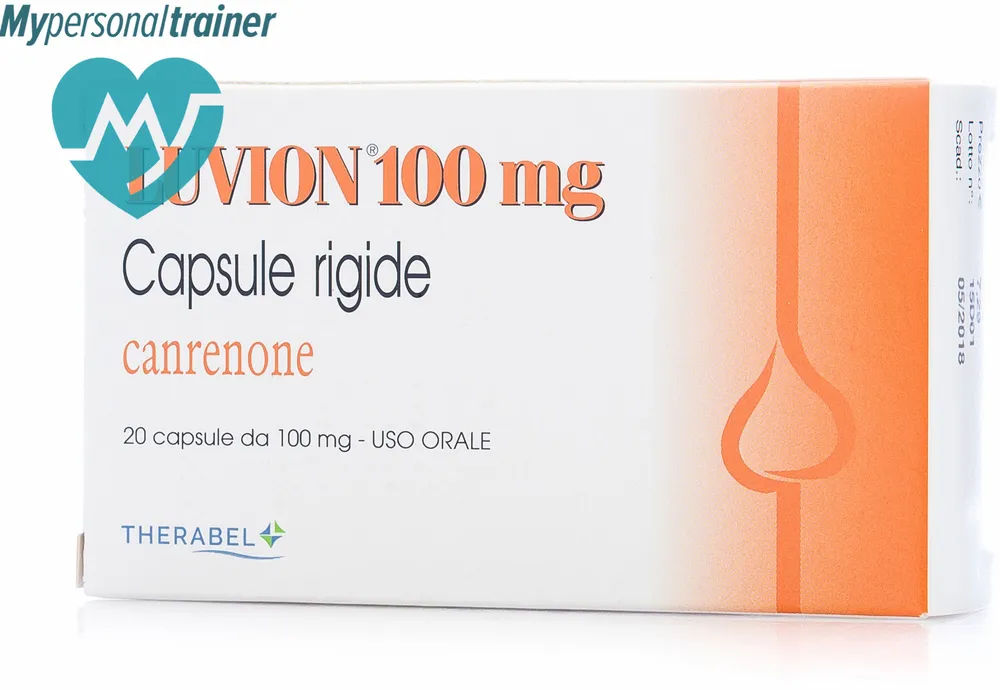
Table of Contents
- Patient Information Leaflet
- LUVION 50 mg Tablets, 100 mg Hard Capsules
- 1. What Luvion is and what it is used for
- 2. What you need to know before taking Luvion
- 3. How to take Luvion
- 4. Possible side effects
- 5. How to store Luvion
- 6. Package contents and other information
- Patient Information Leaflet
- LUVION 200 mg/2 ml powder and solvent for injectable solution for intravenous use
- 1. What Luvion is and what it is used for
- 2. What you need to know before using Luvion
- 3. How to use Luvion
- 4. Possible side effects
- 5. How to store Luvion
- 6. Package contents and other information
Patient Information Leaflet
LUVION 50 mg Tablets, 100 mg Hard Capsules
canrenone
Please read all of this leaflet carefully before you start taking this medicine because it contains important information for you.
- Keep this leaflet. You may need to read it again.
- If you have any questions, ask your doctor or pharmacist.
- This medicine has been prescribed for you only. Do not give it to other people, even if they have the same symptoms as yours, as it may be harmful.
- If you experience any side effect, including those not listed in this leaflet, talk to your doctor or pharmacist. See section 4.
Contents of this leaflet:
- What Luvion is and what it is used for
- What you need to know before taking Luvion
- How to take Luvion
- Possible side effects
- How to store Luvion
- Contents of the pack and other information
1. What Luvion is and what it is used for
Luvion contains the active substance canrenone. It works by increasing the amount of urine produced during the day and by counteracting the activity of a hormone called aldosterone, which regulates sodium and potassium levels and fluid volume in the body.
Luvion is indicated when:
- there is an increased production of aldosterone (primary hyperaldosteronism)
- there is excessive fluid accumulation (edematous states) related to increased aldosterone (secondary hyperaldosteronism), which may be caused by:
- reduced heart function (congestive heart failure)
- chronic liver disease (hepatic cirrhosis)
- kidney disorders (nephrotic syndrome)
- there is high blood pressure (essential arterial hypertension) when other treatments have not been sufficiently effective or tolerated.
2. What you need to know before taking Luvion
Do not take Luvion
- if you are allergic to the active substance or to any of the other ingredients of this medicine (listed in section 6).
- if you have a severe increase in potassium levels in the blood.
- if you have a severe reduction in sodium levels in the blood.
- if you have kidney problems (acute renal failure and severe chronic renal failure).
- if you are unable to urinate (anuria).
Warnings and precautions
Talk to your doctor or pharmacist before taking Luvion.
Since during treatment you may experience an increase in potassium levels in the blood (hyperkalaemia), a reduction in sodium levels in the blood (hyponatraemia), an increase in nitrogen levels in the blood (increased blood urea), and an increase in the amount of acids in the blood (metabolic acidosis), your doctor will carry out blood tests regularly. Before undergoing surgery, these tests will be performed. Your doctor will inform you whether treatment should be discontinued based on your blood sodium and potassium levels.
If you are taking medicines used to lower blood pressure (ACE inhibitors) at the same time, your doctor will increase the frequency of monitoring of potassium levels in the blood.
If you suffer from mild or moderate chronic renal failure, your doctor will carry out frequent tests to monitor kidney function and blood potassium levels.
If you or a family member has ever suffered from porphyria, inform your doctor before taking this medicine.
For athletes: The use of this medicine without therapeutic need constitutes doping and may lead to a positive anti-doping test.
Other medicines and Luvion
Inform your doctor or pharmacist if you are taking, have recently taken, or might take any other medicines.
Medicines used to reduce blood pressure (antihypertensives) may have an enhanced effect when taken together with Luvion. Your doctor may adjust the dosage.
If you are taking acetylsalicylic acid or its derivatives at the same time, consult your doctor, as the diuretic effect (urine production) of Luvion may be reduced.
Luvion with food, drinks and alcohol
During treatment, you should avoid a diet rich in potassium.
Pregnancy and breastfeeding
If you are pregnant, think you might be pregnant, planning a pregnancy, or are breastfeeding, ask your doctor or pharmacist for advice before taking this medicine.
Pregnancy
This medicine will be prescribed during pregnancy only if strictly necessary and under direct medical supervision.
Breastfeeding
Do not take this medicine if you are breastfeeding.
Driving and using machines
This medicine does not affect or has a negligible effect on the ability to drive and use machinery.
Luvion contains lactose
Luvion contains lactose. If your doctor has diagnosed you with an intolerance to certain sugars, contact him before taking this medicine.
3. How to take Luvion
Take this medicine exactly as instructed by your doctor or pharmacist. If you have
any doubts, consult your doctor or pharmacist.
Adults
In most cases, a daily dose of 50–200 mg, divided into one or more daily administrations, is sufficient.
In more severe or resistant cases, the dose may be increased to 300 mg or more, according to medical
prescription; the maintenance dose should be the lowest possible and in any case not exceed 200 mg per day.
If you take more Luvion than you should
The most serious consequences of overdose are reduced sodium levels (hyponatraemia) and increased
potassium levels in the blood (hyperkalaemia).
Reduced sodium levels cause dry mouth, thirst, and drowsiness.
Increased potassium levels may occur particularly if you have impaired kidney function or as a result of
excessive potassium intake, and may lead to dangerous heart rhythm disturbances, which require
treatment in hospital.
If you forget to take Luvion
Do not take a double dose to make up for the missed dose.
If you stop taking Luvion
If you have any doubts about how to use this medicine, consult your doctor or pharmacist.
4. Possible side effects
Like all medicines, this medicine can cause side effects, although not everybody gets them.
Many of the side effects listed below are temporary and/or improve following a dose reduction.
Uncommon side effects (may affect up to 1 in 100 people):
- Fever
- Tendency to loss of coordination of movements (ataxia)
- Allergic-type skin rash
- Enlargement of the breasts in men (gynaecomastia)
- Abnormal growth of body hair in women (mild androgenic effects, hirsutism)
- Transient disturbances in sexual desire (transient disturbances in libido)
- Menstrual irregularities
Rare side effects (may affect up to 1 in 1,000 people):
- Drowsiness
- Nausea
- Cramp-like abdominal pain
Reporting of side effects
If you experience any side effect, including those not listed in this leaflet, please inform your doctor or pharmacist.
You may also report side effects directly via the national reporting system at the following website: http://www.agenziafarmaco.gov.it/content/come-segnalare-una-sospetta-reazione-avversa .
By reporting side effects, you can help provide more information on the safety of this medicine.
5. How to store Luvion
Do not store above 25°C.
Keep this medicine out of the sight and reach of children.
Do not use this medicine after the expiry date stated on the packaging after “Exp.”. The expiry date refers to the last day of that month.
Do not dispose of medicines via wastewater or household waste. Ask your pharmacist how to dispose of medicines you no longer use. This will help protect the environment.
6. Package contents and other information
What Luvion contains
- Luvion 50 mg Tablets
- The active substance is canrenone. One tablet contains 50 mg of canrenone.
- The other components are: monohydrate lactose, maize starch, macrogol 4000, colloidal silica, magnesium stearate.
- Luvion 100 mg Hard capsules
- The active substance is canrenone. One capsule contains 100 mg of canrenone.
- The other components are: monohydrate lactose, maize starch, macrogol 4000, colloidal silica, magnesium stearate.
- Capsule shell composition: gelatin, titanium dioxide, yellow iron oxide (E172), indigotine (E132).
Description of the appearance of Luvion and pack contents
Luvion 50 mg Tablets: carton containing two or four blisters of 10 tablets each.
Luvion 100 mg Hard capsules: carton containing one or two blisters of 10 capsules each.
Marketing Authorisation Holder and Manufacturer
Marketing Authorisation Holder:
NEOPHARMED GENTILI S.p.A.
Via San Giuseppe Cottolengo, 15
20143 Milan
Manufacturers:
Doppel Farmaceutici S.r.l. – Via Volturno, 48 – Quinto de’ Stampi – Rozzano – Milan
VAMFARMA S.r.l., Via Kennedy, 5 – Comazzo (Lodi)
Patient Information Leaflet
LUVION 200 mg/2 ml powder and solvent for injectable solution for intravenous use
potassium canrenoate
Please read this leaflet carefully before using this medicine because it contains important information for you.
- Keep this leaflet. You may need to read it again.
- If you have any questions, ask your doctor, pharmacist, or nurse.
- This medicine has been prescribed for you only. Do not give it to others, even if their symptoms are the same as yours, as it could be harmful.
- If you experience any adverse reactions, including those not listed in this leaflet, contact your doctor, pharmacist, or nurse. See section 4.
Contents of this leaflet:
- What Luvion is and what it is used for
- What you need to know before using Luvion
- How to use Luvion
- Possible side effects
- How to store Luvion
- Contents of the pack and other information
1. What Luvion is and what it is used for
Luvion contains the active substance potassium canrenoate. It works by increasing the amount of urine produced during the day and by counteracting the activity of a hormone called aldosterone, which regulates levels of sodium, potassium, and fluid volume in the body.
Luvion is indicated when:
- there is an increased production of aldosterone (primary hyperaldosteronism)
- there is excessive fluid accumulation (edematous states) related to increased aldosterone (secondary hyperaldosteronism), which may be caused by:
- reduced heart function (congestive heart failure)
- a chronic liver disease (hepatic cirrhosis)
- a kidney disorder (nephrotic syndrome)
- there is high blood pressure (essential arterial hypertension) when other treatments have not been sufficiently effective or are not tolerated.
Luvion 200 mg/2 ml powder and solvent for injectable solution is administered when intravenous use is necessary, particularly suitable for use in intensive care and hospital settings.
2. What you need to know before using Luvion
Do not use Luvion
- if you are allergic to the active substance or to any of the other ingredients of this medicine (listed in section 6)
- if you have a severe increase in potassium levels in the blood
- if you have a severe reduction in sodium levels in the blood
- if you have kidney problems (acute renal failure and severe chronic renal failure)
- if you are unable to urinate (anuria).
Warnings and precautions
Talk to your doctor before using Luvion.
Since during treatment you may experience an increase in potassium levels in the blood (hyperkalaemia), a reduction in sodium levels in the blood (hyponatraemia), an increase in nitrogen in the blood (azotaemia), and an increase in acid levels in the blood (metabolic acidosis), your doctor will periodically perform blood tests. Before undergoing surgery, your doctor will carry out blood tests prior to the procedure. Your doctor will inform you whether treatment should be discontinued based on your blood sodium and potassium levels.
If you are concurrently taking medicines used to lower blood pressure (ACE inhibitors), your doctor will increase the frequency of monitoring your blood potassium levels.
If you suffer from mild or moderate chronic renal failure, your doctor will frequently perform blood tests to monitor kidney function and blood potassium levels.
If you or a family member has ever suffered from porphyria, inform your doctor before taking this medicine.
Although very rarely, with Luvion you may experience local disorders such as pain near the injection site, altered sensation (paraesthesia).
For athletes: using this medicine without therapeutic need constitutes doping and may lead to a positive anti-doping test.
Other medicines and Luvion
Inform your doctor or pharmacist if you are taking, have recently taken, or might take any other medicines.
Medicines used to reduce blood pressure (antihypertensives) may have an enhanced effect when taken together with Luvion. Your doctor may adjust the dosage.
If you are concurrently taking acetylsalicylic acid or its derivatives, inform your doctor, as the diuretic effect (urine production) of Luvion may be reduced.
Luvion with food, drinks and alcohol
During treatment, you should avoid a diet rich in potassium.
Pregnancy and breastfeeding
If you are pregnant, think you might be pregnant, are planning to become pregnant, or are breastfeeding, consult your doctor or pharmacist before using this medicine.
Pregnancy
If you are pregnant, this medicine will be administered only if clearly needed and under strict medical supervision.
Breastfeeding
Do not use this medicine if you are breastfeeding.
Driving and using machines
This medicine does not affect, or affects negligibly, the ability to drive and use machinery.
3. How to use Luvion
Use this medicine exactly as stated in this leaflet or as instructed by your doctor, pharmacist, or nurse. If you have any doubts, consult your doctor, pharmacist, or nurse.
Adults
The intravenous dose must be adjusted by the treating physician according to your health condition and response to therapy.
In general, effective doses range between 200 and 600 mg/day (1–3 vials) administered intravenously.
The maximum daily dose is 800 mg.
Shake well during preparation and before use.
If you use more Luvion than you should
The most serious consequences of overdose are reduction of sodium (hyponatremia) and increase of potassium in the blood (hyperkalemia).
Reduced sodium causes dryness of the mouth, thirst, and drowsiness.
Increased potassium may occur particularly if you have impaired kidney function or following excessive potassium intake, and may cause dangerous heart rhythm disturbances, which require hospital treatment.
If you stop treatment with Luvion
If you have any questions about how to use this medicine, consult your doctor, pharmacist, or nurse.
4. Possible side effects
Like all medicines, this medicine can cause side effects, although not everybody gets them.
Many of the side effects listed below are temporary and/or improve following a reduction in dose.
Uncommon side effects (may affect up to 1 in 100 people):
- Fever
- Tendency to loss of coordination of movements (ataxia)
- Allergic-type skin rash
- Breast enlargement in men (gynecomastia)
- Abnormal growth of body hair in women (mild androgenic effects, hirsutism)
- Transient disturbances in sexual desire (transient disturbances in libido)
- Menstrual irregularities
Rare side effects (may affect up to 1 in 1000 people):
- Drowsiness
- Nausea
- Cramp-like abdominal pain
Reporting of side effects
If you experience any side effect, including those not listed in this leaflet, talk to your doctor, pharmacist, or nurse.
You can also report side effects directly via the national reporting system at the following website:
http://www.agenziafarmaco.gov.it/content/come-segnalare-una-sospetta-reazione-avversa.
By reporting side effects, you can help provide more information on the safety of this medicine.
5. How to store Luvion
This medicine does not require any special storage conditions.
Keep this medicine out of the sight and reach of children.
Do not use this medicine after the expiry date stated on the packaging after "Exp".
The expiry date refers to the last day of that month.
Do not dispose of any medicine via wastewater or household waste. Ask your pharmacist how to dispose of medicines you no longer use. This will help protect the environment.
6. Package contents and other information
What Luvion contains
- The active substance is: potassium canrenoate. One vial contains 200 mg of potassium canrenoate.
- The other components are: trometamol 10 mg. One ampoule of solvent contains: water for injections 2 ml.
Description of the appearance of Luvion and contents of the pack
Powder and solvent for injectable solution for intravenous use.
Carton pack containing 6 vials of 200 mg powder + 6 ampoules of solvent of 2 ml.
Marketing Authorization Holder and Manufacturer
Marketing Authorization Holder:
NEOPHARMED GENTILI S.p.A.
Via San Giuseppe Cottolengo, 15
20143 Milano, Italy
Manufacturer:
Biologici Italia Laboratories S.r.l.
Production site in Masate (MI)
The following information is intended exclusively for physicians or healthcare professionals:
Dosage and method of administration
Adults
The intravenous dosage must be adjusted by the attending physician according to the patient's condition and response to therapy.
In general, effective doses range between 200 and 600 mg/day (1–3 vials) administered intravenously.
It is advisable not to exceed a daily dose of 800 mg.
The injection should be administered slowly or preferably by infusion with 5% glucose solution or
physiological saline.
In case of direct intravenous injection, it is recommended not to inject more than 2 vials at a time.
For any concomitant treatments, depending on the indications (diuretics, beta-blockers, etc.), dosage selection and additive effects must be taken into account.
Although very rare, local adverse reactions (pain at the injection site, paresthesia) may occur, which can be completely avoided by administering the drug via intravenous infusion.
If more Luvion is administered than prescribed
The most serious consequences of overdose are hyponatremia and hyperkalemia; the former is characterized by dry mouth, thirst, and drowsiness. Hyperkalemia may occur particularly in patients with impaired renal function or excessive potassium intake, and may cause dangerous cardiac arrhythmias. Hyperkalemia can be promptly treated by intravenous administration of glucose (20–50%) and insulin (0.25 to 0.5 units per g of glucose). This is a temporary countermeasure, which should be repeated as necessary.