Lurasidone Doc
Italy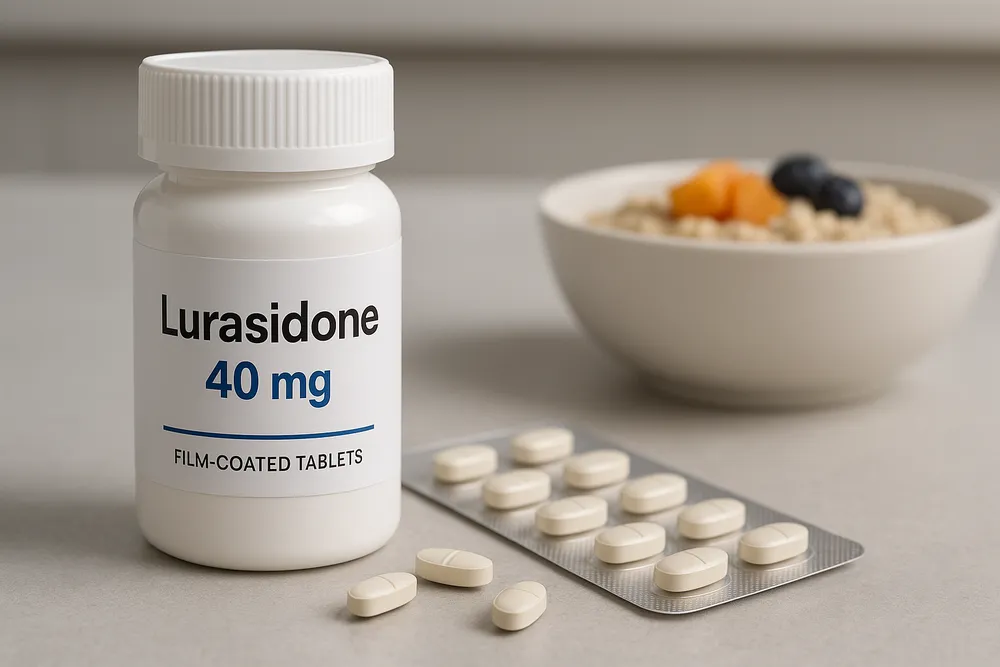
Table of Contents
- Patient Information Leaflet
- LURASIDONE DOC 18.5 mg film-coated tablets, 37 mg film-coated tablets, 74 mg film-coated tablets
- 1. What LURASIDONE DOC is and what it is used for
- 2. What you should know before taking LURASIDONE DOC
- 3. How to take LURASIDONE DOC
- 4. Possible side effects
- 5. How to store LURASIDONE DOC
- 6. Pack contents and other information
Patient Information Leaflet
LURASIDONE DOC 18.5 mg film-coated tablets, 37 mg film-coated tablets, 74 mg film-coated tablets
Equivalent medicinal product
Please read this leaflet carefully before taking this medicine because it contains important information for you.
- Keep this leaflet. You may need to read it again.
- If you have any questions, ask your doctor or pharmacist.
- This medicine has been prescribed for you only. Do not give it to other people, even if their symptoms are the same as yours, as it may be harmful.
- If you experience any side effects, including those not listed in this leaflet, contact your doctor or pharmacist. See section 4.
Contents of this leaflet:
- What LURASIDONE DOC is and what it is used for.
- What you need to know before taking LURASIDONE DOC.
- How to take LURASIDONE DOC.
- Possible side effects.
- How to store LURASIDONE DOC.
- Contents of the pack and other information.
1. What LURASIDONE DOC is and what it is used for
LURASIDONE DOC contains the active substance lurasidone and belongs to a group of
medicines called antipsychotics. It is used to treat the symptoms of schizophrenia in adults (aged
18 years and older) and in adolescents aged between 13 and 17 years. Lurasidone works by
blocking brain receptors to which the substances dopamine and serotonin bind. Dopamine and
serotonin are neurotransmitters (substances that allow nerve cells to communicate with each
other) involved in the symptoms of schizophrenia. By blocking their receptors, lurasidone helps
normalize brain activity, thereby reducing the symptoms of schizophrenia.
Schizophrenia is a disorder characterized by symptoms such as hearing, sensing, or seeing things
that are not actually present, having false beliefs, harboring unusual suspicions, withdrawing from
others, speaking and behaving incoherently, and experiencing a lack of emotions. People with this
condition may also feel depressed, anxious, guilty, or tense. This medicine is used to improve the
symptoms of schizophrenia.
2. What you should know before taking LURASIDONE DOC
Do not take LURASIDONE DOC:
- if you are allergic to lurasidone or to any of the other ingredients of this medicine (listed in section 6);
- if you are taking medicines that could affect the amount of lurasidone in your blood, such as:
- medicines used to treat fungal infections like itraconazole, ketoconazole (except in shampoo formulation), posaconazole, or voriconazole;
- medicines used to treat infections such as the antibiotics clarithromycin or telithromycin;
- medicines used to treat HIV infections like cobicistat, indinavir, nelfinavir, ritonavir, and saquinavir;
- medicines used to treat chronic hepatitis such as boceprevir and telaprevir;
- a medicine used to treat depression, nefazodone;
- a medicine used to treat tuberculosis, rifampicin;
- medicines used to treat seizures such as carbamazepine, phenobarbital, and phenytoin;
- a herbal medicine used to treat depression, St. John’s wort ( Hypericum perforatum ).
Warnings and precautions
It may take days or even weeks before this medicine has a full effect. Contact your doctor if you have any questions about this medicine.
Talk to your doctor or pharmacist before taking LURASIDONE DOC, or during treatment, especially if you:
- have suicidal thoughts or behaviour;
- have Parkinson’s disease or dementia;
- have been diagnosed with a condition whose symptoms include high temperature and muscle stiffness (also known as neuroleptic malignant syndrome), or if you have ever had stiffness, tremors, or movement problems (extrapyramidal symptoms), or abnormal movements of the tongue or face (tardive dyskinesia). You should be aware that these conditions may be caused by this medicine;
- have heart disease or are being treated for a heart condition that makes you prone to low blood pressure, or if you have a family history of irregular heartbeat (including QT prolongation);
- have a history of seizures (convulsions) or epilepsy;
- have a history of blood clots, or if any of your family members have a history of blood clots, because antipsychotic medicines have been associated with blood clot formation;
- are a man with enlarged breasts (gynecomastia), have milky discharge from the nipples (galactorrhea), absence of menstruation (amenorrhea), or erectile dysfunction;
- have diabetes or are prone to developing diabetes;
- have reduced kidney function;
- have reduced liver function;
- have gained weight;
- have low blood pressure when standing up, which may cause fainting;
- are dependent on opioids (treated with buprenorphine) or have severe pain (treated with opioids), or suffer from depression or other conditions treated with antidepressants. Using these medicines together with LURASIDONE DOC may cause serotonin syndrome, a potentially life-threatening condition (see section “Other medicines and LURASIDONE DOC”).
If any of these conditions apply to you, talk to your doctor, who may decide to adjust your dose, monitor you more closely, or discontinue treatment with LURASIDONE DOC.
Children and adolescents
Do not give this medicine to children and adolescents under 13 years of age.
Other medicines and LURASIDONE DOC
Tell your doctor or pharmacist if you are taking, have recently taken, or might take any other medicines. This is particularly important if you are taking:
- medicines that also act on the brain, as their effects may add negatively to the effects of LURASIDONE DOC on the brain;
- medicines that lower blood pressure, because this medicine may also lower it;
- medicines used to treat Parkinson’s disease and restless legs syndrome
(e.g. levodopa), because this medicine may reduce their effectiveness;
- medicines containing derivatives of ergot alkaloids (used to treat migraines) and other medicines, including terfenadine and astemizole (used to treat hay fever and other allergic conditions), cisapride (used to treat digestive problems), pimozide (used to treat psychiatric disorders), quinidine (used to treat heart conditions), bepridil (used to treat chest pain);
- medicines containing buprenorphine (used to treat opioid dependence) or opioids (used to treat severe pain) or antidepressants such as moclobemide, tranylcypromine, citalopram, escitalopram, fluoxetine, fluvoxamine, paroxetine, sertraline, duloxetine, venlafaxine, amitriptyline, doxepin, or trimipramine. These medicines may interact with LURASIDONE DOC and cause symptoms such as involuntary and rhythmic muscle contractions, including muscles controlling eye movements, agitation, hallucinations, coma, excessive sweating, tremor, exaggerated reflexes, increased muscle tension, body temperature above 38 °C. Contact your doctor if you experience any of these symptoms.
Tell your doctor if you are taking any of these medicines, as they may consider it necessary to adjust the dose during treatment with LURASIDONE DOC.
The following medicines may increase lurasidone levels in the blood:
- diltiazem (used to treat high blood pressure);
- erythromycin (used to treat infections);
- fluconazole (used to treat fungal infections);
- verapamil (used to treat high blood pressure or chest pain).
The following medicines may reduce lurasidone levels in the blood:
- amprenavir, efavirenz, etravirine (used to treat HIV infection);
- aprepitant (used to treat nausea and vomiting);
- armodafinil, modafinil (used to treat sleepiness);
- bosentan (used to treat pulmonary hypertension or finger ulcers);
- nafcillin (used to treat infections);
- prednisone (used to treat inflammatory conditions);
- rufinamide (used to treat epileptic seizures).
Inform your doctor if you are taking any of these medicines, as they may decide to adjust the dose of LURASIDONE DOC.
LURASIDONE DOC with food, drinks, and alcohol
Alcohol intake should be avoided during treatment with this medicine, as alcohol may have an additive negative effect.
Do not drink grapefruit juice during treatment with this medicine. Grapefruit may affect how this medicine works.
Pregnancy and breastfeeding
If you are pregnant, think you may be pregnant, plan to become pregnant, or are breastfeeding, consult your doctor or pharmacist before taking this medicine.
You should not take this medicine during pregnancy unless this has been agreed with your doctor.
If your doctor decides that the potential benefit of treatment during pregnancy outweighs the potential risk to the unborn child, your doctor will closely monitor the baby after birth. Indeed, newborns whose mothers have taken lurasidone during the third trimester (the last three months) of pregnancy may experience the following symptoms:
- tremors, muscle stiffness and/or weakness, drowsiness, agitation, breathing problems, and feeding difficulties.
If the baby shows any of these symptoms, contact your doctor.
It is not known whether lurasidone is excreted in breast milk. Inform your doctor if you are breastfeeding or intend to breastfeed.
Driving and using machines
Drowsiness, dizziness, and vision problems may occur during treatment with this medicine (see section 4, Possible side effects). Do not drive, operate bicycles, or use tools or machinery until you know how this medicine affects you.
LURASIDONE DOC contains sodium
This medicine contains less than 1 mmol (23 mg) of sodium per tablet, i.e. essentially ‘sodium-free’.
3. How to take LURASIDONE DOC
Take this medicine exactly as directed by your doctor or pharmacist. If you have any doubts, consult your doctor or pharmacist.
The dose you will need to take will be determined by your doctor and may depend on several factors:
- how you respond to a given dose;
- whether you are taking other medicines (see section 2, Other medicines and LURASIDONE DOC);
- whether you have kidney or liver problems.
Adults (aged 18 years and older)
The recommended starting dose is 37 mg once daily.
Your doctor may increase or decrease this dose within the dose range of 18.5–148 mg once daily. The maximum dose must not exceed 148 mg once daily.
Adolescents (13–17 years)
The recommended starting dose is 37 mg of lurasidone once daily.
This dose may be increased or decreased by your doctor within the dose range of 37–74 mg once daily. The maximum daily dose must not exceed 74 mg.
How to take LURASIDONE DOC
Swallow the tablet(s) whole with water to mask their bitter taste.
Take your dose regularly every day at the same time, as this makes it easier to remember.
You must take this medicine during or immediately after a meal, as doing so helps your body absorb the medicine and allows it to work more effectively.
If you take more LURASIDONE DOC than you should
If you take more medicine than prescribed, contact your doctor immediately. You may experience drowsiness, fatigue, abnormal body movements, difficulty standing or walking, dizziness due to low blood pressure, or abnormal heartbeats.
If you forget to take LURASIDONE DOC
Do not take a double dose to make up for the missed dose. If you miss a dose, take the next dose on the following day after the missed dose. If you miss two or more doses, consult your doctor.
If you stop taking LURASIDONE DOC
If you stop taking this medicine, you will lose its effects. Do not discontinue this medicine unless instructed by your doctor, as your symptoms may return.
If you have any questions about the use of this medicine, consult your doctor or pharmacist.
4. Possible side effects
Like all medicines, this medicine can cause side effects, although not everyone experiences them.
If you notice any of the following symptoms, seek immediate medical advice:
- a severe allergic reaction presenting as fever, swelling of the mouth, face, lips or tongue, shortness of breath, itching, skin rash and sometimes low blood pressure (hypersensitivity). These reactions have been commonly observed (may affect up to 1 in 10 people).
- a severe rash with blistering affecting the skin, mouth, eyes and genitals (Stevens-Johnson syndrome). This reaction has been observed with unknown frequency.
- fever, sweating, muscle stiffness and reduced level of consciousness. These could be symptoms of a condition known as neuroleptic malignant syndrome. These reactions are rare (may affect up to 1 in 1,000 people).
- blood clots in the veins, especially in the legs (symptoms include swelling, pain and redness of the leg), which may travel through the blood vessels to the lungs, causing chest pain and breathing difficulties. If you notice any of these symptoms, seek immediate medical advice.
The following side effects may also occur in adults:
Very common (may affect more than 1 in 10 people)
- feeling restless and unable to sit still;
- nausea;
- insomnia.
Common (may affect up to 1 in 10 people)
- Parkinsonism: a medical term grouping various symptoms, including increased salivary secretion or watery mouth, loss of saliva, jerking movements when bending limbs, slow, reduced or impaired body movements, expressionless face, muscle tension, stiff neck, muscle rigidity, small, shuffling, hurried steps, lack of normal arm swing while walking, persistent blinking in response to tapping on the forehead (an abnormal reflex);
- Difficulty in speaking, abnormal muscle movements; a group of symptoms known as extrapyramidal symptoms (EPS), which generally include unusual, unprovoked and involuntary muscle movements;
- rapid heartbeat;
- increased blood pressure;
- dizziness;
- muscle spasms and stiffness;
- vomiting;
- diarrhoea;
- back pain;
- skin rash and itching;
- indigestion;
- dry mouth or excessive saliva;
- abdominal pain;
- drowsiness, fatigue, agitation and anxiety;
- weight gain;
- increased levels of creatine phosphokinase (an enzyme present in muscles) detected in blood tests;
- increased levels of creatinine (a marker of kidney function) detected in blood tests;
- reduced appetite.
Uncommon (may affect up to 1 in 100 people)
- difficulty in articulating words;
- nightmares;
- difficulty swallowing;
- irritation of the stomach lining;
- sudden anxiety;
- seizures (epileptic fits);
- chest pain;
- muscle pain;
- temporary loss of consciousness;
- sensation of dizziness;
- abnormal nerve impulses in the heart;
- slow heartbeat;
- joint pain;
- difficulty walking;
- rigid posture;
- increased levels of prolactin in the blood, increased blood glucose (blood sugar), increased levels of certain liver enzymes, detectable in blood tests;
- sudden drop in blood pressure upon standing, which may cause fainting;
- common cold;
- hot flushes;
- blurred vision;
- sweating;
- pain when urinating;
- uncontrollable movements of the mouth, tongue and limbs (tardive dyskinesia);
- low sodium levels in the blood, which may cause fatigue, confusion, muscle cramps, seizures and coma (hyponatraemia);
- lack of energy (lethargy);
- gas (flatulence);
- neck pain;
- erection problems;
- painful or absent menstruation;
- reduced levels of red blood cells (which carry oxygen in the body).
Rare (may affect up to 1 in 1,000 people)
- Rhabdomyolysis, i.e. breakdown of muscle fibres leading to release of their contents (myoglobin) into the bloodstream, causing muscle pain, malaise, confusion, abnormal heart rate and rhythm, and possibly dark-coloured urine;
- increased eosinophils (a type of white blood cell);
- swelling beneath the skin surface (angioedema);
- self-harming behaviour;
- stroke;
- kidney failure;
- reduced levels of white blood cells (which fight infections);
- breast pain, milk secretion from the breasts;
- sudden death.
Not known (frequency cannot be estimated from available data)
- reduced levels of a subgroup of white blood cells (neutrophils);
- sleep disorder;
- newborns may experience the following symptoms: agitation, increased or decreased muscle tone, tremor, drowsiness, breathing or feeding difficulties;
- abnormal breast enlargement. In elderly patients with dementia, a small increase in the number of deaths has been reported in patients treated with antipsychotic medicines compared to those not treated with these medicines.
The following side effects may occur in adolescents:
Very common (may affect more than 1 in 10 people)
- feeling restless and unable to sit still;
- headache;
- drowsiness;
- nausea.
Common (may affect up to 1 in 10 people)
- decreased or increased appetite;
- abnormal dreams;
- difficulty sleeping, tension, agitation, anxiety and irritability;
- physical weakness, fatigue;
- depression;
- psychotic disorder: a medical term grouping various mental illnesses causing abnormal thoughts and perceptions; people with psychosis lose touch with reality;
- symptoms of schizophrenia;
- difficulty concentrating;
- sensation of dizziness;
- abnormal involuntary movements (dyskinesia);
- muscle tone abnormalities, including torticollis and involuntary upward deviation of the eyes;
- Parkinsonism: a medical term grouping various symptoms, including increased salivary secretion or watery mouth, loss of saliva, jerking movements when bending limbs, slow, reduced or impaired body movements, expressionless face, muscle tension, stiff neck, muscle rigidity, small, shuffling, hurried steps, lack of normal arm swing while walking, persistent blinking in response to tapping on the forehead (an abnormal reflex);
- rapid heartbeat;
- difficulty emptying the bowel (constipation);
- dry mouth or excessive saliva;
- vomiting;
- sweating;
- muscle stiffness;
- erection problems;
- increased levels of creatine phosphokinase (an enzyme present in muscles), detected in blood tests;
- increased levels of prolactin (an enzyme) in the blood, detected in blood tests;
- weight gain or weight loss.
Uncommon (may affect up to 1 in 100 people)
- hypersensitivity;
- common cold, throat and nasal infection;
- reduced thyroid activity, thyroid inflammation;
- aggressive behaviour, impulsive behaviour;
- apathy;
- confusion;
- depressed mood;
- separation of normal mental processes (dissociation);
- hallucinations (auditory or visual);
- homicidal thoughts;
- difficulty sleeping;
- increased or decreased sexual desire;
- lack of energy;
- changes in mental state;
- obsessive thoughts;
- sudden, intense and disabling anxiety (panic attack);
- purposeless involuntary movements (psychomotor hyperactivity);
- overactivity of body muscles (hyperkinesia), inability to stay still (restlessness);
- uncontrollable urge to move the legs (restless legs syndrome), uncontrollable movements of the mouth, tongue and limbs (tardive dyskinesia);
- sleep disorder;
- intentional suicidal thoughts;
- abnormal thinking;
- instability (sensation of dizziness); altered taste;
- impaired memory;
- altered skin sensation (paraesthesia);
- sensation of tight band around the head (tension-type headache), migraine;
- difficulty focusing eyes, blurred vision;
- increased hearing sensitivity;
- palpitations, changes in heart rhythm;
- sudden drop in blood pressure upon standing, possibly leading to fainting;
- increased blood pressure;
- abdominal pain or discomfort;
- partial or complete absence of salivary secretion;
- diarrhoea;
- indigestion;
- dry lip;
- toothache;
- partial or complete hair loss, abnormal hair growth;
- skin rash, hives; muscle spasms and stiffness, muscle pain;
- joint pain, pain in arms and legs, jaw pain;
- presence of bilirubin in urine, presence of protein in urine, an indicator of kidney function;
- pain or difficulty urinating, frequent urination, kidney disease;
- sexual dysfunction;
- difficulty ejaculating;
- abnormal breast enlargement, breast pain, milk secretion from the breasts;
- absent or irregular menstruation;
- uncontrollable noises and movements (Tourette’s syndrome);
- chills;
- difficulty walking;
- malaise;
- chest pain;
- fever;
- intentional overdose;
- effects on thyroid function, detected in blood tests: increased cholesterol in blood, increased triglycerides in blood, reduced high-density lipoproteins, reduced low-density lipoproteins;
- increased blood glucose (blood sugar), increased insulin in blood, increased levels of certain liver enzymes (an indicator of liver function), detected in blood tests;
- increased or decreased testosterone in blood, increased thyroid-stimulating hormone in blood, detected in blood tests;
- changes in electrocardiogram;
- reduced haemoglobin, reduced levels of white blood cells (which fight infections), detected in blood tests.
Reporting of side effects
If you experience any side effect, including those not listed in this leaflet, talk to your doctor or pharmacist. You can also report side effects directly via the national reporting system at
https://www.aifa.gov.it/content/segnalazioni-reazioni-avverse. By reporting side effects, you can help provide more information on the safety of this medicine.
5. How to store LURASIDONE DOC
Keep this medicine out of the sight and reach of children.
Do not use this medicine after the expiry date stated on the carton and blister after
Exp. The expiry date refers to the last day of that month.
This medicine does not require any special storage conditions.
Do not dispose of medicines via wastewater or household waste. Ask your pharmacist
how to dispose of medicines no longer required. This will help protect the environment.
6. Pack contents and other information
What LURASIDONE DOC contains
- The active substance is lurasidone. Each 18.5 mg tablet contains lurasidone hydrochloride equivalent to 18.6 mg of lurasidone. Each 37 mg tablet contains lurasidone hydrochloride equivalent to 37.2 mg of lurasidone. Each 74 mg tablet contains lurasidone hydrochloride equivalent to 74.5 mg of lurasidone.
- The other components are: Tablet core: mannitol, sodium croscarmellose, hypromellose 2910, magnesium stearate.
Film coating: hypromellose 2910, titanium dioxide (E171), macrogol 6000, yellow iron oxide (E172) (present in the 74 mg tablets), and indigo carmine (E132) (present in the 74 mg tablets).
Description of the appearance of LURASIDONE DOC and pack contents
- LURASIDONE DOC 18.5 mg film-coated tablets are described as white, round, convex tablets with a diameter of 6 mm ± 0.2 mm, marked with a single dash “-”. LURASIDONE DOC 37 mg film-coated tablets are described as white, round, convex tablets with a diameter of 8 mm ± 0.2 mm.
- LURASIDONE DOC 74 mg film-coated tablets are described as light green, oblong, convex tablets, with a length of 12.75 mm ± 0.2 mm and a width of 6.38 mm ± 0.2 mm.
LURASIDONE DOC film-coated tablets are available in packs containing 28 film-coated tablets in blisters OPA-PA/Alu/PVC – Alu.
Not all pack sizes may be marketed.
Marketing Authorization Holder and Manufacturer
Marketing Authorization Holder
DOC Generici S.r.l.
Via Turati 40, 20121 Milan, Italy.
Manufacturer
Atlantic Pharma – Produções Farmacêuticas, S.A.
Rua da Tapada Grande 2, Abrunheira, Sintra, 2710-228, Portugal.